Prepared By :
Darshil Vekaria Civil (2nd Sem)
 TOPIC:
Renewable Energy Resources
VISHWAKARMA GOVT.
ENGINEERING
COLLEGE CHANDKHEDA
Solar Power
 Solar energy is generally captured in two forms: via photovoltaic cells for
electricity generation or via thermal panels for heating purposes
 Remains an expensive method of generating electricity compared to
conventional sources and other renewable sources such as wind or hydro power
 Recent advances in technology and support from certain governments have
continued to drive solar penetration
Solar Power - Photovoltaic
Current is generated through
Photovoltaic effect -flow of
free electrons in Silicon Panel
due to solar irradiance
Direct current (DC) is
generated which can be
stored in a battery or
converted to Alternating
Current (AC)
Pros & Cons - Solar
Pros:
 Most widely available source of energy
 Not as limited in location siting as other renewable sources such as Wind &
Hydro
 Largest potential for decentralized power generation
Cons:
 Most expensive form of energy (though not so much if you consider end-to-end
costs of other energy sources)
 Large up-front Capital investment
Wind Power
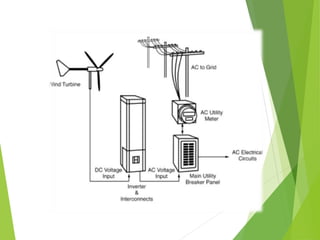
 Converts kinetic energy for wind to electrical energy
 Broadly serving as the renewable of choice in Europe and the United States
 Increased size and higher productivity have enabled wind generation to become an
increasingly competitive alternative to more traditional methods of power
generation
 Uncertainty is the main problem with wind production owing to the inherent
unpredictability of weather conditions
 Utilization for wind generation is generally rather low, with most in the 25-35%
utilization rate
Pros & Cons of Wind Power
Pros:
 Smaller Land requirement when compared to Solar, Hydro
 Can be built off-shore
 Fluctuates less than solar
 Cheaper than Solar
Cons:
 Premium Onshore sites saturated
 Intermittency issue
 Offshore towers more expensive
 Energy Storage not viable
 Cause Noise pollution
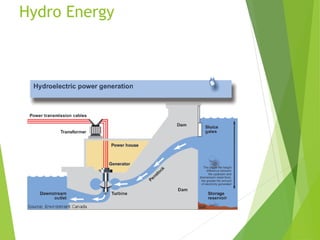
Hydro Energy
Characteristics
 Most mature of renewable energies
 Largest global contributor amongst all renewable energies
 Largely utilizes established technology from other sectors
 Can be “switched on-off” at almost immediately
 Arguably the Cheapest where available
Pros & Cons of Hydro Energy
Pros:
 Cheap electricity
 Capable of providing base load power
 Capable of large scale production
Cons:
 Environmental concerns. Ecology in dam catchment area destroyed
 Depends on seasonal nature of water (rain) availability in catchment area
 High upfront capital investment costs
 Limited in number of potential sites/locations
Geothermal Energy
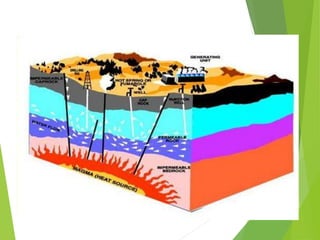
 Geothermal energy is the heat energy stored beneath the surface in the form of
hot spring and geysers it is the exploitation of heat energy of earth within the
upper 10 km of the earth crust.
 Heat from the molten core of the earth offers a huge a limitless heat from the
interior of earth is used to convert water into steam. In volcanic regions of the
earth, the hot rock is relatively close to the surface. Also in such regions
sometimes, the natural groundwater comes in contact with the hot rock and the
heated water or steam may find its way to the surface through natural steam
vents.
 In such regions, holes can be drilled into the hot rock groundwater structure and
make the rising steam to drive turbo generators to produce electric power.
Pros & Cons of Geothermal Energy
Pros:
 Zero carbon
 No fuel required (no mining or transportation)
 Virtually limitless supply
 Inherently simple and reliable
 Already cost competitive in some areas
 Could be built underground
Cons:
 Prime sites are very location-specific & often far from population centers
 Losses due to long distance transmission of electricity
 Water usage
 Sulfur dioxide and silica emissions
 High construction costs
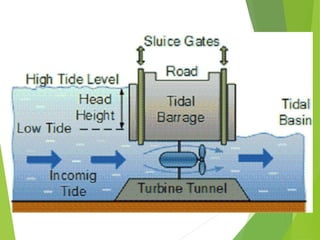
Tidal Energy
 Tidal energy is a type of energy that produces
electricity and other forms of power through
the use of water.
 The tides in places that naturally hold water,
such as lakes and oceans, make the water able
to produce this energy.
 This energy that causes the power is held in
tidal waters.
 There is so much potential energy in the earth's
oceans and other natural water containers that
is not being used, but could be.
Pros & Cons of Tidal Energy
Pros:
 Renewable & Requires no fuel.
 Reliable, a plant can last 100 year
 Easy to construct and set up
 High efficiency & Predictable output
Cons:
 Expensive to build
 Very location specific (only 20 sites identified with high potential)
 Non-continuous & Locations are often remote
 Can change tidal level of surrounding area
 Impact on fish, marine mammals and birds
 Captures dirt, waste and pollution near the coast

Renewable energy resources

  • 1.
    Prepared By : DarshilVekaria Civil (2nd Sem)  TOPIC: Renewable Energy Resources VISHWAKARMA GOVT. ENGINEERING COLLEGE CHANDKHEDA
  • 2.
    Solar Power  Solarenergy is generally captured in two forms: via photovoltaic cells for electricity generation or via thermal panels for heating purposes  Remains an expensive method of generating electricity compared to conventional sources and other renewable sources such as wind or hydro power  Recent advances in technology and support from certain governments have continued to drive solar penetration
  • 3.
    Solar Power -Photovoltaic Current is generated through Photovoltaic effect -flow of free electrons in Silicon Panel due to solar irradiance Direct current (DC) is generated which can be stored in a battery or converted to Alternating Current (AC)
  • 4.
    Pros & Cons- Solar Pros:  Most widely available source of energy  Not as limited in location siting as other renewable sources such as Wind & Hydro  Largest potential for decentralized power generation Cons:  Most expensive form of energy (though not so much if you consider end-to-end costs of other energy sources)  Large up-front Capital investment
  • 5.
    Wind Power  Convertskinetic energy for wind to electrical energy  Broadly serving as the renewable of choice in Europe and the United States  Increased size and higher productivity have enabled wind generation to become an increasingly competitive alternative to more traditional methods of power generation  Uncertainty is the main problem with wind production owing to the inherent unpredictability of weather conditions  Utilization for wind generation is generally rather low, with most in the 25-35% utilization rate
  • 7.
    Pros & Consof Wind Power Pros:  Smaller Land requirement when compared to Solar, Hydro  Can be built off-shore  Fluctuates less than solar  Cheaper than Solar Cons:  Premium Onshore sites saturated  Intermittency issue  Offshore towers more expensive  Energy Storage not viable  Cause Noise pollution
  • 8.
  • 9.
    Characteristics  Most matureof renewable energies  Largest global contributor amongst all renewable energies  Largely utilizes established technology from other sectors  Can be “switched on-off” at almost immediately  Arguably the Cheapest where available
  • 10.
    Pros & Consof Hydro Energy Pros:  Cheap electricity  Capable of providing base load power  Capable of large scale production Cons:  Environmental concerns. Ecology in dam catchment area destroyed  Depends on seasonal nature of water (rain) availability in catchment area  High upfront capital investment costs  Limited in number of potential sites/locations
  • 11.
    Geothermal Energy  Geothermalenergy is the heat energy stored beneath the surface in the form of hot spring and geysers it is the exploitation of heat energy of earth within the upper 10 km of the earth crust.  Heat from the molten core of the earth offers a huge a limitless heat from the interior of earth is used to convert water into steam. In volcanic regions of the earth, the hot rock is relatively close to the surface. Also in such regions sometimes, the natural groundwater comes in contact with the hot rock and the heated water or steam may find its way to the surface through natural steam vents.  In such regions, holes can be drilled into the hot rock groundwater structure and make the rising steam to drive turbo generators to produce electric power.
  • 13.
    Pros & Consof Geothermal Energy Pros:  Zero carbon  No fuel required (no mining or transportation)  Virtually limitless supply  Inherently simple and reliable  Already cost competitive in some areas  Could be built underground Cons:  Prime sites are very location-specific & often far from population centers  Losses due to long distance transmission of electricity  Water usage  Sulfur dioxide and silica emissions  High construction costs
  • 14.
    Tidal Energy  Tidalenergy is a type of energy that produces electricity and other forms of power through the use of water.  The tides in places that naturally hold water, such as lakes and oceans, make the water able to produce this energy.  This energy that causes the power is held in tidal waters.  There is so much potential energy in the earth's oceans and other natural water containers that is not being used, but could be.
  • 16.
    Pros & Consof Tidal Energy Pros:  Renewable & Requires no fuel.  Reliable, a plant can last 100 year  Easy to construct and set up  High efficiency & Predictable output Cons:  Expensive to build  Very location specific (only 20 sites identified with high potential)  Non-continuous & Locations are often remote  Can change tidal level of surrounding area  Impact on fish, marine mammals and birds  Captures dirt, waste and pollution near the coast