BIOMASS ENERGY PLANT
OPERATION, USAGE AND ITS
APPLICATIONS
hashim hasnain hadi 1
BIOMASS ENERGY
Biomass is a term used to describe all organic matter produced by
photosynthesis, existing on the earth’s surface. They include all water- and
land-based vegetation and trees, and all waste biomass such as municipal
solid waste (MSW), municipal bio solids (sewage), and animal wastes
(manures), forestry and agricultural residues, and certain types of industrial
wastes.
 Biomass combustion supplies about 11% of the world’s total primary
energy
hashim hasnain hadi 2
Application of BIOMASS ENERGY
 Heat for daily living use (stoves)
 District heating
 heat and electricity production for combined heat and power (CHP) for pulp and
paper,
forest industries, and sugarcane processing
 Electric Power Production
hashim hasnain hadi 3
METHODS OF EXTRACTING BIOMASS ENERGY
Generally, the prominent biopower technologies are comprised of:
Direct combustion
Co-firing
Gasification
Pyrolysis
Anaerobic digestion
Fermentation
hashim hasnain hadi 4
Direct combustion
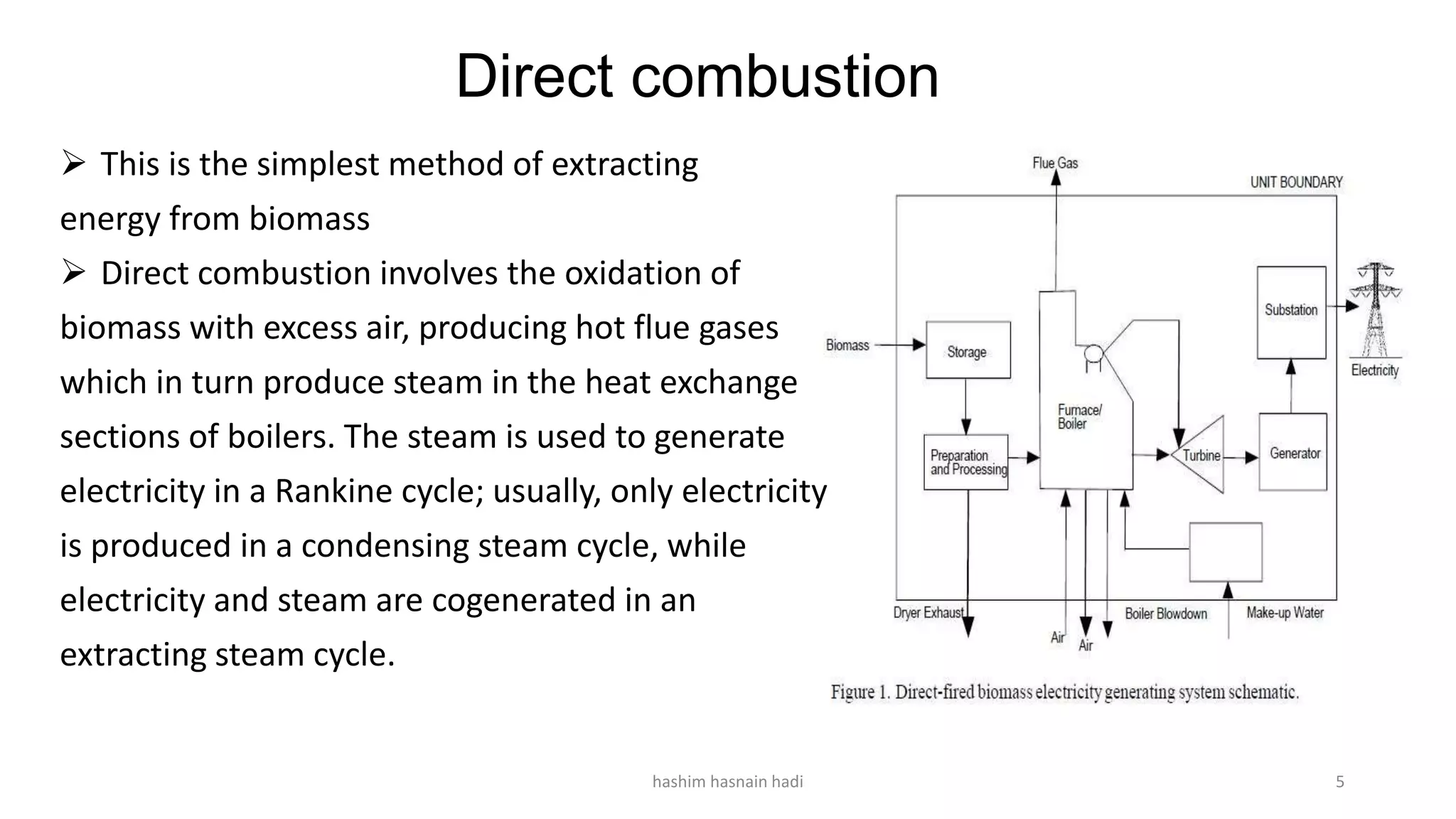
 This is the simplest method of extracting
energy from biomass
 Direct combustion involves the oxidation of
biomass with excess air, producing hot flue gases
which in turn produce steam in the heat exchange
sections of boilers. The steam is used to generate
electricity in a Rankine cycle; usually, only electricity
is produced in a condensing steam cycle, while
electricity and steam are cogenerated in an
extracting steam cycle.
hashim hasnain hadi 5
 Industrial biomass combustion facilities can burn many types of biomass fuel, including wood, agricultural
residues, wood pulping liquor, municipal solid waste (MSW) and refuse-derived fuel
CO-FIRING
 Co-firing is the simultaneous combustion of different fuels in the same
boiler
 Co-firing biomass at coal-fired power plants is very fruitful because biomass
fuels are sustainably grown, dedicated energy crops is viewed as a possible
option for reducing net emissions of carbon dioxide (CO2), Coupled with the
need of the industrial sector to dispose of biomass residues (generally clean
byproducts or remnants), biomass co-firing offers the potential for solving
multiple problems at potentially modest investment costs.
hashim hasnain hadi 6
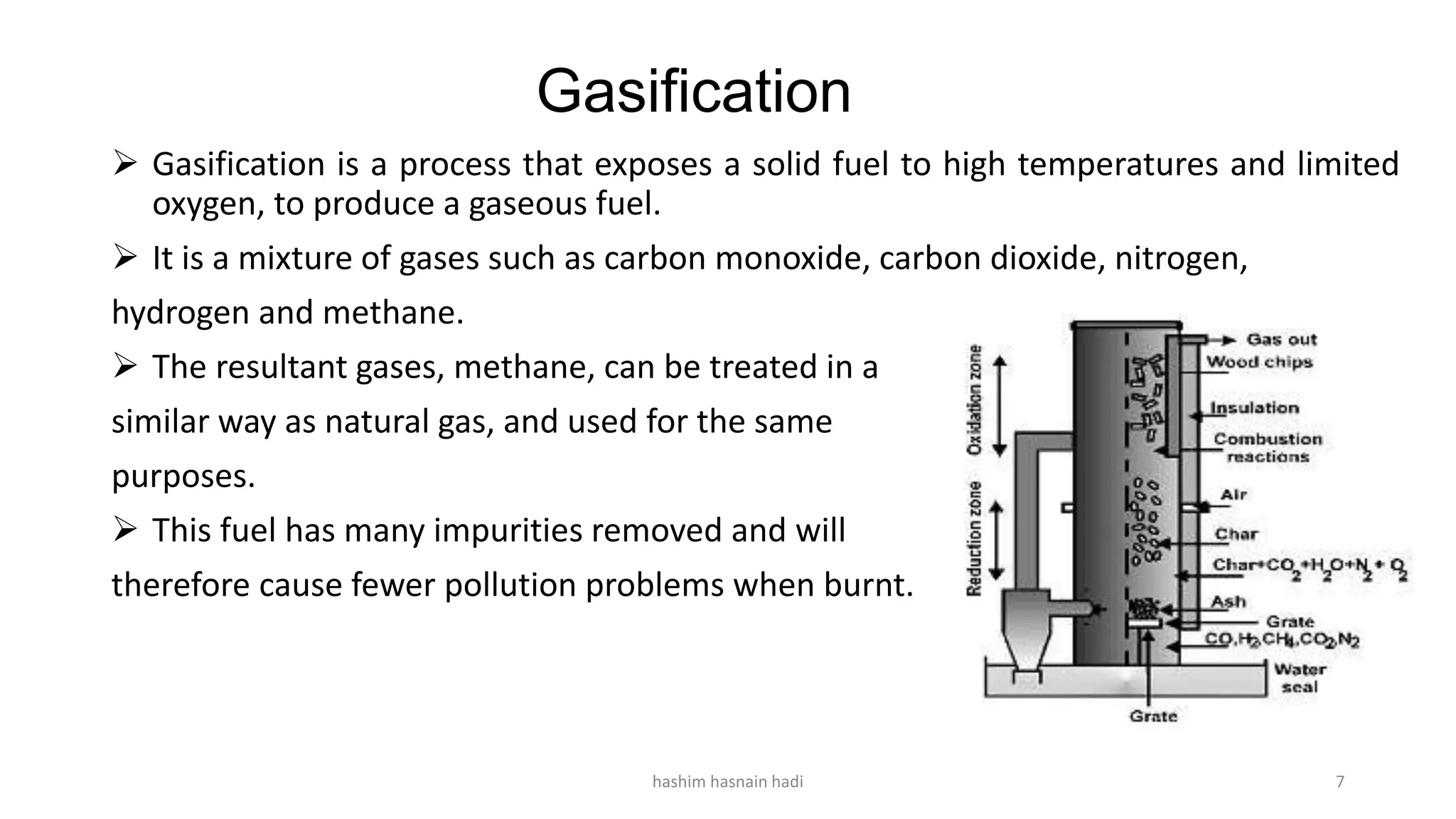
Gasification
 Gasification is a process that exposes a solid fuel to high temperatures and limited
oxygen, to produce a gaseous fuel.
 It is a mixture of gases such as carbon monoxide, carbon dioxide, nitrogen,
hydrogen and methane.
 The resultant gases, methane, can be treated in a
similar way as natural gas, and used for the same
purposes.
 This fuel has many impurities removed and will
therefore cause fewer pollution problems when burnt.
hashim hasnain hadi 7
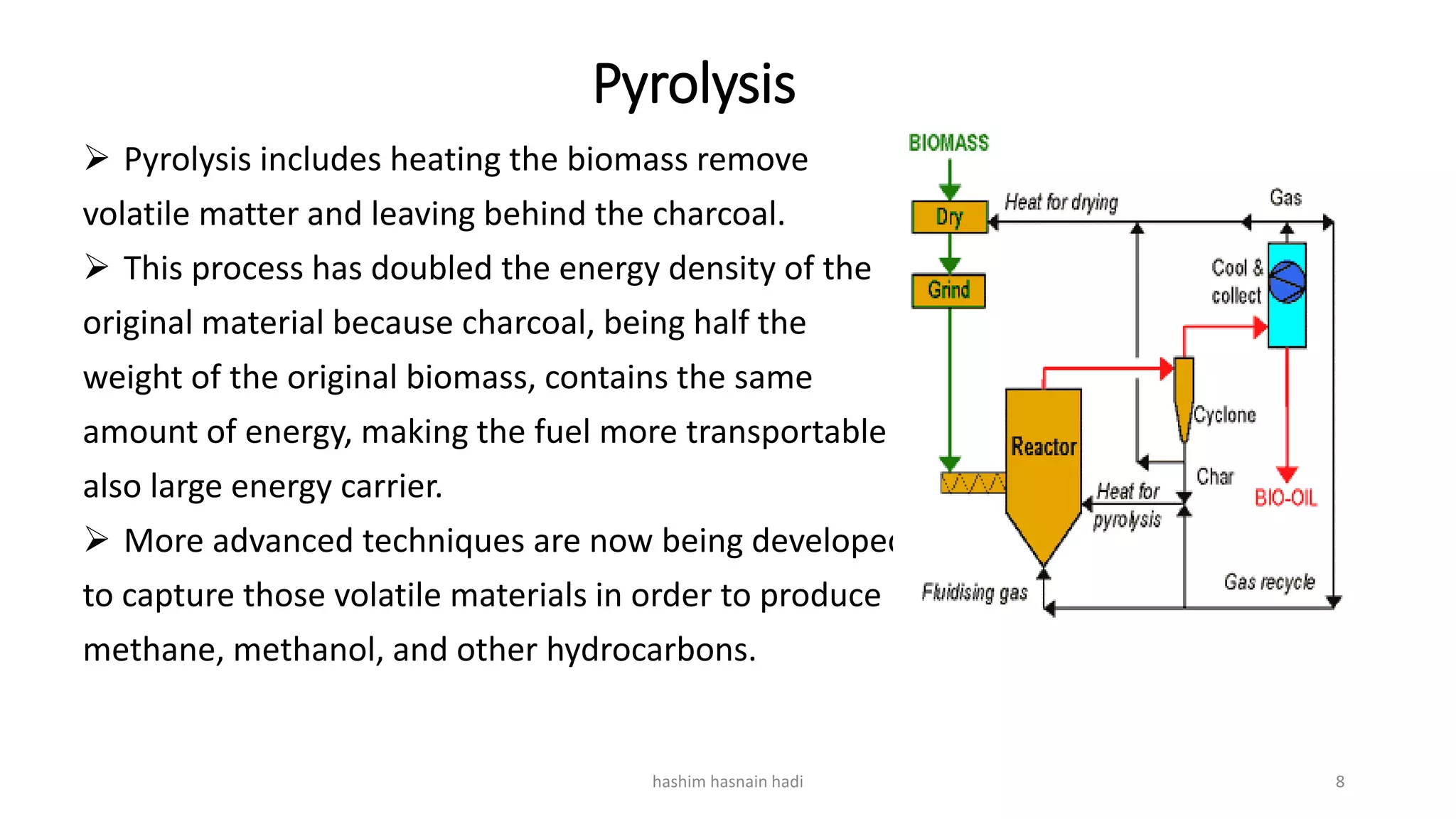
Pyrolysis
 Pyrolysis includes heating the biomass remove
volatile matter and leaving behind the charcoal.
 This process has doubled the energy density of the
original material because charcoal, being half the
weight of the original biomass, contains the same
amount of energy, making the fuel more transportable
also large energy carrier.
 More advanced techniques are now being developed
to capture those volatile materials in order to produce
methane, methanol, and other hydrocarbons.
hashim hasnain hadi 8
Anaerobic digestion
 works by utilizing anaerobic bacteria
 These microorganisms usually live at the bottom of swamps or in other places where there
is no air, consuming dead organic matter to produce methane and hydrogen
 Bacteria is put to work by feeding organic matter such as animal dung or human sewage
into tanks, called digesters, and adding bacteria, we collect the emitted gas to use as an
energy source. This process is a very efficient means of extracting usable energy from such
biomass
hashim hasnain hadi 9
Fermentation
 Yeasts and other microorganisms are used to ferment the sugar of various plants into
ethanol.
 Producing fuel from biomass by fermentation is just an extension of this process
 Ethanol is then mixed with diesel to produce diesehol, a product used by trucks and buses
hashim hasnain hadi 10
Advantages Of Using Biomass
 Biomass energy is an abundant, secure, environmental friendly, and renewable source
of energy. Biomass does not add carbon dioxide to the atmosphere as it absorbs the
same amount of carbon in growing as it releases when consumed as a fuel.
 It can be used to generate electricity with the same equipment or in the same power
plants that are now burning fossil fuels.
 Biomass energy is not associated with environmental impacts such as acid rain, mine
spoils, open pits, oil spills, radioactive waste disposal or the damming of rivers.
 Biomass fuels are sustainable. The green plants from which biomass fuels are derived
fix carbon dioxide as they grow, so their use does not add to the levels of atmospheric
carbon. In addition, using refuse as a fuel avoids polluting landfill disposal.
 Alcohols and other fuels produced by biomass are efficient, viable, and relatively clean
burning.
 Biomass is easily available and can be grown with relative ease in all parts of the world
many impurities removed and will therefore cause fewer pollution problems when
burnt.
hashim hasnain hadi 11
CONSTRAINTS Of Using Biomass
 Biomass is still an expensive source of energy, both in terms of producing biomass and
converting it into alcohols, as a very large quantity of biomass is needed.
 When plant and animal wastes are used as fuel, they cannot be added to the soil as
fertilizer. Soil without fertilizer is depleted of nutrients and produce fewer crops.
 Direct combustion of biomass can be harmful to the environment as burning biomass
releases carbon dioxide, which contributes to the warming of the atmosphere and possible
climatic change.
 Over-collecting wood can destroy forests. Soils bared of trees erode easily and do not hold
rainfall
hashim hasnain hadi 12

Renewable energy Lecture05 : Biomass Energy

  • 1.
    BIOMASS ENERGY PLANT OPERATION,USAGE AND ITS APPLICATIONS hashim hasnain hadi 1
  • 2.
    BIOMASS ENERGY Biomass isa term used to describe all organic matter produced by photosynthesis, existing on the earth’s surface. They include all water- and land-based vegetation and trees, and all waste biomass such as municipal solid waste (MSW), municipal bio solids (sewage), and animal wastes (manures), forestry and agricultural residues, and certain types of industrial wastes.  Biomass combustion supplies about 11% of the world’s total primary energy hashim hasnain hadi 2
  • 3.
    Application of BIOMASSENERGY  Heat for daily living use (stoves)  District heating  heat and electricity production for combined heat and power (CHP) for pulp and paper, forest industries, and sugarcane processing  Electric Power Production hashim hasnain hadi 3
  • 4.
    METHODS OF EXTRACTINGBIOMASS ENERGY Generally, the prominent biopower technologies are comprised of: Direct combustion Co-firing Gasification Pyrolysis Anaerobic digestion Fermentation hashim hasnain hadi 4
  • 5.
    Direct combustion  Thisis the simplest method of extracting energy from biomass  Direct combustion involves the oxidation of biomass with excess air, producing hot flue gases which in turn produce steam in the heat exchange sections of boilers. The steam is used to generate electricity in a Rankine cycle; usually, only electricity is produced in a condensing steam cycle, while electricity and steam are cogenerated in an extracting steam cycle. hashim hasnain hadi 5
  • 6.
     Industrial biomasscombustion facilities can burn many types of biomass fuel, including wood, agricultural residues, wood pulping liquor, municipal solid waste (MSW) and refuse-derived fuel CO-FIRING  Co-firing is the simultaneous combustion of different fuels in the same boiler  Co-firing biomass at coal-fired power plants is very fruitful because biomass fuels are sustainably grown, dedicated energy crops is viewed as a possible option for reducing net emissions of carbon dioxide (CO2), Coupled with the need of the industrial sector to dispose of biomass residues (generally clean byproducts or remnants), biomass co-firing offers the potential for solving multiple problems at potentially modest investment costs. hashim hasnain hadi 6
  • 7.
    Gasification  Gasification isa process that exposes a solid fuel to high temperatures and limited oxygen, to produce a gaseous fuel.  It is a mixture of gases such as carbon monoxide, carbon dioxide, nitrogen, hydrogen and methane.  The resultant gases, methane, can be treated in a similar way as natural gas, and used for the same purposes.  This fuel has many impurities removed and will therefore cause fewer pollution problems when burnt. hashim hasnain hadi 7
  • 8.
    Pyrolysis  Pyrolysis includesheating the biomass remove volatile matter and leaving behind the charcoal.  This process has doubled the energy density of the original material because charcoal, being half the weight of the original biomass, contains the same amount of energy, making the fuel more transportable also large energy carrier.  More advanced techniques are now being developed to capture those volatile materials in order to produce methane, methanol, and other hydrocarbons. hashim hasnain hadi 8
  • 9.
    Anaerobic digestion  worksby utilizing anaerobic bacteria  These microorganisms usually live at the bottom of swamps or in other places where there is no air, consuming dead organic matter to produce methane and hydrogen  Bacteria is put to work by feeding organic matter such as animal dung or human sewage into tanks, called digesters, and adding bacteria, we collect the emitted gas to use as an energy source. This process is a very efficient means of extracting usable energy from such biomass hashim hasnain hadi 9
  • 10.
    Fermentation  Yeasts andother microorganisms are used to ferment the sugar of various plants into ethanol.  Producing fuel from biomass by fermentation is just an extension of this process  Ethanol is then mixed with diesel to produce diesehol, a product used by trucks and buses hashim hasnain hadi 10
  • 11.
    Advantages Of UsingBiomass  Biomass energy is an abundant, secure, environmental friendly, and renewable source of energy. Biomass does not add carbon dioxide to the atmosphere as it absorbs the same amount of carbon in growing as it releases when consumed as a fuel.  It can be used to generate electricity with the same equipment or in the same power plants that are now burning fossil fuels.  Biomass energy is not associated with environmental impacts such as acid rain, mine spoils, open pits, oil spills, radioactive waste disposal or the damming of rivers.  Biomass fuels are sustainable. The green plants from which biomass fuels are derived fix carbon dioxide as they grow, so their use does not add to the levels of atmospheric carbon. In addition, using refuse as a fuel avoids polluting landfill disposal.  Alcohols and other fuels produced by biomass are efficient, viable, and relatively clean burning.  Biomass is easily available and can be grown with relative ease in all parts of the world many impurities removed and will therefore cause fewer pollution problems when burnt. hashim hasnain hadi 11
  • 12.
    CONSTRAINTS Of UsingBiomass  Biomass is still an expensive source of energy, both in terms of producing biomass and converting it into alcohols, as a very large quantity of biomass is needed.  When plant and animal wastes are used as fuel, they cannot be added to the soil as fertilizer. Soil without fertilizer is depleted of nutrients and produce fewer crops.  Direct combustion of biomass can be harmful to the environment as burning biomass releases carbon dioxide, which contributes to the warming of the atmosphere and possible climatic change.  Over-collecting wood can destroy forests. Soils bared of trees erode easily and do not hold rainfall hashim hasnain hadi 12