Microteaching & Supervision
How Supervision can Improve Microteaching
Mahmudul Hassan
ID: 1163049
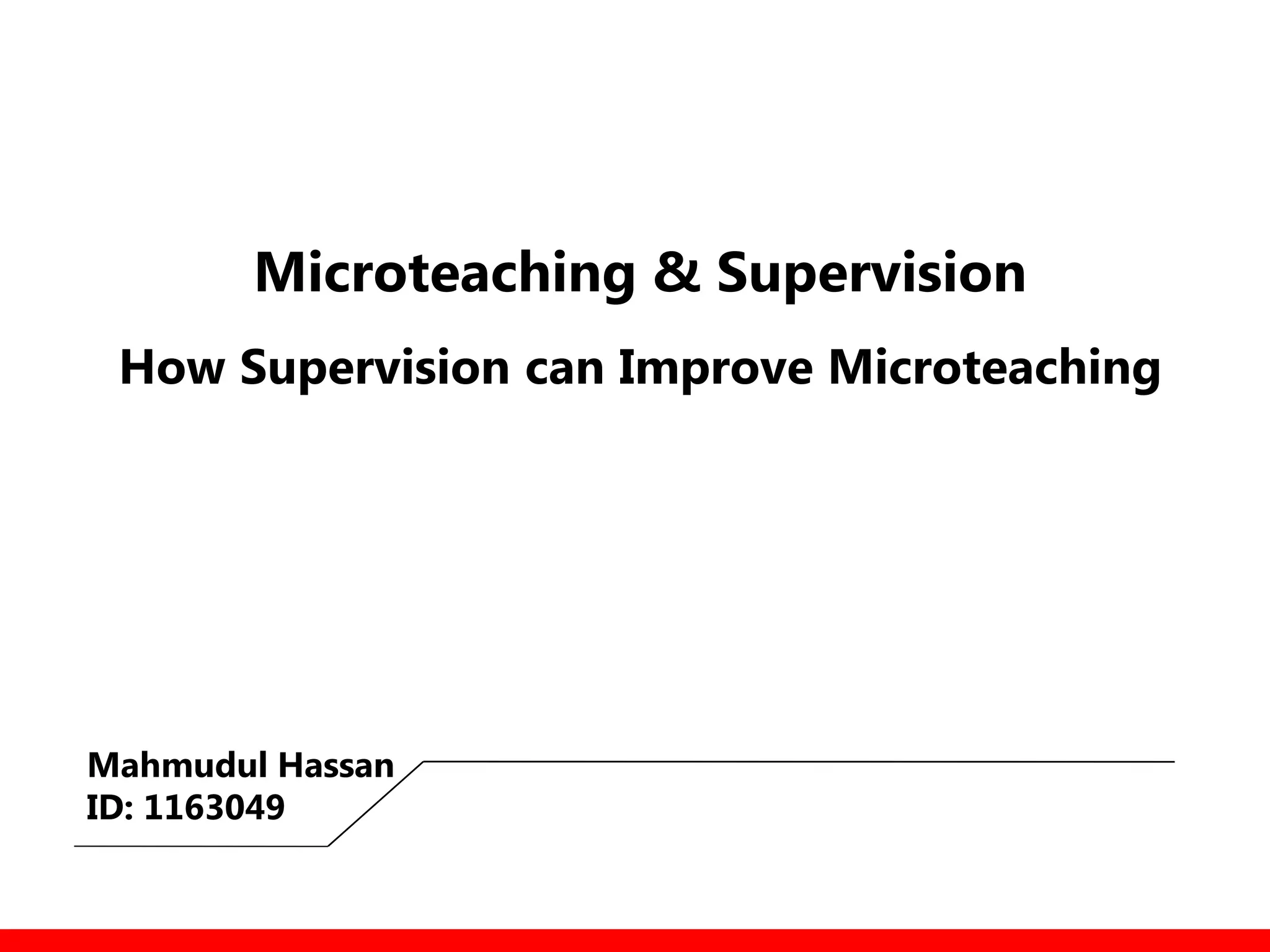
Microteaching
• Microteaching is an innovative approach-
• Can be proved valuable in student teaching.
• Teacher training and faculty development technique
• Used for developing educators in all forms of education
Microteaching is a scaled down controlled teaching encounter used to
provide introductory teaching experiences, in service teaching, or
controlled environment for research. It helps the trainee teachers develop
performance skills and the application of their knowledge to the
improvement of pupil learning. -L.B. Beltran (2002)
• Trainee teachers practice teaching with-
a reduced number of students
in a reduced period of time
focusing on specific teaching skills
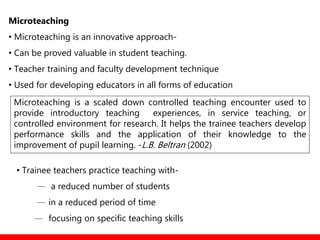
Supervision
• Is an act or Instance of directing, managing or oversight.
• Supervisor has the duty of monitoring and improving the quality of
teaching.
• “Teaching” done by others in a given educational situation.
• Teacher trainers are considered as supervisors
• Supervision can be (1) General supervision and (2) Clinical supervision
General supervision
• Administrative aspects of supervision.
• “Out of Class” Supervision.
• Concerned with issues such as curriculum, syllabus and the overall
management structure of education.
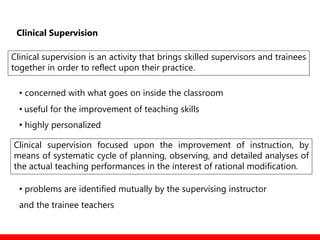
Clinical Supervision
Clinical supervision is an activity that brings skilled supervisors and trainees
together in order to reflect upon their practice.
• concerned with what goes on inside the classroom
• useful for the improvement of teaching skills
• highly personalized
• problems are identified mutually by the supervising instructor
and the trainee teachers
Clinical supervision focused upon the improvement of instruction, by
means of systematic cycle of planning, observing, and detailed analyses of
the actual teaching performances in the interest of rational modification.
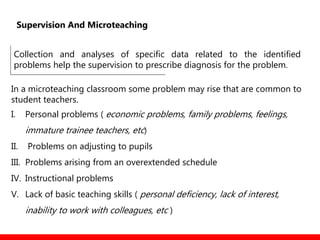
Collection and analyses of specific data related to the identified
problems help the supervision to prescribe diagnosis for the problem.
In a microteaching classroom some problem may rise that are common to
student teachers.
I. Personal problems ( economic problems, family problems, feelings,
immature trainee teachers, etc)
II. Problems on adjusting to pupils
III. Problems arising from an overextended schedule
IV. Instructional problems
V. Lack of basic teaching skills ( personal deficiency, lack of interest,
inability to work with colleagues, etc )
Supervision And Microteaching
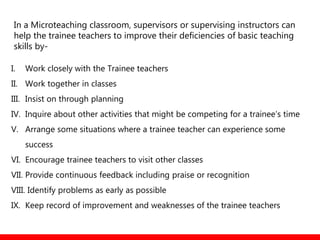
In a Microteaching classroom, supervisors or supervising instructors can
help the trainee teachers to improve their deficiencies of basic teaching
skills by-
I. Work closely with the Trainee teachers
II. Work together in classes
III. Insist on through planning
IV. Inquire about other activities that might be competing for a trainee’s time
V. Arrange some situations where a trainee teacher can experience some
success
VI. Encourage trainee teachers to visit other classes
VII. Provide continuous feedback including praise or recognition
VIII. Identify problems as early as possible
IX. Keep record of improvement and weaknesses of the trainee teachers

Microteaching & Supervision

  • 1.
    Microteaching & Supervision HowSupervision can Improve Microteaching Mahmudul Hassan ID: 1163049
  • 2.
    Microteaching • Microteaching isan innovative approach- • Can be proved valuable in student teaching. • Teacher training and faculty development technique • Used for developing educators in all forms of education Microteaching is a scaled down controlled teaching encounter used to provide introductory teaching experiences, in service teaching, or controlled environment for research. It helps the trainee teachers develop performance skills and the application of their knowledge to the improvement of pupil learning. -L.B. Beltran (2002) • Trainee teachers practice teaching with- a reduced number of students in a reduced period of time focusing on specific teaching skills
  • 3.
    Supervision • Is anact or Instance of directing, managing or oversight. • Supervisor has the duty of monitoring and improving the quality of teaching. • “Teaching” done by others in a given educational situation. • Teacher trainers are considered as supervisors • Supervision can be (1) General supervision and (2) Clinical supervision General supervision • Administrative aspects of supervision. • “Out of Class” Supervision. • Concerned with issues such as curriculum, syllabus and the overall management structure of education.
  • 4.
    Clinical Supervision Clinical supervisionis an activity that brings skilled supervisors and trainees together in order to reflect upon their practice. • concerned with what goes on inside the classroom • useful for the improvement of teaching skills • highly personalized • problems are identified mutually by the supervising instructor and the trainee teachers Clinical supervision focused upon the improvement of instruction, by means of systematic cycle of planning, observing, and detailed analyses of the actual teaching performances in the interest of rational modification.
  • 5.
    Collection and analysesof specific data related to the identified problems help the supervision to prescribe diagnosis for the problem. In a microteaching classroom some problem may rise that are common to student teachers. I. Personal problems ( economic problems, family problems, feelings, immature trainee teachers, etc) II. Problems on adjusting to pupils III. Problems arising from an overextended schedule IV. Instructional problems V. Lack of basic teaching skills ( personal deficiency, lack of interest, inability to work with colleagues, etc ) Supervision And Microteaching
  • 6.
    In a Microteachingclassroom, supervisors or supervising instructors can help the trainee teachers to improve their deficiencies of basic teaching skills by- I. Work closely with the Trainee teachers II. Work together in classes III. Insist on through planning IV. Inquire about other activities that might be competing for a trainee’s time V. Arrange some situations where a trainee teacher can experience some success VI. Encourage trainee teachers to visit other classes VII. Provide continuous feedback including praise or recognition VIII. Identify problems as early as possible IX. Keep record of improvement and weaknesses of the trainee teachers