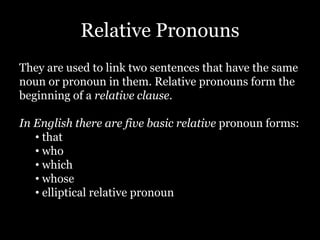
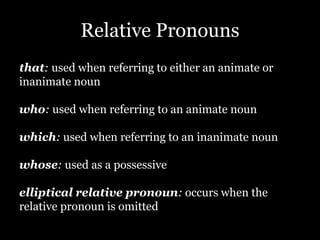
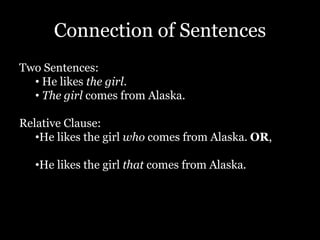
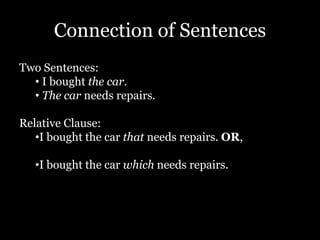
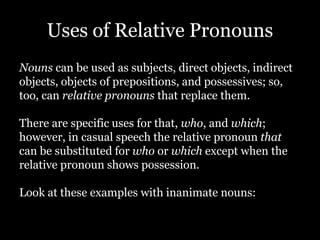
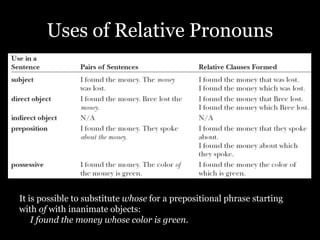
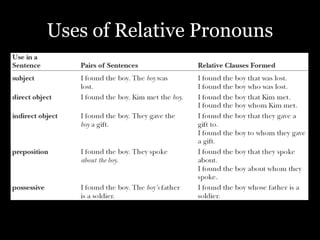
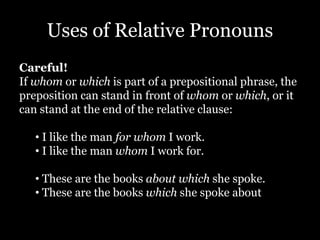
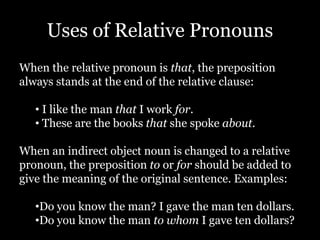
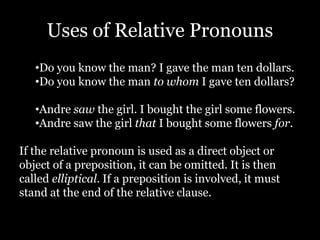
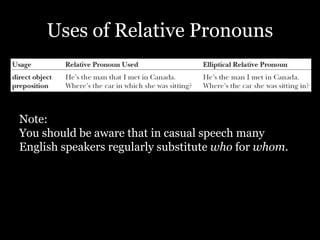
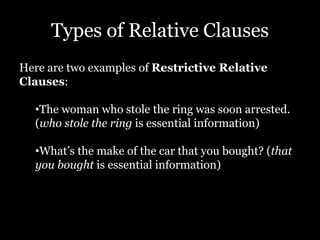
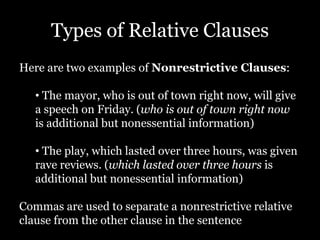
Relative pronouns are used to link two sentences that share a noun or pronoun. There are five basic relative pronouns in English: that, who, which, whose, and the elliptical form. Relative pronouns replace nouns in a second, relative clause and have specific uses depending on if the antecedent is animate or inanimate. Relative clauses can be restrictive or nonrestrictive, with restrictive clauses providing essential information and nonrestrictive clauses giving additional, nonessential details.