Download as PPS, PPTX
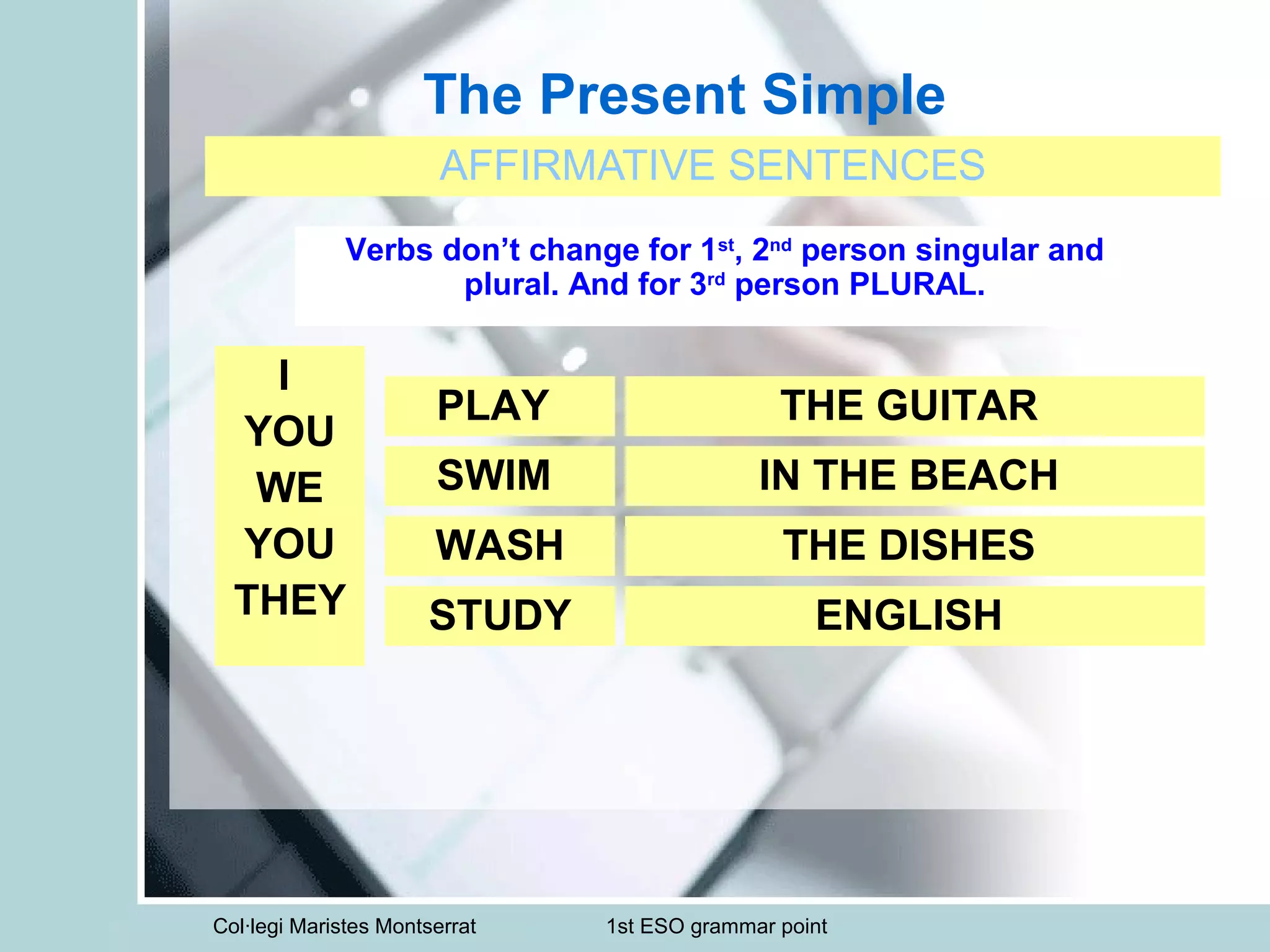
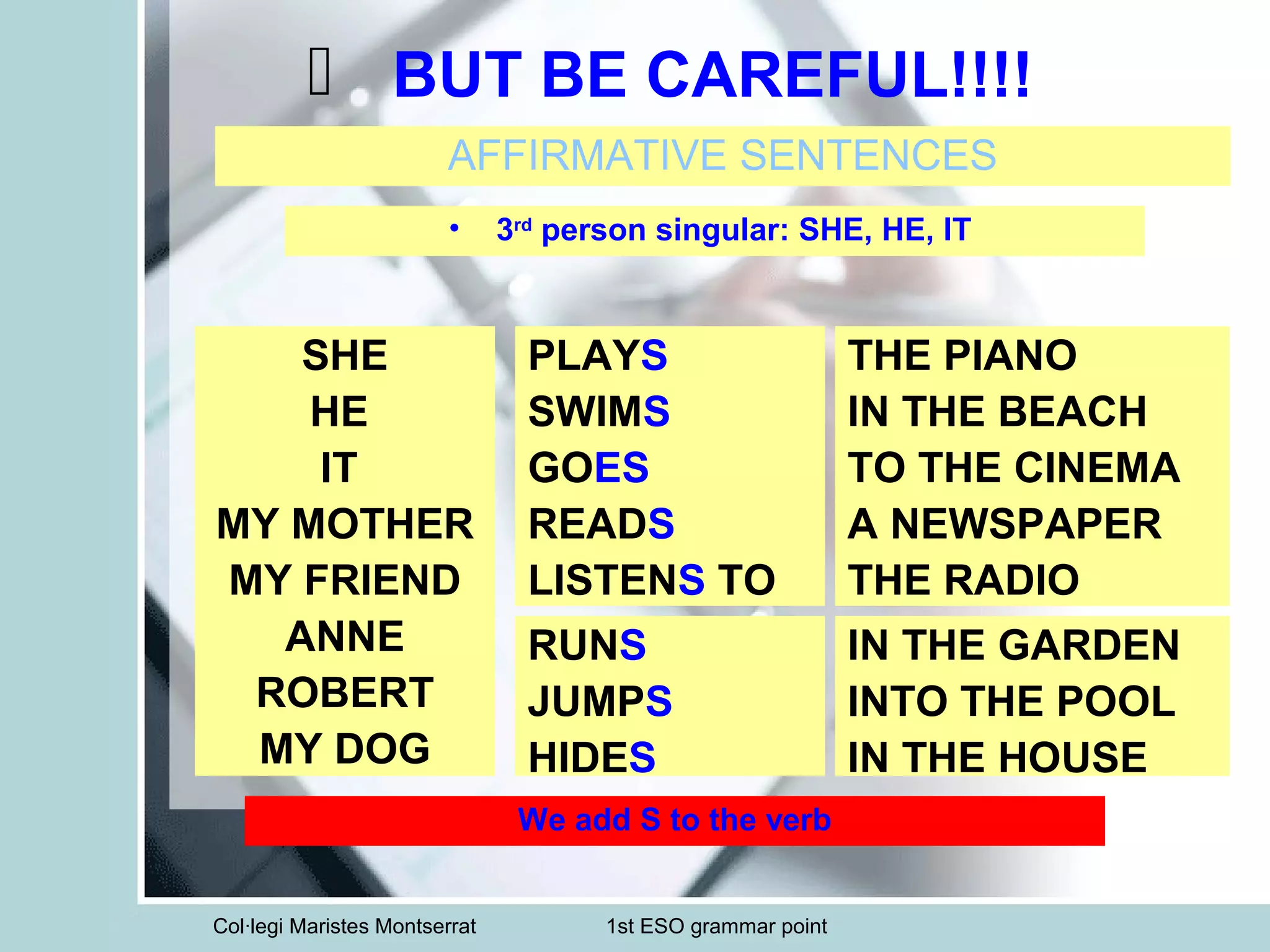
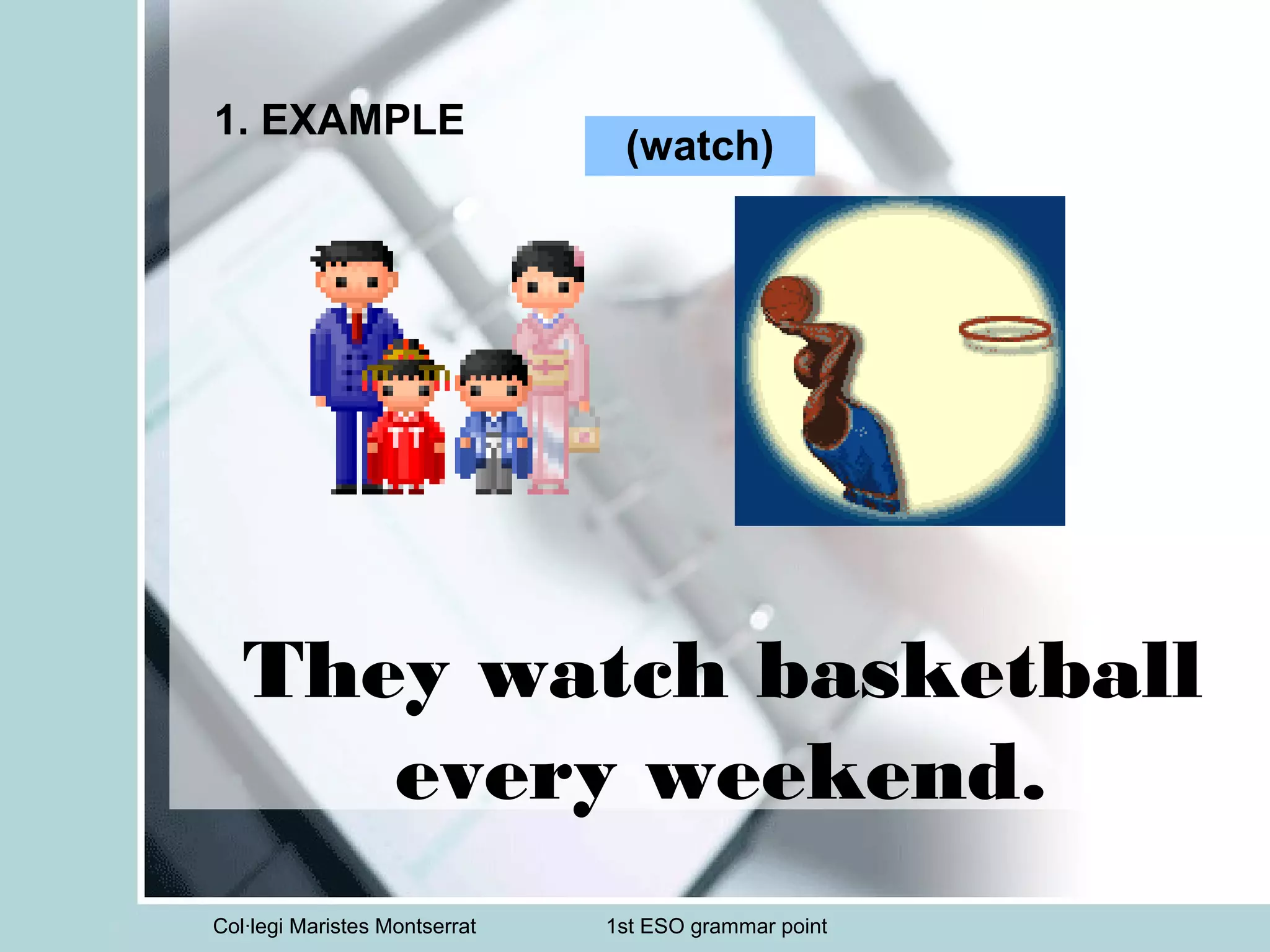
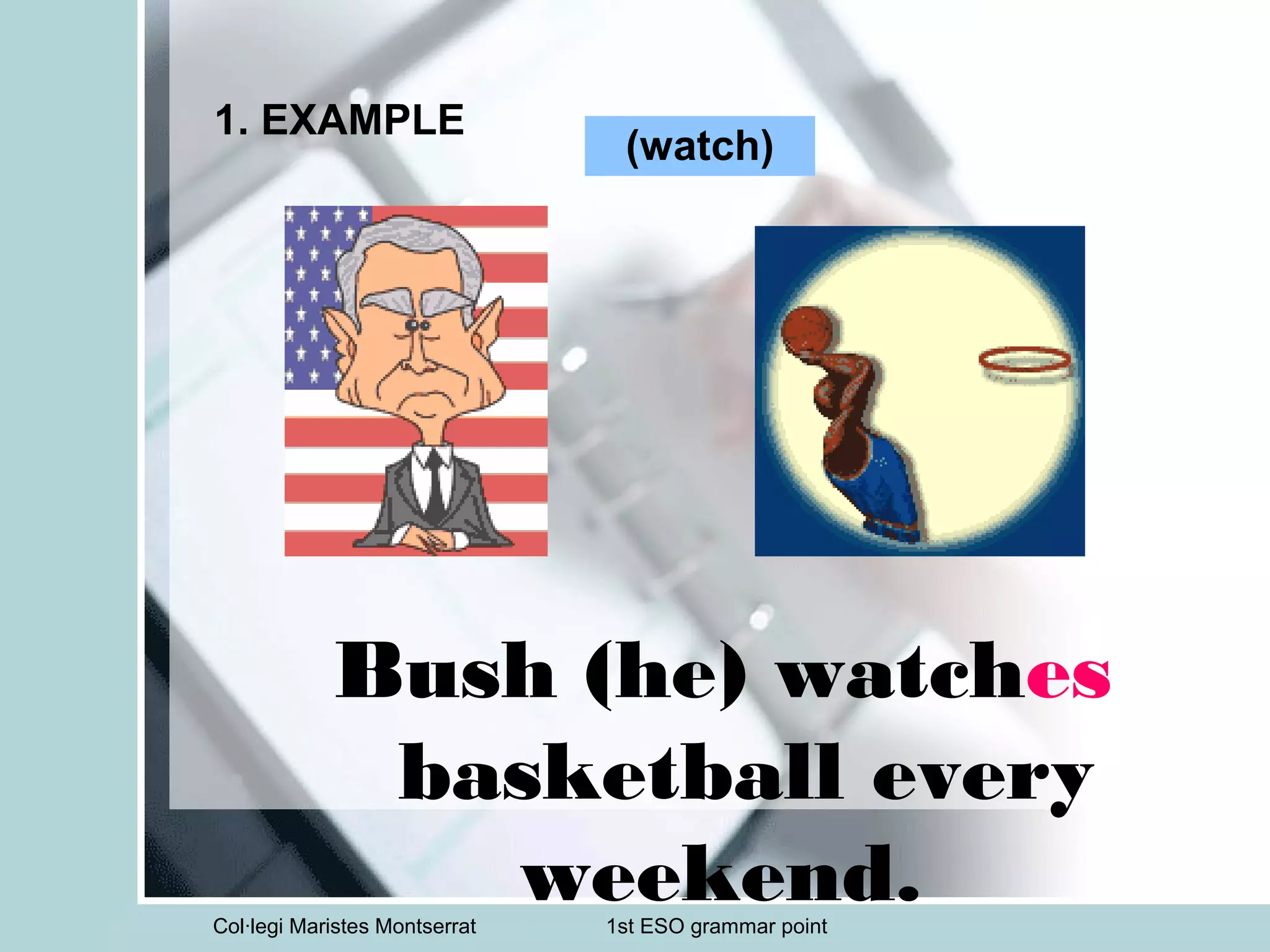
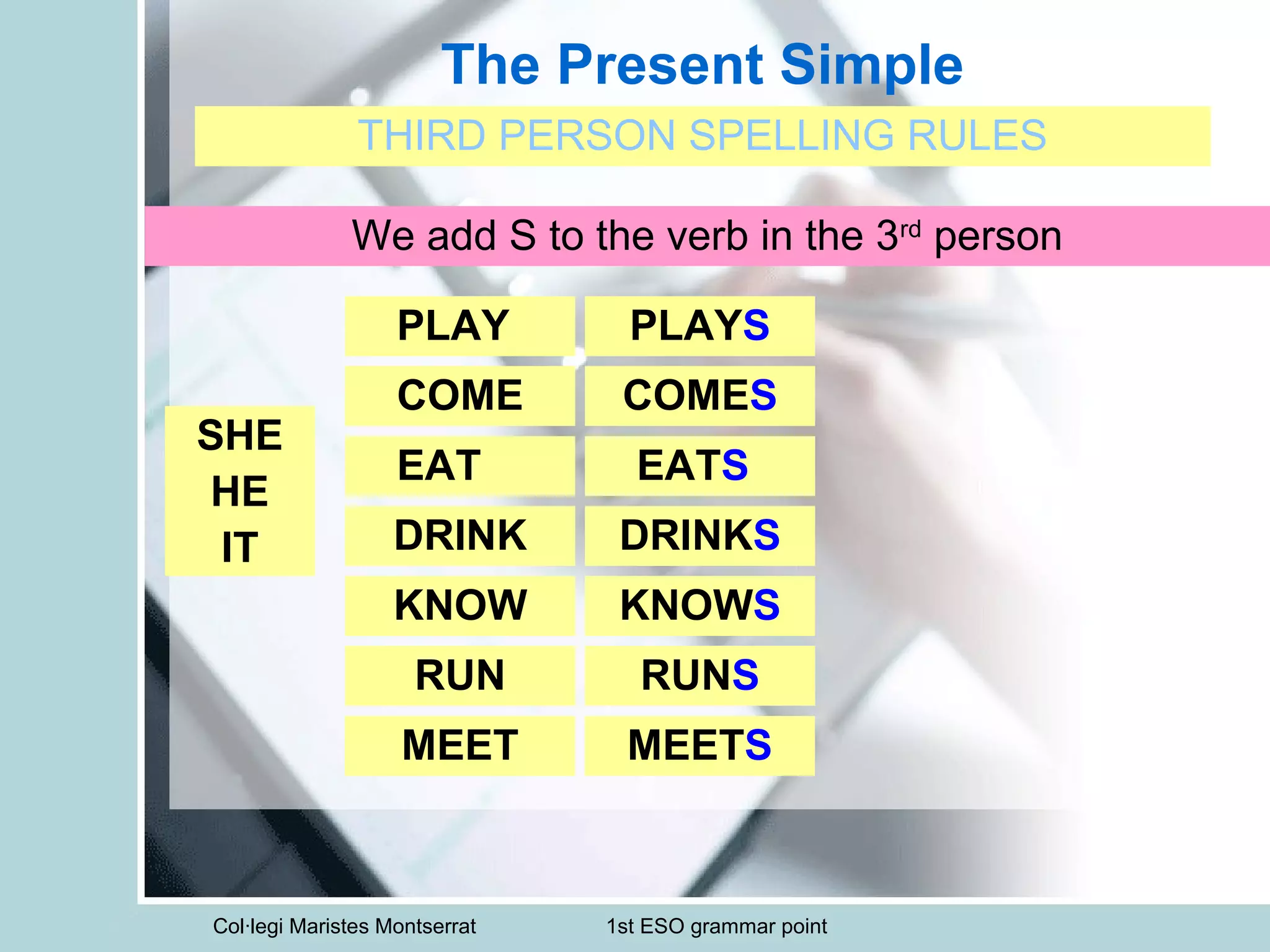
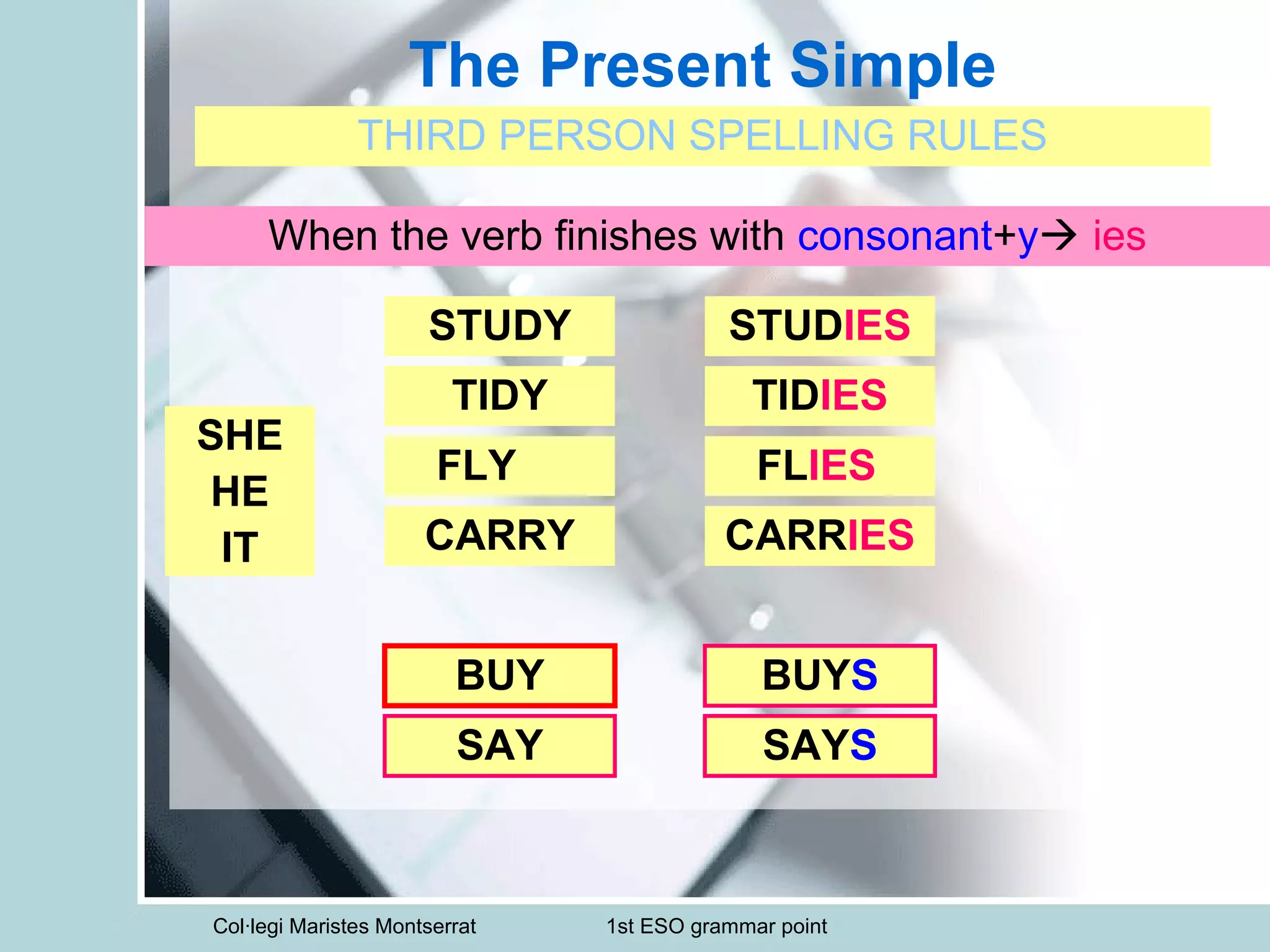
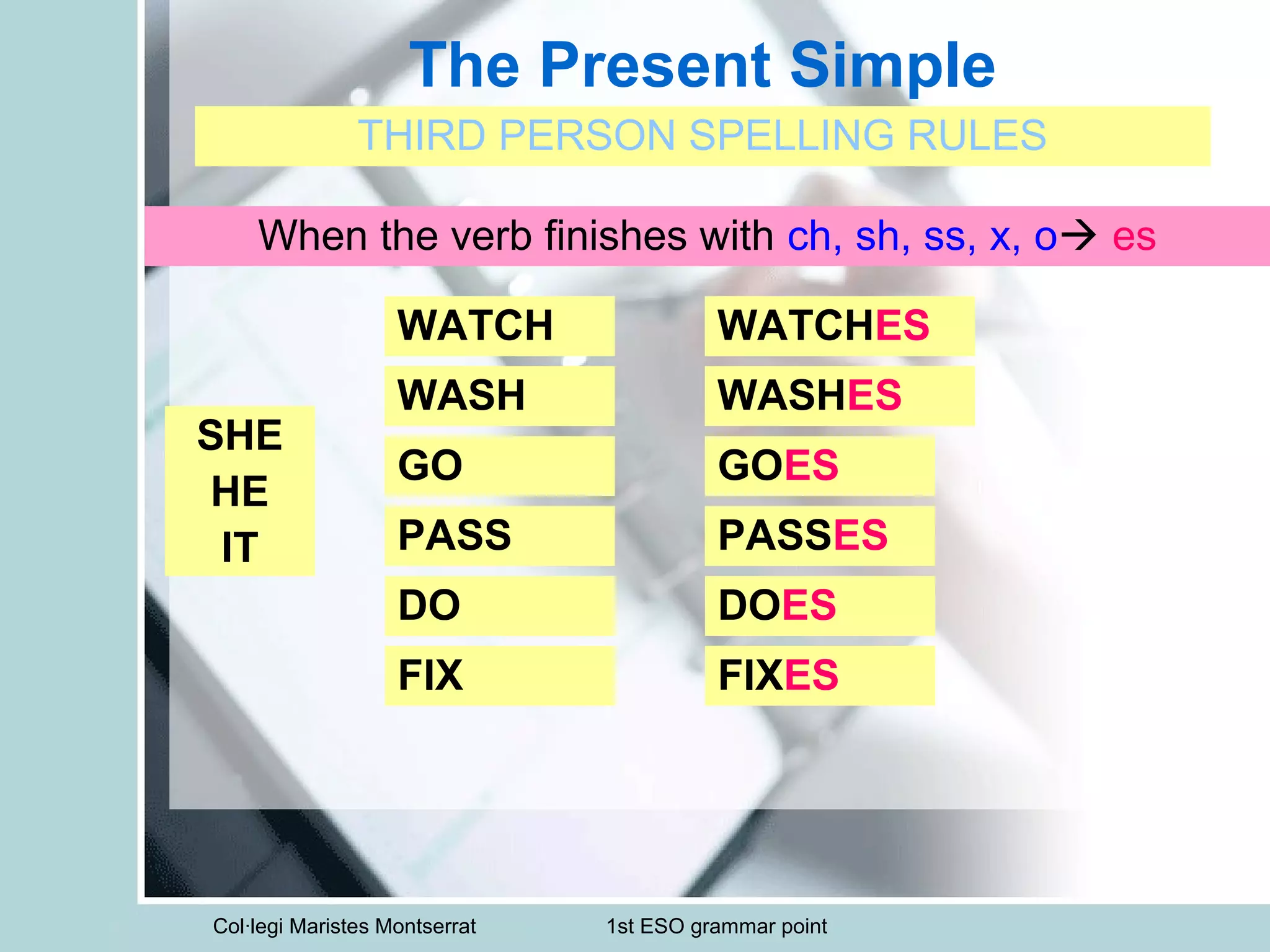
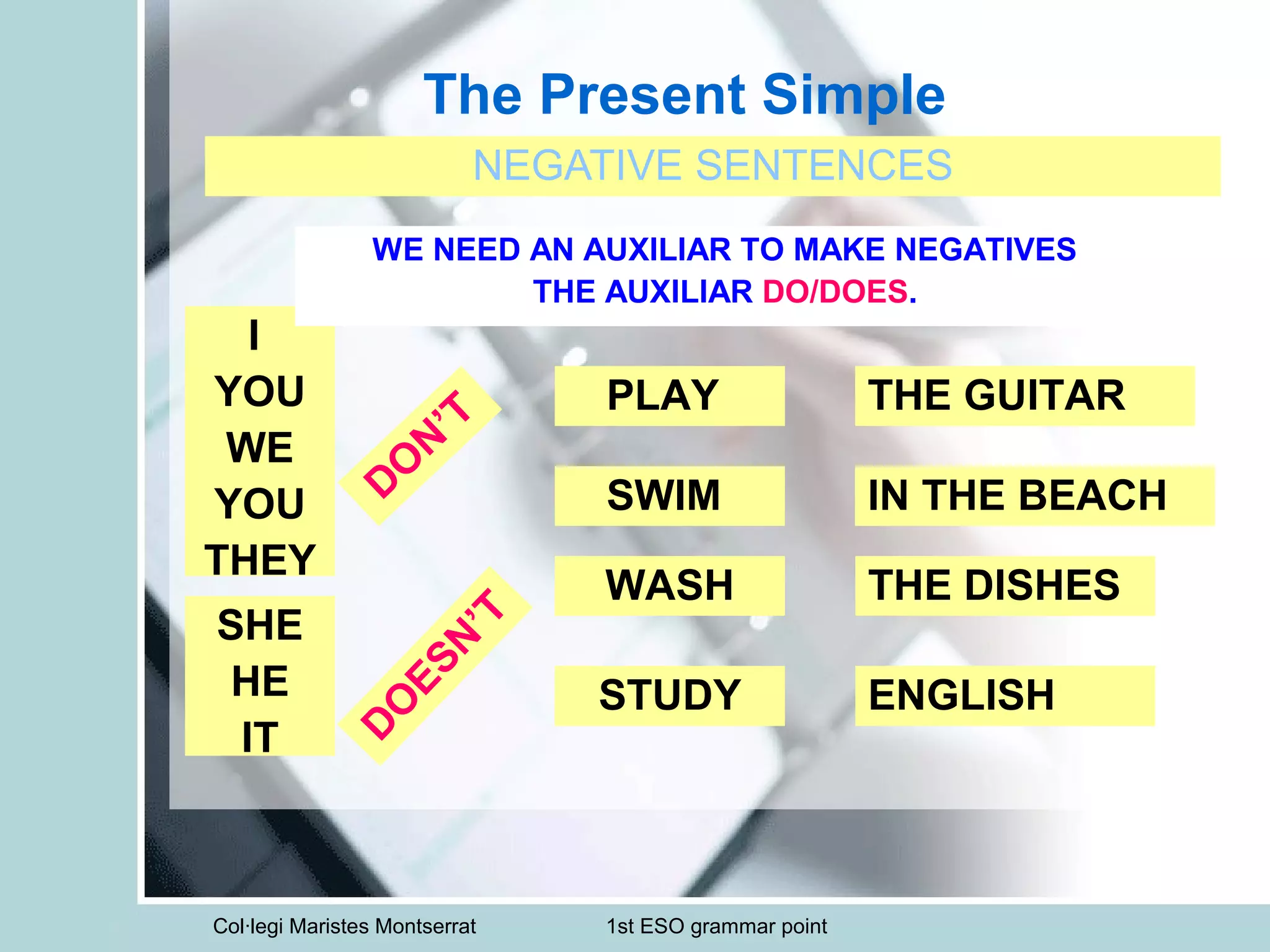
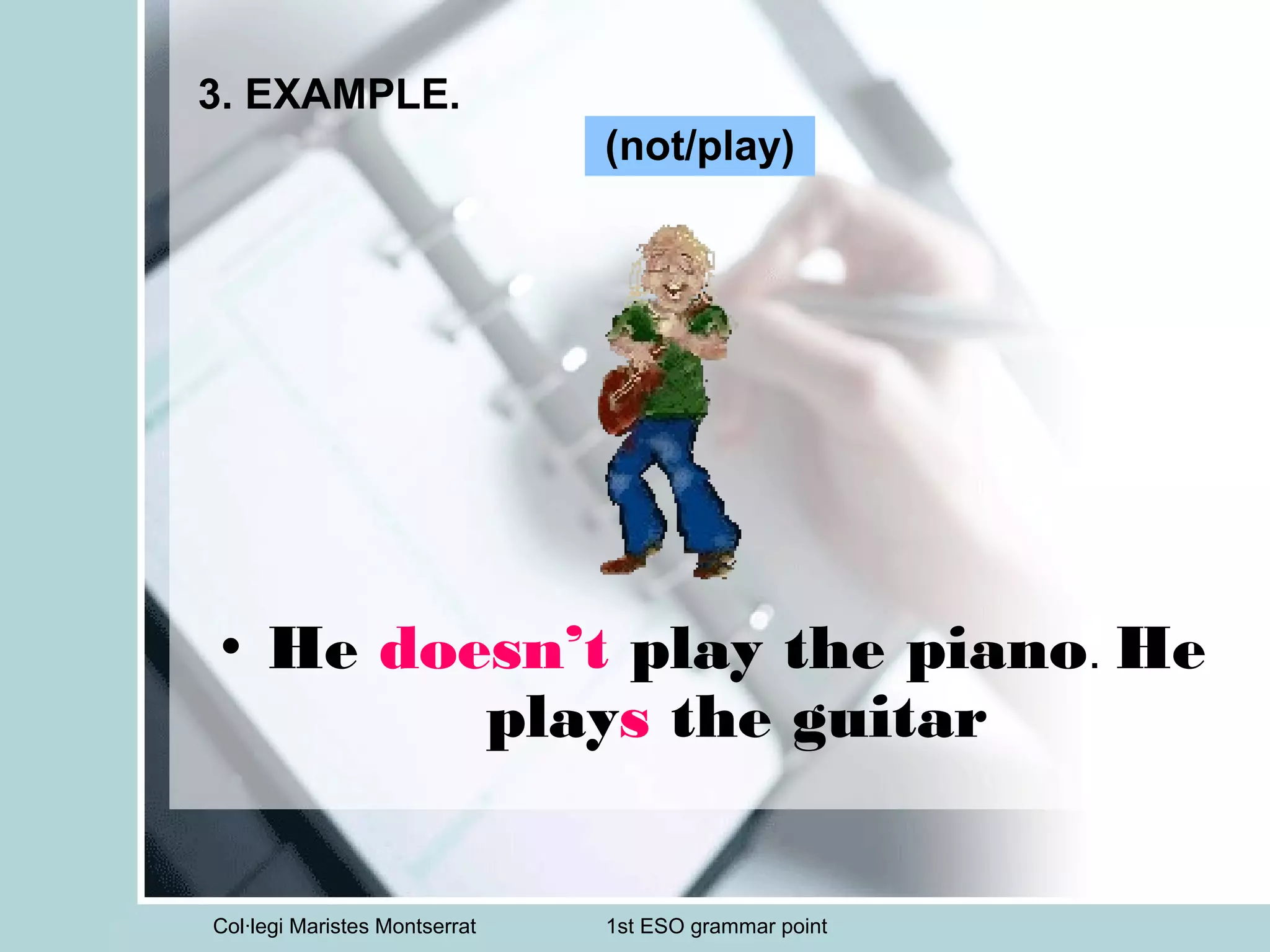
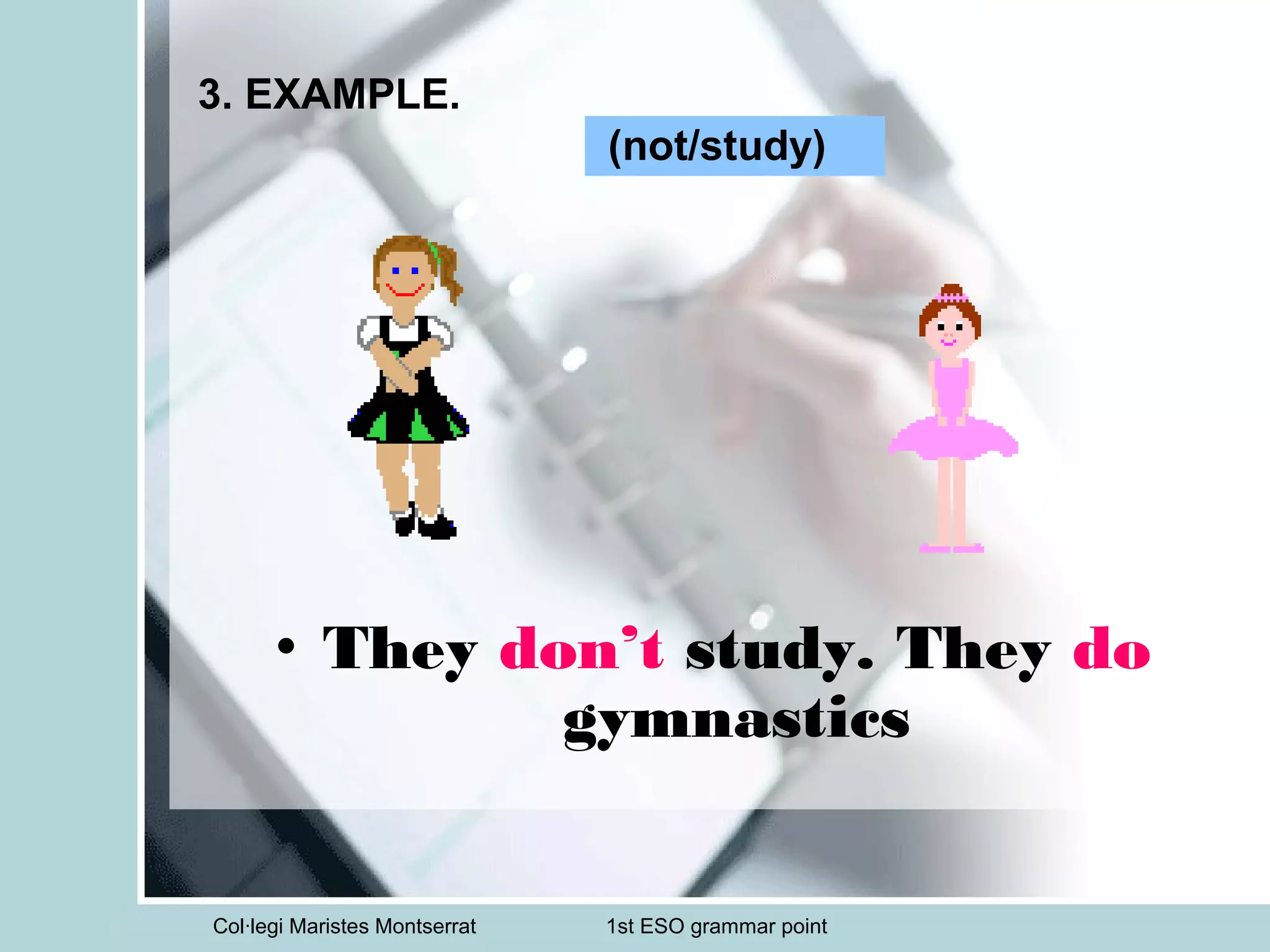
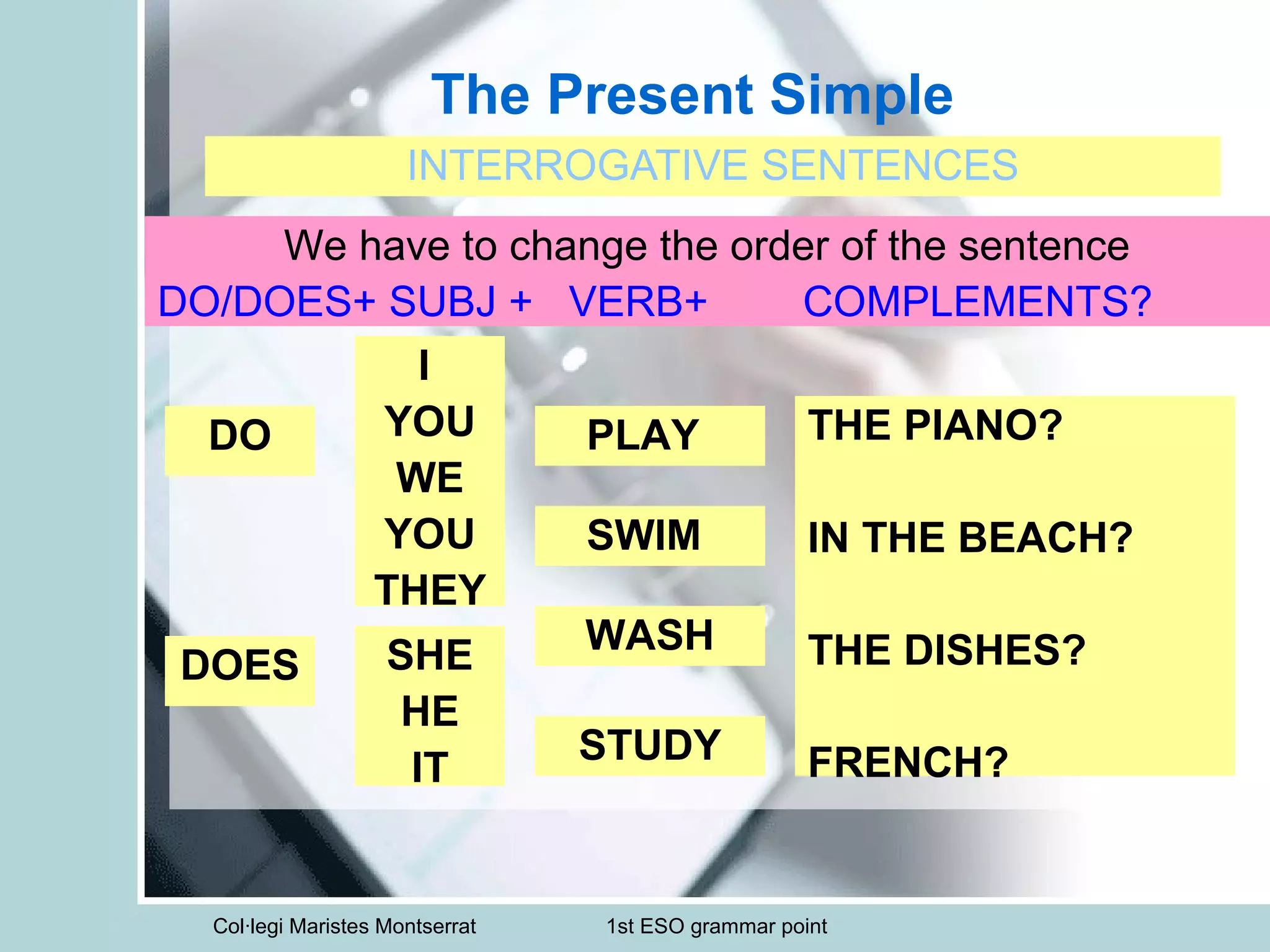
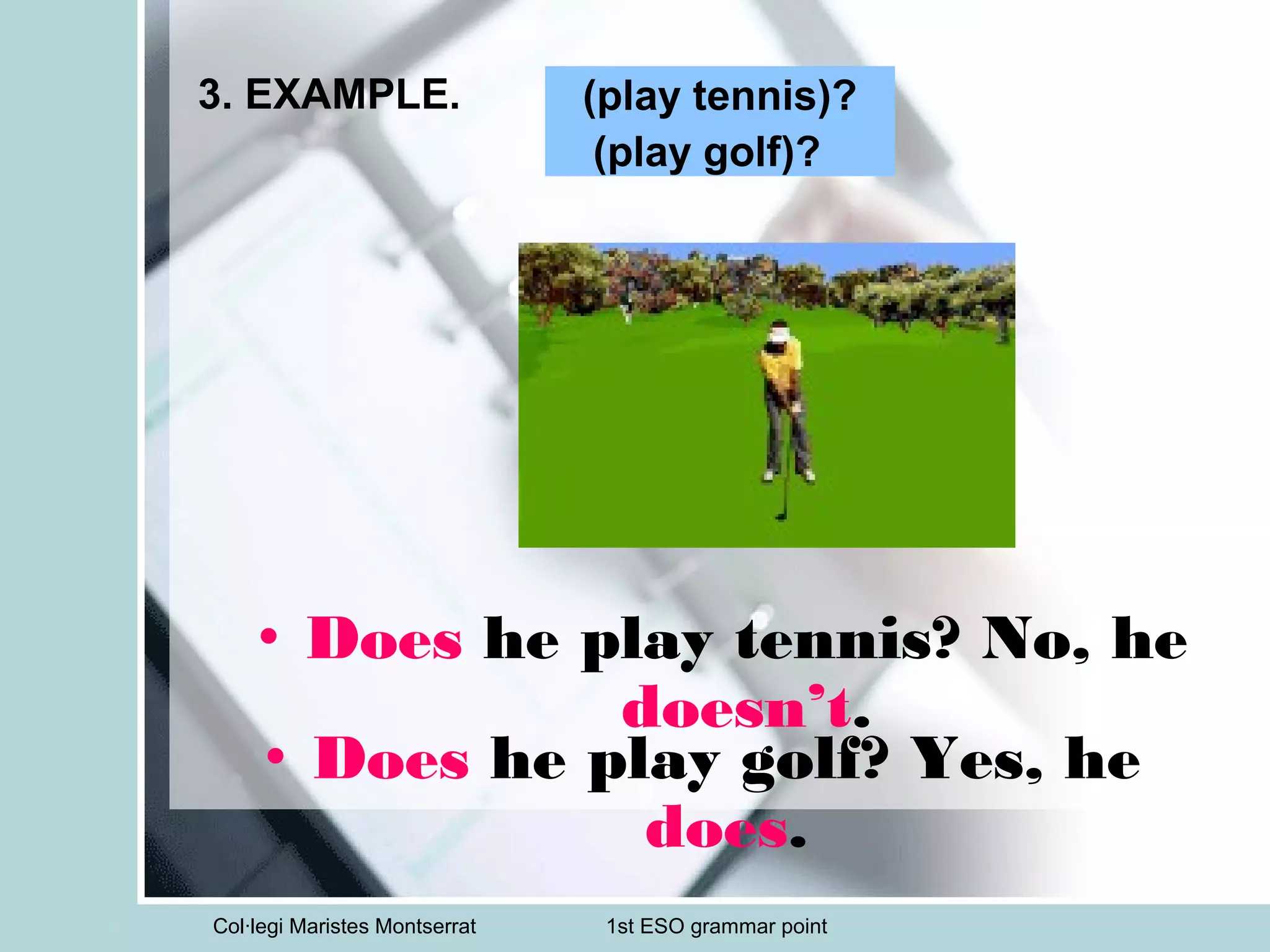
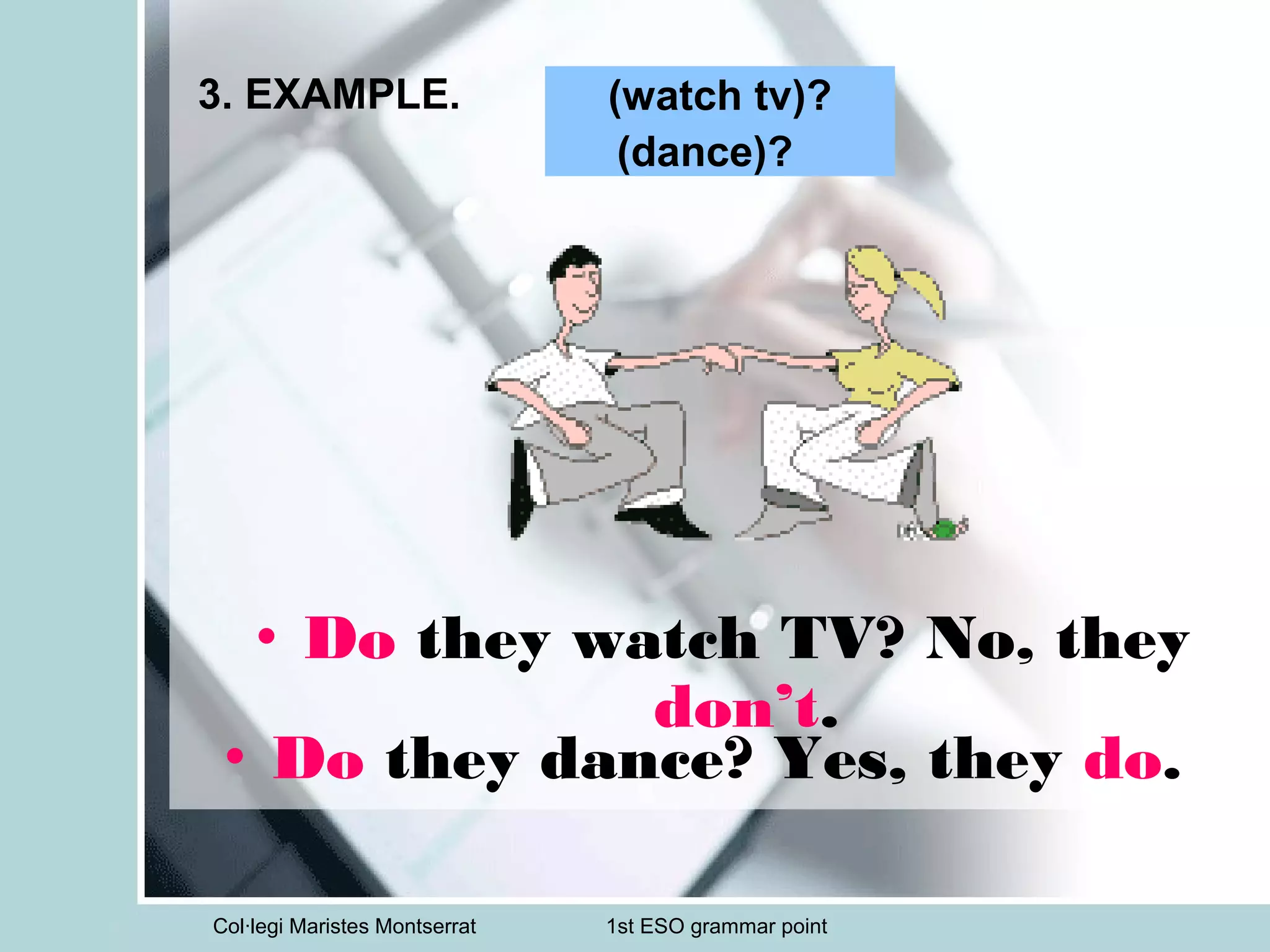
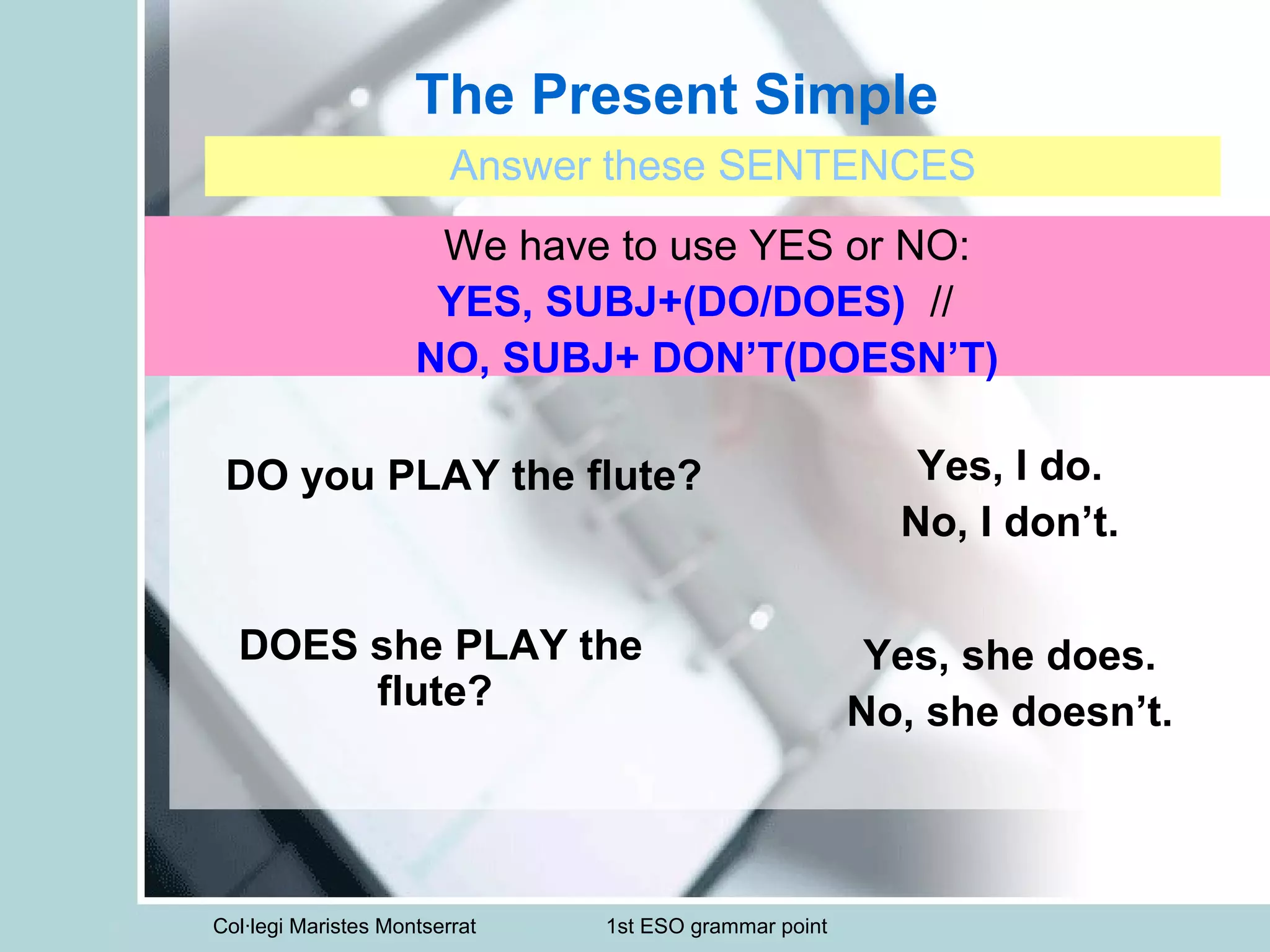
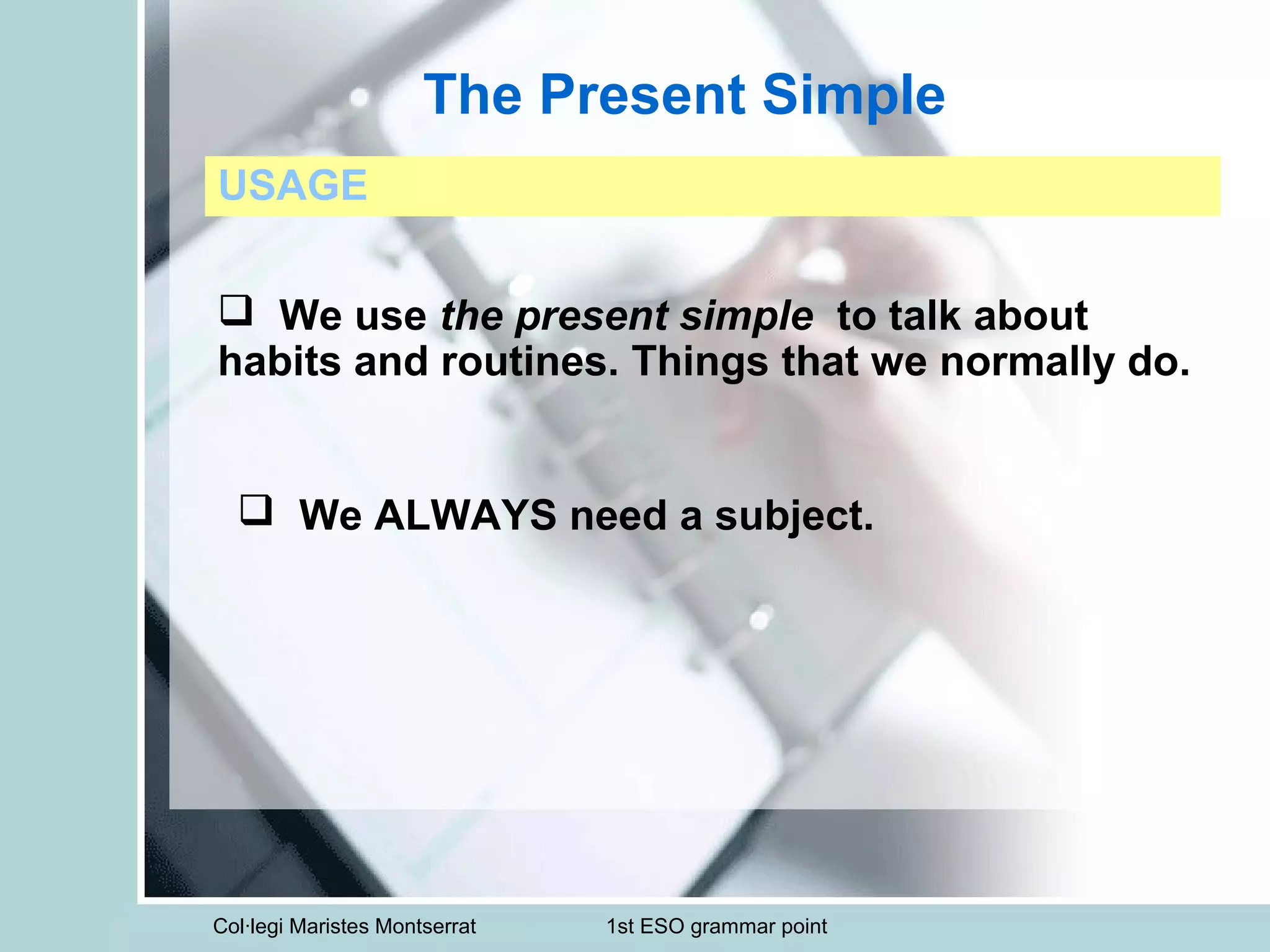
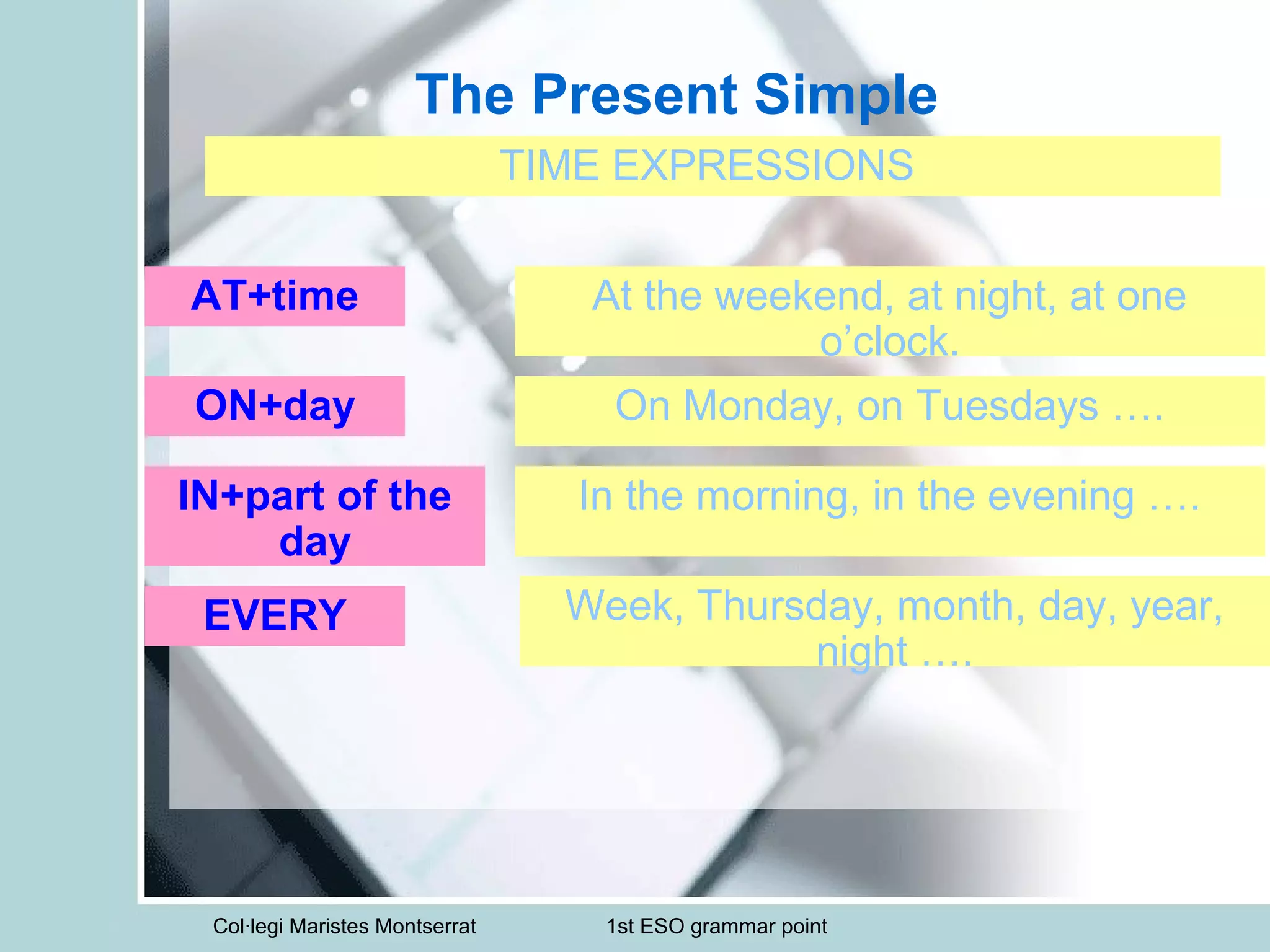
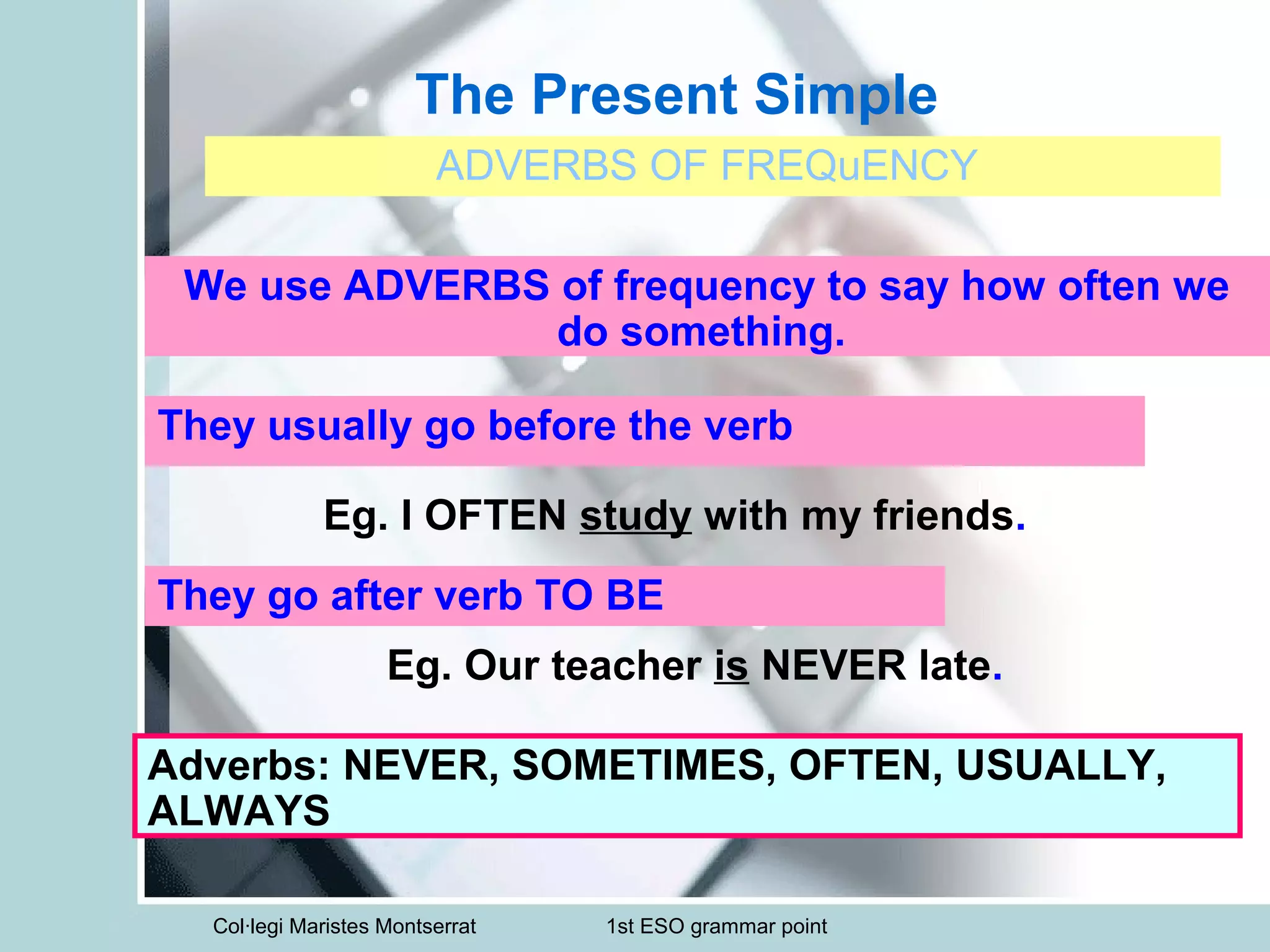

This document provides information about using the present simple tense in English. It discusses the affirmative, negative, and interrogative forms. For the third person singular, verbs typically add 's' except when the verb ends in 'y', 'ch', 'sh', 'ss', 'x' or 'o' where they add 'es' instead. Examples are given of affirmative, negative, and interrogative sentences. The present simple is used to discuss habits and routines, and it can be used with time expressions like 'at the weekend' or 'every day' as well as adverbs of frequency such as 'often' or 'never'.


![Grammar book[1]](https://cdn.slidesharecdn.com/ss_thumbnails/grammarbook1-111207192554-phpapp01-thumbnail.jpg?width=640&height=640&fit=bounds)


