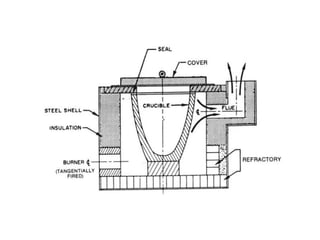
Refractories
Refractories are materials (usually nonmetallic)
that maintain enough physical and chemical
identity to be used for structural purposes in the
high temperature environment encountered in
process industries
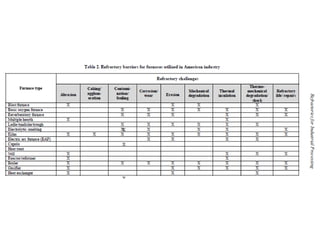
• Exposed to high temperatures
• Effects of other conditions
– Mechanical stress
– Thermal cycling & associated stress
– Erosion
– Corrosion by hot gas and molten materials e.g.
metals, slags or glasses
First Use of Refractories
• Stone age
• Value of stone substances in crude places of
fire for containing and reflecting heat
• Sandstone does not spall ( granite spall)
• Does not disintegrate ( Limestone
decomposes)
Uses of Refractories
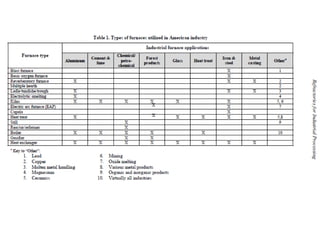
• Although refractories are used in most, if not
all, of U.S. industries, the iron and steel
industry consumes 70% of the refractories
produced globally, while the cement and lime
industry consumes 7%, the ceramics industry
6%, the glass industry 3–4%, and the oil
industry about 4%.
Small scale Uses
• Specific applications
– Propulsion systems and friction heating at high
velocities in atmosphere (Aerospace industries)
– Nuclear energy
Sources of refractories
• Natural deposits of oxides on earth crust
• Seawater
– Dolomite and MgO
Cost issue
• Compounds of Hf, Cb, Ta, Th, U
• Plasma arc spraying to apply refractory coating
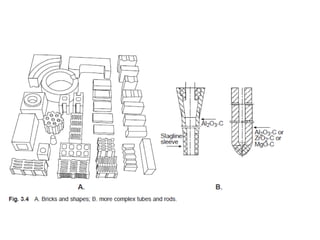
• Special processes to produce refractories of
different shapes
Refractories
Refractories
Refractories
Refractories
Refractories
Refractories
Refractories

Refractories

  • 1.
    Refractories Refractories are materials(usually nonmetallic) that maintain enough physical and chemical identity to be used for structural purposes in the high temperature environment encountered in process industries
  • 2.
    • Exposed tohigh temperatures • Effects of other conditions – Mechanical stress – Thermal cycling & associated stress – Erosion – Corrosion by hot gas and molten materials e.g. metals, slags or glasses
  • 3.
    First Use ofRefractories • Stone age • Value of stone substances in crude places of fire for containing and reflecting heat • Sandstone does not spall ( granite spall) • Does not disintegrate ( Limestone decomposes)
  • 4.
    Uses of Refractories •Although refractories are used in most, if not all, of U.S. industries, the iron and steel industry consumes 70% of the refractories produced globally, while the cement and lime industry consumes 7%, the ceramics industry 6%, the glass industry 3–4%, and the oil industry about 4%.
  • 9.
    Small scale Uses •Specific applications – Propulsion systems and friction heating at high velocities in atmosphere (Aerospace industries) – Nuclear energy
  • 11.
    Sources of refractories •Natural deposits of oxides on earth crust • Seawater – Dolomite and MgO
  • 12.
    Cost issue • Compoundsof Hf, Cb, Ta, Th, U • Plasma arc spraying to apply refractory coating • Special processes to produce refractories of different shapes