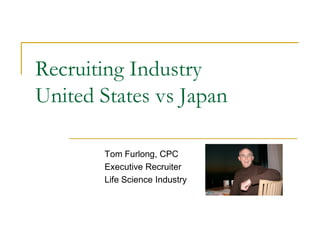
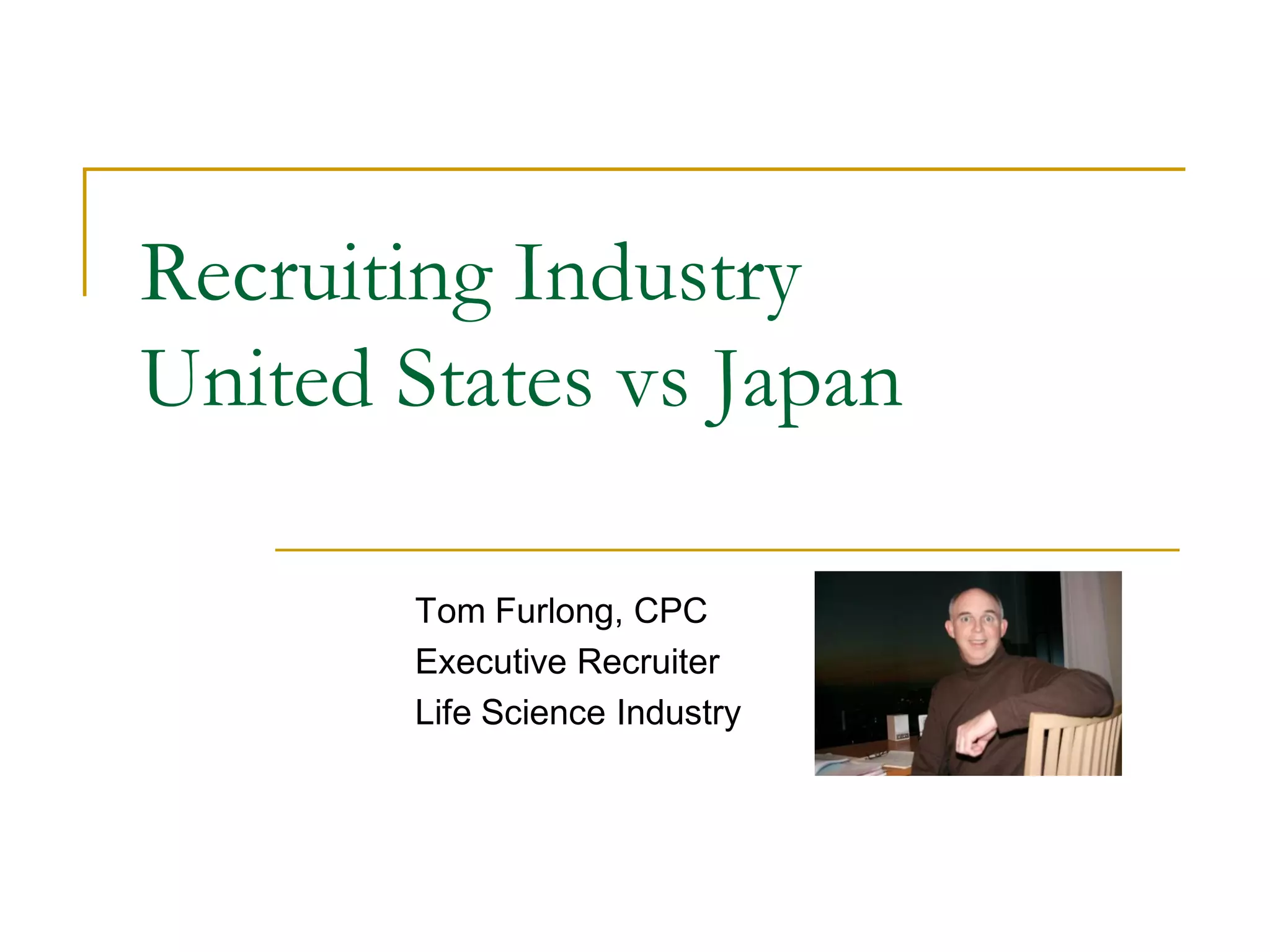
Recruiting Industry
United States vs Japan

       Tom Furlong, CPC
       Executive Recruiter
       Life Science Industry
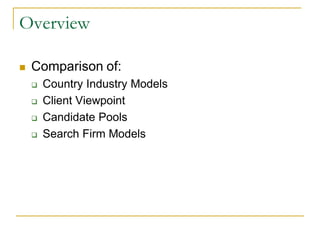
Overview

   Comparison of:
       Country Industry Models
       Client Viewpoint
       Candidate Pools
       Search Firm Models
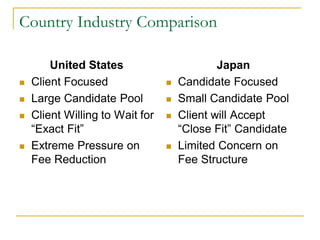
Country Industry Comparison

        United States                        Japan
   Client Focused                  Candidate Focused
   Large Candidate Pool            Small Candidate Pool
   Client Willing to Wait for      Client will Accept
    “Exact Fit”                      “Close Fit” Candidate
   Extreme Pressure on             Limited Concern on
    Fee Reduction                    Fee Structure
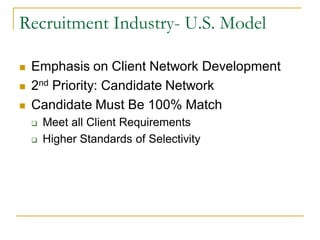
Recruitment Industry- U.S. Model

   Emphasis on Client Network Development
   2nd Priority: Candidate Network
   Candidate Must Be 100% Match
       Meet all Client Requirements
       Higher Standards of Selectivity
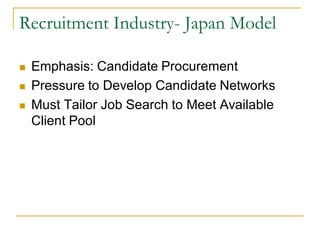
Recruitment Industry- Japan Model

   Emphasis: Candidate Procurement
   Pressure to Develop Candidate Networks
   Must Tailor Job Search to Meet Available
    Client Pool
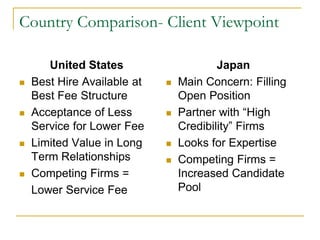
Country Comparison- Client Viewpoint

       United States                     Japan
   Best Hire Available at      Main Concern: Filling
    Best Fee Structure           Open Position
   Acceptance of Less          Partner with “High
    Service for Lower Fee        Credibility” Firms
   Limited Value in Long       Looks for Expertise
    Term Relationships          Competing Firms =
   Competing Firms =            Increased Candidate
    Lower Service Fee            Pool
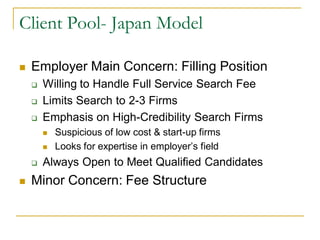
Client Pool- Japan Model

   Employer Main Concern: Filling Position
       Willing to Handle Full Service Search Fee
       Limits Search to 2-3 Firms
       Emphasis on High-Credibility Search Firms
           Suspicious of low cost & start-up firms
           Looks for expertise in employer’s field
       Always Open to Meet Qualified Candidates
   Minor Concern: Fee Structure
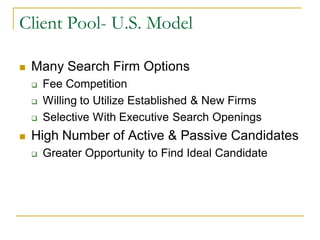
Client Pool- U.S. Model

   Many Search Firm Options
       Fee Competition
       Willing to Utilize Established & New Firms
       Selective With Executive Search Openings
   High Number of Active & Passive Candidates
       Greater Opportunity to Find Ideal Candidate
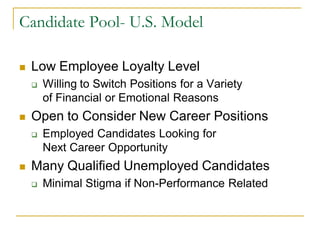
Candidate Pool- U.S. Model

   Low Employee Loyalty Level
       Willing to Switch Positions for a Variety
        of Financial or Emotional Reasons
   Open to Consider New Career Positions
       Employed Candidates Looking for
        Next Career Opportunity
   Many Qualified Unemployed Candidates
       Minimal Stigma if Non-Performance Related
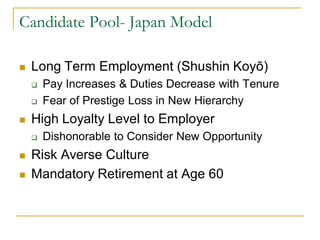
Candidate Pool- Japan Model

   Long Term Employment (Shushin Koyō)
       Pay Increases & Duties Decrease with Tenure
       Fear of Prestige Loss in New Hierarchy
   High Loyalty Level to Employer
       Dishonorable to Consider New Opportunity
   Risk Averse Culture
   Mandatory Retirement at Age 60
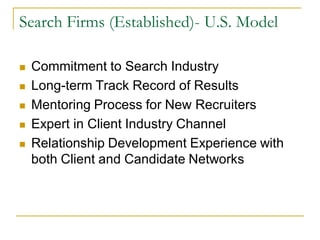
Search Firms (Established)- U.S. Model

   Commitment to Search Industry
   Long-term Track Record of Results
   Mentoring Process for New Recruiters
   Expert in Client Industry Channel
   Relationship Development Experience with
    both Client and Candidate Networks
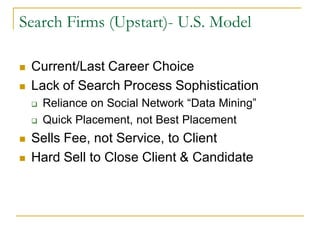
Search Firms (Upstart)- U.S. Model

   Current/Last Career Choice
   Lack of Search Process Sophistication
       Reliance on Social Network “Data Mining”
       Quick Placement, not Best Placement
   Sells Fee, not Service, to Client
   Hard Sell to Close Client & Candidate
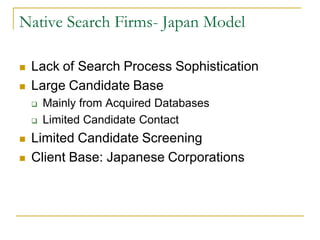
Native Search Firms- Japan Model

   Lack of Search Process Sophistication
   Large Candidate Base
       Mainly from Acquired Databases
       Limited Candidate Contact
   Limited Candidate Screening
   Client Base: Japanese Corporations
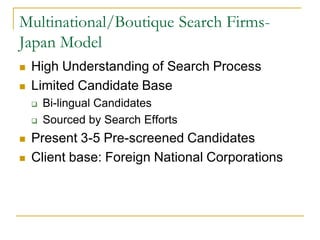
Multinational/Boutique Search Firms-
Japan Model
   High Understanding of Search Process
   Limited Candidate Base
       Bi-lingual Candidates
       Sourced by Search Efforts
   Present 3-5 Pre-screened Candidates
   Client base: Foreign National Corporations
About Tom 富(とむ)

   23-Year Life Science Industry Professional
   C- Level Consultant to Life Science Firms
   Multiple National & Regional Awards
   Success in U.S., Canada, & Japan Markets
   e-mail: tafurlong99@yahoo.com
   Twitter: TerrellMillTom
   LinkedIn: http://www.linkedin.com/in/tomfurlong

Recruiting Industry Japan vs USA

  • 1.
    Recruiting Industry United Statesvs Japan Tom Furlong, CPC Executive Recruiter Life Science Industry
  • 2.
    Overview  Comparison of:  Country Industry Models  Client Viewpoint  Candidate Pools  Search Firm Models
  • 3.
    Country Industry Comparison United States Japan  Client Focused  Candidate Focused  Large Candidate Pool  Small Candidate Pool  Client Willing to Wait for  Client will Accept “Exact Fit” “Close Fit” Candidate  Extreme Pressure on  Limited Concern on Fee Reduction Fee Structure
  • 4.
    Recruitment Industry- U.S.Model  Emphasis on Client Network Development  2nd Priority: Candidate Network  Candidate Must Be 100% Match  Meet all Client Requirements  Higher Standards of Selectivity
  • 5.
    Recruitment Industry- JapanModel  Emphasis: Candidate Procurement  Pressure to Develop Candidate Networks  Must Tailor Job Search to Meet Available Client Pool
  • 6.
    Country Comparison- ClientViewpoint United States Japan  Best Hire Available at  Main Concern: Filling Best Fee Structure Open Position  Acceptance of Less  Partner with “High Service for Lower Fee Credibility” Firms  Limited Value in Long  Looks for Expertise Term Relationships  Competing Firms =  Competing Firms = Increased Candidate Lower Service Fee Pool
  • 7.
    Client Pool- JapanModel  Employer Main Concern: Filling Position  Willing to Handle Full Service Search Fee  Limits Search to 2-3 Firms  Emphasis on High-Credibility Search Firms  Suspicious of low cost & start-up firms  Looks for expertise in employer’s field  Always Open to Meet Qualified Candidates  Minor Concern: Fee Structure
  • 8.
    Client Pool- U.S.Model  Many Search Firm Options  Fee Competition  Willing to Utilize Established & New Firms  Selective With Executive Search Openings  High Number of Active & Passive Candidates  Greater Opportunity to Find Ideal Candidate
  • 9.
    Candidate Pool- U.S.Model  Low Employee Loyalty Level  Willing to Switch Positions for a Variety of Financial or Emotional Reasons  Open to Consider New Career Positions  Employed Candidates Looking for Next Career Opportunity  Many Qualified Unemployed Candidates  Minimal Stigma if Non-Performance Related
  • 10.
    Candidate Pool- JapanModel  Long Term Employment (Shushin Koyō)  Pay Increases & Duties Decrease with Tenure  Fear of Prestige Loss in New Hierarchy  High Loyalty Level to Employer  Dishonorable to Consider New Opportunity  Risk Averse Culture  Mandatory Retirement at Age 60
  • 11.
    Search Firms (Established)-U.S. Model  Commitment to Search Industry  Long-term Track Record of Results  Mentoring Process for New Recruiters  Expert in Client Industry Channel  Relationship Development Experience with both Client and Candidate Networks
  • 12.
    Search Firms (Upstart)-U.S. Model  Current/Last Career Choice  Lack of Search Process Sophistication  Reliance on Social Network “Data Mining”  Quick Placement, not Best Placement  Sells Fee, not Service, to Client  Hard Sell to Close Client & Candidate
  • 13.
    Native Search Firms-Japan Model  Lack of Search Process Sophistication  Large Candidate Base  Mainly from Acquired Databases  Limited Candidate Contact  Limited Candidate Screening  Client Base: Japanese Corporations
  • 14.
    Multinational/Boutique Search Firms- JapanModel  High Understanding of Search Process  Limited Candidate Base  Bi-lingual Candidates  Sourced by Search Efforts  Present 3-5 Pre-screened Candidates  Client base: Foreign National Corporations
  • 15.
    About Tom 富(とむ)  23-Year Life Science Industry Professional  C- Level Consultant to Life Science Firms  Multiple National & Regional Awards  Success in U.S., Canada, & Japan Markets  e-mail: tafurlong99@yahoo.com  Twitter: TerrellMillTom  LinkedIn: http://www.linkedin.com/in/tomfurlong