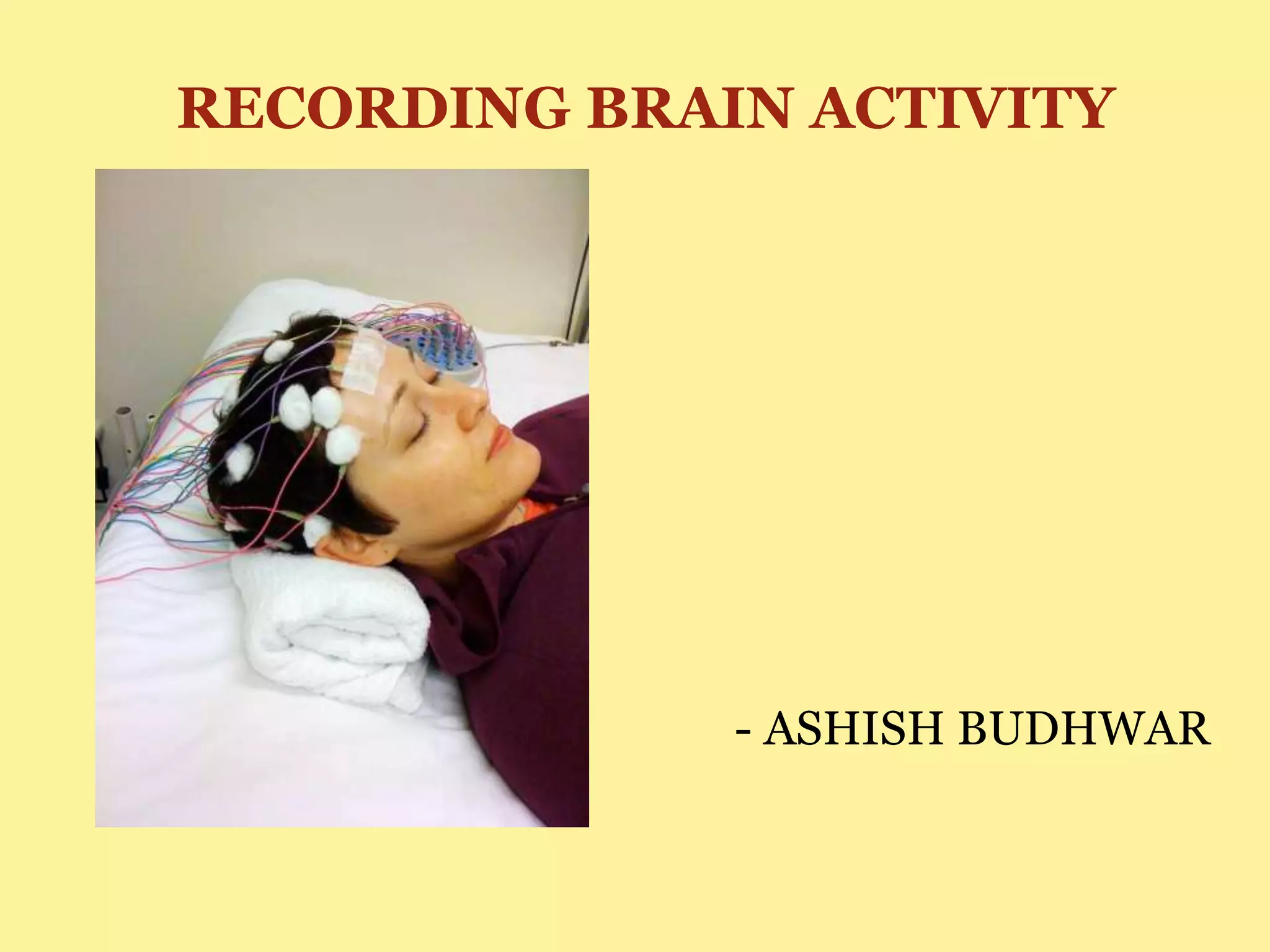
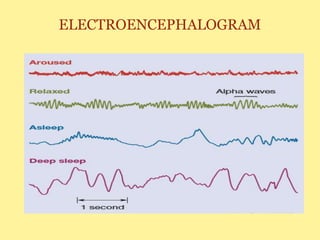
Electroencephalography (EEG) involves recording the electrical activity of the brain through electrodes placed on the scalp. Hans Berger first discovered EEG in 1924. EEG measures voltage fluctuations resulting from ionic currents within neurons. When neurons fire simultaneously, they create a wave that can be detected by electrodes. EEG is useful for studying brain function and diagnosing conditions like epilepsy by analyzing patterns of electrical activity.