Linkage Analysis and Genotyping
Analysis
Represented By – Usha
M.Sc. Bioinformatics
Submitted to – Dr. Nisha Singh
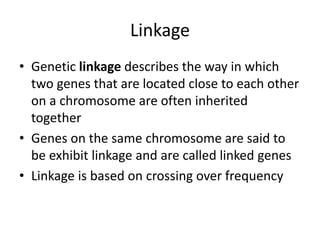
Linkage
• Genetic linkage describes the way in which
two genes that are located close to each other
on a chromosome are often inherited
together
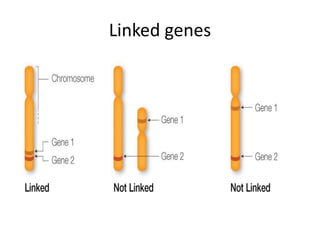
• Genes on the same chromosome are said to
be exhibit linkage and are called linked genes
• Linkage is based on crossing over frequency
Linked genes
Types of linkage
On the basis of Crossing over
• Complete Linkage - The genes located on the
same chromosome do not separate and are
inherited together over the generations due to
the absence of crossing over
• Incomplete Linkage - Genes present in the same
chromosome have a tendency to separate due to
crossing over and hence produce recombinant
progeny besides the parental type
Linkage Analysis
• Genetic Linkage Analysis is a power tool to
detect the chromosomal locations of diseases
genes
• Statistical method for mapping heritable trait
genes to their chromosome locations
Linkage Analysis Techniques
• Recombination Fraction
• LOD score
• Haldane mapping function
Recombination Fraction
• Probability of a marker and a susceptibility
locus segregating independently(may be
represented as θ)
• Ratio of the number of recombined gametes
to the total number of gametes produced
• If θ = 0.5 No linkage
• If θ < 0.5 Linkage
LOD scores
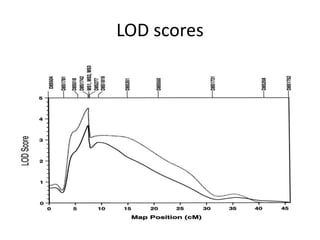
• Statistical measure of the likelihood of genetic
linkage between two loci
• Test to compare the likelihood that two loci
are linked, vs. the likelihood that the two loci
are unlinked
• LOD – logarithm of the odd
LOD scores
LOD score
• LOD calculations:
• LOD(Z) = log10 = probability of birth
sequences with a given linkage/probability of
birth sequences with no linkage
• A LOD score, higher than 3.0 is generally
accepted as evidence for linkage
• A LOD score lower than -2.0 is accepted as
evidence against linkage
Mapping functions
• Mapping functions are used to translate
recombination fractions into genetic distances
• A genetic map function M gives a relations i.e.
r = M(d), connecting recombination fraction r
and genetic map
Haldane’s Mapping functions
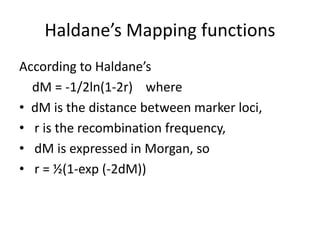
According to Haldane’s
dM = -1/2ln(1-2r) where
• dM is the distance between marker loci,
• r is the recombination frequency,
• dM is expressed in Morgan, so
• r = ½(1-exp (-2dM))
Tool for Linkage Analysis
• JoinMap
• Vitesse
• MAPMAKER
• HOMOG
• LOT
• LInkageMapView
Genotyping
• Process of determining differences between
genotype of individuals by examining DNA
sequences
• Genotyping enables researchers to explore
genetic variants such as single nucleotide
polymorphisms (SNPs) and large structural
changes in DNA
Genotyping
• Whole genome genotyping
• Targeted genotyping
• Custom genotyping
• Copy number variations analysis
Whole genome Genotyping
• Whole-genome genotyping provides an
overview of the entire genome, enabling
genome-wide discoveries and associations
• Include high-throughput next-generation
sequencing (NGS) and microarray
technologies
Targeted Genotyping
• Allows researchers to focus time and expenses
on specific regions of interest
• Generates a smaller, more manageable data
set, thereby reducing data analysis burdens
• Offers a cost-effective solution with reduced
turnaround time compared to broader
approaches
Custom genotyping
• Allows researchers to focus on genes, variants,
and/or genomic regions of interest relevant to
certain diseases or traits of interest, but not
covered in pre-designed products
• Conserves resources by avoiding irrelevant
regions of the genome
CNV Analysis
• Copy number variations (CNVs) are genomic
alterations that result in an abnormal number
of copies of one or more genes
Tool for CNV analysis
• Control-FREEC
• CNVnator
• mrCaNaVaR
• BreakDancer
• CNVrd
• CNVer
Approaches to visualize genetic
Alterations
• Enzymatic Approaches for Discriminations of
Allelic Variants
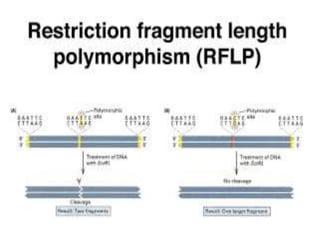
RFLP
AFLP
• Electrophoretic Discriminations of Allelic Variants
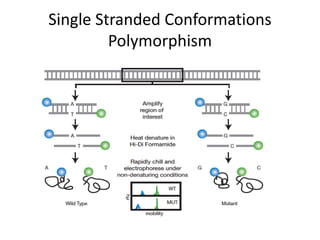
SSCP
High performance DNA sequencing
• Solid-Phase Determinations of allelic Variants
Oligonucleotide arrays
Approaches to visualize genetic
Alterations
• Chromatographic methods for discriminations of
Allelic Variants
DHPLC(Denaturing high performance liquid
chromatography)
• Physical methods for Discriminations of Allelic
Variants
Differential sequencing with mass spectrometry
Fluorescence exchange based methods
• In-Silico – Analyzing EST Data
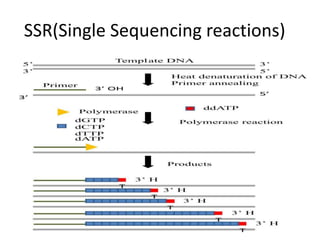
SSR(Single Sequencing reactions)
Single Stranded Conformations
Polymorphism
References
• Pulst SM,Genetic linkage analysis.Arch Neurol.
1999 Jun;56(6):667-72.
• Kristensen VN, Kelefiotis D, Kristensen T,
Børresen-Dale AL.High-throughput methods
for detection of genetic
variation.Biotechniques. 2001 Feb;30(2):318-
22, 324, 326 passim.
Thank you

Linkage analysis

  • 1.
    Linkage Analysis andGenotyping Analysis Represented By – Usha M.Sc. Bioinformatics Submitted to – Dr. Nisha Singh
  • 2.
    Linkage • Genetic linkagedescribes the way in which two genes that are located close to each other on a chromosome are often inherited together • Genes on the same chromosome are said to be exhibit linkage and are called linked genes • Linkage is based on crossing over frequency
  • 3.
  • 4.
    Types of linkage Onthe basis of Crossing over • Complete Linkage - The genes located on the same chromosome do not separate and are inherited together over the generations due to the absence of crossing over • Incomplete Linkage - Genes present in the same chromosome have a tendency to separate due to crossing over and hence produce recombinant progeny besides the parental type
  • 5.
    Linkage Analysis • GeneticLinkage Analysis is a power tool to detect the chromosomal locations of diseases genes • Statistical method for mapping heritable trait genes to their chromosome locations
  • 6.
    Linkage Analysis Techniques •Recombination Fraction • LOD score • Haldane mapping function
  • 7.
    Recombination Fraction • Probabilityof a marker and a susceptibility locus segregating independently(may be represented as θ) • Ratio of the number of recombined gametes to the total number of gametes produced • If θ = 0.5 No linkage • If θ < 0.5 Linkage
  • 8.
    LOD scores • Statisticalmeasure of the likelihood of genetic linkage between two loci • Test to compare the likelihood that two loci are linked, vs. the likelihood that the two loci are unlinked • LOD – logarithm of the odd
  • 9.
  • 10.
    LOD score • LODcalculations: • LOD(Z) = log10 = probability of birth sequences with a given linkage/probability of birth sequences with no linkage • A LOD score, higher than 3.0 is generally accepted as evidence for linkage • A LOD score lower than -2.0 is accepted as evidence against linkage
  • 11.
    Mapping functions • Mappingfunctions are used to translate recombination fractions into genetic distances • A genetic map function M gives a relations i.e. r = M(d), connecting recombination fraction r and genetic map
  • 12.
    Haldane’s Mapping functions Accordingto Haldane’s dM = -1/2ln(1-2r) where • dM is the distance between marker loci, • r is the recombination frequency, • dM is expressed in Morgan, so • r = ½(1-exp (-2dM))
  • 13.
    Tool for LinkageAnalysis • JoinMap • Vitesse • MAPMAKER • HOMOG • LOT • LInkageMapView
  • 14.
    Genotyping • Process ofdetermining differences between genotype of individuals by examining DNA sequences • Genotyping enables researchers to explore genetic variants such as single nucleotide polymorphisms (SNPs) and large structural changes in DNA
  • 15.
    Genotyping • Whole genomegenotyping • Targeted genotyping • Custom genotyping • Copy number variations analysis
  • 16.
    Whole genome Genotyping •Whole-genome genotyping provides an overview of the entire genome, enabling genome-wide discoveries and associations • Include high-throughput next-generation sequencing (NGS) and microarray technologies
  • 17.
    Targeted Genotyping • Allowsresearchers to focus time and expenses on specific regions of interest • Generates a smaller, more manageable data set, thereby reducing data analysis burdens • Offers a cost-effective solution with reduced turnaround time compared to broader approaches
  • 18.
    Custom genotyping • Allowsresearchers to focus on genes, variants, and/or genomic regions of interest relevant to certain diseases or traits of interest, but not covered in pre-designed products • Conserves resources by avoiding irrelevant regions of the genome
  • 19.
    CNV Analysis • Copynumber variations (CNVs) are genomic alterations that result in an abnormal number of copies of one or more genes
  • 20.
    Tool for CNVanalysis • Control-FREEC • CNVnator • mrCaNaVaR • BreakDancer • CNVrd • CNVer
  • 21.
    Approaches to visualizegenetic Alterations • Enzymatic Approaches for Discriminations of Allelic Variants RFLP AFLP • Electrophoretic Discriminations of Allelic Variants SSCP High performance DNA sequencing • Solid-Phase Determinations of allelic Variants Oligonucleotide arrays
  • 22.
    Approaches to visualizegenetic Alterations • Chromatographic methods for discriminations of Allelic Variants DHPLC(Denaturing high performance liquid chromatography) • Physical methods for Discriminations of Allelic Variants Differential sequencing with mass spectrometry Fluorescence exchange based methods • In-Silico – Analyzing EST Data
  • 24.
  • 25.
  • 26.
    References • Pulst SM,Geneticlinkage analysis.Arch Neurol. 1999 Jun;56(6):667-72. • Kristensen VN, Kelefiotis D, Kristensen T, Børresen-Dale AL.High-throughput methods for detection of genetic variation.Biotechniques. 2001 Feb;30(2):318- 22, 324, 326 passim.
  • 27.