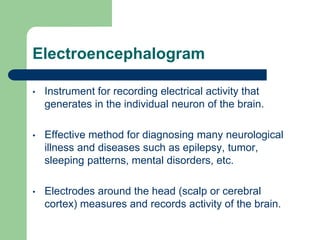
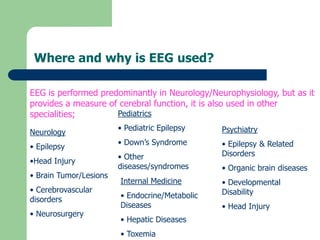
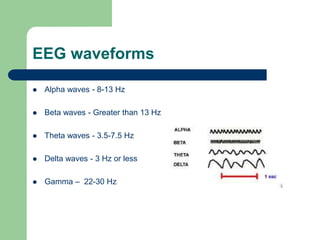
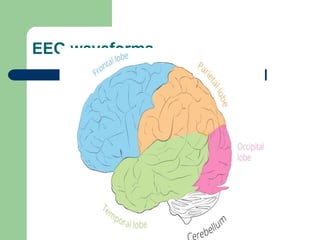
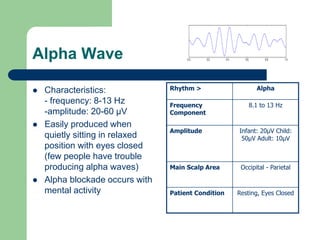
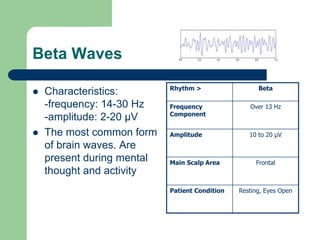
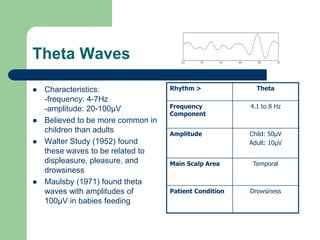
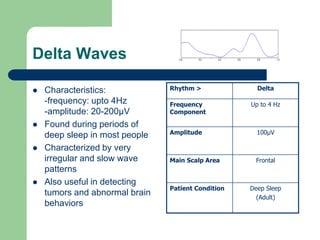
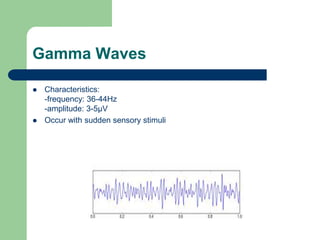
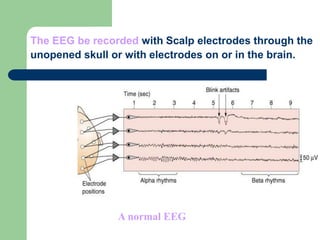
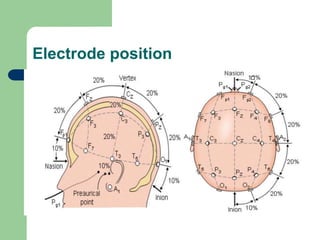
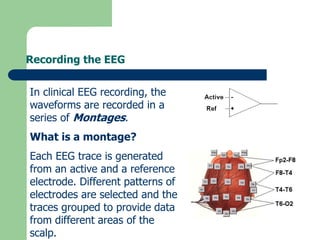
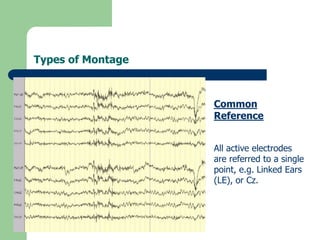
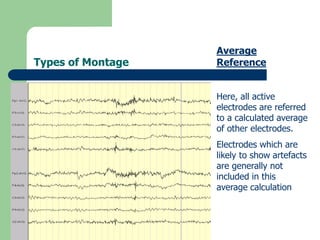
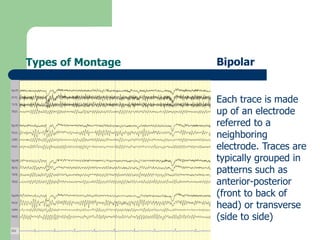
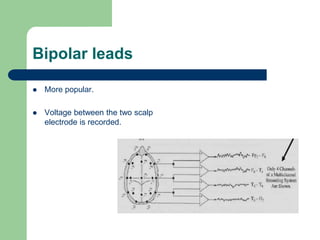
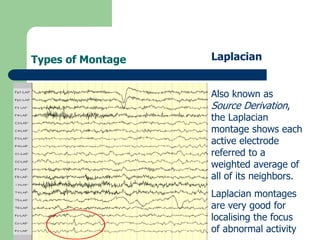
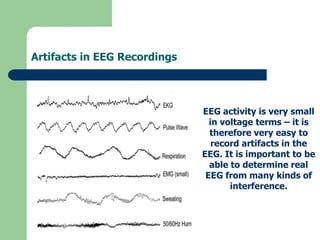
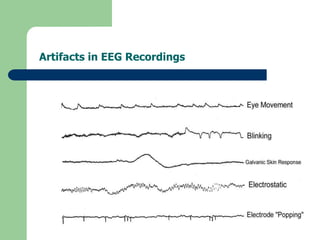
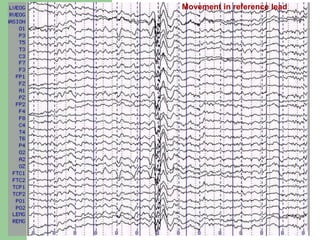
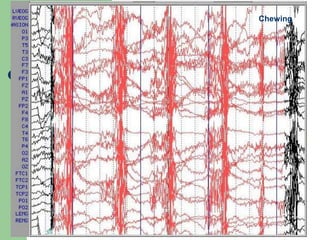
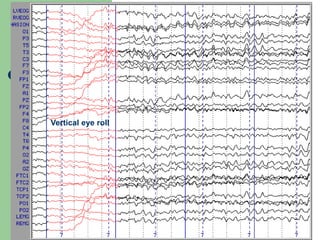
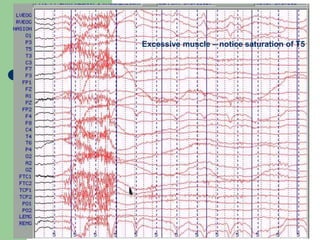
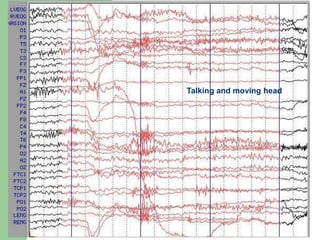
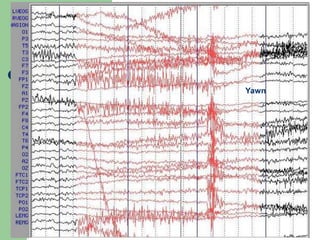
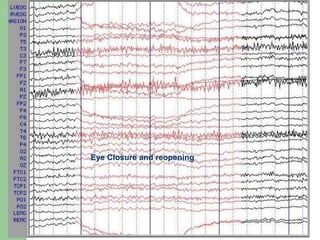
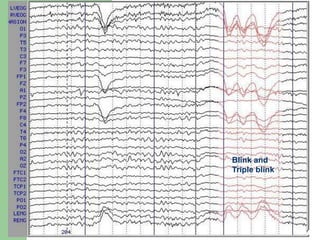
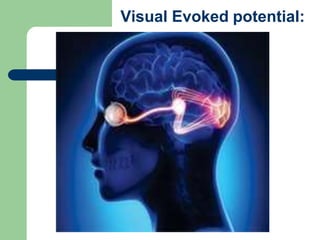
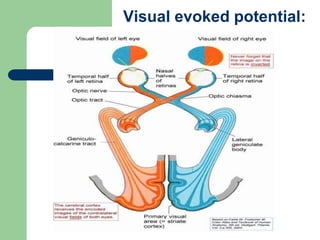
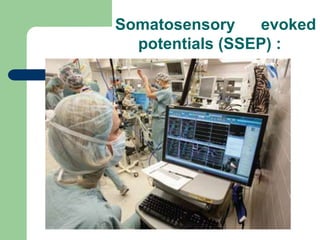
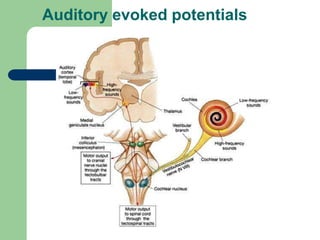
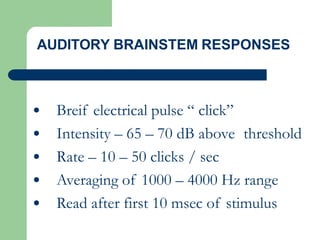
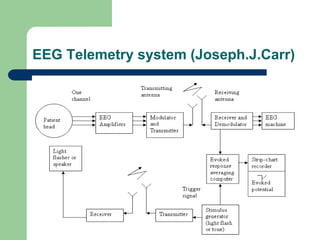
This document discusses electroencephalography (EEG) and evoked potentials. It begins by describing EEG as a method for recording electrical brain activity using electrodes placed on the scalp. It then discusses how EEG is used to diagnose neurological conditions like epilepsy and brain tumors. The document outlines different brain wave patterns observed in EEG like alpha, beta, theta, and delta waves. It also discusses how EEG is performed and interpreted, potential artifacts, and different electrode montages. Finally, it describes evoked potentials as the electrical response of the brain to sensory stimulation, and summarizes different types of evoked potentials including visual, somatosensory, and auditory potentials.