 Hard real time system
 Strict timing constraints
 High performance
 Guaranteed response time constraints
 So, the entire database sits in the main memory
 Multiprocessor Database Architecture for Real
Time System
 This is for hard real time systems
 Main memory database
 Object oriented (C++ elements)
 Support direct, concurrent, shared memory data access
 Support explicit declaration of real time constraints and
semantic constraints within the application code
 Constraint specification like Access time
 Write < 80 micro sec
 Read < 50 micro sec
 Persistance -> volatile
 Suitable for NGC (Next generation machine
controllers) for automated factories
 Transaction timing in the order of tens of
microseconds
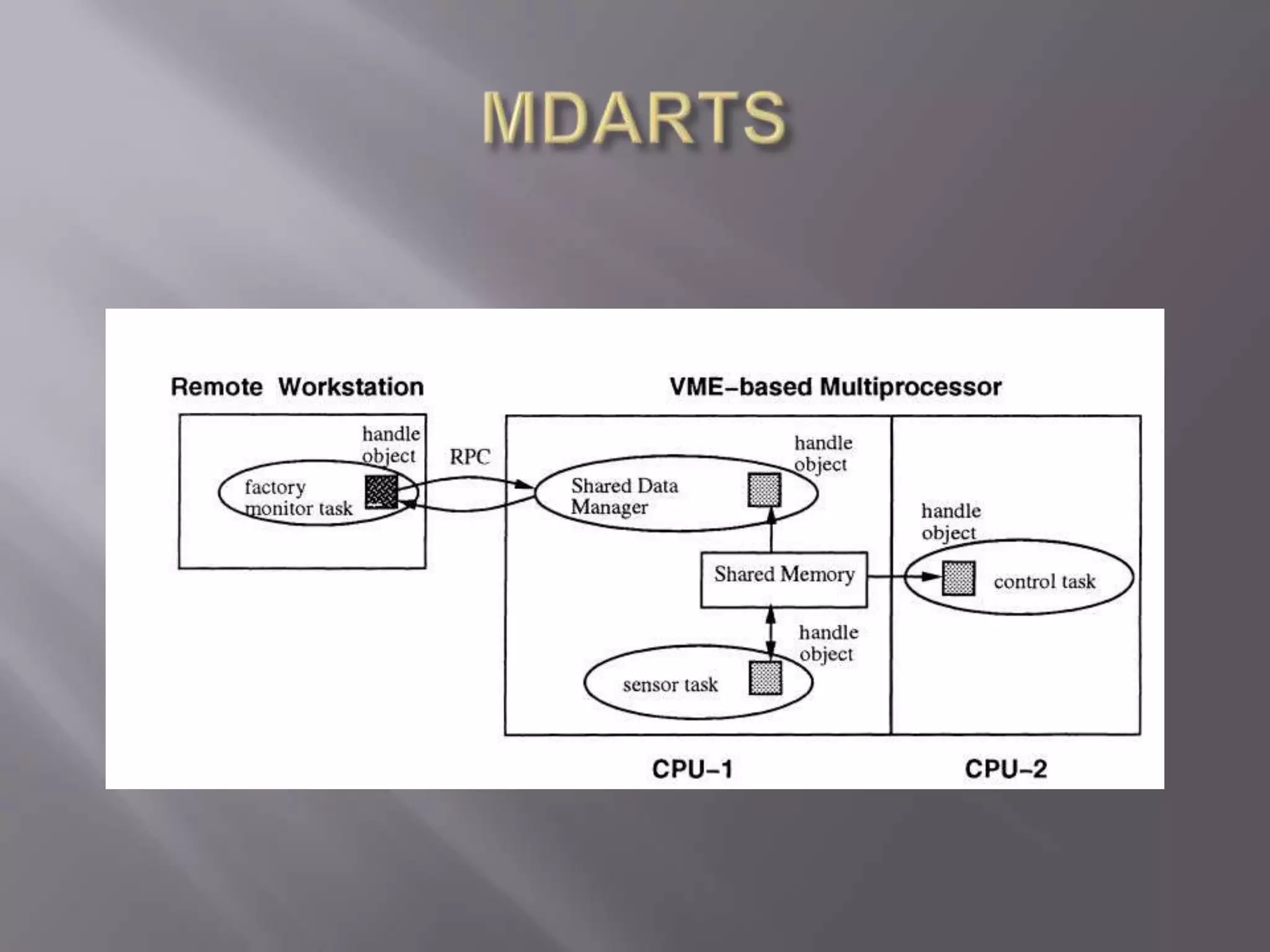
 Control task
 Periodic task
 Extracts current sensor values from the database and
computes new control signal for the actuators
 Data accessed extremely high speed must be stored in the
physical shared memory as the virtual memory and disk
based databases may generate the page faults
 Applications need not know whether the database access
is local or remote. The database handler hides the
information of being remote. Remote access achieved
through Remote Procedure calls (RPC).
 There may be some communication delay when the data
is accessed remotely. The shared data manager (SDM)
tracks the location and identity of the shared memory
objects and also constructs its own database handle for
each object to service remote requests.

Real time database (MDARTS)

  • 2.
     Hard realtime system  Strict timing constraints  High performance  Guaranteed response time constraints  So, the entire database sits in the main memory
  • 3.
     Multiprocessor DatabaseArchitecture for Real Time System  This is for hard real time systems  Main memory database  Object oriented (C++ elements)  Support direct, concurrent, shared memory data access  Support explicit declaration of real time constraints and semantic constraints within the application code  Constraint specification like Access time  Write < 80 micro sec  Read < 50 micro sec  Persistance -> volatile
  • 5.
     Suitable forNGC (Next generation machine controllers) for automated factories  Transaction timing in the order of tens of microseconds  Control task  Periodic task  Extracts current sensor values from the database and computes new control signal for the actuators
  • 6.
     Data accessedextremely high speed must be stored in the physical shared memory as the virtual memory and disk based databases may generate the page faults  Applications need not know whether the database access is local or remote. The database handler hides the information of being remote. Remote access achieved through Remote Procedure calls (RPC).  There may be some communication delay when the data is accessed remotely. The shared data manager (SDM) tracks the location and identity of the shared memory objects and also constructs its own database handle for each object to service remote requests.