is

property that includes land
and buildings, and anything
affixed to the land.
Real property only includes
those structures that are affixed
to the land, not those which can
be removed, such as
equipment.
 For

a business, real property would
include warehouses, factories,
offices, and other buildings
owned by the business.
 Whatever

is beneath the surface
of the land, like minerals, natural
gas, and oil
 Rights to the use of property
 Leasehold Improvements(since
they cannot be removed)
Assessment — the act or process of
determining the value of a property
 Assessment level — is the percentage
applied to the market value to
determine the taxable or assessed
value of the property.
 Assessed Value — the value placed
on taxable property by the assessor
for ad valorem tax purposes

 Fair

Market Value - is the highest
price a property can command if
put up for sale in an open market

The FMW and the assessment level
are important in determining the
assessed value of real estate.
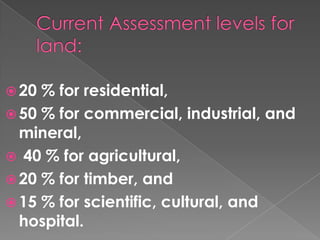
 20

% for residential,
 50 % for commercial, industrial, and
mineral,
 40 % for agricultural,
 20 % for timber, and
 15 % for scientific, cultural, and
hospital.
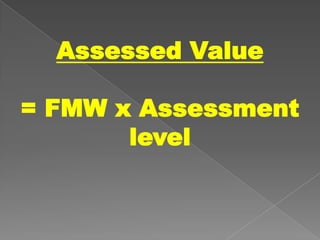
Assessed Value
= FMW x Assessment
level
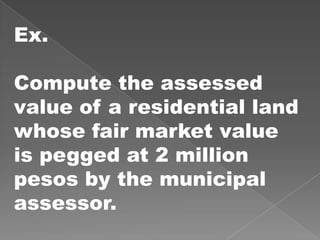
Ex.
Compute the assessed
value of a residential land
whose fair market value
is pegged at 2 million
pesos by the municipal
assessor.
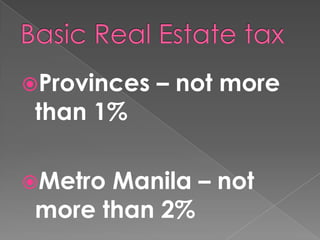
Provinces

than 1%

Metro

– not more

Manila – not
more than 2%
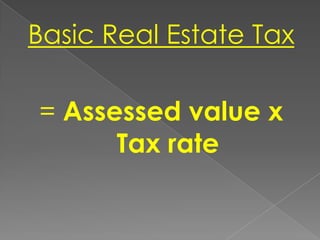
Basic Real Estate Tax
= Assessed value x
Tax rate
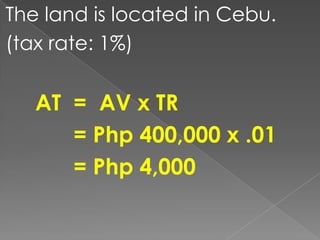
The land is located in Cebu.
(tax rate: 1%)

AT = AV x TR
= Php 400,000 x .01
= Php 4,000

Real property tax

  • 2.
    is property that includesland and buildings, and anything affixed to the land. Real property only includes those structures that are affixed to the land, not those which can be removed, such as equipment.
  • 3.
     For a business,real property would include warehouses, factories, offices, and other buildings owned by the business.
  • 4.
     Whatever is beneaththe surface of the land, like minerals, natural gas, and oil  Rights to the use of property  Leasehold Improvements(since they cannot be removed)
  • 5.
    Assessment — theact or process of determining the value of a property  Assessment level — is the percentage applied to the market value to determine the taxable or assessed value of the property.  Assessed Value — the value placed on taxable property by the assessor for ad valorem tax purposes 
  • 6.
     Fair Market Value- is the highest price a property can command if put up for sale in an open market The FMW and the assessment level are important in determining the assessed value of real estate.
  • 7.
     20 % forresidential,  50 % for commercial, industrial, and mineral,  40 % for agricultural,  20 % for timber, and  15 % for scientific, cultural, and hospital.
  • 8.
    Assessed Value = FMWx Assessment level
  • 9.
    Ex. Compute the assessed valueof a residential land whose fair market value is pegged at 2 million pesos by the municipal assessor.
  • 10.
    Provinces than 1% Metro – notmore Manila – not more than 2%
  • 11.
    Basic Real EstateTax = Assessed value x Tax rate
  • 12.
    The land islocated in Cebu. (tax rate: 1%) AT = AV x TR = Php 400,000 x .01 = Php 4,000