A cognitive process of
decoding symbols to derive
meaning from text.
(…. making meaning from print)
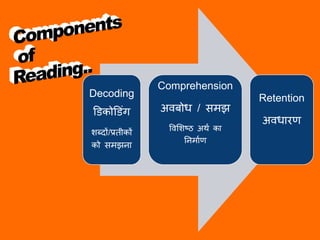
Decoding
डिकोडििंग
शब्दों/प्रतीकों
को समझना
Comprehension
अवबोध / समझ
ववशशष्ठ अर्थ का
ननमाथण
Retention
अवधारण
Jens Martensson
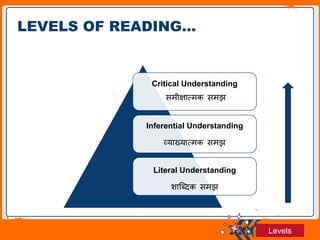
Critical Understanding
समीक्षात्मक समझ
Inferential Understanding
व्याख्यात्मक समझ
Literal Understanding
शाब्ब्दक समझ
LEVELS OF READING…
Levels
Jens Martensson
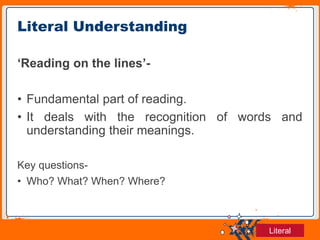
‘Reading on the lines’-
• Fundamental part of reading.
• It deals with the recognition of words and
understanding their meanings.
Key questions-
• Who? What? When? Where?
Literal Understanding
Literal
Jens Martensson
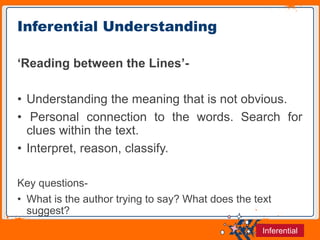
‘Reading between the Lines’-
• Understanding the meaning that is not obvious.
• Personal connection to the words. Search for
clues within the text.
• Interpret, reason, classify.
Key questions-
• What is the author trying to say? What does the text
suggest?
Inferential Understanding
Inferential
Jens Martensson
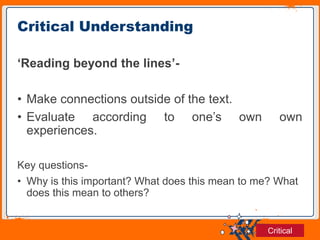
‘Reading beyond the lines’-
• Make connections outside of the text.
• Evaluate according to one’s own own
experiences.
Key questions-
• Why is this important? What does this mean to me? What
does this mean to others?
Critical Understanding
Critical
Jens Martensson
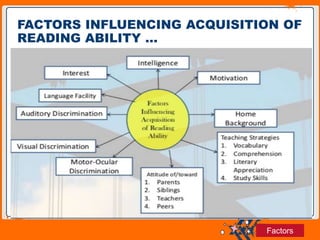
FACTORS INFLUENCING ACQUISITION OF
READING ABILITY …
Factors
Jens Martensson
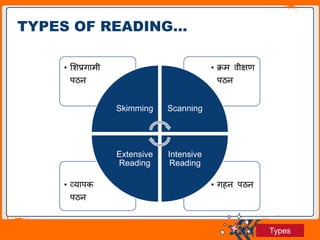
• गहन पठन
• व्यापक
पठन
• क्रम वीक्षण
पठन
• शशप्रगामी
पठन
Skimming Scanning
Intensive
Reading
Extensive
Reading
TYPES OF READING…
Types
Jens Martensson
• Speed reading technique for getting general
idea of a text
• Reading rapidly for the main points.
• Skimming is used to quickly gather the most
important information or gist.
• Run your eyes over the text.
• It is not essential to understand each word
while skimming.
SKIMMING:
Skimming
Jens Martensson
• Read the title first
• Read headings and sub-headings
• Read the first line or the introduction
• Read the first sentence of each paragraph
• Notice any italicized or boldface phrases or words
• Notice any pictures, graphs or charts
• Read the summary of the last paragraph carefully
Steps of Skimming:
Steps
Jens Martensson
• Specific reading skill which involves quickly
searching through the texts for specific piece of
information, be it key words or phrases
• Reading rapidly through a text to find specific
information required.
• Scanning is used to find a particular piece of
information.
• Run your eyes over the text looking for the
specific information.
SCANNING:
Scanning
Jens Martensson
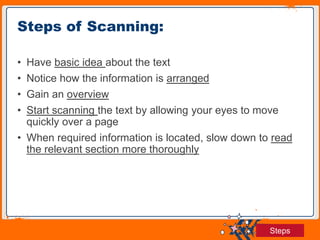
• Have basic idea about the text
• Notice how the information is arranged
• Gain an overview
• Start scanning the text by allowing your eyes to move
quickly over a page
• When required information is located, slow down to read
the relevant section more thoroughly
Steps of Scanning:
Steps
Jens Martensson
• Reading longer texts, often for pleasure and for
over all understanding.
• Extensive reading is used to obtain a general
understanding of a subject.
EXTENSIVE READING:
Extensive
Jens Martensson
• Reading shorter texts for detailed information with
an emphasis on precise understanding.
• Intensive reading is used on shorter texts in order
to extract specific information.
• It includes very close accurate reading for detail.
INTENSIVE READING:
Intensive
Jens Martensson
• To develop an understanding toward directions
given and follow the text accordingly.
• To memorize and understand the facts, words,…
• To explain and express the text
• To differentiate between meaningful and
meaningless text.
• To correlate the text and its examples
• To understand and analyze the central idea/gist of
the text.
• To identify the writer’s idea of composing the text
and reflecting it throughout the reading
PURPOSE OF READING:
Purpose
Jens Martensson
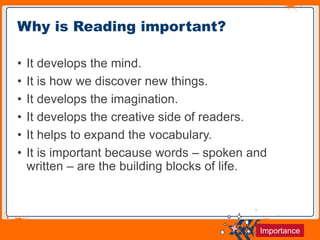
• It develops the mind.
• It is how we discover new things.
• It develops the imagination.
• It develops the creative side of readers.
• It helps to expand the vocabulary.
• It is important because words – spoken and
written – are the building blocks of life.
Why is Reading important?
Importance
Jens Martensson
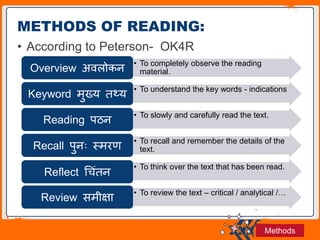
• According to Peterson- OK4R
METHODS OF READING:
• To completely observe the reading
material.
Overview अवलोकन
• To understand the key words - indications
Keyword मुख्य तथ्य
• To slowly and carefully read the text.
Reading पठन
• To recall and remember the details of the
text.
Recall पुनः स्मरण
• To think over the text that has been read.
Reflect च िंतन
• To review the text – critical / analytical /…
Review समीक्षा
Methods
For feedback and suggestions mail at-
shaini1010@gmail.com

Reading.pptx

  • 2.
    A cognitive processof decoding symbols to derive meaning from text. (…. making meaning from print)
  • 3.
    Decoding डिकोडििंग शब्दों/प्रतीकों को समझना Comprehension अवबोध /समझ ववशशष्ठ अर्थ का ननमाथण Retention अवधारण
  • 4.
    Jens Martensson Critical Understanding समीक्षात्मकसमझ Inferential Understanding व्याख्यात्मक समझ Literal Understanding शाब्ब्दक समझ LEVELS OF READING… Levels
  • 5.
    Jens Martensson ‘Reading onthe lines’- • Fundamental part of reading. • It deals with the recognition of words and understanding their meanings. Key questions- • Who? What? When? Where? Literal Understanding Literal
  • 6.
    Jens Martensson ‘Reading betweenthe Lines’- • Understanding the meaning that is not obvious. • Personal connection to the words. Search for clues within the text. • Interpret, reason, classify. Key questions- • What is the author trying to say? What does the text suggest? Inferential Understanding Inferential
  • 7.
    Jens Martensson ‘Reading beyondthe lines’- • Make connections outside of the text. • Evaluate according to one’s own own experiences. Key questions- • Why is this important? What does this mean to me? What does this mean to others? Critical Understanding Critical
  • 8.
    Jens Martensson FACTORS INFLUENCINGACQUISITION OF READING ABILITY … Factors
  • 9.
    Jens Martensson • गहनपठन • व्यापक पठन • क्रम वीक्षण पठन • शशप्रगामी पठन Skimming Scanning Intensive Reading Extensive Reading TYPES OF READING… Types
  • 10.
    Jens Martensson • Speedreading technique for getting general idea of a text • Reading rapidly for the main points. • Skimming is used to quickly gather the most important information or gist. • Run your eyes over the text. • It is not essential to understand each word while skimming. SKIMMING: Skimming
  • 11.
    Jens Martensson • Readthe title first • Read headings and sub-headings • Read the first line or the introduction • Read the first sentence of each paragraph • Notice any italicized or boldface phrases or words • Notice any pictures, graphs or charts • Read the summary of the last paragraph carefully Steps of Skimming: Steps
  • 12.
    Jens Martensson • Specificreading skill which involves quickly searching through the texts for specific piece of information, be it key words or phrases • Reading rapidly through a text to find specific information required. • Scanning is used to find a particular piece of information. • Run your eyes over the text looking for the specific information. SCANNING: Scanning
  • 13.
    Jens Martensson • Havebasic idea about the text • Notice how the information is arranged • Gain an overview • Start scanning the text by allowing your eyes to move quickly over a page • When required information is located, slow down to read the relevant section more thoroughly Steps of Scanning: Steps
  • 14.
    Jens Martensson • Readinglonger texts, often for pleasure and for over all understanding. • Extensive reading is used to obtain a general understanding of a subject. EXTENSIVE READING: Extensive
  • 15.
    Jens Martensson • Readingshorter texts for detailed information with an emphasis on precise understanding. • Intensive reading is used on shorter texts in order to extract specific information. • It includes very close accurate reading for detail. INTENSIVE READING: Intensive
  • 16.
    Jens Martensson • Todevelop an understanding toward directions given and follow the text accordingly. • To memorize and understand the facts, words,… • To explain and express the text • To differentiate between meaningful and meaningless text. • To correlate the text and its examples • To understand and analyze the central idea/gist of the text. • To identify the writer’s idea of composing the text and reflecting it throughout the reading PURPOSE OF READING: Purpose
  • 17.
    Jens Martensson • Itdevelops the mind. • It is how we discover new things. • It develops the imagination. • It develops the creative side of readers. • It helps to expand the vocabulary. • It is important because words – spoken and written – are the building blocks of life. Why is Reading important? Importance
  • 18.
    Jens Martensson • Accordingto Peterson- OK4R METHODS OF READING: • To completely observe the reading material. Overview अवलोकन • To understand the key words - indications Keyword मुख्य तथ्य • To slowly and carefully read the text. Reading पठन • To recall and remember the details of the text. Recall पुनः स्मरण • To think over the text that has been read. Reflect च िंतन • To review the text – critical / analytical /… Review समीक्षा Methods
  • 19.
    For feedback andsuggestions mail at- shaini1010@gmail.com