Aerospace Department 
Made by: Amr Emad
1-the definition of RC Airplane,UAVs,UAS 
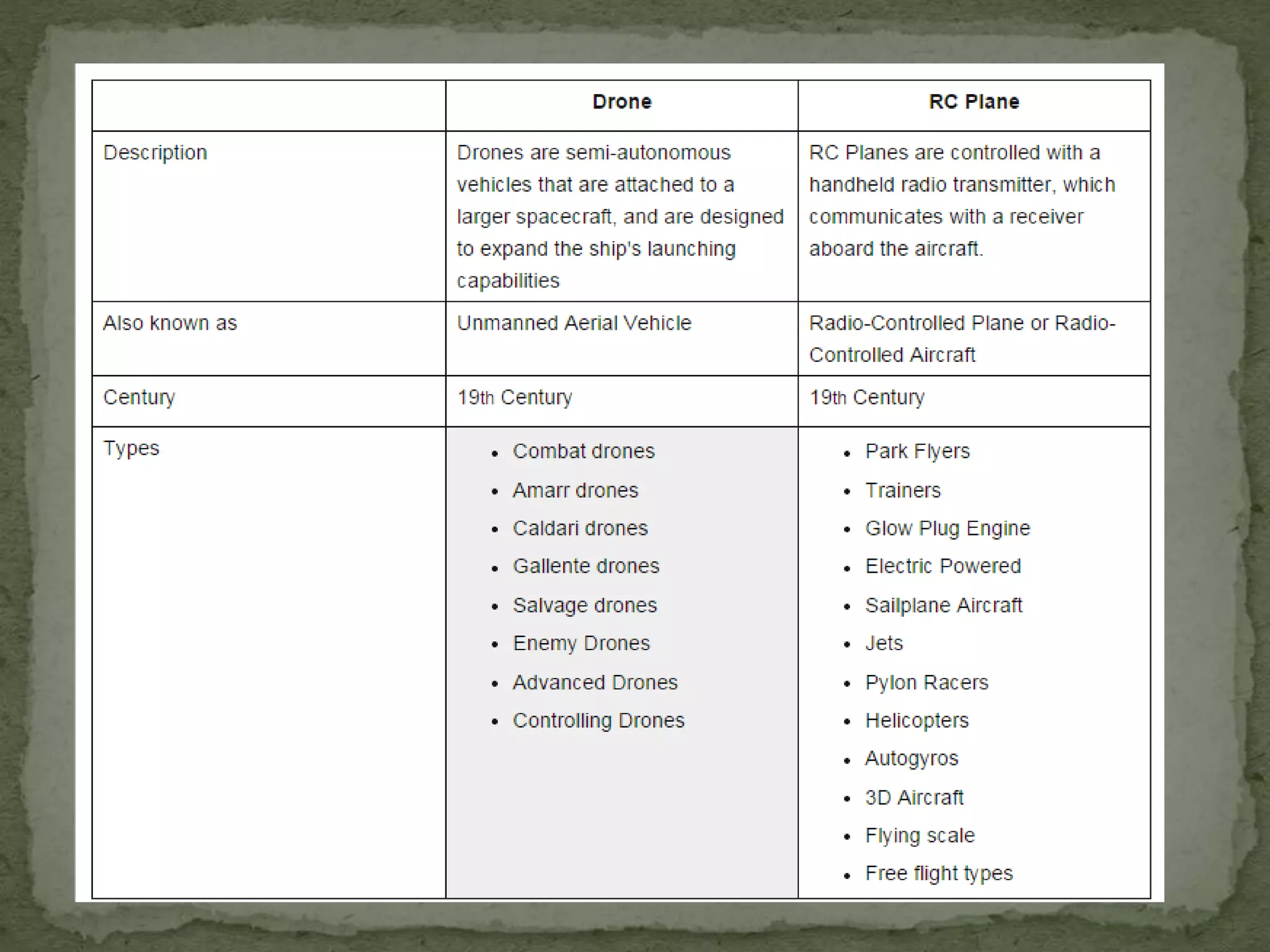
2-the difference between RC and UAV 
3-The difference between UAV and UAS 
4-Classifications of UAV 
5-Functions of UAV 
6-The history of UAV and development of it.
 Before we get too specific, let’s consider some generally agreed-upon 
definitions of the two aircraft categories. Later on, we’ll 
delve a bit deeper into specifics of several other aspects.
 Unmanned Aerial Vehicle: According to Wikipedia, a UAV, or 
drone, is controlled either autonomously or by remote control of 
a pilot. While remote piloting was the norm for many years, 
autonomous control has since become the standard method of 
operation. DIY Drones echoes this definition; claiming that UAVs 
have the capacity for autonomous flight and navigation. The 
Academy of Model Aeronautics (AMA) adds that drones are 
“computer-controlled for nearly their entire flight.” Apparently, as 
long as the autonomous system is in place and capable of 
functioning, the aircraft remains a UAV, regardless of whether or 
not the autonomous system is in use.
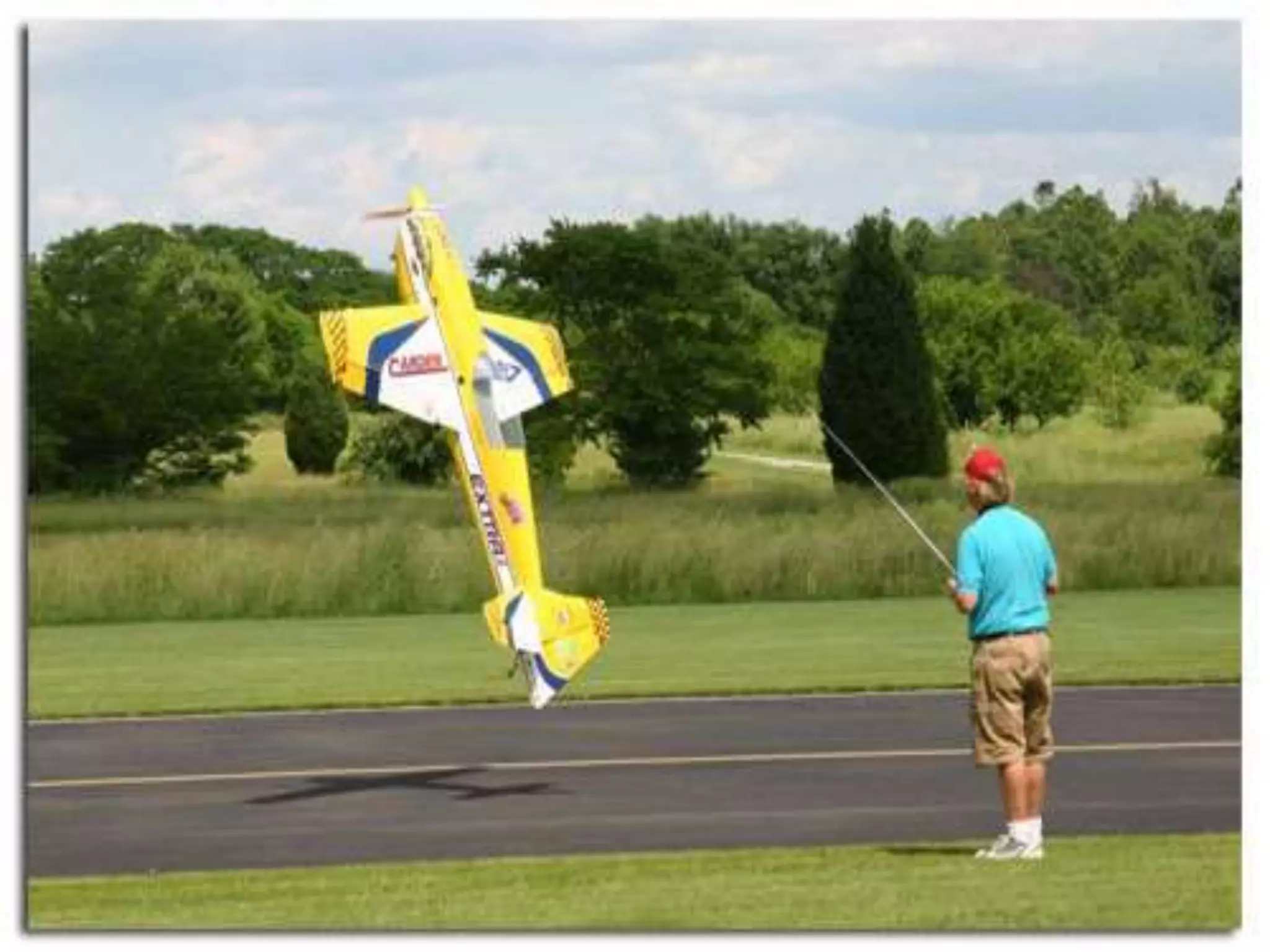
 Radio-Controlled Aircraft: By contrast, RCA (as the name 
implies) are controlled with a handheld radio transmitter, which 
communicates with a receiver aboard the aircraft. The receiver 
directs the aircraft’s servos to move the control surfaces based 
on pilot input.
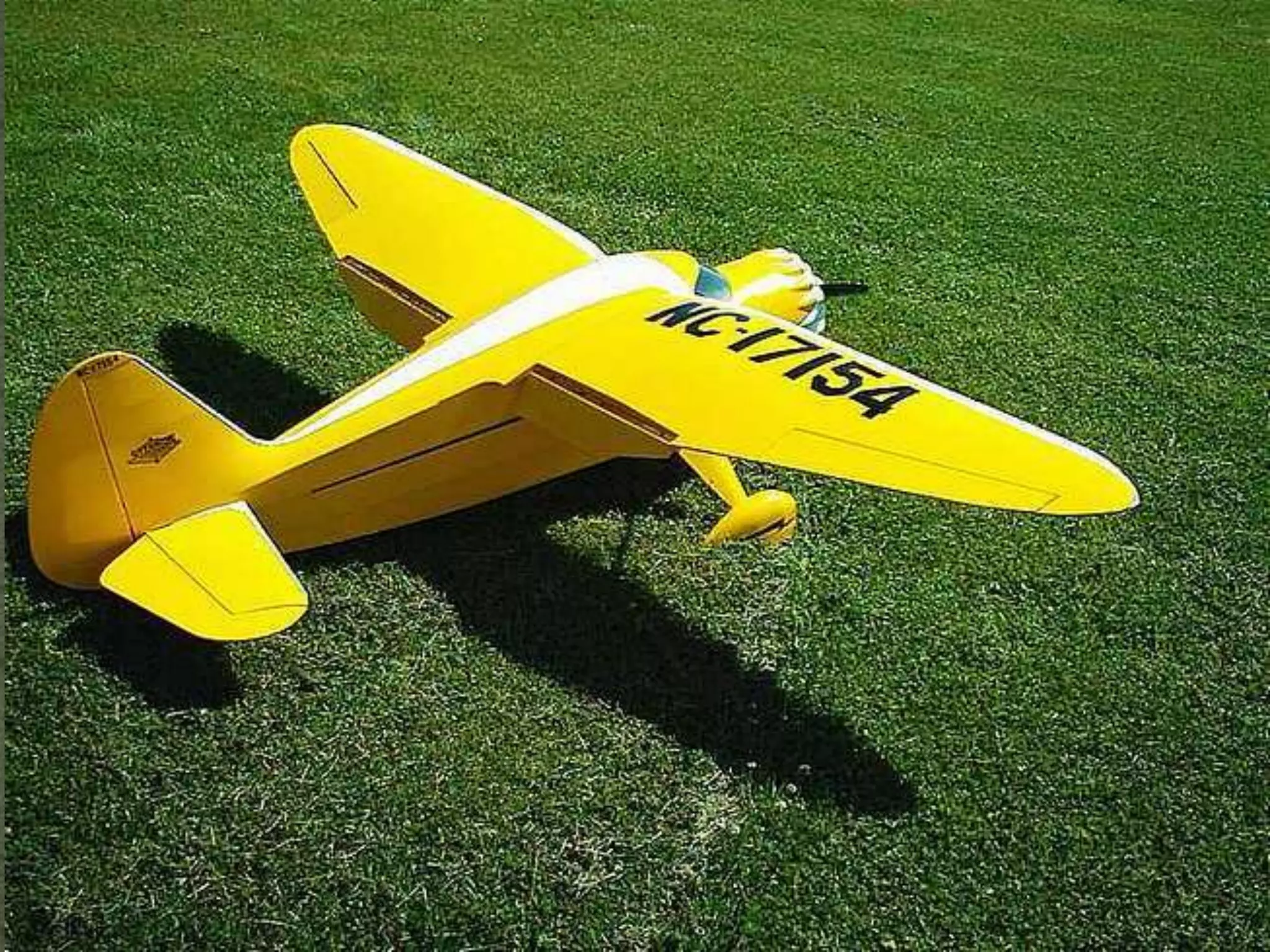
 RC plane becomes a UAV with the addition of an autopilot 
Per their website, AMA claims that an RC flier “manually controls 
the aircraft via R/C for nearly the entire flight.” Even if an 
autopilot is installed and occasionally used
 RCA: Nearly everyone seems to agree that R/C aircraft are 
operated for recreational purposes only 
Drone: In contrast to RCA, one of the generally agreed-upon 
requirements for UAVs is that these aircraft are mission-oriented, 
transport a payload, or otherwise perform some sort of practical 
function. 
While such pursuits have historically been for military purposes, 
commercial and non-military
 RCA: Currently, unoccupied aircraft that are flown strictly for 
recreational purposes aren’t subject to FAA certification or 
oversight(Federal Aviation Administration) 
provided they comply with certain operating conditions 
(discussed later)
 Commercial RCAs: All recreational, unpiloted aircraft are 
prohibited from engaging in any type of commercial activity. To 
be eligible for commercial operations, the system(s) must meet 
the equipment and certification requirements of actual drones 
(specifics to follow)
 Government Drones: To operate in the national airspace system 
(NAS), government UAVs must obtain a Certificate of 
Authorization (COA) or Waiver
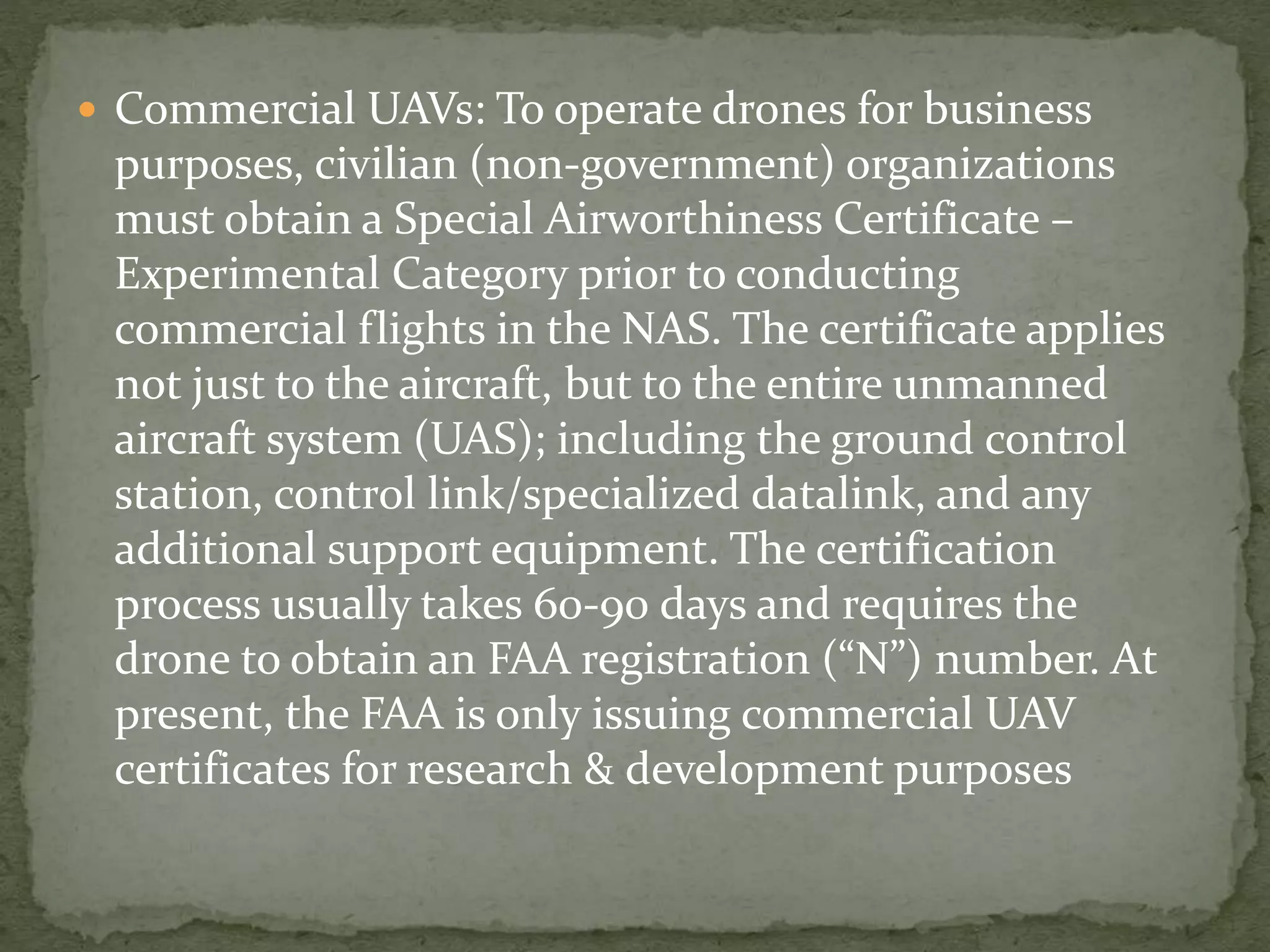
 Commercial UAVs: To operate drones for business 
purposes, civilian (non-government) organizations 
must obtain a Special Airworthiness Certificate – 
Experimental Category prior to conducting 
commercial flights in the NAS. The certificate applies 
not just to the aircraft, but to the entire unmanned 
aircraft system (UAS); including the ground control 
station, control link/specialized datalink, and any 
additional support equipment. The certification 
process usually takes 60-90 days and requires the 
drone to obtain an FAA registration (“N”) number. At 
present, the FAA is only issuing commercial UAV 
certificates for research & development purposes
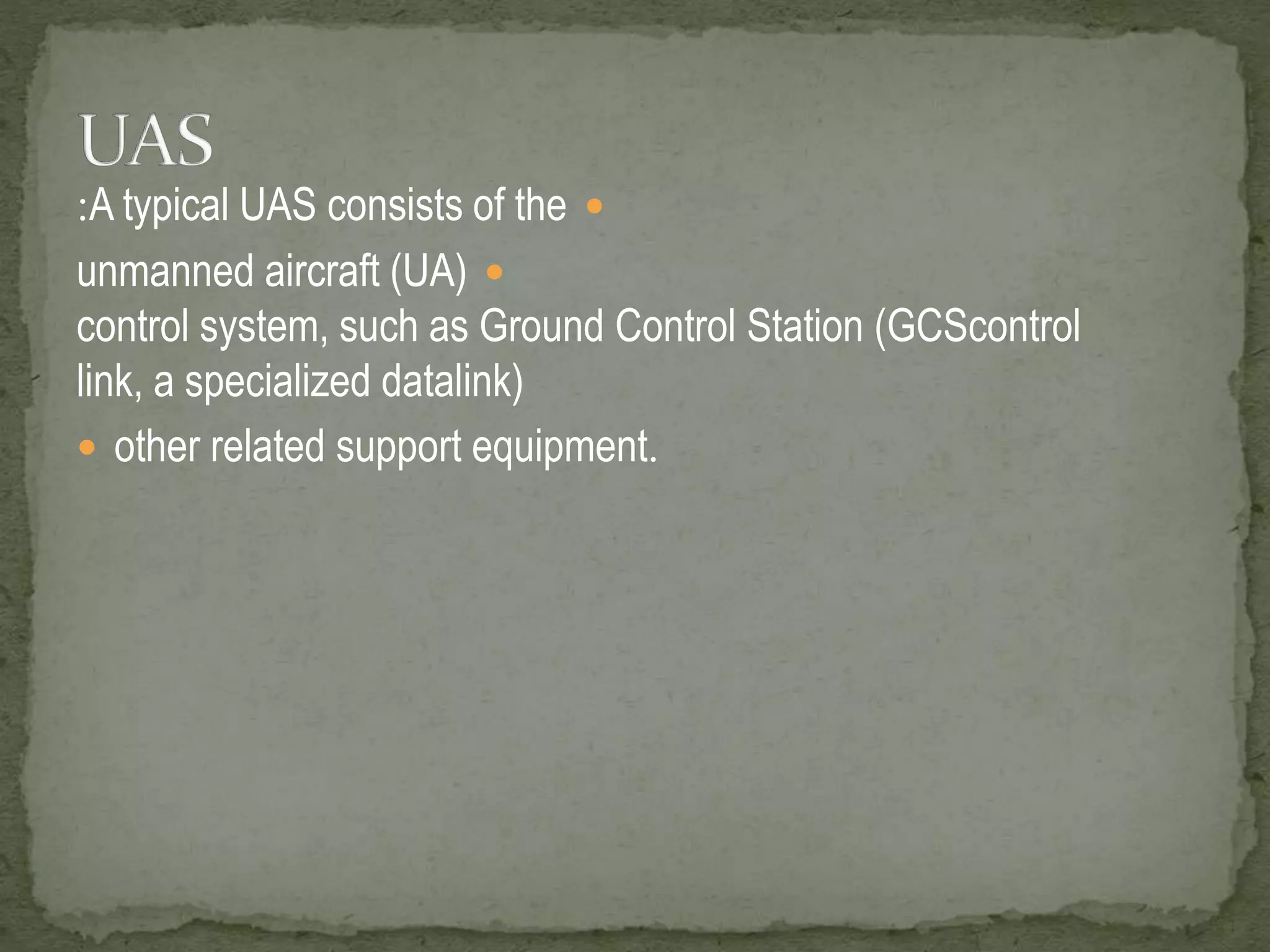
:A typical UAS consists of the  
unmanned aircraft (UA)  
control system, such as Ground Control Station (GCScontrol 
link, a specialized datalink) 
 other related support equipment.
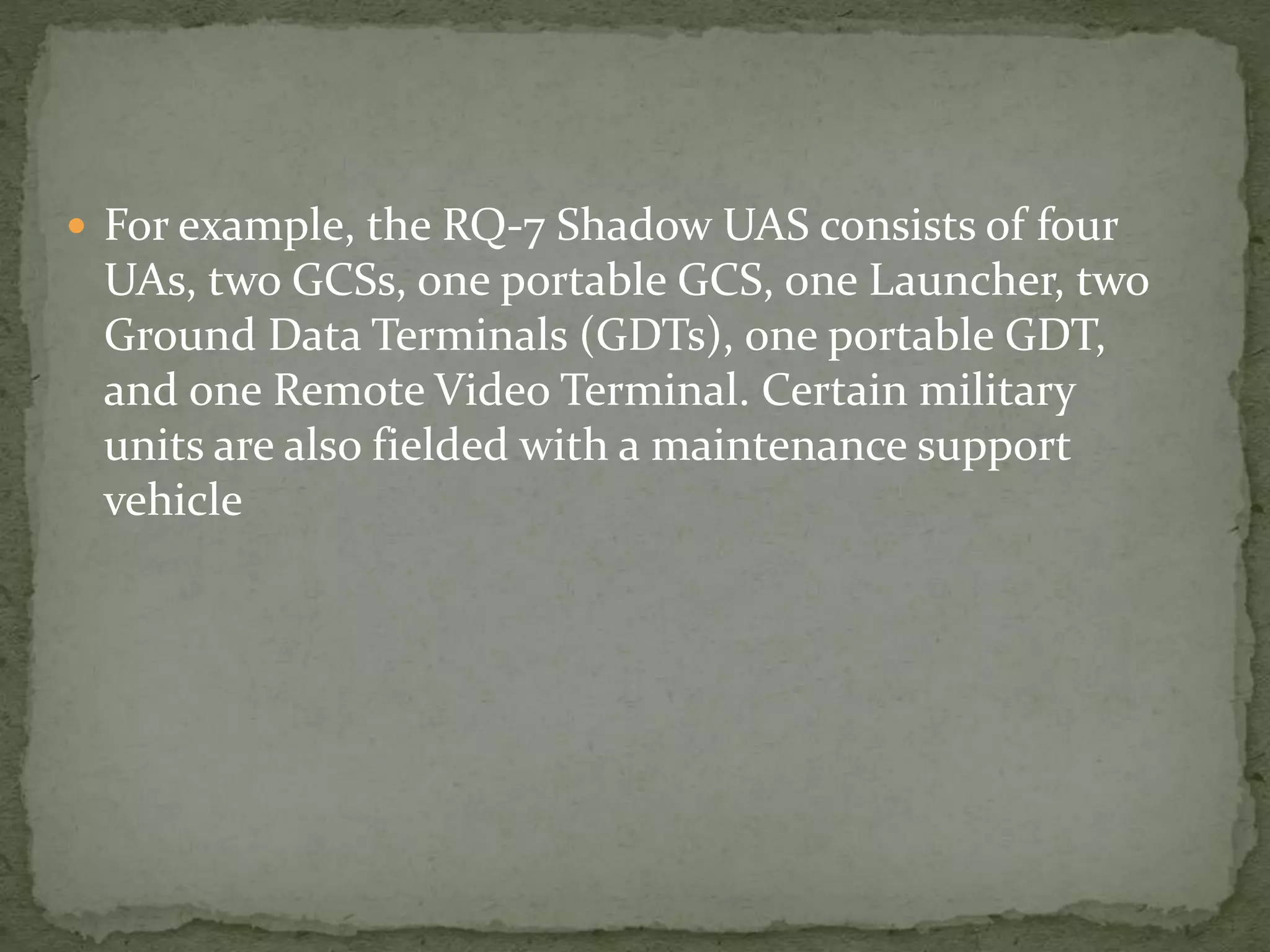
 For example, the RQ-7 Shadow UAS consists of four 
UAs, two GCSs, one portable GCS, one Launcher, two 
Ground Data Terminals (GDTs), one portable GDT, 
and one Remote Video Terminal. Certain military 
units are also fielded with a maintenance support 
vehicle
 target and decoy 
research and development 
reconnaissance 
logistics 
civil and commercial UAVs 
combat.
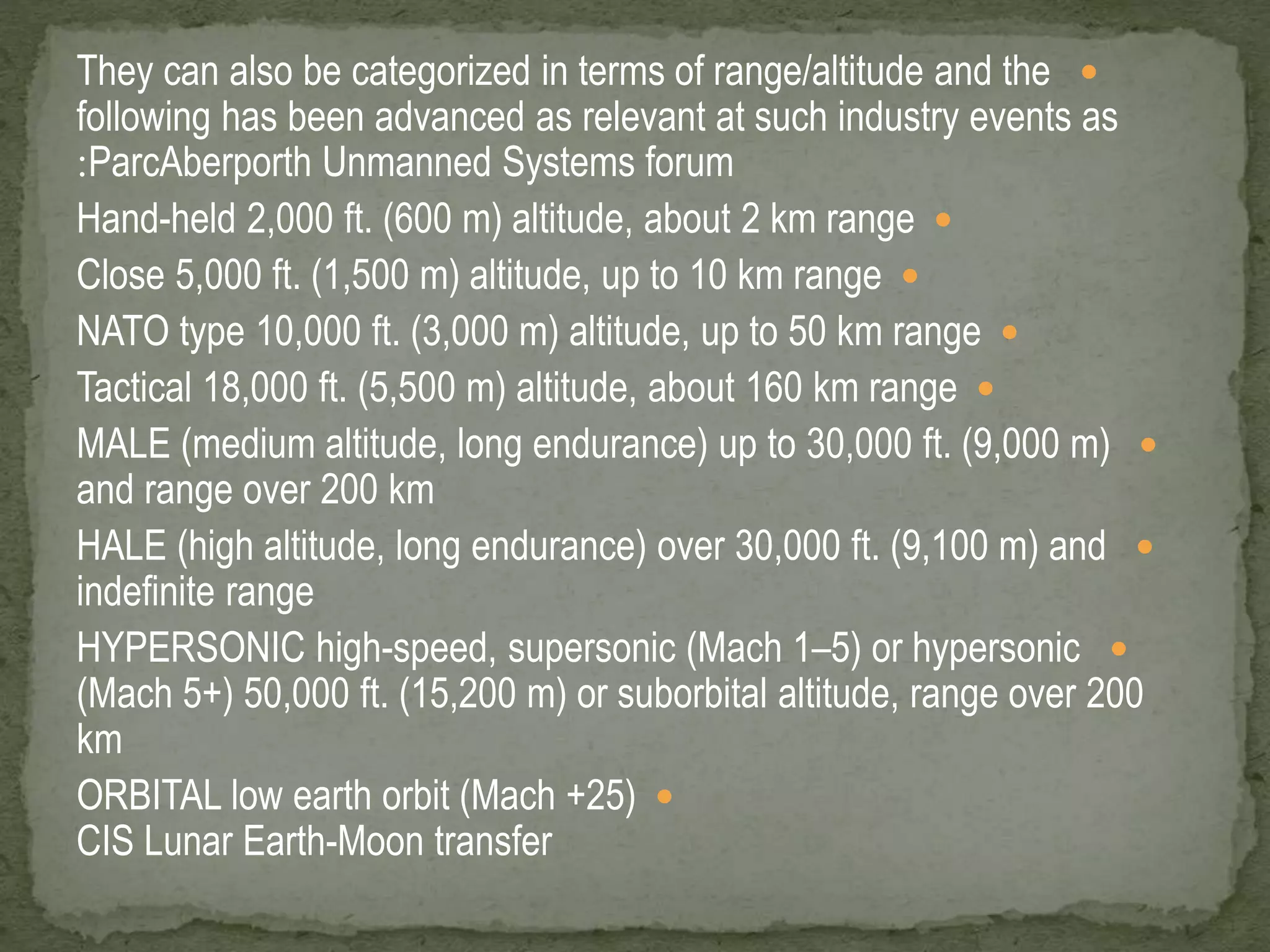
They can also be categorized in terms of range/altitude and the  
following has been advanced as relevant at such industry events as 
:ParcAberporth Unmanned Systems forum 
Hand-held 2,000 ft. (600 m) altitude, about 2 km range  
Close 5,000 ft. (1,500 m) altitude, up to 10 km range  
NATO type 10,000 ft. (3,000 m) altitude, up to 50 km range  
Tactical 18,000 ft. (5,500 m) altitude, about 160 km range  
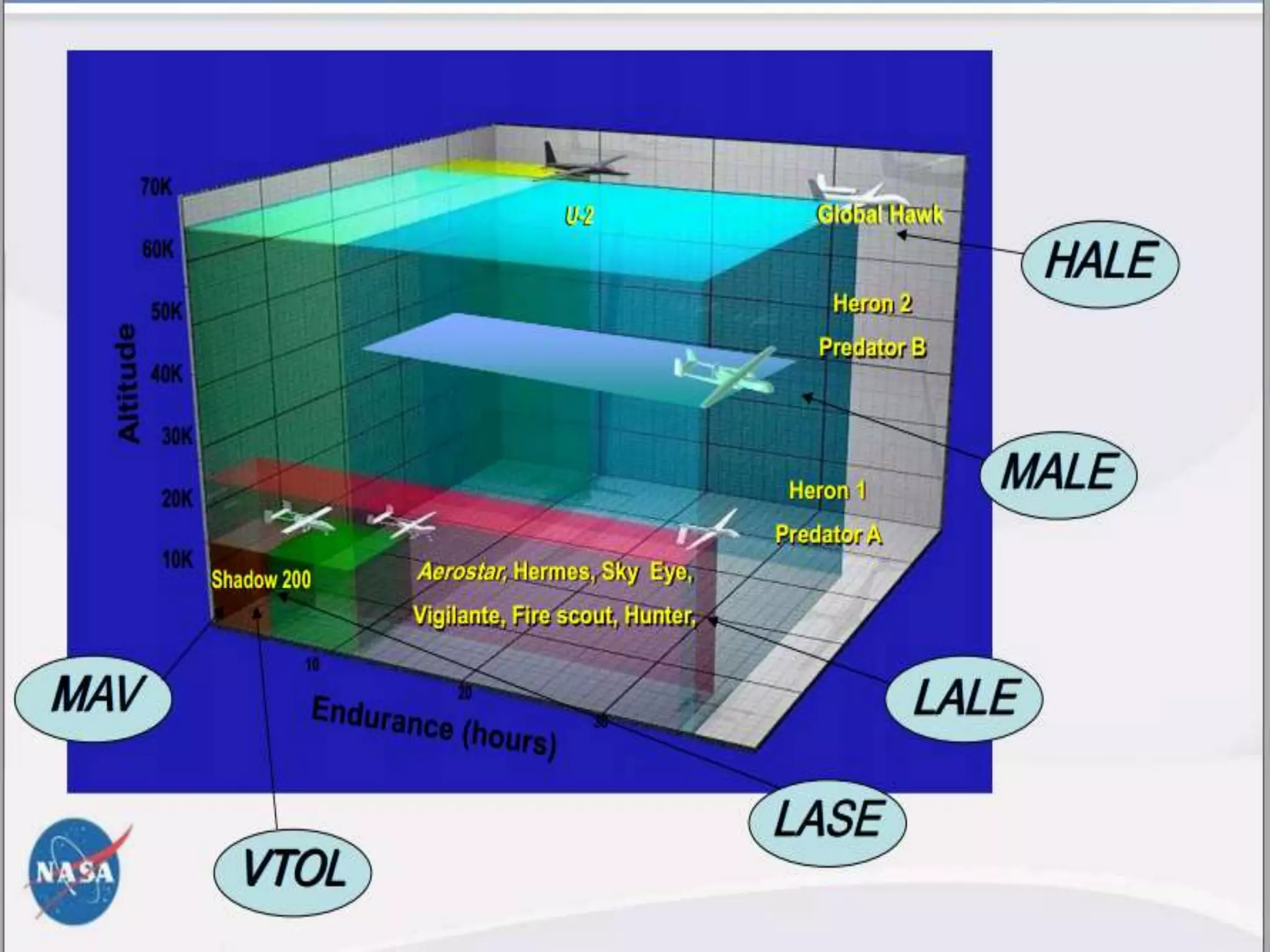
MALE (medium altitude, long endurance) up to 30,000 ft. (9,000 m)  
and range over 200 km 
HALE (high altitude, long endurance) over 30,000 ft. (9,100 m) and  
indefinite range 
HYPERSONIC high-speed, supersonic (Mach 1–5) or hypersonic  
(Mach 5+) 50,000 ft. (15,200 m) or suborbital altitude, range over 200 
km 
ORBITAL low earth orbit (Mach +25)  
CIS Lunar Earth-Moon transfer
Remote Sensing  
Transport  
Scientific Research  
Armed Attack  
 Search and Rescue
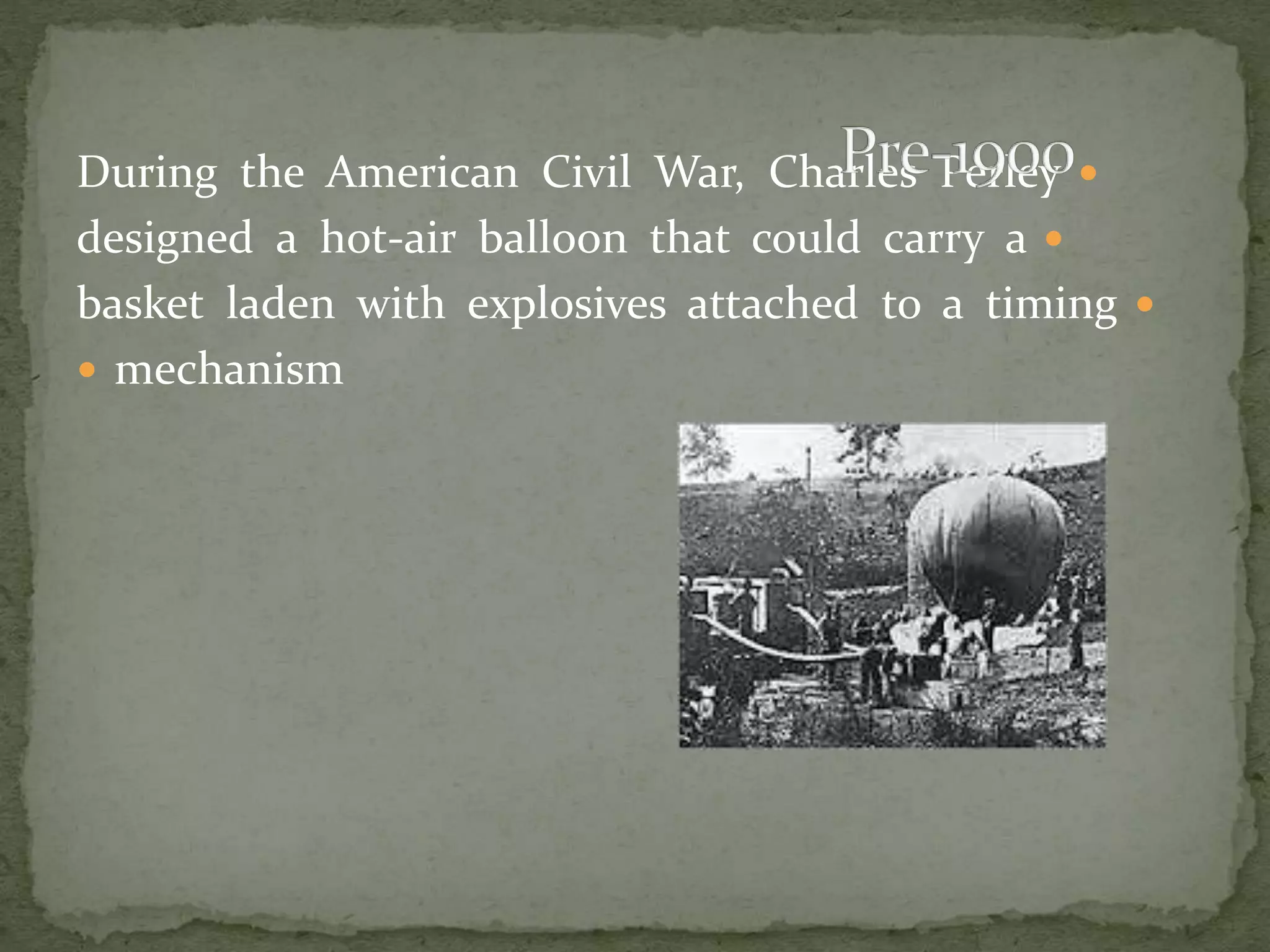
During the American Civil War, Charles Perley  
designed a hot-air balloon that could carry a  
basket laden with explosives attached to a timing  
 mechanism
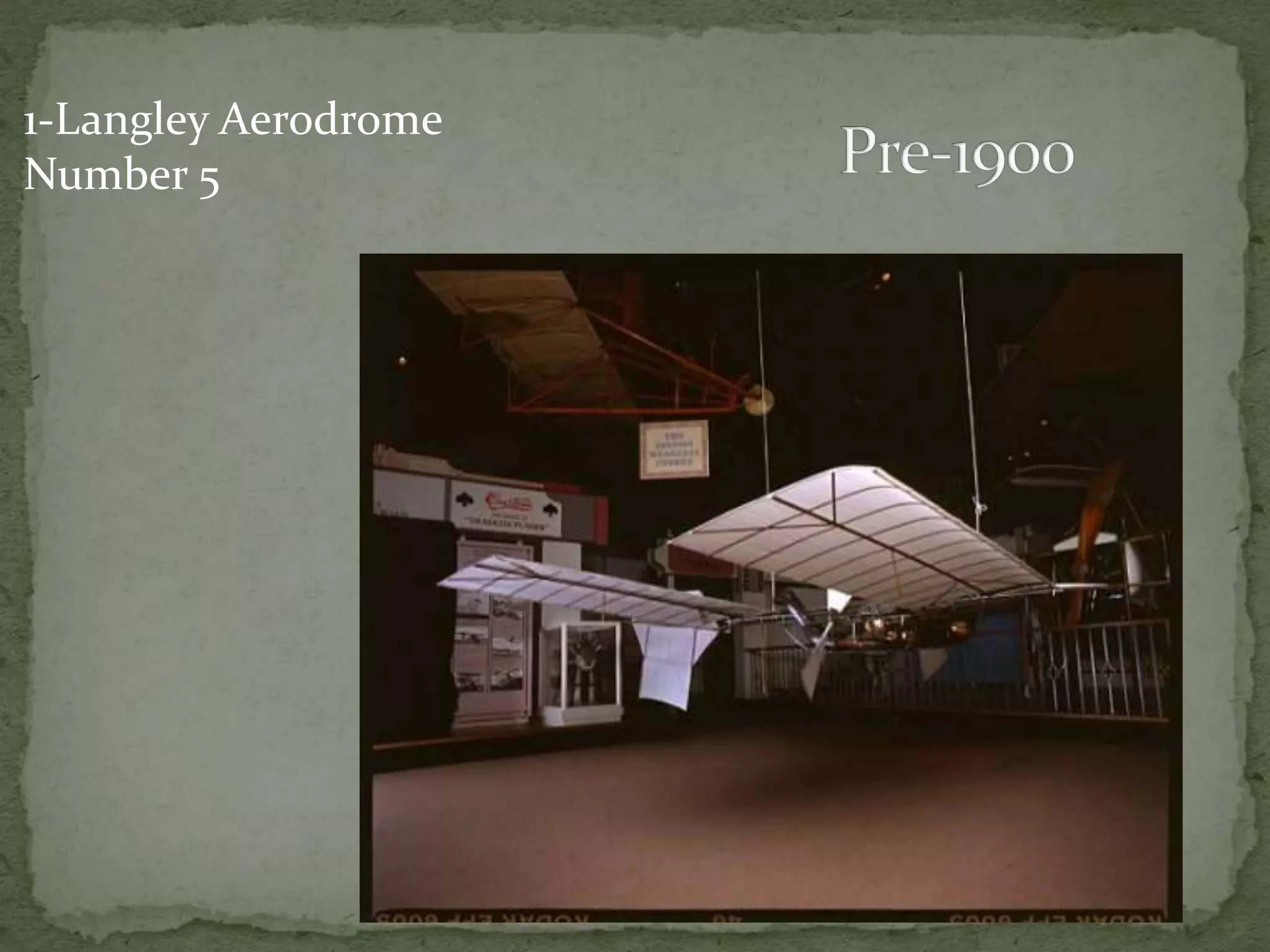
1-Langley Aerodrome 
Number 5
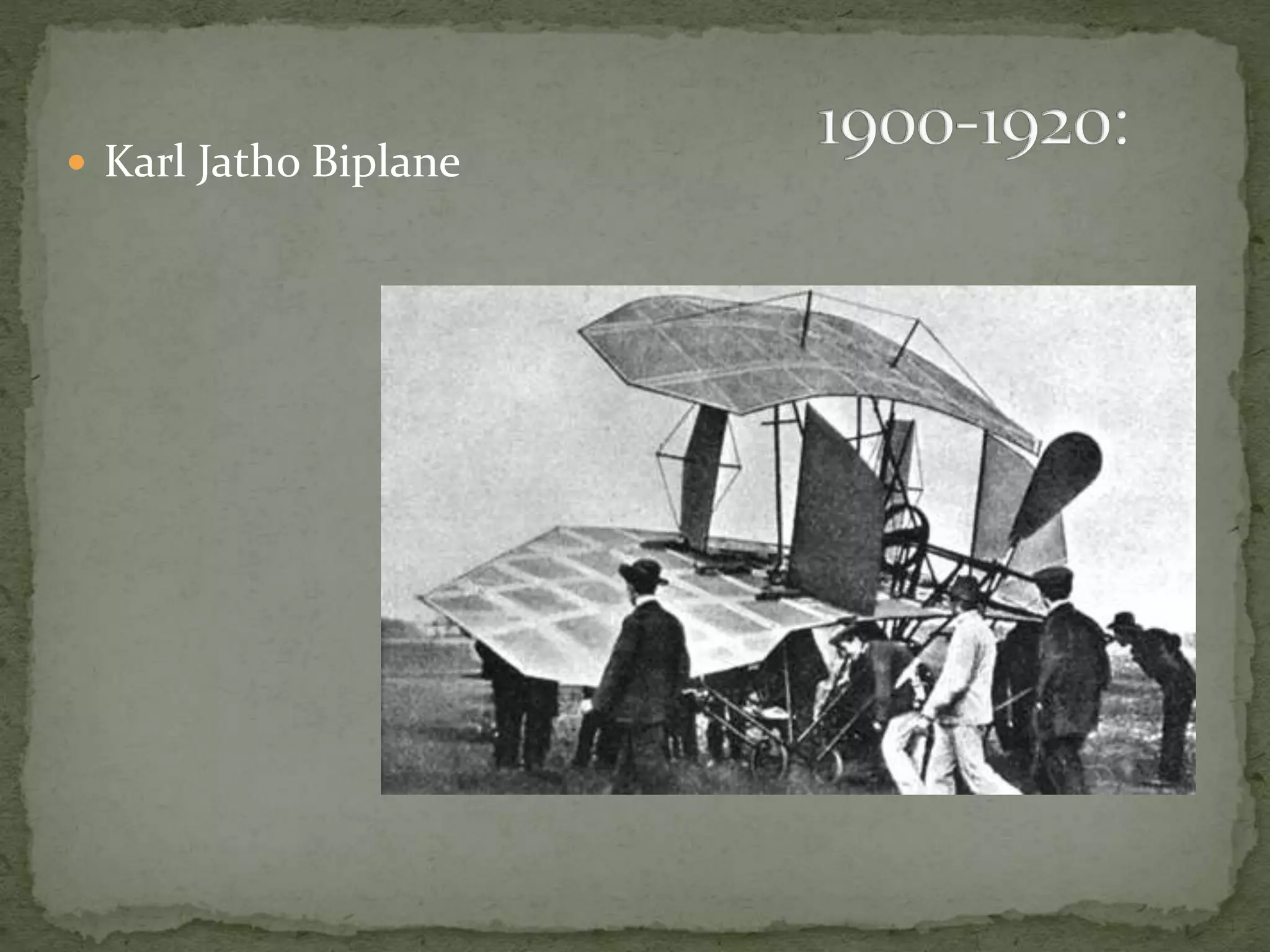
 Karl Jatho Biplane
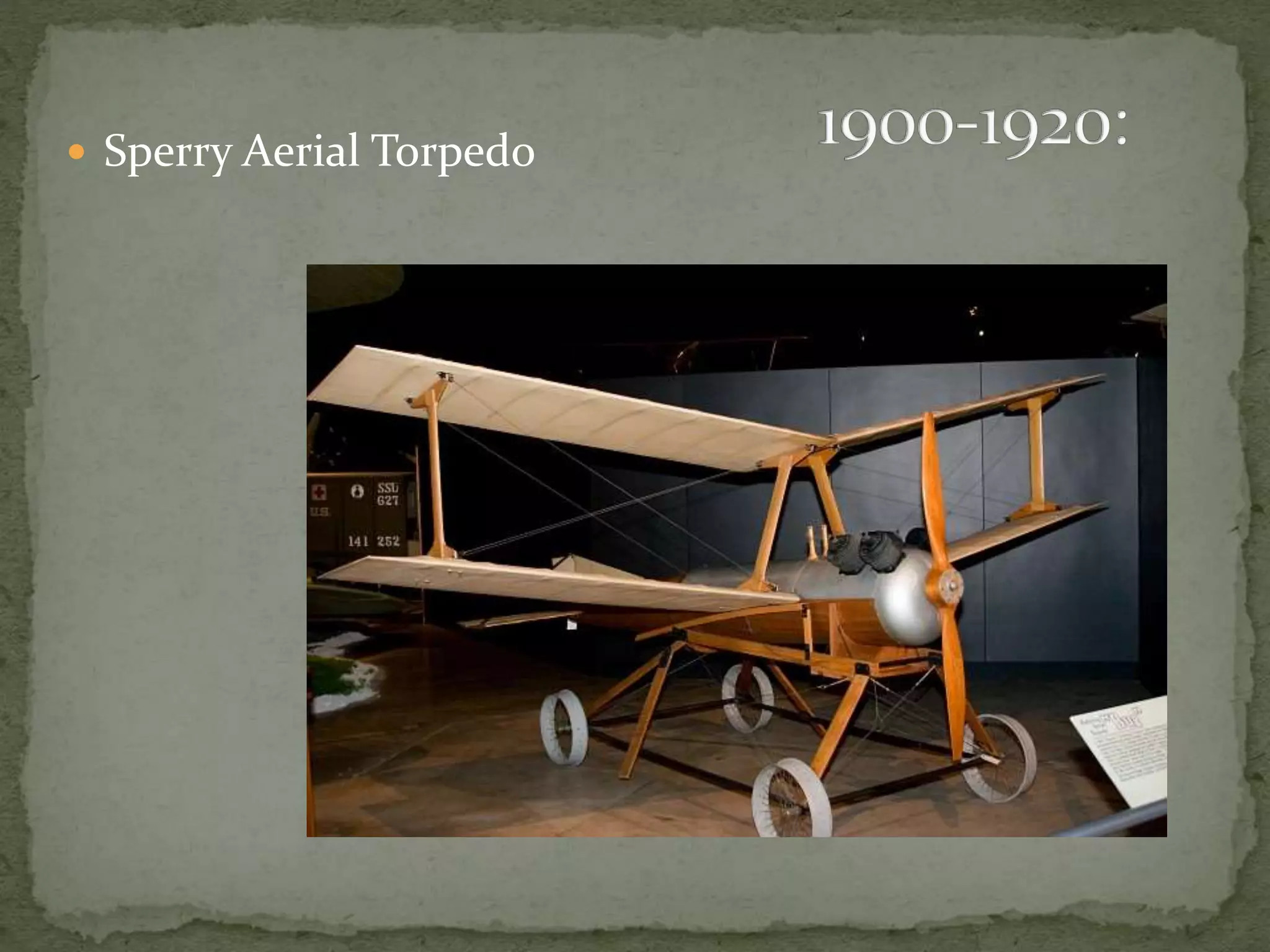
 Sperry Aerial Torpedo
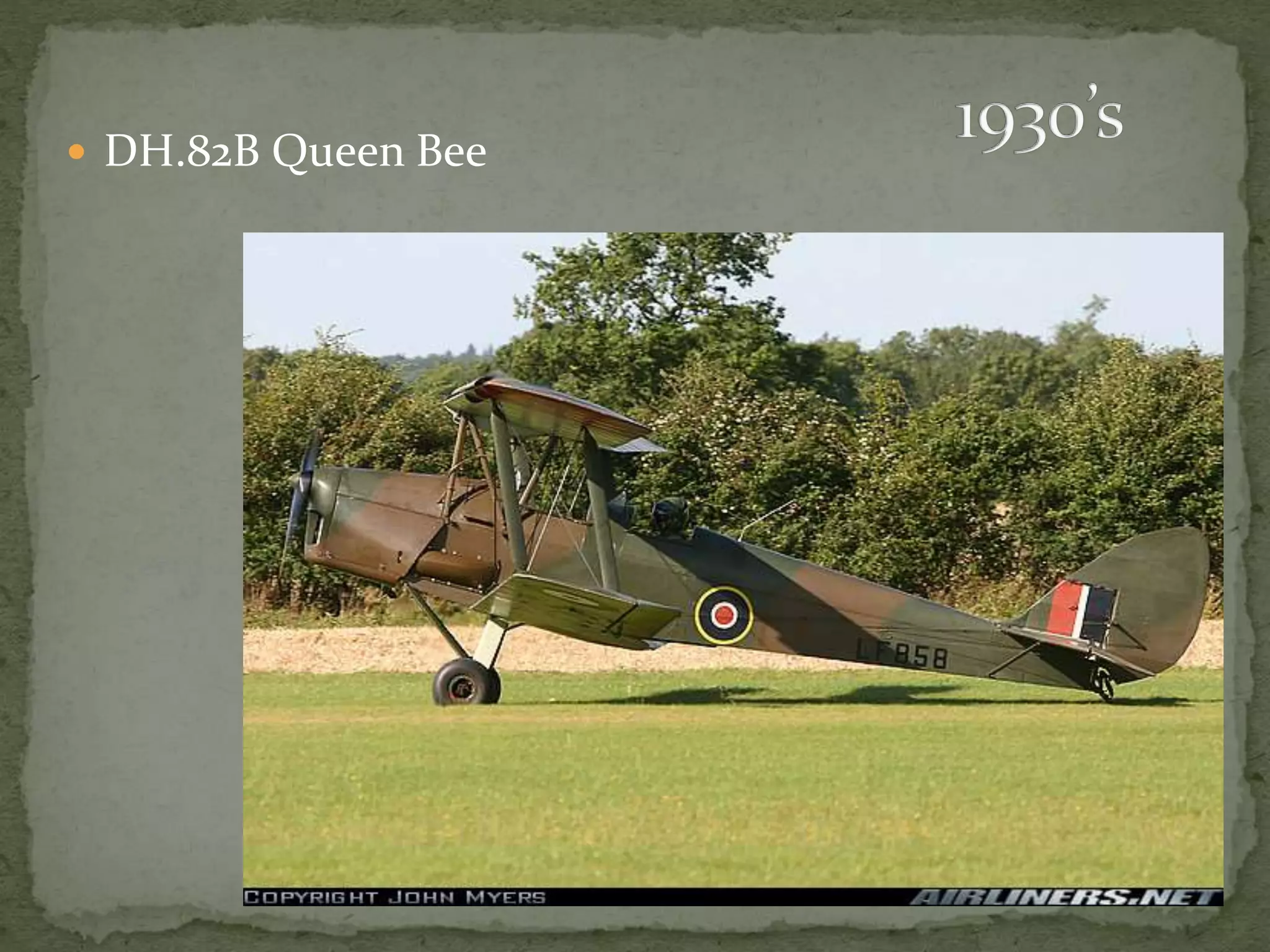
 DH.82B Queen Bee
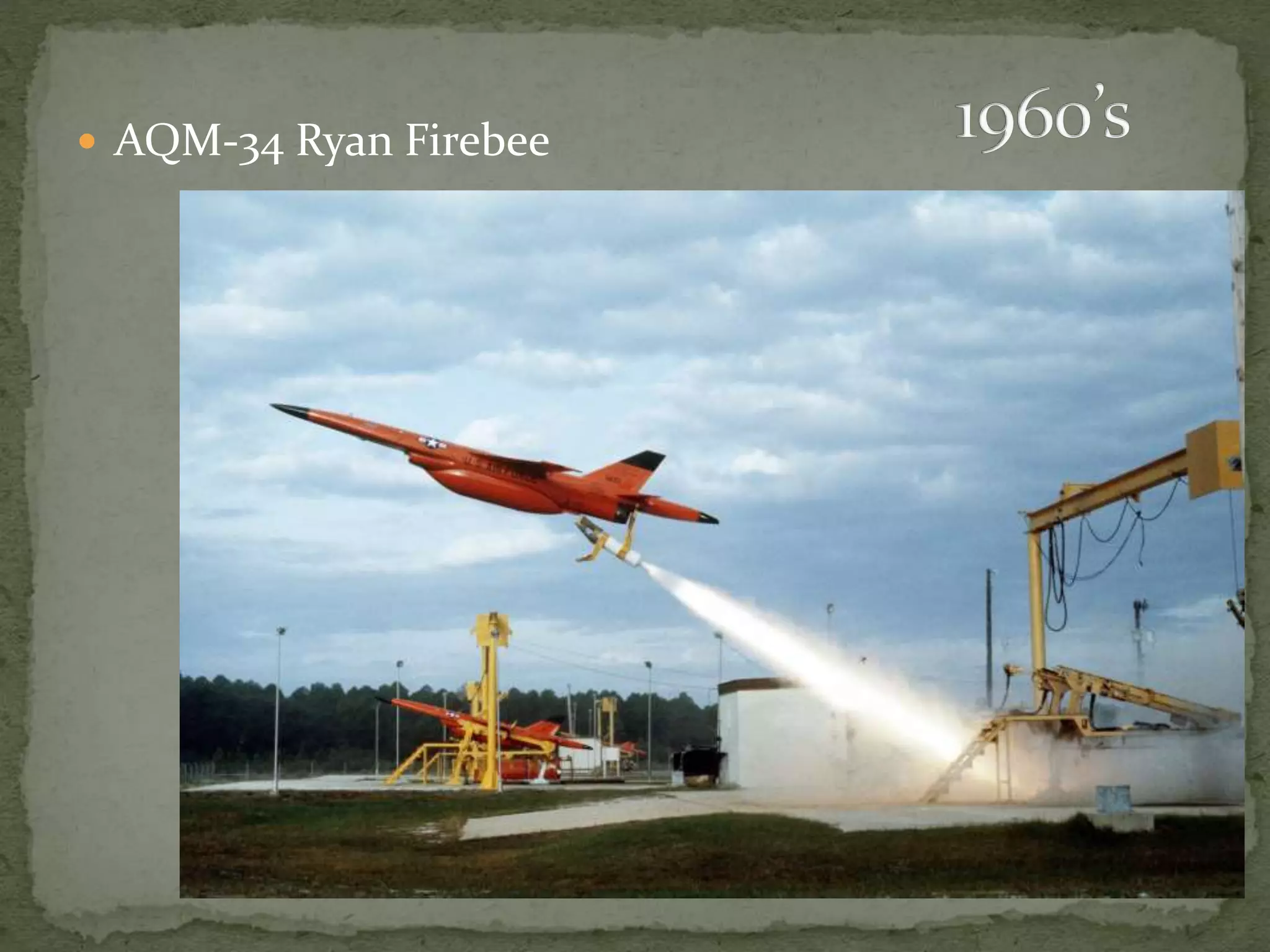
 AQM-34 Ryan Firebee
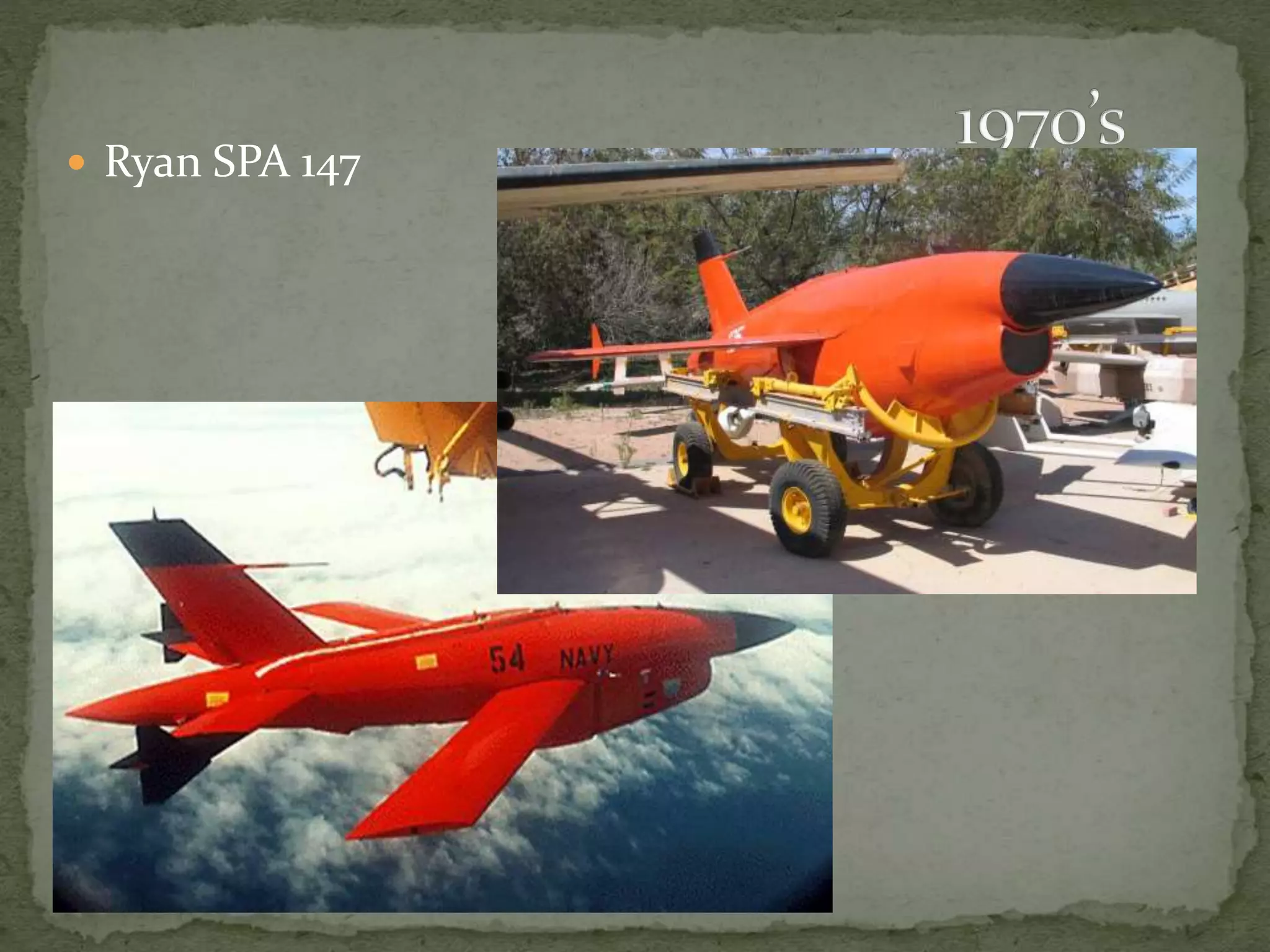
 Ryan SPA 147
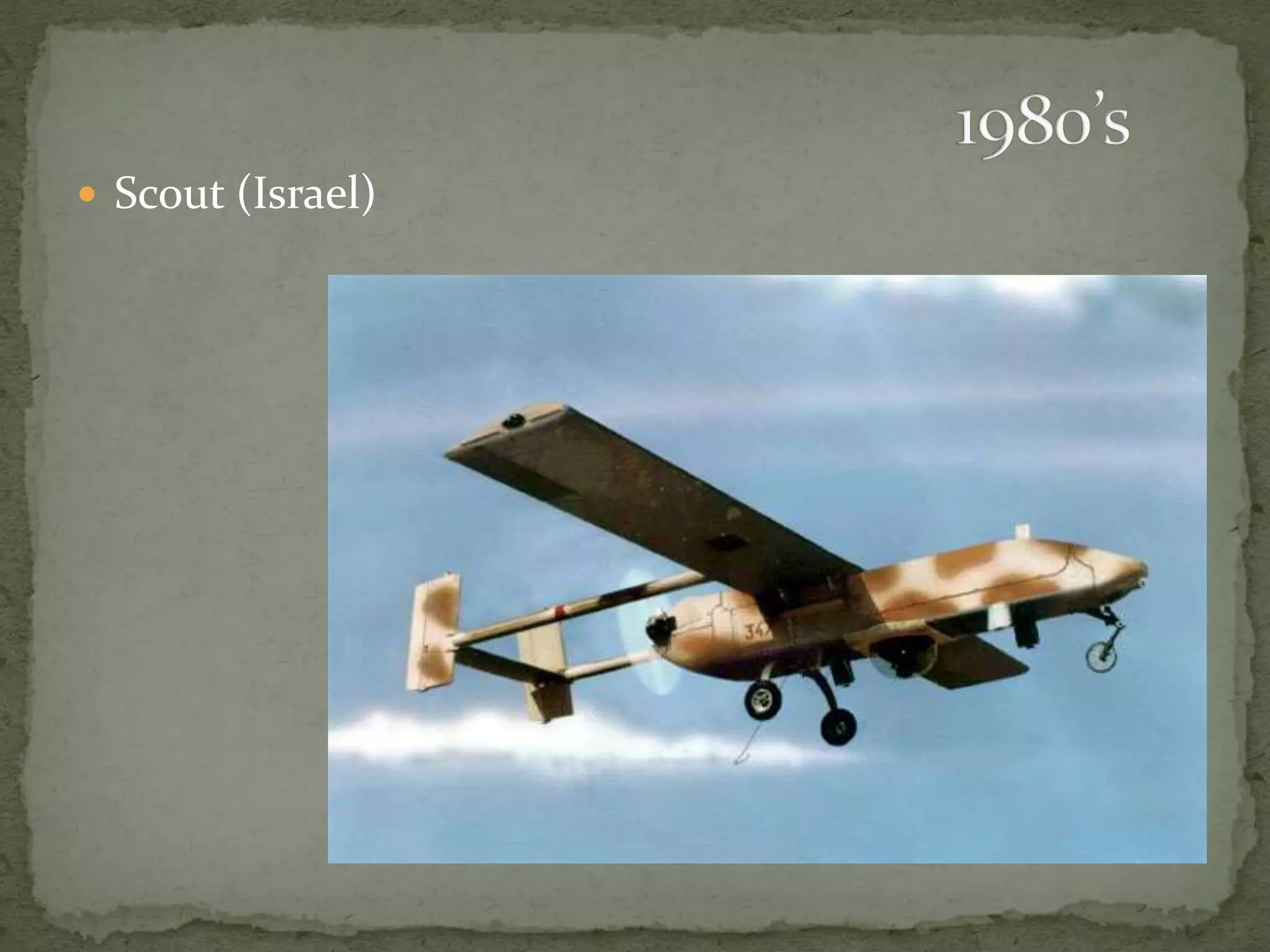
 Scout (Israel)
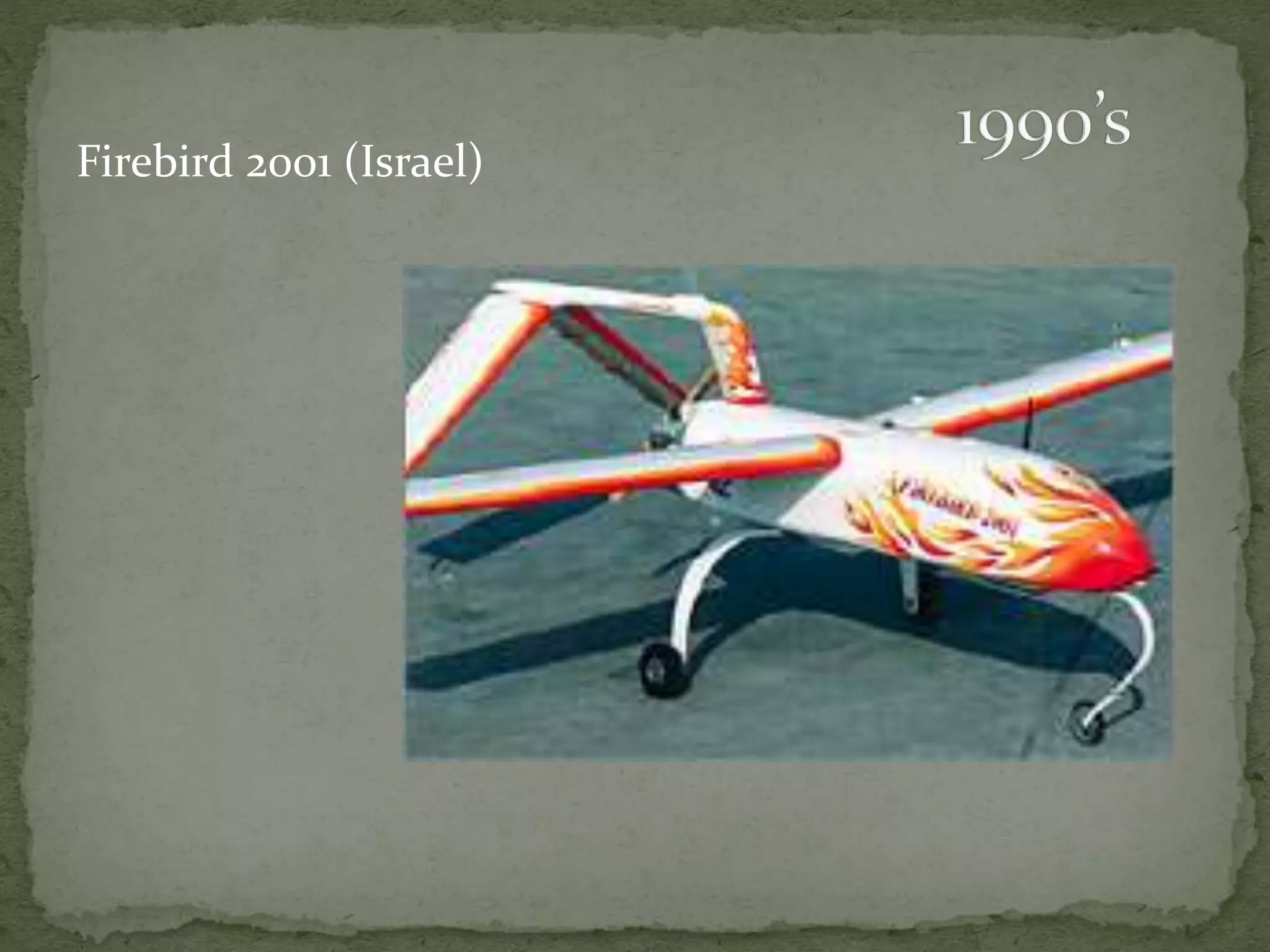
Firebird 2001 (Israel)
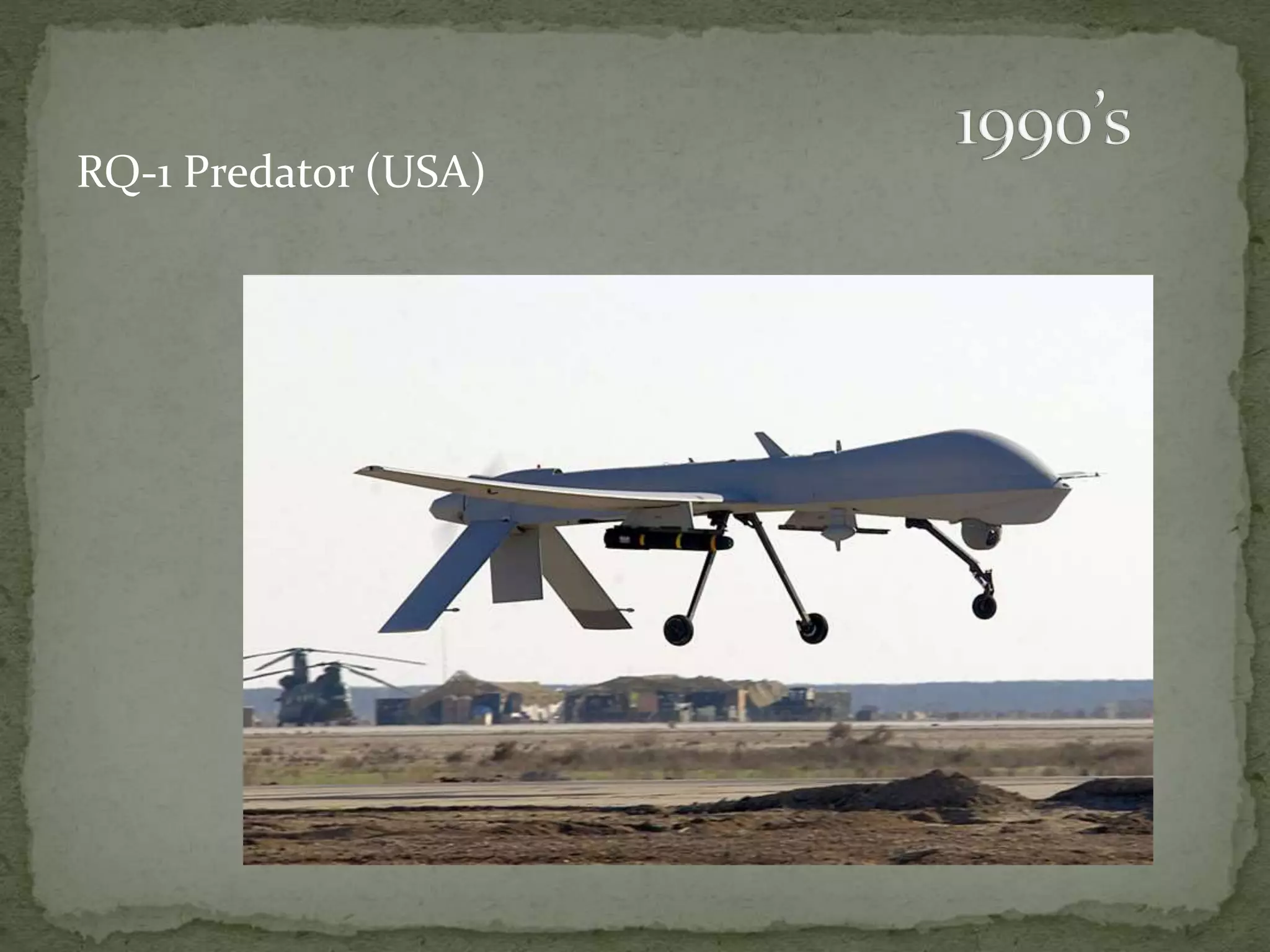
RQ-1 Predator (USA)
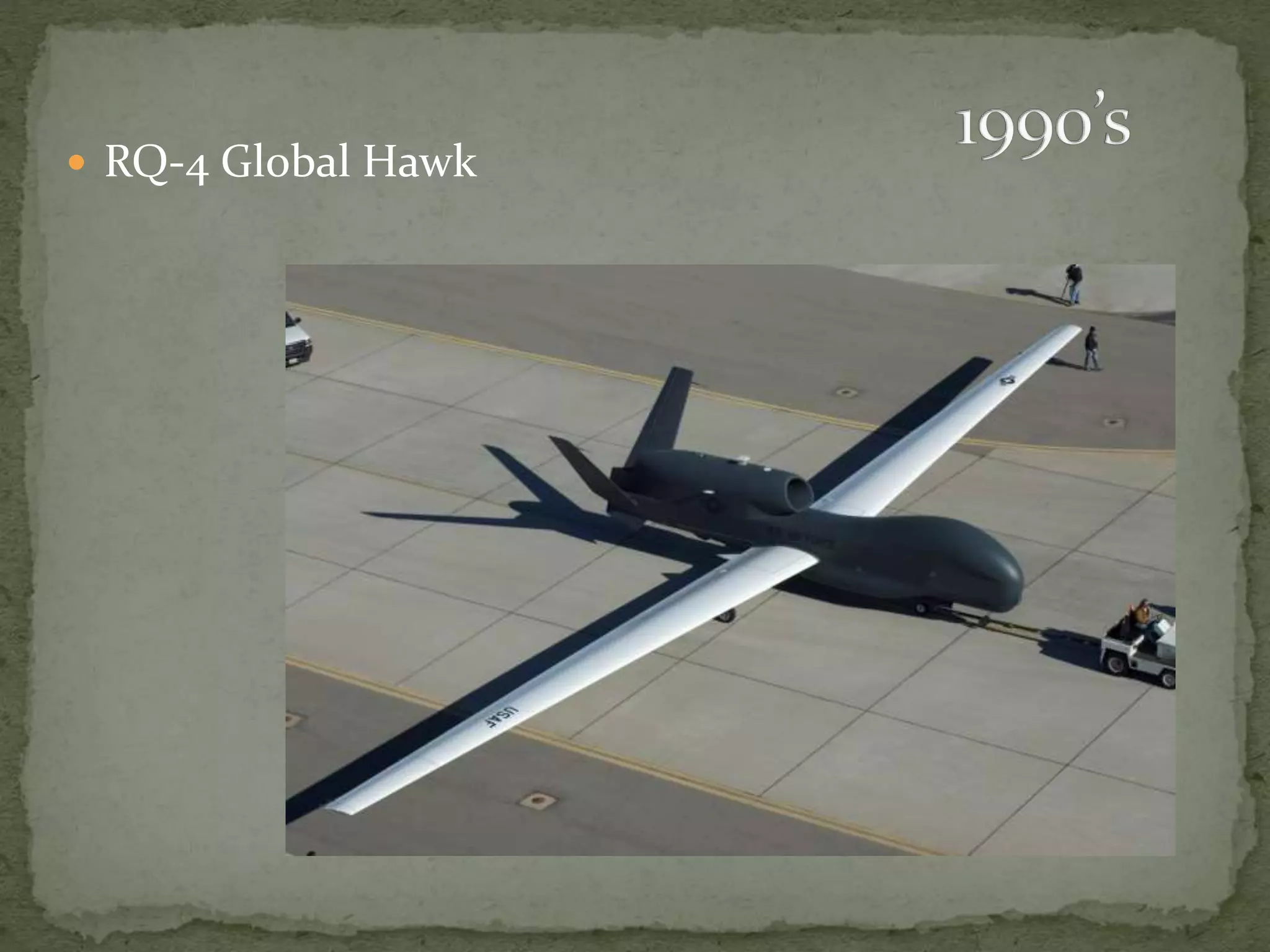
 RQ-4 Global Hawk
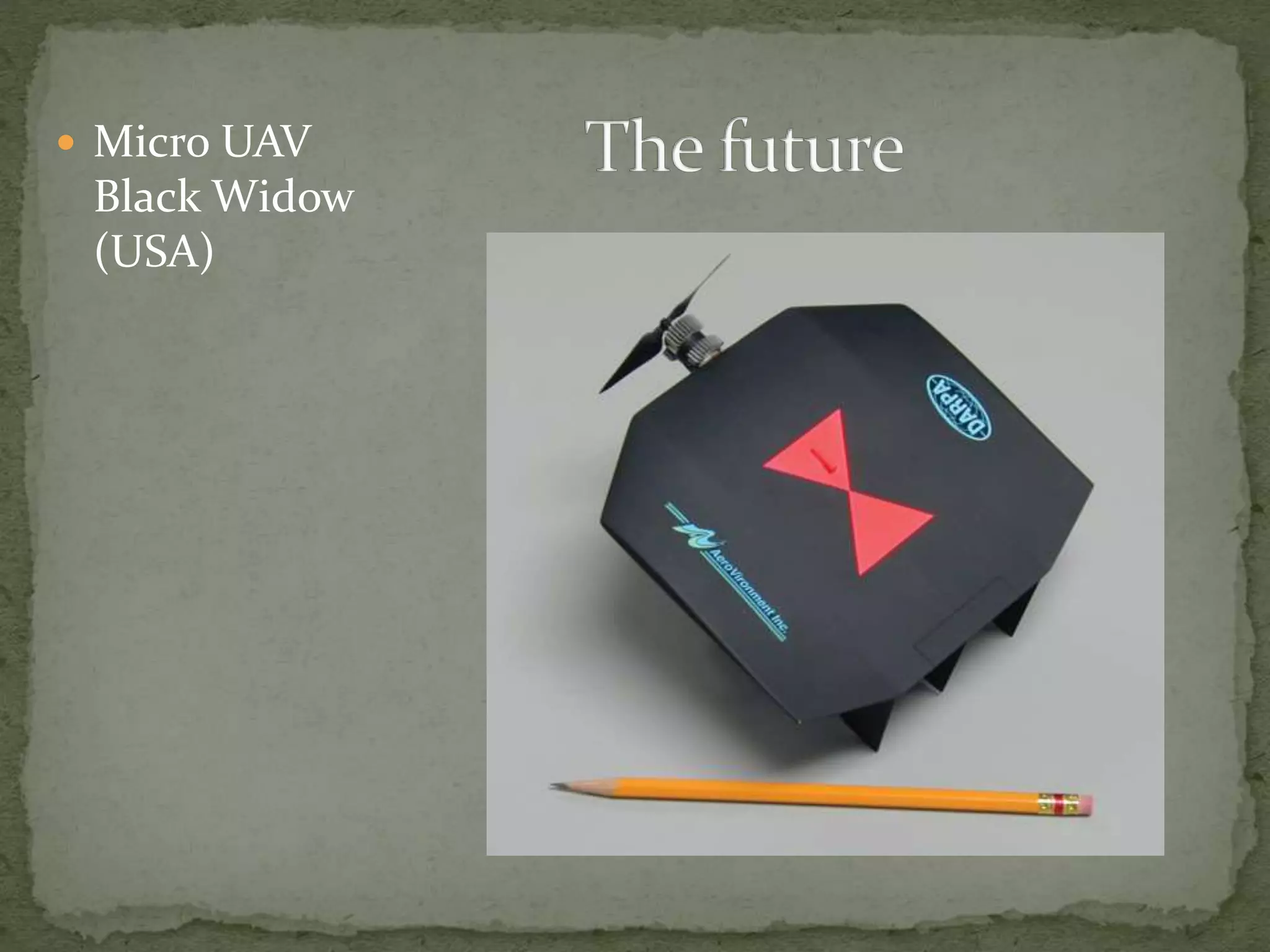
 Micro UAV 
Black Widow 
(USA)
 History of UAS by NASA 
 http://rcflightline.com/drones-vs-radio-controlled-aircraft- 
a-look-at-the-differences-between-the-two/

Unmanned Aerial Systems and its history

  • 1.
  • 2.
    1-the definition ofRC Airplane,UAVs,UAS 2-the difference between RC and UAV 3-The difference between UAV and UAS 4-Classifications of UAV 5-Functions of UAV 6-The history of UAV and development of it.
  • 3.
     Before weget too specific, let’s consider some generally agreed-upon definitions of the two aircraft categories. Later on, we’ll delve a bit deeper into specifics of several other aspects.
  • 4.
     Unmanned AerialVehicle: According to Wikipedia, a UAV, or drone, is controlled either autonomously or by remote control of a pilot. While remote piloting was the norm for many years, autonomous control has since become the standard method of operation. DIY Drones echoes this definition; claiming that UAVs have the capacity for autonomous flight and navigation. The Academy of Model Aeronautics (AMA) adds that drones are “computer-controlled for nearly their entire flight.” Apparently, as long as the autonomous system is in place and capable of functioning, the aircraft remains a UAV, regardless of whether or not the autonomous system is in use.
  • 5.
     Radio-Controlled Aircraft:By contrast, RCA (as the name implies) are controlled with a handheld radio transmitter, which communicates with a receiver aboard the aircraft. The receiver directs the aircraft’s servos to move the control surfaces based on pilot input.
  • 6.
     RC planebecomes a UAV with the addition of an autopilot Per their website, AMA claims that an RC flier “manually controls the aircraft via R/C for nearly the entire flight.” Even if an autopilot is installed and occasionally used
  • 9.
     RCA: Nearlyeveryone seems to agree that R/C aircraft are operated for recreational purposes only Drone: In contrast to RCA, one of the generally agreed-upon requirements for UAVs is that these aircraft are mission-oriented, transport a payload, or otherwise perform some sort of practical function. While such pursuits have historically been for military purposes, commercial and non-military
  • 10.
     RCA: Currently,unoccupied aircraft that are flown strictly for recreational purposes aren’t subject to FAA certification or oversight(Federal Aviation Administration) provided they comply with certain operating conditions (discussed later)
  • 11.
     Commercial RCAs:All recreational, unpiloted aircraft are prohibited from engaging in any type of commercial activity. To be eligible for commercial operations, the system(s) must meet the equipment and certification requirements of actual drones (specifics to follow)
  • 12.
     Government Drones:To operate in the national airspace system (NAS), government UAVs must obtain a Certificate of Authorization (COA) or Waiver
  • 13.
     Commercial UAVs:To operate drones for business purposes, civilian (non-government) organizations must obtain a Special Airworthiness Certificate – Experimental Category prior to conducting commercial flights in the NAS. The certificate applies not just to the aircraft, but to the entire unmanned aircraft system (UAS); including the ground control station, control link/specialized datalink, and any additional support equipment. The certification process usually takes 60-90 days and requires the drone to obtain an FAA registration (“N”) number. At present, the FAA is only issuing commercial UAV certificates for research & development purposes
  • 15.
    :A typical UASconsists of the  unmanned aircraft (UA)  control system, such as Ground Control Station (GCScontrol link, a specialized datalink)  other related support equipment.
  • 16.
     For example,the RQ-7 Shadow UAS consists of four UAs, two GCSs, one portable GCS, one Launcher, two Ground Data Terminals (GDTs), one portable GDT, and one Remote Video Terminal. Certain military units are also fielded with a maintenance support vehicle
  • 17.
     target anddecoy research and development reconnaissance logistics civil and commercial UAVs combat.
  • 18.
    They can alsobe categorized in terms of range/altitude and the  following has been advanced as relevant at such industry events as :ParcAberporth Unmanned Systems forum Hand-held 2,000 ft. (600 m) altitude, about 2 km range  Close 5,000 ft. (1,500 m) altitude, up to 10 km range  NATO type 10,000 ft. (3,000 m) altitude, up to 50 km range  Tactical 18,000 ft. (5,500 m) altitude, about 160 km range  MALE (medium altitude, long endurance) up to 30,000 ft. (9,000 m)  and range over 200 km HALE (high altitude, long endurance) over 30,000 ft. (9,100 m) and  indefinite range HYPERSONIC high-speed, supersonic (Mach 1–5) or hypersonic  (Mach 5+) 50,000 ft. (15,200 m) or suborbital altitude, range over 200 km ORBITAL low earth orbit (Mach +25)  CIS Lunar Earth-Moon transfer
  • 20.
    Remote Sensing  Transport  Scientific Research  Armed Attack   Search and Rescue
  • 21.
    During the AmericanCivil War, Charles Perley  designed a hot-air balloon that could carry a  basket laden with explosives attached to a timing   mechanism
  • 22.
  • 23.
  • 24.
  • 25.
  • 26.
  • 27.
  • 28.
  • 29.
  • 30.
  • 31.
  • 32.
     Micro UAV Black Widow (USA)
  • 33.
     History ofUAS by NASA  http://rcflightline.com/drones-vs-radio-controlled-aircraft- a-look-at-the-differences-between-the-two/