Raw water quality
(surface and ground water)
GYANENDRA BAHADUR KARKI
MANAGER
WATER QUALITY DIVISION,KUKL
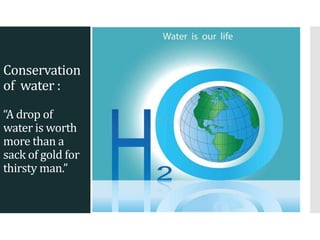
Conservation
of water :
“A drop of
water is worth
more than a
sack of gold for
thirsty man.”
INTRODUCTION
 Water is a transparent, tasteless, odourless, and nearly
colourless chemical substance that is the main
constituent of Earth's streams, lakes, and oceans, and
the fluids of most living organisms.
 Density: 997 kg/m³
 Formula: H2O
 Boiling point: 100 °C
 Melting point: 0 °C
NECESSITY OF
PURIFYING
DRINKING WATER
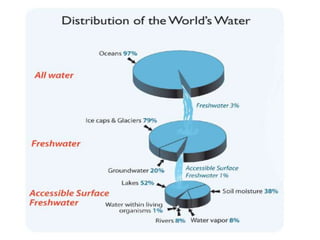
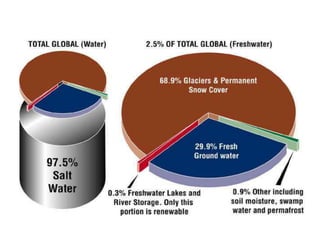
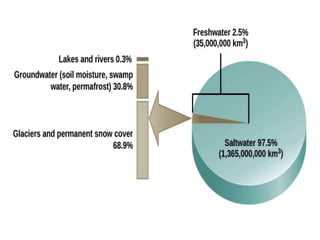
 About 71% of the earth's surface is covered with
water bodies.
 Mostly water is present in the oceans (97%) and
glaciers (2%). Since ocean water is saline, it cannot be
used directly.
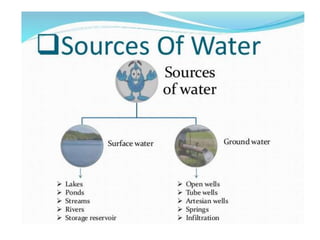
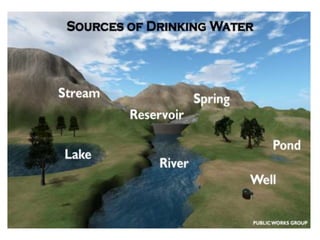
 Water source can broadly divide into two - surface
water and ground water.
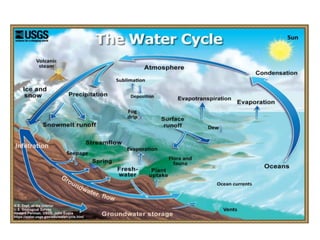
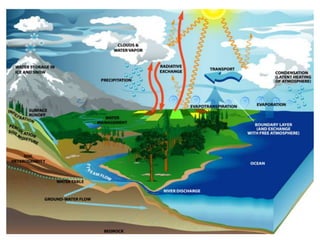
 Rainwater contributes to both surface water and
ground water.
 Drinking water purification is the process of removing
undesirable biological and chemical contaminants
from raw water, so as to make water fit for human
consumption
Basic
concept of
water:
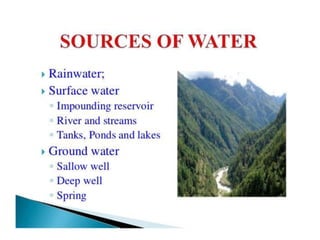
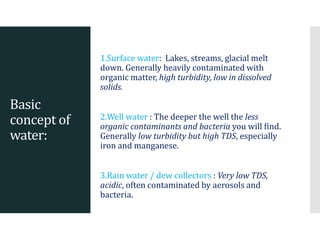
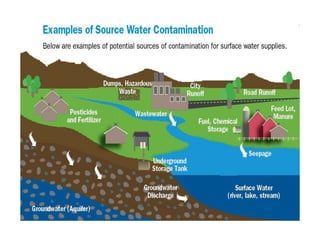
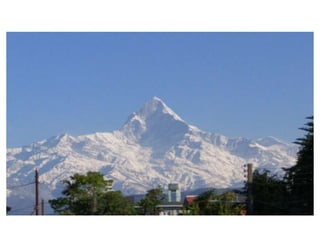
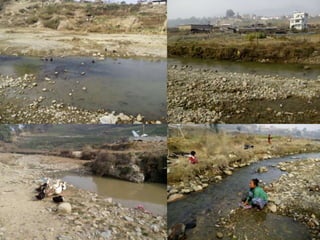
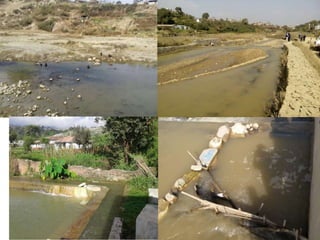
1.Surface water: Lakes, streams, glacial melt
down. Generally heavily contaminated with
organic matter, high turbidity, low in dissolved
solids.
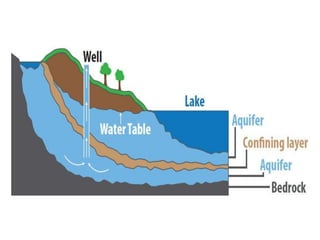
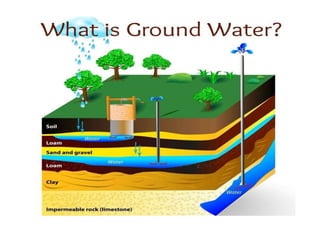
2.Well water : The deeper the well the less
organic contaminants and bacteria you will find.
Generally low turbidity but high TDS, especially
iron and manganese.
3.Rain water / dew collectors : Very low TDS,
acidic, often contaminated by aerosols and
bacteria.
Contd.
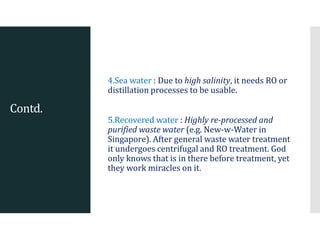
4.Sea water : Due to high salinity, it needs RO or
distillation processes to be usable.
5.Recovered water : Highly re-processed and
purified waste water (e.g. New-w-Water in
Singapore). After general waste water treatment
it undergoes centrifugal and RO treatment. God
only knows that is in there before treatment, yet
they work miracles on it.
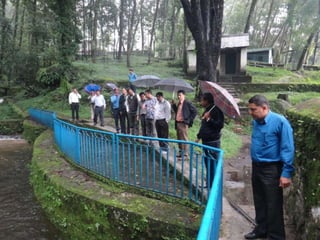
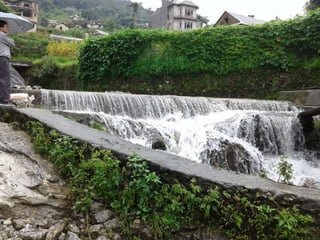
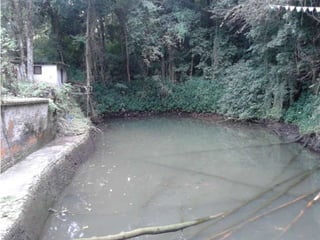
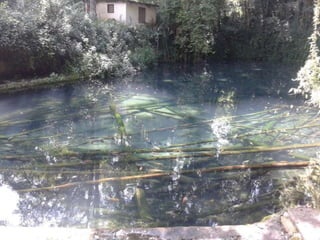
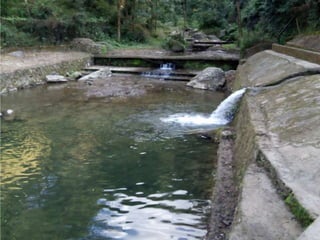
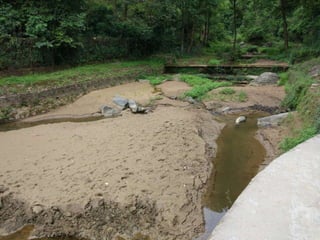
Different sources
of water
Traditional Stone Spout
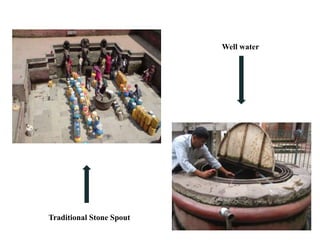
Well water
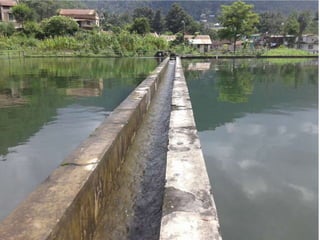
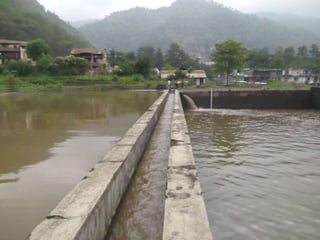
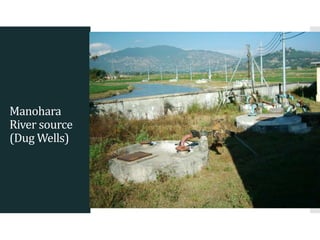
Manohara
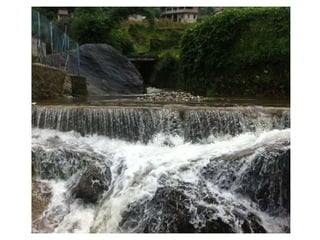
River source
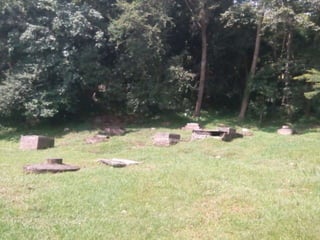
(Dug Wells)
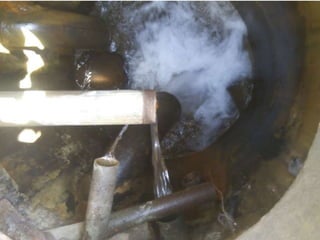
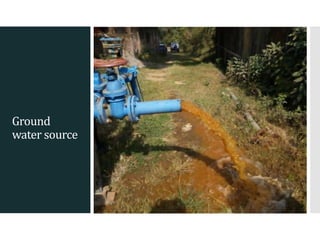
Ground
water source
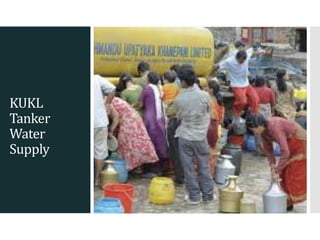
KUKL
Tanker
Water
Supply
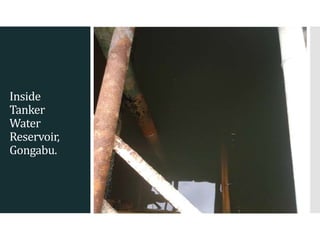
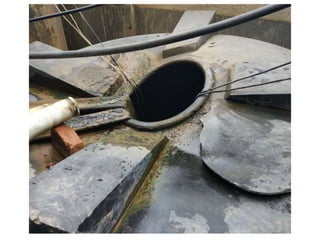
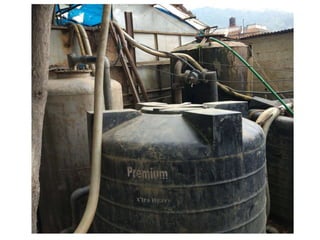
Inside
Tanker
Water
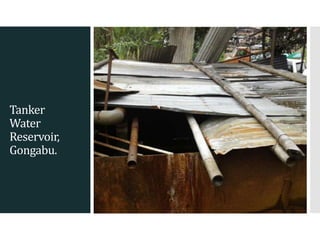
Reservoir,
Gongabu.
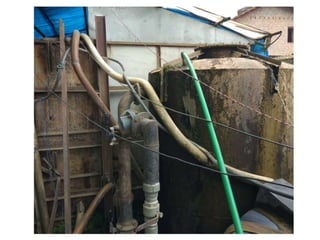
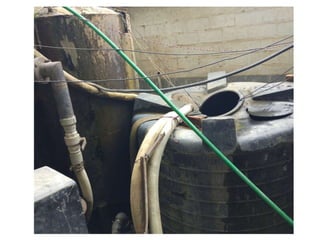
Tanker
Water
Reservoir,
Gongabu.
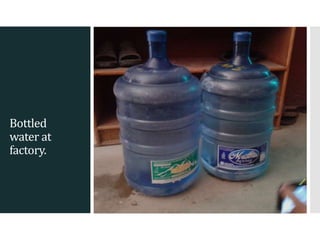
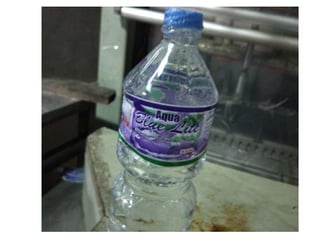
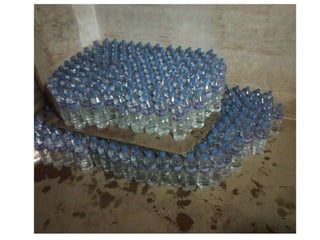
Bottled
water at
factory.
THANK YOU

Raw water quality (surface and ground water)

  • 1.
    Raw water quality (surfaceand ground water) GYANENDRA BAHADUR KARKI MANAGER WATER QUALITY DIVISION,KUKL
  • 2.
    Conservation of water : “Adrop of water is worth more than a sack of gold for thirsty man.”
  • 3.
    INTRODUCTION  Water isa transparent, tasteless, odourless, and nearly colourless chemical substance that is the main constituent of Earth's streams, lakes, and oceans, and the fluids of most living organisms.  Density: 997 kg/m³  Formula: H2O  Boiling point: 100 °C  Melting point: 0 °C
  • 11.
    NECESSITY OF PURIFYING DRINKING WATER About 71% of the earth's surface is covered with water bodies.  Mostly water is present in the oceans (97%) and glaciers (2%). Since ocean water is saline, it cannot be used directly.  Water source can broadly divide into two - surface water and ground water.  Rainwater contributes to both surface water and ground water.  Drinking water purification is the process of removing undesirable biological and chemical contaminants from raw water, so as to make water fit for human consumption
  • 19.
    Basic concept of water: 1.Surface water:Lakes, streams, glacial melt down. Generally heavily contaminated with organic matter, high turbidity, low in dissolved solids. 2.Well water : The deeper the well the less organic contaminants and bacteria you will find. Generally low turbidity but high TDS, especially iron and manganese. 3.Rain water / dew collectors : Very low TDS, acidic, often contaminated by aerosols and bacteria.
  • 20.
    Contd. 4.Sea water :Due to high salinity, it needs RO or distillation processes to be usable. 5.Recovered water : Highly re-processed and purified waste water (e.g. New-w-Water in Singapore). After general waste water treatment it undergoes centrifugal and RO treatment. God only knows that is in there before treatment, yet they work miracles on it.
  • 22.
  • 37.
  • 39.
  • 40.
  • 41.
  • 42.
  • 43.
  • 48.
  • 55.