Safe Water
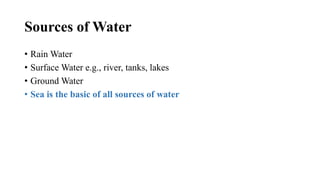
Sources of Water
• Rain Water
• Surface Water e.g., river, tanks, lakes
• Ground Water
• Sea is the basic of all sources of water
Importance
• Physiological importance
• Domestic importance
• Public importance
• Occupational importance
• Agricultural importance
• Cultural importance
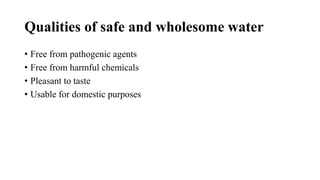
Qualities of safe and wholesome water
• Free from pathogenic agents
• Free from harmful chemicals
• Pleasant to taste
• Usable for domestic purposes
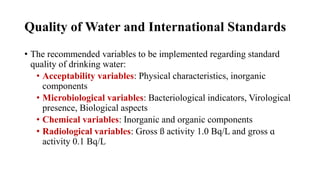
Quality of Water and International Standards
• The recommended variables to be implemented regarding standard
quality of drinking water:
• Acceptability variables: Physical characteristics, inorganic
components
• Microbiological variables: Bacteriological indicators, Virological
presence, Biological aspects
• Chemical variables: Inorganic and organic components
• Radiological variables: Gross ß activity 1.0 Bq/L and gross ɑ
activity 0.1 Bq/L
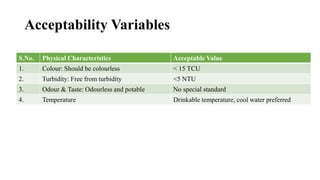
Acceptability Variables
S.No. Physical Characteristics Acceptable Value
1. Colour: Should be colourless < 15 TCU
2. Turbidity: Free from turbidity <5 NTU
3. Odour & Taste: Odourless and potable No special standard
4. Temperature Drinkable temperature, cool water preferred
Acceptability Variables
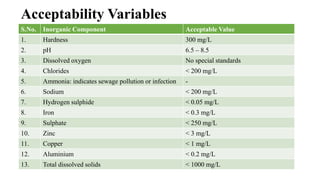
S.No. Inorganic Component Acceptable Value
1. Hardness 300 mg/L
2. pH 6.5 – 8.5
3. Dissolved oxygen No special standards
4. Chlorides < 200 mg/L
5. Ammonia: indicates sewage pollution or infection -
6. Sodium < 200 mg/L
7. Hydrogen sulphide < 0.05 mg/L
8. Iron < 0.3 mg/L
9. Sulphate < 250 mg/L
10. Zinc < 3 mg/L
11. Copper < 1 mg/L
12. Aluminium < 0.2 mg/L
13. Total dissolved solids < 1000 mg/L
Acceptability Variables
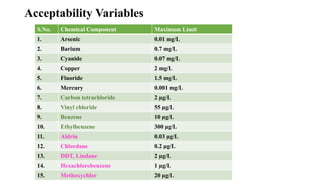
S.No. Chemical Component Maximum Limit
1. Arsenic 0.01 mg/L
2. Barium 0.7 mg/L
3. Cyanide 0.07 mg/L
4. Copper 2 mg/L
5. Fluoride 1.5 mg/L
6. Mercury 0.001 mg/L
7. Carbon tetrachloride 2 µg/L
8. Vinyl chloride 55 µg/L
9. Benzene 10 µg/L
10. Ethylbenzene 300 µg/L
11. Aldrin 0.03 µg/L
12. Chlordane 0.2 µg/L
13. DDT, Lindane 2 µg/L
14. Hexachlorobenzene 1 µg/L
15. Methoxychlor 20 µg/L
Hardness of Water
• Is expressed in meq/L
• 1 meq/L = 50 mg of CaCO₃ in 1 L of water or 50 PPM
• If quantity > 300 mg/L of water, water is regarded as hard
• In drinking water, quantity may be between 50-150 mg/L
• Treatment of Hardness
• Boiling
• Mixing (lime, sodium carbonate)
• Base Exchange Methods (sodium permutit - compound of sodium,
aluminium and silica – exchanges sodium for calcium and
magnesium)
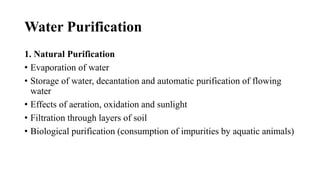
Water Purification
1. Natural Purification
• Evaporation of water
• Storage of water, decantation and automatic purification of flowing
water
• Effects of aeration, oxidation and sunlight
• Filtration through layers of soil
• Biological purification (consumption of impurities by aquatic animals)
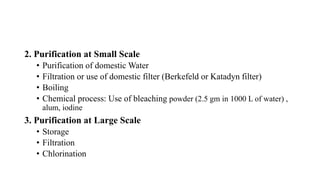
2. Purification at Small Scale
• Purification of domestic Water
• Filtration or use of domestic filter (Berkefeld or Katadyn filter)
• Boiling
• Chemical process: Use of bleaching powder (2.5 gm in 1000 L of water) ,
alum, iodine
3. Purification at Large Scale
• Storage
• Filtration
• Chlorination
Chlorination
• Removes pathogenic bacteria from water and makes it potable
• Cl2 + H2O HCl + HOCl
• HOCl H + OCl
• The disinfecting action of this chemical is due to hypochlorous acid
and hypochlorite ions.
• Precautions to be taken in the chlorination process:
• Chlorine demand of Water
• Amount of free residual chlorine
• Contact period
• Procedure of chlorination
Prevention from Waterborne Diseases
Waterborne diseases
• viral hepatitis, polio, cholera, roundworm may occur due to the presence of
infective agents
• fluorosis and other toxicities due to chemical change in water
Prevention
• Practicing good hygiene: hand washing, short nails
• Drinking safe potable water
• Thoroughly filtered
• Stored in a hygienic place
• If water purification system is absent, practice boiling and cooling
• Maintenance of public water supply system, sanitation facilities, cleanliness in
home surrounding
Water Examination
• Sanitation survey: nature of water supply, source, distribution system,
method of use and environment of area around the water source
• Sampling of water
• Water examining techniques: physical, chemical and bacteriological
Action plan implemented by central and state
government for sanitation & supply of water
• Establishing urban development fund to develop infrastructure
• Making responsible urban and rural autonomous bodies
• Encouraging participation of community, NGO and private sectors
• Developing low cost technique for maintenance and construction of
sanitation and water supply projects
• Training of personnel
• Discouraging free water supply in rural areas
• Establishing water supply and sanitation cell
• Giving special attention to agriculture and irrigation management
• Recharging of rainwater to increase the level of ground water
• Experimenting on water conservation
• Better management for water conservation
• Restricting the uncontrolled exploitation of ground water
• Making sea water potable
• Finding additional sources of water
Thanky
ou

IPC- Safe Water.pptx

  • 1.
  • 2.
    Sources of Water •Rain Water • Surface Water e.g., river, tanks, lakes • Ground Water • Sea is the basic of all sources of water
  • 3.
    Importance • Physiological importance •Domestic importance • Public importance • Occupational importance • Agricultural importance • Cultural importance
  • 4.
    Qualities of safeand wholesome water • Free from pathogenic agents • Free from harmful chemicals • Pleasant to taste • Usable for domestic purposes
  • 5.
    Quality of Waterand International Standards • The recommended variables to be implemented regarding standard quality of drinking water: • Acceptability variables: Physical characteristics, inorganic components • Microbiological variables: Bacteriological indicators, Virological presence, Biological aspects • Chemical variables: Inorganic and organic components • Radiological variables: Gross ß activity 1.0 Bq/L and gross ɑ activity 0.1 Bq/L
  • 6.
    Acceptability Variables S.No. PhysicalCharacteristics Acceptable Value 1. Colour: Should be colourless < 15 TCU 2. Turbidity: Free from turbidity <5 NTU 3. Odour & Taste: Odourless and potable No special standard 4. Temperature Drinkable temperature, cool water preferred
  • 7.
    Acceptability Variables S.No. InorganicComponent Acceptable Value 1. Hardness 300 mg/L 2. pH 6.5 – 8.5 3. Dissolved oxygen No special standards 4. Chlorides < 200 mg/L 5. Ammonia: indicates sewage pollution or infection - 6. Sodium < 200 mg/L 7. Hydrogen sulphide < 0.05 mg/L 8. Iron < 0.3 mg/L 9. Sulphate < 250 mg/L 10. Zinc < 3 mg/L 11. Copper < 1 mg/L 12. Aluminium < 0.2 mg/L 13. Total dissolved solids < 1000 mg/L
  • 8.
    Acceptability Variables S.No. ChemicalComponent Maximum Limit 1. Arsenic 0.01 mg/L 2. Barium 0.7 mg/L 3. Cyanide 0.07 mg/L 4. Copper 2 mg/L 5. Fluoride 1.5 mg/L 6. Mercury 0.001 mg/L 7. Carbon tetrachloride 2 µg/L 8. Vinyl chloride 55 µg/L 9. Benzene 10 µg/L 10. Ethylbenzene 300 µg/L 11. Aldrin 0.03 µg/L 12. Chlordane 0.2 µg/L 13. DDT, Lindane 2 µg/L 14. Hexachlorobenzene 1 µg/L 15. Methoxychlor 20 µg/L
  • 9.
    Hardness of Water •Is expressed in meq/L • 1 meq/L = 50 mg of CaCO₃ in 1 L of water or 50 PPM • If quantity > 300 mg/L of water, water is regarded as hard • In drinking water, quantity may be between 50-150 mg/L • Treatment of Hardness • Boiling • Mixing (lime, sodium carbonate) • Base Exchange Methods (sodium permutit - compound of sodium, aluminium and silica – exchanges sodium for calcium and magnesium)
  • 10.
    Water Purification 1. NaturalPurification • Evaporation of water • Storage of water, decantation and automatic purification of flowing water • Effects of aeration, oxidation and sunlight • Filtration through layers of soil • Biological purification (consumption of impurities by aquatic animals)
  • 11.
    2. Purification atSmall Scale • Purification of domestic Water • Filtration or use of domestic filter (Berkefeld or Katadyn filter) • Boiling • Chemical process: Use of bleaching powder (2.5 gm in 1000 L of water) , alum, iodine 3. Purification at Large Scale • Storage • Filtration • Chlorination
  • 12.
    Chlorination • Removes pathogenicbacteria from water and makes it potable • Cl2 + H2O HCl + HOCl • HOCl H + OCl • The disinfecting action of this chemical is due to hypochlorous acid and hypochlorite ions. • Precautions to be taken in the chlorination process: • Chlorine demand of Water • Amount of free residual chlorine • Contact period • Procedure of chlorination
  • 13.
    Prevention from WaterborneDiseases Waterborne diseases • viral hepatitis, polio, cholera, roundworm may occur due to the presence of infective agents • fluorosis and other toxicities due to chemical change in water Prevention • Practicing good hygiene: hand washing, short nails • Drinking safe potable water • Thoroughly filtered • Stored in a hygienic place • If water purification system is absent, practice boiling and cooling • Maintenance of public water supply system, sanitation facilities, cleanliness in home surrounding
  • 14.
    Water Examination • Sanitationsurvey: nature of water supply, source, distribution system, method of use and environment of area around the water source • Sampling of water • Water examining techniques: physical, chemical and bacteriological
  • 15.
    Action plan implementedby central and state government for sanitation & supply of water • Establishing urban development fund to develop infrastructure • Making responsible urban and rural autonomous bodies • Encouraging participation of community, NGO and private sectors • Developing low cost technique for maintenance and construction of sanitation and water supply projects • Training of personnel • Discouraging free water supply in rural areas • Establishing water supply and sanitation cell • Giving special attention to agriculture and irrigation management
  • 16.
    • Recharging ofrainwater to increase the level of ground water • Experimenting on water conservation • Better management for water conservation • Restricting the uncontrolled exploitation of ground water • Making sea water potable • Finding additional sources of water
  • 17.

Editor's Notes

  • #6  The unit of activity is Bq 1 Bq = 1 disintegration/sec Gross beta activity is measure of total amount of radioactivity in water sample due to beta emitting elements
  • #7 TCU: true colour unit NTU: Nephelometric turbidity unit
  • #10 Hardness of water is defined as soap destroying power of water due to the presence of CaCo3, MgCO3,{ Temporary hardness}; CaSo4, MgSO4, chlorides and nitrates {permanent hardness} Sodium bicarbonate and base exchange resin removes both temporary and permanent hardness
  • #11 Decantation: Separation of mixture of immiscible liquids and a solid mixture such as suspension