

Rasha Mohamed Mahmoud
By
Supervised by
Prof. Dr. Aziz M. Higazy
Drinking water
Microbiology of Water and Wastewater
(AMP 616)
1st semester
2014 - 2015
Drinking water
1. SOURCE OF DRINKING WATER
2. TYPES OF DRINKING WATR
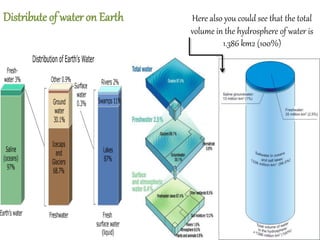
• 97% of the water on the Earth is salt water.
However, only 3% percent is fresh water;
slightly over 2/3 of this is frozen in glaciers
and polar ice caps.
• The remaining unfrozen freshwater is found
mainly as groundwater, with only a small
fraction present above ground or in the air.
• Fresh water is a renewable resource
About Water
Here also you could see that the total
volume in the hydrosphere of water is
1.386 km2 (100%)
Distribute of water on Earth
SOURCE OF DRINKING WATER
1. Surface water
5. Desalination
4. Rain water3. Ground water
2. Frozen water
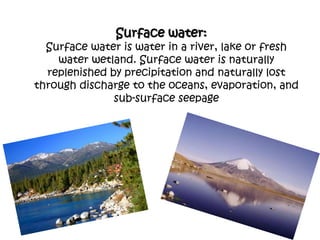
Surface water:
Surface water is water in a river, lake or fresh
water wetland. Surface water is naturally
replenished by precipitation and naturally lost
through discharge to the oceans, evaporation, and
sub-surface seepage
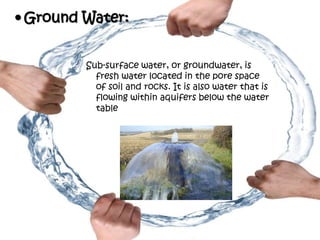
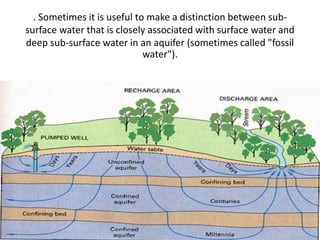
Sub-surface water, or groundwater, is
fresh water located in the pore space
of soil and rocks. It is also water that is
flowing within aquifers below the water
table
Ground Water:
. Sometimes it is useful to make a distinction between sub-
surface water that is closely associated with surface water and
deep sub-surface water in an aquifer (sometimes called "fossil
water").
• Desalination:
Desalination is an artificial process by which saline water (generally sea
water) is converted to fresh water. The most common desalination
processes are distillation and reverse osmosis. Desalination is
currently expensive compared to most alternative sources of water,
and only a very small fraction of total human use is satisfied by
desalination. It is only economically practical for high-valued uses
(such as household and industrial uses) in arid areas. The most
extensive use is in the Persian Gulf.
Frozen Water:
Several schemes have been
proposed to make use of
icebergs as a water source,
however to date this has
only been done for novelty
purposes. Glacier runoff is
considered to be surface
water.
Rain water
TYPES OF DRINKING WATR
TAP WATER
tap water is generally safe to drink, but it may be heavily filtered and
treated with chemicals to reduce the presence of parasites. Tap water
may contain heavy chlorine levels to help maintain micro-biological
safety during storage, and transit, through water mains, tanks and
pipes
The majority of tap water will have been used in some capacity before,
so it is recycled, re-treated and re-filtered before consumption.
Consequently, tap water can taste unpleasant and some customers worry
about treatment by-products. The presence of parasites such as
cryptosporidium is not unknown in tap water, which results in a number
of requests to ‘boil water’ each year. Cryptosporidium, a bug found in
surface water sources such as those taken from rivers and stream-fed
reservoirs, can occasionally get through filters and isn’t removed by
chlorine.
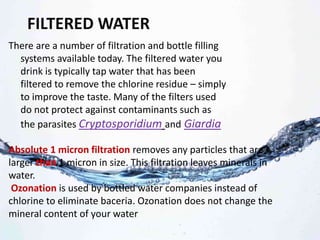
FILTERED WATER
There are a number of filtration and bottle filling
systems available today. The filtered water you
drink is typically tap water that has been
filtered to remove the chlorine residue – simply
to improve the taste. Many of the filters used
do not protect against contaminants such as
the parasites Cryptosporidium and Giardia
Absolute 1 micron filtration removes any particles that are
larger than 1 micron in size. This filtration leaves minerals in
water.
Ozonation is used by bottled water companies instead of
chlorine to eliminate baceria. Ozonation does not change the
mineral content of your water
• These types of water can originate from a mixture of
sources; some of the well packaged and marketed
bottled waters are merely re-processed tap water.
Waters labelled as ‘purified’ or ‘vapour distilled’ are
actually tap water that has gone through further
processing, such as reverse osmosis, to make them
suitable for sale as bottled drinking water.
• This process will remove most of the mineral content,
notably calcium. So much so that in the UK the addition
of calcium back to the water is compulsory, on the
advice of the medical authorities, due to concerns over
heart disease. Many of these waters are ozonated,
which can result in harmful by-products like bromates.
These waters are not renowned for their sensory
stimulation qualities. Interestingly, these waters can
appear under one brand name, but can be mutli-
sourced in different countries from across the world
BOTTLED DRINKING WATER
SPRING WATER
Like natural mineral water, waters that are
labelled ‘spring water’ must originate from an
officially recognised source. However, unlike
natural mineral water they do not undergo the
intensive 2 year recognition and regulatory
process, and until recently did not have to be
bottled at source.
Spring water is microbiologically wholesome,
naturally free from pollution and harmful
organisms but may use micro-filtration and UV
treatments. It does not need to demonstrate a
stable composition, and in essence is judged on
the day it is bottled, which means that the
composition can change.
Natural Mineral Water
• Natural mineral water must originate
from an officially recognised single
source and must be bottled at that
location. Before water can be officially
recognised as natural mineral water, it
must be demonstrated to the UK
authorities, through regular and
frequent micro-biological testing for 2
years, that the source is protected from
all risk of pollution and that the
composition, temperature and other
essential characteristics remain stable.
The water is then subjected to ongoing
statutory testing and continual
maintenance for the duration of its
continued extraction from its source
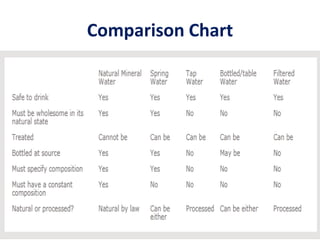
Comparison Chart
http://bodyecology.com/articles/best_water_to_drink.php#.VIGYt
13q7IW
http://www.hildon.com/our-water/what-is-natural-mineral-
water/different-types-of-water/
Water resources ppt
NSF/ANSI (2011). Standard 53: Drinking water treatment units--
health effects. NSF International and American National
Standards Institute.(pdf)
References
drinking water

drinking water

  • 2.
    Rasha Mohamed Mahmoud By Supervisedby Prof. Dr. Aziz M. Higazy Drinking water Microbiology of Water and Wastewater (AMP 616) 1st semester 2014 - 2015
  • 3.
    Drinking water 1. SOURCEOF DRINKING WATER 2. TYPES OF DRINKING WATR
  • 4.
    • 97% ofthe water on the Earth is salt water. However, only 3% percent is fresh water; slightly over 2/3 of this is frozen in glaciers and polar ice caps. • The remaining unfrozen freshwater is found mainly as groundwater, with only a small fraction present above ground or in the air. • Fresh water is a renewable resource About Water
  • 5.
    Here also youcould see that the total volume in the hydrosphere of water is 1.386 km2 (100%) Distribute of water on Earth
  • 6.
    SOURCE OF DRINKINGWATER 1. Surface water 5. Desalination 4. Rain water3. Ground water 2. Frozen water
  • 7.
    Surface water: Surface wateris water in a river, lake or fresh water wetland. Surface water is naturally replenished by precipitation and naturally lost through discharge to the oceans, evaporation, and sub-surface seepage
  • 8.
    Sub-surface water, orgroundwater, is fresh water located in the pore space of soil and rocks. It is also water that is flowing within aquifers below the water table Ground Water:
  • 9.
    . Sometimes itis useful to make a distinction between sub- surface water that is closely associated with surface water and deep sub-surface water in an aquifer (sometimes called "fossil water").
  • 10.
    • Desalination: Desalination isan artificial process by which saline water (generally sea water) is converted to fresh water. The most common desalination processes are distillation and reverse osmosis. Desalination is currently expensive compared to most alternative sources of water, and only a very small fraction of total human use is satisfied by desalination. It is only economically practical for high-valued uses (such as household and industrial uses) in arid areas. The most extensive use is in the Persian Gulf.
  • 11.
    Frozen Water: Several schemeshave been proposed to make use of icebergs as a water source, however to date this has only been done for novelty purposes. Glacier runoff is considered to be surface water. Rain water
  • 12.
    TYPES OF DRINKINGWATR TAP WATER tap water is generally safe to drink, but it may be heavily filtered and treated with chemicals to reduce the presence of parasites. Tap water may contain heavy chlorine levels to help maintain micro-biological safety during storage, and transit, through water mains, tanks and pipes The majority of tap water will have been used in some capacity before, so it is recycled, re-treated and re-filtered before consumption. Consequently, tap water can taste unpleasant and some customers worry about treatment by-products. The presence of parasites such as cryptosporidium is not unknown in tap water, which results in a number of requests to ‘boil water’ each year. Cryptosporidium, a bug found in surface water sources such as those taken from rivers and stream-fed reservoirs, can occasionally get through filters and isn’t removed by chlorine.
  • 13.
    FILTERED WATER There area number of filtration and bottle filling systems available today. The filtered water you drink is typically tap water that has been filtered to remove the chlorine residue – simply to improve the taste. Many of the filters used do not protect against contaminants such as the parasites Cryptosporidium and Giardia Absolute 1 micron filtration removes any particles that are larger than 1 micron in size. This filtration leaves minerals in water. Ozonation is used by bottled water companies instead of chlorine to eliminate baceria. Ozonation does not change the mineral content of your water
  • 14.
    • These typesof water can originate from a mixture of sources; some of the well packaged and marketed bottled waters are merely re-processed tap water. Waters labelled as ‘purified’ or ‘vapour distilled’ are actually tap water that has gone through further processing, such as reverse osmosis, to make them suitable for sale as bottled drinking water. • This process will remove most of the mineral content, notably calcium. So much so that in the UK the addition of calcium back to the water is compulsory, on the advice of the medical authorities, due to concerns over heart disease. Many of these waters are ozonated, which can result in harmful by-products like bromates. These waters are not renowned for their sensory stimulation qualities. Interestingly, these waters can appear under one brand name, but can be mutli- sourced in different countries from across the world BOTTLED DRINKING WATER
  • 15.
    SPRING WATER Like naturalmineral water, waters that are labelled ‘spring water’ must originate from an officially recognised source. However, unlike natural mineral water they do not undergo the intensive 2 year recognition and regulatory process, and until recently did not have to be bottled at source. Spring water is microbiologically wholesome, naturally free from pollution and harmful organisms but may use micro-filtration and UV treatments. It does not need to demonstrate a stable composition, and in essence is judged on the day it is bottled, which means that the composition can change.
  • 16.
    Natural Mineral Water •Natural mineral water must originate from an officially recognised single source and must be bottled at that location. Before water can be officially recognised as natural mineral water, it must be demonstrated to the UK authorities, through regular and frequent micro-biological testing for 2 years, that the source is protected from all risk of pollution and that the composition, temperature and other essential characteristics remain stable. The water is then subjected to ongoing statutory testing and continual maintenance for the duration of its continued extraction from its source
  • 17.
  • 18.
    http://bodyecology.com/articles/best_water_to_drink.php#.VIGYt 13q7IW http://www.hildon.com/our-water/what-is-natural-mineral- water/different-types-of-water/ Water resources ppt NSF/ANSI(2011). Standard 53: Drinking water treatment units-- health effects. NSF International and American National Standards Institute.(pdf) References