*
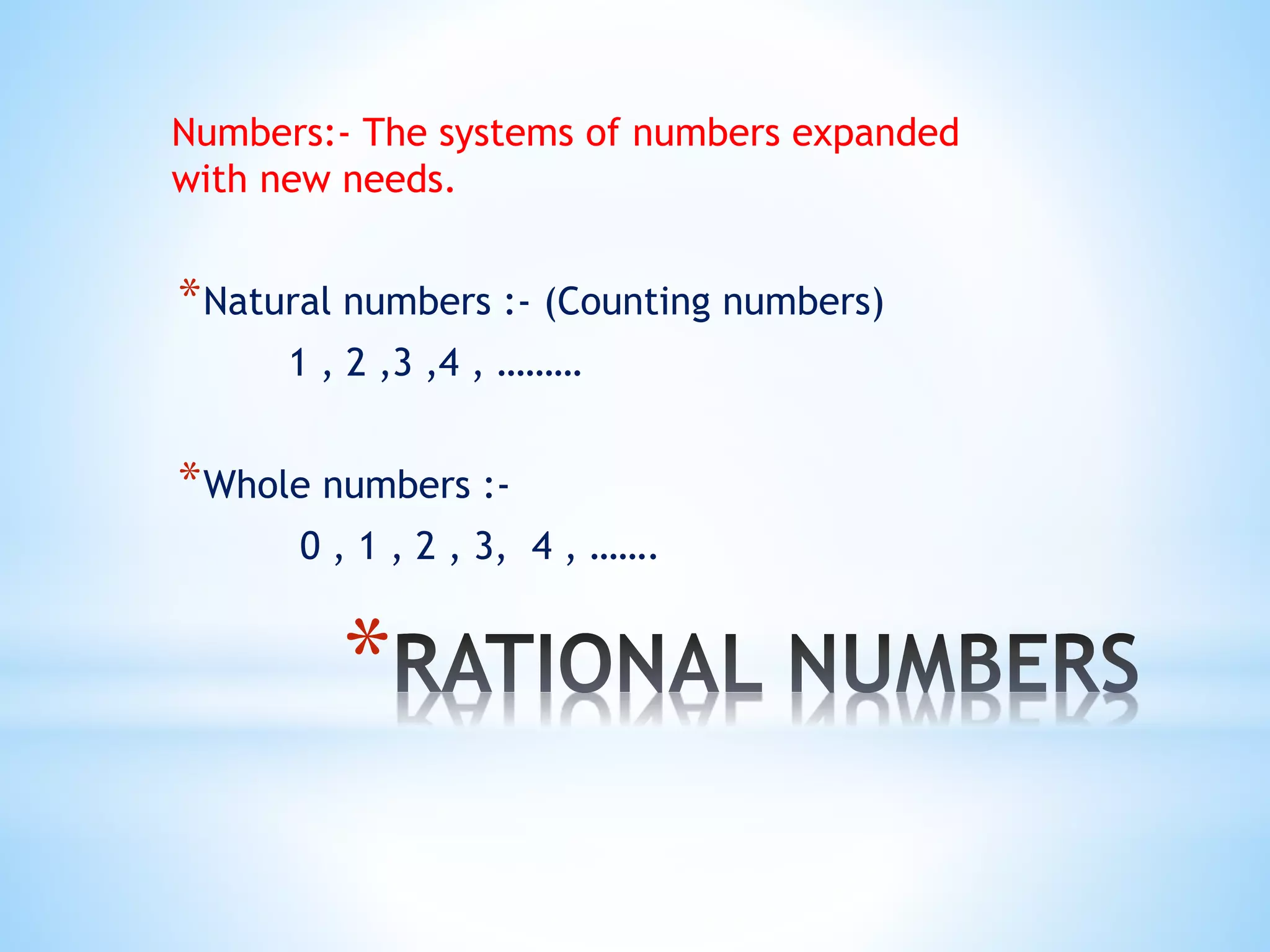
Numbers:- The systems of numbers expanded
with new needs.
*Natural numbers :- (Counting numbers)
1 , 2 ,3 ,4 , ………
*Whole numbers :-
0 , 1 , 2 , 3, 4 , …….
*
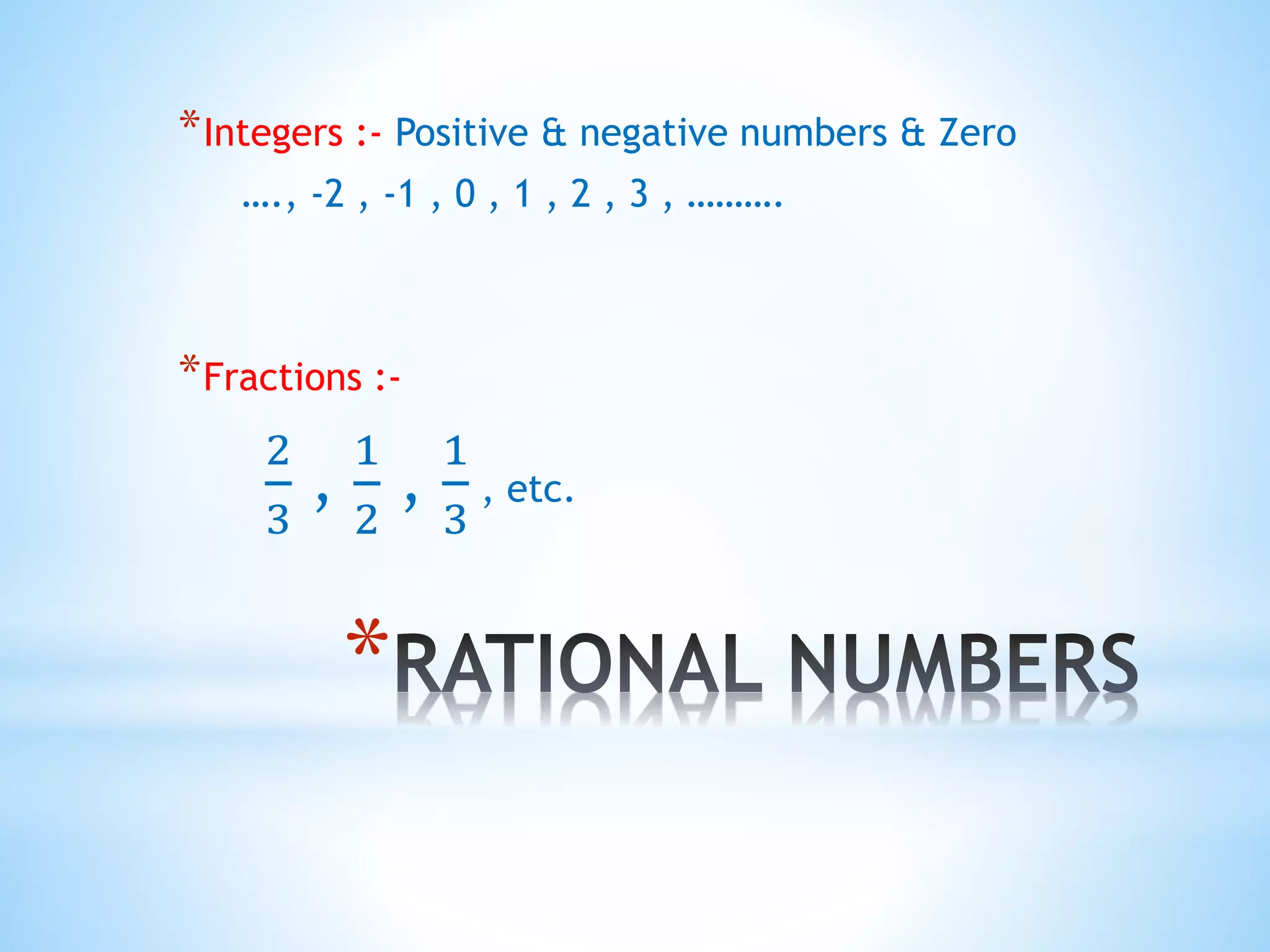
*Integers :- Positive & negative numbers & Zero
…., -2 , -1 , 0 , 1 , 2 , 3 , ……….
*Fractions :-
2
3
,
1
2
,
1
3
, etc.
*
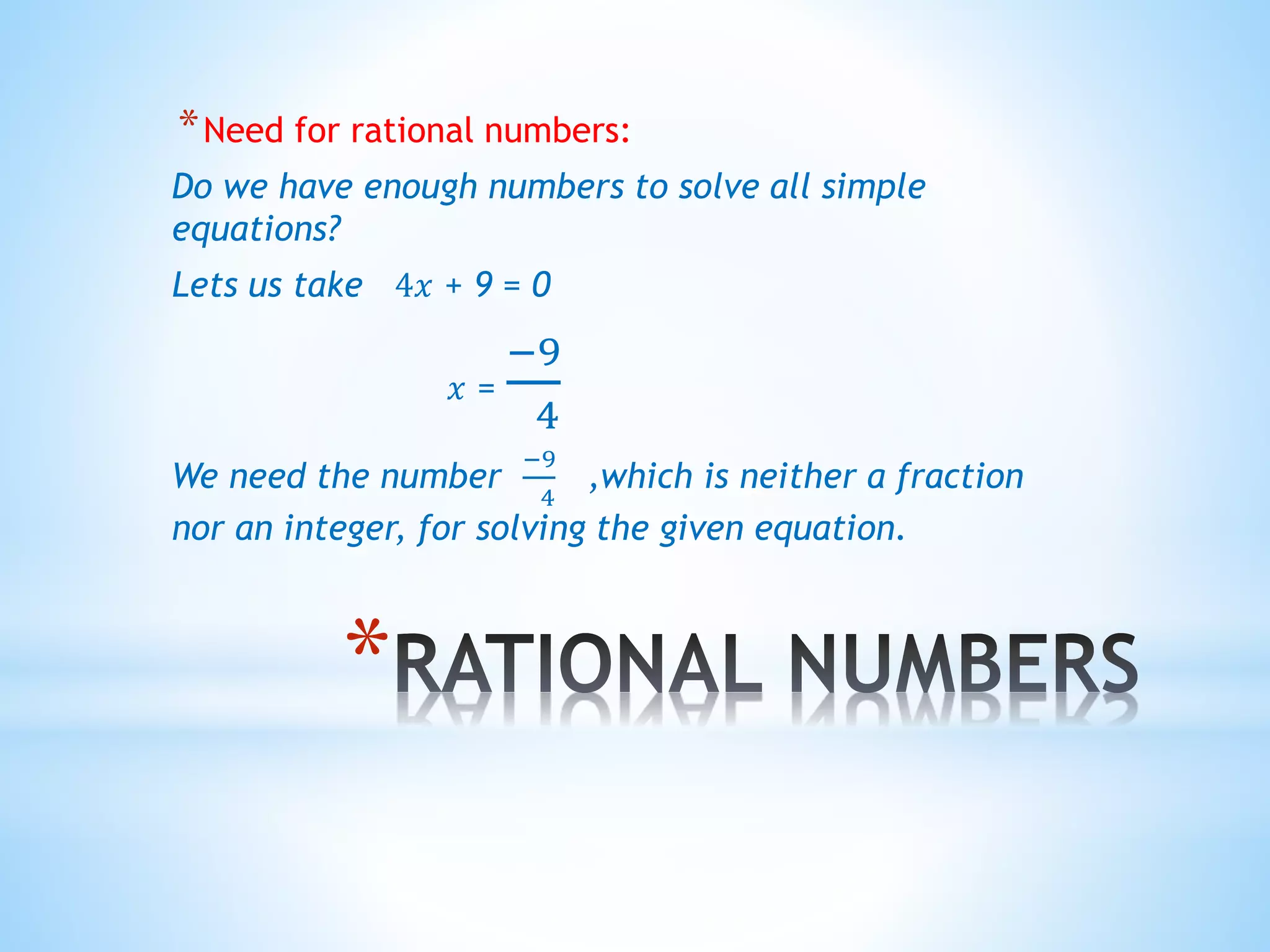
*Need for rational numbers:
Do we have enough numbers to solve all simple
equations?
Lets us take 4𝑥 + 9 = 0
𝑥 =
−9
4
We need the number
−9
4
,which is neither a fraction
nor an integer, for solving the given equation.
*
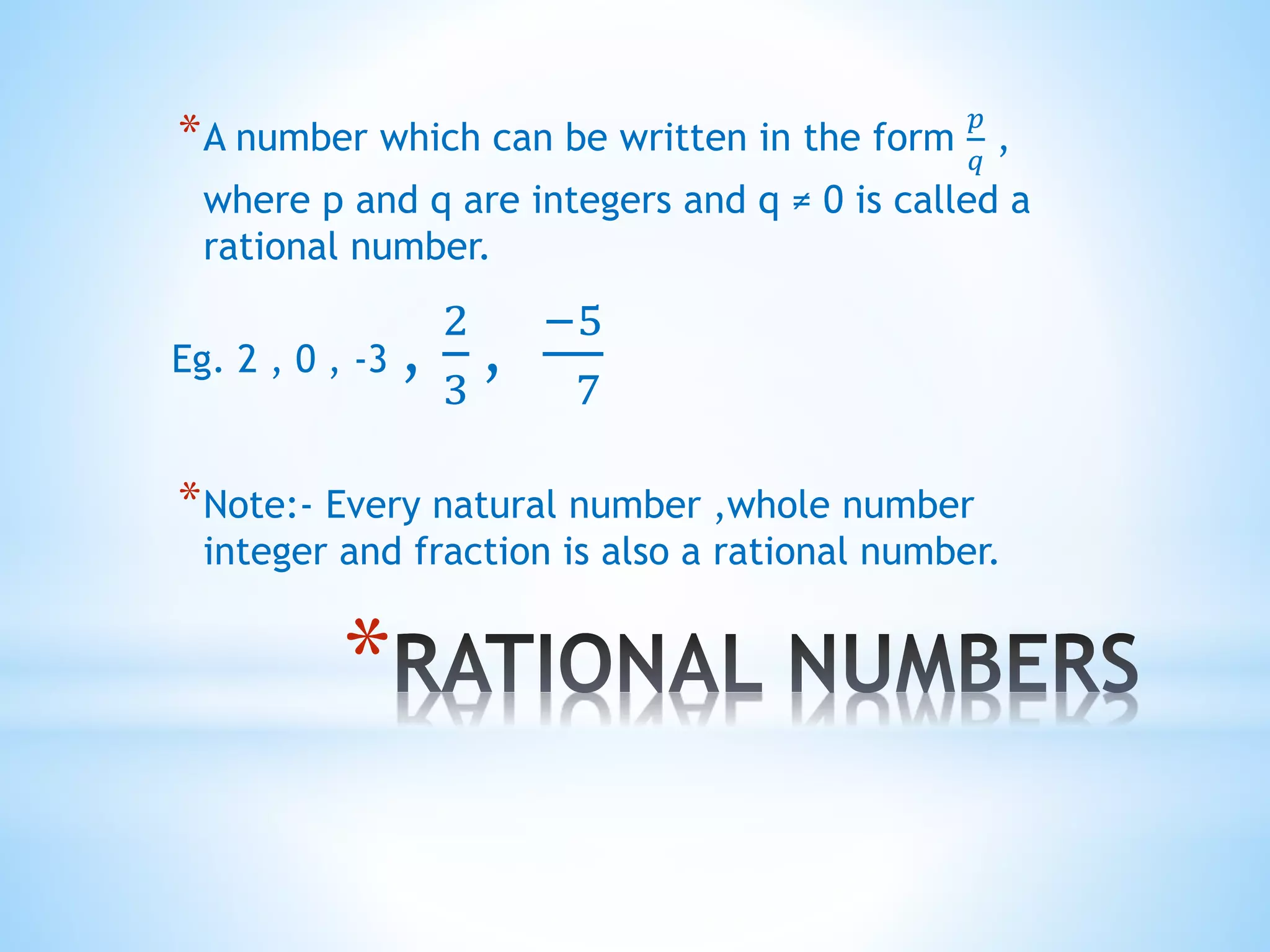
*A number which can be written in the form
𝑝
𝑞
,
where p and q are integers and q ≠ 0 is called a
rational number.
Eg. 2 , 0 , -3 ,
2
3
,
−5
7
*Note:- Every natural number ,whole number
integer and fraction is also a rational number.
*Properties of Rational
numbers
How do rational numbers behave when they are
added , subtracted ,multiplied or divided with each
other?
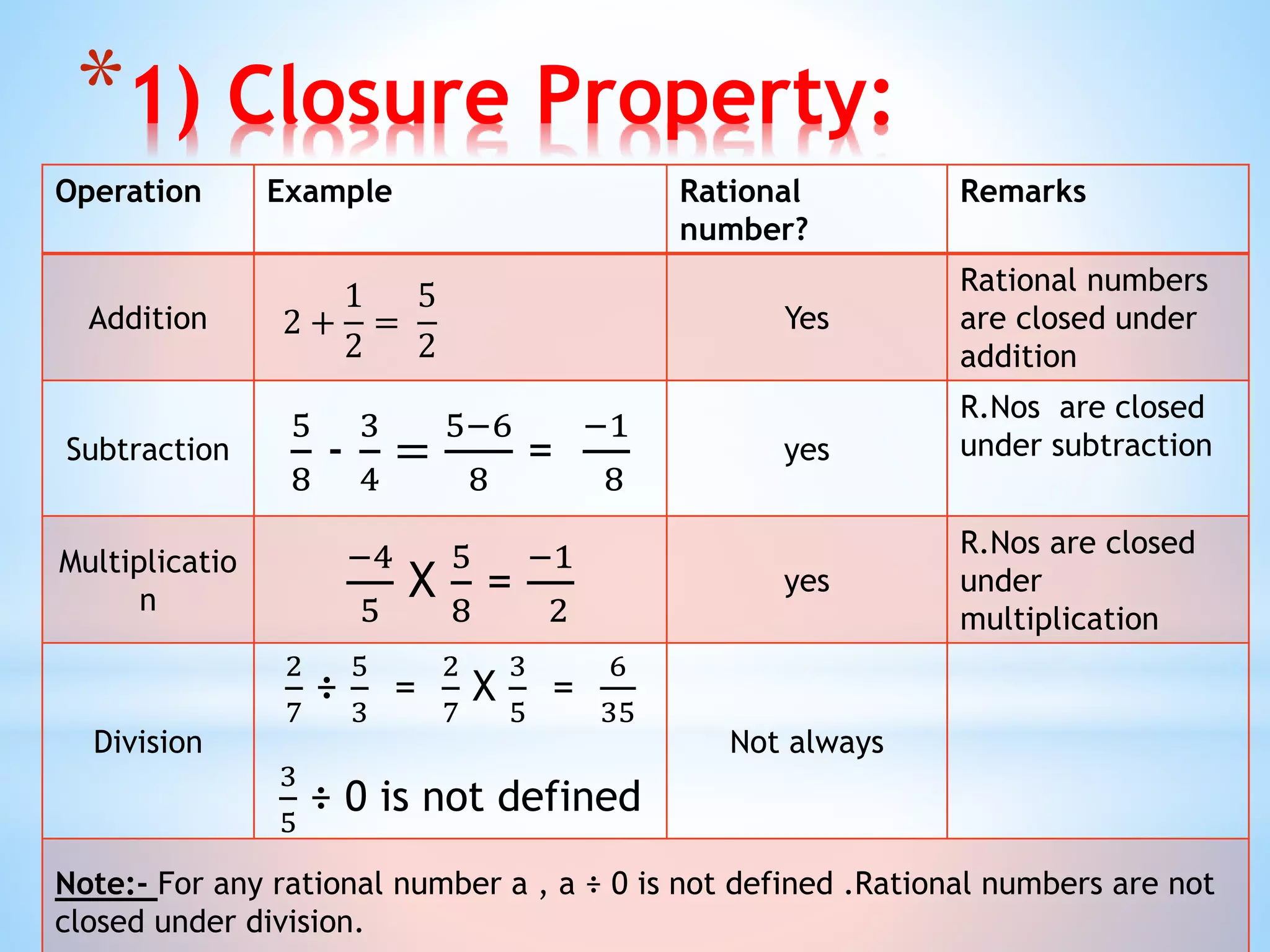
*1) Closure Property:
Operation Example Rational
number?
Remarks
Addition 2 +
1
2
=
5
2
Yes
Rational numbers
are closed under
addition
Subtraction
5
8
-
3
4
=
5−6
8
=
−1
8
yes
R.Nos are closed
under subtraction
Multiplicatio
n
−4
5
X
5
8
=
−1
2
yes
R.Nos are closed
under
multiplication
Division
2
7
÷
5
3
=
2
7
X
3
5
=
6
35
3
5
÷ 0 is not defined
Not always
Note:- For any rational number a , a ÷ 0 is not defined .Rational numbers are not
closed under division.
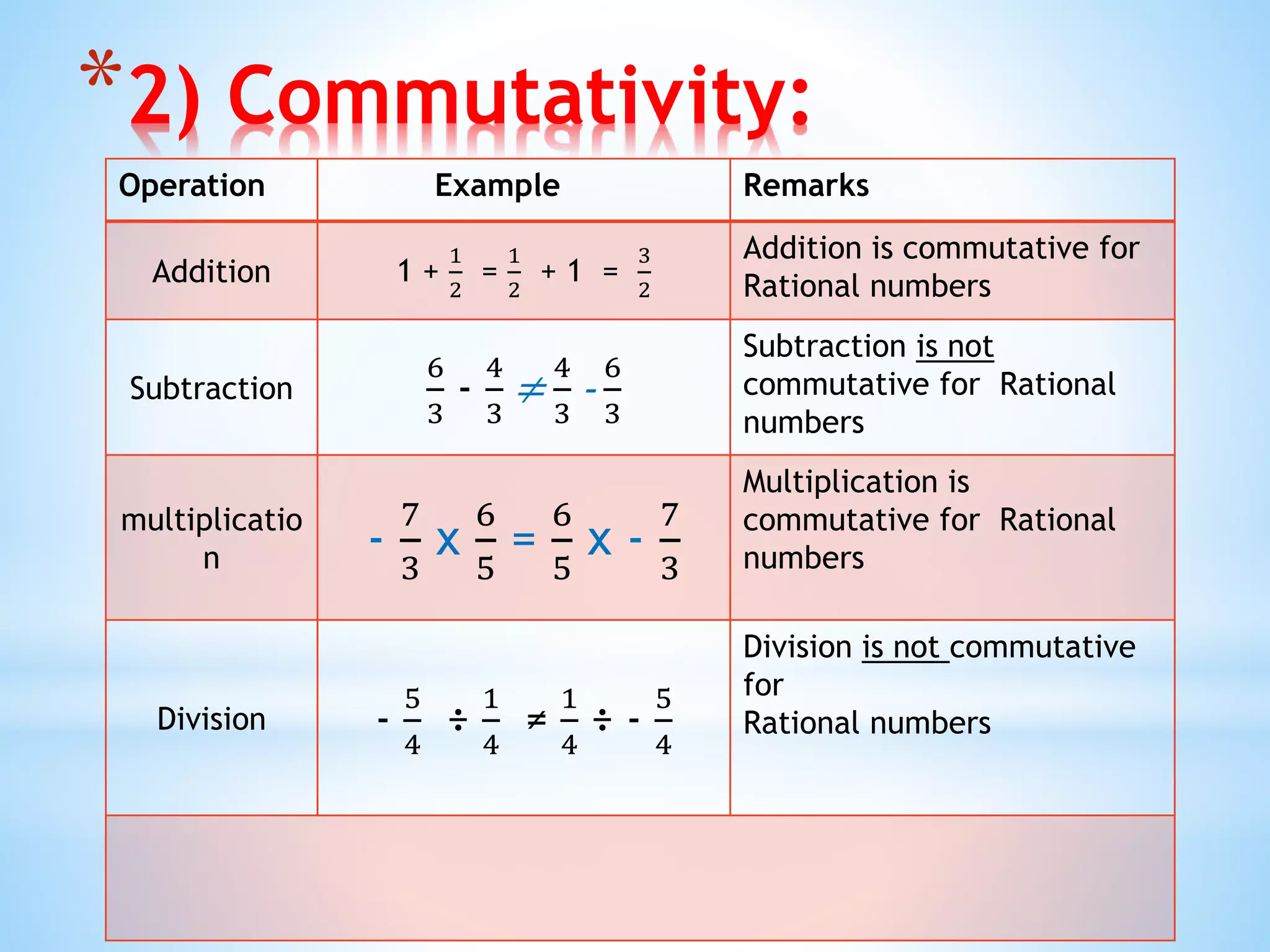
*2) Commutativity:
Operation Example Remarks
Addition 1 +
1
2
=
1
2
+ 1 =
3
2
Addition is commutative for
Rational numbers
Subtraction
6
3
-
4
3
≠
4
3
-
6
3
Subtraction is not
commutative for Rational
numbers
multiplicatio
n -
7
3
x
6
5
=
6
5
x -
7
3
Multiplication is
commutative for Rational
numbers
Division -
5
4
÷
1
4
≠
1
4
÷ -
5
4
Division is not commutative
for
Rational numbers
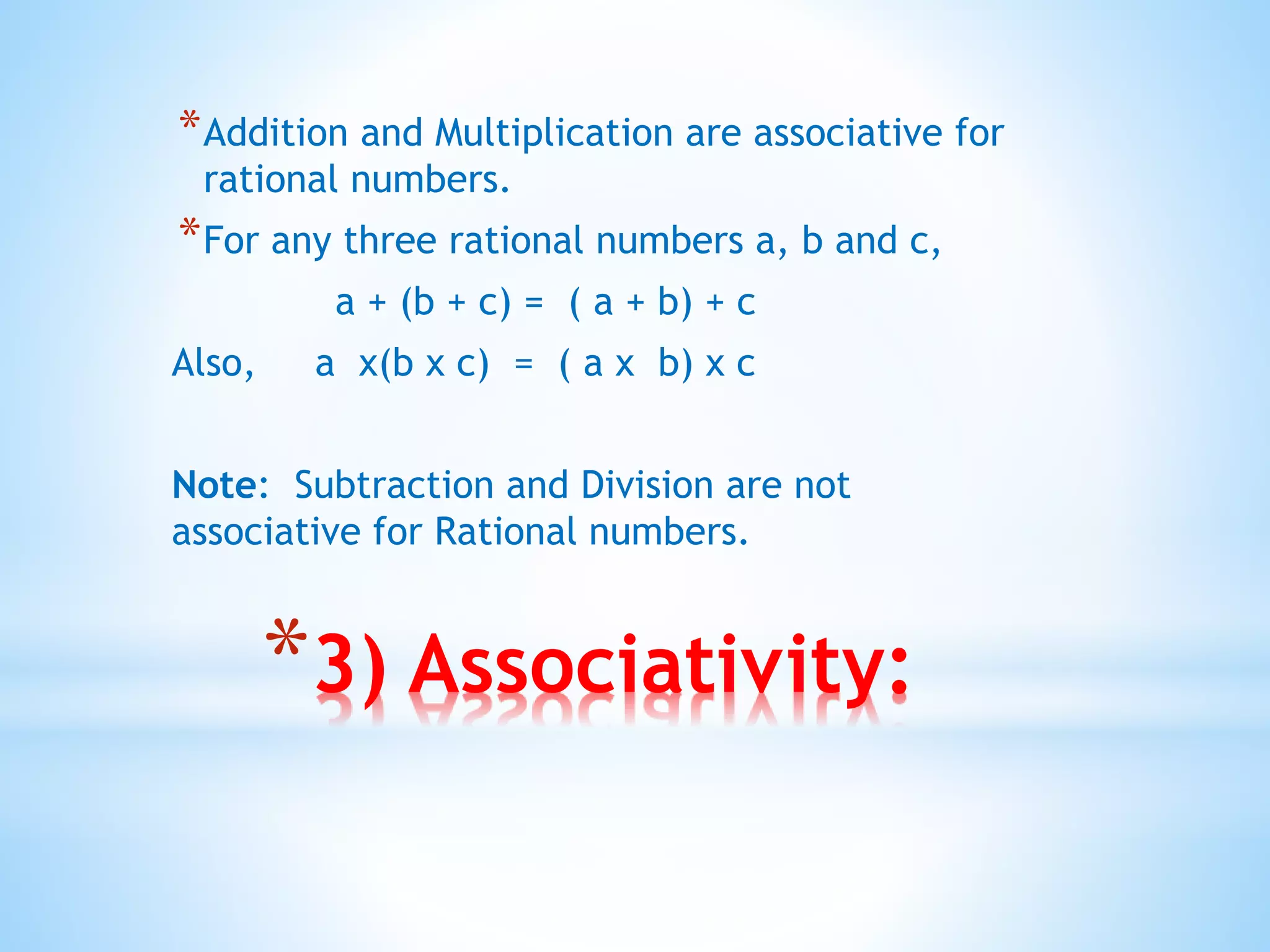
*3) Associativity:
*Addition and Multiplication are associative for
rational numbers.
*For any three rational numbers a, b and c,
a + (b + c) = ( a + b) + c
Also, a x(b x c) = ( a x b) x c
Note: Subtraction and Division are not
associative for Rational numbers.
5) The Role of
ONE:
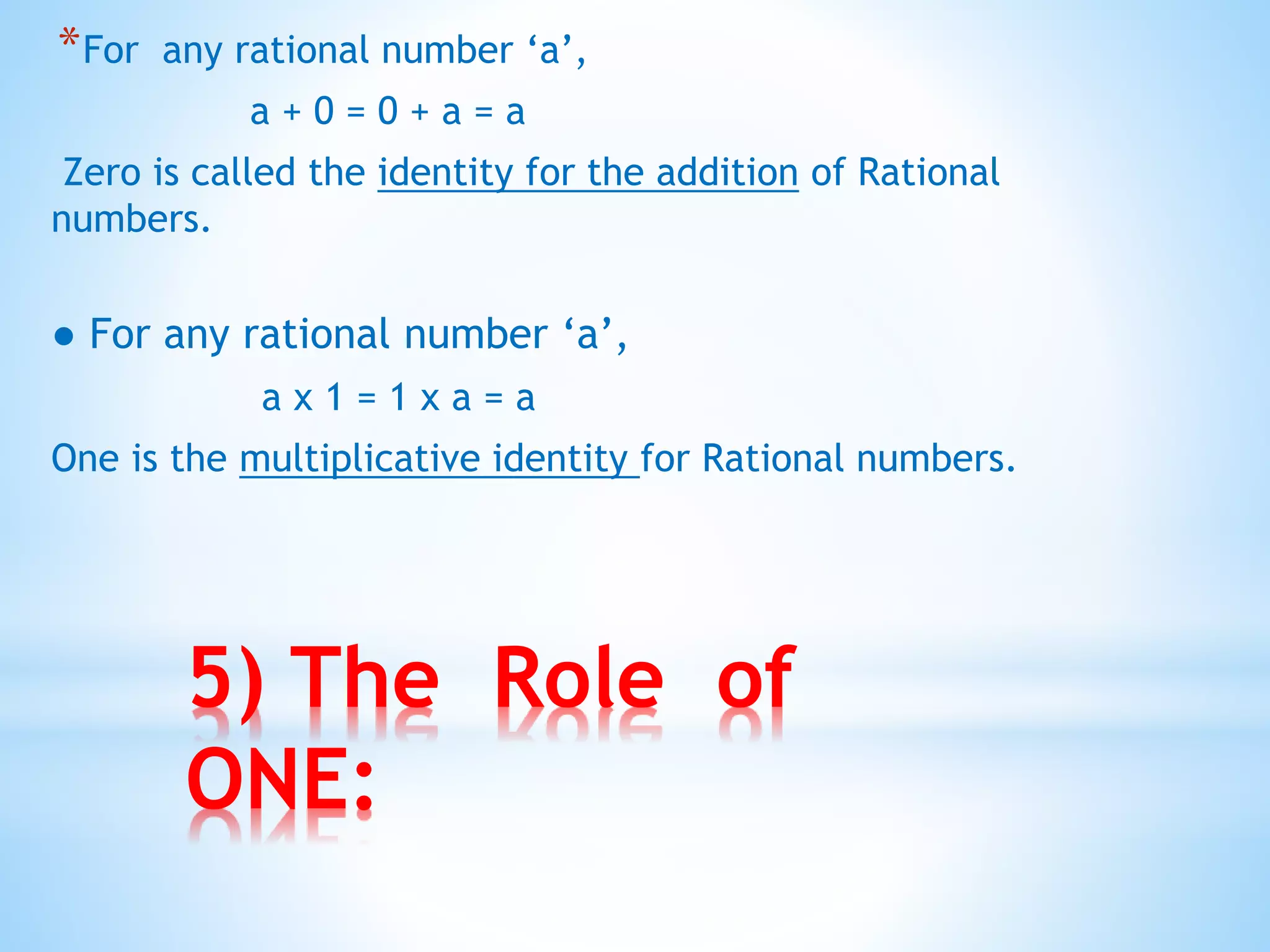
*For any rational number ‘a’,
a + 0 = 0 + a = a
Zero is called the identity for the addition of Rational
numbers.
● For any rational number ‘a’,
a x 1 = 1 x a = a
One is the multiplicative identity for Rational numbers.
*
Additive Inverse and Multiplicative
Inverse
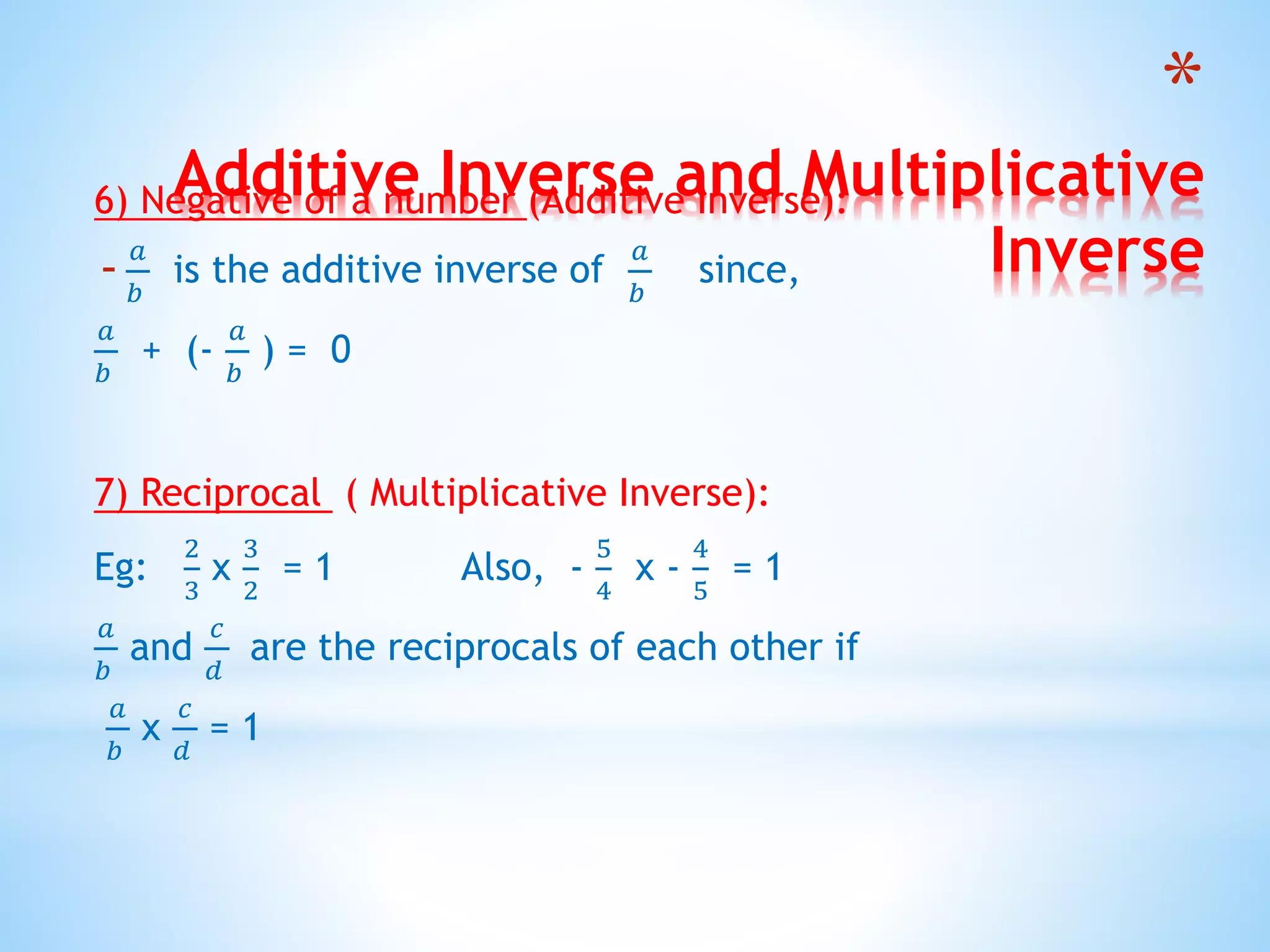
6) Negative of a number (Additive Inverse):
- 𝑎
𝑏
is the additive inverse of
𝑎
𝑏
since,
𝑎
𝑏
+ (-
𝑎
𝑏
) = 0
7) Reciprocal ( Multiplicative Inverse):
Eg:
2
3
x
3
2
= 1 Also, -
5
4
x -
4
5
= 1
𝑎
𝑏
and
𝑐
𝑑
are the reciprocals of each other if
𝑎
𝑏
x
𝑐
𝑑
= 1
*8) Distributivity of
Mutiplication over
Addition and
Subtraction:
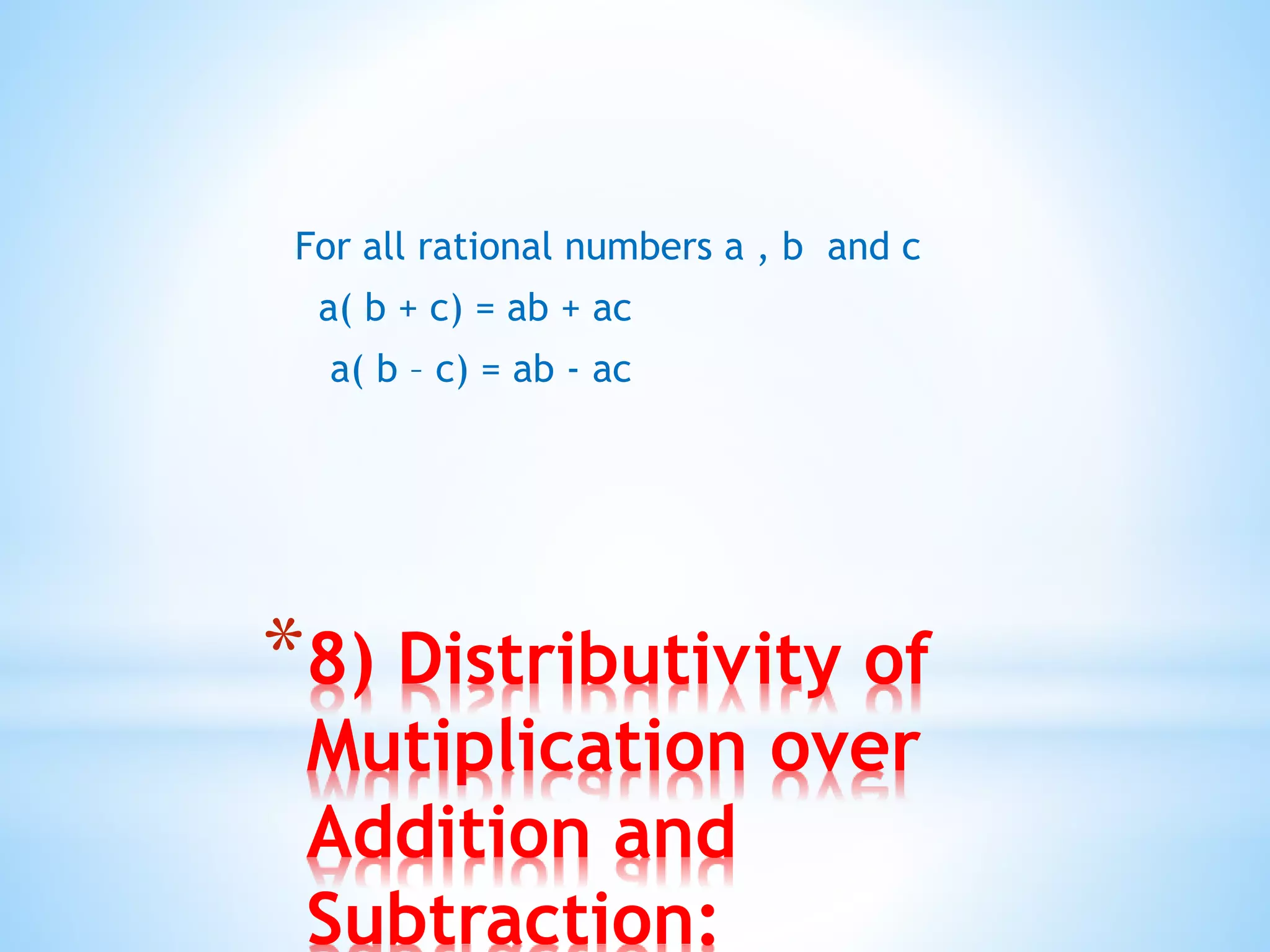
For all rational numbers a , b and c
a( b + c) = ab + ac
a( b – c) = ab - ac
*Find the no./nos. in each case:
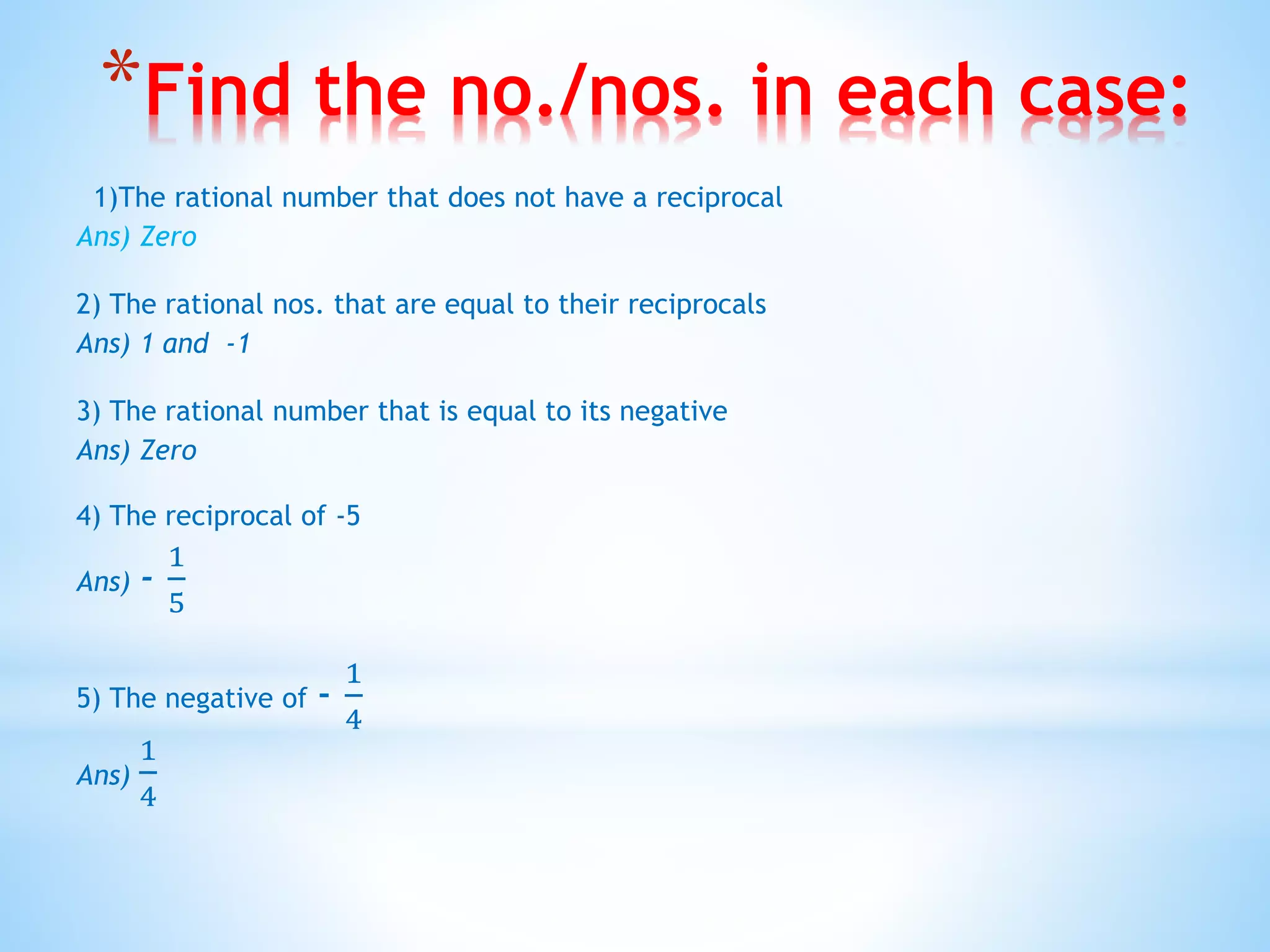
1)The rational number that does not have a reciprocal
Ans) Zero
2) The rational nos. that are equal to their reciprocals
Ans) 1 and -1
3) The rational number that is equal to its negative
Ans) Zero
4) The reciprocal of -5
Ans) -
1
5
5) The negative of -
1
4
Ans)
1
4
*Fill in the blanks:
1) The reciprocal of
1
𝑥
where x ≠ 0 is ---x------.
2) The product of two R.nos is always a –R.NOS----.
3) The reciprocal of a positive R.no is ----Possitive-
-----.
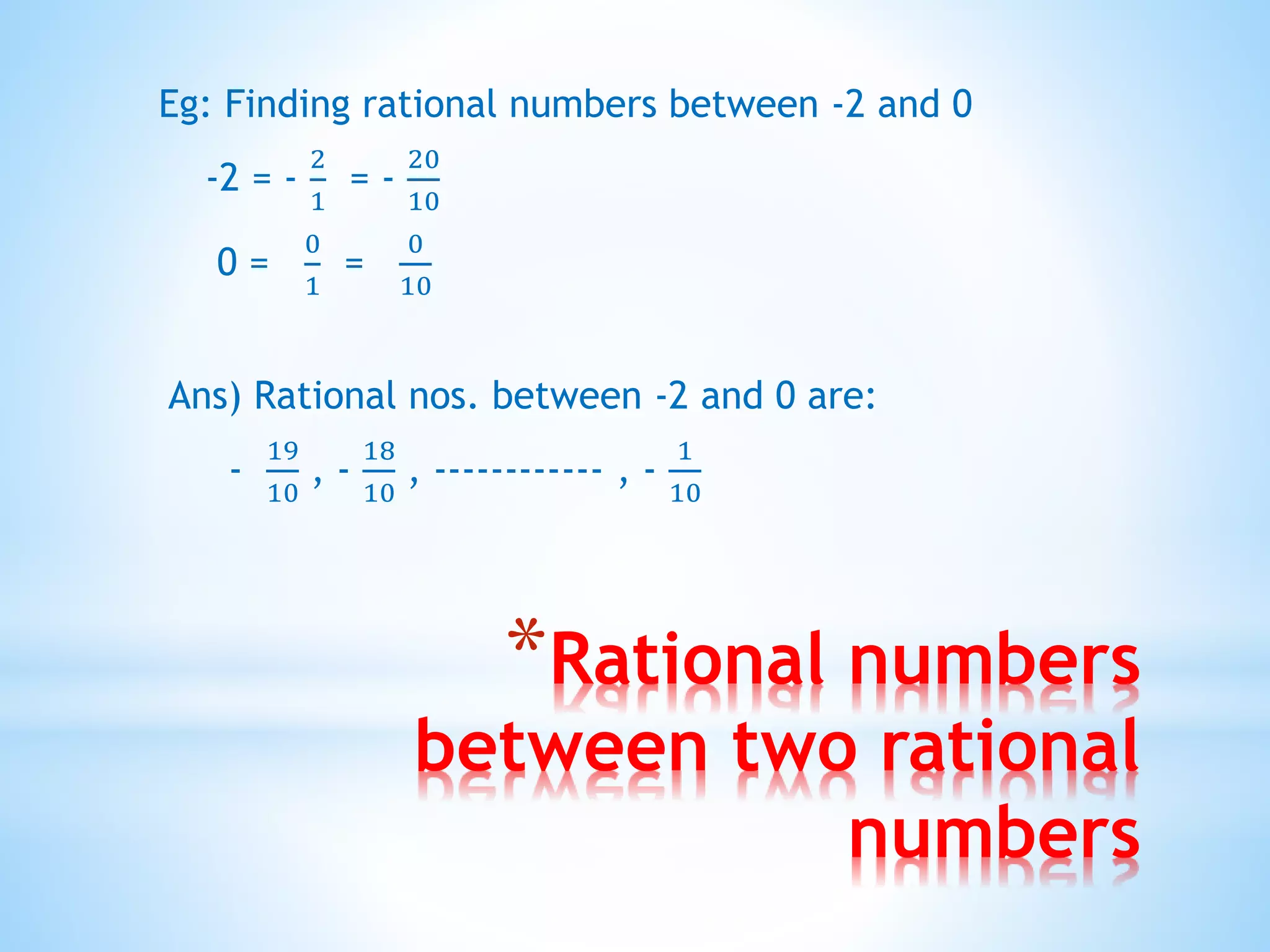
*Rational numbers
between two rational
numbers
Eg: Finding rational numbers between -2 and 0
-2 = -
2
1
= -
20
10
0 =
0
1
=
0
10
Ans) Rational nos. between -2 and 0 are:
-
19
10
, -
18
10
, ------------ , -
1
10
THANKYOU

Rational numbers

  • 1.
    * Numbers:- The systemsof numbers expanded with new needs. *Natural numbers :- (Counting numbers) 1 , 2 ,3 ,4 , ……… *Whole numbers :- 0 , 1 , 2 , 3, 4 , …….
  • 2.
    * *Integers :- Positive& negative numbers & Zero …., -2 , -1 , 0 , 1 , 2 , 3 , ………. *Fractions :- 2 3 , 1 2 , 1 3 , etc.
  • 3.
    * *Need for rationalnumbers: Do we have enough numbers to solve all simple equations? Lets us take 4𝑥 + 9 = 0 𝑥 = −9 4 We need the number −9 4 ,which is neither a fraction nor an integer, for solving the given equation.
  • 4.
    * *A number whichcan be written in the form 𝑝 𝑞 , where p and q are integers and q ≠ 0 is called a rational number. Eg. 2 , 0 , -3 , 2 3 , −5 7 *Note:- Every natural number ,whole number integer and fraction is also a rational number.
  • 5.
    *Properties of Rational numbers Howdo rational numbers behave when they are added , subtracted ,multiplied or divided with each other?
  • 6.
    *1) Closure Property: OperationExample Rational number? Remarks Addition 2 + 1 2 = 5 2 Yes Rational numbers are closed under addition Subtraction 5 8 - 3 4 = 5−6 8 = −1 8 yes R.Nos are closed under subtraction Multiplicatio n −4 5 X 5 8 = −1 2 yes R.Nos are closed under multiplication Division 2 7 ÷ 5 3 = 2 7 X 3 5 = 6 35 3 5 ÷ 0 is not defined Not always Note:- For any rational number a , a ÷ 0 is not defined .Rational numbers are not closed under division.
  • 7.
    *2) Commutativity: Operation ExampleRemarks Addition 1 + 1 2 = 1 2 + 1 = 3 2 Addition is commutative for Rational numbers Subtraction 6 3 - 4 3 ≠ 4 3 - 6 3 Subtraction is not commutative for Rational numbers multiplicatio n - 7 3 x 6 5 = 6 5 x - 7 3 Multiplication is commutative for Rational numbers Division - 5 4 ÷ 1 4 ≠ 1 4 ÷ - 5 4 Division is not commutative for Rational numbers
  • 8.
    *3) Associativity: *Addition andMultiplication are associative for rational numbers. *For any three rational numbers a, b and c, a + (b + c) = ( a + b) + c Also, a x(b x c) = ( a x b) x c Note: Subtraction and Division are not associative for Rational numbers.
  • 9.
    5) The Roleof ONE: *For any rational number ‘a’, a + 0 = 0 + a = a Zero is called the identity for the addition of Rational numbers. ● For any rational number ‘a’, a x 1 = 1 x a = a One is the multiplicative identity for Rational numbers.
  • 10.
    * Additive Inverse andMultiplicative Inverse 6) Negative of a number (Additive Inverse): - 𝑎 𝑏 is the additive inverse of 𝑎 𝑏 since, 𝑎 𝑏 + (- 𝑎 𝑏 ) = 0 7) Reciprocal ( Multiplicative Inverse): Eg: 2 3 x 3 2 = 1 Also, - 5 4 x - 4 5 = 1 𝑎 𝑏 and 𝑐 𝑑 are the reciprocals of each other if 𝑎 𝑏 x 𝑐 𝑑 = 1
  • 11.
    *8) Distributivity of Mutiplicationover Addition and Subtraction: For all rational numbers a , b and c a( b + c) = ab + ac a( b – c) = ab - ac
  • 12.
    *Find the no./nos.in each case: 1)The rational number that does not have a reciprocal Ans) Zero 2) The rational nos. that are equal to their reciprocals Ans) 1 and -1 3) The rational number that is equal to its negative Ans) Zero 4) The reciprocal of -5 Ans) - 1 5 5) The negative of - 1 4 Ans) 1 4
  • 13.
    *Fill in theblanks: 1) The reciprocal of 1 𝑥 where x ≠ 0 is ---x------. 2) The product of two R.nos is always a –R.NOS----. 3) The reciprocal of a positive R.no is ----Possitive- -----.
  • 14.
    *Rational numbers between tworational numbers Eg: Finding rational numbers between -2 and 0 -2 = - 2 1 = - 20 10 0 = 0 1 = 0 10 Ans) Rational nos. between -2 and 0 are: - 19 10 , - 18 10 , ------------ , - 1 10
  • 15.