Mathematics
(Class VI)
Integers
Integers
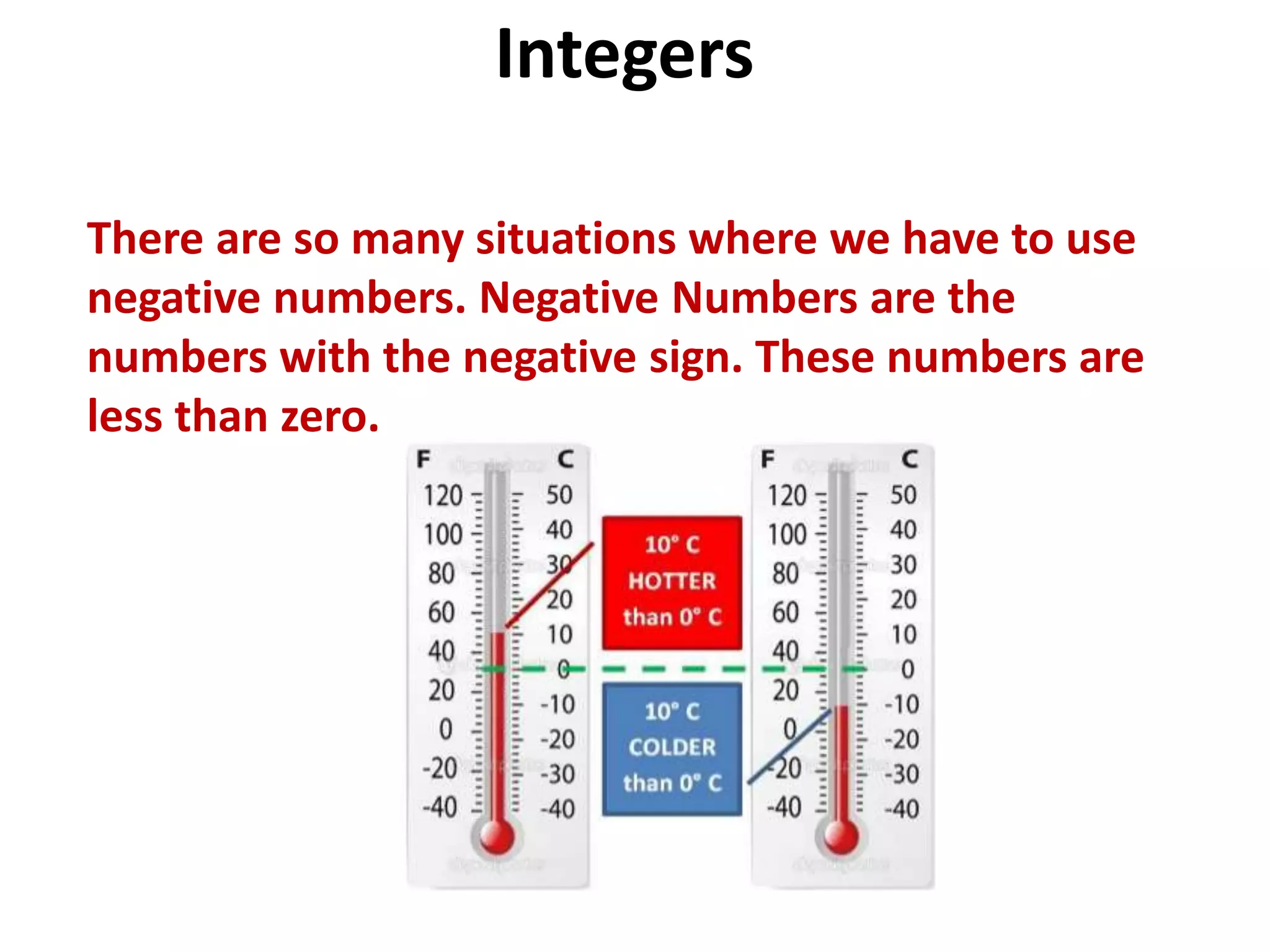
There are so many situations where we have to use
negative numbers. Negative Numbers are the
numbers with the negative sign. These numbers are
less than zero.
Predecessor and Successor
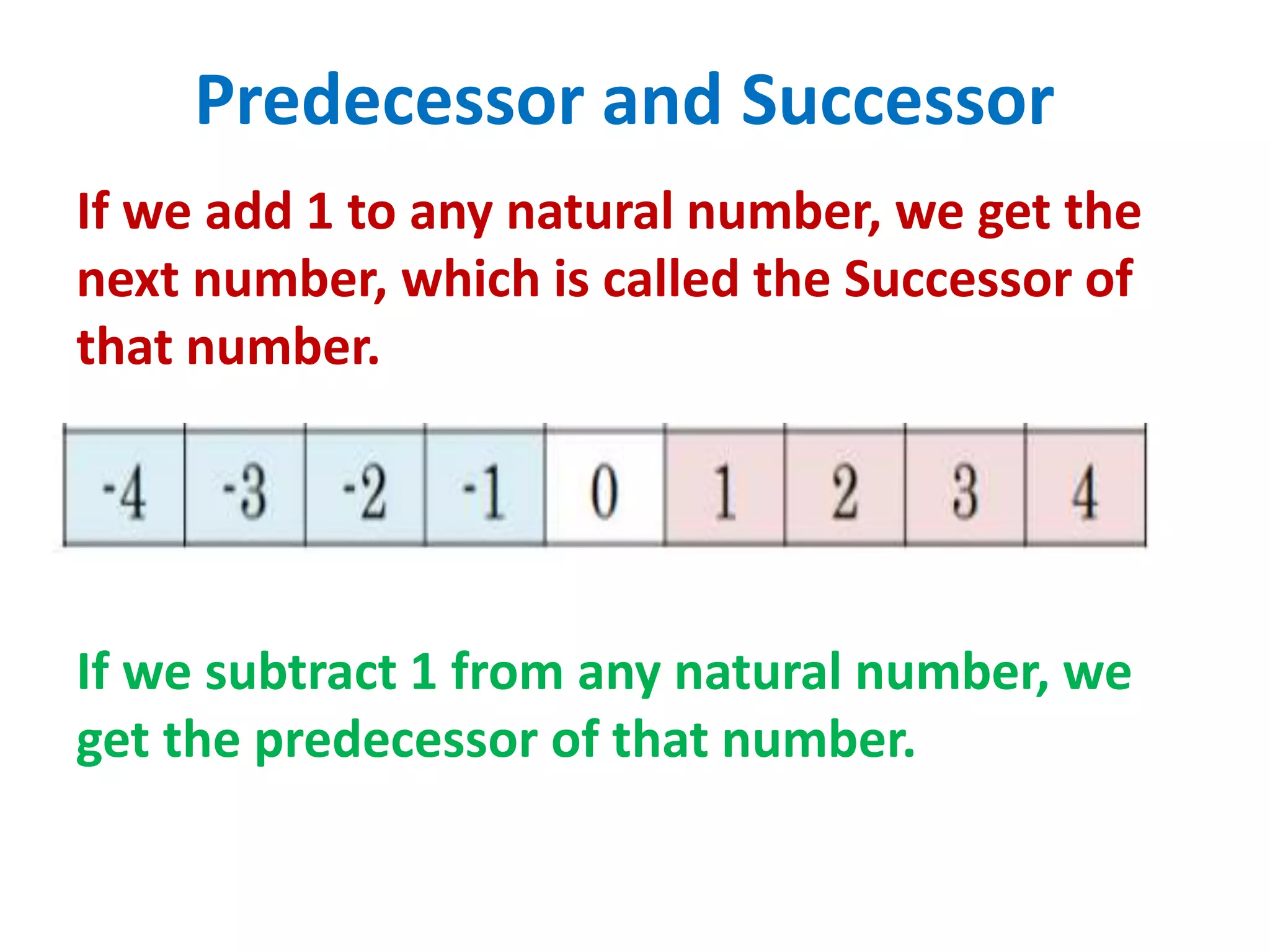
If we add 1 to any natural number, we get the
next number, which is called the Successor of
that number.
If we subtract 1 from any natural number, we
get the predecessor of that number.
Integers
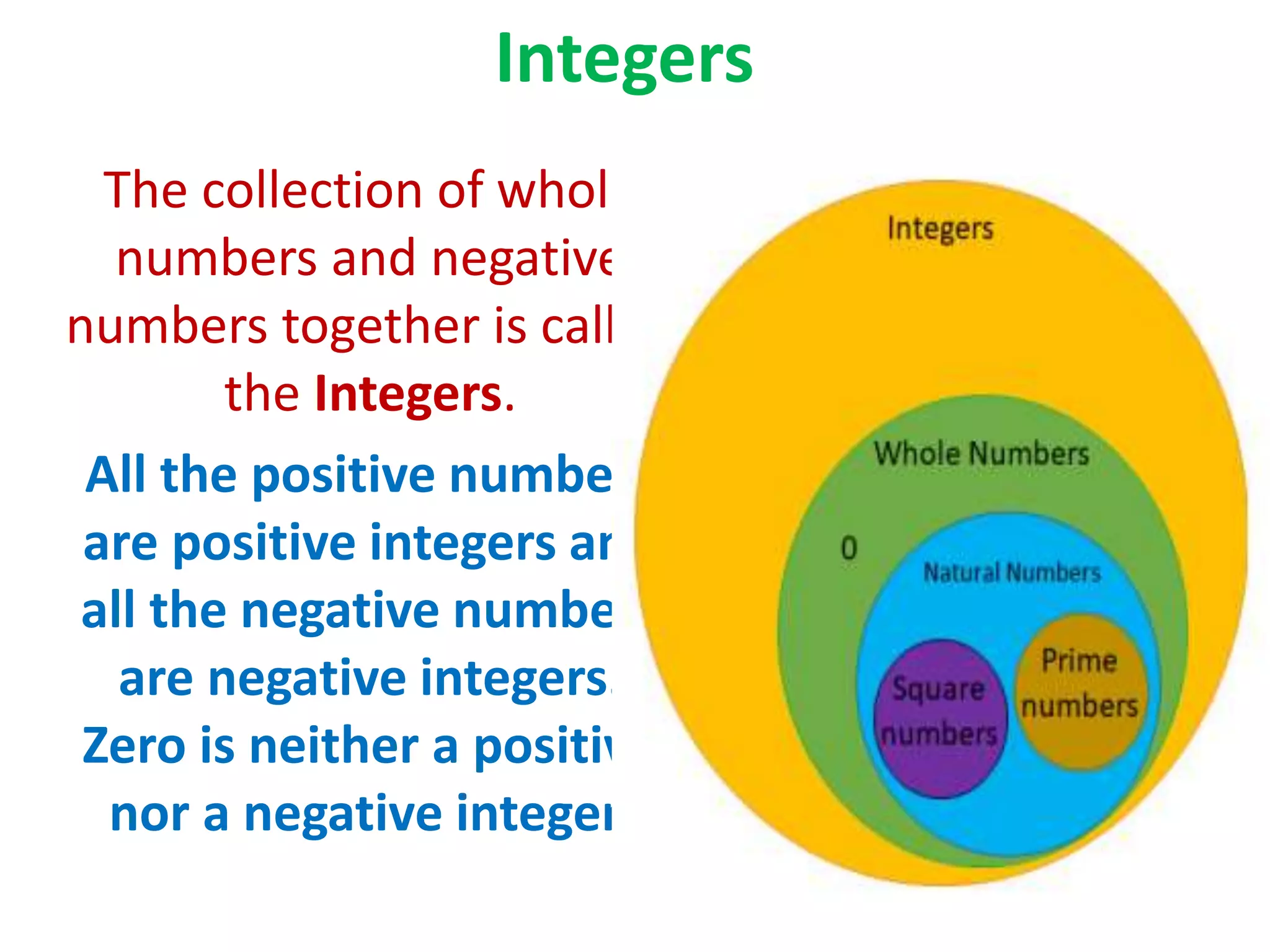
The collection of whole
numbers and negative
numbers together is called
the Integers.
All the positive numbers
are positive integers and
all the negative numbers
are negative integers.
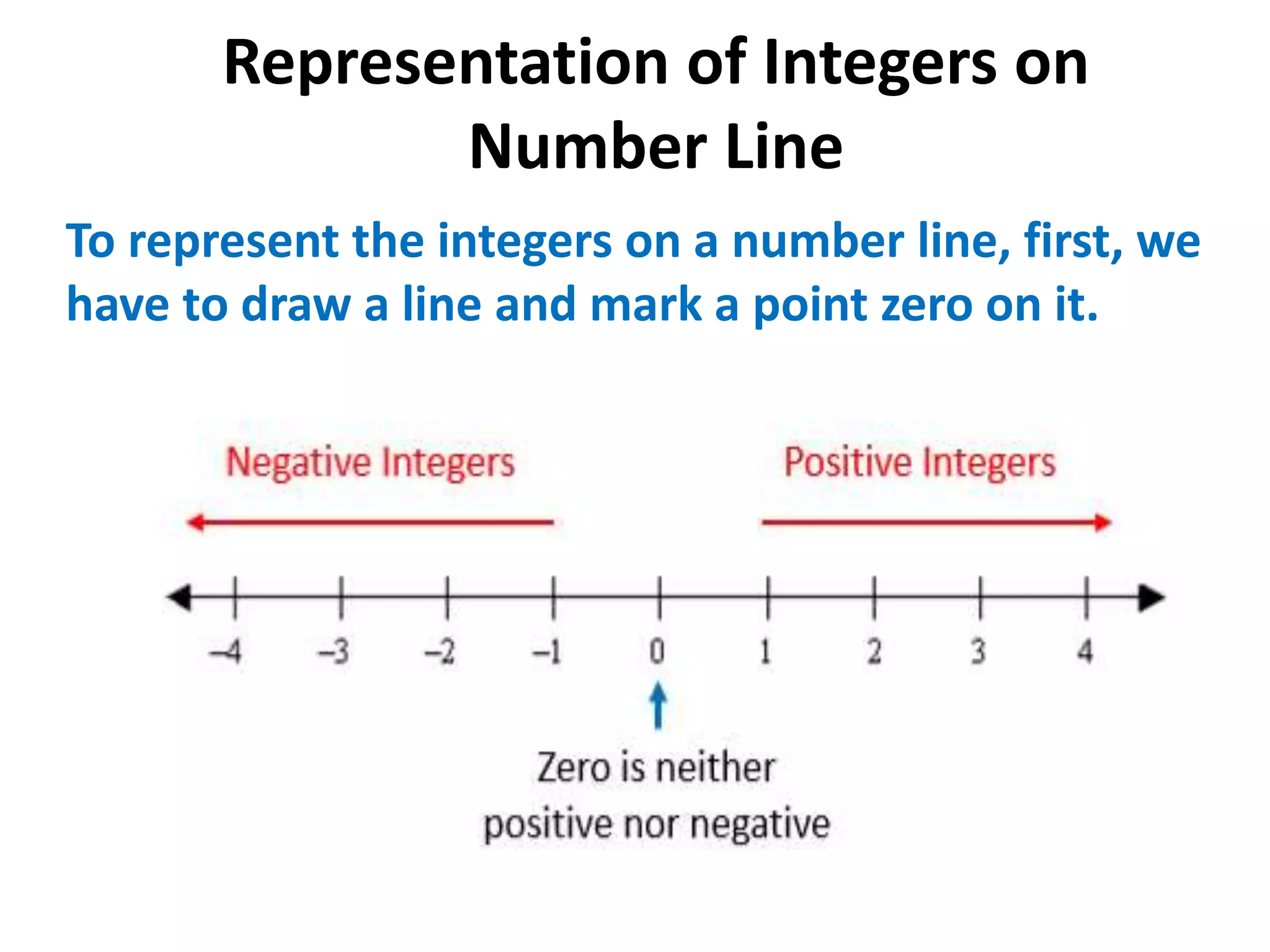
Zero is neither a positive
nor a negative integer.
Representation of Integers on
Number Line
To represent the integers on a number line, first, we
have to draw a line and mark a point zero on it.
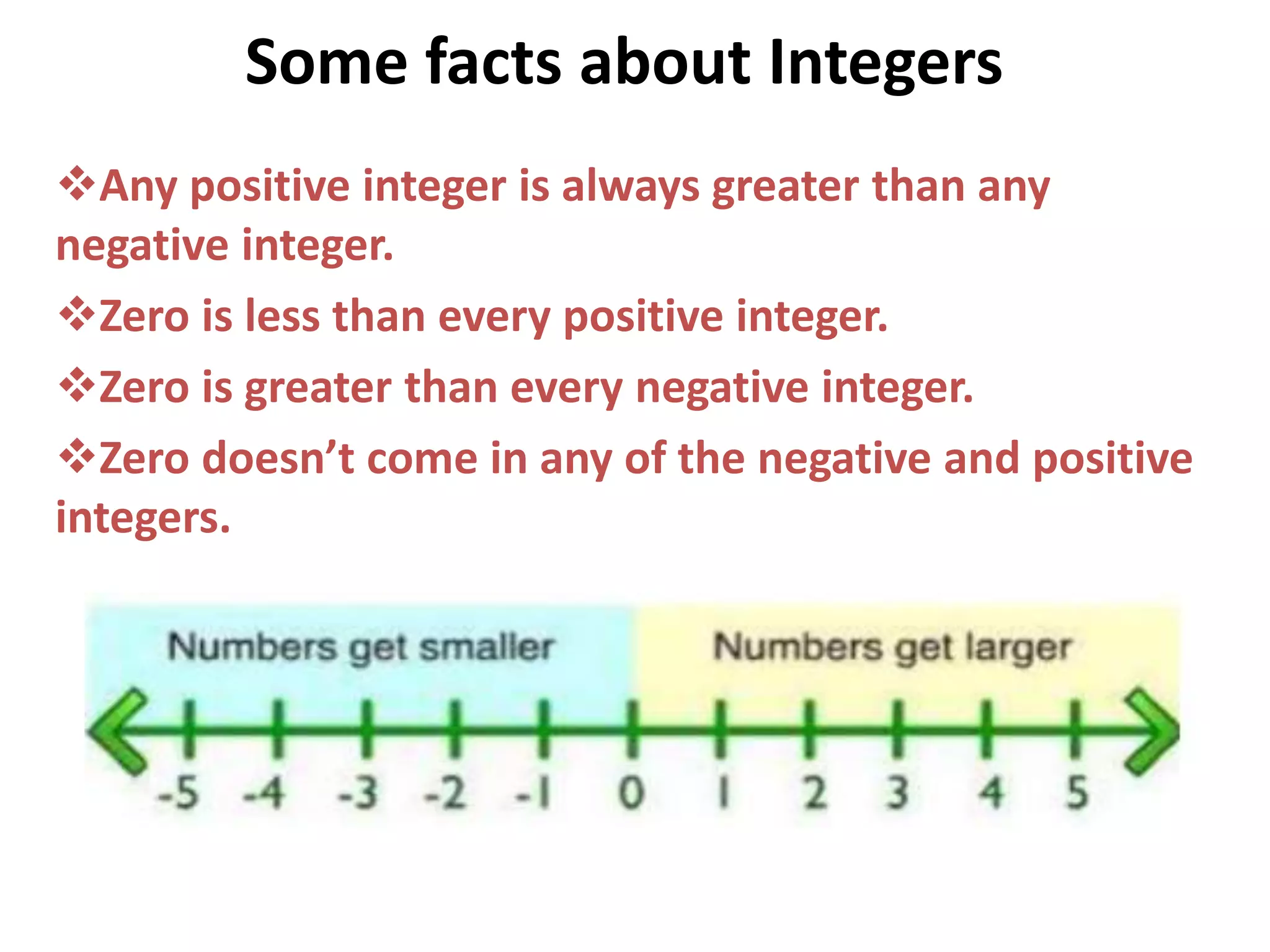
Some facts about Integers
Any positive integer is always greater than any
negative integer.
Zero is less than every positive integer.
Zero is greater than every negative integer.
Zero doesn’t come in any of the negative and positive
integers.
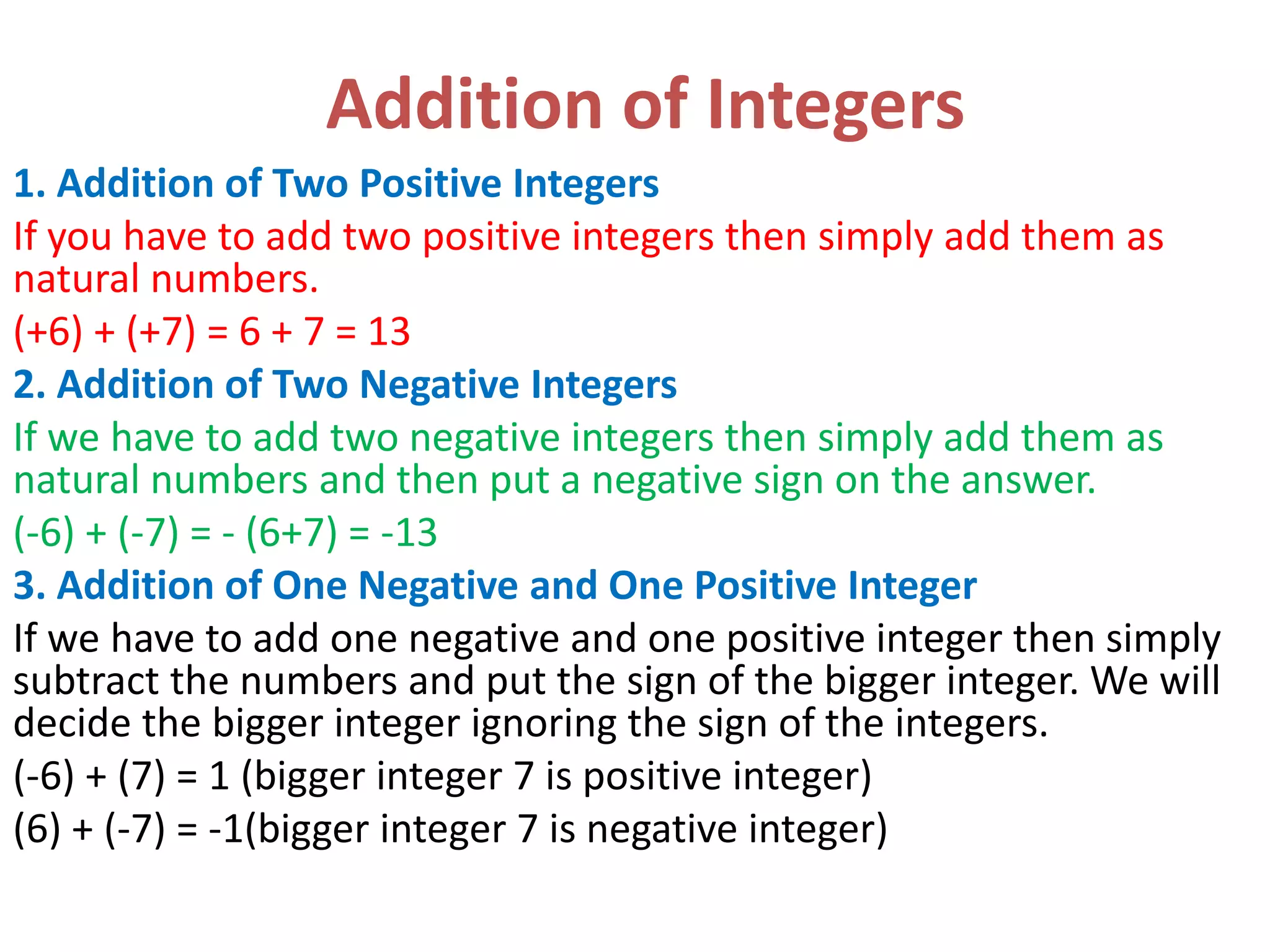
Addition of Integers
1. Addition of Two Positive Integers
If you have to add two positive integers then simply add them as
natural numbers.
(+6) + (+7) = 6 + 7 = 13
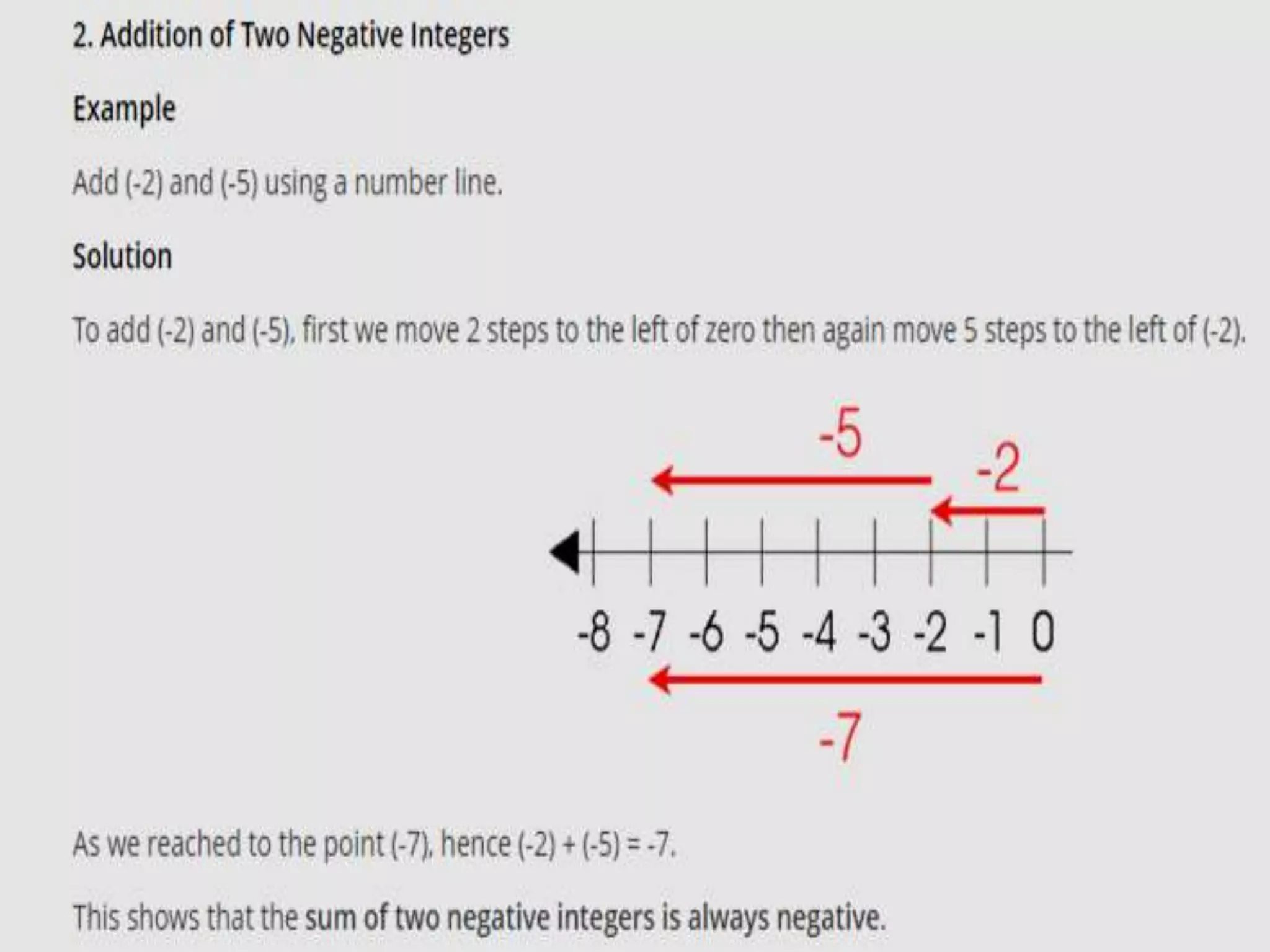
2. Addition of Two Negative Integers
If we have to add two negative integers then simply add them as
natural numbers and then put a negative sign on the answer.
(-6) + (-7) = - (6+7) = -13
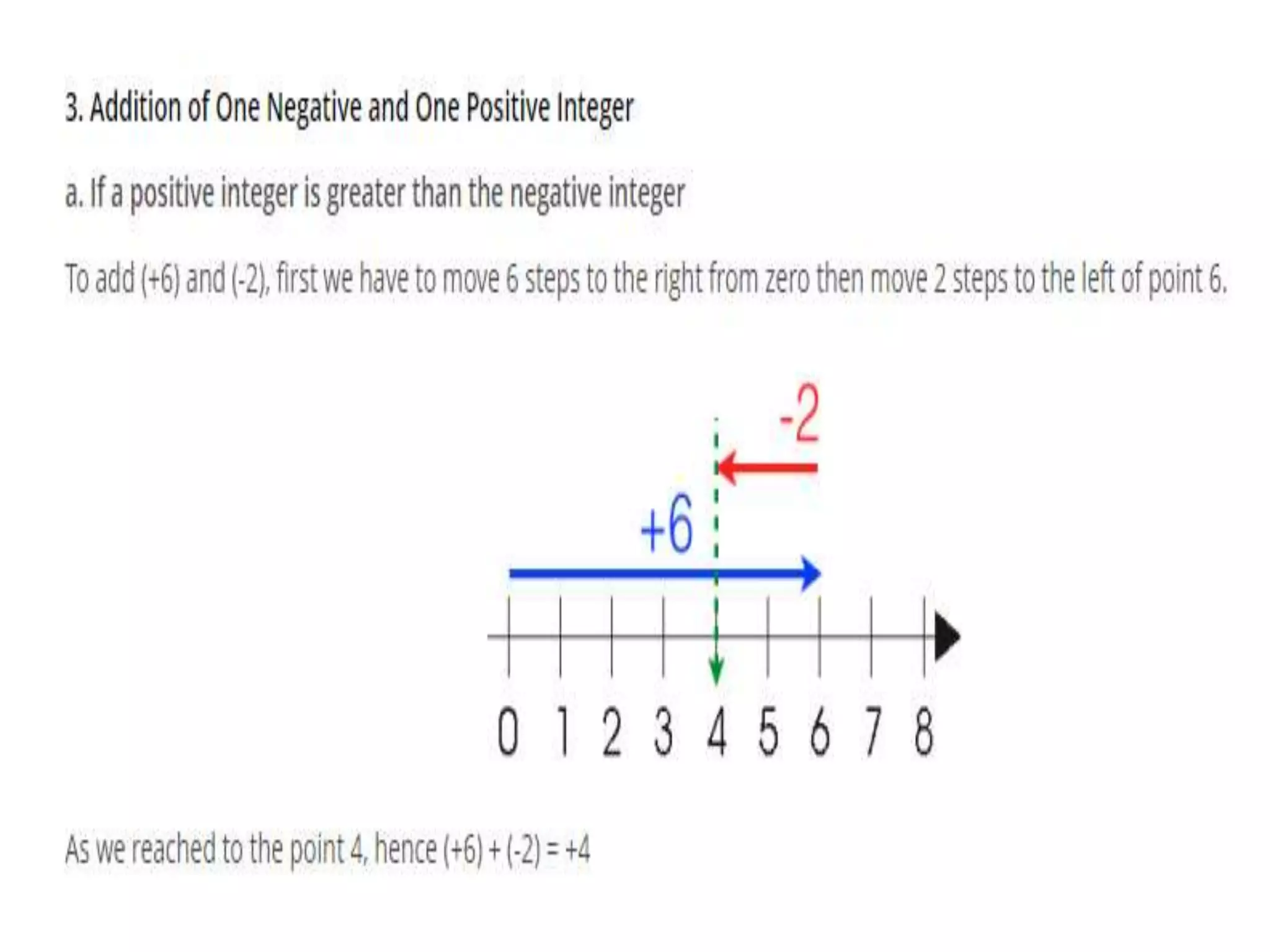
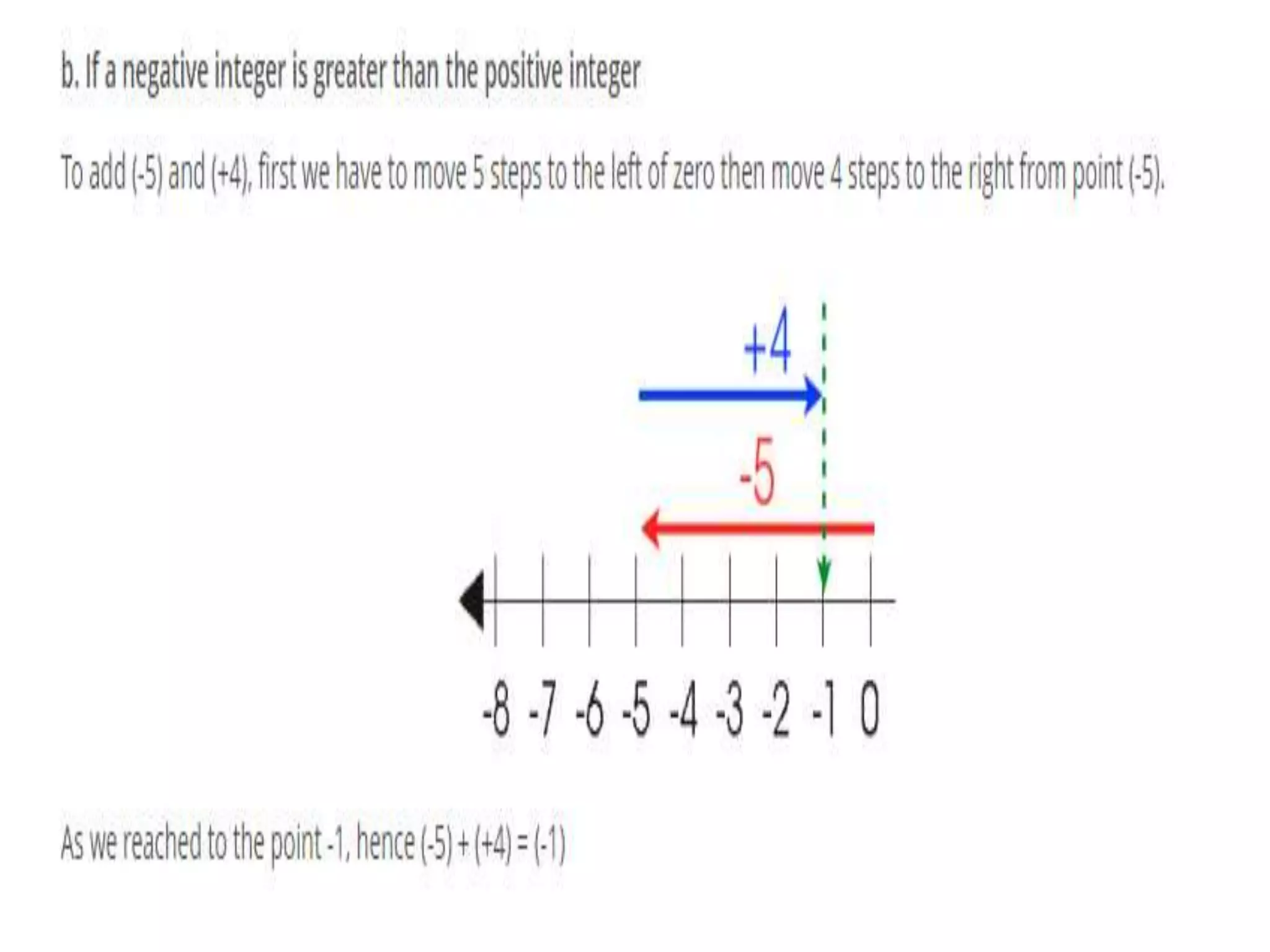
3. Addition of One Negative and One Positive Integer
If we have to add one negative and one positive integer then simply
subtract the numbers and put the sign of the bigger integer. We will
decide the bigger integer ignoring the sign of the integers.
(-6) + (7) = 1 (bigger integer 7 is positive integer)
(6) + (-7) = -1(bigger integer 7 is negative integer)
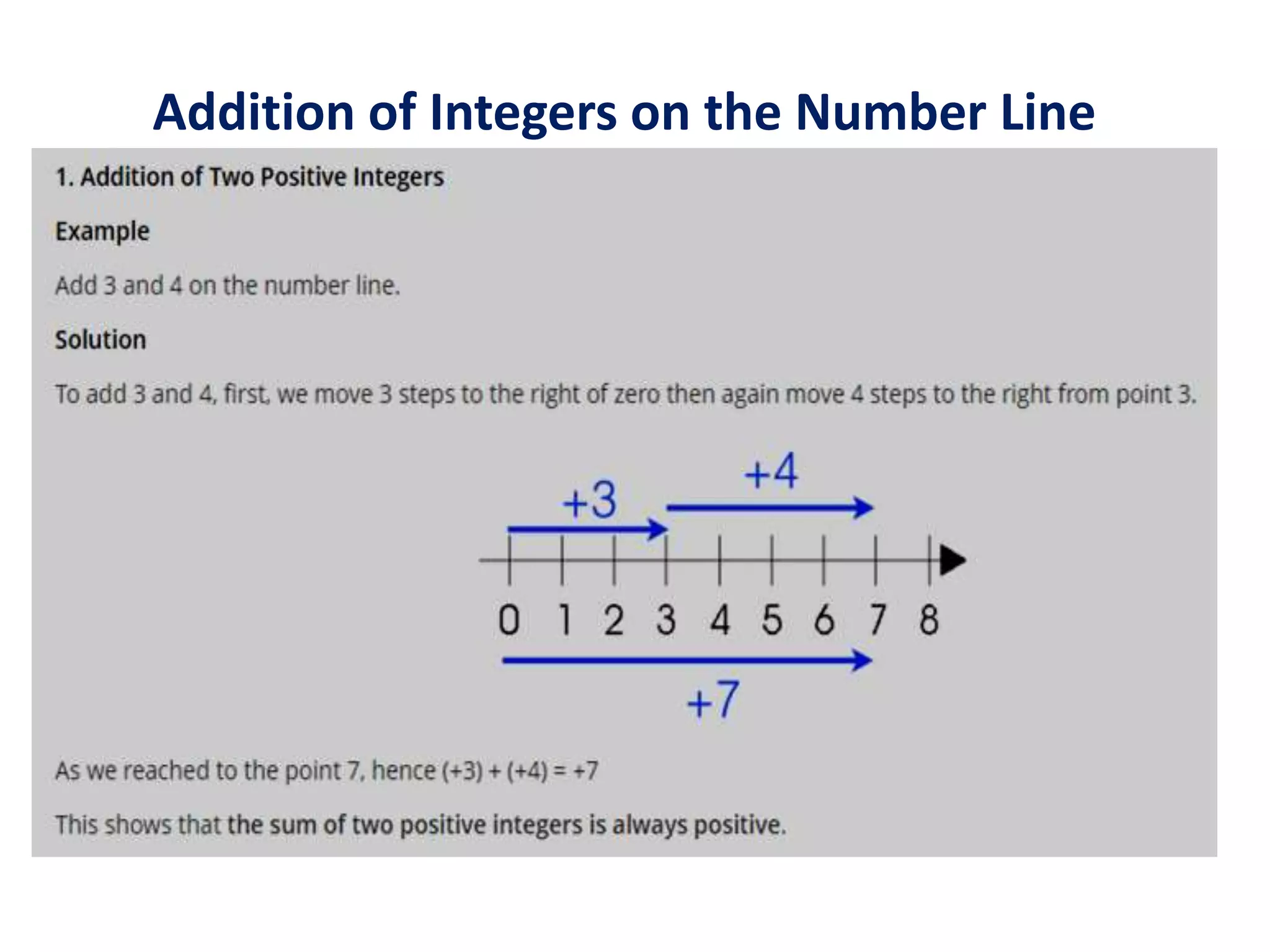
Addition of Integers on the Number Line
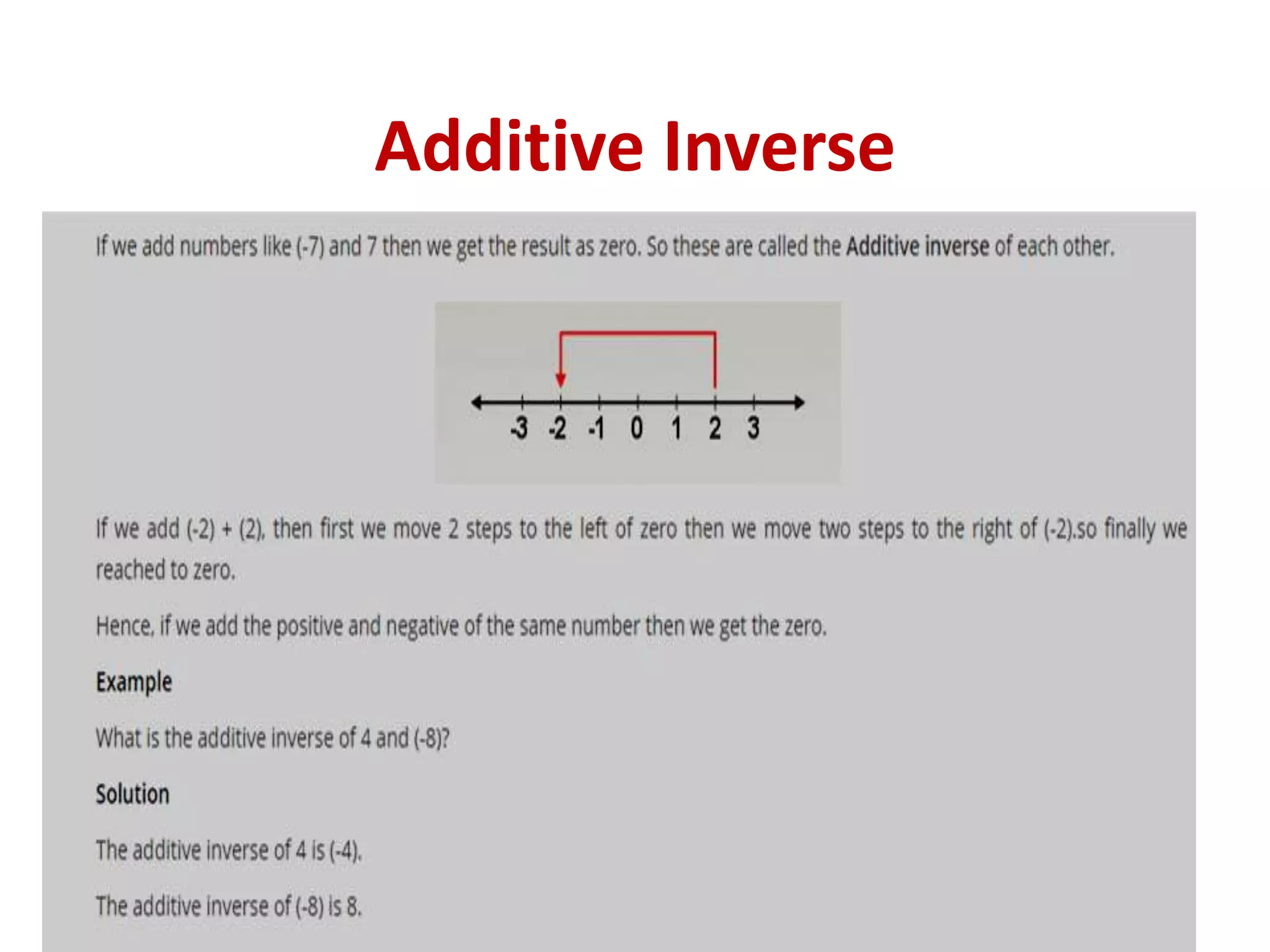
Additive Inverse
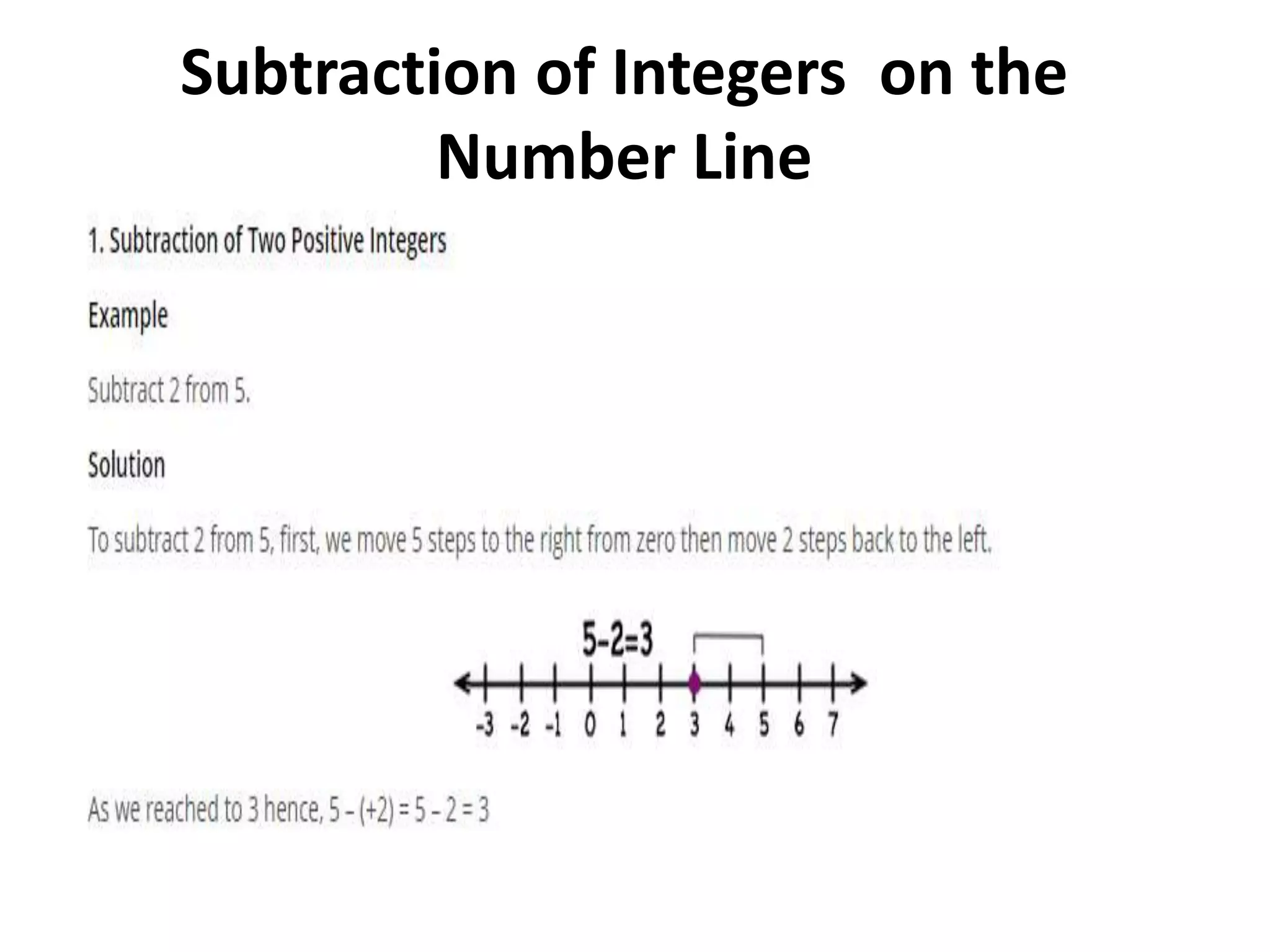
Subtraction of Integers on the
Number Line
Integers Class 6
Integers Class 6
Integers Class 6

Integers Class 6

  • 1.
  • 2.
    Integers There are somany situations where we have to use negative numbers. Negative Numbers are the numbers with the negative sign. These numbers are less than zero.
  • 3.
    Predecessor and Successor Ifwe add 1 to any natural number, we get the next number, which is called the Successor of that number. If we subtract 1 from any natural number, we get the predecessor of that number.
  • 4.
    Integers The collection ofwhole numbers and negative numbers together is called the Integers. All the positive numbers are positive integers and all the negative numbers are negative integers. Zero is neither a positive nor a negative integer.
  • 5.
    Representation of Integerson Number Line To represent the integers on a number line, first, we have to draw a line and mark a point zero on it.
  • 6.
    Some facts aboutIntegers Any positive integer is always greater than any negative integer. Zero is less than every positive integer. Zero is greater than every negative integer. Zero doesn’t come in any of the negative and positive integers.
  • 7.
    Addition of Integers 1.Addition of Two Positive Integers If you have to add two positive integers then simply add them as natural numbers. (+6) + (+7) = 6 + 7 = 13 2. Addition of Two Negative Integers If we have to add two negative integers then simply add them as natural numbers and then put a negative sign on the answer. (-6) + (-7) = - (6+7) = -13 3. Addition of One Negative and One Positive Integer If we have to add one negative and one positive integer then simply subtract the numbers and put the sign of the bigger integer. We will decide the bigger integer ignoring the sign of the integers. (-6) + (7) = 1 (bigger integer 7 is positive integer) (6) + (-7) = -1(bigger integer 7 is negative integer)
  • 8.
    Addition of Integerson the Number Line
  • 12.
  • 13.
    Subtraction of Integerson the Number Line