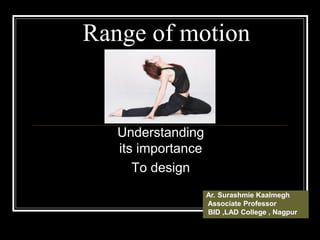
Range of motion
Understanding
its importance
To design
Ar. Surashmie Kaalmegh
Associate Professor
BID ,LAD College , Nagpur
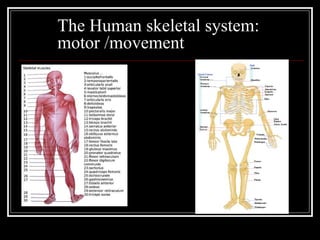
The Human skeletal system:
motor /movement
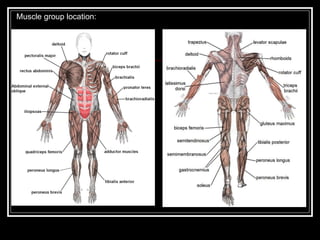
Muscle group location:
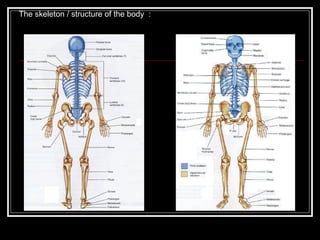
The skeleton / structure of the body :
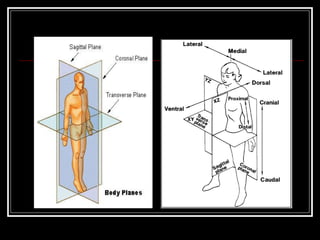
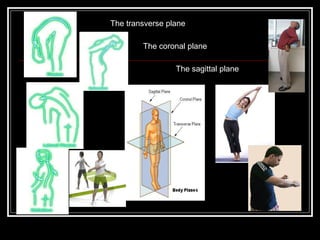
The transverse plane
The coronal plane
The sagittal plane
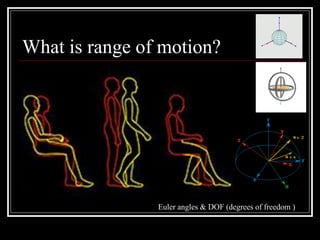
What is range of motion?
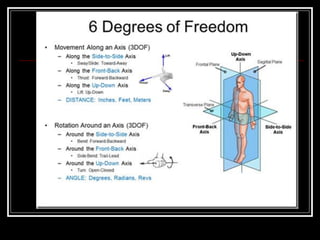
Euler angles & DOF (degrees of freedom )
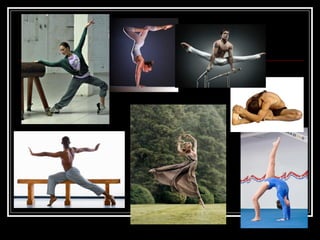
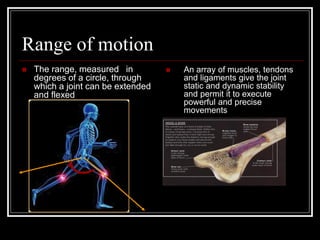
Range of motion
 The range, measured in
degrees of a circle, through
which a joint can be extended
and flexed
 An array of muscles, tendons
and ligaments give the joint
static and dynamic stability
and permit it to execute
powerful and precise
movements
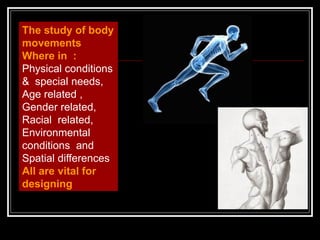
The study of body
movements
Where in :
Physical conditions
& special needs,
Age related ,
Gender related,
Racial related,
Environmental
conditions and
Spatial differences
All are vital for
designing
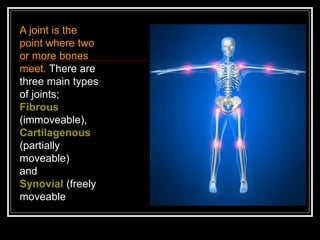
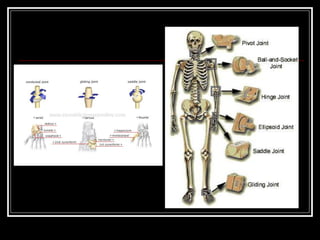
A joint is the
point where two
or more bones
meet. There are
three main types
of joints;
Fibrous
(immoveable),
Cartilagenous
(partially
moveable)
and
Synovial (freely
moveable
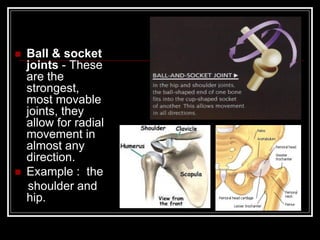
 Ball & socket
joints - These
are the
strongest,
most movable
joints, they
allow for radial
movement in
almost any
direction.
 Example : the
shoulder and
hip.
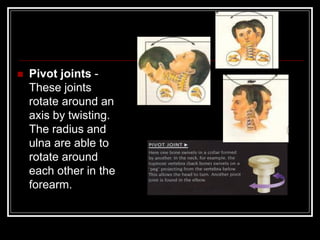
 Pivot joints -
These joints
rotate around an
axis by twisting.
The radius and
ulna are able to
rotate around
each other in the
forearm.
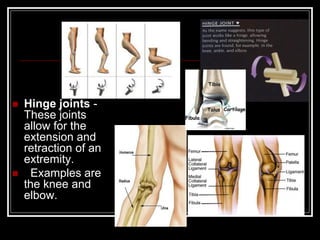
 Hinge joints -
These joints
allow for the
extension and
retraction of an
extremity.
 Examples are
the knee and
elbow.
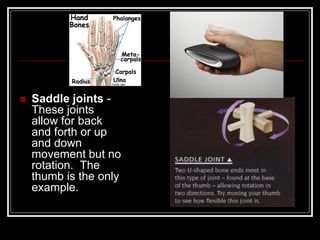
 Saddle joints -
These joints
allow for back
and forth or up
and down
movement but no
rotation. The
thumb is the only
example.
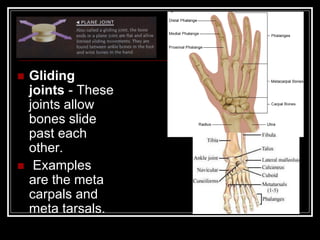
 Gliding
joints - These
joints allow
bones slide
past each
other.
 Examples
are the meta
carpals and
meta tarsals.
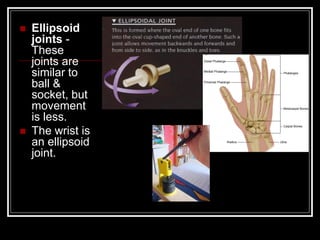
 Ellipsoid
joints -
These
joints are
similar to
ball &
socket, but
movement
is less.
 The wrist is
an ellipsoid
joint.
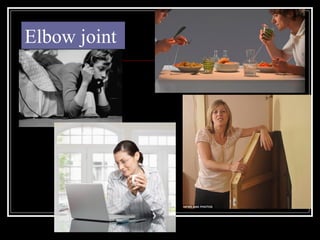
Elbow joint
Activity needs
motion & motion
needs mobility ,
flexibility………
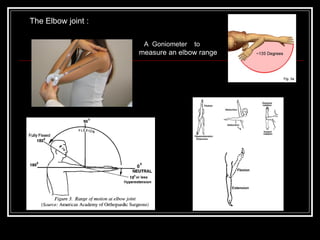
A Goniometer to
measure an elbow range
The Elbow joint :
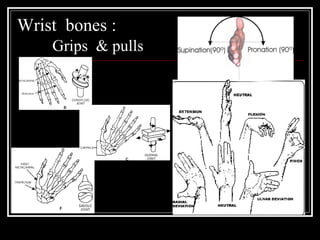
Wrist bones :
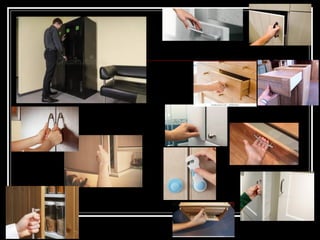
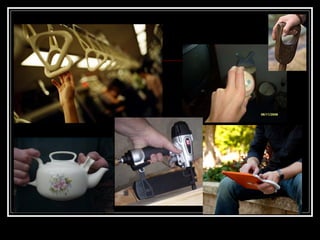
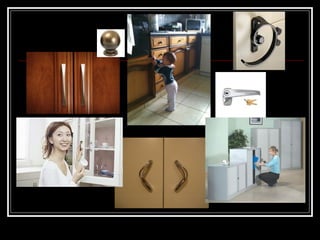
Grips & pulls
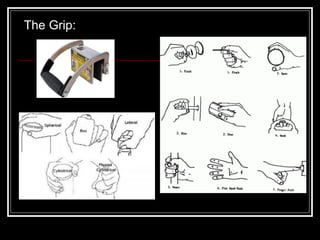
The Grip:
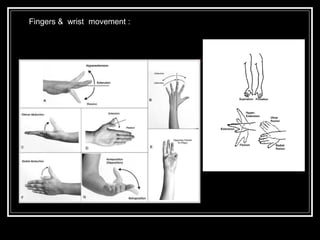
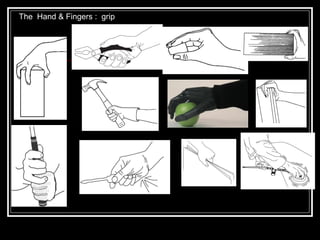
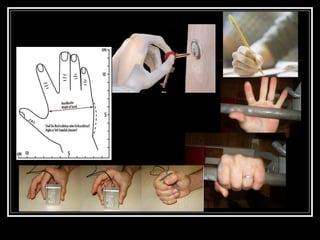
Fingers & wrist movement :
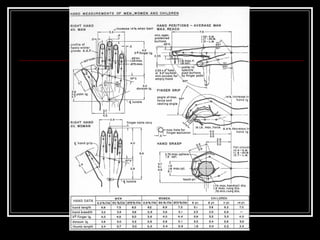
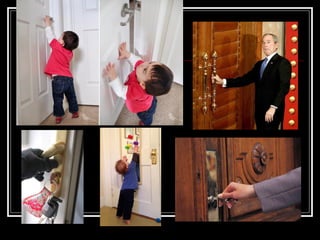
The Hand & Fingers : grip
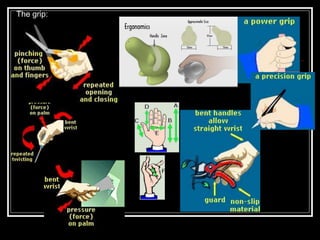
The grip:
The grip
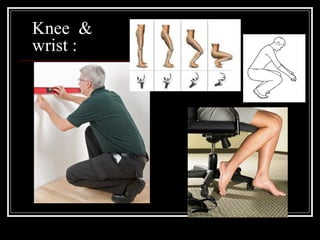
Knee &
wrist :
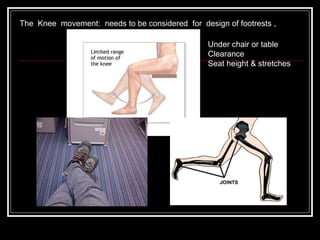
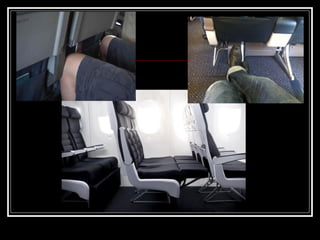
The Knee movement: needs to be considered for design of footrests ,
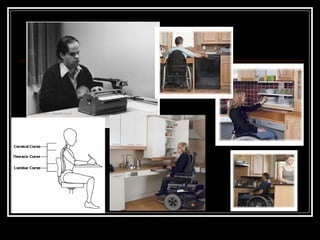
Under chair or table
Clearance
Seat height & stretches
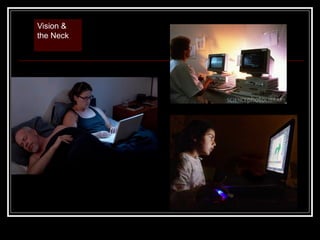
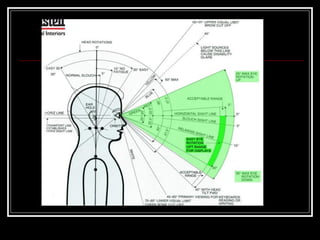
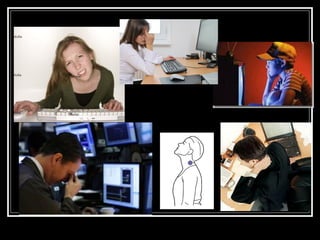
Vision &
the Neck
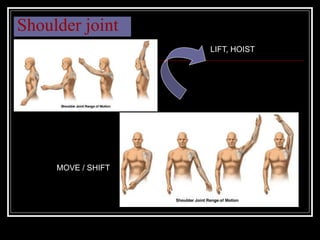
Shoulder joint
LIFT, HOIST
MOVE / SHIFT
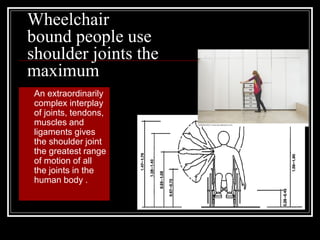
Wheelchair
bound people use
shoulder joints the
maximum
 An extraordinarily
complex interplay
of joints, tendons,
muscles and
ligaments gives
the shoulder joint
the greatest range
of motion of all
the joints in the
human body .
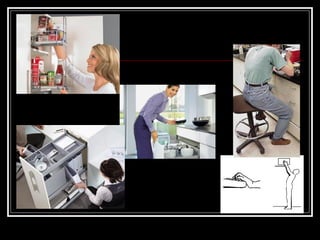
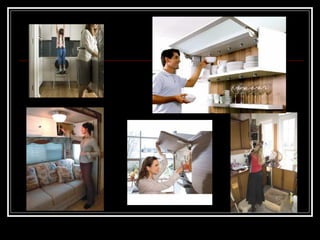
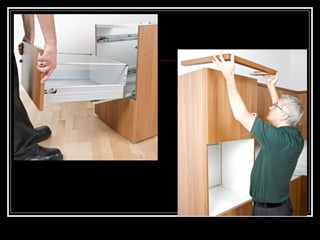
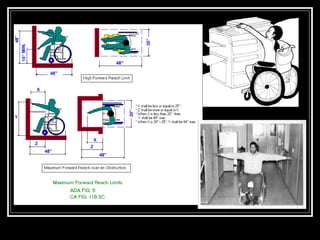
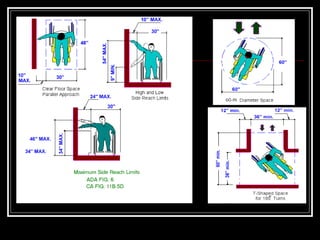
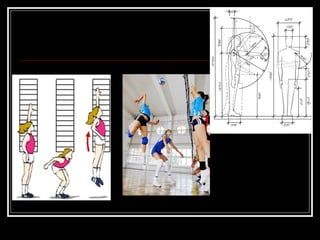
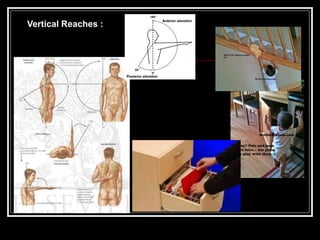
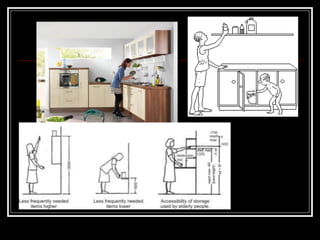
Vertical Reaches :
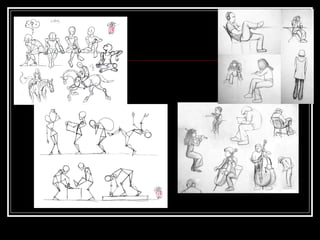
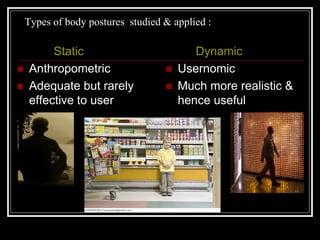
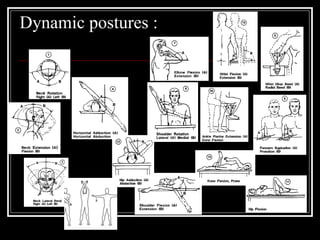
Types of body postures studied & applied :
Static
 Anthropometric
 Adequate but rarely
effective to user
Dynamic
 Usernomic
 Much more realistic &
hence useful
Dynamic postures :
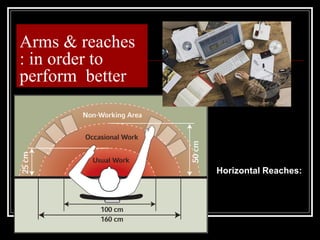
Horizontal Reaches:
Arms & reaches
: in order to
perform better
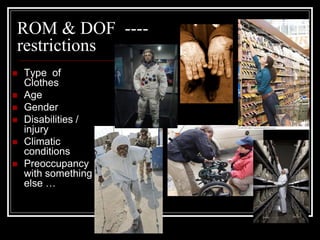
ROM & DOF ----
restrictions
 Type of
Clothes
 Age
 Gender
 Disabilities /
injury
 Climatic
conditions
 Preoccupancy
with something
else …
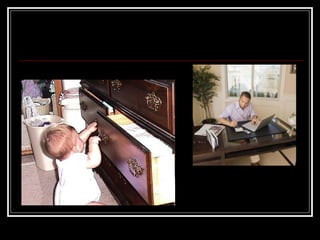
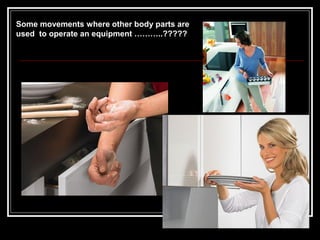
Some movements where other body parts are
used to operate an equipment ………..?????
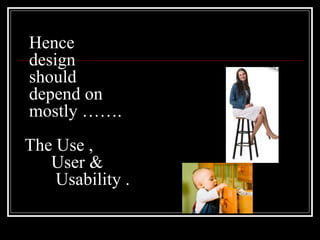
Hence
design
should
depend on
mostly …….
The Use ,
User &
Usability .
Photo and text credit to all the talented unnamed photographers and authors whose works have been used in this presentation

Range of motion