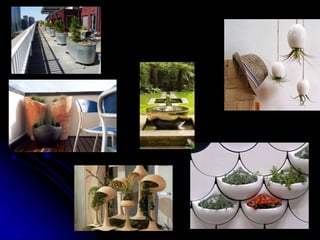
The use of hardscape &
softscape elements
By:
Surashmie Kaalmegh
Faculty in Interior Design
LAD College
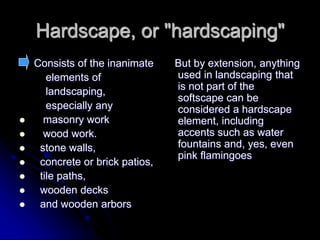
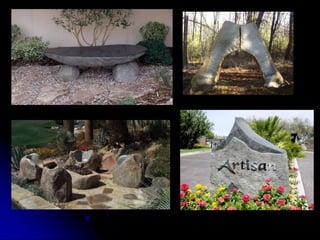
Hardscape, or "hardscaping"
Consists of the inanimate
elements of
landscaping,
especially any
 masonry work
 wood work.
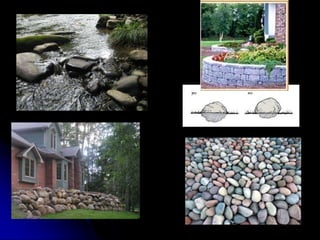
 stone walls,
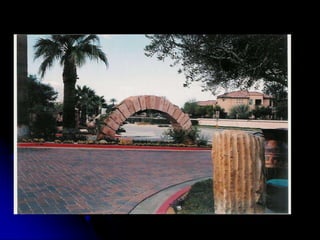
 concrete or brick patios,
 tile paths,
 wooden decks
 and wooden arbors
But by extension, anything
used in landscaping that
is not part of the
softscape can be
considered a hardscape
element, including
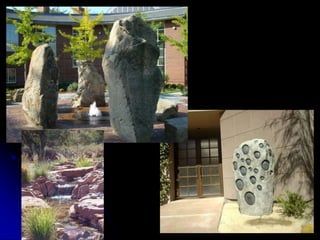
accents such as water
fountains and, yes, even
pink flamingoes
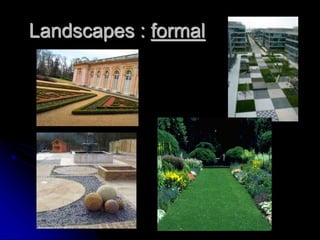
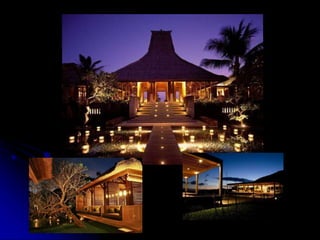
Landscapes : formal
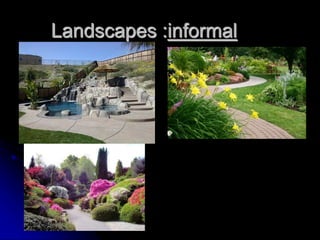
Landscapes :informal
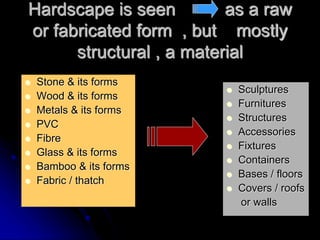
Hardscape is seen as a raw
or fabricated form , but mostly
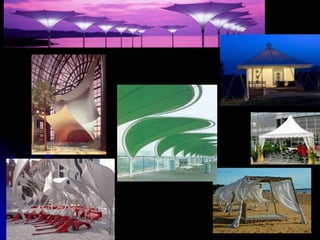
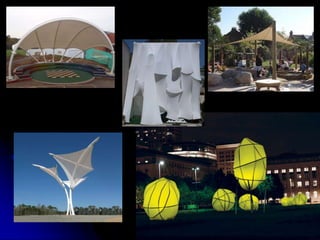
structural , a material
 Stone & its forms
 Wood & its forms
 Metals & its forms
 PVC
 Fibre
 Glass & its forms
 Bamboo & its forms
 Fabric / thatch
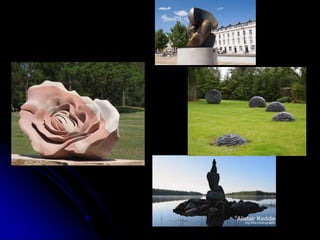
 Sculptures
 Furnitures
 Structures
 Accessories
 Fixtures
 Containers
 Bases / floors
 Covers / roofs
or walls
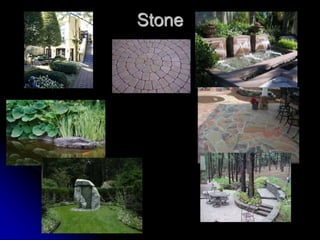
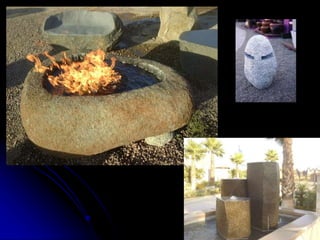
Stone
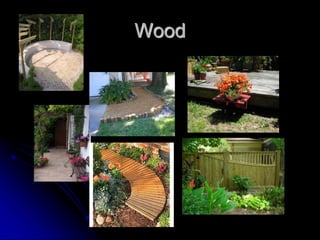
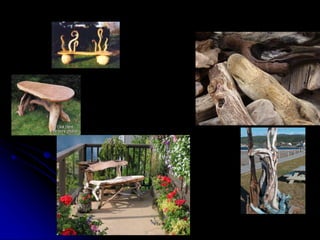
Wood
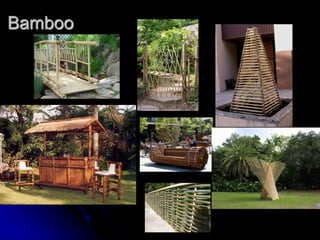
Bamboo
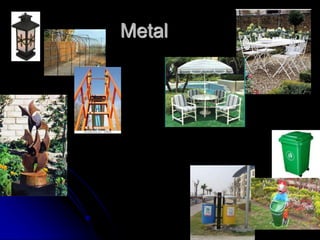
Metal
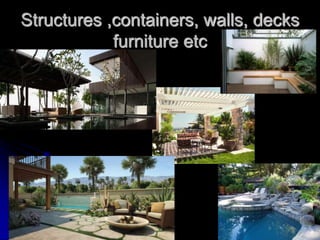
Structures ,containers, walls, decks
furniture etc
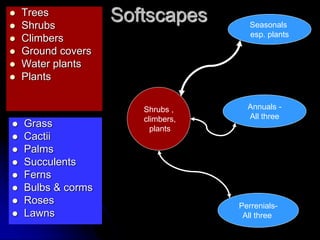
Softscapes
 Trees
 Shrubs
 Climbers
 Ground covers
 Water plants
 Plants
 Grass
 Cactii
 Palms
 Succulents
 Ferns
 Bulbs & corms
 Roses
 Lawns
Seasonals
esp. plants
Annuals -
All three
Shrubs ,
climbers,
plants
Perrenials-
All three
Trees
There are 3 main
categories of trees.
 Ornamental Trees
 Evergreen Trees
 Shade Trees
Some of their attributes
and the specific ways to
use them in a landscape
is important for a
Designer.
 They have specific
characteristics :
physical : which are
form, branches,
leaves, trunk, bark
flowers, fruits, seeds
growth : the method
in which the tree
grows in a given
environment
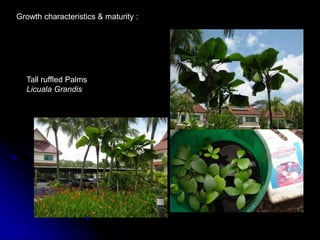
Tall ruffled Palms
Licuala Grandis
Growth characteristics & maturity :
Trees
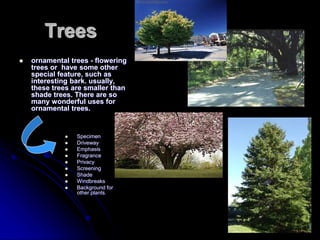
 ornamental trees - flowering
trees or have some other
special feature, such as
interesting bark. usually,
these trees are smaller than
shade trees. There are so
many wonderful uses for
ornamental trees.
 Specimen
 Driveway
 Emphasis
 Fragrance
 Privacy
 Screening
 Shade
 Windbreaks
 Background for
other plants.
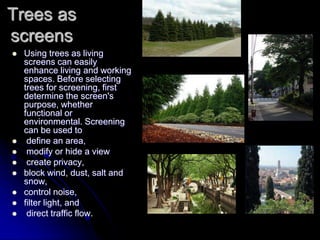
Trees as
screens
 Using trees as living
screens can easily
enhance living and working
spaces. Before selecting
trees for screening, first
determine the screen's
purpose, whether
functional or
environmental. Screening
can be used to
 define an area,
 modify or hide a view
 create privacy,
 block wind, dust, salt and
snow,
 control noise,
 filter light, and
 direct traffic flow.
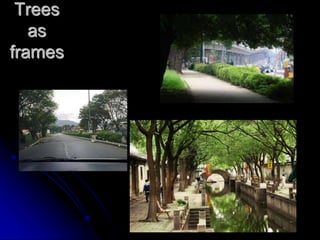
Trees
as
frames
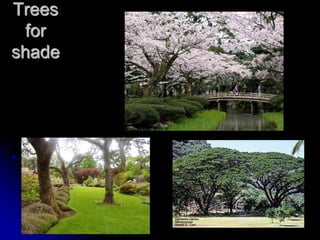
Trees
for
shade
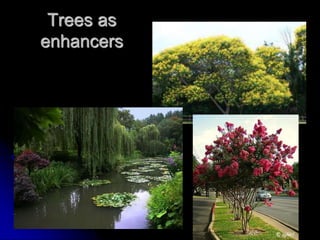
Trees as
enhancers
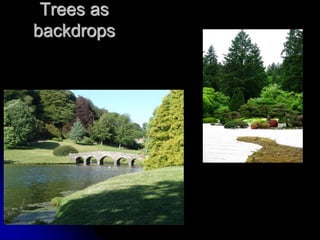
Trees as
backdrops
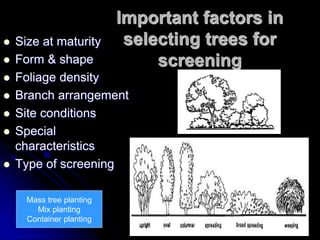
Important factors in
selecting trees for
screening
 Size at maturity
 Form & shape
 Foliage density
 Branch arrangement
 Site conditions
 Special
characteristics
 Type of screening
Mass tree planting
Mix planting
Container planting
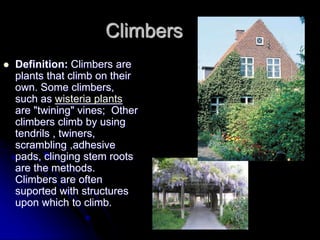
Climbers
 Definition: Climbers are
plants that climb on their
own. Some climbers,
such as wisteria plants
are "twining" vines; Other
climbers climb by using
tendrils , twiners,
scrambling ,adhesive
pads, clinging stem roots
are the methods.
Climbers are often
suported with structures
upon which to climb.
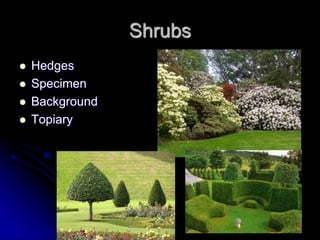
Shrubs
 Hedges
 Specimen
 Background
 Topiary
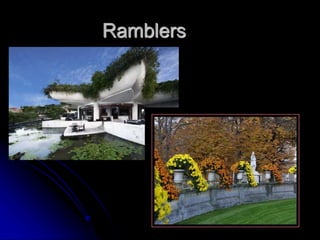
Ramblers
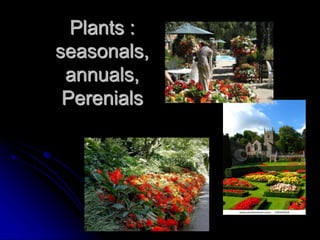
Plants :
seasonals,
annuals,
Perenials
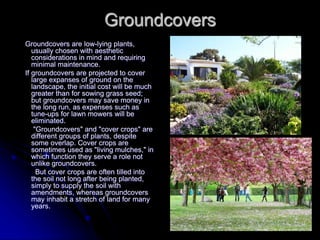
Groundcovers
Groundcovers are low-lying plants,
usually chosen with aesthetic
considerations in mind and requiring
minimal maintenance.
If groundcovers are projected to cover
large expanses of ground on the
landscape, the initial cost will be much
greater than for sowing grass seed;
but groundcovers may save money in
the long run, as expenses such as
tune-ups for lawn mowers will be
eliminated.
"Groundcovers" and "cover crops" are
different groups of plants, despite
some overlap. Cover crops are
sometimes used as "living mulches," in
which function they serve a role not
unlike groundcovers.
But cover crops are often tilled into
the soil not long after being planted,
simply to supply the soil with
amendments, whereas groundcovers
may inhabit a stretch of land for many
years.
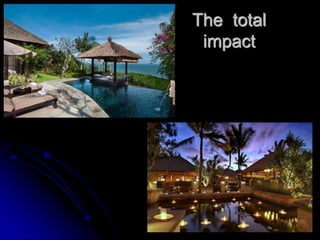
The total
impact
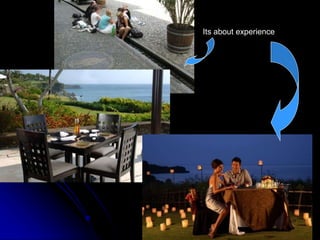
Its about experience
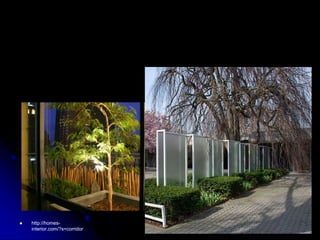
 http://homes-
interior.com/?s=corridor

The uses of hardscape elements

  • 1.
    The use ofhardscape & softscape elements By: Surashmie Kaalmegh Faculty in Interior Design LAD College
  • 2.
    Hardscape, or "hardscaping" Consistsof the inanimate elements of landscaping, especially any  masonry work  wood work.  stone walls,  concrete or brick patios,  tile paths,  wooden decks  and wooden arbors But by extension, anything used in landscaping that is not part of the softscape can be considered a hardscape element, including accents such as water fountains and, yes, even pink flamingoes
  • 3.
  • 4.
  • 5.
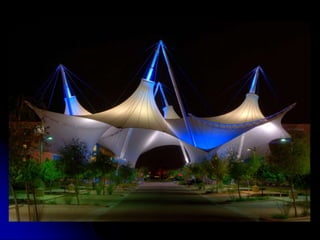
    Hardscape is seenas a raw or fabricated form , but mostly structural , a material  Stone & its forms  Wood & its forms  Metals & its forms  PVC  Fibre  Glass & its forms  Bamboo & its forms  Fabric / thatch  Sculptures  Furnitures  Structures  Accessories  Fixtures  Containers  Bases / floors  Covers / roofs or walls
  • 6.
  • 13.
  • 15.
  • 16.
  • 20.
    Structures ,containers, walls,decks furniture etc
  • 22.
    Softscapes  Trees  Shrubs Climbers  Ground covers  Water plants  Plants  Grass  Cactii  Palms  Succulents  Ferns  Bulbs & corms  Roses  Lawns Seasonals esp. plants Annuals - All three Shrubs , climbers, plants Perrenials- All three
  • 23.
    Trees There are 3main categories of trees.  Ornamental Trees  Evergreen Trees  Shade Trees Some of their attributes and the specific ways to use them in a landscape is important for a Designer.  They have specific characteristics : physical : which are form, branches, leaves, trunk, bark flowers, fruits, seeds growth : the method in which the tree grows in a given environment
  • 24.
    Tall ruffled Palms LicualaGrandis Growth characteristics & maturity :
  • 25.
    Trees  ornamental trees- flowering trees or have some other special feature, such as interesting bark. usually, these trees are smaller than shade trees. There are so many wonderful uses for ornamental trees.  Specimen  Driveway  Emphasis  Fragrance  Privacy  Screening  Shade  Windbreaks  Background for other plants.
  • 26.
    Trees as screens  Usingtrees as living screens can easily enhance living and working spaces. Before selecting trees for screening, first determine the screen's purpose, whether functional or environmental. Screening can be used to  define an area,  modify or hide a view  create privacy,  block wind, dust, salt and snow,  control noise,  filter light, and  direct traffic flow.
  • 27.
  • 28.
  • 29.
  • 30.
  • 31.
    Important factors in selectingtrees for screening  Size at maturity  Form & shape  Foliage density  Branch arrangement  Site conditions  Special characteristics  Type of screening Mass tree planting Mix planting Container planting
  • 32.
    Climbers  Definition: Climbersare plants that climb on their own. Some climbers, such as wisteria plants are "twining" vines; Other climbers climb by using tendrils , twiners, scrambling ,adhesive pads, clinging stem roots are the methods. Climbers are often suported with structures upon which to climb.
  • 34.
    Shrubs  Hedges  Specimen Background  Topiary
  • 35.
  • 36.
  • 37.
    Groundcovers Groundcovers are low-lyingplants, usually chosen with aesthetic considerations in mind and requiring minimal maintenance. If groundcovers are projected to cover large expanses of ground on the landscape, the initial cost will be much greater than for sowing grass seed; but groundcovers may save money in the long run, as expenses such as tune-ups for lawn mowers will be eliminated. "Groundcovers" and "cover crops" are different groups of plants, despite some overlap. Cover crops are sometimes used as "living mulches," in which function they serve a role not unlike groundcovers. But cover crops are often tilled into the soil not long after being planted, simply to supply the soil with amendments, whereas groundcovers may inhabit a stretch of land for many years.
  • 40.
  • 42.
  • 45.