BY:
D RAJKUMAR
12P75A0204
CONTENTS
 What is PLC?
 Why we use PLC’s
 How plc’s are help in ELECTRICAL SYSTEM
 Working of plcs
 Advantages and Disadvantages
 Applications
INTRODUCTION
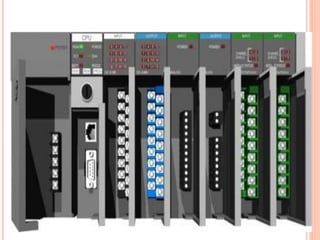
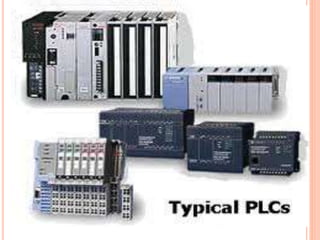
WHAT IS PLC ?
 A programmable logic
controller, PLC or programmable controller is a digital
computer used for automation of typically industrial
electromechanical processes, such as control of
machinery on factory assembly lines, amusement rides,
or lighting fixtures.
 PLCs are designed for multiple analogue and digital
inputs and output arrangements, extended temperature
ranges, immunity to electrical noise, and resistance to
vibration and impact.
NEED FOR PLC:
 Hardwired panels were very time consuming to
time, debug and change.
 The following requirements for computer controllers to
replace hardwired panels.
1.Solid-state not mechanical.
2.Easy to modify input and output devices.
3.Easily programmed and maintained by plant
electricians.
4.Be able to function in an industrial environment.
SSSSSSSSS
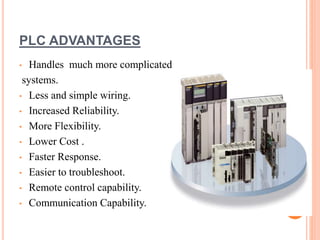
PLC ADVANTAGES
• Handles much more complicated
systems.
• Less and simple wiring.
• Increased Reliability.
• More Flexibility.
• Lower Cost .
• Faster Response.
• Easier to troubleshoot.
• Remote control capability.
• Communication Capability.
DISADVANTAGES
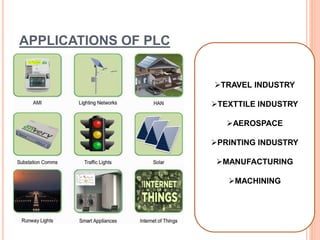
APPLICATIONS OF PLC
TRAVEL INDUSTRY
TEXTTILE INDUSTRY
AEROSPACE
PRINTING INDUSTRY
MANUFACTURING
MACHINING
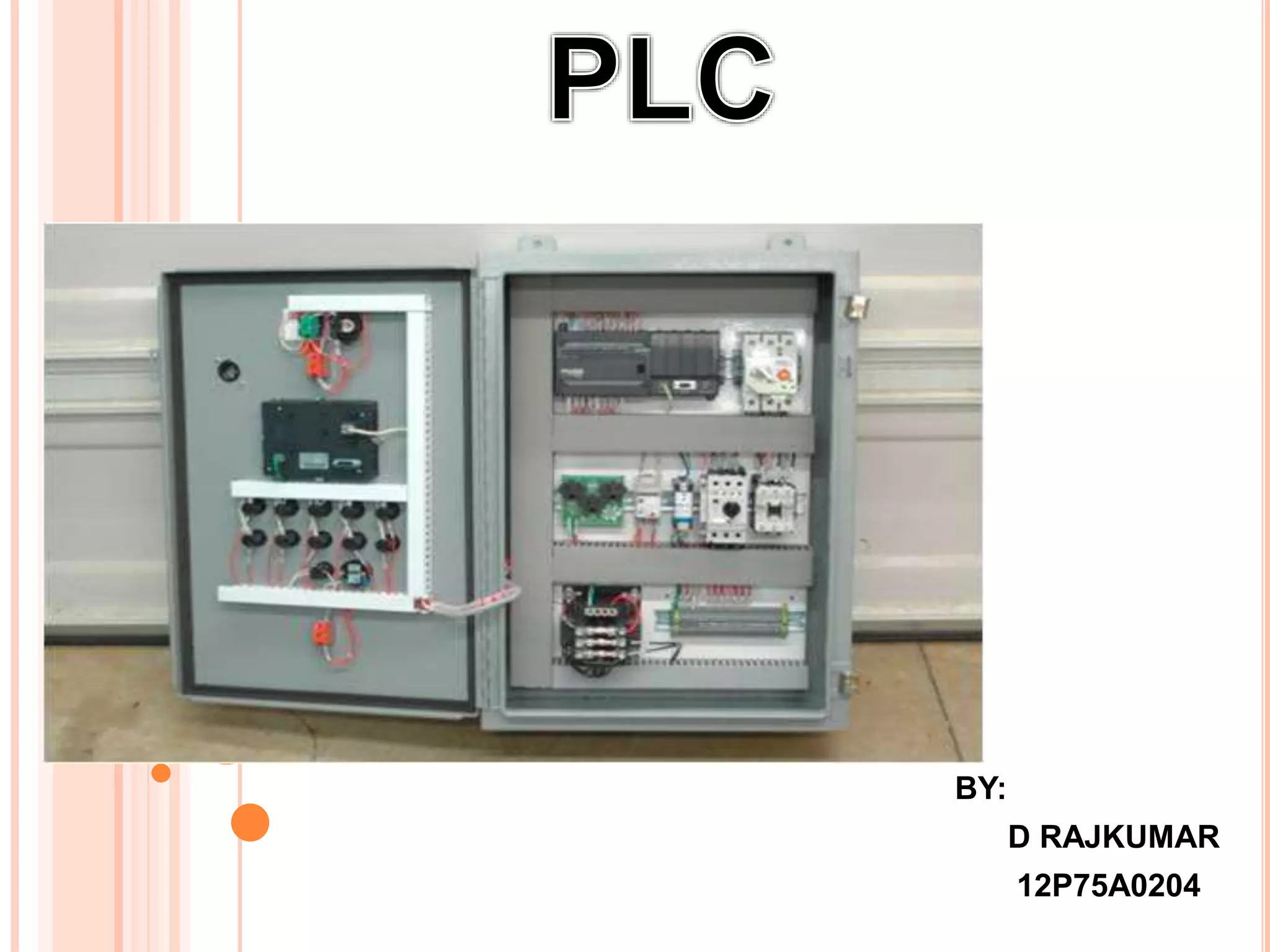
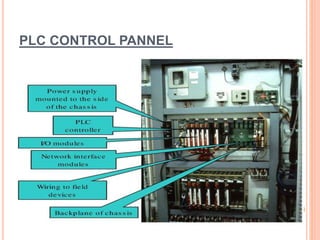
PLC CONTROL PANNEL
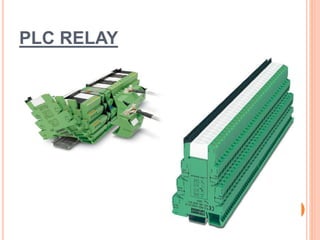
PLC RELAY

Rajkumar333

  • 1.
  • 2.
    CONTENTS  What isPLC?  Why we use PLC’s  How plc’s are help in ELECTRICAL SYSTEM  Working of plcs  Advantages and Disadvantages  Applications
  • 3.
    INTRODUCTION WHAT IS PLC?  A programmable logic controller, PLC or programmable controller is a digital computer used for automation of typically industrial electromechanical processes, such as control of machinery on factory assembly lines, amusement rides, or lighting fixtures.  PLCs are designed for multiple analogue and digital inputs and output arrangements, extended temperature ranges, immunity to electrical noise, and resistance to vibration and impact.
  • 4.
    NEED FOR PLC: Hardwired panels were very time consuming to time, debug and change.  The following requirements for computer controllers to replace hardwired panels. 1.Solid-state not mechanical. 2.Easy to modify input and output devices. 3.Easily programmed and maintained by plant electricians. 4.Be able to function in an industrial environment.
  • 5.
  • 10.
    PLC ADVANTAGES • Handlesmuch more complicated systems. • Less and simple wiring. • Increased Reliability. • More Flexibility. • Lower Cost . • Faster Response. • Easier to troubleshoot. • Remote control capability. • Communication Capability.
  • 11.
  • 12.
    APPLICATIONS OF PLC TRAVELINDUSTRY TEXTTILE INDUSTRY AEROSPACE PRINTING INDUSTRY MANUFACTURING MACHINING
  • 15.
  • 17.