Prepared by
Chris Miller 3/21/24
Lesson 1
Welcome to the World of
Programmable Logic
Controllers
Prepared by
Chris Miller 3/21/24
Objectives
• Define PLC.
• Explain where the PLC came from.
• Explain why their use is valuable.
• Explain where they are used.
• Detail what PLCs can do.
• Explain how PLCs know what they are
supposed to do.
Prepared by
Chris Miller 3/21/24
What Is a
Programmable Controller?
• A programmable logic controller, usually
called a PLC or programmable controller, is a
solid state, digital, industrial computer.
• Simply, a programmable controller is a
computer, much like a desktop personal
computer.
• A PLC is an industrially hardened computer.
Prepared by
Chris Miller 3/21/24
Where Did the
PLC Come From?
• In the 1960s, electromechanical relays,
timers, counters, sequencers were the
standard.
• Many control panels contained
hundreds of these devices and a mile or
more of wire.
Prepared by
Chris Miller 3/21/24
Where Did the
PLC Come From? (cont’d.)
• Reliability was low and maintenance costs
high.
• Cost was high to modify or upgrade control
panels.
• In 1968 the General Motors Hydramatic
division specified a device that would become
what we know today as the programmable
logic controller.
Prepared by
Chris Miller 3/21/24
Early PLCs
• Only relay replacers
• Did not have timers or counters
• No sequencer instructions
• No math instructions
• No data manipulation instructions
Prepared by
Chris Miller 3/21/24
Why a PLC?
• Easily changeable
• Programmable
• Reliable
• Smaller
• Fast switching
Prepared by
Chris Miller 3/21/24
Why a PLC? (cont’d.)
• Able to withstand harsh factory
environment
• Consumes less power
• Easier to troubleshoot
• Easy to install
Prepared by
Chris Miller 3/21/24
Why Use A PLC?
• The question “why use a PLC?” should
really be rephrased to “why automate?”
• The PLC is the tool that provides the
control for the automated process.
Prepared by
Chris Miller 3/21/24
Automating Helps a
Manufacturing Facility:
• Gain complete control of the
manufacturing process.
• Achieve consistency.
• Improve quality and accuracy.
• Work in difficult or hazardous
environments.
• Increase productivity.
Prepared by
Chris Miller 3/21/24
Automating Helps a
Manufacturing Facility: (cont’d.)
• Shorten lead time to market.
• Lower cost of quality, scrap, and rework.
• Offer greater product variety.
• Allow a quick changeover from one product to
another.
• Control inventory.
Prepared by
Chris Miller 3/21/24
A PLC upon First Glance
• A black box with wires bringing signals
in and other wires sending signals out
• Some sort of magic being done inside
that somehow decides when field
devices should be turned on or off
Prepared by
Chris Miller 3/21/24
Actually There Is No Magic
• The PLC is a computer and someone had to
tell it what to do.
• The PLC knows what to do through a
program that was developed and entered into
its memory.
• Without a set of instructions telling the PLC
what to do, it is nothing more than a box full
of electronic components.
Prepared by
Chris Miller 3/21/24
What Makes a PLC Work?
• The heart of any computer is the
microprocessor.
• The microprocessor, also called the
processor or central processing unit
(CPU), supervises system control
through the user program.
Prepared by
Chris Miller 3/21/24
What Makes a PLC Work?
(cont’d.)
• The processor reads input signals
and follows the instructions that the
programmer has stored in the
PLC’s memory.
Prepared by
Chris Miller 3/21/24
What Makes a PLC Work?
(cont’d.)
• As a result of the solved program, the PLC
writes information to outputs, or field
controlled devices, to turn them on or off.
• When the PLC is running and following the
programs instructions, this is called solving
the user program.
• The PLC is running or in RUN MODE.
Prepared by
Chris Miller 3/21/24
What Makes a PLC Work?
(cont’d.)
• The user program (ladder program) is
the list of instructions that tells the PLC
what to do.
• The library of instructions available to
the PLC is called the instruction set.
• The instruction set determines how
much flexibility the programmer has.
Prepared by
Chris Miller 3/21/24
Common PLC Inputs
• Push buttons
• Selector switches
• Limit switches and level switches
• Proximity sensors
• Photo switches
• Relay contacts
• Motor starter contacts
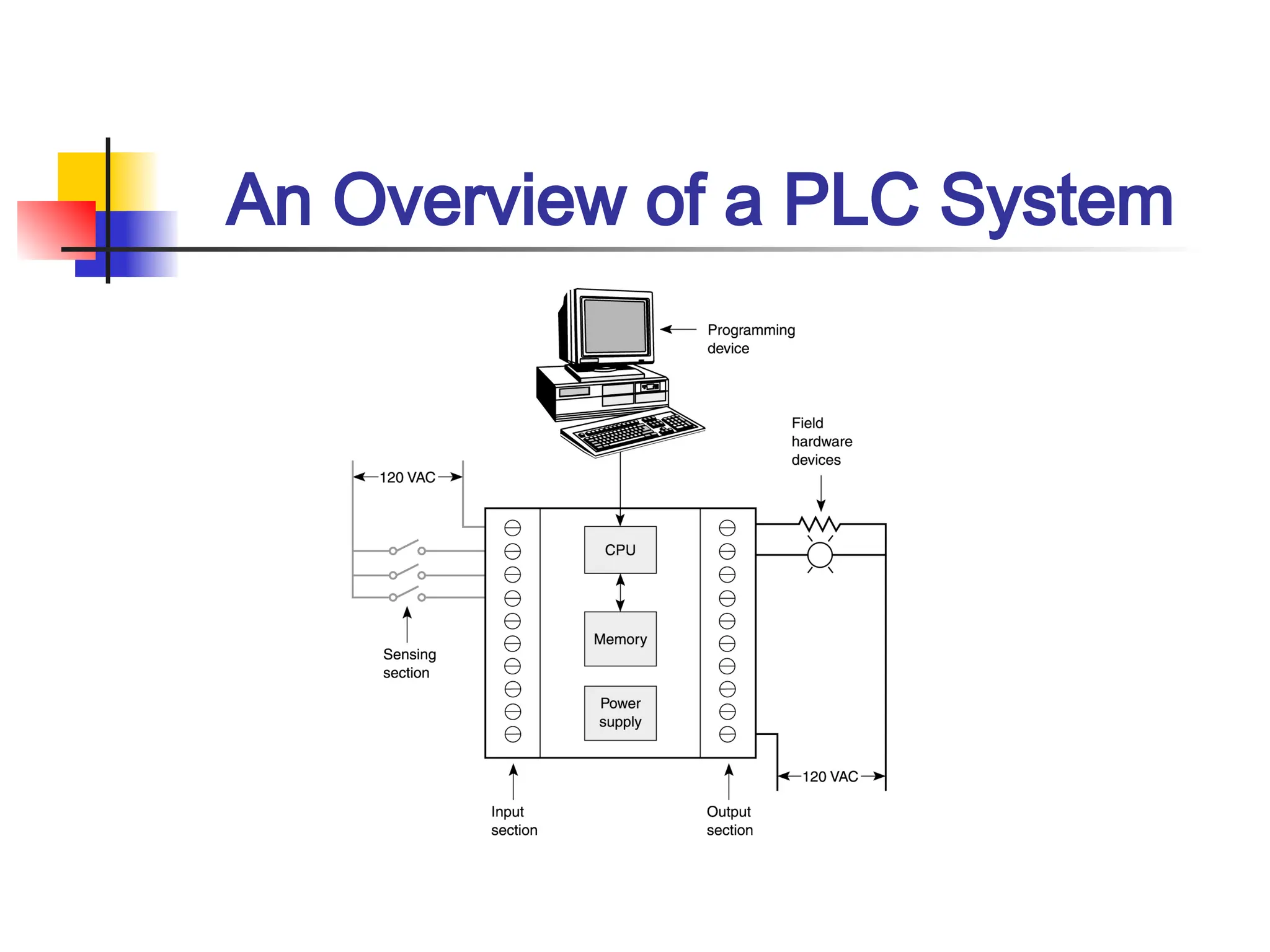
An Overview of a PLC System
(cont’d.)
• Incoming signals, or inputs, interact with
instructions in the user program to help
the PLC to determine when an input
instruction is either true or false.
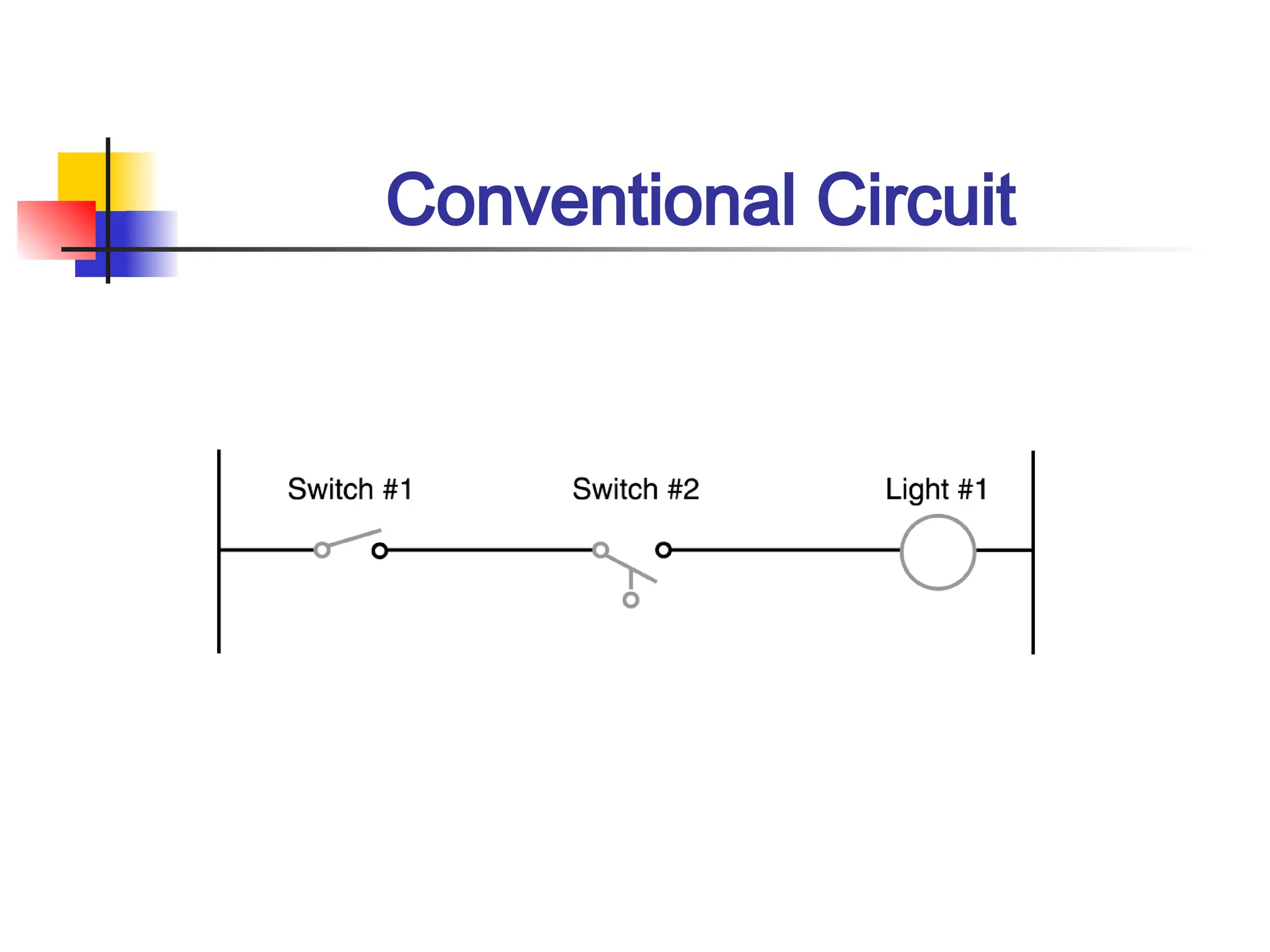
Conventional Circuit
Representation of
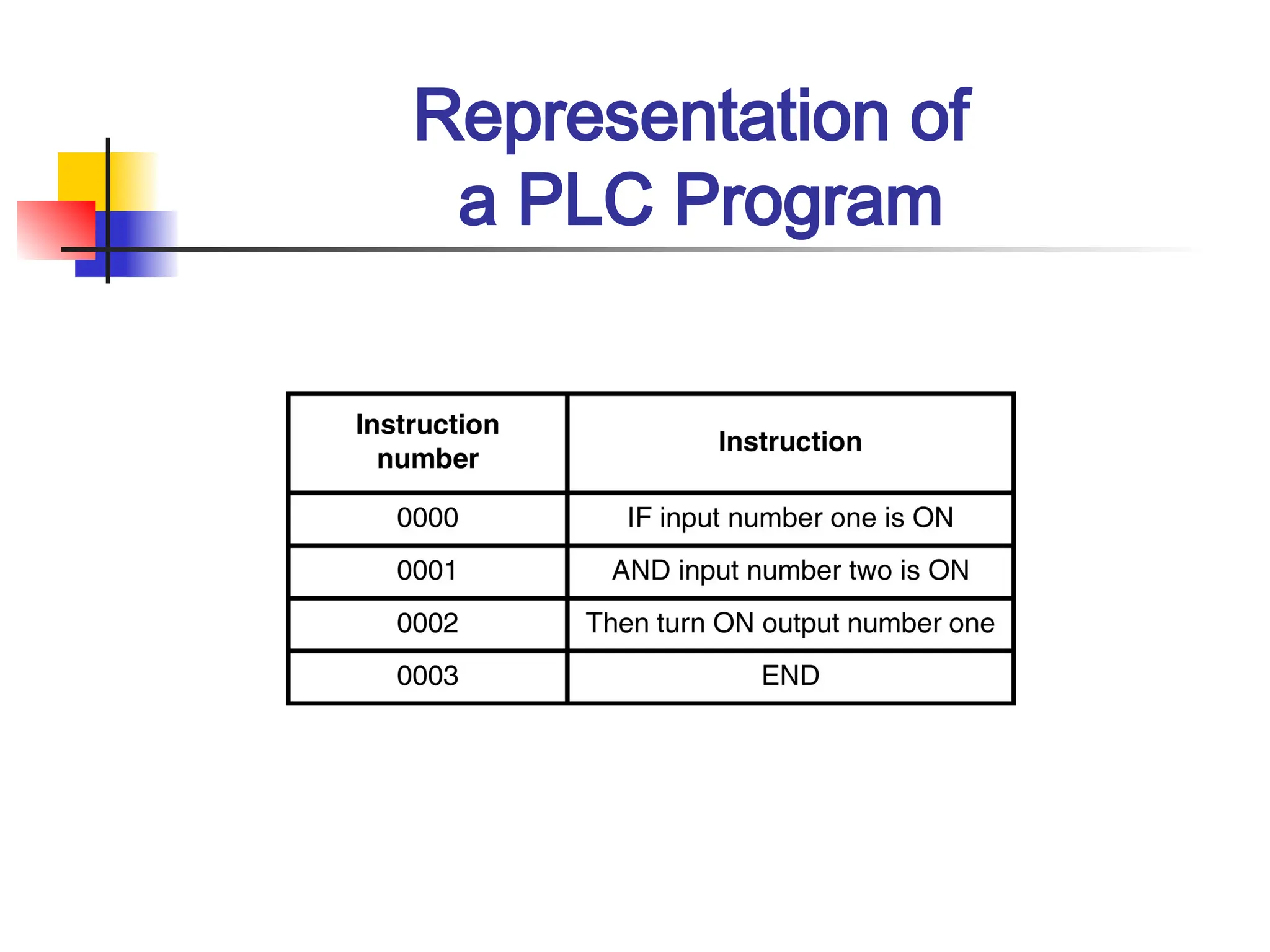
a PLC Program
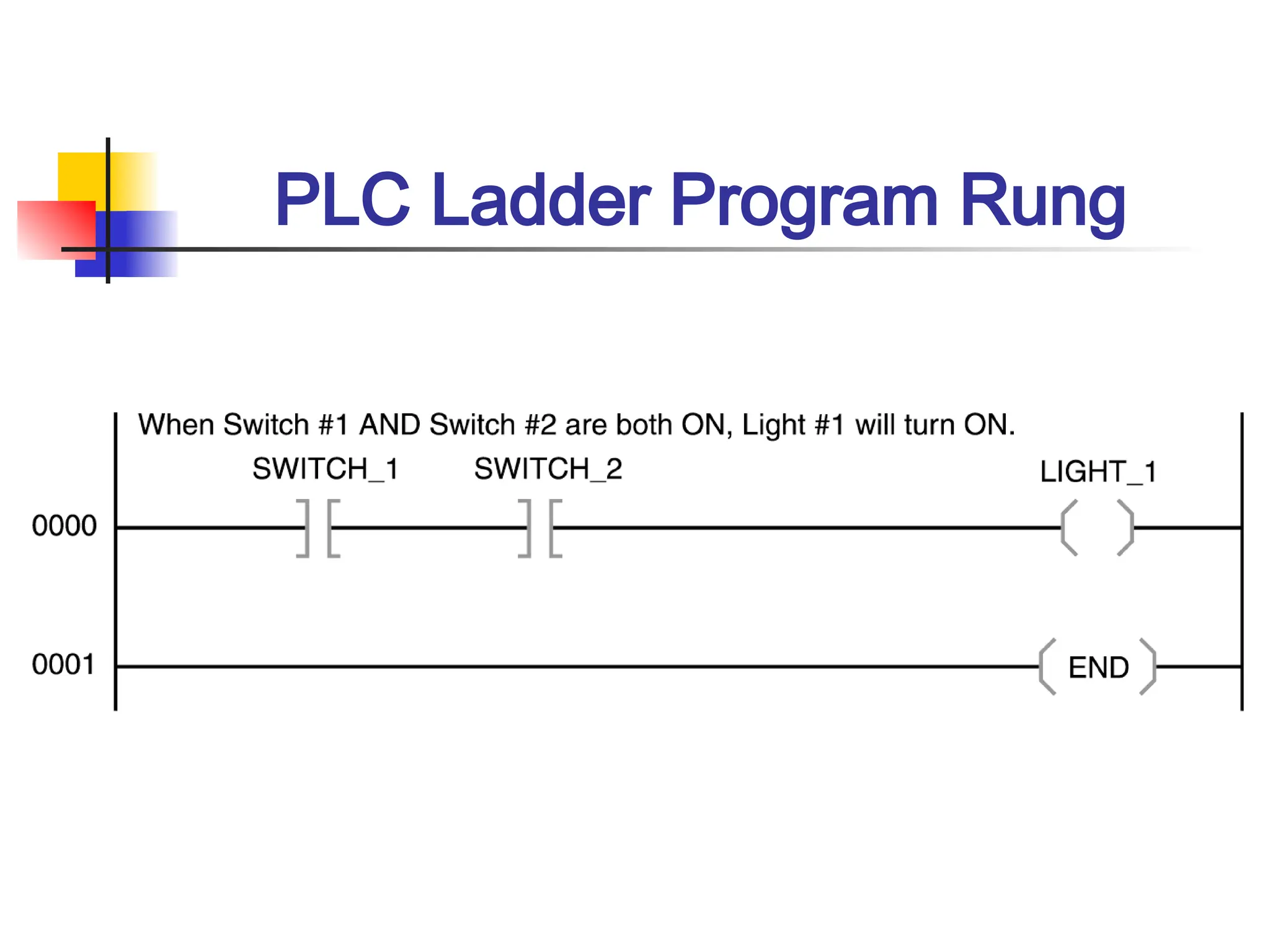
PLC Ladder Program Rung
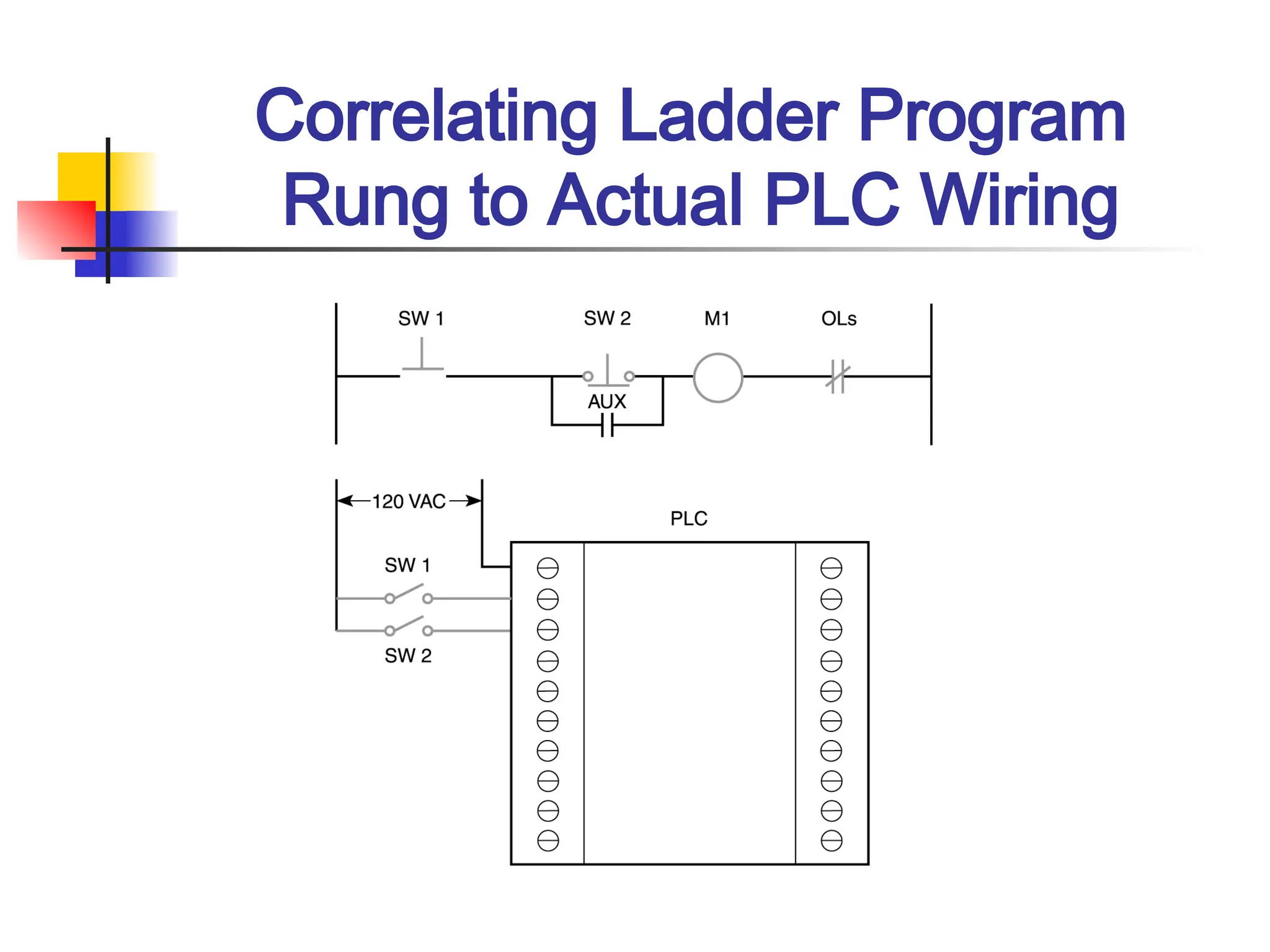
Correlating Ladder Program
Rung to Actual PLC Wiring
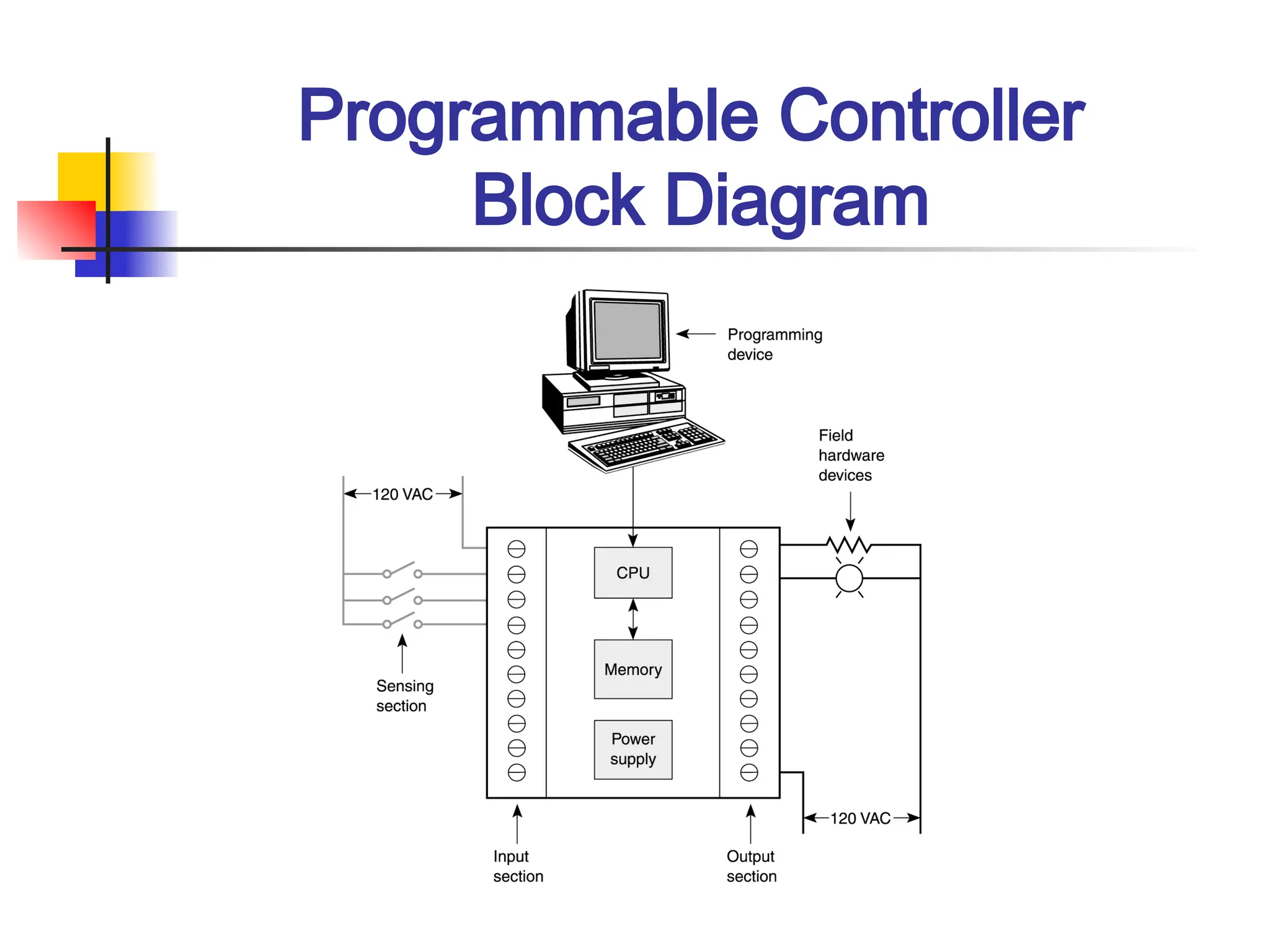
Programmable Controller
Block Diagram
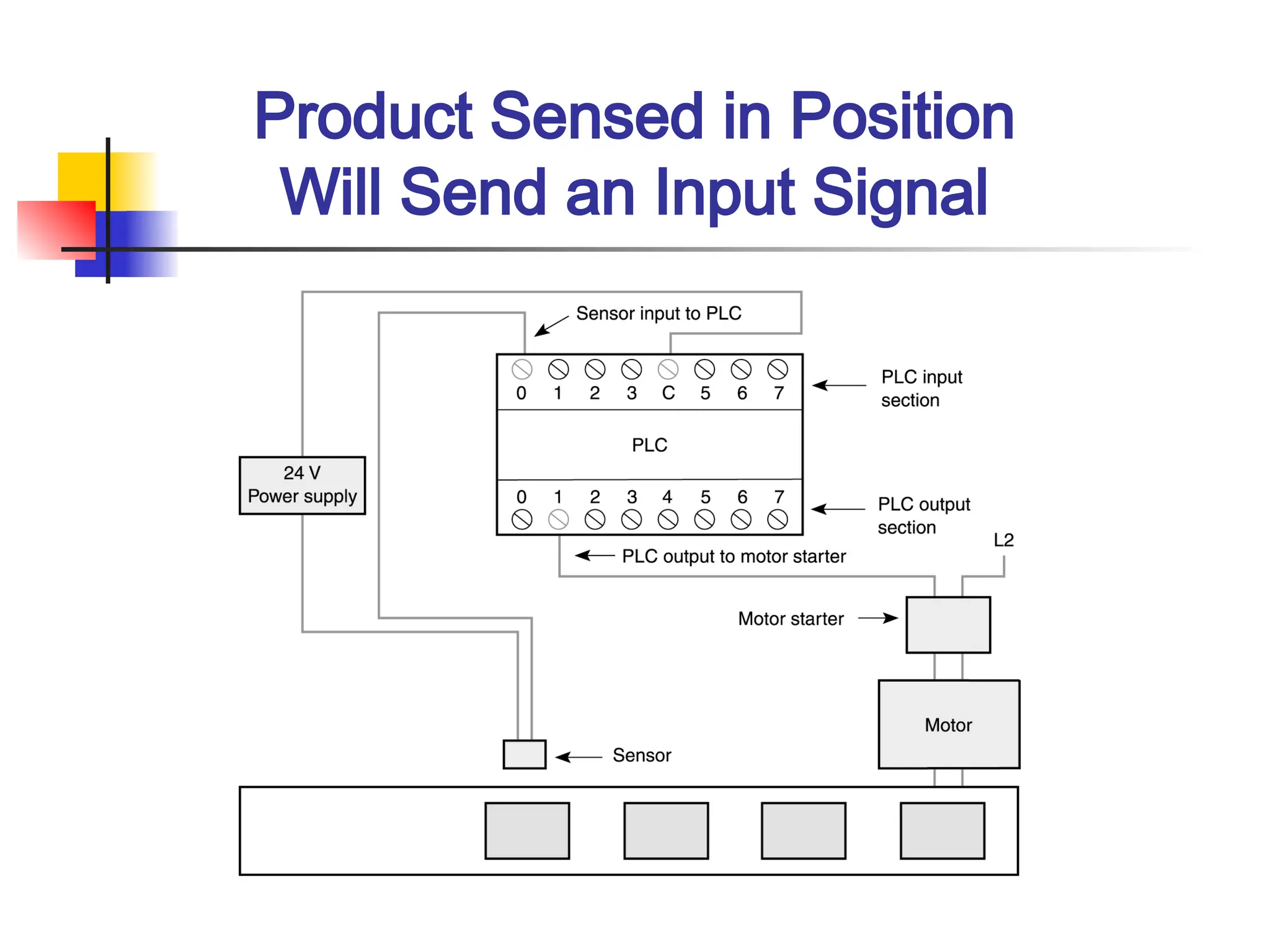
Product Sensed in Position
Will Send an Input Signal
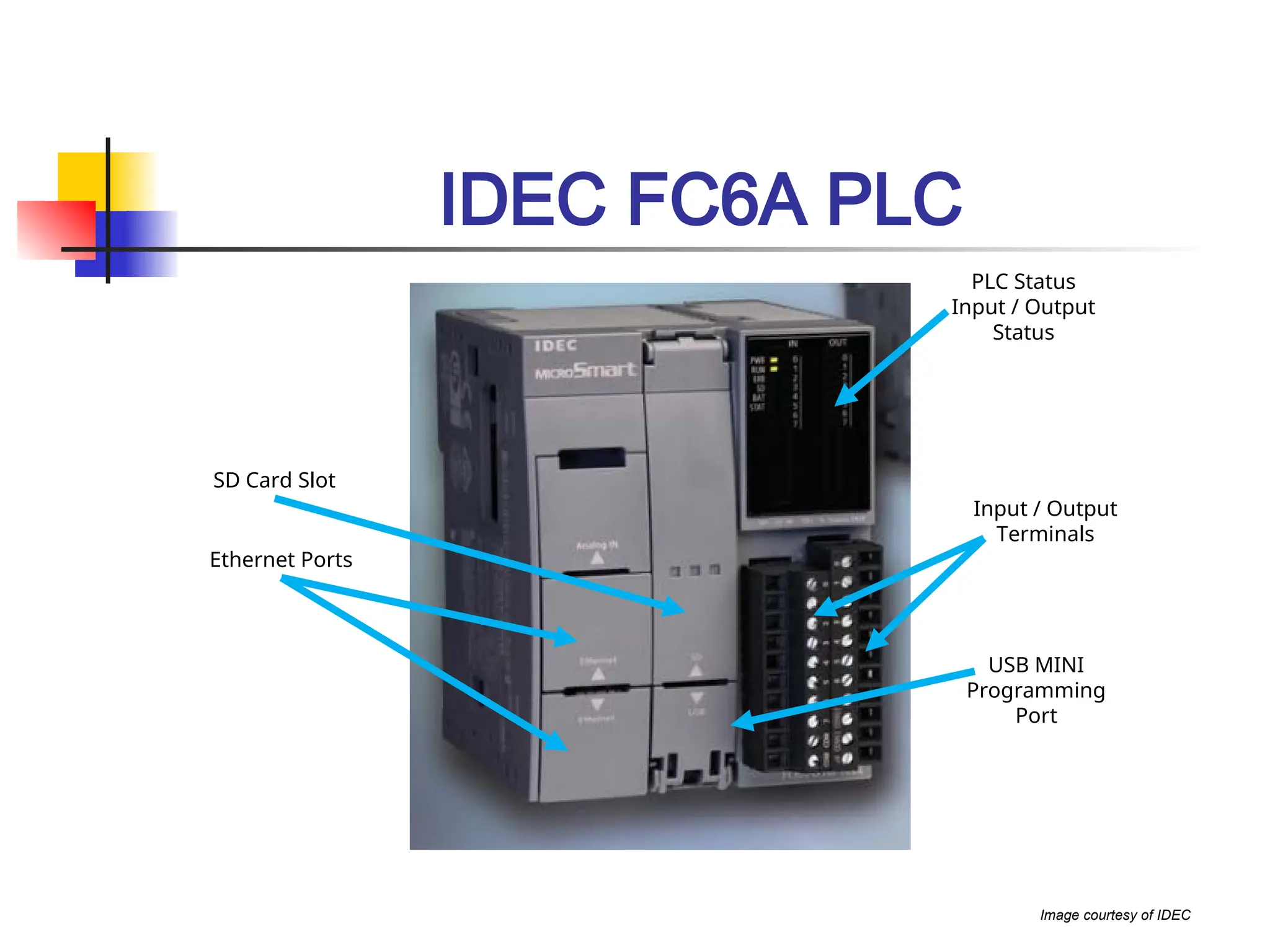
IDEC FC6A PLC
Image courtesy of IDEC
PLC Status
Input / Output
Status
Input / Output
Terminals
USB MINI
Programming
Port
Ethernet Ports
SD Card Slot
Installation of an I/O Module
Image courtesy of IDEC
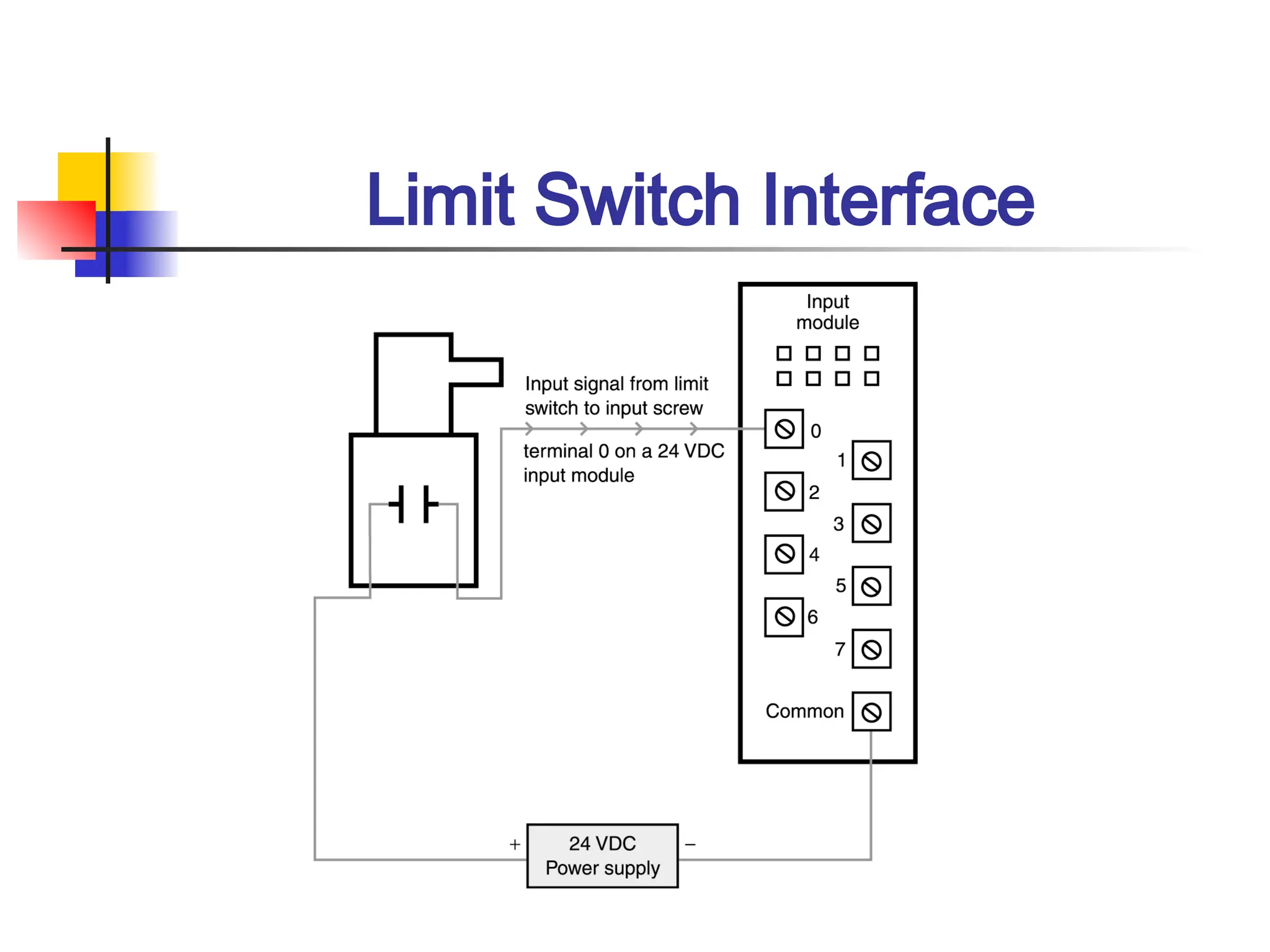
Limit Switch Interface
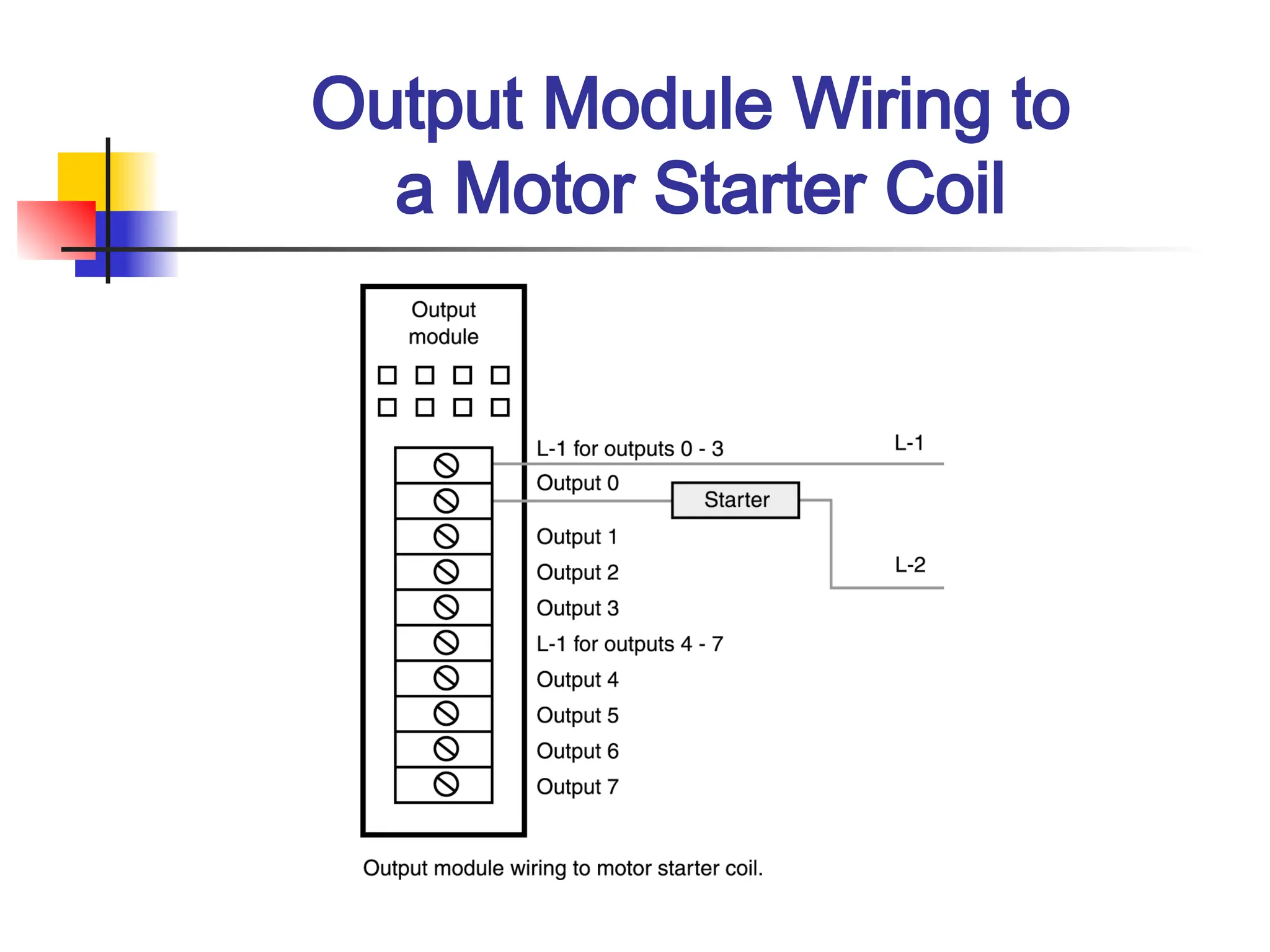
Output Module Wiring to
a Motor Starter Coil
Lesson 1 END
Image courtesy of IDEC
Questions?
For more information:
https://us.idec.com

PLC Training Introduction - Lesson 01.ppt

  • 1.
    Prepared by Chris Miller3/21/24 Lesson 1 Welcome to the World of Programmable Logic Controllers
  • 2.
    Prepared by Chris Miller3/21/24 Objectives • Define PLC. • Explain where the PLC came from. • Explain why their use is valuable. • Explain where they are used. • Detail what PLCs can do. • Explain how PLCs know what they are supposed to do.
  • 3.
    Prepared by Chris Miller3/21/24 What Is a Programmable Controller? • A programmable logic controller, usually called a PLC or programmable controller, is a solid state, digital, industrial computer. • Simply, a programmable controller is a computer, much like a desktop personal computer. • A PLC is an industrially hardened computer.
  • 4.
    Prepared by Chris Miller3/21/24 Where Did the PLC Come From? • In the 1960s, electromechanical relays, timers, counters, sequencers were the standard. • Many control panels contained hundreds of these devices and a mile or more of wire.
  • 5.
    Prepared by Chris Miller3/21/24 Where Did the PLC Come From? (cont’d.) • Reliability was low and maintenance costs high. • Cost was high to modify or upgrade control panels. • In 1968 the General Motors Hydramatic division specified a device that would become what we know today as the programmable logic controller.
  • 6.
    Prepared by Chris Miller3/21/24 Early PLCs • Only relay replacers • Did not have timers or counters • No sequencer instructions • No math instructions • No data manipulation instructions
  • 7.
    Prepared by Chris Miller3/21/24 Why a PLC? • Easily changeable • Programmable • Reliable • Smaller • Fast switching
  • 8.
    Prepared by Chris Miller3/21/24 Why a PLC? (cont’d.) • Able to withstand harsh factory environment • Consumes less power • Easier to troubleshoot • Easy to install
  • 9.
    Prepared by Chris Miller3/21/24 Why Use A PLC? • The question “why use a PLC?” should really be rephrased to “why automate?” • The PLC is the tool that provides the control for the automated process.
  • 10.
    Prepared by Chris Miller3/21/24 Automating Helps a Manufacturing Facility: • Gain complete control of the manufacturing process. • Achieve consistency. • Improve quality and accuracy. • Work in difficult or hazardous environments. • Increase productivity.
  • 11.
    Prepared by Chris Miller3/21/24 Automating Helps a Manufacturing Facility: (cont’d.) • Shorten lead time to market. • Lower cost of quality, scrap, and rework. • Offer greater product variety. • Allow a quick changeover from one product to another. • Control inventory.
  • 12.
    Prepared by Chris Miller3/21/24 A PLC upon First Glance • A black box with wires bringing signals in and other wires sending signals out • Some sort of magic being done inside that somehow decides when field devices should be turned on or off
  • 13.
    Prepared by Chris Miller3/21/24 Actually There Is No Magic • The PLC is a computer and someone had to tell it what to do. • The PLC knows what to do through a program that was developed and entered into its memory. • Without a set of instructions telling the PLC what to do, it is nothing more than a box full of electronic components.
  • 14.
    Prepared by Chris Miller3/21/24 What Makes a PLC Work? • The heart of any computer is the microprocessor. • The microprocessor, also called the processor or central processing unit (CPU), supervises system control through the user program.
  • 15.
    Prepared by Chris Miller3/21/24 What Makes a PLC Work? (cont’d.) • The processor reads input signals and follows the instructions that the programmer has stored in the PLC’s memory.
  • 16.
    Prepared by Chris Miller3/21/24 What Makes a PLC Work? (cont’d.) • As a result of the solved program, the PLC writes information to outputs, or field controlled devices, to turn them on or off. • When the PLC is running and following the programs instructions, this is called solving the user program. • The PLC is running or in RUN MODE.
  • 17.
    Prepared by Chris Miller3/21/24 What Makes a PLC Work? (cont’d.) • The user program (ladder program) is the list of instructions that tells the PLC what to do. • The library of instructions available to the PLC is called the instruction set. • The instruction set determines how much flexibility the programmer has.
  • 18.
    Prepared by Chris Miller3/21/24 Common PLC Inputs • Push buttons • Selector switches • Limit switches and level switches • Proximity sensors • Photo switches • Relay contacts • Motor starter contacts
  • 19.
    An Overview ofa PLC System
  • 20.
    An Overview ofa PLC System (cont’d.) • Incoming signals, or inputs, interact with instructions in the user program to help the PLC to determine when an input instruction is either true or false.
  • 21.
  • 22.
  • 23.
  • 24.
    Correlating Ladder Program Rungto Actual PLC Wiring
  • 25.
  • 26.
    Product Sensed inPosition Will Send an Input Signal
  • 27.
    IDEC FC6A PLC Imagecourtesy of IDEC PLC Status Input / Output Status Input / Output Terminals USB MINI Programming Port Ethernet Ports SD Card Slot
  • 28.
    Installation of anI/O Module Image courtesy of IDEC
  • 29.
  • 30.
    Output Module Wiringto a Motor Starter Coil
  • 31.
    Lesson 1 END Imagecourtesy of IDEC Questions? For more information: https://us.idec.com