Prostate cancer is the uncontrolled
multiplication of abnormal prostate gland
cell tumor formation.
Idiopathic
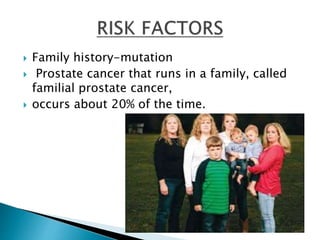
 Family history-mutation
 Prostate cancer that runs in a family, called
familial prostate cancer,
 occurs about 20% of the time.
 Age-above 40 years
 Age. The risk of prostate cancer increases
with after age 50.
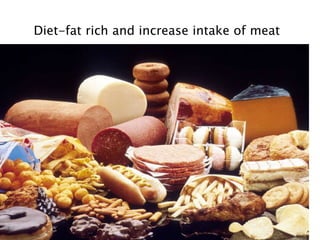
Diet-fat rich and increase intake of meat
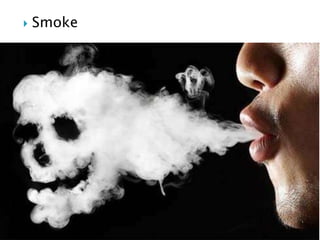
 Smoke
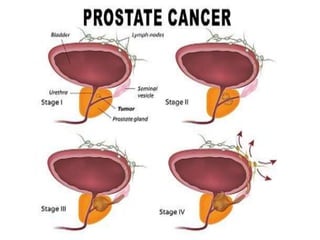
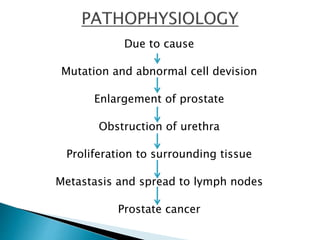
Due to cause
Mutation and abnormal cell devision
Enlargement of prostate
Obstruction of urethra
Proliferation to surrounding tissue
Metastasis and spread to lymph nodes
Prostate cancer
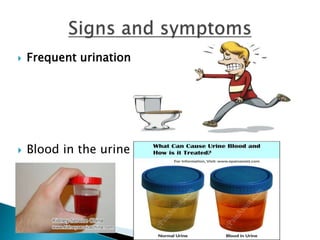
 Frequent urination
 Blood in the urine
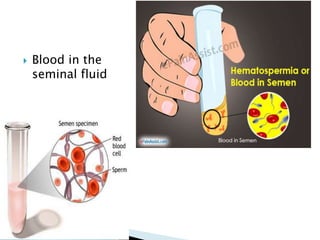
 Blood in the
seminal fluid
 Pain or burning during urination
 Discomfort when sitting, caused by an
enlarged prostate
 Bone pain(most common vertebral
metastases)publi
 Abdominal pelvic CT
 Biopsy (fine-needle aspiration)
 CBC
 Digital rectal exam
 Serum PSA(prostate-specific antigen)
 MRI
 Transrectal ultrasound (TRUS)
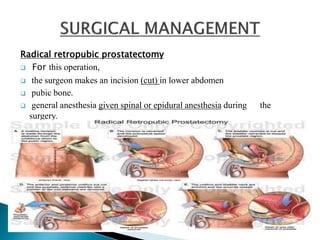
Radical retropubic prostatectomy
 For this operation,
 the surgeon makes an incision (cut) in lower abdomen
 pubic bone.
 general anesthesia given spinal or epidural anesthesia during the
surgery.
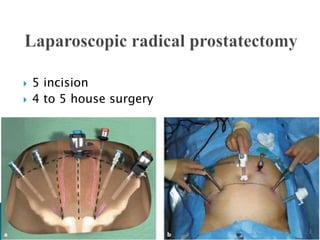
 5 incision
 4 to 5 house surgery
 Nausea or vomiting. Watch for and treat early
signs of dehydration, such as having a dry
mouth , Eating smaller meals may help. So can
a little bit of ginger tea.
 Pain. Not all forms of cancer or treatment cause
pain. But if you do have pain, there are many
home treatments that can help.
 Sleep problems. Often, simple measures such
as having a regular bedtime, getting
some exercise during the day
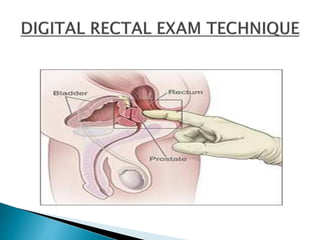
 The patient can be in a lithotomy position
 Digital rectal examination (DRE)
 The finger into the anal canal, facing forward.
The posterior surface of the prostate can be felt
past the anal canal. It is firm and rounded.
Usually, there is a lateral bulge on either side of a
midline, top-to-bottom furrow.
 During the exam,
 the patient will feel a pressure from the finger
against the gland
 sensation of needing to urinate.
 The exam may be painful if the gland is irritated.
 1. Impaired Urinary Elimination related to an
enlarged prostate, and bladder distension.
Intervention:
 Encourage the patient to urinate every 2-4
hours
 Encourage fluid intake to 3000 ml per day.
 Observation of the flow of urine
 palpation of the suprapubic area.
 Monitor vital signs closely
 2. Risk for Infection related to invasive
procedures (tools during surgery)
Intervention:
 Maintain a catheter system,
 provide catheter care
 regular antibiotic ointment around the
catheter.
 Replace dressings with frequent , cleaning
and drying of the skin over time.
 Collaboration in the provision of antibiotics
 3. Imbalanced Nutrition, Less Than Body
Requirements related to the nausea and
weight loss
Intervention:
 Assess the patient's nutritional status.
 Encourage the patient to eat small amounts
frequently.
 Collaborate with the physician in the delivery
of antiemetic drugs
 1.Eat fewer milk product,less meat
 2.Increases exercise more
 3.Avoid smoking alcohol
 4.Taking more than 1,500 mg of calcium a
day
 3.Eat more fish,olive oil cooked tomatoe
 Regarding disease condition
 Discuss the epidemiology of prostate cancer.
 Identify the anatomy and physiology of the
normal, healthy prostate gland
 Describe the surgical and nonsurgical
treatment options, along with their side
effects, for prostate cancer.
 Discuss nursing care both for patients
undergoing prostate cancer treatment
 Brenda M, Nevidjon’s Text book on
Cancercare 10th edition published by Kevin W
sower pg no 122-125
 Paul D.Hopper’s Text book of Medical
surgical nursing 2 edition published by
Lindes Williams pg no.34-37
 Muaskowsks’s Textbook of Oncology nursing
1 edition published by Pop.Saunder pg no
44-45
Thank you

Prostate cancer

  • 3.
    Prostate cancer isthe uncontrolled multiplication of abnormal prostate gland cell tumor formation.
  • 6.
  • 7.
     Family history-mutation Prostate cancer that runs in a family, called familial prostate cancer,  occurs about 20% of the time.
  • 8.
     Age-above 40years  Age. The risk of prostate cancer increases with after age 50.
  • 9.
    Diet-fat rich andincrease intake of meat
  • 10.
  • 13.
    Due to cause Mutationand abnormal cell devision Enlargement of prostate Obstruction of urethra Proliferation to surrounding tissue Metastasis and spread to lymph nodes Prostate cancer
  • 14.
     Frequent urination Blood in the urine
  • 15.
     Blood inthe seminal fluid
  • 16.
     Pain orburning during urination  Discomfort when sitting, caused by an enlarged prostate  Bone pain(most common vertebral metastases)publi
  • 17.
     Abdominal pelvicCT  Biopsy (fine-needle aspiration)  CBC  Digital rectal exam  Serum PSA(prostate-specific antigen)  MRI  Transrectal ultrasound (TRUS)
  • 20.
    Radical retropubic prostatectomy For this operation,  the surgeon makes an incision (cut) in lower abdomen  pubic bone.  general anesthesia given spinal or epidural anesthesia during the surgery.
  • 21.
     5 incision 4 to 5 house surgery
  • 23.
     Nausea orvomiting. Watch for and treat early signs of dehydration, such as having a dry mouth , Eating smaller meals may help. So can a little bit of ginger tea.  Pain. Not all forms of cancer or treatment cause pain. But if you do have pain, there are many home treatments that can help.
  • 24.
     Sleep problems.Often, simple measures such as having a regular bedtime, getting some exercise during the day
  • 25.
     The patientcan be in a lithotomy position  Digital rectal examination (DRE)  The finger into the anal canal, facing forward. The posterior surface of the prostate can be felt past the anal canal. It is firm and rounded. Usually, there is a lateral bulge on either side of a midline, top-to-bottom furrow.  During the exam,  the patient will feel a pressure from the finger against the gland  sensation of needing to urinate.  The exam may be painful if the gland is irritated.
  • 27.
     1. ImpairedUrinary Elimination related to an enlarged prostate, and bladder distension. Intervention:  Encourage the patient to urinate every 2-4 hours  Encourage fluid intake to 3000 ml per day.  Observation of the flow of urine  palpation of the suprapubic area.  Monitor vital signs closely
  • 28.
     2. Riskfor Infection related to invasive procedures (tools during surgery) Intervention:  Maintain a catheter system,  provide catheter care  regular antibiotic ointment around the catheter.  Replace dressings with frequent , cleaning and drying of the skin over time.  Collaboration in the provision of antibiotics
  • 29.
     3. ImbalancedNutrition, Less Than Body Requirements related to the nausea and weight loss Intervention:  Assess the patient's nutritional status.  Encourage the patient to eat small amounts frequently.  Collaborate with the physician in the delivery of antiemetic drugs
  • 30.
     1.Eat fewermilk product,less meat  2.Increases exercise more  3.Avoid smoking alcohol  4.Taking more than 1,500 mg of calcium a day  3.Eat more fish,olive oil cooked tomatoe
  • 31.
     Regarding diseasecondition  Discuss the epidemiology of prostate cancer.  Identify the anatomy and physiology of the normal, healthy prostate gland  Describe the surgical and nonsurgical treatment options, along with their side effects, for prostate cancer.  Discuss nursing care both for patients undergoing prostate cancer treatment
  • 32.
     Brenda M,Nevidjon’s Text book on Cancercare 10th edition published by Kevin W sower pg no 122-125  Paul D.Hopper’s Text book of Medical surgical nursing 2 edition published by Lindes Williams pg no.34-37  Muaskowsks’s Textbook of Oncology nursing 1 edition published by Pop.Saunder pg no 44-45
  • 33.