Presented by
Mr B.Kalyan kumar Msc (N)
Deptof MSN
Introduction
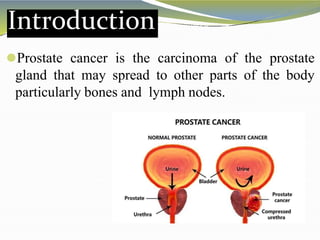
⚫Prostate cancer is the carcinoma of the prostate
gland that may spread to other parts of the body
particularly bones and lymph nodes.
Definition
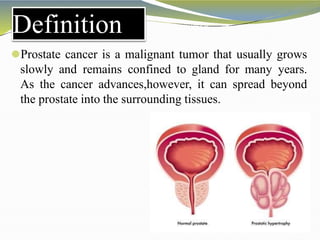
⚫Prostate cancer is a malignant tumor that usually grows
slowly and remains confined to gland for many years.
As the cancer advances,however, it can spread beyond
the prostate into the surrounding tissues.
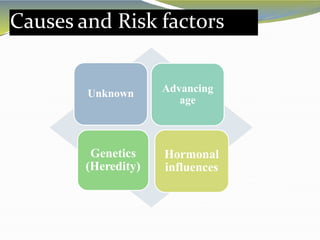
Causes and Risk factors
Unknown Advancing
age
Genetics
(Heredity)
Hormonal
influences
Environmental
factors as
cigarette
smoking
Industrial
products
Toxins,chemicals
Diets that are
high in
saturated fat
Clinical manifestations
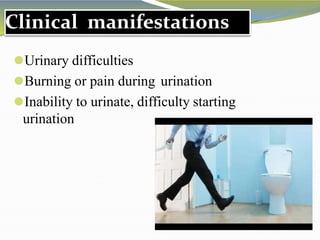
⚫Urinary difficulties
⚫Burning or pain during urination
⚫Inability to urinate, difficulty starting
urination
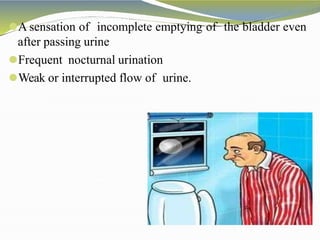
⚫A sensation of incomplete emptying of the bladder even
after passing urine
⚫Frequent nocturnal urination
⚫Weak or interrupted flow of urine.
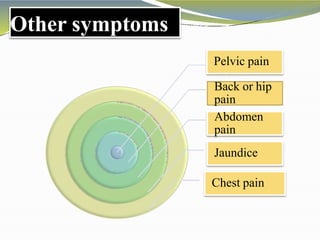
Other symptoms
Pelvic pain
Back or hip
pain
Abdomen
pain
Jaundice
Chest pain
MANAGEMENT
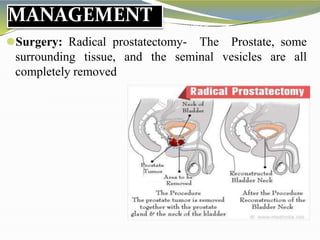
Prostate, some
vesicles are all
⚫Surgery: Radical prostatectomy- The
surrounding tissue, and the seminal
completely removed
⚫Retropubic radical prostatectomy- The initial incision
by the surgeon is made in the lower abdomen between
the navel and just above the penis.
⚫Perineal radical prostatectomy- The initial incision by
the surgeon is made in the skin between the Anus and
Scrotum.
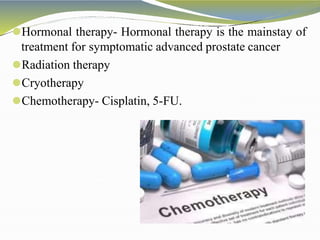
⚫Hormonal therapy- Hormonal therapy is the mainstay of
treatment for symptomatic advanced prostate cancer
⚫Radiation therapy
⚫Cryotherapy
⚫Chemotherapy- Cisplatin, 5-FU.
NURSING MANAGEMENT
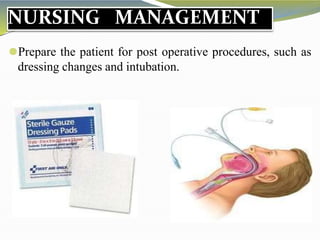
⚫Prepare the patient for post operative procedures, such as
dressing changes and intubation.
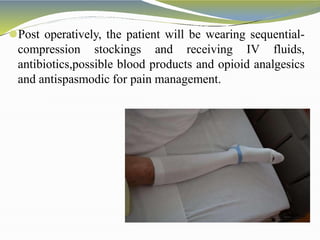
⚫Post operatively, the patient will be wearing sequential-
compression stockings and receiving IV fluids,
antibiotics,possible blood products and opioid analgesics
and antispasmodic for pain management.
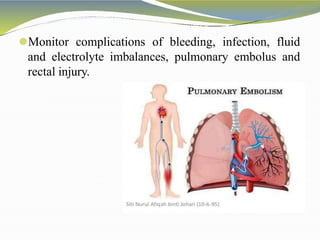
⚫Monitor complications of bleeding, infection, fluid
and electrolyte imbalances, pulmonary embolus and
rectal injury.
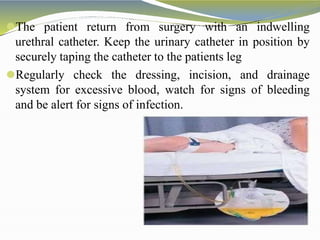
⚫The patient return from surgery with an indwelling
urethral catheter. Keep the urinary catheter in position by
securely taping the catheter to the patients leg
⚫Regularly check the dressing, incision, and drainage
system for excessive blood, watch for signs of bleeding
and be alert for signs of infection.
⚫Regularly check the dressing, incision, and drainage
system for excessive blood, watch for signs of bleeding
and be alert for signs of infection
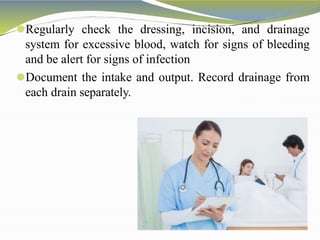
⚫Document the intake and output. Record drainage from
each drain separately.
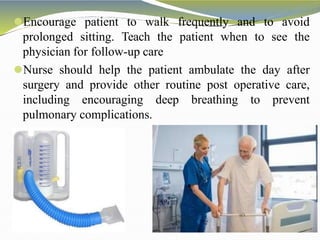
⚫Encourage patient to walk frequently and to avoid
prolonged sitting. Teach the patient when to see the
physician for follow-up care
⚫Nurse should help the patient ambulate the day after
surgery and provide other routine post operative care,
including encouraging deep breathing to prevent
pulmonary complications.
GOOD TIME WITH YOU

prostatecancer-200417071749.pptx

  • 1.
    Presented by Mr B.Kalyankumar Msc (N) Deptof MSN
  • 2.
    Introduction ⚫Prostate cancer isthe carcinoma of the prostate gland that may spread to other parts of the body particularly bones and lymph nodes.
  • 3.
    Definition ⚫Prostate cancer isa malignant tumor that usually grows slowly and remains confined to gland for many years. As the cancer advances,however, it can spread beyond the prostate into the surrounding tissues.
  • 4.
    Causes and Riskfactors Unknown Advancing age Genetics (Heredity) Hormonal influences
  • 5.
  • 7.
    Clinical manifestations ⚫Urinary difficulties ⚫Burningor pain during urination ⚫Inability to urinate, difficulty starting urination
  • 8.
    ⚫A sensation ofincomplete emptying of the bladder even after passing urine ⚫Frequent nocturnal urination ⚫Weak or interrupted flow of urine.
  • 9.
    Other symptoms Pelvic pain Backor hip pain Abdomen pain Jaundice Chest pain
  • 11.
    MANAGEMENT Prostate, some vesicles areall ⚫Surgery: Radical prostatectomy- The surrounding tissue, and the seminal completely removed
  • 12.
    ⚫Retropubic radical prostatectomy-The initial incision by the surgeon is made in the lower abdomen between the navel and just above the penis. ⚫Perineal radical prostatectomy- The initial incision by the surgeon is made in the skin between the Anus and Scrotum.
  • 13.
    ⚫Hormonal therapy- Hormonaltherapy is the mainstay of treatment for symptomatic advanced prostate cancer ⚫Radiation therapy ⚫Cryotherapy ⚫Chemotherapy- Cisplatin, 5-FU.
  • 14.
    NURSING MANAGEMENT ⚫Prepare thepatient for post operative procedures, such as dressing changes and intubation.
  • 15.
    ⚫Post operatively, thepatient will be wearing sequential- compression stockings and receiving IV fluids, antibiotics,possible blood products and opioid analgesics and antispasmodic for pain management.
  • 16.
    ⚫Monitor complications ofbleeding, infection, fluid and electrolyte imbalances, pulmonary embolus and rectal injury.
  • 17.
    ⚫The patient returnfrom surgery with an indwelling urethral catheter. Keep the urinary catheter in position by securely taping the catheter to the patients leg ⚫Regularly check the dressing, incision, and drainage system for excessive blood, watch for signs of bleeding and be alert for signs of infection.
  • 18.
    ⚫Regularly check thedressing, incision, and drainage system for excessive blood, watch for signs of bleeding and be alert for signs of infection ⚫Document the intake and output. Record drainage from each drain separately.
  • 19.
    ⚫Encourage patient towalk frequently and to avoid prolonged sitting. Teach the patient when to see the physician for follow-up care ⚫Nurse should help the patient ambulate the day after surgery and provide other routine post operative care, including encouraging deep breathing to prevent pulmonary complications.
  • 22.