Presented by:
Ms. Elizabeth M.Sc (N)
Asst. Professor,
Dept of MSN
NNC, GNSU.
Ø Anatomy & Physiology
Ø Definition
Ø Types
Ø Risk factors
Ø Stages
Ø Clinical Feature
Ø Screening
Ø Diagnosis
Ø Management - Medical & Surgical
Ø Alternative Treatment
Ø Nursing Management
Ø Prevention
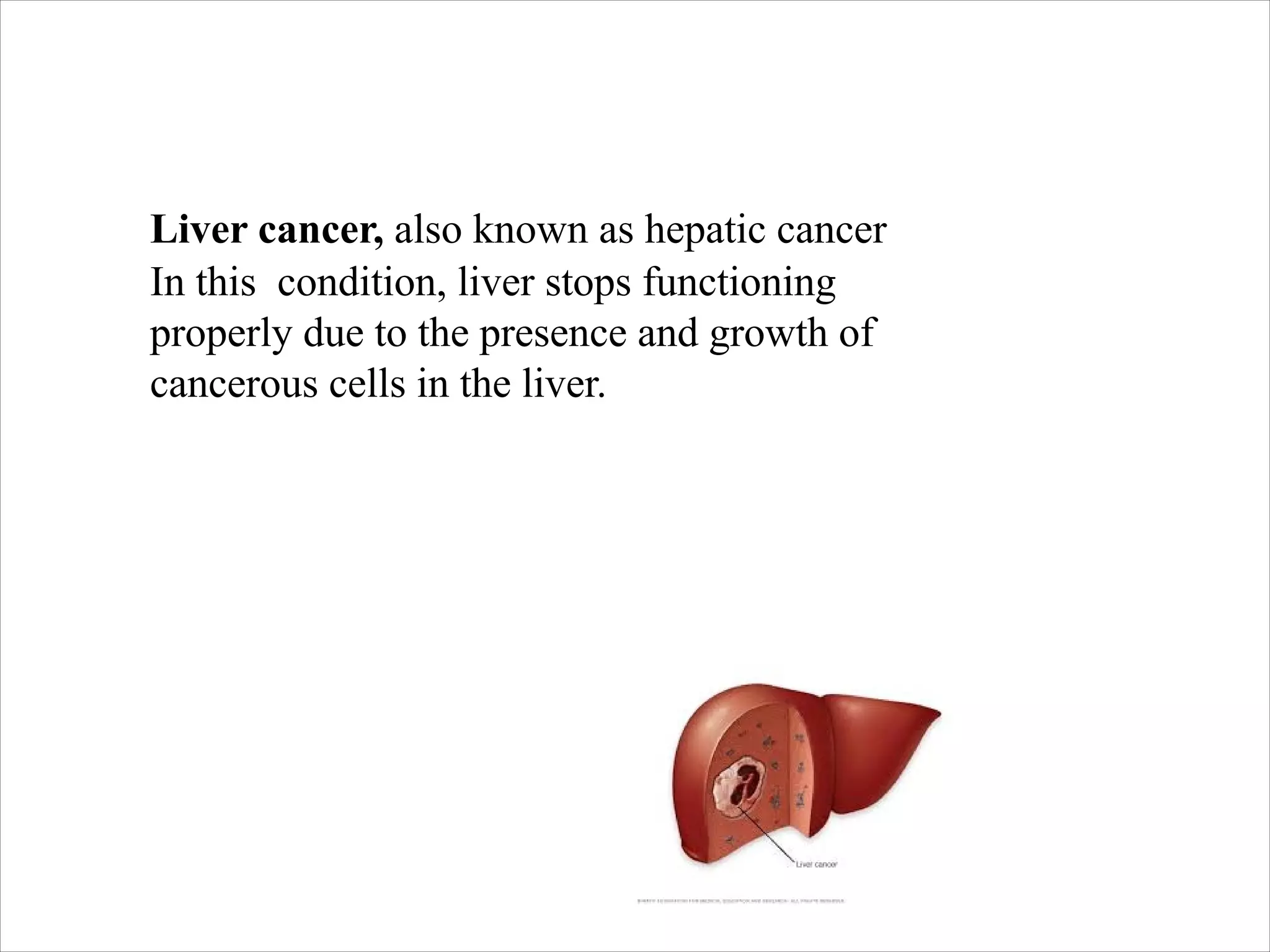
Liver cancer, also known as hepatic cancer
In this condition, liver stops functioning
properly due to the presence and growth of
cancerous cells in the liver.
Primary liver cancer originates in the liver where abnormal
cells begin dividing and multiply rapidly
Secondary liver cancer is a result of cancer from nearby or
different internal organs from other sites.
Although the two most common liver cancer types and primary
and secondary liver cancer, this condition is categorised based on
the characteristics and types of abnormal cells found in the
liver. These are the different liver cancer type
• Hepatocellular carcinoma (HCC) – accounts for 75% of liver cancer.It is
caused by infections hepatitis B or C.
• Fibrolamellar HCC – rare type. Idiopathic
• Cholangiocarcinoma – occurs in the bile ducts accounts for 10-20%
• Angiosarcoma – blood vessels in the liver , 1%
Anabolic steroids
- Its a male hormones
- used by athletes and weight lifters.
- Chronic use can lead to liver Cancer
Aflatoxins
- Produced by fungus
-It is found in wheat, groundnuts, corn, nuts, soybeans and peanuts.
- Low socio-economic countries
- Chronic use can lead to liver Cancer
• Birth Defects
• Genetics
• Cirrhosis - when liver cells are damaged and replaced
with scar tissue.
• Diabetes
• Family history.
• Alcohol
• Obesity
• Liver disease and inherited liver disease
• Low immunity – HIV/AIDS have five times greater risk.
• Gender - a higher percentage of males get liver cancer
compared to females.
• Smoking - individuals with hepatitis B or C have a higher
risk of liver cancer if they smoke.
• Chronic Infections - Hep - B, C
• Chemical substances - vinyl chloride and arsenic
Stage 1 - the tumor is just in/on the liver and no where else
Stage 2 - either there are several small tumors with little increase in size, but
all within the liver, or one tumor that has reached a blood vessel
Stage 3 - either there are various large tumors, or there is just one that has
reached the main blood vessel(s). Cancer may have also reached the
gallbladder
Stage 4 - metastasis. The liver cancer has spread to other parts of
the body.
• Fatigue
• Weight loss
• Upper abdomen Pain
• Nausea, vomiting
• Itching
• Pain around the right shoulder
blade.
High risk individuals include those with hepatitis C and B,
patients with alcohol-related cirrhosis and other alcohol abusers
should have regular screenings for liver cancer.
• Physical examination
– abdomen to check for lumps, swelling, ascites
– changes in the liver, spleen
– signs of jaundice - yellowing of the skin and Sclera.
• LFT - AFP (alpha fetoprotein), a type of protein, is
produced by liver tumors
• Imaging scans
Ø USG
Ø CT - To measure the tumor’s size.
Ø MRI - To identify the extent of the outbreak.
Ø PET scans - liver scans
Ø Biopsy - a small sample of tissue is removed and analyzed. The
analysis can reveal whether the tumor is cancerous (malignant) or
non-cancerous (benign).
• Arteriography
• Leukocytosis, erythrocytosis, hypercalcemia, hypoglycemia,
and hypocholesterolemia
• Molecular testing - To identify specific genes, proteins, to
plan for targeted therapy
• It is used to bypass biliary ducts obstructed by the liver,
pancreatic, or bile ducts in patients with inoperable tumors or
those who are poor surgical risks.
• Complications - sepsis, leakage of bile, hemorrhage, and
reobstruction of the biliary system.
• Observe patient for
– fever and chills
– bile drainage around the catheter
– changes in vital signs
– evidence of biliary obstruction - increased pain or pressure, pruritus,
and recurrence of jaundice
Chemoembolization
• Embolization of tumor vessels with chemotherapy
• An implantable pump to deliver high-concentration
chemo- therapy to the liver through the hepatic artery
• In chemoembolization the blood supply to the tumor is
blocked surgically or mechanically and anticancer drugs
are administered directly into the tumor
• Targeted drugs work by interfering with specific
abnormalities within a tumor.
• To slow or stop advanced hepatocellular carcinoma from
progressing for a few months longer than with no treatment.
E.g. - Advanced liver cancer
Radiation therapy IV or intra-arterial injection of antibodies
tagged with radioactive isotopes that specifically attack tumor-
associated antigens percutaneous placement of a high- intensity
source for inter-stitial radiation therapy
Radiation is directed at the tumor(s), killing a significant number
of them. Patients may experience nausea, vomiting and fatigue.
• Embolization - ischemia and necrosis of the
tumor occur.
• For multiple small lesions, ultrasound-guided
injection of alcohol promotes dehydration of
tumor cells and tumor necrosis
Radiofrequency thermal ablation
• RFA and microwave therapy both use heat to destroy cancer
cells.
• Patient will be Sedated
• It is also called as thermal ablation.
• Immunotherapy: lymphocytes with antitumor
reactivity are administered
• A portion of the liver is removed
• It can be done only if the cancer is in 1 part of the liver and
the liver is working well. The remaining section of liver takes
over the functions of the entire liver. The liver may grow back
to its normal size within a few weeks.
• Contra indication: advanced cirrhosis, small tumour.
• Side effects - pain, weakness, fatigue, and temporary liver
failure.
• Nurses Resonsibility - watch for signs of bleeding, infection,
signs of liver failure
• This procedure is possible only suitable donor is found.
• single tumor that is 5 cm or smaller or 3 or fewer tumors, all of
which are smaller than 3 cm.
• After a transplant, watch closely for signs of rejection such as
puffiness in the face, high blood pressure, or increased body
hair.
• Liver transplant has significant risks of serious complications,
including death from infection or the body's rejection of the
donor liver.
Palliative care (Hospice Care)
• It is for patient with advanced or terminal stage of Cancer.
• Hospice care is designed to provide the best possible quality
of life for people who are near the end of life.
• Support – emotionally and spiritually.
• Pain medications or relievers are given to the patient to
relieve liver cancer symptoms
Diagnosis
• Imbalanced Nutrition: Less Than Body Requirements related to anorexia,
nausea, impaired absorption, metabolism of vitamins.
• Ineffective Breathing Pattern related to the presence of ascites and
emphasis diapragma.
• Acute pain related to tension in the abdominal wall.
• Risk for deficient fluid volume related to excessive ascites, bleeding, and
edema.
• Risk for infection related to deficiency of white blood cells.
• Impaired Skin Integrity related to pruritus, edema, and ascites.
• Altered Sexuality and Sexual Dysfunction related to hormonal
dysfunction and decreased libido.
• Anxiety related to hospitalization.
• Knowledge deficient: the disease process and its causes.
• Social isolation related to the risk of spreading infection.
• Monitor Vital signs, abdominal grith
• Restricts sodium, fluids, and protein
• Prohibits alcohol.
• Toincrease venous return and prevent edema, elevate the patient’s
legs whenever possible.
• Provide meticulous skin care.
• Turn the patient frequently and keep his skin clean to prevent
pressure ulcers.
• Monitor the patient for fluid retention and ascites.
• Monitor respiratory function.
• Provide comprehensive care and emotional assistance.
• Long Term side effects
• Recurrence
• Emotional Health
• Alcohol:
ü Long-term, regular high alcohol intake significantly increases the risk
of cirrhosis of the liver, which in turn makes the likelihood of
developing liver cancer much greater.
ü Moderating one's alcohol intake (or giving up completely) can
significantly reduce the risk of developing liver cancer.
• Body pierceings and tattoos
• Use caution with chemicals.
• Hepatitis B
ü Advise to take hepatitis vaccine
ü Health care professionals, Drug addicts who share needles are at risk
ü Safe sex practice prevent Hep - B Infection
• Hepatitis C - Safe sex practice prevent Hep - B Infection

Liver cancer

  • 1.
    Presented by: Ms. ElizabethM.Sc (N) Asst. Professor, Dept of MSN NNC, GNSU.
  • 3.
    Ø Anatomy &Physiology Ø Definition Ø Types Ø Risk factors Ø Stages Ø Clinical Feature Ø Screening Ø Diagnosis Ø Management - Medical & Surgical Ø Alternative Treatment Ø Nursing Management Ø Prevention
  • 9.
    Liver cancer, alsoknown as hepatic cancer In this condition, liver stops functioning properly due to the presence and growth of cancerous cells in the liver.
  • 10.
    Primary liver canceroriginates in the liver where abnormal cells begin dividing and multiply rapidly Secondary liver cancer is a result of cancer from nearby or different internal organs from other sites.
  • 11.
    Although the twomost common liver cancer types and primary and secondary liver cancer, this condition is categorised based on the characteristics and types of abnormal cells found in the liver. These are the different liver cancer type • Hepatocellular carcinoma (HCC) – accounts for 75% of liver cancer.It is caused by infections hepatitis B or C. • Fibrolamellar HCC – rare type. Idiopathic • Cholangiocarcinoma – occurs in the bile ducts accounts for 10-20% • Angiosarcoma – blood vessels in the liver , 1%
  • 13.
    Anabolic steroids - Itsa male hormones - used by athletes and weight lifters. - Chronic use can lead to liver Cancer Aflatoxins - Produced by fungus -It is found in wheat, groundnuts, corn, nuts, soybeans and peanuts. - Low socio-economic countries - Chronic use can lead to liver Cancer • Birth Defects • Genetics
  • 14.
    • Cirrhosis -when liver cells are damaged and replaced with scar tissue. • Diabetes • Family history. • Alcohol • Obesity • Liver disease and inherited liver disease • Low immunity – HIV/AIDS have five times greater risk. • Gender - a higher percentage of males get liver cancer compared to females. • Smoking - individuals with hepatitis B or C have a higher risk of liver cancer if they smoke. • Chronic Infections - Hep - B, C • Chemical substances - vinyl chloride and arsenic
  • 15.
    Stage 1 -the tumor is just in/on the liver and no where else Stage 2 - either there are several small tumors with little increase in size, but all within the liver, or one tumor that has reached a blood vessel Stage 3 - either there are various large tumors, or there is just one that has reached the main blood vessel(s). Cancer may have also reached the gallbladder Stage 4 - metastasis. The liver cancer has spread to other parts of the body.
  • 17.
    • Fatigue • Weightloss • Upper abdomen Pain • Nausea, vomiting • Itching • Pain around the right shoulder blade.
  • 18.
    High risk individualsinclude those with hepatitis C and B, patients with alcohol-related cirrhosis and other alcohol abusers should have regular screenings for liver cancer.
  • 20.
    • Physical examination –abdomen to check for lumps, swelling, ascites – changes in the liver, spleen – signs of jaundice - yellowing of the skin and Sclera. • LFT - AFP (alpha fetoprotein), a type of protein, is produced by liver tumors • Imaging scans Ø USG Ø CT - To measure the tumor’s size. Ø MRI - To identify the extent of the outbreak. Ø PET scans - liver scans Ø Biopsy - a small sample of tissue is removed and analyzed. The analysis can reveal whether the tumor is cancerous (malignant) or non-cancerous (benign).
  • 21.
    • Arteriography • Leukocytosis,erythrocytosis, hypercalcemia, hypoglycemia, and hypocholesterolemia • Molecular testing - To identify specific genes, proteins, to plan for targeted therapy
  • 24.
    • It isused to bypass biliary ducts obstructed by the liver, pancreatic, or bile ducts in patients with inoperable tumors or those who are poor surgical risks. • Complications - sepsis, leakage of bile, hemorrhage, and reobstruction of the biliary system. • Observe patient for – fever and chills – bile drainage around the catheter – changes in vital signs – evidence of biliary obstruction - increased pain or pressure, pruritus, and recurrence of jaundice
  • 26.
    Chemoembolization • Embolization oftumor vessels with chemotherapy • An implantable pump to deliver high-concentration chemo- therapy to the liver through the hepatic artery • In chemoembolization the blood supply to the tumor is blocked surgically or mechanically and anticancer drugs are administered directly into the tumor
  • 27.
    • Targeted drugswork by interfering with specific abnormalities within a tumor. • To slow or stop advanced hepatocellular carcinoma from progressing for a few months longer than with no treatment. E.g. - Advanced liver cancer
  • 28.
    Radiation therapy IVor intra-arterial injection of antibodies tagged with radioactive isotopes that specifically attack tumor- associated antigens percutaneous placement of a high- intensity source for inter-stitial radiation therapy Radiation is directed at the tumor(s), killing a significant number of them. Patients may experience nausea, vomiting and fatigue.
  • 29.
    • Embolization -ischemia and necrosis of the tumor occur. • For multiple small lesions, ultrasound-guided injection of alcohol promotes dehydration of tumor cells and tumor necrosis
  • 30.
    Radiofrequency thermal ablation •RFA and microwave therapy both use heat to destroy cancer cells. • Patient will be Sedated • It is also called as thermal ablation.
  • 31.
    • Immunotherapy: lymphocyteswith antitumor reactivity are administered
  • 33.
    • A portionof the liver is removed • It can be done only if the cancer is in 1 part of the liver and the liver is working well. The remaining section of liver takes over the functions of the entire liver. The liver may grow back to its normal size within a few weeks. • Contra indication: advanced cirrhosis, small tumour. • Side effects - pain, weakness, fatigue, and temporary liver failure. • Nurses Resonsibility - watch for signs of bleeding, infection, signs of liver failure
  • 35.
    • This procedureis possible only suitable donor is found. • single tumor that is 5 cm or smaller or 3 or fewer tumors, all of which are smaller than 3 cm. • After a transplant, watch closely for signs of rejection such as puffiness in the face, high blood pressure, or increased body hair. • Liver transplant has significant risks of serious complications, including death from infection or the body's rejection of the donor liver.
  • 36.
    Palliative care (HospiceCare) • It is for patient with advanced or terminal stage of Cancer. • Hospice care is designed to provide the best possible quality of life for people who are near the end of life. • Support – emotionally and spiritually. • Pain medications or relievers are given to the patient to relieve liver cancer symptoms
  • 37.
  • 38.
    • Imbalanced Nutrition:Less Than Body Requirements related to anorexia, nausea, impaired absorption, metabolism of vitamins. • Ineffective Breathing Pattern related to the presence of ascites and emphasis diapragma. • Acute pain related to tension in the abdominal wall. • Risk for deficient fluid volume related to excessive ascites, bleeding, and edema. • Risk for infection related to deficiency of white blood cells. • Impaired Skin Integrity related to pruritus, edema, and ascites. • Altered Sexuality and Sexual Dysfunction related to hormonal dysfunction and decreased libido. • Anxiety related to hospitalization. • Knowledge deficient: the disease process and its causes. • Social isolation related to the risk of spreading infection.
  • 39.
    • Monitor Vitalsigns, abdominal grith • Restricts sodium, fluids, and protein • Prohibits alcohol. • Toincrease venous return and prevent edema, elevate the patient’s legs whenever possible. • Provide meticulous skin care. • Turn the patient frequently and keep his skin clean to prevent pressure ulcers. • Monitor the patient for fluid retention and ascites. • Monitor respiratory function. • Provide comprehensive care and emotional assistance.
  • 40.
    • Long Termside effects • Recurrence • Emotional Health
  • 42.
    • Alcohol: ü Long-term,regular high alcohol intake significantly increases the risk of cirrhosis of the liver, which in turn makes the likelihood of developing liver cancer much greater. ü Moderating one's alcohol intake (or giving up completely) can significantly reduce the risk of developing liver cancer. • Body pierceings and tattoos • Use caution with chemicals. • Hepatitis B ü Advise to take hepatitis vaccine ü Health care professionals, Drug addicts who share needles are at risk ü Safe sex practice prevent Hep - B Infection • Hepatitis C - Safe sex practice prevent Hep - B Infection