RAILWAY TRACK CONSTRUCTION
CONSTRUCTION OF RAILWAY TRACKS
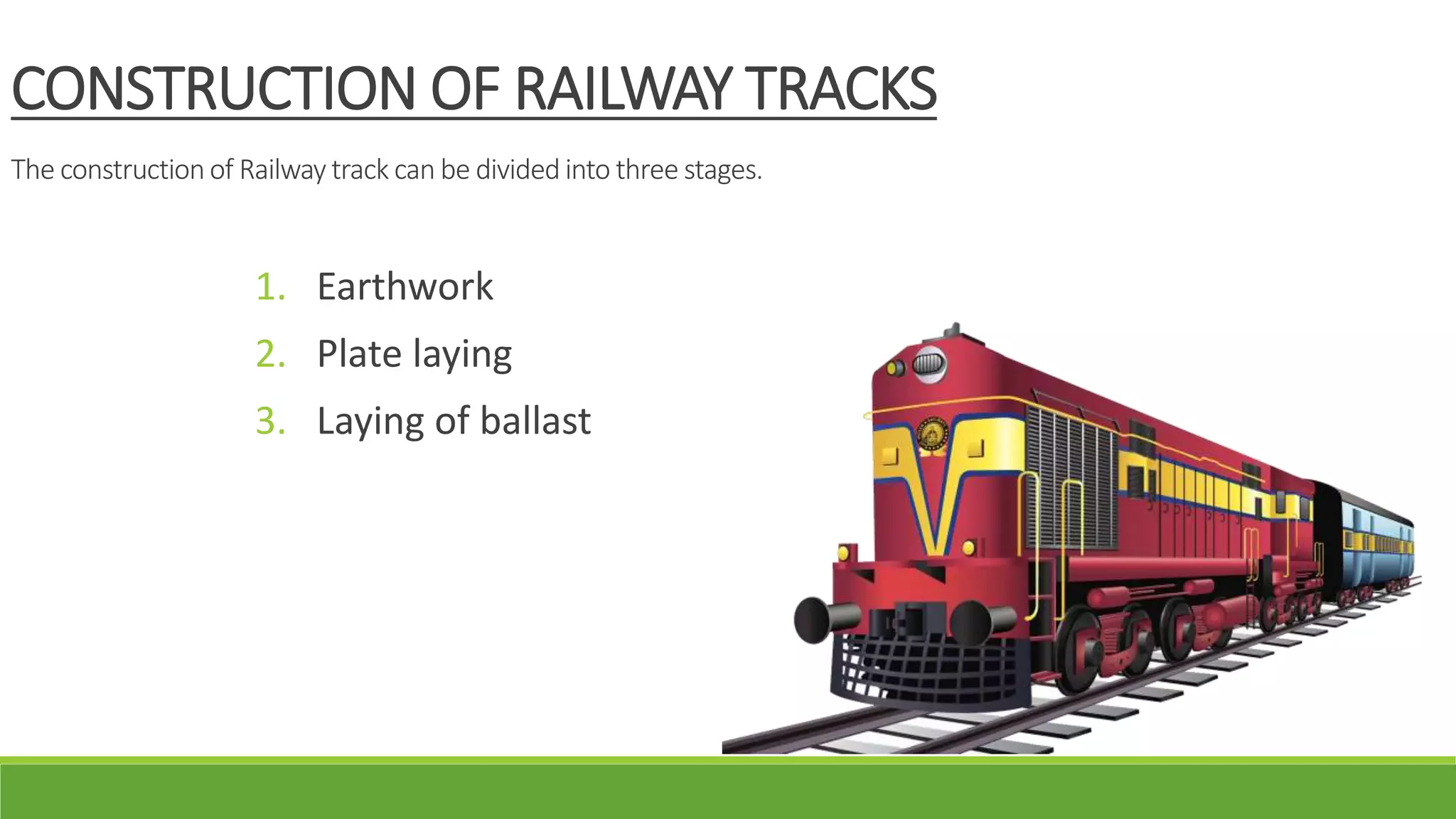
The constructionof Railway track can be divided into three stages.
1. Earthwork
2. Plate laying
3. Laying of ballast
EARTH WORK .
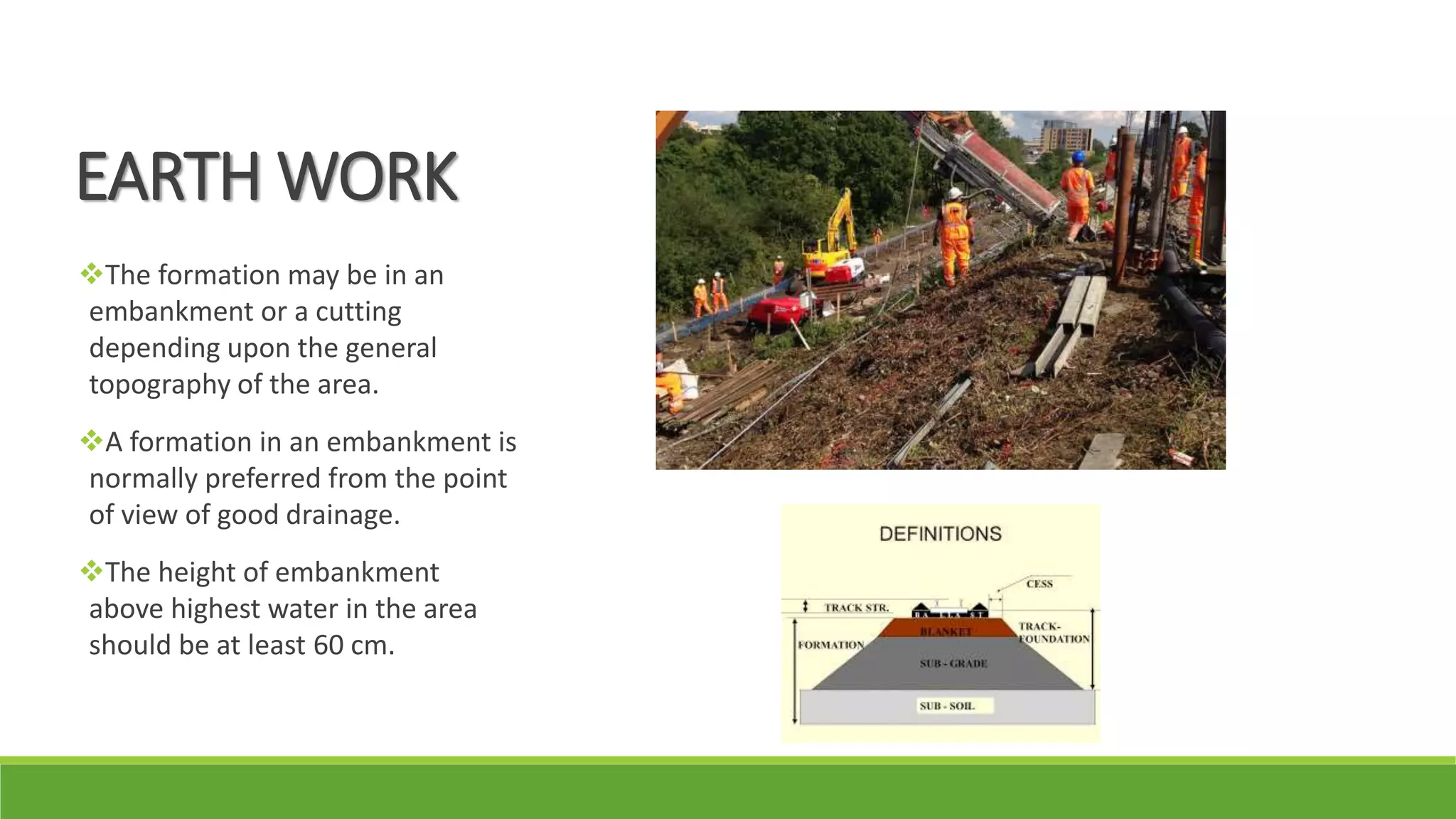
The formation may be in an
embankment or a cutting
depending upon the general
topography of the area.
A formation in an embankment is
normally preferred from the point
of view of good drainage.
The height of embankment
above highest water in the area
should be at least 60 cm.
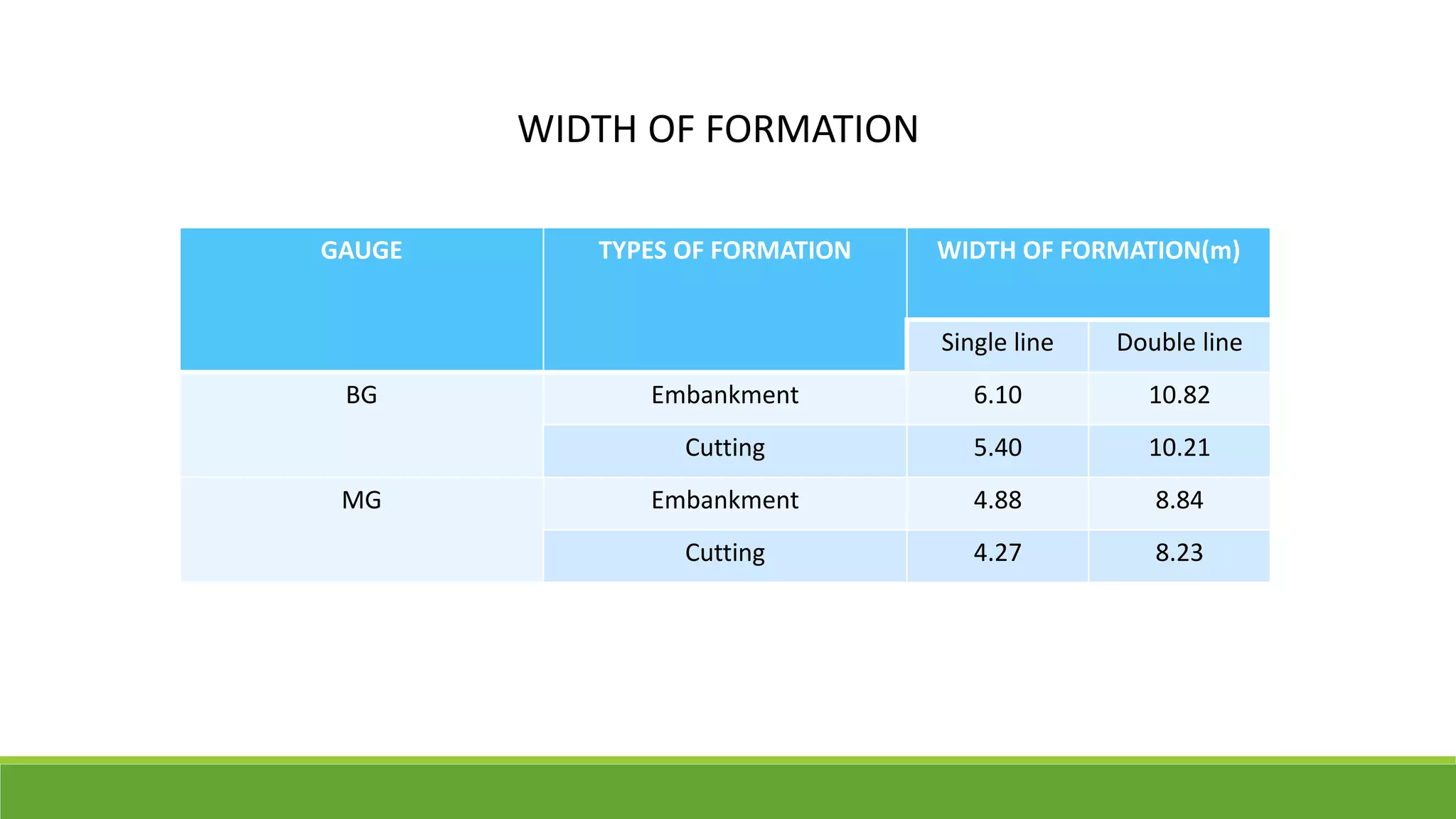
WIDTH OF FORMATION
GAUGE TYPES OF FORMATION WIDTH OF FORMATION(m)
Single line Double line
BG Embankment 6.10 10.82
Cutting 5.40 10.21
MG Embankment 4.88 8.84
Cutting 4.27 8.23
PLATE- LAYING
• The operation of laying out of the rails and sleepers over the ready
formation is known as plate laying.
• The point from where the laying of track starts is known as the base and the
point upon which the new track is carried out is known as the rail head.
Methods of plate laying
1. Tramline method or side method
2. Telescopic method
3. American method
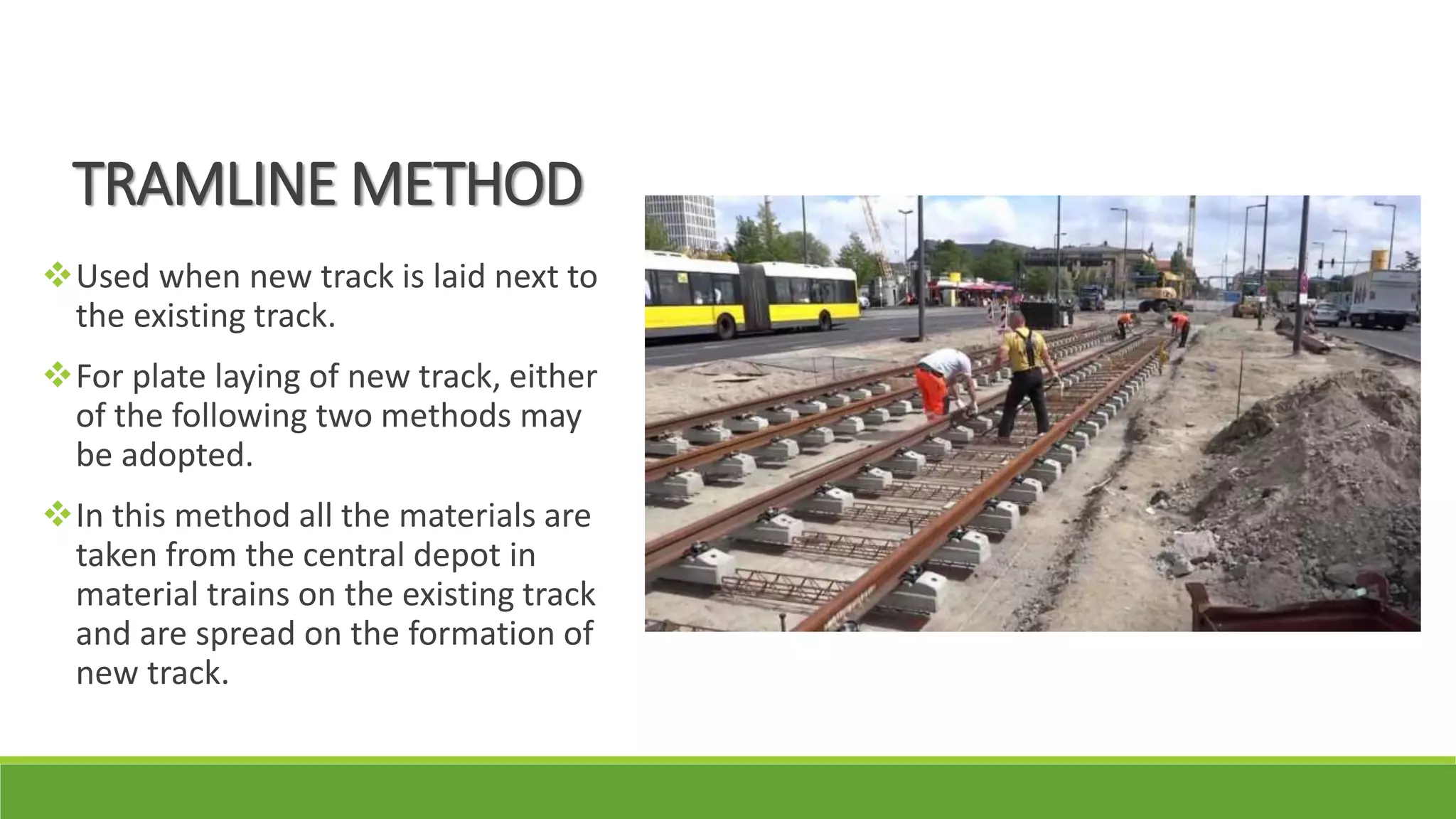
TRAMLINE METHOD
Used when new track is laid next to
the existing track.
For plate laying of new track, either
of the following two methods may
be adopted.
In this method all the materials are
taken from the central depot in
material trains on the existing track
and are spread on the formation of
new track.
TELESCOPIC
METHOD
This method is used very widely in India
1)The material are transported in material
train to the farthest point of new track and
unloaded.
2)These materials are then transported to the
point where work is in progress and different
components of track are assembled here.
3)In all 5 operations are involved in telescopic
method.
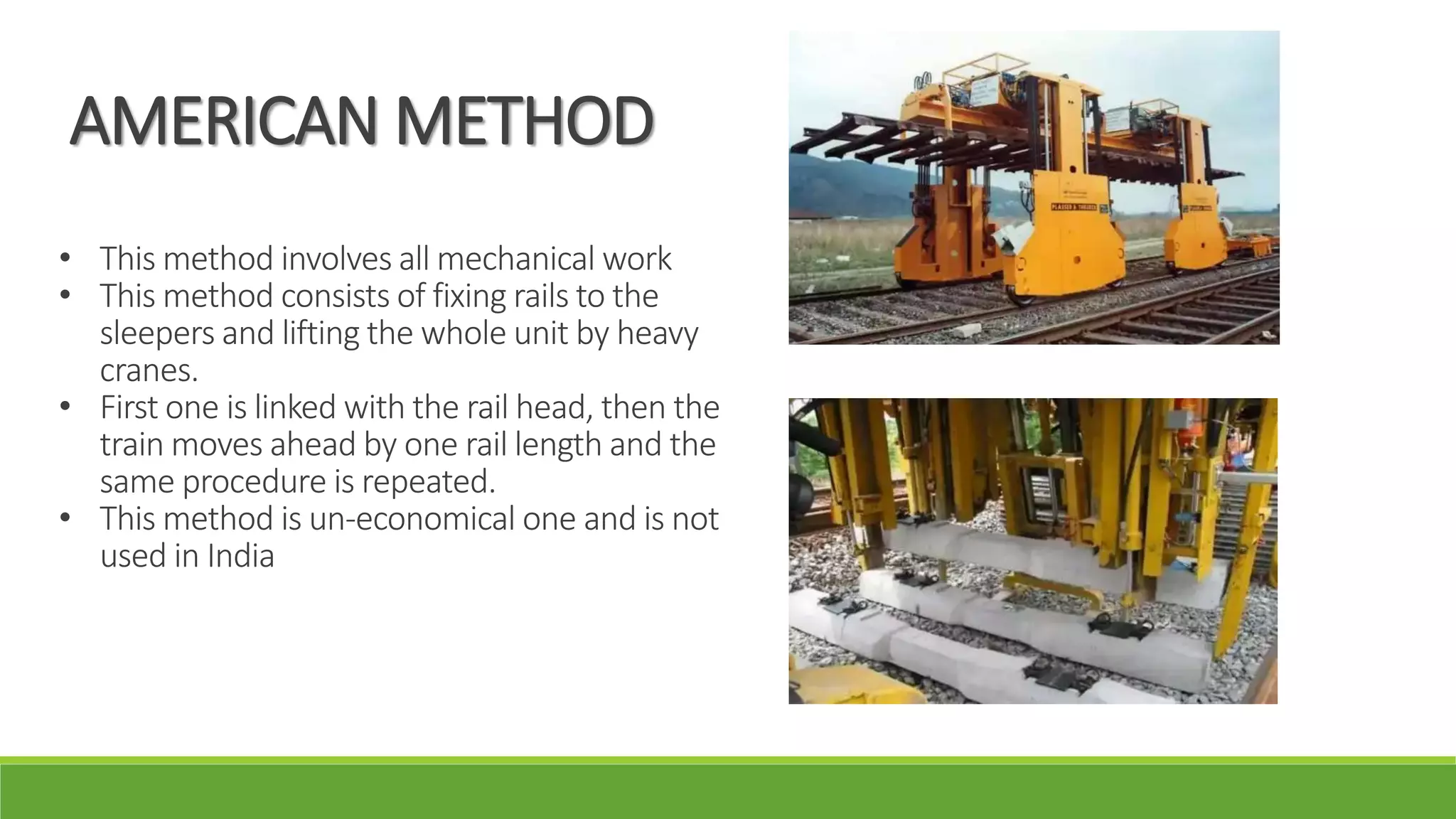
AMERICAN METHOD
• This method involves all mechanical work
• This method consists of fixing rails to the
sleepers and lifting the whole unit by heavy
cranes.
• First one is linked with the rail head, then the
train moves ahead by one rail length and the
same procedure is repeated.
• This method is un-economical one and is not
used in India
LAYING OF BALLEST
• The ballast is normally spread on the railway lines
after the embankment has settled well and at least
two monsoons have passed over it.
• The work of spreading the ballast is done by means of
ballast trains, which have special hoppers through
which the ballast can automatically unloaded onto the
track. be
• Alternatively, ballast is loaded in wagons of the train
and then unloaded at the site into a number of heaps
at suitable intervals along the track.
• Then packing of ballast is done by the workers by
means of shovels
Ballast laying vehicle
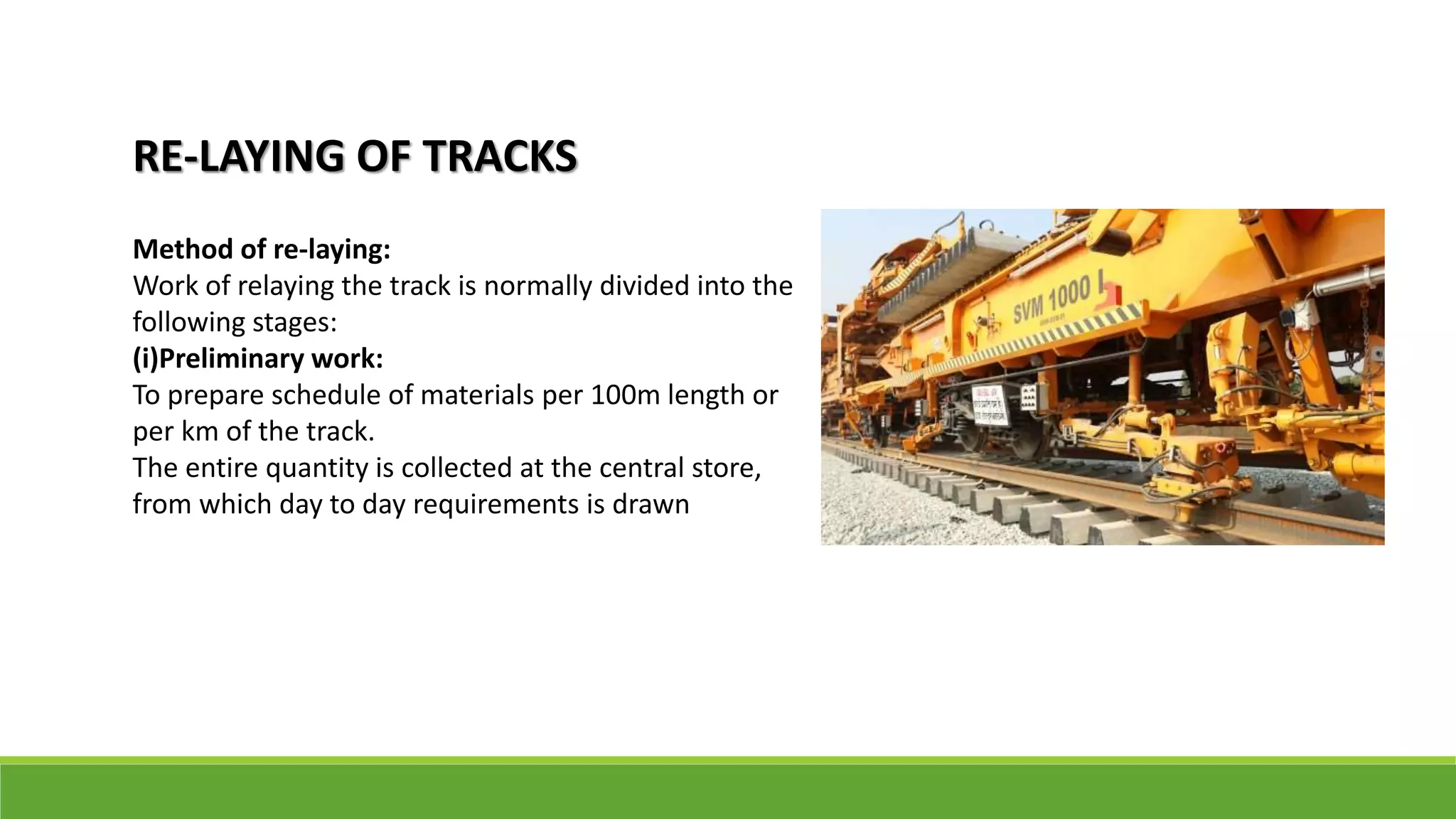
RE-LAYING OF TRACKS
Method of re-laying:
Work of relaying the track is normally divided into the
following stages:
(i)Preliminary work:
To prepare schedule of materials per 100m length or
per km of the track.
The entire quantity is collected at the central store,
from which day to day requirements is drawn
RAILWAY TRACK CONSTRUCTION CIVIL 2.pptx

RAILWAY TRACK CONSTRUCTION CIVIL 2.pptx

  • 1.
  • 2.
    CONSTRUCTION OF RAILWAYTRACKS The constructionof Railway track can be divided into three stages. 1. Earthwork 2. Plate laying 3. Laying of ballast
  • 3.
    EARTH WORK . Theformation may be in an embankment or a cutting depending upon the general topography of the area. A formation in an embankment is normally preferred from the point of view of good drainage. The height of embankment above highest water in the area should be at least 60 cm.
  • 4.
    WIDTH OF FORMATION GAUGETYPES OF FORMATION WIDTH OF FORMATION(m) Single line Double line BG Embankment 6.10 10.82 Cutting 5.40 10.21 MG Embankment 4.88 8.84 Cutting 4.27 8.23
  • 5.
    PLATE- LAYING • Theoperation of laying out of the rails and sleepers over the ready formation is known as plate laying. • The point from where the laying of track starts is known as the base and the point upon which the new track is carried out is known as the rail head. Methods of plate laying 1. Tramline method or side method 2. Telescopic method 3. American method
  • 6.
    TRAMLINE METHOD Used whennew track is laid next to the existing track. For plate laying of new track, either of the following two methods may be adopted. In this method all the materials are taken from the central depot in material trains on the existing track and are spread on the formation of new track.
  • 7.
    TELESCOPIC METHOD This method isused very widely in India 1)The material are transported in material train to the farthest point of new track and unloaded. 2)These materials are then transported to the point where work is in progress and different components of track are assembled here. 3)In all 5 operations are involved in telescopic method.
  • 8.
    AMERICAN METHOD • Thismethod involves all mechanical work • This method consists of fixing rails to the sleepers and lifting the whole unit by heavy cranes. • First one is linked with the rail head, then the train moves ahead by one rail length and the same procedure is repeated. • This method is un-economical one and is not used in India
  • 9.
    LAYING OF BALLEST •The ballast is normally spread on the railway lines after the embankment has settled well and at least two monsoons have passed over it. • The work of spreading the ballast is done by means of ballast trains, which have special hoppers through which the ballast can automatically unloaded onto the track. be • Alternatively, ballast is loaded in wagons of the train and then unloaded at the site into a number of heaps at suitable intervals along the track. • Then packing of ballast is done by the workers by means of shovels Ballast laying vehicle
  • 10.
    RE-LAYING OF TRACKS Methodof re-laying: Work of relaying the track is normally divided into the following stages: (i)Preliminary work: To prepare schedule of materials per 100m length or per km of the track. The entire quantity is collected at the central store, from which day to day requirements is drawn