Presented by
Dr Ajith Y. MVSc
Division of Medicine
IVRI, Izatnagar, UP, India
Any appearance/opacity on a radiograph
which doesn’t represents an actual anatomic
structure within the patient being
radiographed.
• Degrades quality of radiograph and affect
interpretation.
- Cause visual distractions for the radiologist
leading to misrepresentation of an actual
anatomic structure
- Can mimic pathology
• Render a radiographic study non-diagnostic
Post
exposure
Exposure
Pre
exposure
A. Pre exposure artifacts (Film storage and Handling)
Pressure
Abrasions & Scratches
Fingerprints
Static electricity
Material in cassette
Light leak
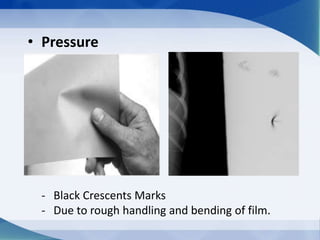
• Pressure
- Black Crescents Marks
- Due to rough handling and bending of film.
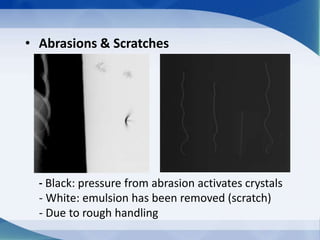
• Abrasions & Scratches
- Black: pressure from abrasion activates crystals
- White: emulsion has been removed (scratch)
- Due to rough handling
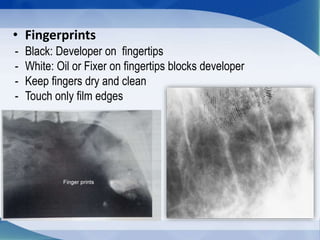
• Fingerprints
- Black: Developer on fingertips
- White: Oil or Fixer on fingertips blocks developer
- Keep fingers dry and clean
- Touch only film edges
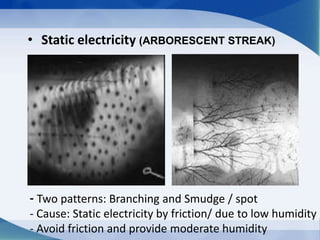
• Static electricity (ARBORESCENT STREAK)
- Two patterns: Branching and Smudge / spot
- Cause: Static electricity by friction/ due to low humidity
- Avoid friction and provide moderate humidity
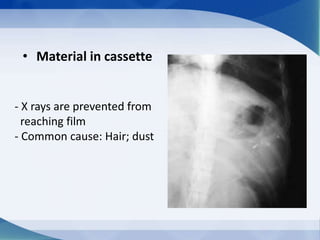
• Material in cassette
- X rays are prevented from
reaching film
- Common cause: Hair; dust
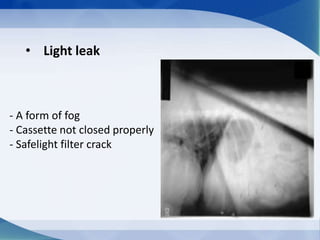
• Light leak
- A form of fog
- Cassette not closed properly
- Safelight filter crack
B. Positioning
• Magnification
• Foreshortening / distortion
• Patient rotation
• Upside-down cassette
• Grid cut off
• Magnification
• Object closer to film:
– Closer to normal size
– Sharper margins
• Object far from film:
– Magnified
– Less distinct margins
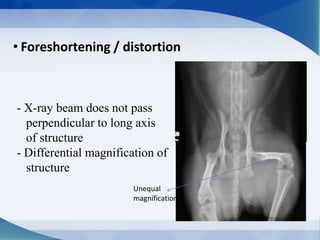
• Foreshortening / distortion
- X-ray beam does not pass
perpendicular to long axis
of structure
- Differential magnification of
structure
Unequal
magnification
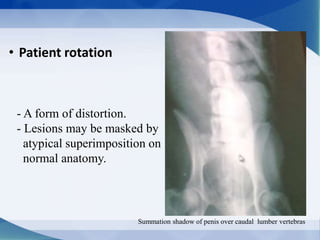
• Patient rotation
- A form of distortion.
- Lesions may be masked by
atypical superimposition on
normal anatomy.
Summation shadow of penis over caudal lumber vertebras
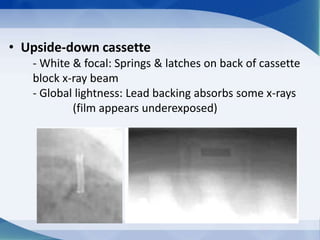
• Upside-down cassette
- White & focal: Springs & latches on back of cassette
block x-ray beam
- Global lightness: Lead backing absorbs some x-rays
(film appears underexposed)
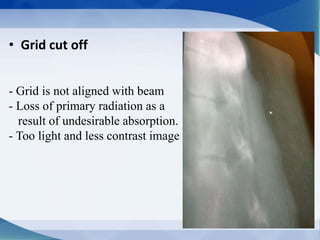
• Grid cut off
- Grid is not aligned with beam
- Loss of primary radiation as a
result of undesirable absorption.
- Too light and less contrast image
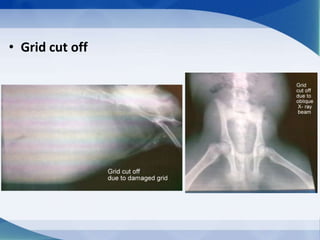
• Grid cut off
C. Exposure artifacts
• Motion
• Double exposure
• Overexposure
• Underexposure
• Material obstructing x-ray beam
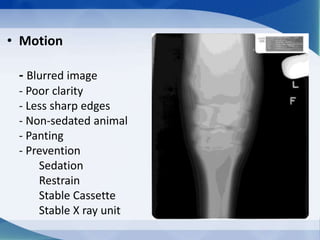
• Motion
- Blurred image
- Poor clarity
- Less sharp edges
- Non-sedated animal
- Panting
- Prevention
Sedation
Restrain
Stable Cassette
Stable X ray unit
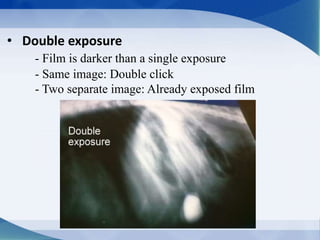
• Double exposure
- Film is darker than a single exposure
- Same image: Double click
- Two separate image: Already exposed film
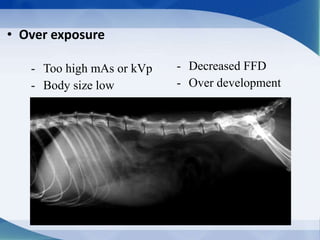
• Over exposure
- Too high mAs or kVp
- Body size low
- Decreased FFD
- Over development
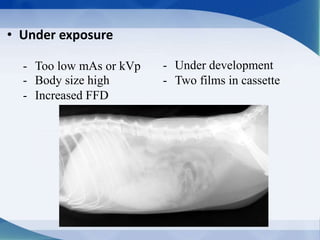
• Under exposure
- Too low mAs or kVp
- Body size high
- Increased FFD
- Under development
- Two films in cassette
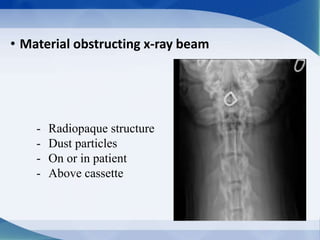
• Material obstructing x-ray beam
- Radiopaque structure
- Dust particles
- On or in patient
- Above cassette
D. Post exposure artifacts (Film processing)
 Overdevelopment
 Underdevelopment
 Insufficient mixing
 Incomplete fixation
 Incomplete washing
 Frosty area on film
 Finger marks
 Dark line on top
 White line on top
 Blank film
 Chemical fog
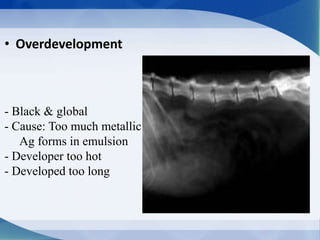
• Overdevelopment
- Black & global
- Cause: Too much metallic
Ag forms in emulsion
- Developer too hot
- Developed too long
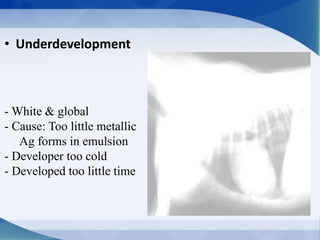
• Underdevelopment
- White & global
- Cause: Too little metallic
Ag forms in emulsion
- Developer too cold
- Developed too little time
• Uneven development
• Chemical levels are uneven: affect developing and fixing
• Top of the film.
- White horizontal area on top of the film
- Dark horizontal area on top of the film
• If the chemicals are not stirred prior to use.
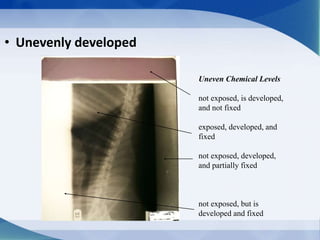
• Unevenly developed
Uneven Chemical Levels
not exposed, is developed,
and not fixed
exposed, developed, and
fixed
not exposed, developed,
and partially fixed
not exposed, but is
developed and fixed
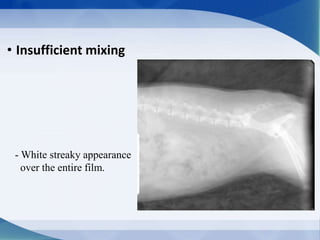
• Insufficient mixing
- White streaky appearance
over the entire film.
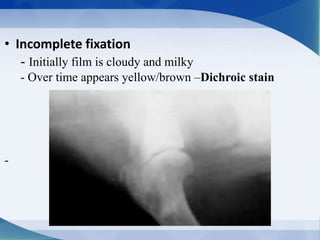
• Incomplete fixation
- Initially film is cloudy and milky
- Over time appears yellow/brown –Dichroic stain
-
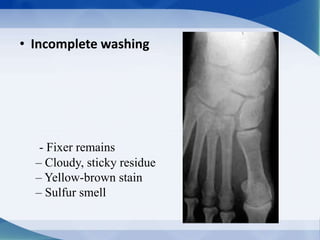
• Incomplete washing
- Fixer remains
– Cloudy, sticky residue
– Yellow-brown stain
– Sulfur smell
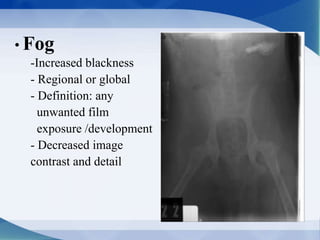
• Fog
-Increased blackness
- Regional or global
- Definition: any
unwanted film
exposure /development
- Decreased image
contrast and detail
• Fog: causes
- Excessive pressure
- Heat- film should be stored at <68 F
- Light- from outside source or safelight
- Humidity- should be 30-50%
- Chemical- over developing
- Old film
- Certain gases
- Scatter radiation
E. Artifacts in Digital/Computerised radiography
• Cassette Debris
• Faulty Transfer
• Uberschwinger or rebound effect
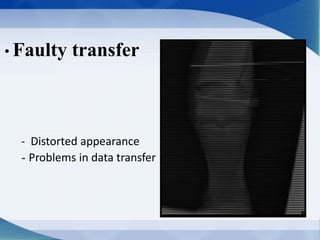
• Faulty transfer
- Distorted appearance
- Problems in data transfer
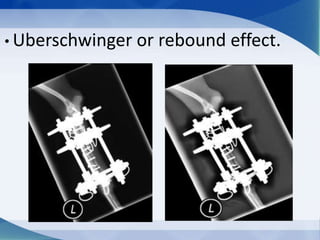
• Uberschwinger or rebound effect.
• Black lines occur around dense structure border
– Can be mistaken for loosening or infection of
implants
• Cause: Certain processing algorithms (edge
enhancement)
• Uberschwinger or rebound effect.
Radiographic artifacts

Radiographic artifacts

  • 1.
    Presented by Dr AjithY. MVSc Division of Medicine IVRI, Izatnagar, UP, India
  • 2.
    Any appearance/opacity ona radiograph which doesn’t represents an actual anatomic structure within the patient being radiographed.
  • 4.
    • Degrades qualityof radiograph and affect interpretation. - Cause visual distractions for the radiologist leading to misrepresentation of an actual anatomic structure - Can mimic pathology • Render a radiographic study non-diagnostic
  • 5.
  • 6.
    A. Pre exposureartifacts (Film storage and Handling) Pressure Abrasions & Scratches Fingerprints Static electricity Material in cassette Light leak
  • 7.
    • Pressure - BlackCrescents Marks - Due to rough handling and bending of film.
  • 8.
    • Abrasions &Scratches - Black: pressure from abrasion activates crystals - White: emulsion has been removed (scratch) - Due to rough handling
  • 9.
    • Fingerprints - Black:Developer on fingertips - White: Oil or Fixer on fingertips blocks developer - Keep fingers dry and clean - Touch only film edges
  • 10.
    • Static electricity(ARBORESCENT STREAK) - Two patterns: Branching and Smudge / spot - Cause: Static electricity by friction/ due to low humidity - Avoid friction and provide moderate humidity
  • 11.
    • Material incassette - X rays are prevented from reaching film - Common cause: Hair; dust
  • 12.
    • Light leak -A form of fog - Cassette not closed properly - Safelight filter crack
  • 13.
    B. Positioning • Magnification •Foreshortening / distortion • Patient rotation • Upside-down cassette • Grid cut off
  • 14.
    • Magnification • Objectcloser to film: – Closer to normal size – Sharper margins • Object far from film: – Magnified – Less distinct margins
  • 15.
    • Foreshortening /distortion - X-ray beam does not pass perpendicular to long axis of structure - Differential magnification of structure Unequal magnification
  • 16.
    • Patient rotation -A form of distortion. - Lesions may be masked by atypical superimposition on normal anatomy. Summation shadow of penis over caudal lumber vertebras
  • 17.
    • Upside-down cassette -White & focal: Springs & latches on back of cassette block x-ray beam - Global lightness: Lead backing absorbs some x-rays (film appears underexposed)
  • 18.
    • Grid cutoff - Grid is not aligned with beam - Loss of primary radiation as a result of undesirable absorption. - Too light and less contrast image
  • 19.
  • 20.
    C. Exposure artifacts •Motion • Double exposure • Overexposure • Underexposure • Material obstructing x-ray beam
  • 21.
    • Motion - Blurredimage - Poor clarity - Less sharp edges - Non-sedated animal - Panting - Prevention Sedation Restrain Stable Cassette Stable X ray unit
  • 22.
    • Double exposure -Film is darker than a single exposure - Same image: Double click - Two separate image: Already exposed film
  • 23.
    • Over exposure -Too high mAs or kVp - Body size low - Decreased FFD - Over development
  • 24.
    • Under exposure -Too low mAs or kVp - Body size high - Increased FFD - Under development - Two films in cassette
  • 25.
    • Material obstructingx-ray beam - Radiopaque structure - Dust particles - On or in patient - Above cassette
  • 26.
    D. Post exposureartifacts (Film processing)  Overdevelopment  Underdevelopment  Insufficient mixing  Incomplete fixation  Incomplete washing  Frosty area on film  Finger marks  Dark line on top  White line on top  Blank film  Chemical fog
  • 27.
    • Overdevelopment - Black& global - Cause: Too much metallic Ag forms in emulsion - Developer too hot - Developed too long
  • 28.
    • Underdevelopment - White& global - Cause: Too little metallic Ag forms in emulsion - Developer too cold - Developed too little time
  • 29.
    • Uneven development •Chemical levels are uneven: affect developing and fixing • Top of the film. - White horizontal area on top of the film - Dark horizontal area on top of the film • If the chemicals are not stirred prior to use.
  • 30.
    • Unevenly developed UnevenChemical Levels not exposed, is developed, and not fixed exposed, developed, and fixed not exposed, developed, and partially fixed not exposed, but is developed and fixed
  • 31.
    • Insufficient mixing -White streaky appearance over the entire film.
  • 32.
    • Incomplete fixation -Initially film is cloudy and milky - Over time appears yellow/brown –Dichroic stain -
  • 33.
    • Incomplete washing -Fixer remains – Cloudy, sticky residue – Yellow-brown stain – Sulfur smell
  • 34.
    • Fog -Increased blackness -Regional or global - Definition: any unwanted film exposure /development - Decreased image contrast and detail
  • 35.
    • Fog: causes -Excessive pressure - Heat- film should be stored at <68 F - Light- from outside source or safelight - Humidity- should be 30-50% - Chemical- over developing - Old film - Certain gases - Scatter radiation
  • 36.
    E. Artifacts inDigital/Computerised radiography • Cassette Debris • Faulty Transfer • Uberschwinger or rebound effect
  • 37.
    • Faulty transfer -Distorted appearance - Problems in data transfer
  • 38.
    • Uberschwinger orrebound effect. • Black lines occur around dense structure border – Can be mistaken for loosening or infection of implants • Cause: Certain processing algorithms (edge enhancement)
  • 39.
    • Uberschwinger orrebound effect.