Dr. Ajith Y., MVSc, PhD
Assistant Professor
Department of Veterinary Medicine
FVAS, Banaras Hindu University, Mirzapur
BONE MARROW
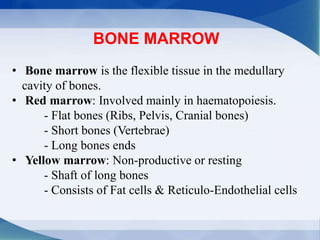
• Bone marrow is the flexible tissue in the medullary
cavity of bones.
• Red marrow: Involved mainly in haematopoiesis.
- Flat bones (Ribs, Pelvis, Cranial bones)
- Short bones (Vertebrae)
- Long bones ends
• Yellow marrow: Non-productive or resting
- Shaft of long bones
- Consists of Fat cells & Reticulo-Endothelial cells
Bone marrow biopsy- Indications
• Investigate abnormal blood cell counts and morphology
- Establish or confirm leukemia.
- Reduction of 1 or more type of blood cell precursors.
- Determine cause of Refractory anaemia, interference with
erythrocyte maturation.
• Demonstrate metastatic neoplasm .
• Demonstrate infections (Histoplasmosis, Leishmaniosis,
Toxoplasmosis, Cytauxzoonosis)
• Investigations on body iron stores.
• Occult neoplasia (indistinct borders of medullary cavity)
Bone marrow biopsy- Be Cautious…
• Severe coagulopathy
- DIC
- Anti-vitamin K rodenticide toxicity
- Severe hepatic failure
• Severe anemia
- Transfuse first
• Severe thrombocytopenia (<50000 counts)
Bone Marrow Biopsy
• Two types
Bone marrow aspirates
Bone marrow core biopsy
• Steps:
1. Preparing equipment
2. Patient preparation and sedation
3. Placement of the sampling needle
4. Collection of sample
5. Preparation of slides
6. Confirming adequate sampling
7. Submitting samples to the lab or interpreting
results in house
1. Preparation of equipment
- Medicines for sedation & anaesthesia
- Surgical gloves, Drape
- Petridish, EDTA or Heparin, Formalin
- BP blade No: 11, 10-12ml syringes
- DiffQuick stain, Slides
- Checked bone marrow needles
Biopsy needles
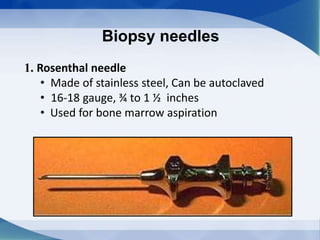
1. Rosenthal needle
• Made of stainless steel, Can be autoclaved
• 16-18 gauge, ¾ to 1 ½ inches
• Used for bone marrow aspiration
2. Illinois sternal-illiac needle
• 16-18 gauge with a guide piece.
• Used for bone marrow aspiration
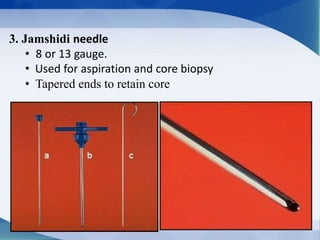
3. Jamshidi needle
• 8 or 13 gauge.
• Used for aspiration and core biopsy
• Tapered ends to retain core
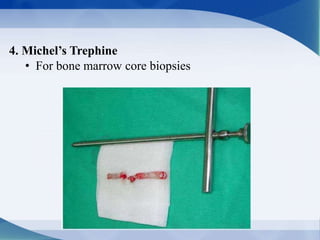
4. Michel’s Trephine
• For bone marrow core biopsies
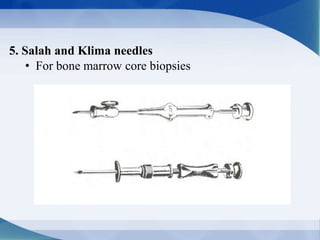
5. Salah and Klima needles
• For bone marrow core biopsies
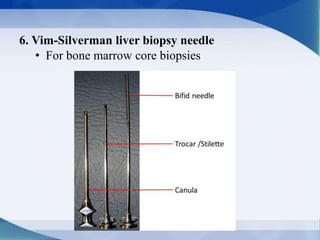
6. Vim-Silverman liver biopsy needle
• For bone marrow core biopsies
2. Patient preparation and sedation
• Restrain & Sedate the animal
• Clip and surgically prep site
- 4 square inches
• Scrub the area
• Lidocaine block down to bone, including
periosteum
• Drape
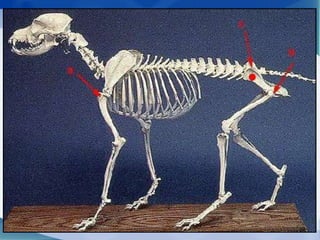
Bone marrow biopsy sites
• Dog, cat, young pig and laboratory animals
i. Iliac crest- most preferred for dogs
ii. Proximal end of femur- most preferred for cats
iii. Proximal humerus- Preferred in thrombocytopenics
iv. Wing of ilium- Core biopsy
• Horse, cattle, sheep and goat
i. Rib & Sternum
ii. Tuber coxae
iii. Iliac crest- Not in older horse and cattle
iv. Vertebral spine- Preferred for calf
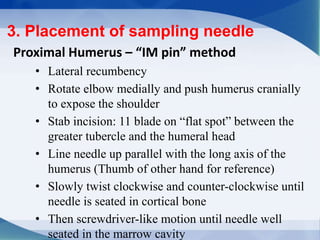
3. Placement of sampling needle
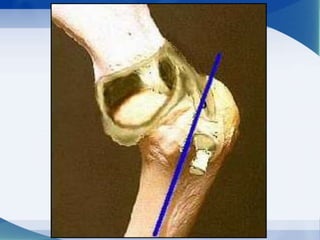
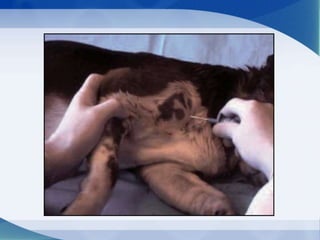
Proximal Humerus – “IM pin” method
• Lateral recumbency
• Rotate elbow medially and push humerus cranially
to expose the shoulder
• Stab incision: 11 blade on “flat spot” between the
greater tubercle and the humeral head
• Line needle up parallel with the long axis of the
humerus (Thumb of other hand for reference)
• Slowly twist clockwise and counter-clockwise until
needle is seated in cortical bone
• Then screwdriver-like motion until needle well
seated in the marrow cavity
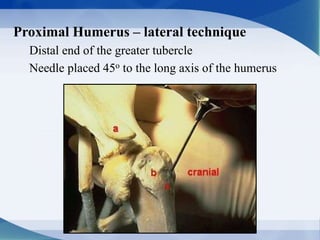
Proximal Humerus – lateral technique
Distal end of the greater tubercle
Needle placed 45o to the long axis of the humerus
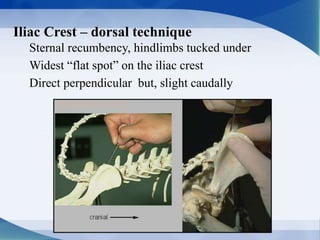
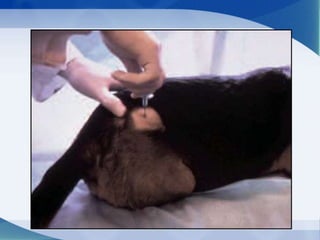
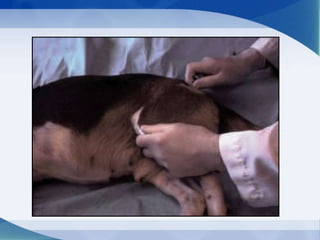
Iliac Crest – dorsal technique
Sternal recumbency, hindlimbs tucked under
Widest “flat spot” on the iliac crest
Direct perpendicular but, slight caudally
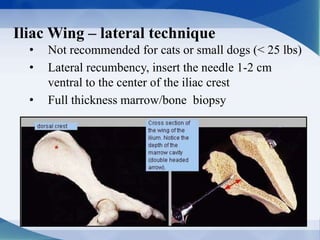
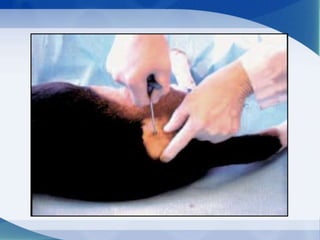
Iliac Wing – lateral technique
• Not recommended for cats or small dogs (< 25 lbs)
• Lateral recumbency, insert the needle 1-2 cm
ventral to the center of the iliac crest
• Full thickness marrow/bone biopsy
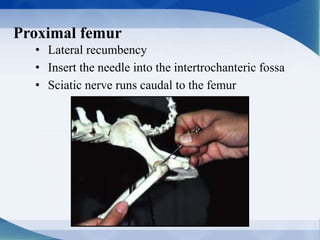
Proximal femur
• Lateral recumbency
• Insert the needle into the intertrochanteric fossa
• Sciatic nerve runs caudal to the femur
• Coat syringe with anticoagulant.
• Remove the cap and stylet from the bone marrow
needle and attach the syringe firmly.
• Rapidly pull plunger back to 8-10ml.
• When blood seen, release pressure, collect ≤1 ml
• Squirt the marrow into a petri dish & look for
spicules.
• If no spicules, remove needle and try again
• If spicules, replace the marrow needle cap and
prepare slides to confirm good sample
4. Collection of sample
To Review – Bone marrow aspiration
• Determine needle placement landmarks
• Stab incision using no.11 blade
• Line needle up at proper angle
• Back and forth twisting until seated in cortex
• Screwdriver-like motion until seated in marrow
cavity
• Coat syringe with anticoagulant
• Remove cap/stylet, attach syringe & aspirate
• Squirt marrow in petri dish & look for flecks
• If no flecks, remove needle and try again
• If flecks, replace cap and prepare slides
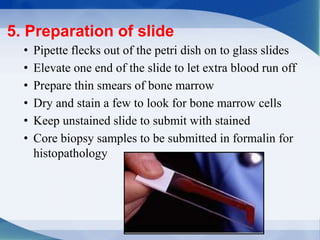
• Pipette flecks out of the petri dish on to glass slides
• Elevate one end of the slide to let extra blood run off
• Prepare thin smears of bone marrow
• Dry and stain a few to look for bone marrow cells
• Keep unstained slide to submit with stained
• Core biopsy samples to be submitted in formalin for
histopathology
5. Preparation of slide
• Michel’s trephine/ Jamshidi needle
• After well placing needle on cortex, remove the stylet,
and replace the cap and handle
• Advance the needle 1-2 cm further, rotating in a single
direction
• “stir” the needle to break loose the core
• Remove the needle rotating in a single direction
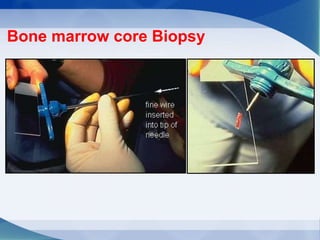
• Pass the wire or stylet backward to pop the core out the
top of the needle
• Core 0.75-1 cm long is sufficient
Bone marrow core Biopsy
Avantages of aspiration biopsy
• Cellular morphology is more clear
Better identification of cell lineages
Characteristics of malignancy
• Can calculate M:E ratios
Estimate regenerative responses
Interpret with respect to CBC and reticulocyte count
• Maturation sequence counts are easier
More mature cell stages should be present in successively
greater numbers
More younger cells means leukemia, maturation arrest or
immune mediated destruction of the next stage
Advantages of core biopsy
• Can evaluate tissue architecture
• Can detect myelofibrosis or myelonecrosis
• If repeated attempts to aspirate produce no fluid
(“packed marrow”)
- Myelophthisic disease
- Myelofibrosis
• If repeated attempts to aspirate produce blood only
with flecks of fat
- Aplastic anemia
• Can evaluate marrow cellularity
6. Evaluation of adequate sampling
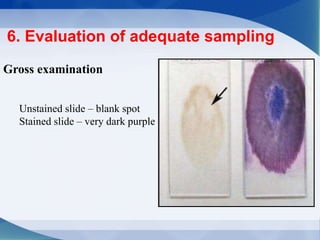
Gross examination
Unstained slide – blank spot
Stained slide – very dark purple spot
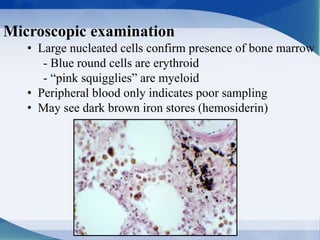
Microscopic examination
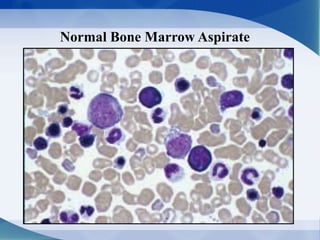
• Large nucleated cells confirm presence of bone marrow
- Blue round cells are erythroid
- “pink squigglies” are myeloid
• Peripheral blood only indicates poor sampling
• May see dark brown iron stores (hemosiderin)
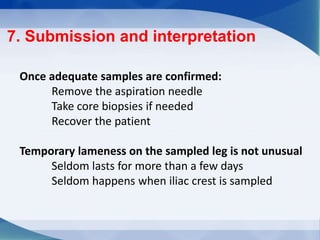
7. Submission and interpretation
Once adequate samples are confirmed:
Remove the aspiration needle
Take core biopsies if needed
Recover the patient
Temporary lameness on the sampled leg is not unusual
Seldom lasts for more than a few days
Seldom happens when iliac crest is sampled
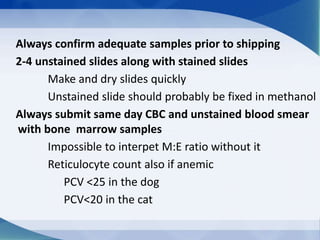
Always confirm adequate samples prior to shipping
2-4 unstained slides along with stained slides
Make and dry slides quickly
Unstained slide should probably be fixed in methanol
Always submit same day CBC and unstained blood smear
with bone marrow samples
Impossible to interpet M:E ratio without it
Reticulocyte count also if anemic
PCV <25 in the dog
PCV<20 in the cat
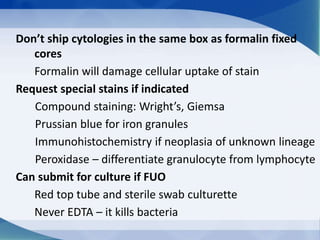
Don’t ship cytologies in the same box as formalin fixed
cores
Formalin will damage cellular uptake of stain
Request special stains if indicated
Compound staining: Wright’s, Giemsa
Prussian blue for iron granules
Immunohistochemistry if neoplasia of unknown lineage
Peroxidase – differentiate granulocyte from lymphocyte
Can submit for culture if FUO
Red top tube and sterile swab culturette
Never EDTA – it kills bacteria
Normal Bone Marrow Aspirate
Acute myelogenous leukemia
Bone marrow biopsy in animals   Veterinary Diagnostics

Bone marrow biopsy in animals Veterinary Diagnostics

  • 1.
    Dr. Ajith Y.,MVSc, PhD Assistant Professor Department of Veterinary Medicine FVAS, Banaras Hindu University, Mirzapur
  • 2.
    BONE MARROW • Bonemarrow is the flexible tissue in the medullary cavity of bones. • Red marrow: Involved mainly in haematopoiesis. - Flat bones (Ribs, Pelvis, Cranial bones) - Short bones (Vertebrae) - Long bones ends • Yellow marrow: Non-productive or resting - Shaft of long bones - Consists of Fat cells & Reticulo-Endothelial cells
  • 3.
    Bone marrow biopsy-Indications • Investigate abnormal blood cell counts and morphology - Establish or confirm leukemia. - Reduction of 1 or more type of blood cell precursors. - Determine cause of Refractory anaemia, interference with erythrocyte maturation. • Demonstrate metastatic neoplasm . • Demonstrate infections (Histoplasmosis, Leishmaniosis, Toxoplasmosis, Cytauxzoonosis) • Investigations on body iron stores. • Occult neoplasia (indistinct borders of medullary cavity)
  • 4.
    Bone marrow biopsy-Be Cautious… • Severe coagulopathy - DIC - Anti-vitamin K rodenticide toxicity - Severe hepatic failure • Severe anemia - Transfuse first • Severe thrombocytopenia (<50000 counts)
  • 5.
    Bone Marrow Biopsy •Two types Bone marrow aspirates Bone marrow core biopsy • Steps: 1. Preparing equipment 2. Patient preparation and sedation 3. Placement of the sampling needle 4. Collection of sample 5. Preparation of slides 6. Confirming adequate sampling 7. Submitting samples to the lab or interpreting results in house
  • 6.
    1. Preparation ofequipment - Medicines for sedation & anaesthesia - Surgical gloves, Drape - Petridish, EDTA or Heparin, Formalin - BP blade No: 11, 10-12ml syringes - DiffQuick stain, Slides - Checked bone marrow needles
  • 7.
    Biopsy needles 1. Rosenthalneedle • Made of stainless steel, Can be autoclaved • 16-18 gauge, ¾ to 1 ½ inches • Used for bone marrow aspiration
  • 8.
    2. Illinois sternal-illiacneedle • 16-18 gauge with a guide piece. • Used for bone marrow aspiration
  • 9.
    3. Jamshidi needle •8 or 13 gauge. • Used for aspiration and core biopsy • Tapered ends to retain core
  • 10.
    4. Michel’s Trephine •For bone marrow core biopsies
  • 11.
    5. Salah andKlima needles • For bone marrow core biopsies
  • 12.
    6. Vim-Silverman liverbiopsy needle • For bone marrow core biopsies
  • 13.
    2. Patient preparationand sedation • Restrain & Sedate the animal • Clip and surgically prep site - 4 square inches • Scrub the area • Lidocaine block down to bone, including periosteum • Drape
  • 14.
    Bone marrow biopsysites • Dog, cat, young pig and laboratory animals i. Iliac crest- most preferred for dogs ii. Proximal end of femur- most preferred for cats iii. Proximal humerus- Preferred in thrombocytopenics iv. Wing of ilium- Core biopsy • Horse, cattle, sheep and goat i. Rib & Sternum ii. Tuber coxae iii. Iliac crest- Not in older horse and cattle iv. Vertebral spine- Preferred for calf
  • 16.
    3. Placement ofsampling needle Proximal Humerus – “IM pin” method • Lateral recumbency • Rotate elbow medially and push humerus cranially to expose the shoulder • Stab incision: 11 blade on “flat spot” between the greater tubercle and the humeral head • Line needle up parallel with the long axis of the humerus (Thumb of other hand for reference) • Slowly twist clockwise and counter-clockwise until needle is seated in cortical bone • Then screwdriver-like motion until needle well seated in the marrow cavity
  • 18.
    Proximal Humerus –lateral technique Distal end of the greater tubercle Needle placed 45o to the long axis of the humerus
  • 20.
    Iliac Crest –dorsal technique Sternal recumbency, hindlimbs tucked under Widest “flat spot” on the iliac crest Direct perpendicular but, slight caudally
  • 22.
    Iliac Wing –lateral technique • Not recommended for cats or small dogs (< 25 lbs) • Lateral recumbency, insert the needle 1-2 cm ventral to the center of the iliac crest • Full thickness marrow/bone biopsy
  • 24.
    Proximal femur • Lateralrecumbency • Insert the needle into the intertrochanteric fossa • Sciatic nerve runs caudal to the femur
  • 26.
    • Coat syringewith anticoagulant. • Remove the cap and stylet from the bone marrow needle and attach the syringe firmly. • Rapidly pull plunger back to 8-10ml. • When blood seen, release pressure, collect ≤1 ml • Squirt the marrow into a petri dish & look for spicules. • If no spicules, remove needle and try again • If spicules, replace the marrow needle cap and prepare slides to confirm good sample 4. Collection of sample
  • 27.
    To Review –Bone marrow aspiration • Determine needle placement landmarks • Stab incision using no.11 blade • Line needle up at proper angle • Back and forth twisting until seated in cortex • Screwdriver-like motion until seated in marrow cavity • Coat syringe with anticoagulant • Remove cap/stylet, attach syringe & aspirate • Squirt marrow in petri dish & look for flecks • If no flecks, remove needle and try again • If flecks, replace cap and prepare slides
  • 28.
    • Pipette flecksout of the petri dish on to glass slides • Elevate one end of the slide to let extra blood run off • Prepare thin smears of bone marrow • Dry and stain a few to look for bone marrow cells • Keep unstained slide to submit with stained • Core biopsy samples to be submitted in formalin for histopathology 5. Preparation of slide
  • 29.
    • Michel’s trephine/Jamshidi needle • After well placing needle on cortex, remove the stylet, and replace the cap and handle • Advance the needle 1-2 cm further, rotating in a single direction • “stir” the needle to break loose the core • Remove the needle rotating in a single direction • Pass the wire or stylet backward to pop the core out the top of the needle • Core 0.75-1 cm long is sufficient Bone marrow core Biopsy
  • 30.
  • 31.
    Avantages of aspirationbiopsy • Cellular morphology is more clear Better identification of cell lineages Characteristics of malignancy • Can calculate M:E ratios Estimate regenerative responses Interpret with respect to CBC and reticulocyte count • Maturation sequence counts are easier More mature cell stages should be present in successively greater numbers More younger cells means leukemia, maturation arrest or immune mediated destruction of the next stage
  • 32.
    Advantages of corebiopsy • Can evaluate tissue architecture • Can detect myelofibrosis or myelonecrosis • If repeated attempts to aspirate produce no fluid (“packed marrow”) - Myelophthisic disease - Myelofibrosis • If repeated attempts to aspirate produce blood only with flecks of fat - Aplastic anemia • Can evaluate marrow cellularity
  • 33.
    6. Evaluation ofadequate sampling Gross examination Unstained slide – blank spot Stained slide – very dark purple spot
  • 34.
    Microscopic examination • Largenucleated cells confirm presence of bone marrow - Blue round cells are erythroid - “pink squigglies” are myeloid • Peripheral blood only indicates poor sampling • May see dark brown iron stores (hemosiderin)
  • 36.
    7. Submission andinterpretation Once adequate samples are confirmed: Remove the aspiration needle Take core biopsies if needed Recover the patient Temporary lameness on the sampled leg is not unusual Seldom lasts for more than a few days Seldom happens when iliac crest is sampled
  • 37.
    Always confirm adequatesamples prior to shipping 2-4 unstained slides along with stained slides Make and dry slides quickly Unstained slide should probably be fixed in methanol Always submit same day CBC and unstained blood smear with bone marrow samples Impossible to interpet M:E ratio without it Reticulocyte count also if anemic PCV <25 in the dog PCV<20 in the cat
  • 38.
    Don’t ship cytologiesin the same box as formalin fixed cores Formalin will damage cellular uptake of stain Request special stains if indicated Compound staining: Wright’s, Giemsa Prussian blue for iron granules Immunohistochemistry if neoplasia of unknown lineage Peroxidase – differentiate granulocyte from lymphocyte Can submit for culture if FUO Red top tube and sterile swab culturette Never EDTA – it kills bacteria
  • 39.
  • 40.