Radburn City Planning
Aamlan Saswat Mishra
2017 BARC 013
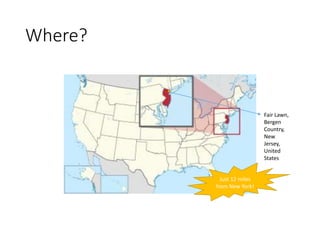
Where?
Fair Lawn,
Bergen
Country,
New
Jersey,
United
States
Just 12 miles
from New York!
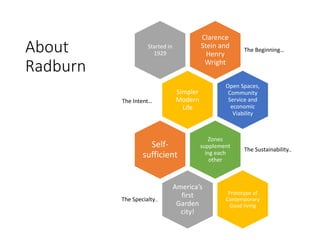
About
Radburn
Clarence
Stein and
Henry
Wright
The Beginning…
Started in
1929
Simpler
Modern
Life
Open Spaces,
Community
Service and
economic
Viability
Zones
supplement
ing each
other
The Sustainability..
Self-
sufficient
America’s
first
Garden
city!
The Specialty…
Prototype of
Contemporary
Good living
The Intent…
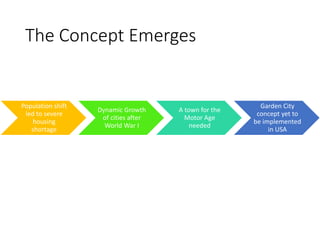
The Concept Emerges
Population shift
led to severe
housing
shortage
Dynamic Growth
of cities after
World War I
A town for the
Motor Age
needed
Garden City
concept yet to
be implemented
in USA
Influencing Factors:
Rapid
industrialization
Migration Over-population and
housing shortage
Dynamic growth of
cities
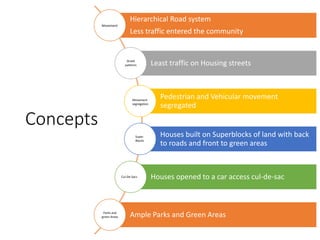
Concepts
Hierarchical Road system
Less traffic entered the community
Least traffic on Housing streets
Pedestrian and Vehicular movement
segregated
Houses built on Superblocks of land with back
to roads and front to green areas
Houses opened to a car access cul-de-sac
Ample Parks and Green Areas
Street
patterns
Movement
Movement
segregation
Cul-De-Sacs
Super
Blocks
Parks and
green Areas
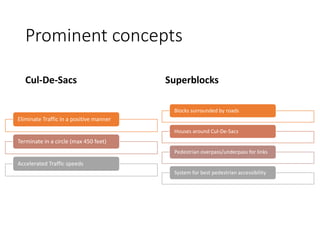
Prominent concepts
Cul-De-Sacs
Eliminate Traffic in a positive manner
Terminate in a circle (max 450 feet)
Accelerated Traffic speeds
Superblocks
Blocks surrounded by roads
Houses around Cul-De-Sacs
Pedestrian overpass/underpass for links
System for best pedestrian accessibility
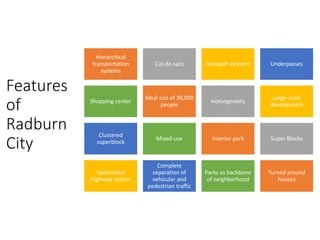
Features
of
Radburn
City
Hierarchical
transportation
systems
Cul-de-sacs Footpath systems Underpasses
Shopping center
Ideal size of 30,000
people
Homogeneity
Large-scale
development
Clustered
superblock
Mixed-use Interior park Super Blocks
Specialized
Highway system
Complete
separation of
vehicular and
pedestrian traffic
Parks as backbone
of neighborhood
Turned around
houses
HENRY
WRIGHT’S SIX
PLANKS FOR
HOUSING
PLATFORM
Plan simply but
comprehensively
Ample sites in
right places for
community use
Seclude factories
and Industrial
buildings
Delivery, waste
collection and
car parking with
minimum
confusion
Private-Public
land relation and
Individual-Group
building relation
House
occupancy as
per cost and
service
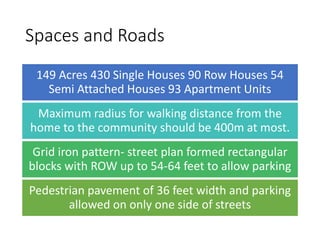
Spaces and Roads
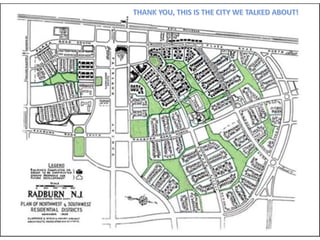
149 Acres 430 Single Houses 90 Row Houses 54
Semi Attached Houses 93 Apartment Units
Maximum radius for walking distance from the
home to the community should be 400m at most.
Grid iron pattern- street plan formed rectangular
blocks with ROW up to 54-64 feet to allow parking
Pedestrian pavement of 36 feet width and parking
allowed on only one side of streets
Houses and Parks
Houses with Kitchen and garage facing the roads and
living and bed-rooms facing Gardens
Un-interrupted pedestrian access to community open
spaces (23 acres of Interior parks and shopping plaza)
Expenditure saved in roads and public spaces utilized
in park development
Less street area needed for same frontage provision
with smaller utility line requirements
Failures:
People come and leave from back of the
house and not pedestrian access
Home owners prefer larger personal land
rather than large green common spaces
Only a small portion of it executed before
the great depression hit
Radburn city planning

Radburn city planning

  • 1.
    Radburn City Planning AamlanSaswat Mishra 2017 BARC 013
  • 2.
  • 3.
    About Radburn Clarence Stein and Henry Wright The Beginning… Startedin 1929 Simpler Modern Life Open Spaces, Community Service and economic Viability Zones supplement ing each other The Sustainability.. Self- sufficient America’s first Garden city! The Specialty… Prototype of Contemporary Good living The Intent…
  • 4.
    The Concept Emerges Populationshift led to severe housing shortage Dynamic Growth of cities after World War I A town for the Motor Age needed Garden City concept yet to be implemented in USA
  • 5.
  • 6.
    Concepts Hierarchical Road system Lesstraffic entered the community Least traffic on Housing streets Pedestrian and Vehicular movement segregated Houses built on Superblocks of land with back to roads and front to green areas Houses opened to a car access cul-de-sac Ample Parks and Green Areas Street patterns Movement Movement segregation Cul-De-Sacs Super Blocks Parks and green Areas
  • 7.
    Prominent concepts Cul-De-Sacs Eliminate Trafficin a positive manner Terminate in a circle (max 450 feet) Accelerated Traffic speeds Superblocks Blocks surrounded by roads Houses around Cul-De-Sacs Pedestrian overpass/underpass for links System for best pedestrian accessibility
  • 8.
    Features of Radburn City Hierarchical transportation systems Cul-de-sacs Footpath systemsUnderpasses Shopping center Ideal size of 30,000 people Homogeneity Large-scale development Clustered superblock Mixed-use Interior park Super Blocks Specialized Highway system Complete separation of vehicular and pedestrian traffic Parks as backbone of neighborhood Turned around houses
  • 9.
    HENRY WRIGHT’S SIX PLANKS FOR HOUSING PLATFORM Plansimply but comprehensively Ample sites in right places for community use Seclude factories and Industrial buildings Delivery, waste collection and car parking with minimum confusion Private-Public land relation and Individual-Group building relation House occupancy as per cost and service
  • 10.
    Spaces and Roads 149Acres 430 Single Houses 90 Row Houses 54 Semi Attached Houses 93 Apartment Units Maximum radius for walking distance from the home to the community should be 400m at most. Grid iron pattern- street plan formed rectangular blocks with ROW up to 54-64 feet to allow parking Pedestrian pavement of 36 feet width and parking allowed on only one side of streets
  • 11.
    Houses and Parks Houseswith Kitchen and garage facing the roads and living and bed-rooms facing Gardens Un-interrupted pedestrian access to community open spaces (23 acres of Interior parks and shopping plaza) Expenditure saved in roads and public spaces utilized in park development Less street area needed for same frontage provision with smaller utility line requirements
  • 12.
    Failures: People come andleave from back of the house and not pedestrian access Home owners prefer larger personal land rather than large green common spaces Only a small portion of it executed before the great depression hit