D R . S H I L N A
QUESTIONING TECHNIQUE
 Question is an expression of inquiry that invites or
calls for a reply
 An interrogative sentence, phrase, or gesture
 A written or verbal tool which stimulates and learner
towards a topic.
Importance of questioning in teaching and
learning
 Encourage discussion
 Arouse interest
 Maintain learning
 Summarize major points
 Reinforce learning
 Stimulates students’ questioning skills
 Review and Re teach
 Assess the teaching
 Assess students learning
Characteristics of good questions
 Clearly stated
 Common vocabulary
 Thought provoking
 Properly directed
 Remember PPPB of questions Pose, Pause and
Pounce, Bounce
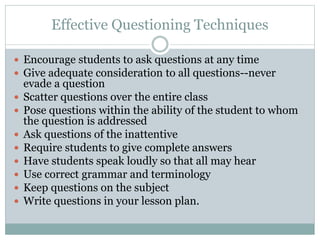
Effective Questioning Techniques
 Encourage students to ask questions at any time
 Give adequate consideration to all questions--never
evade a question
 Scatter questions over the entire class
 Pose questions within the ability of the student to whom
the question is addressed
 Ask questions of the inattentive
 Require students to give complete answers
 Have students speak loudly so that all may hear
 Use correct grammar and terminology
 Keep questions on the subject
 Write questions in your lesson plan.
Questioning technique

Questioning technique

  • 1.
    D R .S H I L N A QUESTIONING TECHNIQUE
  • 2.
    QUESTIONING TECHNIQUE  Questionis an expression of inquiry that invites or calls for a reply  An interrogative sentence, phrase, or gesture  A written or verbal tool which stimulates and learner towards a topic.
  • 3.
    Importance of questioningin teaching and learning  Encourage discussion  Arouse interest  Maintain learning  Summarize major points  Reinforce learning  Stimulates students’ questioning skills  Review and Re teach  Assess the teaching  Assess students learning
  • 4.
    Characteristics of goodquestions  Clearly stated  Common vocabulary  Thought provoking  Properly directed  Remember PPPB of questions Pose, Pause and Pounce, Bounce
  • 5.
    Effective Questioning Techniques Encourage students to ask questions at any time  Give adequate consideration to all questions--never evade a question  Scatter questions over the entire class  Pose questions within the ability of the student to whom the question is addressed  Ask questions of the inattentive  Require students to give complete answers  Have students speak loudly so that all may hear  Use correct grammar and terminology  Keep questions on the subject  Write questions in your lesson plan.