Quantitative Research
Design
Sarah Sinks
Quantitative Research:
• Systematic scientific investigation of data
and their relationships.
Overview of Qualitative research
• The objective of quantitative research is to
develop and employ mathematical models,
theories and hypotheses pertaining to
natural phenomena.
• Measuring is key in quantitative research
because it shows the relationship between
data and observation.
Correlational Research
• To find if the data has an observable
relationship that can be further specified
in terms of magnitude and/or an increase
or decrease.
Characteristics of Correlational
Research
• Correlation indicates the strength and
direction of a linear relationship between
variables.
Correlation and Significance
• Is there a relationship
between two
variables/data?
• What is the direction
of the relationship?
• What is the
magnitude?
• These relationships
may show any
tendency for the
variables to vary
consistently.
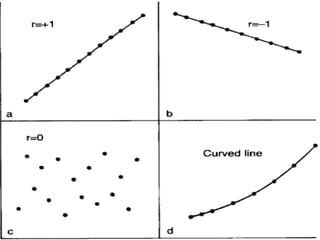
• Pearson’s product
moment coefficient
correlation: -1.0 to
+1.0
Ex post facto
‘from what is done afterwards’
• Studies that investigate possible cause
and effect relationships by observing an
existing condition or state of affairs and
searching back in time for plausible causal
factors.
Characteristics of Ex Post Facto
• Researcher takes the effect/dependent
variable and examines it retrospectively
• Establishes causes, relationships or
associations and their meanings.
• Researcher has little to no control over
independent variables.
• Flexible by nature.
When to use this?
• You can use this where more powerful
experimental designs are not possible;
when you are unable to select, control and
manipulate the factors necessary to study
cause and effect relationships directly, or
when control variables except a single
independent variable may be unrealistic
and artificial.
Ex post facto advantages and
disadvantages
Advantages
• Show a correlation where
more rigorous
experimentation is not
possible
• Exploratory tool
• Useful to avoid articiality
in the research.
• Shows cause and effect
relationships
Disadvantages
• Lack of control for
independent variable and
randomizing subjects.
• Never certain if causative
factor has been included
or identified
• Relationship between two
factors does not est.
cause and effect.
• May be regarded as too
flexible.
Experimental
• Research in which the investigator
deliberately controls and manipulates the
independent variable to observe the effect
of that change on another the dependent
variable.
How and when to use
Experimental Research
• Most commonly used in Educational
research.
• You vary the independent variable and
look for the effect it has on the dependent
variable.
How and When to use Quasi-
experimental research
• Used when you have control over the
“when and the whom of measurement”,
but lack control over the “when and to
whom of exposure.”
• Common in educational research.
How and when to use Single Case
research
• Process of continuous assessment of
some aspect of human behavior over a
period of time.
• Involves “intervention effects”, that are
replicated in the same subject(s) over
time.
• Used in many fields including psychology,
education and social work.
How and when to use Meta-
analysis research
• Research to explore the effectiveness of
classroom methods.
• Involves aggregating the results of other
studies into a coherent account.
Useful Terms
• Correlation- Indicates the strength and direction
of a linear relationship between two random
variables.
• Ex post facto- from the Latin for "from
something done afterward"
• Quasi- the prefix 'quasi' denotes methods that
are "almost" or "socially approximate"
• Variable- a measurable factor, characteristic, or
attribute of an individual or a system
References
• Research Methods in Education 5th
Edition, Louis Cohen, Lawrence, Manion
and Keith Morrison 2004, New York
• http://en.wikipedia.org/wiki/Main_Page,
4/10/2007

Quantitative Research Design

  • 1.
  • 2.
    Quantitative Research: • Systematicscientific investigation of data and their relationships.
  • 3.
    Overview of Qualitativeresearch • The objective of quantitative research is to develop and employ mathematical models, theories and hypotheses pertaining to natural phenomena. • Measuring is key in quantitative research because it shows the relationship between data and observation.
  • 4.
    Correlational Research • Tofind if the data has an observable relationship that can be further specified in terms of magnitude and/or an increase or decrease.
  • 5.
    Characteristics of Correlational Research •Correlation indicates the strength and direction of a linear relationship between variables.
  • 6.
    Correlation and Significance •Is there a relationship between two variables/data? • What is the direction of the relationship? • What is the magnitude? • These relationships may show any tendency for the variables to vary consistently. • Pearson’s product moment coefficient correlation: -1.0 to +1.0
  • 8.
    Ex post facto ‘fromwhat is done afterwards’
  • 9.
    • Studies thatinvestigate possible cause and effect relationships by observing an existing condition or state of affairs and searching back in time for plausible causal factors.
  • 10.
    Characteristics of ExPost Facto • Researcher takes the effect/dependent variable and examines it retrospectively • Establishes causes, relationships or associations and their meanings. • Researcher has little to no control over independent variables. • Flexible by nature.
  • 11.
    When to usethis? • You can use this where more powerful experimental designs are not possible; when you are unable to select, control and manipulate the factors necessary to study cause and effect relationships directly, or when control variables except a single independent variable may be unrealistic and artificial.
  • 12.
    Ex post factoadvantages and disadvantages Advantages • Show a correlation where more rigorous experimentation is not possible • Exploratory tool • Useful to avoid articiality in the research. • Shows cause and effect relationships Disadvantages • Lack of control for independent variable and randomizing subjects. • Never certain if causative factor has been included or identified • Relationship between two factors does not est. cause and effect. • May be regarded as too flexible.
  • 13.
    Experimental • Research inwhich the investigator deliberately controls and manipulates the independent variable to observe the effect of that change on another the dependent variable.
  • 14.
    How and whento use Experimental Research • Most commonly used in Educational research. • You vary the independent variable and look for the effect it has on the dependent variable.
  • 15.
    How and Whento use Quasi- experimental research • Used when you have control over the “when and the whom of measurement”, but lack control over the “when and to whom of exposure.” • Common in educational research.
  • 16.
    How and whento use Single Case research • Process of continuous assessment of some aspect of human behavior over a period of time. • Involves “intervention effects”, that are replicated in the same subject(s) over time. • Used in many fields including psychology, education and social work.
  • 17.
    How and whento use Meta- analysis research • Research to explore the effectiveness of classroom methods. • Involves aggregating the results of other studies into a coherent account.
  • 18.
    Useful Terms • Correlation-Indicates the strength and direction of a linear relationship between two random variables. • Ex post facto- from the Latin for "from something done afterward" • Quasi- the prefix 'quasi' denotes methods that are "almost" or "socially approximate" • Variable- a measurable factor, characteristic, or attribute of an individual or a system
  • 19.
    References • Research Methodsin Education 5th Edition, Louis Cohen, Lawrence, Manion and Keith Morrison 2004, New York • http://en.wikipedia.org/wiki/Main_Page, 4/10/2007