Rajarata University of Sri Lanka
P.B. Dharmasena
0777-613234, 0717-613234
dharmasenapb@ymail.com, dharmasenapb@gmail.com
Rajarata University of Sri Lanka
P.B. Dharmasena
0777-613234, 0717-613234
dharmasenapb@ymail.com, dharmasenapb@gmail.com
https://independent.academia.edu/PunchiBandageDharmasena
https://www.researchgate.net/profile/Punchi_Bandage_Dharmasena/contributions
http://www.slideshare.net/DharmasenaPb
LESSON
TWO
EMGT 3172 (1:15)
B.A. (Special) Degree Program
Monday 10.30 am – 12.30 pm
Hall: EML
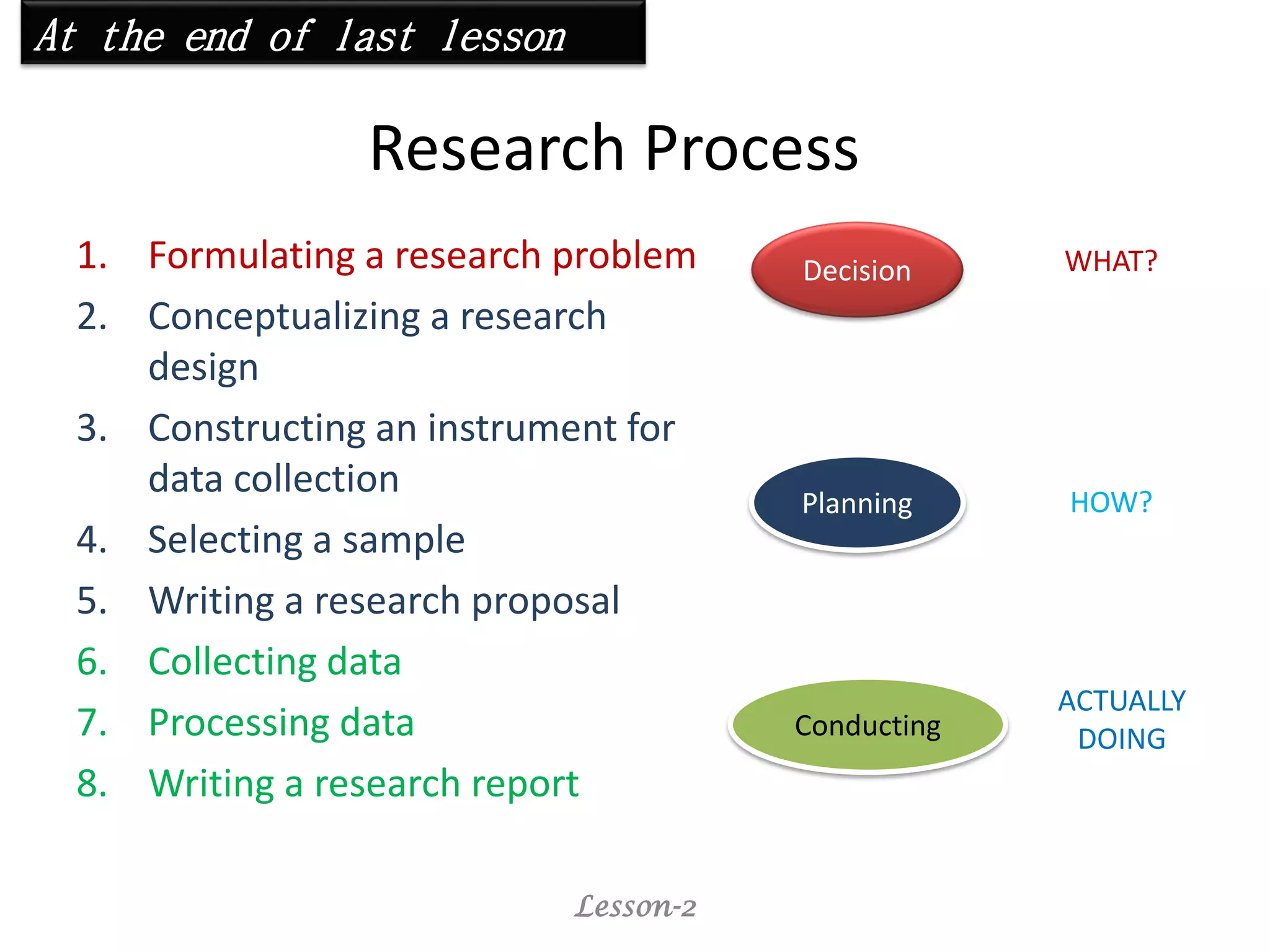
Research Process
1. Formulating a research problem
2. Conceptualizing a research
design
3. Constructing an instrument for
data collection
4. Selecting a sample
5. Writing a research proposal
6. Collecting data
7. Processing data
8. Writing a research report
WHAT?
HOW?
ACTUALLY
DOING
Lesson-2
Planning
Conducting
Decision
At the end of last lesson
RESEARCH METHODOLOGY
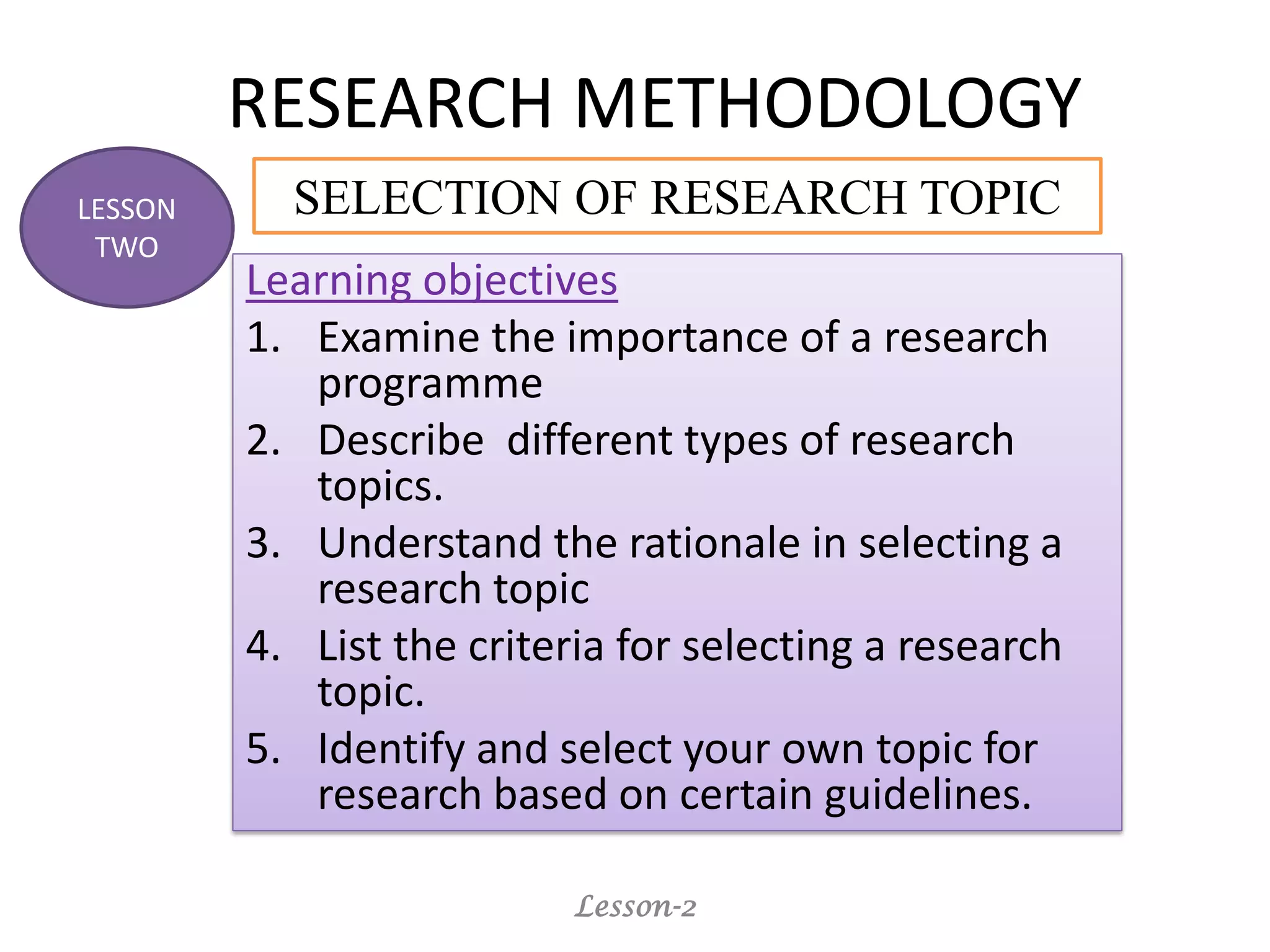
Learning objectives
1. Examine the importance of a research
programme
2. Describe different types of research
topics.
3. Understand the rationale in selecting a
research topic
4. List the criteria for selecting a research
topic.
5. Identify and select your own topic for
research based on certain guidelines.
Lesson-2
LESSON
TWO
SELECTION OF RESEARCH TOPIC
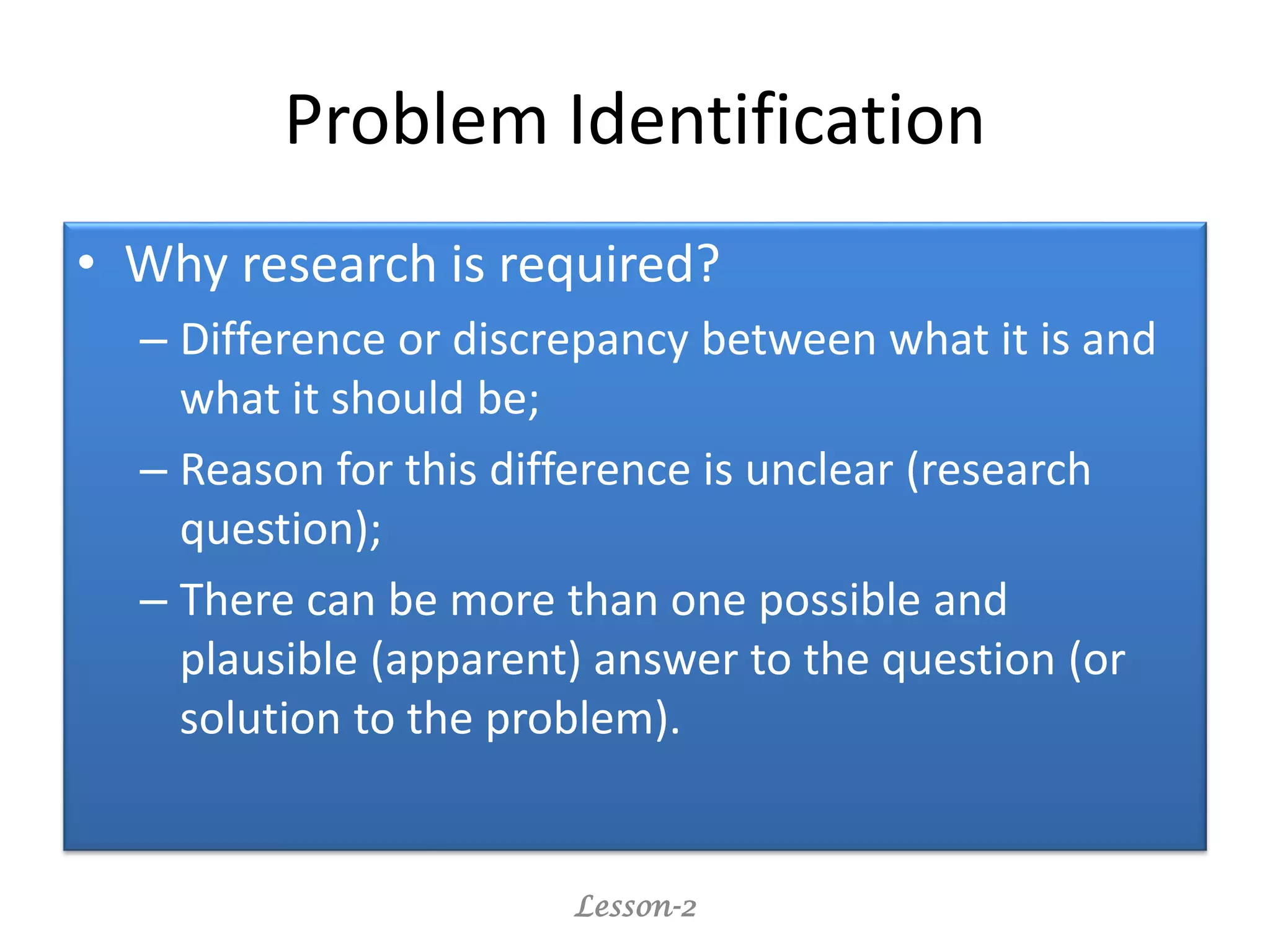
Problem Identification
• Why research is required?
– Difference or discrepancy between what it is and
what it should be;
– Reason for this difference is unclear (research
question);
– There can be more than one possible and
plausible (apparent) answer to the question (or
solution to the problem).
Lesson-2
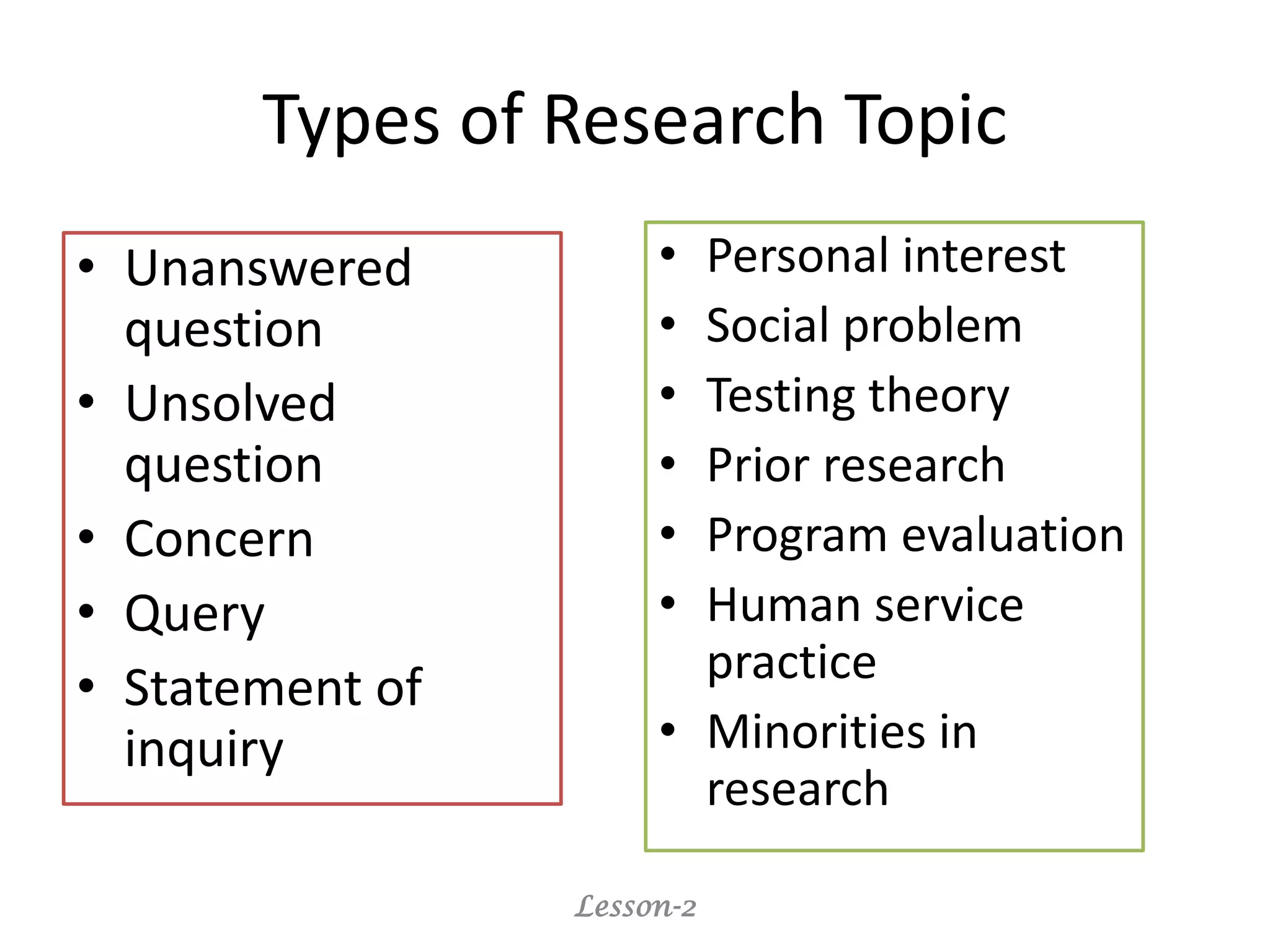
Types of Research Topic
• Unanswered
question
• Unsolved
question
• Concern
• Query
• Statement of
inquiry
Lesson-2
• Personal interest
• Social problem
• Testing theory
• Prior research
• Program evaluation
• Human service
practice
• Minorities in
research
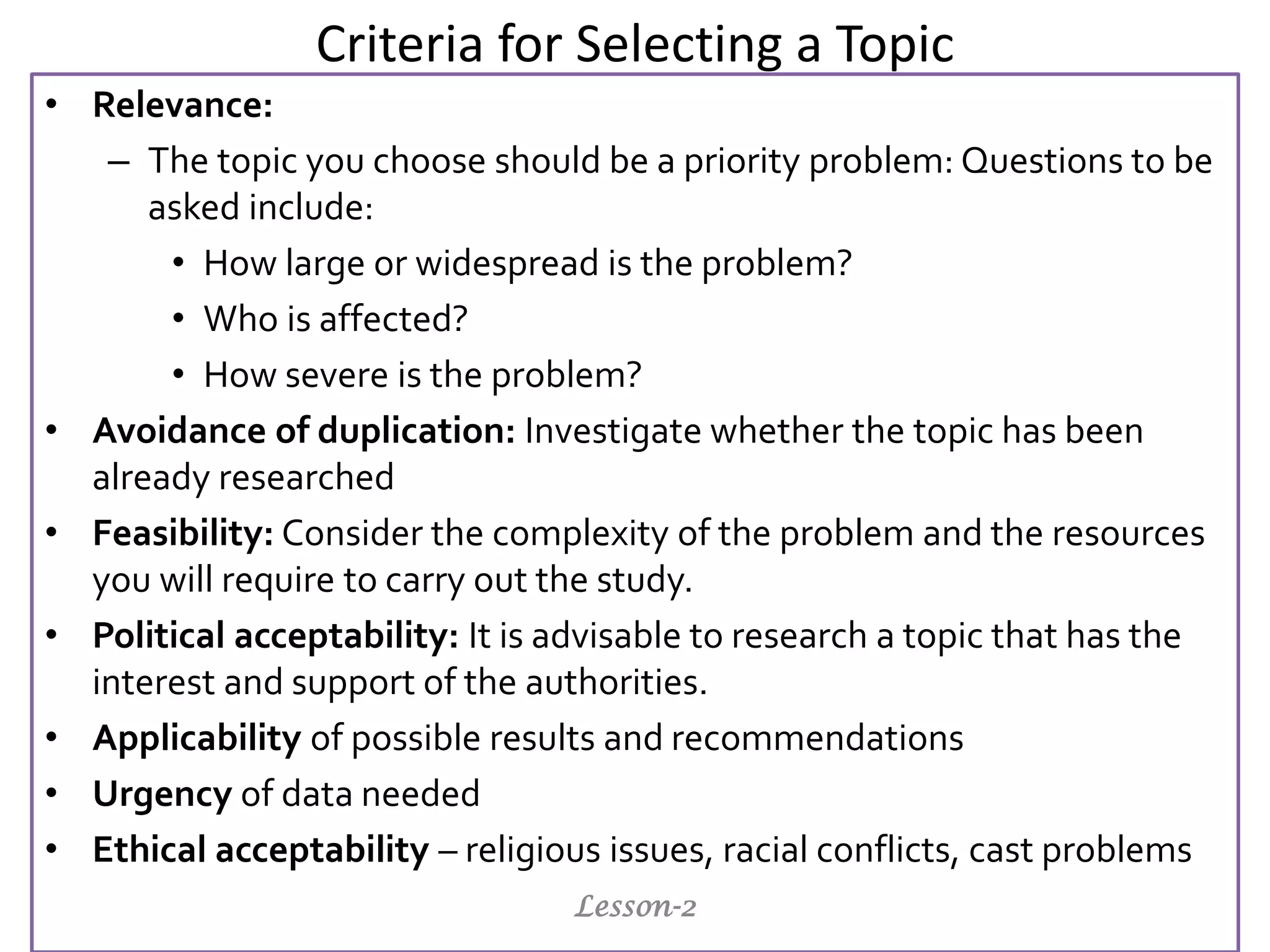
Criteria for Selecting a Topic
• Relevance:
– The topic you choose should be a priority problem: Questions to be
asked include:
• How large or widespread is the problem?
• Who is affected?
• How severe is the problem?
• Avoidance of duplication: Investigate whether the topic has been
already researched
• Feasibility: Consider the complexity of the problem and the resources
you will require to carry out the study.
• Political acceptability: It is advisable to research a topic that has the
interest and support of the authorities.
• Applicability of possible results and recommendations
• Urgency of data needed
• Ethical acceptability – religious issues, racial conflicts, cast problems
Lesson-2
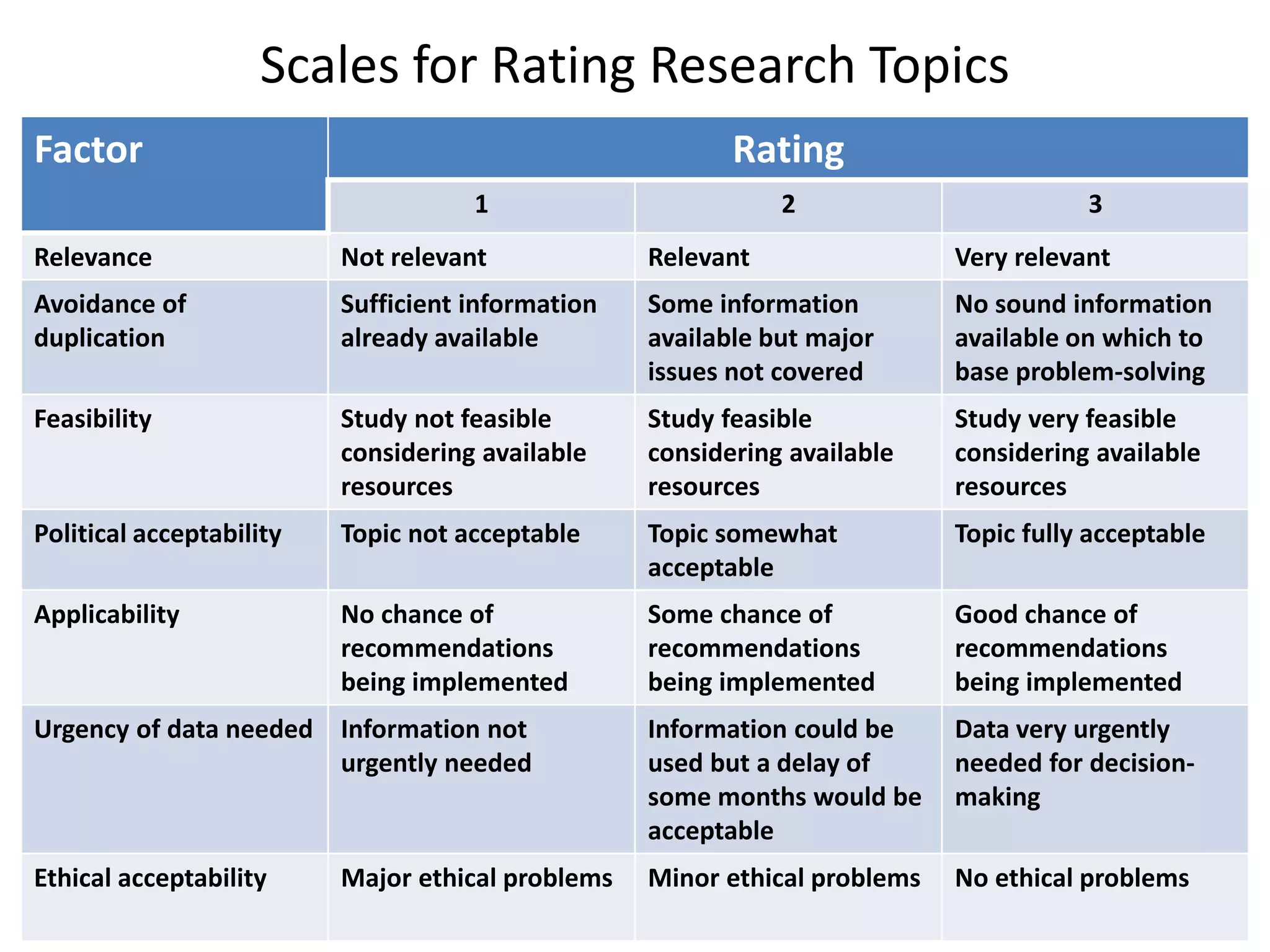
Scales for Rating Research Topics
Lesson-2
Factor Rating
1 2 3
Relevance Not relevant Relevant Very relevant
Avoidance of
duplication
Sufficient information
already available
Some information
available but major
issues not covered
No sound information
available on which to
base problem-solving
Feasibility Study not feasible
considering available
resources
Study feasible
considering available
resources
Study very feasible
considering available
resources
Political acceptability Topic not acceptable Topic somewhat
acceptable
Topic fully acceptable
Applicability No chance of
recommendations
being implemented
Some chance of
recommendations
being implemented
Good chance of
recommendations
being implemented
Urgency of data needed Information not
urgently needed
Information could be
used but a delay of
some months would be
acceptable
Data very urgently
needed for decision-
making
Ethical acceptability Major ethical problems Minor ethical problems No ethical problems
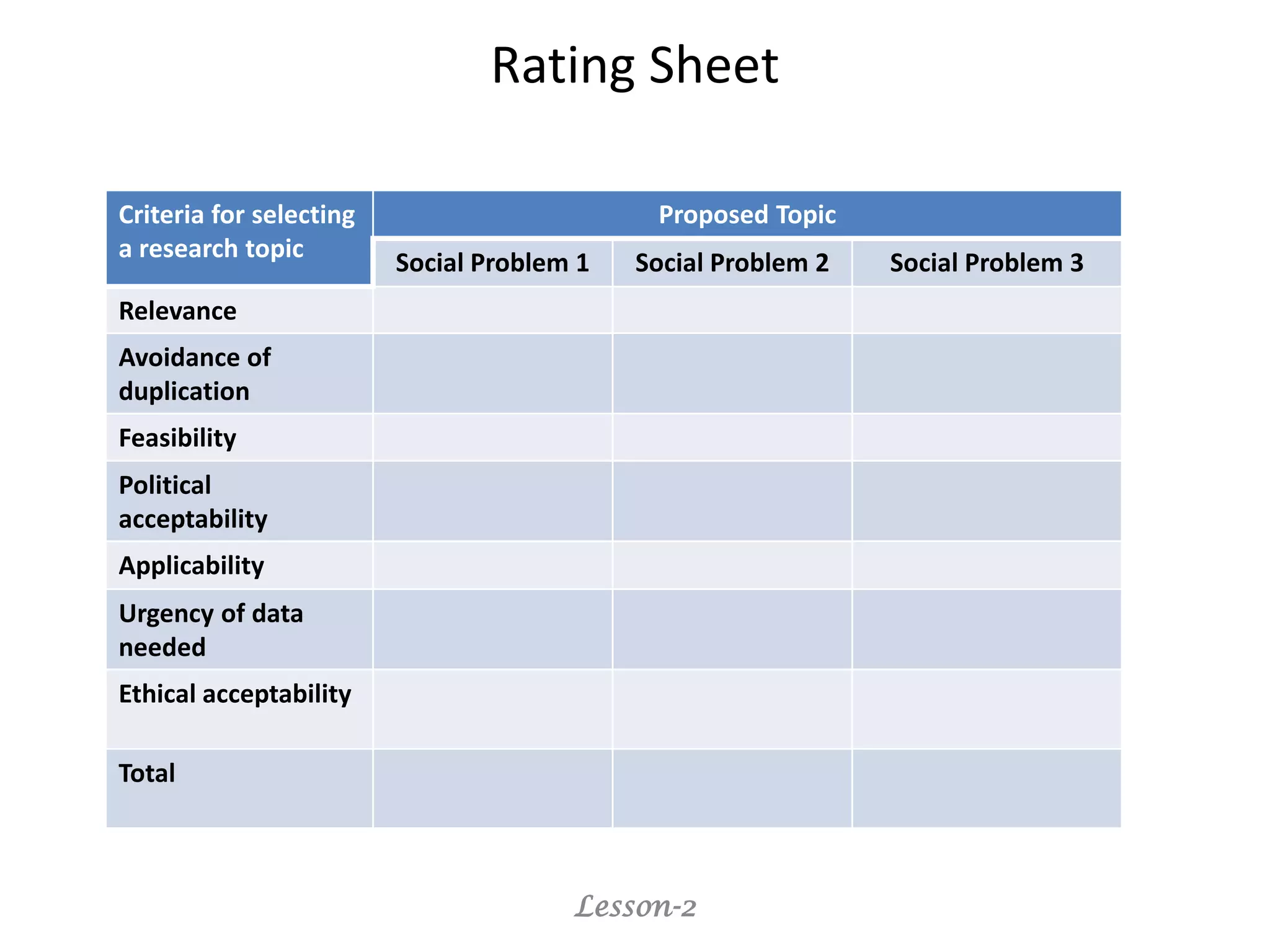
Rating Sheet
Lesson-2
Criteria for selecting
a research topic
Proposed Topic
Social Problem 1 Social Problem 2 Social Problem 3
Relevance
Avoidance of
duplication
Feasibility
Political
acceptability
Applicability
Urgency of data
needed
Ethical acceptability
Total
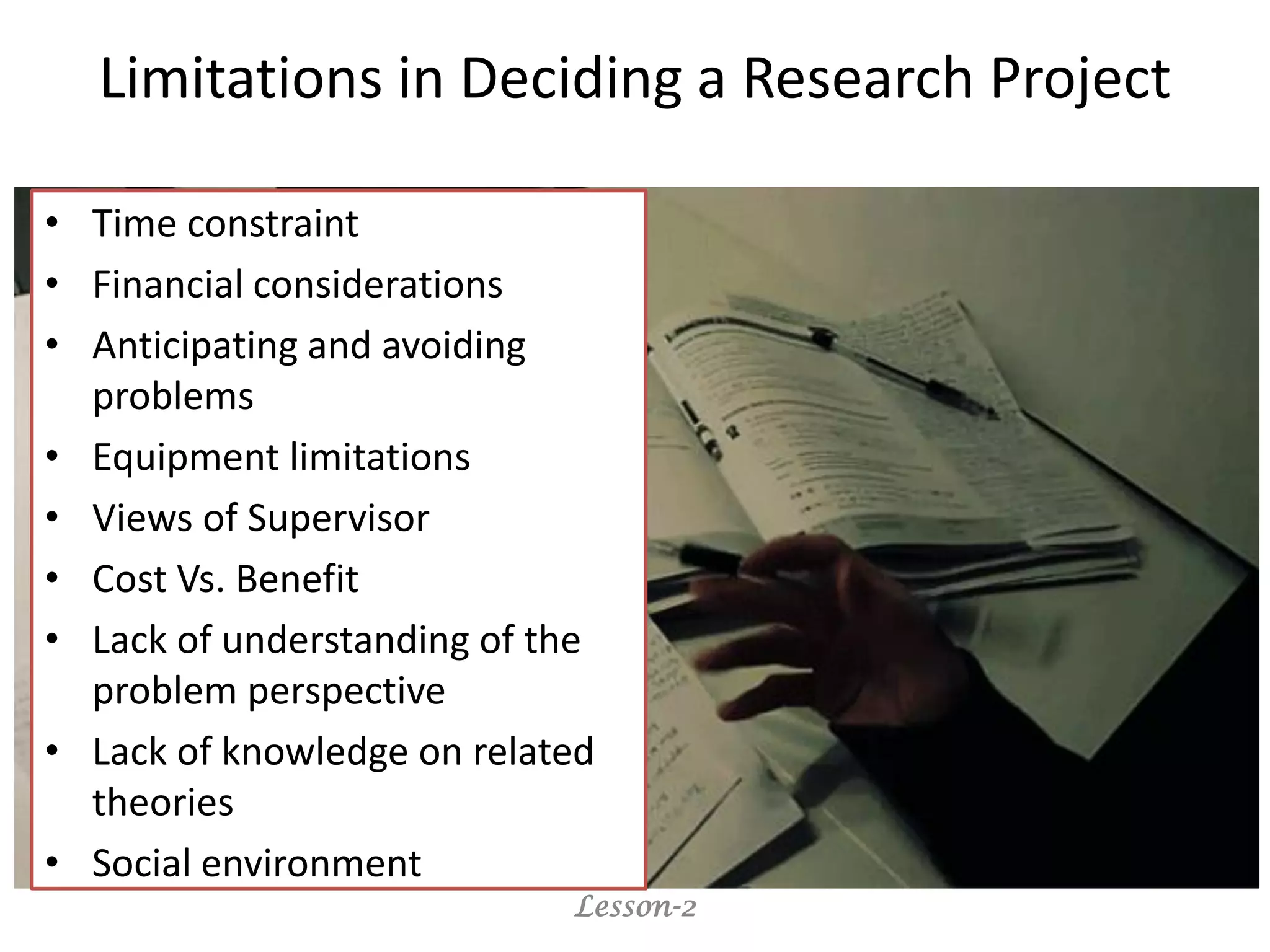
Limitations in Deciding a Research Project
• Time constraint
• Financial considerations
• Anticipating and avoiding
problems
• Equipment limitations
• Views of Supervisor
• Cost Vs. Benefit
• Lack of understanding of the
problem perspective
• Lack of knowledge on related
theories
• Social environment
Lesson-2

Lesson 2 selection of research topic

  • 1.
    Rajarata University ofSri Lanka P.B. Dharmasena 0777-613234, 0717-613234 dharmasenapb@ymail.com, dharmasenapb@gmail.com Rajarata University of Sri Lanka P.B. Dharmasena 0777-613234, 0717-613234 dharmasenapb@ymail.com, dharmasenapb@gmail.com https://independent.academia.edu/PunchiBandageDharmasena https://www.researchgate.net/profile/Punchi_Bandage_Dharmasena/contributions http://www.slideshare.net/DharmasenaPb LESSON TWO EMGT 3172 (1:15) B.A. (Special) Degree Program Monday 10.30 am – 12.30 pm Hall: EML
  • 2.
    Research Process 1. Formulatinga research problem 2. Conceptualizing a research design 3. Constructing an instrument for data collection 4. Selecting a sample 5. Writing a research proposal 6. Collecting data 7. Processing data 8. Writing a research report WHAT? HOW? ACTUALLY DOING Lesson-2 Planning Conducting Decision At the end of last lesson
  • 3.
    RESEARCH METHODOLOGY Learning objectives 1.Examine the importance of a research programme 2. Describe different types of research topics. 3. Understand the rationale in selecting a research topic 4. List the criteria for selecting a research topic. 5. Identify and select your own topic for research based on certain guidelines. Lesson-2 LESSON TWO SELECTION OF RESEARCH TOPIC
  • 4.
    Problem Identification • Whyresearch is required? – Difference or discrepancy between what it is and what it should be; – Reason for this difference is unclear (research question); – There can be more than one possible and plausible (apparent) answer to the question (or solution to the problem). Lesson-2
  • 5.
    Types of ResearchTopic • Unanswered question • Unsolved question • Concern • Query • Statement of inquiry Lesson-2 • Personal interest • Social problem • Testing theory • Prior research • Program evaluation • Human service practice • Minorities in research
  • 6.
    Criteria for Selectinga Topic • Relevance: – The topic you choose should be a priority problem: Questions to be asked include: • How large or widespread is the problem? • Who is affected? • How severe is the problem? • Avoidance of duplication: Investigate whether the topic has been already researched • Feasibility: Consider the complexity of the problem and the resources you will require to carry out the study. • Political acceptability: It is advisable to research a topic that has the interest and support of the authorities. • Applicability of possible results and recommendations • Urgency of data needed • Ethical acceptability – religious issues, racial conflicts, cast problems Lesson-2
  • 7.
    Scales for RatingResearch Topics Lesson-2 Factor Rating 1 2 3 Relevance Not relevant Relevant Very relevant Avoidance of duplication Sufficient information already available Some information available but major issues not covered No sound information available on which to base problem-solving Feasibility Study not feasible considering available resources Study feasible considering available resources Study very feasible considering available resources Political acceptability Topic not acceptable Topic somewhat acceptable Topic fully acceptable Applicability No chance of recommendations being implemented Some chance of recommendations being implemented Good chance of recommendations being implemented Urgency of data needed Information not urgently needed Information could be used but a delay of some months would be acceptable Data very urgently needed for decision- making Ethical acceptability Major ethical problems Minor ethical problems No ethical problems
  • 8.
    Rating Sheet Lesson-2 Criteria forselecting a research topic Proposed Topic Social Problem 1 Social Problem 2 Social Problem 3 Relevance Avoidance of duplication Feasibility Political acceptability Applicability Urgency of data needed Ethical acceptability Total
  • 9.
    Limitations in Decidinga Research Project • Time constraint • Financial considerations • Anticipating and avoiding problems • Equipment limitations • Views of Supervisor • Cost Vs. Benefit • Lack of understanding of the problem perspective • Lack of knowledge on related theories • Social environment Lesson-2