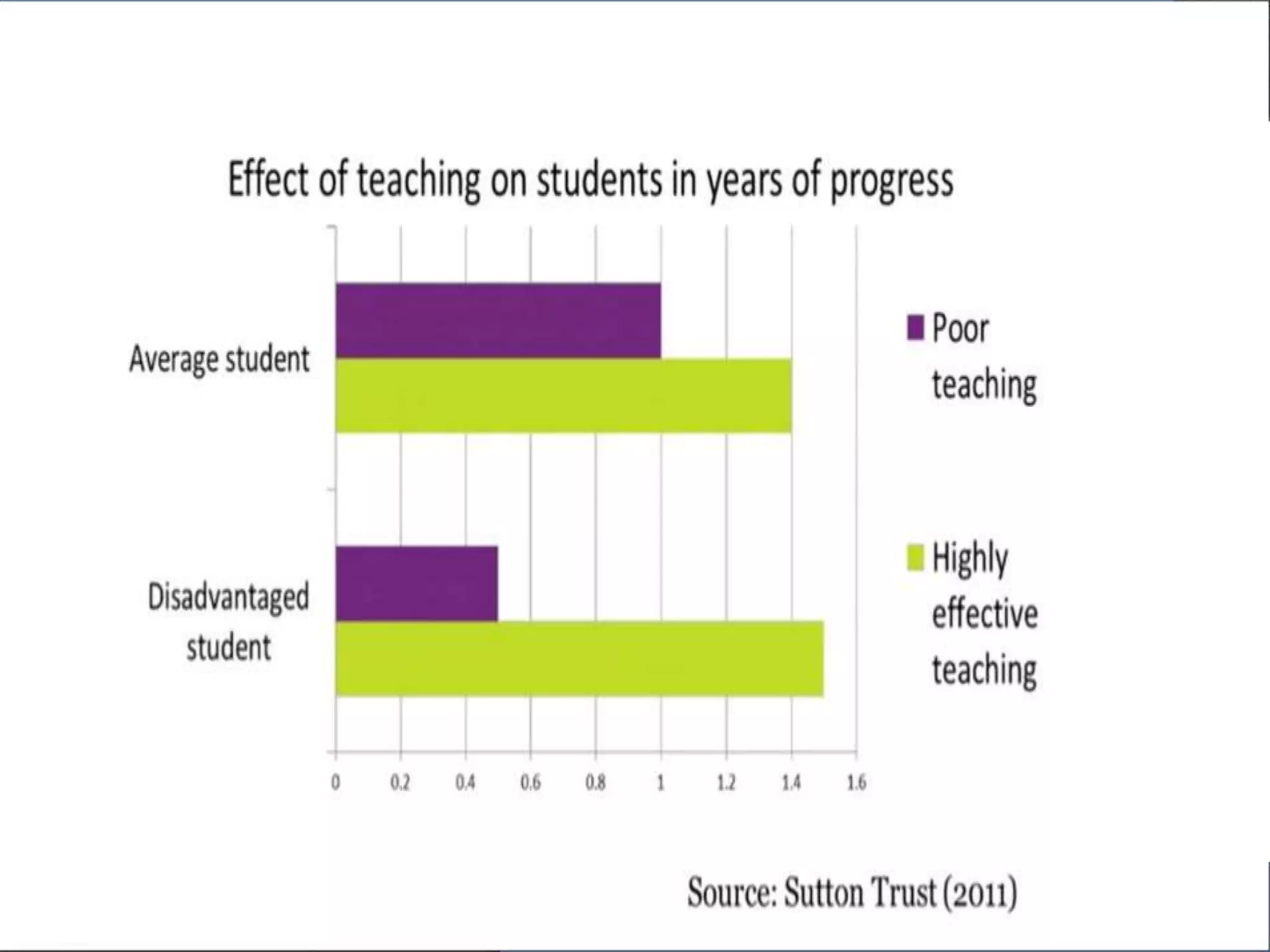
“Attainment is the best
therapy. Nothing is
better for a
disadvantaged
student.”
Session 1: 2.30-3.20
• List as many difficulties you can think of that
our students face?
• www.bit.ly/difficultiesatschool
Learning Intentions
• Ideas on how to raise the
attainment of our
disadvantaged students
Success Criteria
• You will be able to
implement some ideas into
your practice!
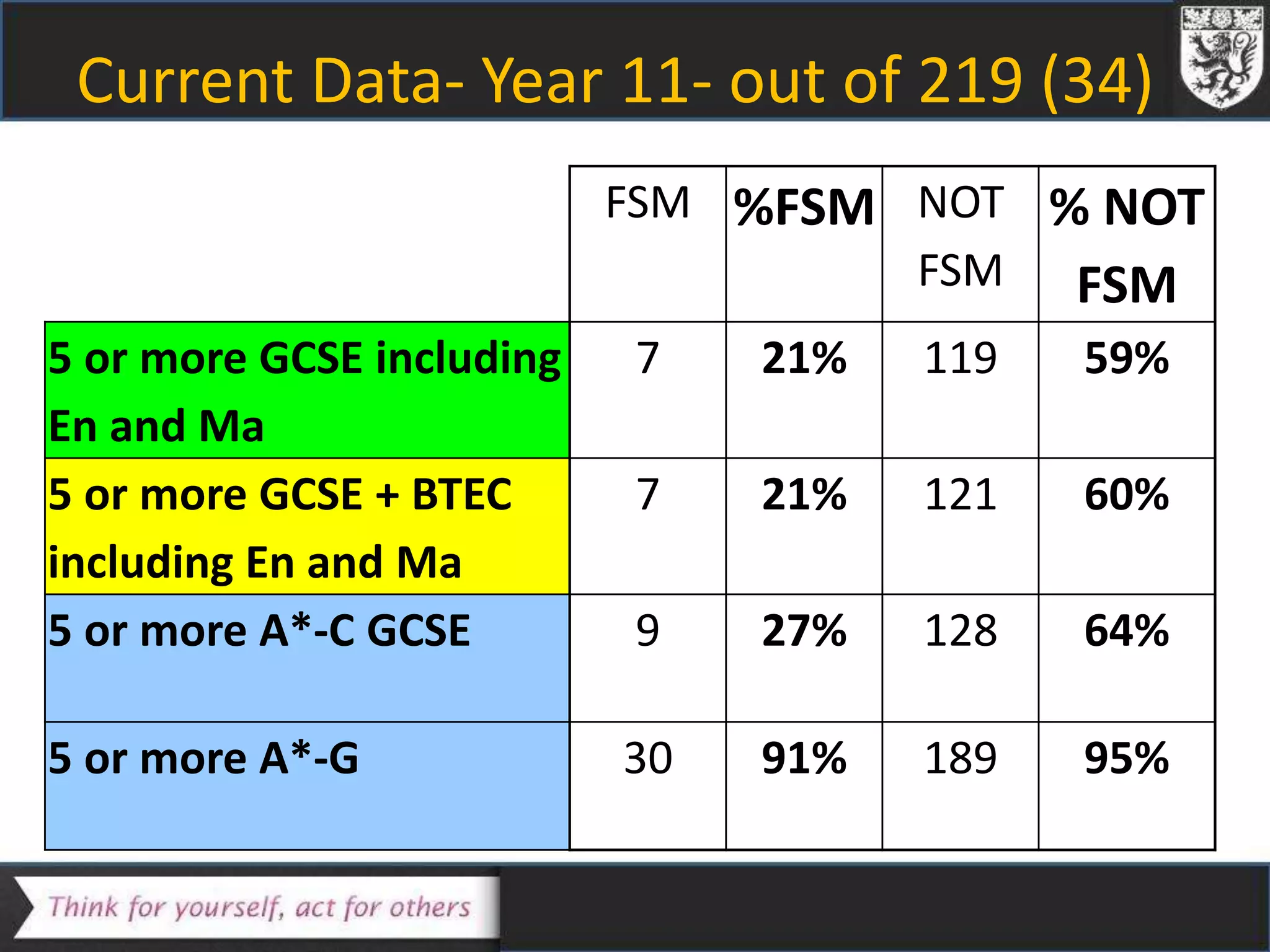
Current Data- Year 11- out of 219 (34)
FSM %FSM NOT
FSM
% NOT
FSM
5 or more GCSE including
En and Ma
7 21% 119 59%
5 or more GCSE + BTEC
including En and Ma
7 21% 121 60%
5 or more A*-C GCSE 9 27% 128 64%
5 or more A*-G 30 91% 189 95%
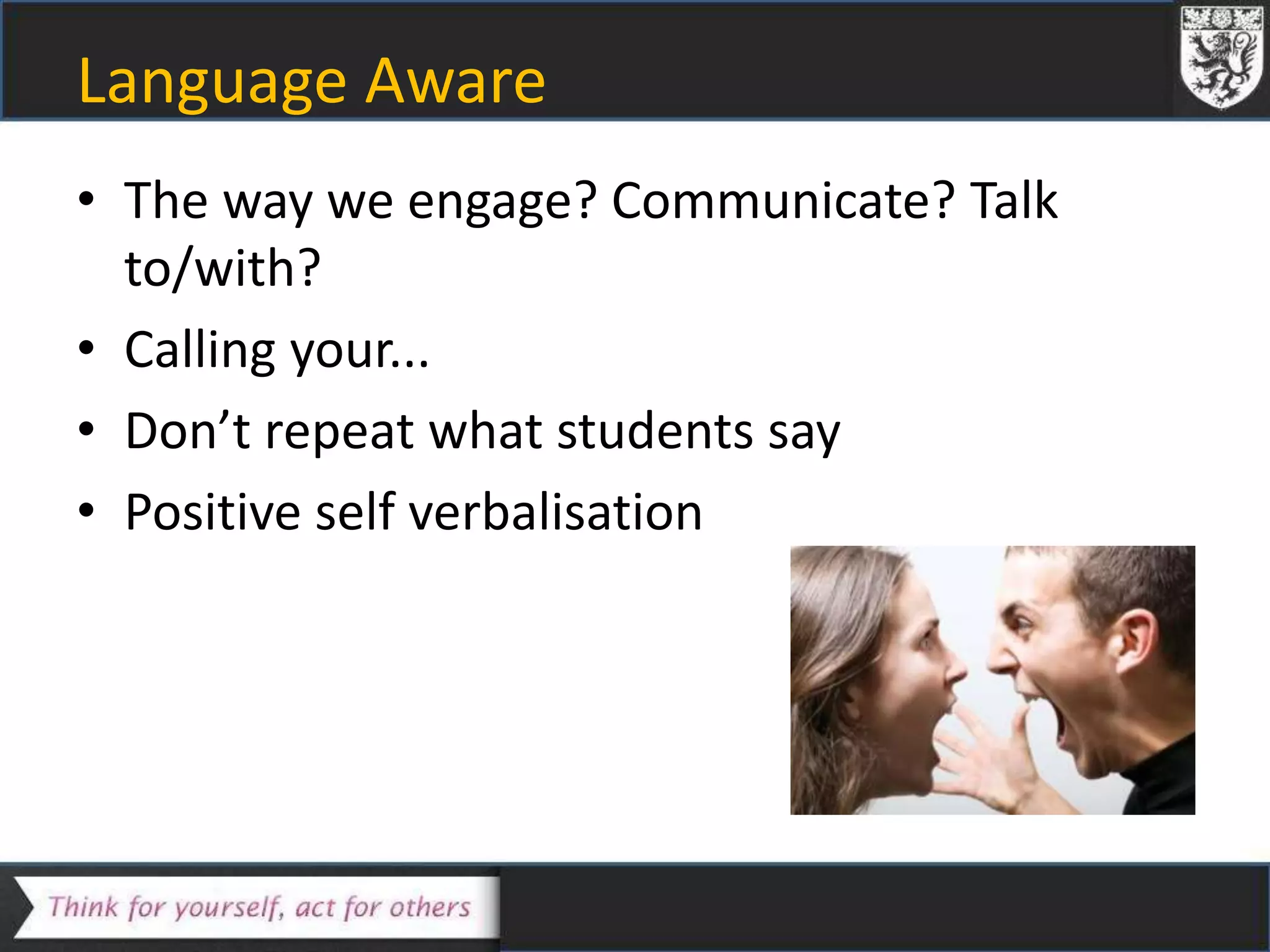
Language Aware
• The way we engage? Communicate? Talk
to/with?
• Calling your...
• Don’t repeat what students say
• Positive self verbalisation
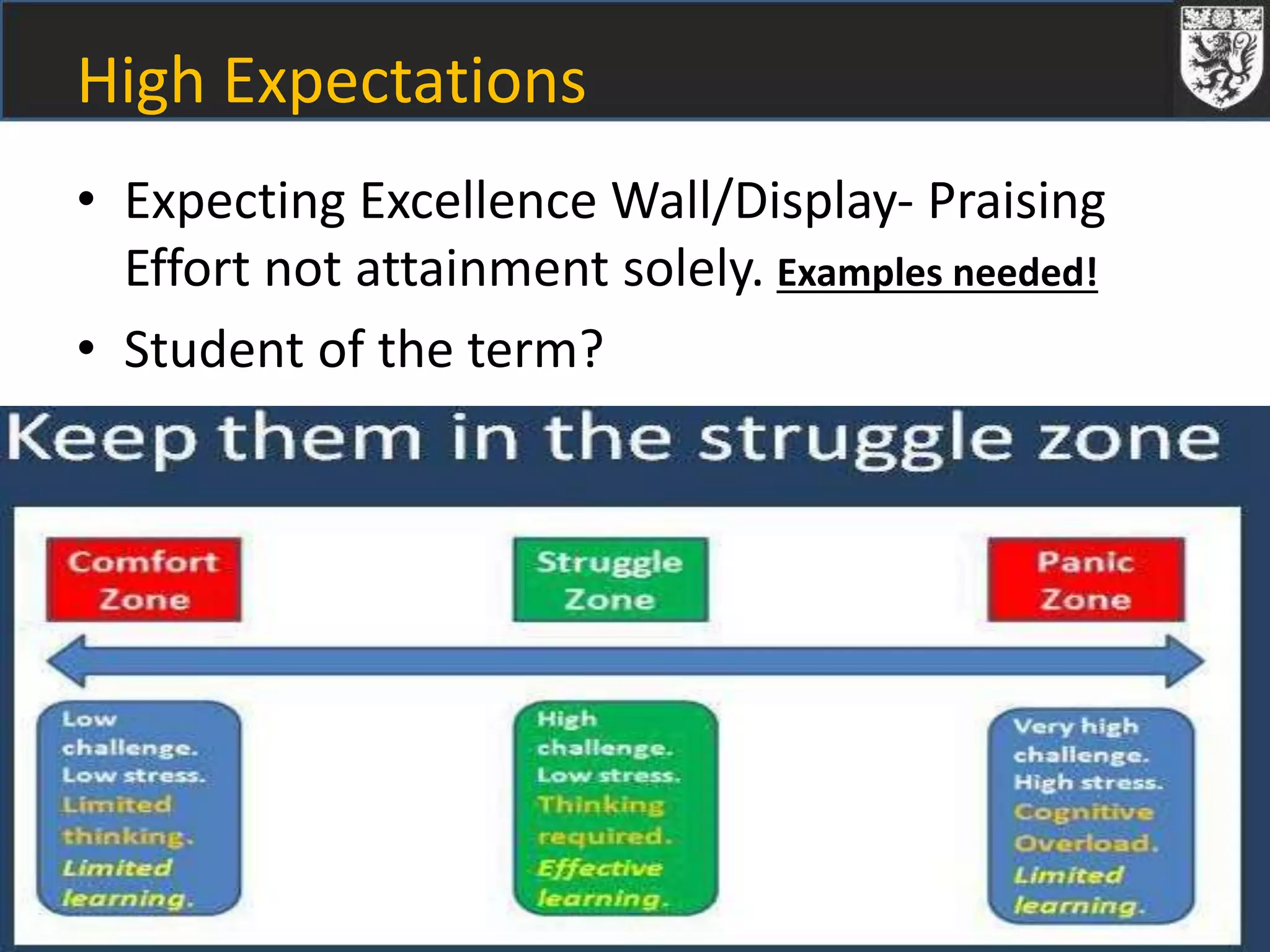
High Expectations
• Expecting Excellence Wall/Display- Praising
Effort not attainment solely. Examples needed!
• Student of the term?
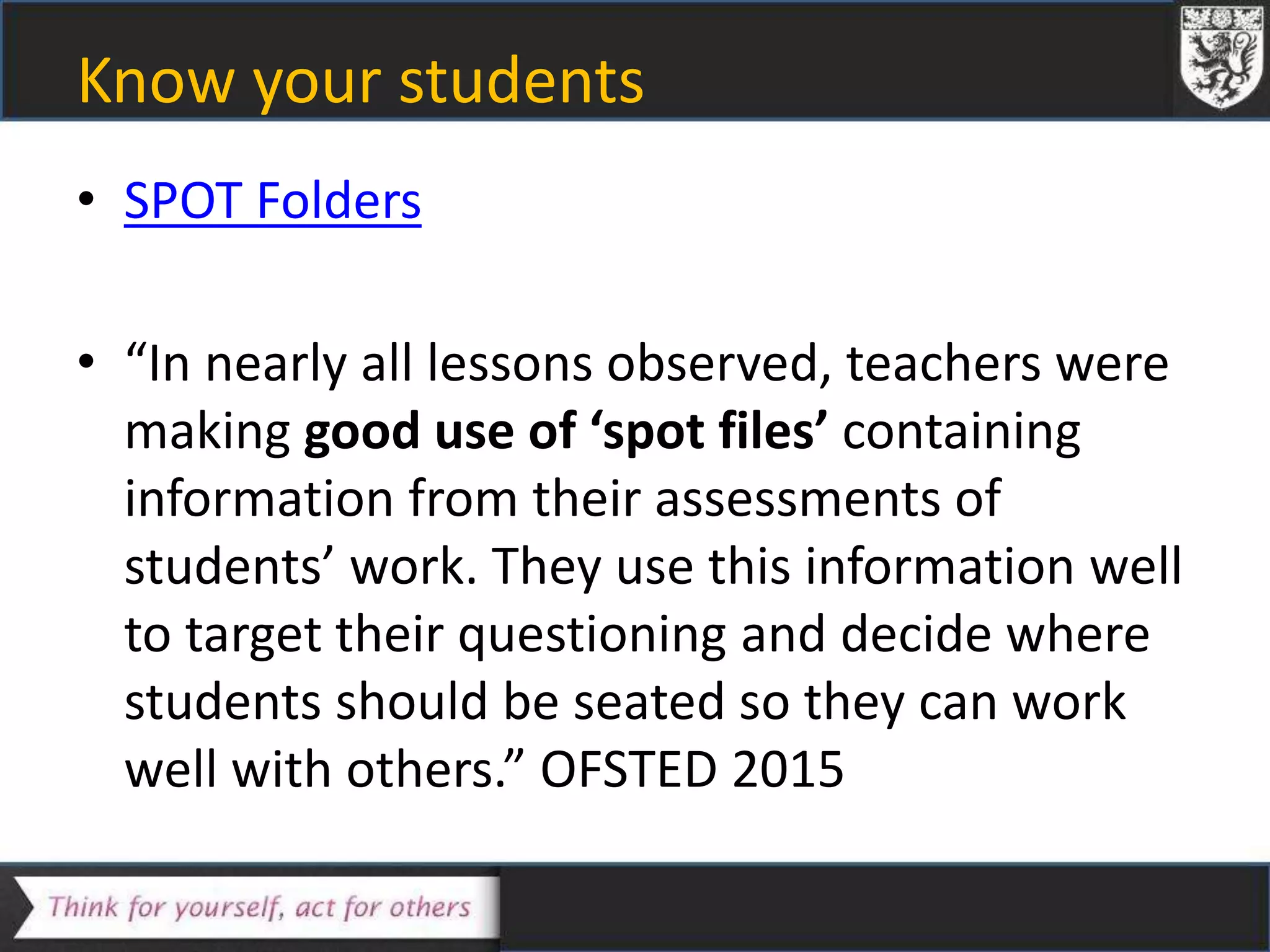
Know your students
• SPOT Folders
• “In nearly all lessons observed, teachers were
making good use of ‘spot files’ containing
information from their assessments of
students’ work. They use this information well
to target their questioning and decide where
students should be seated so they can work
well with others.” OFSTED 2015
Used to think...
• There is a preferred style/method
• Lessons have to have lots of activities in them
• Hard work isn’t good
• Lessons have to be fun
• Differentiation is a load of worksheets
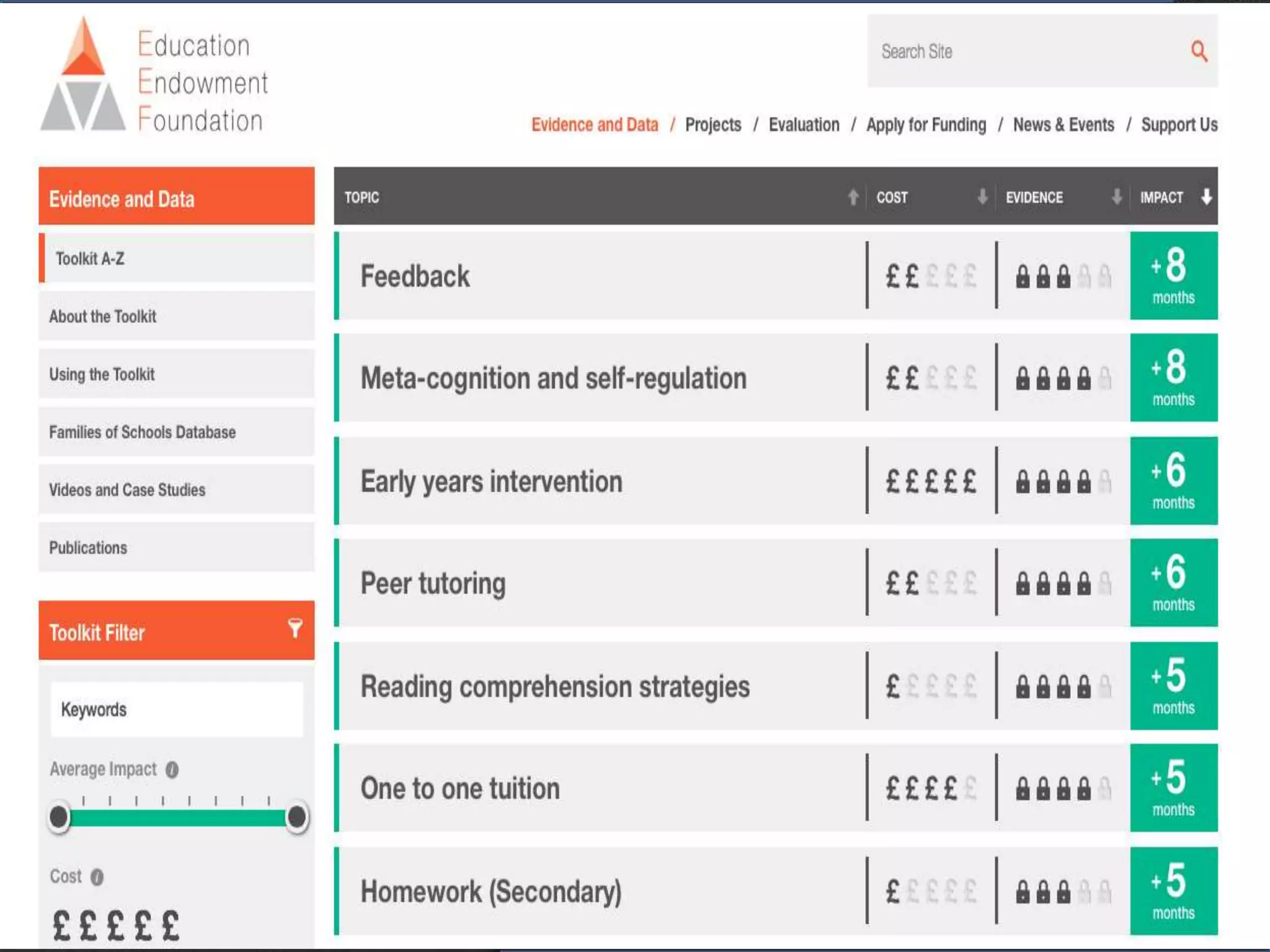
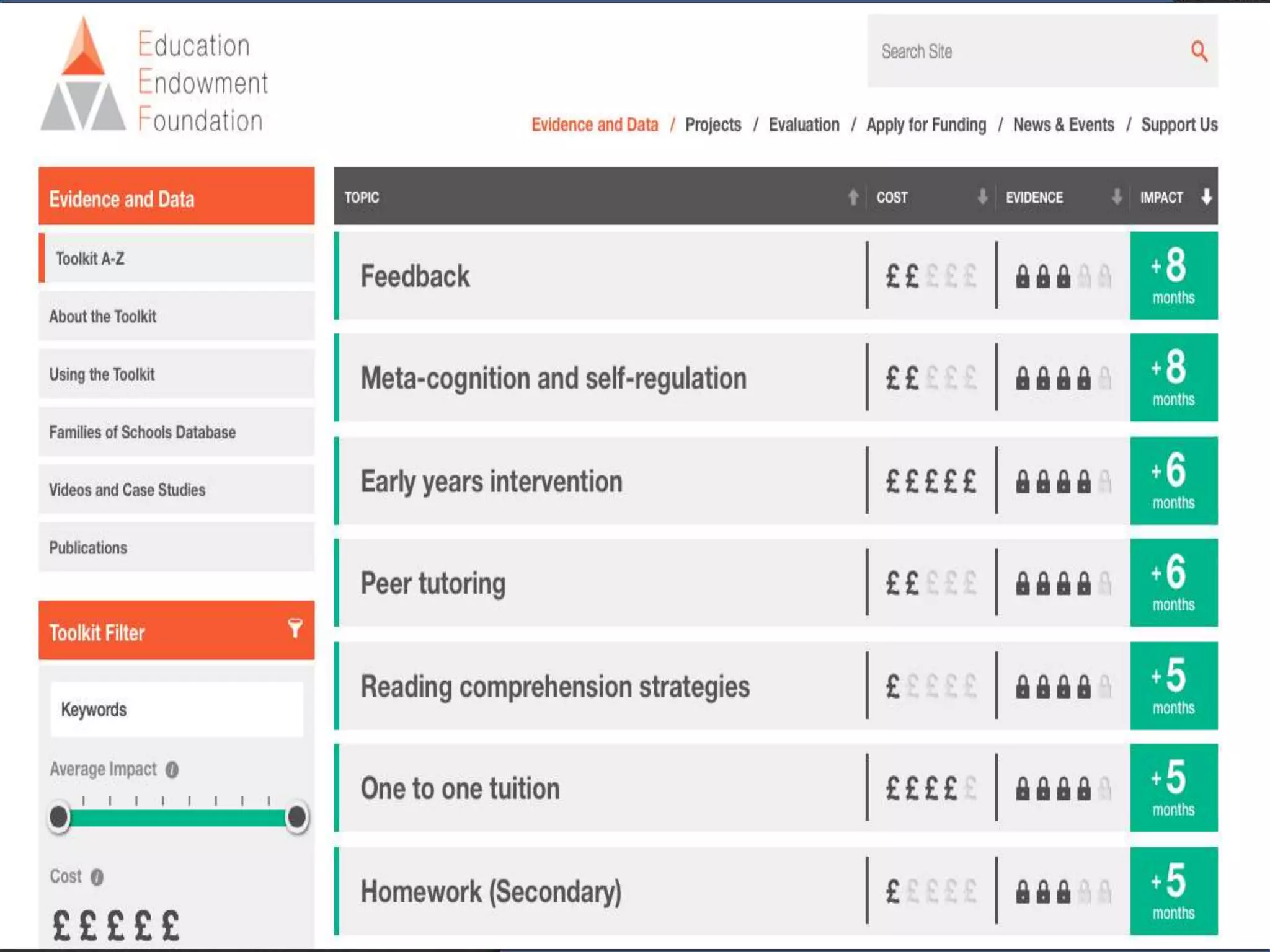
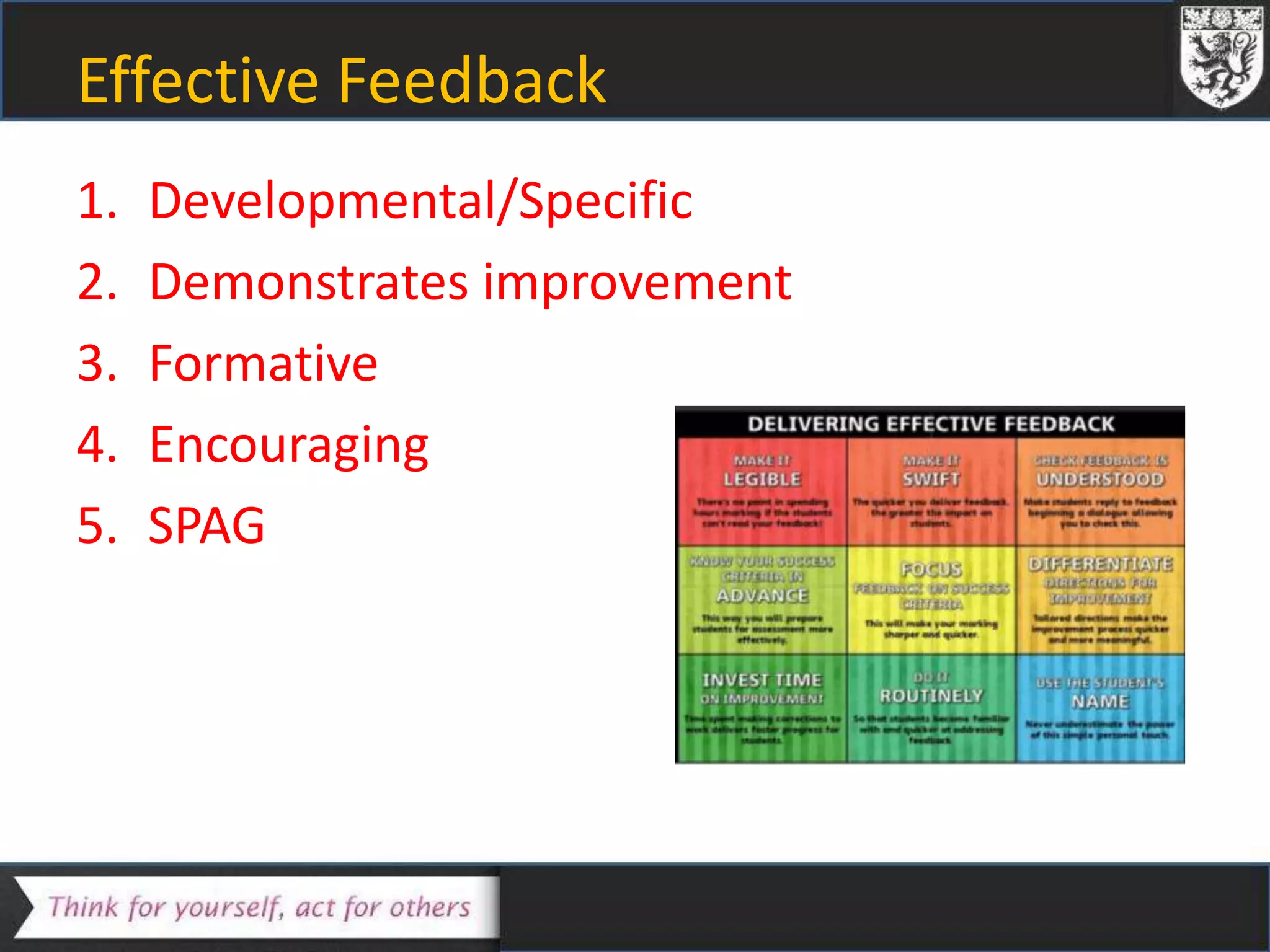
Effective Feedback
1. Developmental/Specific
2. Demonstrates improvement
3. Formative
4. Encouraging
5. SPAG
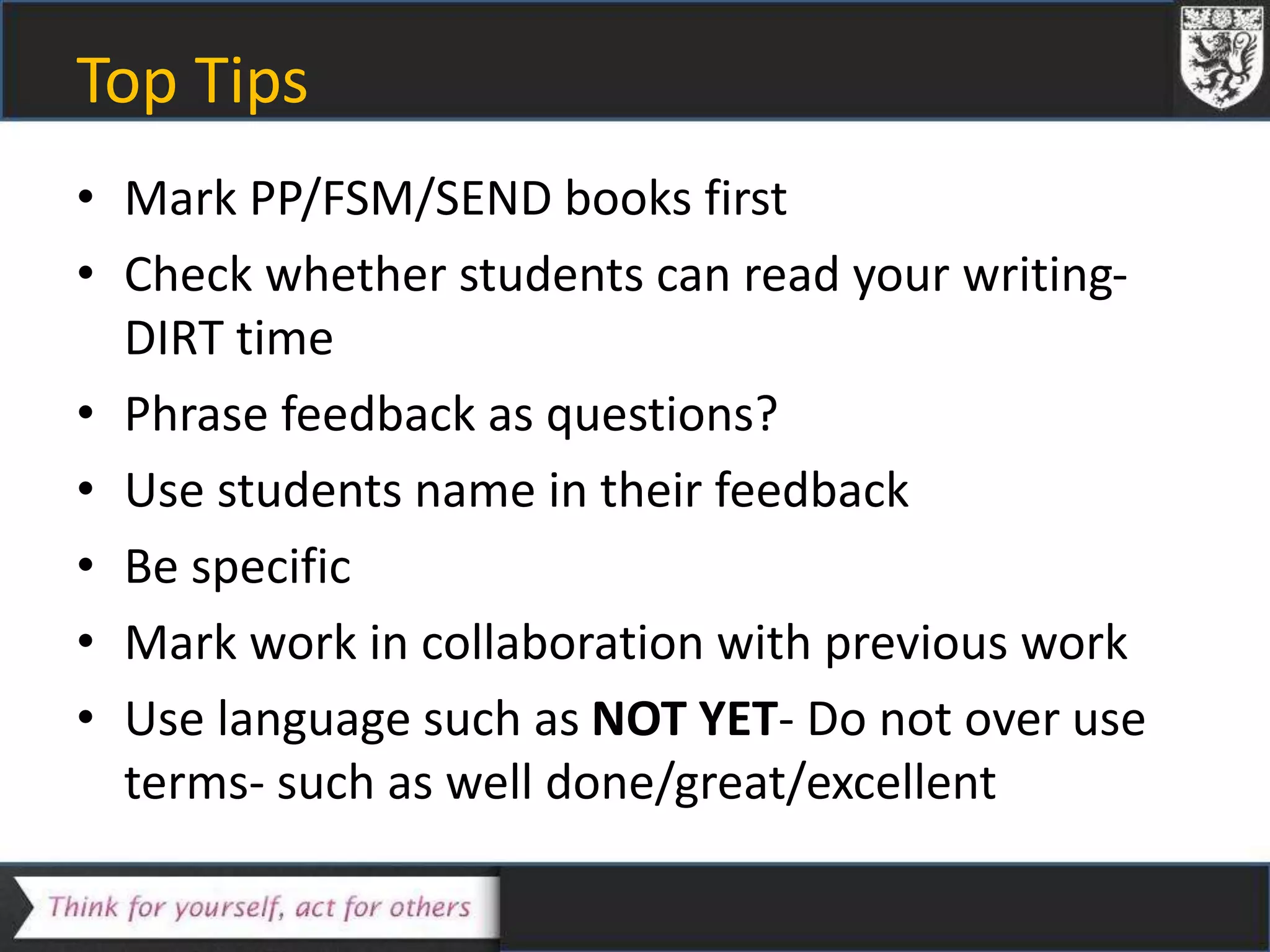
Top Tips
• Mark PP/FSM/SEND books first
• Check whether students can read your writing-
DIRT time
• Phrase feedback as questions?
• Use students name in their feedback
• Be specific
• Mark work in collaboration with previous work
• Use language such as NOT YET- Do not over use
terms- such as well done/great/excellent
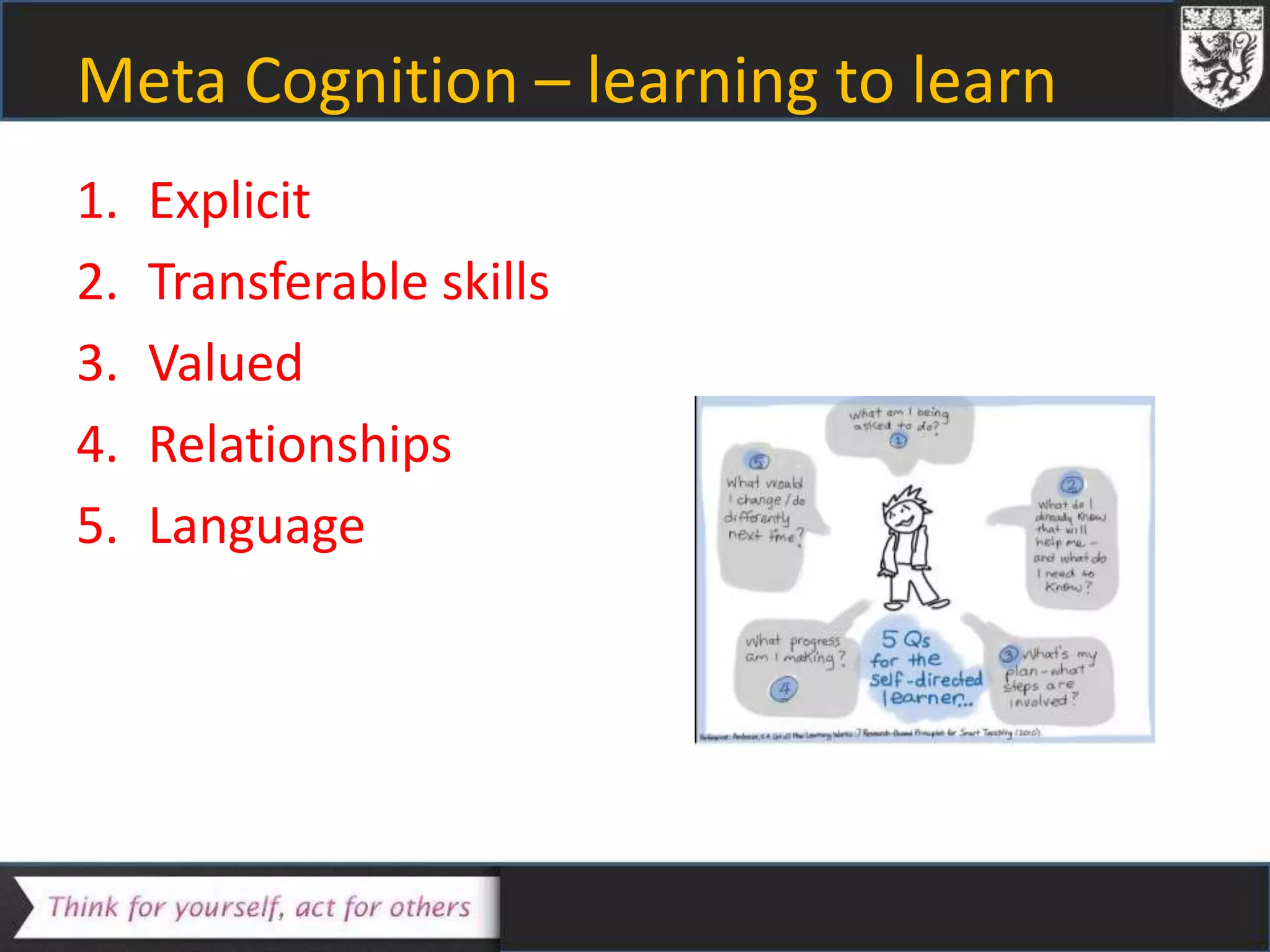
Meta Cognition – learning to learn
1. Explicit
2. Transferable skills
3. Valued
4. Relationships
5. Language
Top Tips
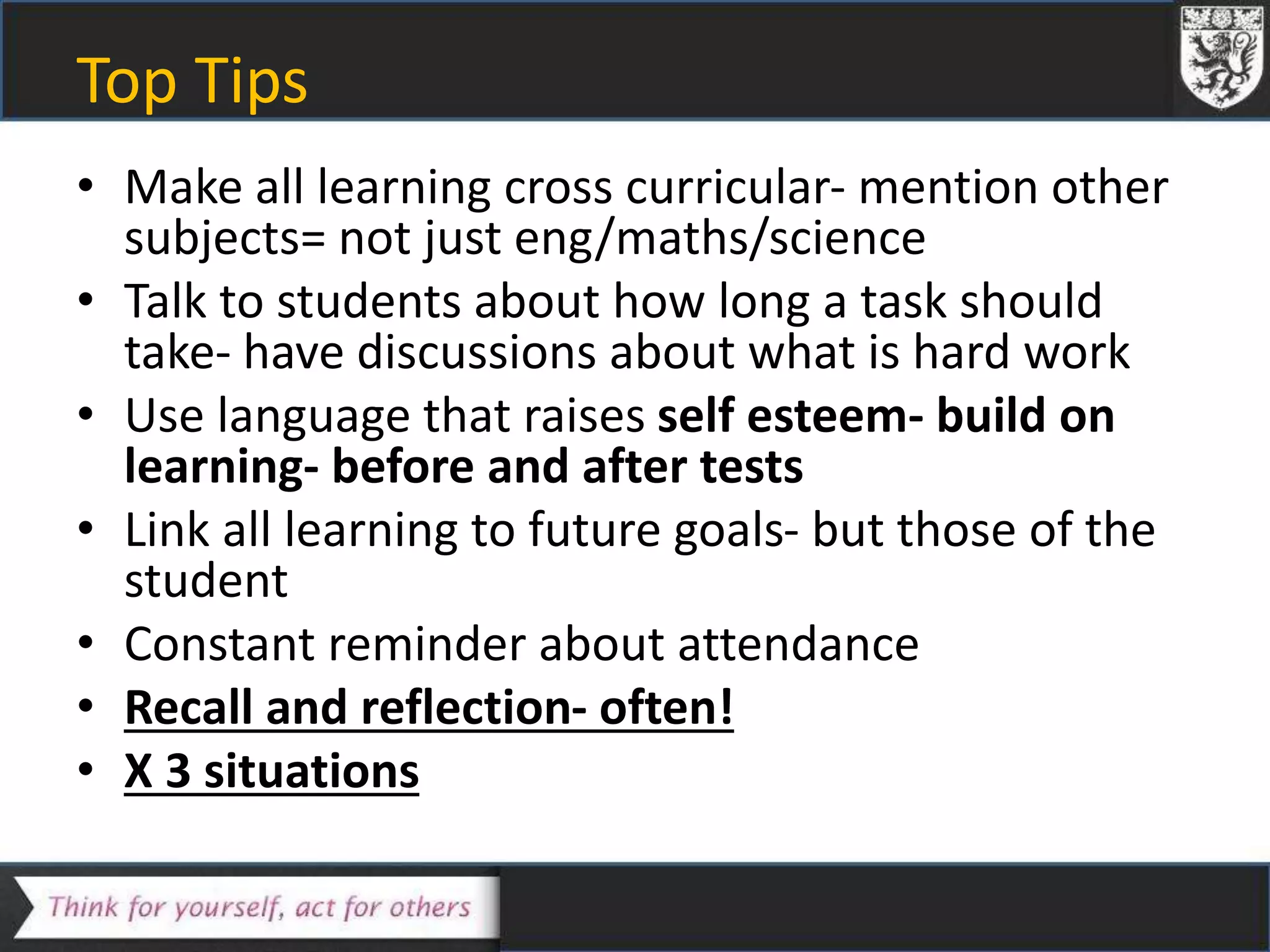
• Make all learning cross curricular- mention other
subjects= not just eng/maths/science
• Talk to students about how long a task should
take- have discussions about what is hard work
• Use language that raises self esteem- build on
learning- before and after tests
• Link all learning to future goals- but those of the
student
• Constant reminder about attendance
• Recall and reflection- often!
• X 3 situations
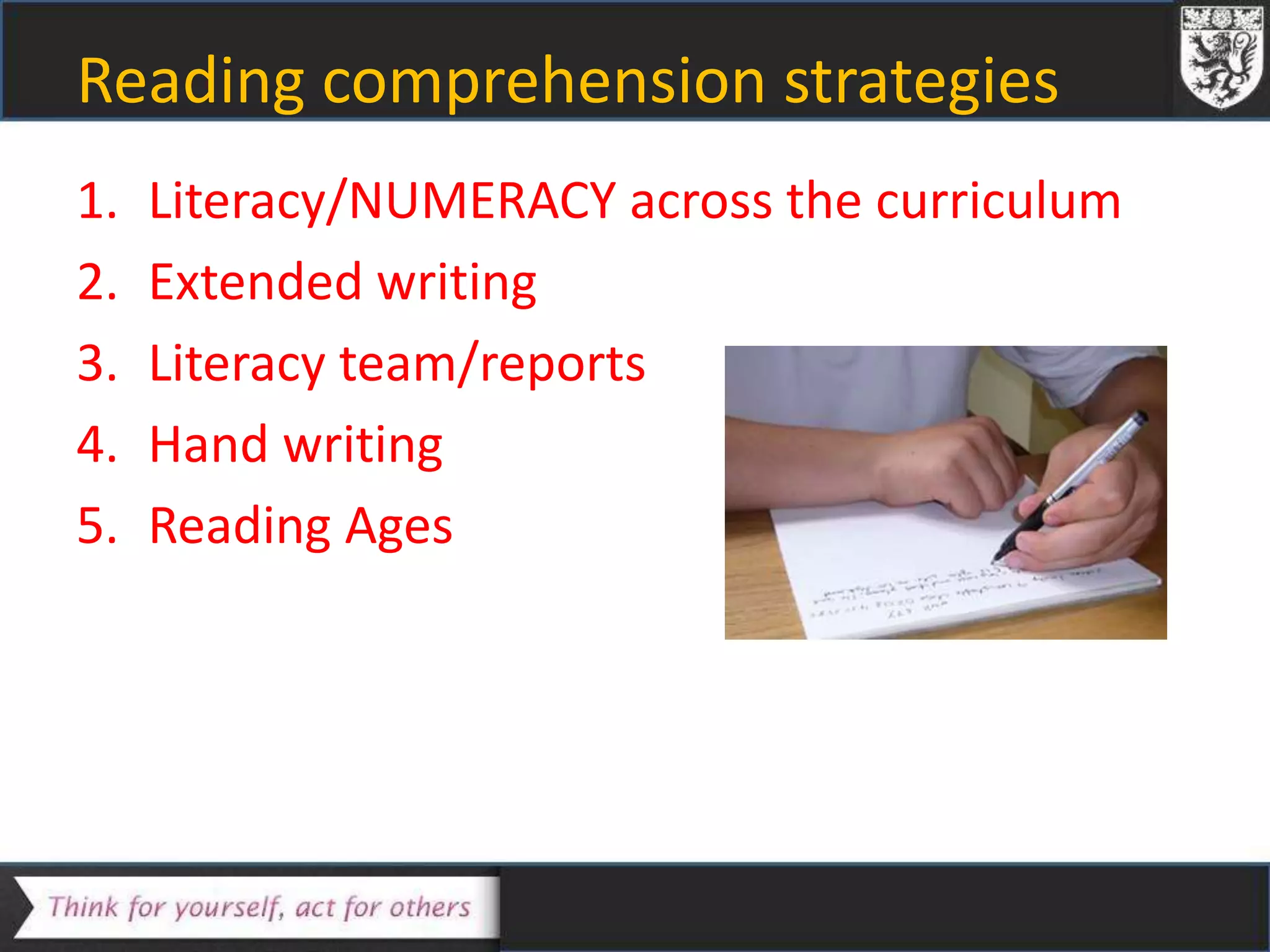
Reading comprehension strategies
1. Literacy/NUMERACY across the curriculum
2. Extended writing
3. Literacy team/reports
4. Hand writing
5. Reading Ages
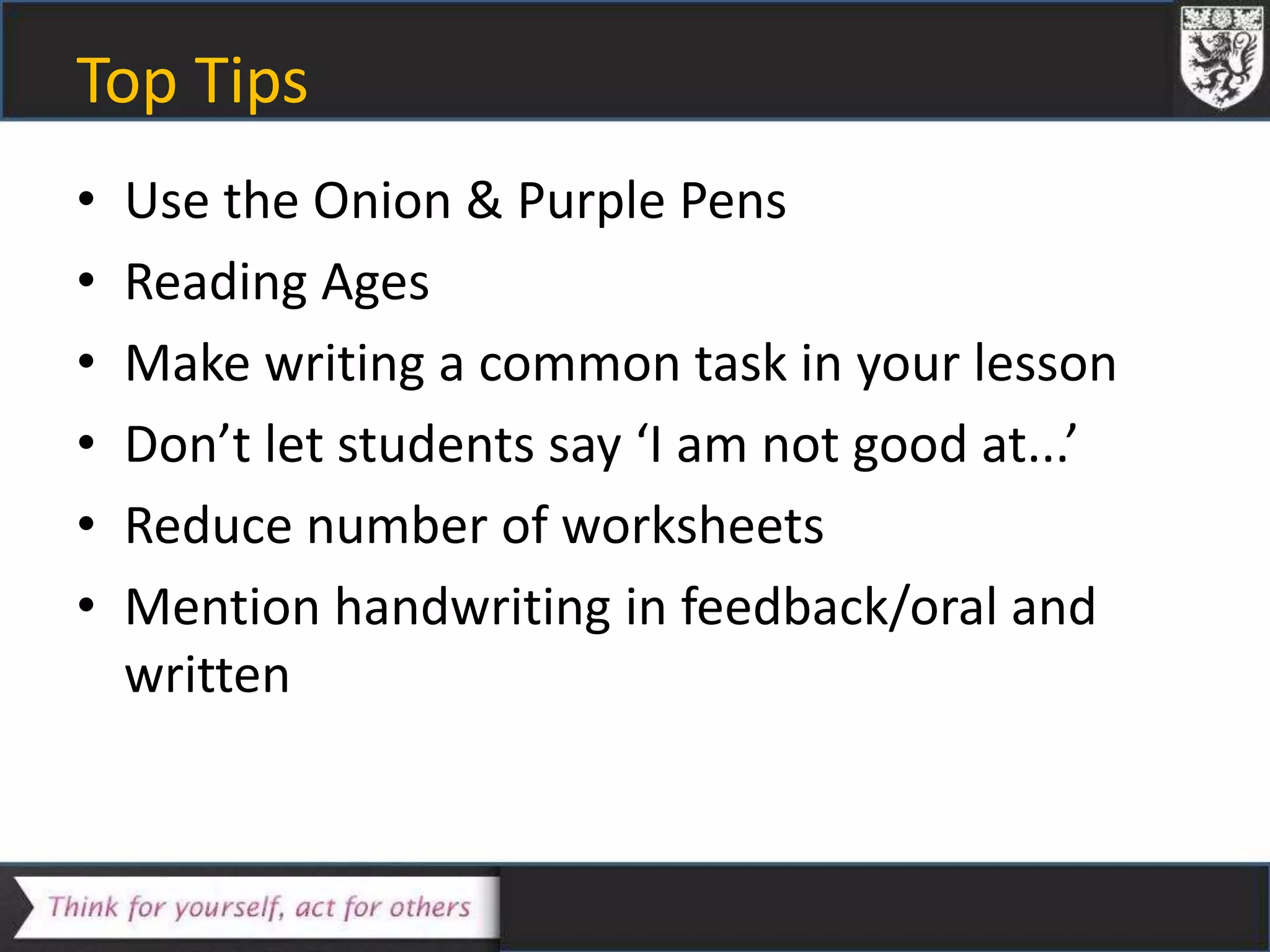
Top Tips
• Use the Onion & Purple Pens
• Reading Ages
• Make writing a common task in your lesson
• Don’t let students say ‘I am not good at...’
• Reduce number of worksheets
• Mention handwriting in feedback/oral and
written
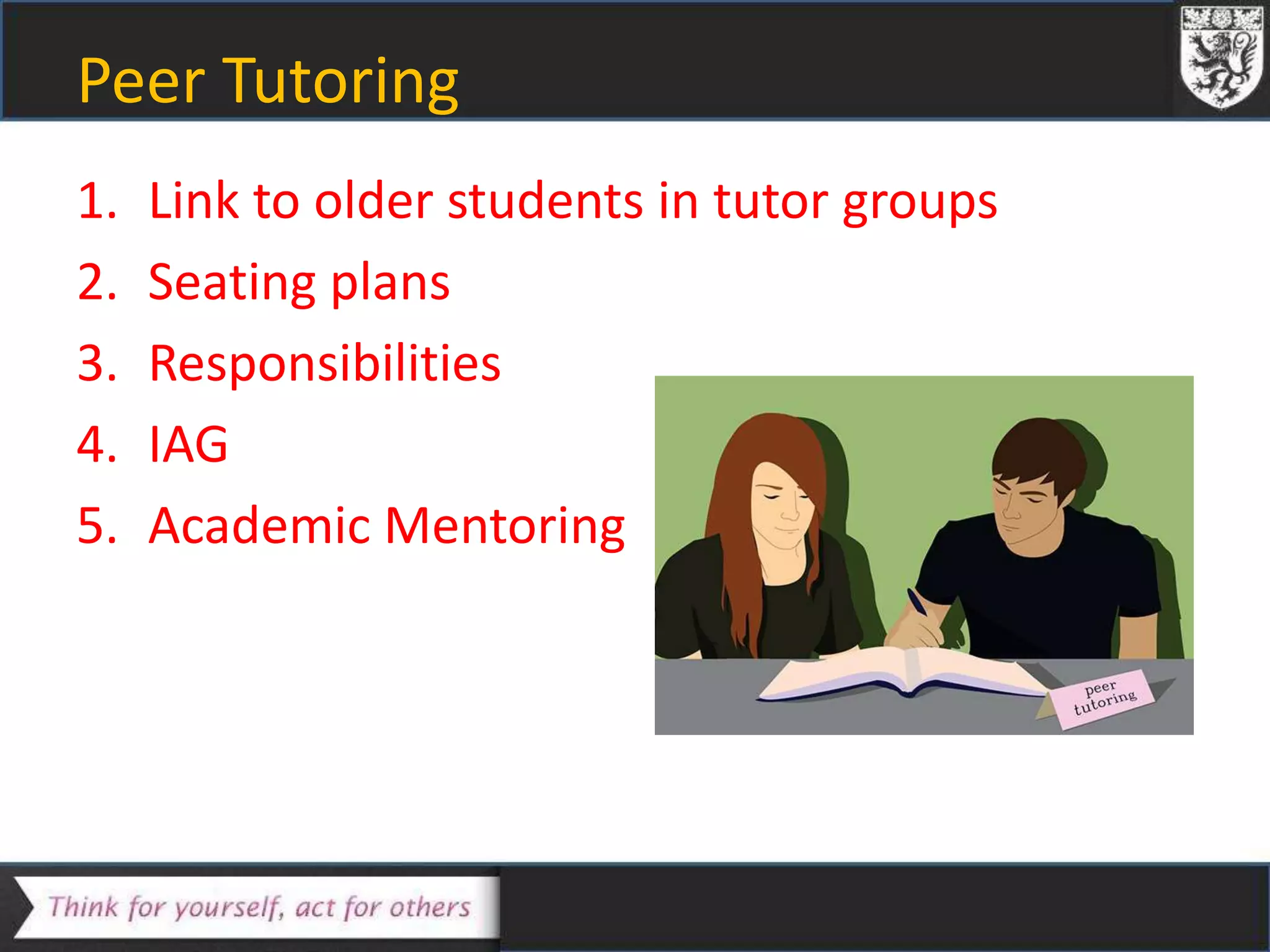
Peer Tutoring
1. Link to older students in tutor groups
2. Seating plans
3. Responsibilities
4. IAG
5. Academic Mentoring
Top Tips
• Make your seating plans ever changing- rotate
the communication? Time partners?
• Use Jason Davis!
• Link with old students in your subject area?
• Speak to older PP students- in sixth form who
succeeded in your subject/classroom? What
can you learn from them?
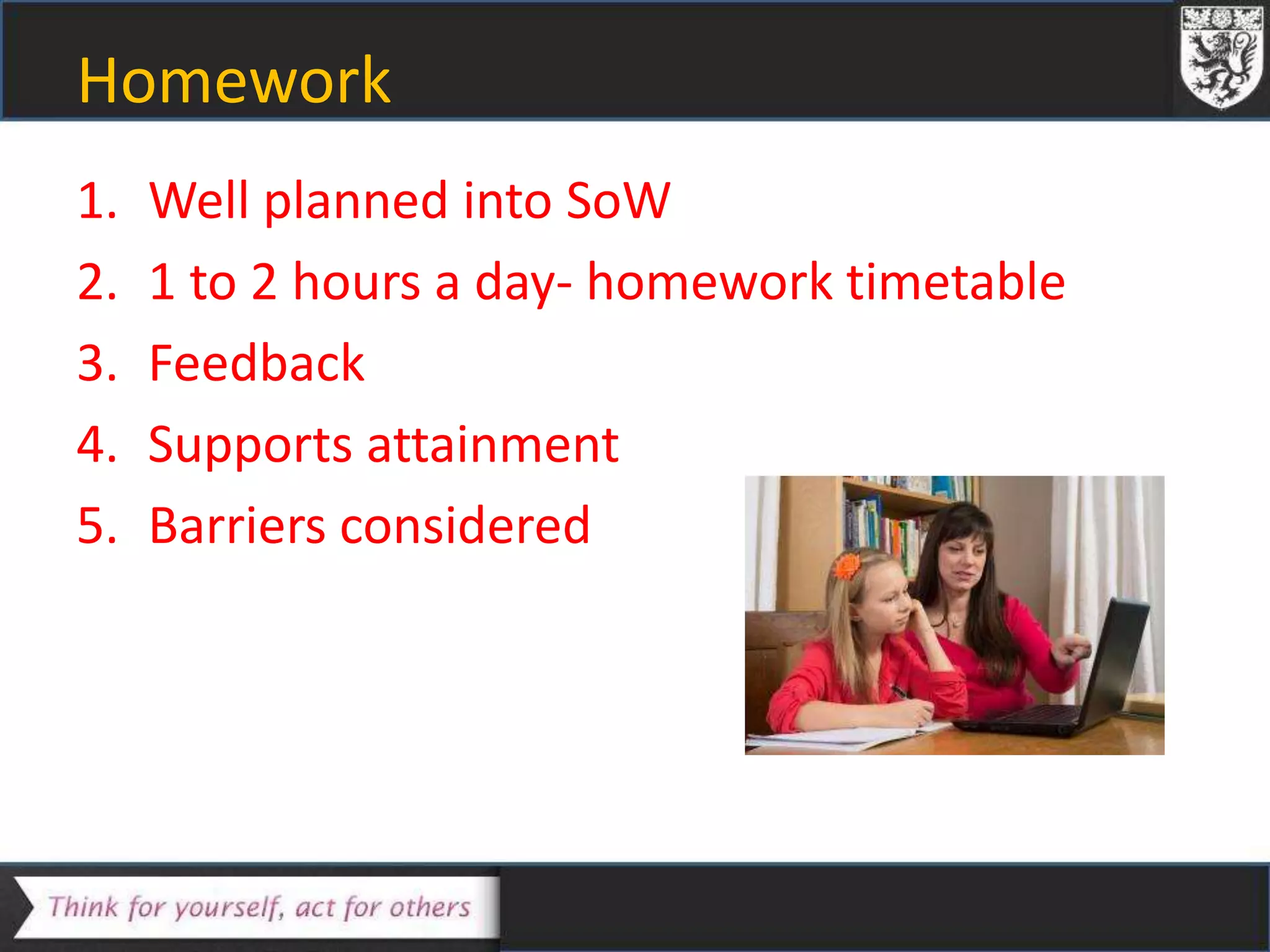
Homework
1. Well planned into SoW
2. 1 to 2 hours a day- homework timetable
3. Feedback
4. Supports attainment
5. Barriers considered
Top Tips
• Set homework early in the lesson
• Provide printed slips for certain students
• What barriers do you need to overcome?
• Mark homework too
• Use a class blog- www.cheneyre.edublogs.org
flip their learning?
Whole school- Remember Andy Buck
1. Uninterrupted teacher exposition
2. No hands up...
3. Hands up for voting!
4. Wait time
5. Well structure group work
6. Don’t repeat
7. Going into the woods
8. Pupils leading the lesson
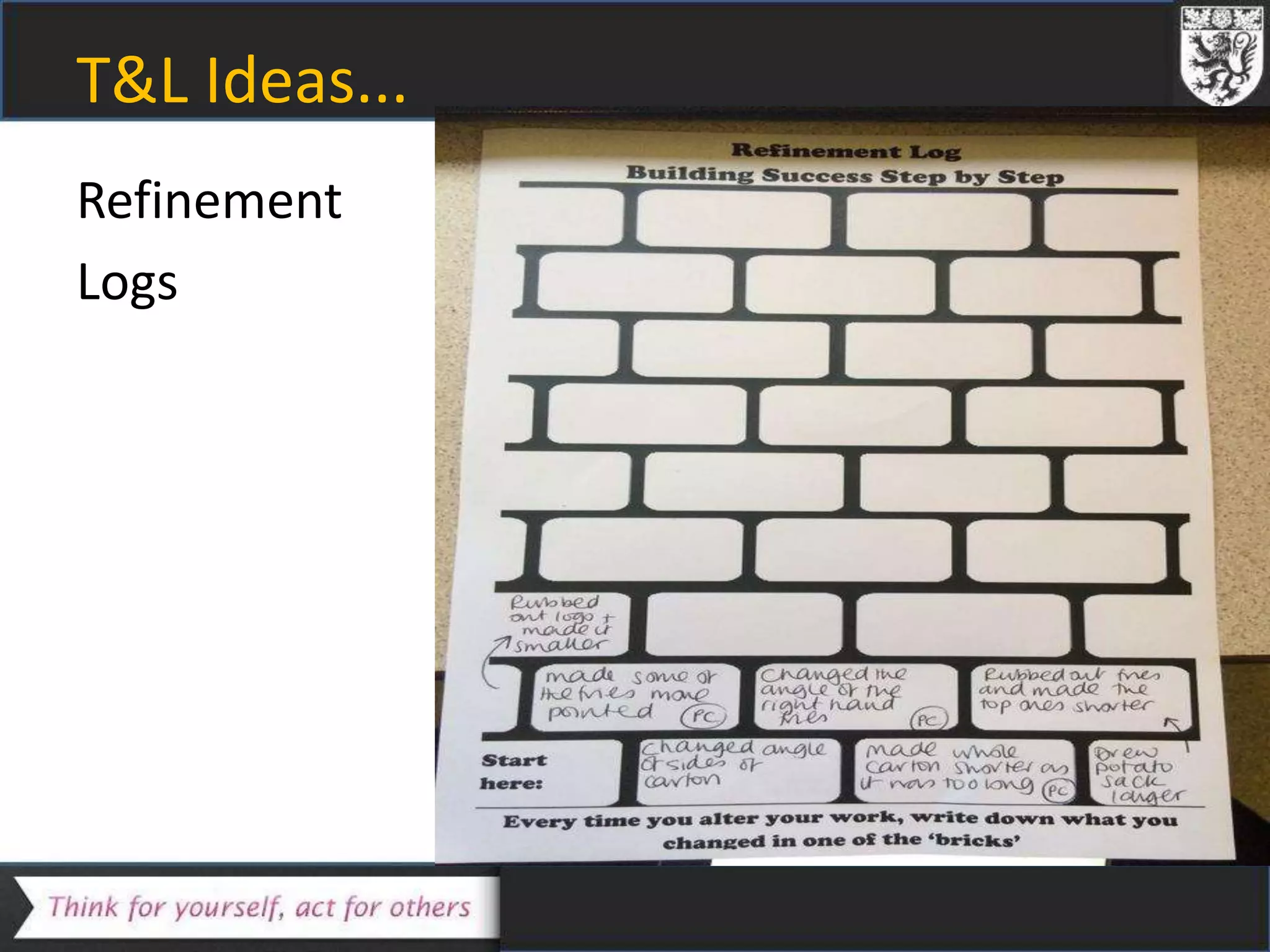
T&L Ideas...
Refinement
Logs
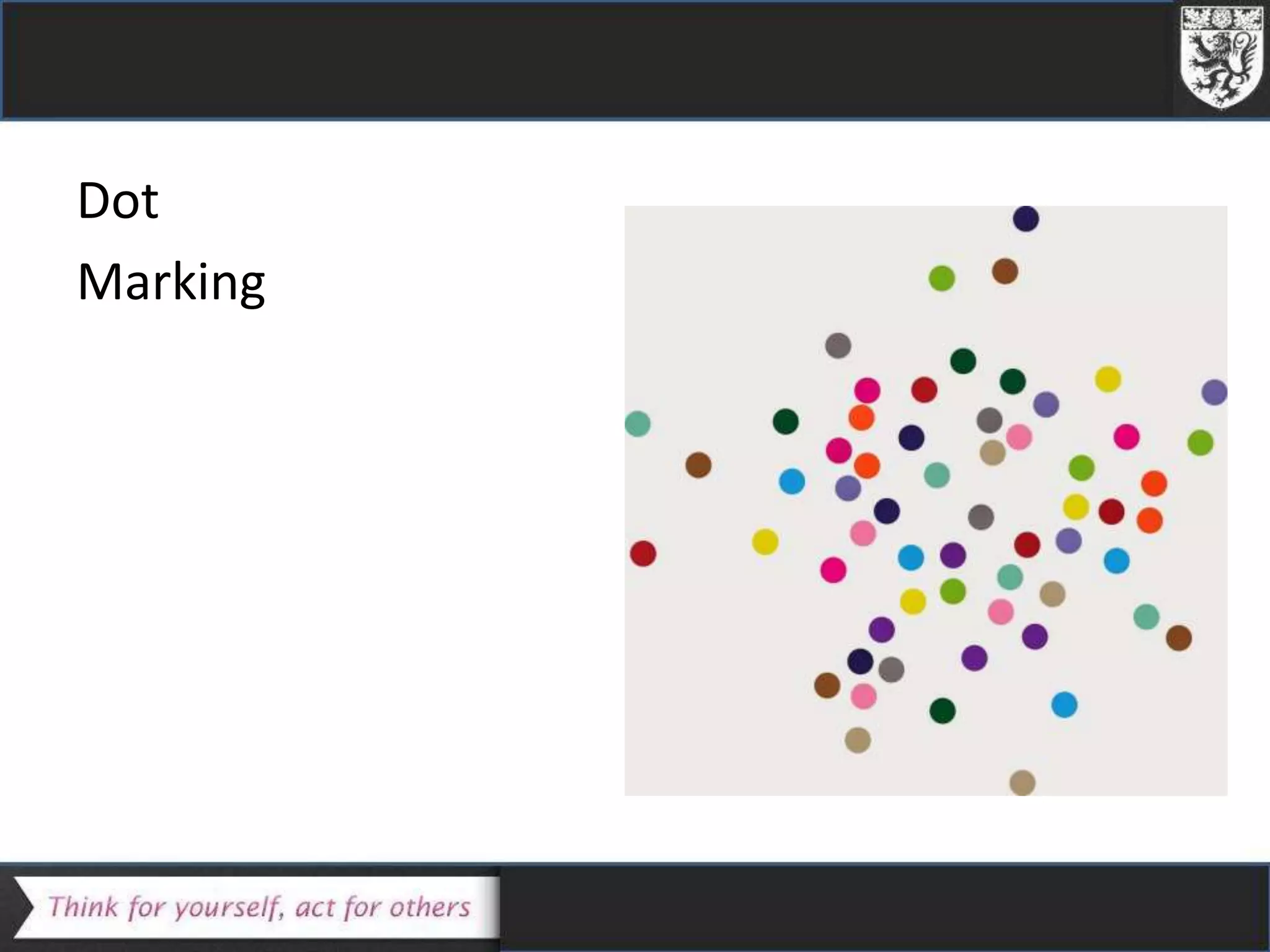
Dot
Marking
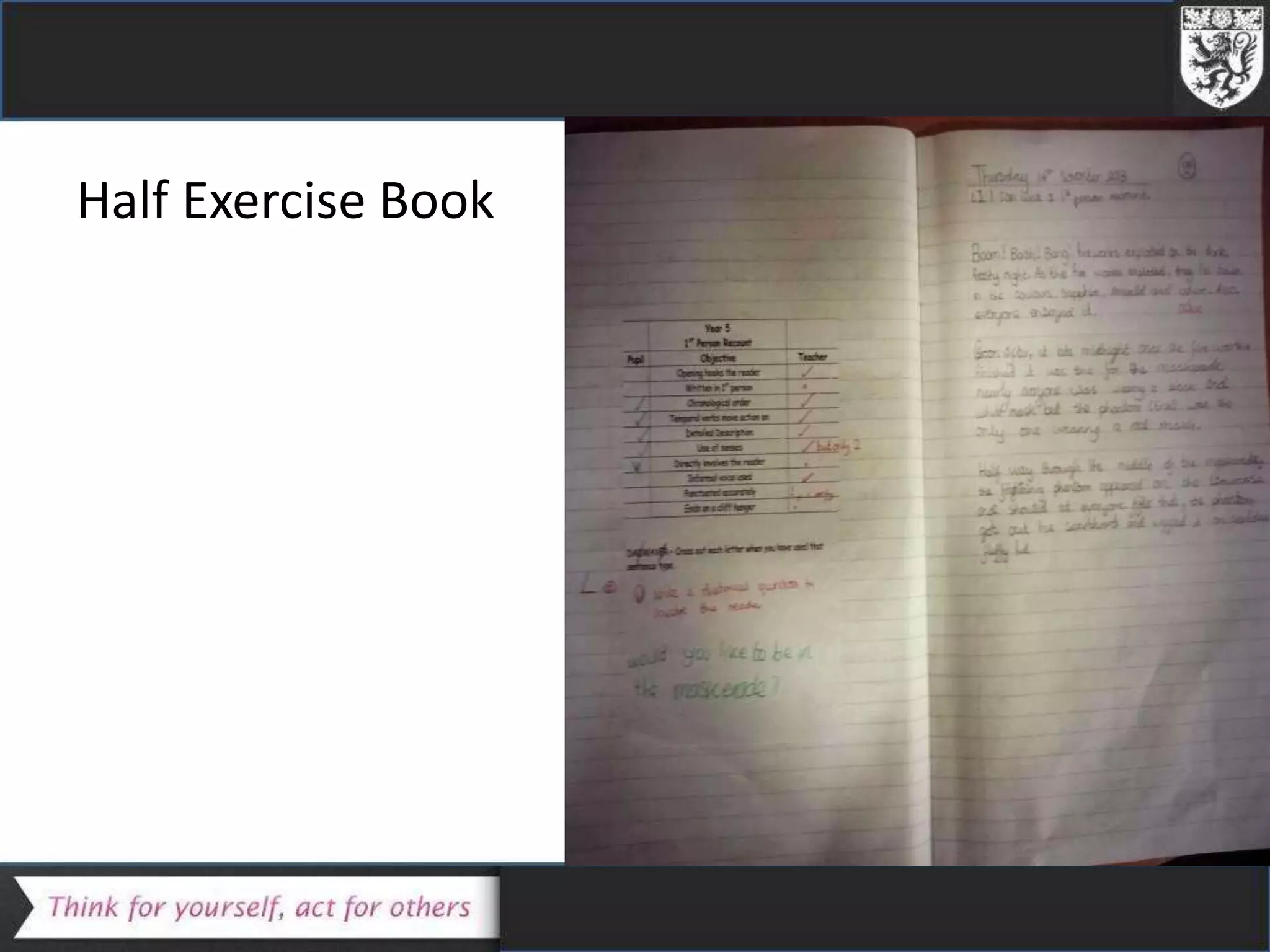
Half Exercise Book
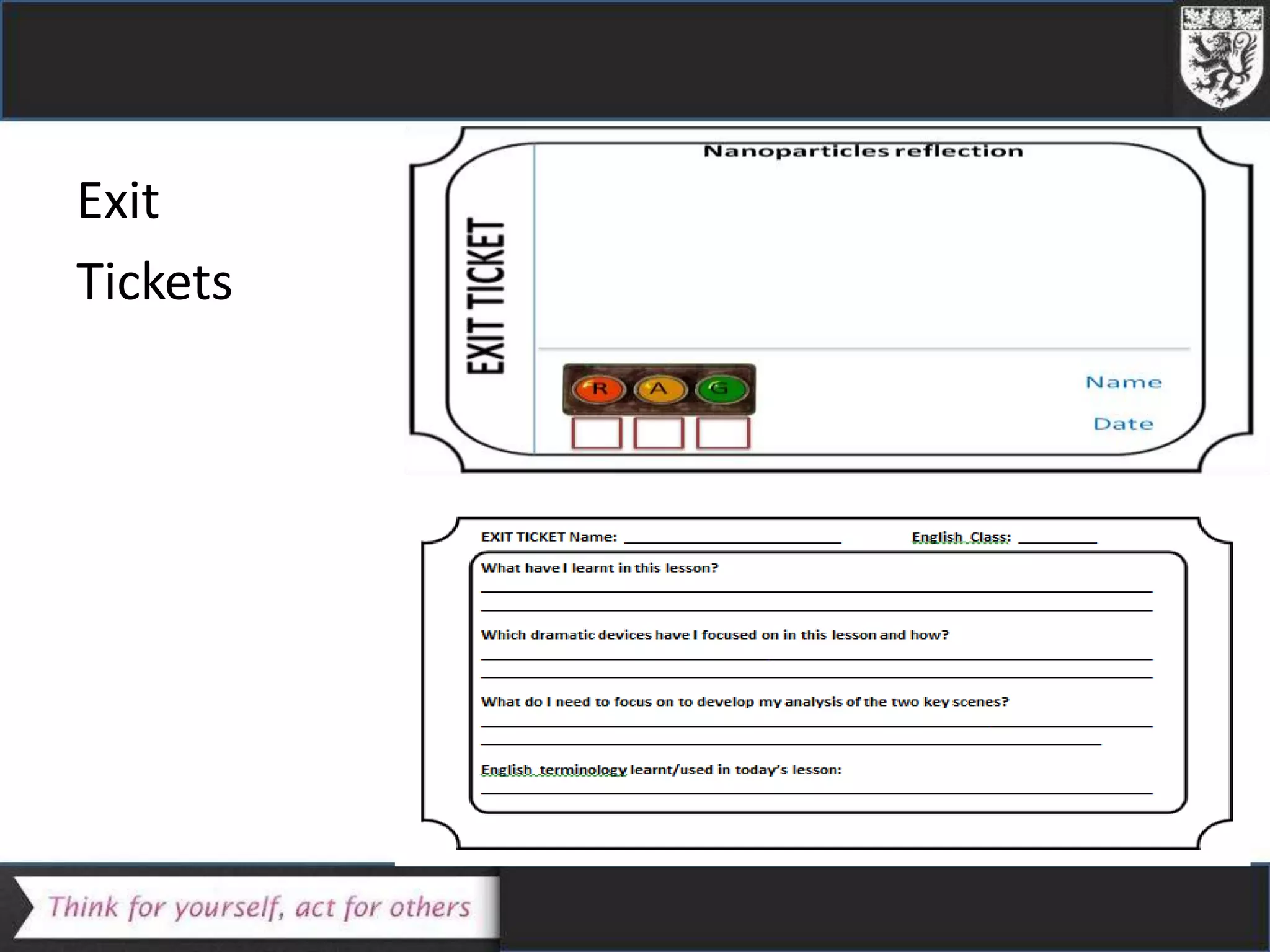
Exit
Tickets
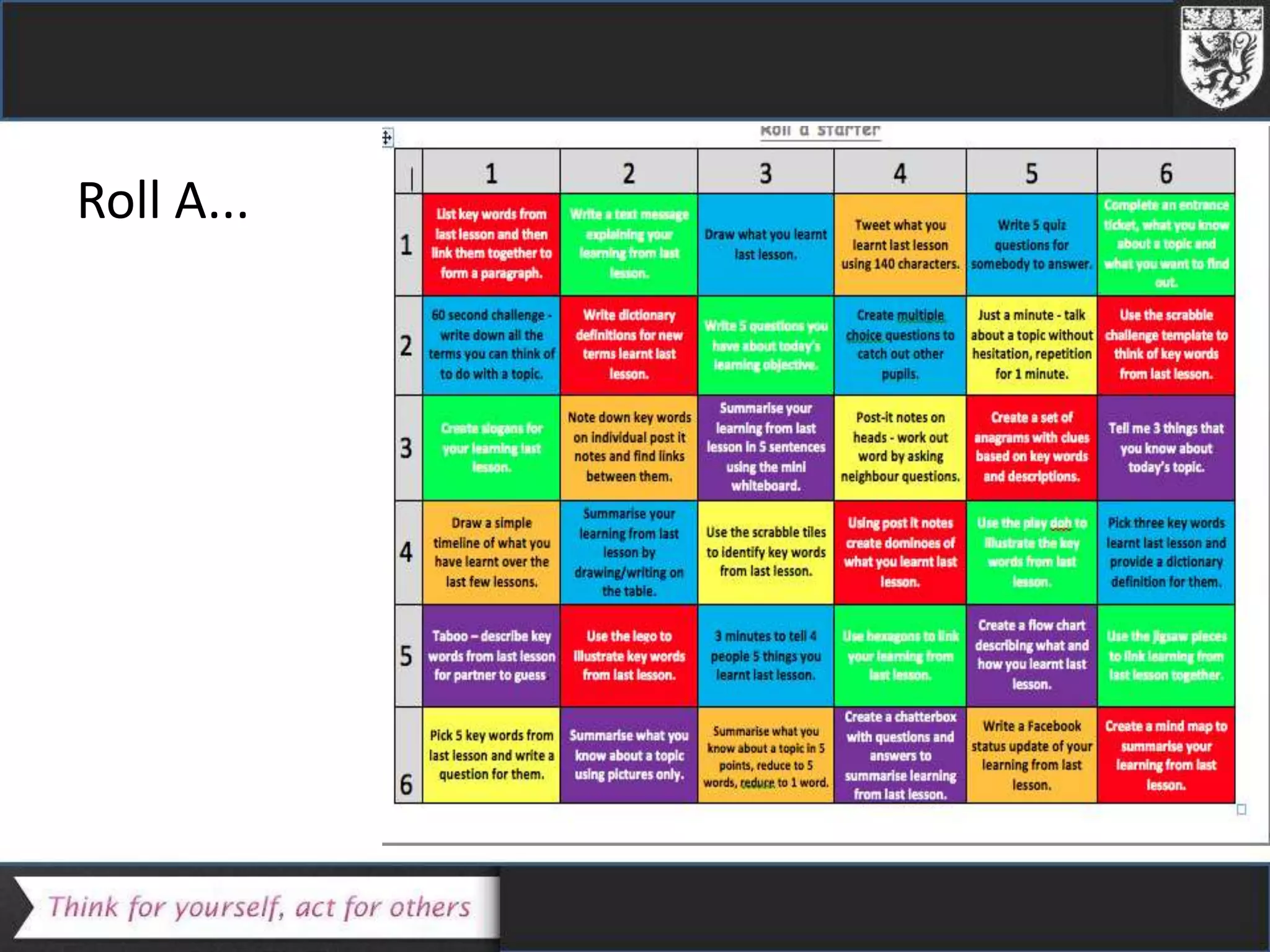
Roll A...
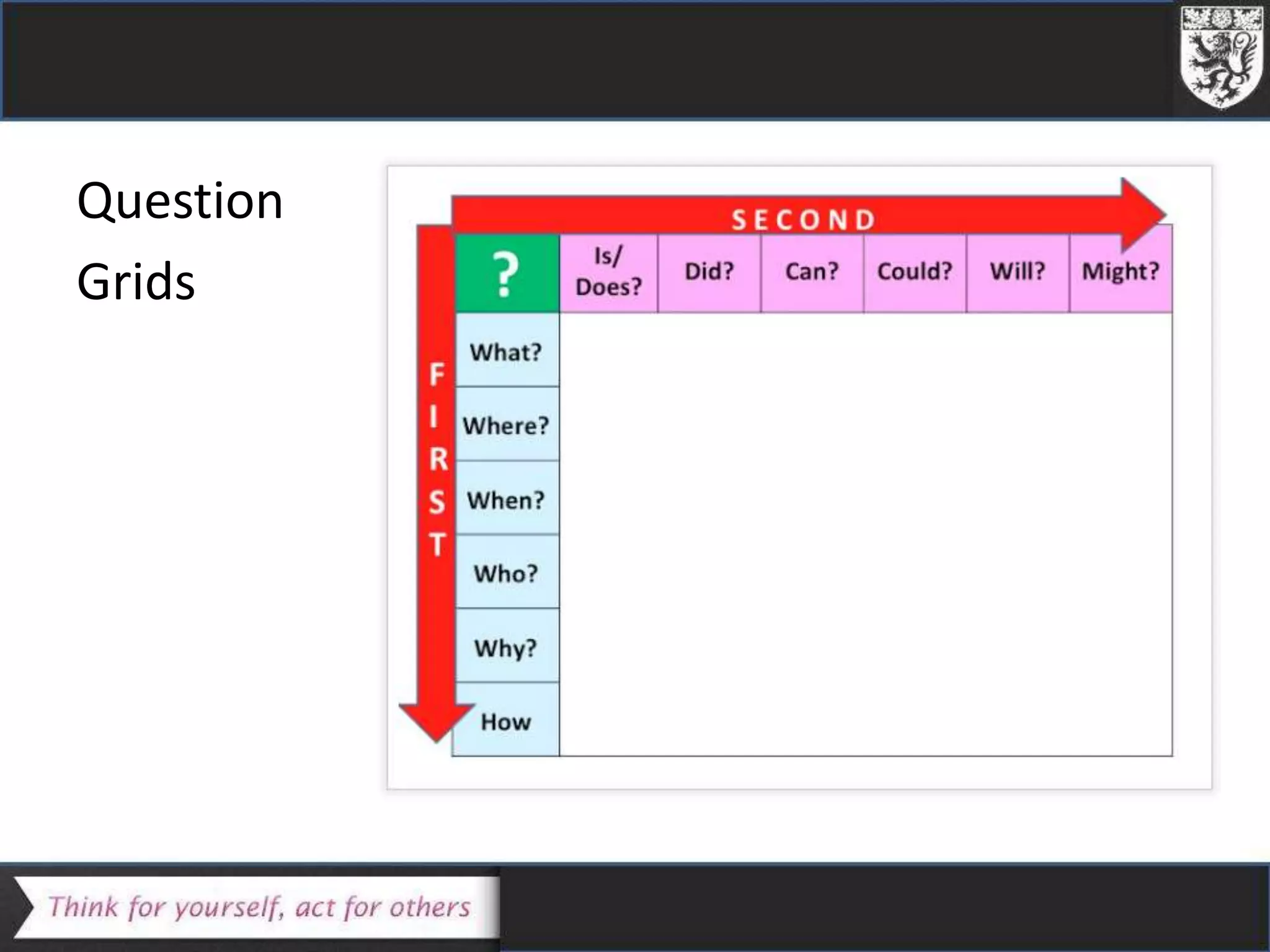
Question
Grids
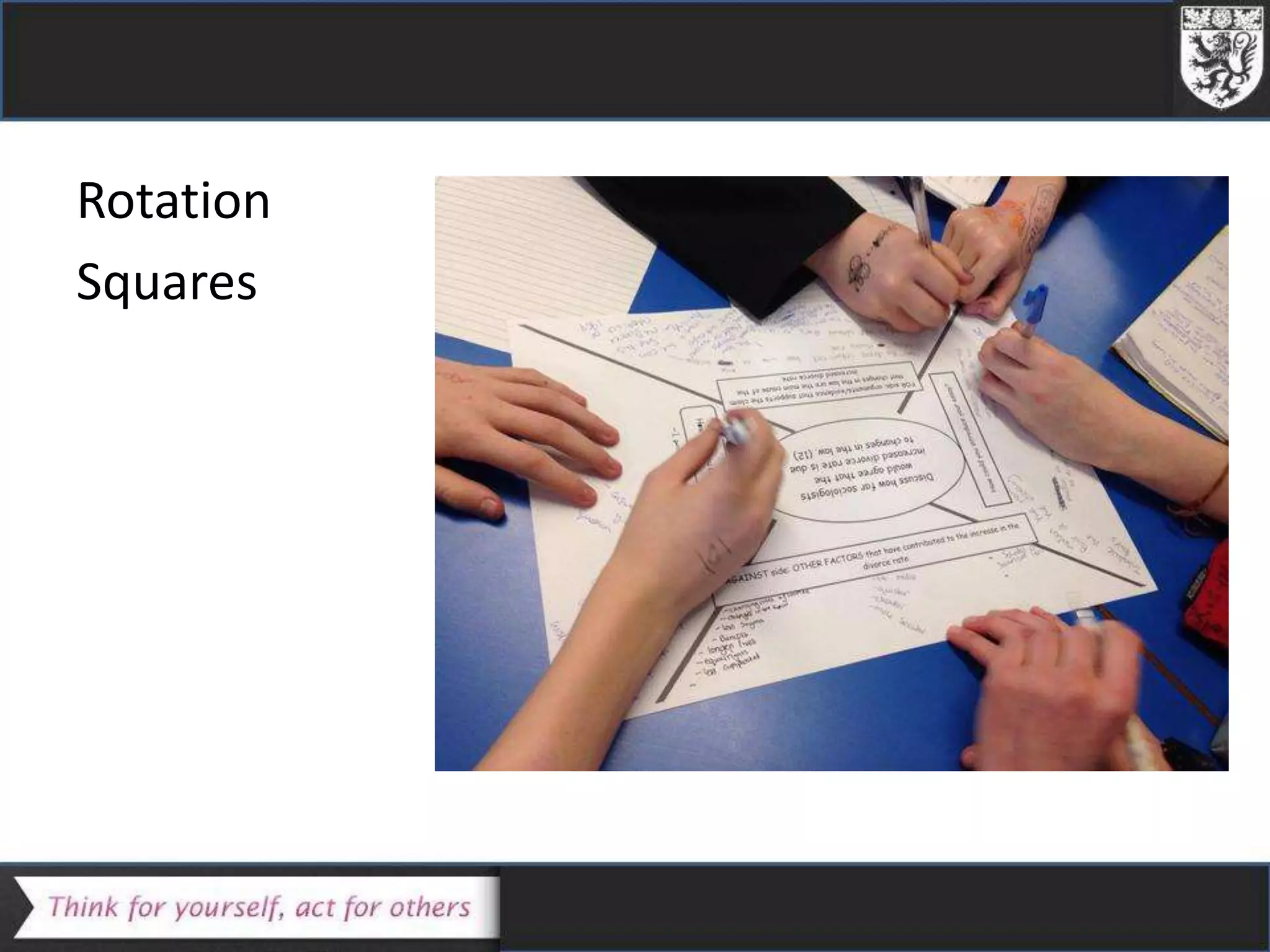
Rotation
Squares
• www.Cheneyagilitytoolkit.blogspot.com
• Staff Area> Agile teaching > Disadvantaged
Students

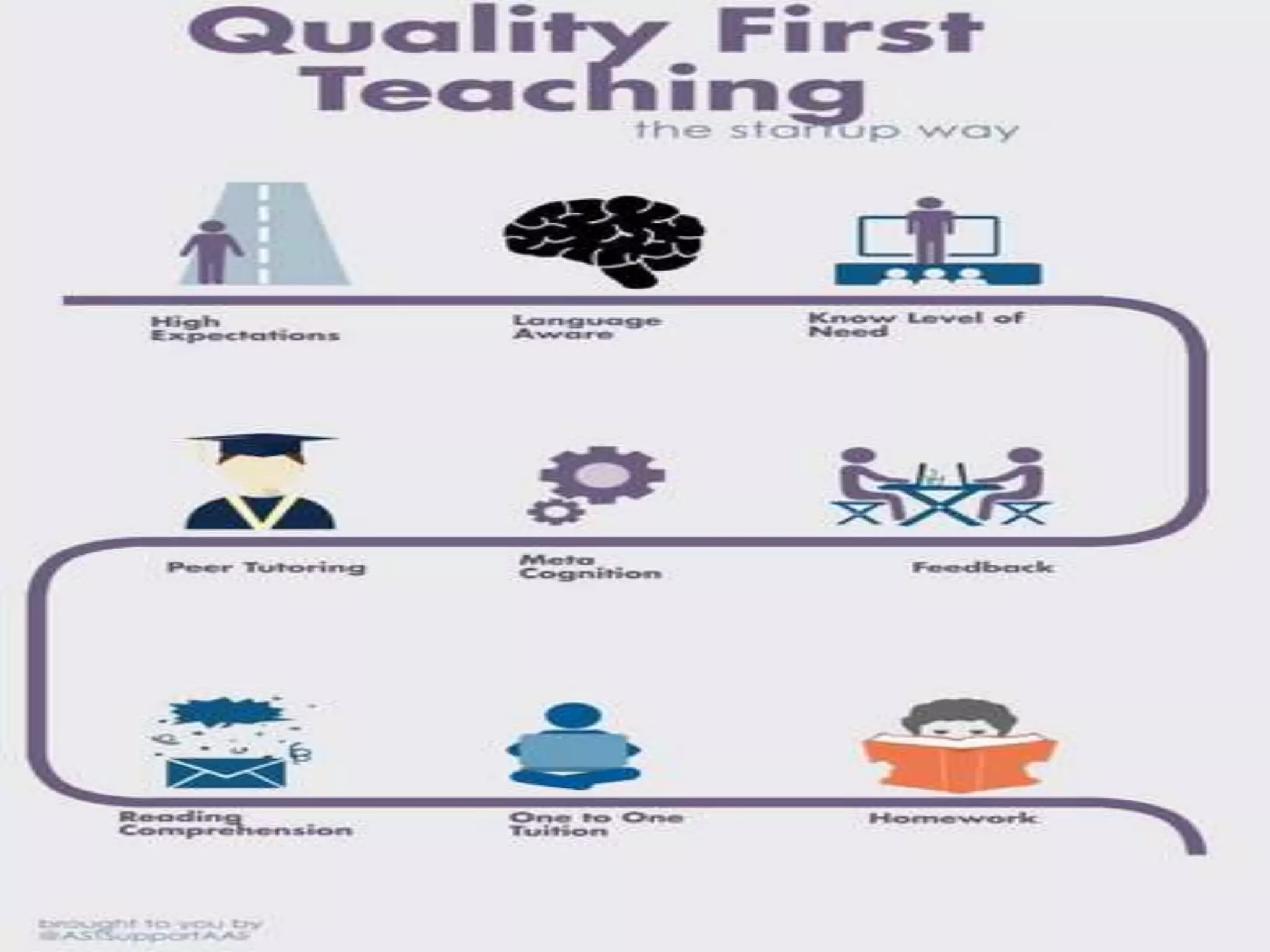
Quality First Teaching- @ASTSupportaali

  • 1.
    “Attainment is thebest therapy. Nothing is better for a disadvantaged student.”
  • 2.
    Session 1: 2.30-3.20 •List as many difficulties you can think of that our students face? • www.bit.ly/difficultiesatschool
  • 4.
    Learning Intentions • Ideason how to raise the attainment of our disadvantaged students Success Criteria • You will be able to implement some ideas into your practice!
  • 5.
    Current Data- Year11- out of 219 (34) FSM %FSM NOT FSM % NOT FSM 5 or more GCSE including En and Ma 7 21% 119 59% 5 or more GCSE + BTEC including En and Ma 7 21% 121 60% 5 or more A*-C GCSE 9 27% 128 64% 5 or more A*-G 30 91% 189 95%
  • 8.
    Language Aware • Theway we engage? Communicate? Talk to/with? • Calling your... • Don’t repeat what students say • Positive self verbalisation
  • 10.
    High Expectations • ExpectingExcellence Wall/Display- Praising Effort not attainment solely. Examples needed! • Student of the term?
  • 11.
    Know your students •SPOT Folders • “In nearly all lessons observed, teachers were making good use of ‘spot files’ containing information from their assessments of students’ work. They use this information well to target their questioning and decide where students should be seated so they can work well with others.” OFSTED 2015
  • 12.
    Used to think... •There is a preferred style/method • Lessons have to have lots of activities in them • Hard work isn’t good • Lessons have to be fun • Differentiation is a load of worksheets
  • 14.
    Effective Feedback 1. Developmental/Specific 2.Demonstrates improvement 3. Formative 4. Encouraging 5. SPAG
  • 15.
    Top Tips • MarkPP/FSM/SEND books first • Check whether students can read your writing- DIRT time • Phrase feedback as questions? • Use students name in their feedback • Be specific • Mark work in collaboration with previous work • Use language such as NOT YET- Do not over use terms- such as well done/great/excellent
  • 16.
    Meta Cognition –learning to learn 1. Explicit 2. Transferable skills 3. Valued 4. Relationships 5. Language
  • 17.
    Top Tips • Makeall learning cross curricular- mention other subjects= not just eng/maths/science • Talk to students about how long a task should take- have discussions about what is hard work • Use language that raises self esteem- build on learning- before and after tests • Link all learning to future goals- but those of the student • Constant reminder about attendance • Recall and reflection- often! • X 3 situations
  • 18.
    Reading comprehension strategies 1.Literacy/NUMERACY across the curriculum 2. Extended writing 3. Literacy team/reports 4. Hand writing 5. Reading Ages
  • 19.
    Top Tips • Usethe Onion & Purple Pens • Reading Ages • Make writing a common task in your lesson • Don’t let students say ‘I am not good at...’ • Reduce number of worksheets • Mention handwriting in feedback/oral and written
  • 20.
    Peer Tutoring 1. Linkto older students in tutor groups 2. Seating plans 3. Responsibilities 4. IAG 5. Academic Mentoring
  • 21.
    Top Tips • Makeyour seating plans ever changing- rotate the communication? Time partners? • Use Jason Davis! • Link with old students in your subject area? • Speak to older PP students- in sixth form who succeeded in your subject/classroom? What can you learn from them?
  • 22.
    Homework 1. Well plannedinto SoW 2. 1 to 2 hours a day- homework timetable 3. Feedback 4. Supports attainment 5. Barriers considered
  • 23.
    Top Tips • Sethomework early in the lesson • Provide printed slips for certain students • What barriers do you need to overcome? • Mark homework too • Use a class blog- www.cheneyre.edublogs.org flip their learning?
  • 24.
    Whole school- RememberAndy Buck 1. Uninterrupted teacher exposition 2. No hands up... 3. Hands up for voting! 4. Wait time 5. Well structure group work 6. Don’t repeat 7. Going into the woods 8. Pupils leading the lesson
  • 25.
  • 26.
  • 27.
  • 28.
  • 29.
  • 30.
  • 31.
  • 32.
    • www.Cheneyagilitytoolkit.blogspot.com • StaffArea> Agile teaching > Disadvantaged Students