Literacy briefing Sept 2014.notebook 
1 
November 03, 2014 
Literacy at RHS 
Speak like an essay in EVERY lesson 
Write like an expert in EVERY subject 
Aim high: allow TIME to improve work
Literacy briefing Sept 2014.notebook 
2 
November 03, 2014 
http://www.savethechildren.org.uk/resources/online­library/ 
read­get 
Forty per cent of UK children who are eligible for free school meals (FSM) 
say that their parents do not care if they spend time reading, compared with 
25 per cent of their peers. Seven per cent of the FSM pupils surveyed have 
no children’s books in their home and are less likely to have been given a 
book as a present, or to have visited a library or bookshop. 
The research was commissioned for the Read On Get On campaign, 
launched this week. This coalition of educationalists and charities, 
spearheaded by Save the Children, aims to ensure that all pupils leave 
primary school able to read well by 2025. 
According to the campaign, “reading well” means being able to read, 
understand and discuss books such as the Harry Potter novels and Treasure 
Island, and is equivalent to national curriculum level 4b. In 2013, 40 per 
cent of FSM pupils did not reach this level, compared with 22 per cent of 
their classmates. 
The research finds that daily reading is strongly linked to literacy skills, with 
children who read daily outside class five times more likely to perform 
above the expected level for their age in reading than their peers. 
Jonathan Douglas, director of the National Literacy Trust, said the research 
highlighted the vital role parents and carers played in reading with children, 
even for short periods. “They don’t need to find big chunks of time,” he 
said. “Parents, carers, grandparents and anyone with a child in their life can 
make a huge difference by reading for just 10 minutes a day.”
Literacy briefing Sept 2014.notebook 
3 
November 03, 2014 
Literacy at RHS Ofsted criteria ‐ see checklist 
· Display key words for the topic in general, and the lesson specifically 
· Refer to key words during the lesson. Praise the use of key words & ensure understanding 
· Differenat e key words for pupils who need it eg. EAL. 
· READING ‐ Before any reading acvity, explain reading skill to be used. State whether pupils are 
reading every word, skimming for meaning, scanning for key informaon or annotang for later use. 
· Be aware of reading ability. Reading ages on SIMS from Sept: add to seang plans. 
· WRITING ‐ Be very clear about what you are asking pupils to write. Give clear instrucons 
· Make a clear statement about the level of formality needed in the responses you want. 
· Share / mind map success criteria AND model / create Shared Wring example as a class 
· SPEAKING ‐ Model the sort of English you wish to see in the pupils. Ensure all quesons are 
answered using correct English. 
· Correct errors in pupil speech which reflect poor grammar 
SPAG ‐ Pick up on spelling, punctuaon and key word errors when you circulate around the room. Use 
TAs to support. 
Use proofreading as an starter, extension or plenary . Try using CUPS (check for Capital leers, 
Understanding, Punctuaon & Spelling)
Literacy briefing Sept 2014.notebook 
4 
November 03, 2014 
LITERACY TUTORIALS 
Reading for pleasure 
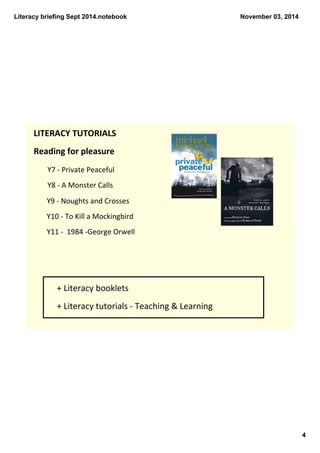
Y7 ‐ Private Peaceful 
Y8 ‐ A Monster Calls 
Y9 ‐ Noughts and Crosses 
Y10 ‐ To Kill a Mockingbird 
Y11 ‐ 1984 ‐George Orwell 
+ Literacy booklets 
+ Literacy tutorials ‐ Teaching & Learning
Literacy briefing Sept 2014.notebook 
5 
November 03, 2014 
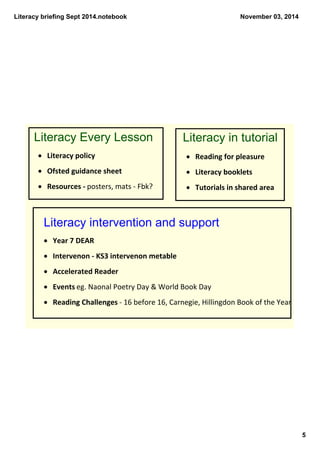
Literacy Every Lesson 
· Literacy policy 
· Ofsted guidance sheet 
· Resources ‐ posters, mats ‐ Fbk? 
Literacy in tutorial 
· Reading for pleasure 
· Literacy booklets 
· Tutorials in shared area 
Literacy intervention and support 
· Year 7 DEAR 
· Intervenon ‐ KS3 intervenon metable 
· Accelerated Reader 
· Events eg. Naonal Poetry Day & World Book Day 
· Reading Challenges ‐ 16 before 16, Carnegie, Hillingdon Book of the Year
Literacy briefing Sept 2014.notebook 
6 
November 03, 2014 
..... am reading .... posters

Literacy Briefing - Monday 15th September

  • 1.
    Literacy briefing Sept2014.notebook 1 November 03, 2014 Literacy at RHS Speak like an essay in EVERY lesson Write like an expert in EVERY subject Aim high: allow TIME to improve work
  • 2.
    Literacy briefing Sept2014.notebook 2 November 03, 2014 http://www.savethechildren.org.uk/resources/online­library/ read­get Forty per cent of UK children who are eligible for free school meals (FSM) say that their parents do not care if they spend time reading, compared with 25 per cent of their peers. Seven per cent of the FSM pupils surveyed have no children’s books in their home and are less likely to have been given a book as a present, or to have visited a library or bookshop. The research was commissioned for the Read On Get On campaign, launched this week. This coalition of educationalists and charities, spearheaded by Save the Children, aims to ensure that all pupils leave primary school able to read well by 2025. According to the campaign, “reading well” means being able to read, understand and discuss books such as the Harry Potter novels and Treasure Island, and is equivalent to national curriculum level 4b. In 2013, 40 per cent of FSM pupils did not reach this level, compared with 22 per cent of their classmates. The research finds that daily reading is strongly linked to literacy skills, with children who read daily outside class five times more likely to perform above the expected level for their age in reading than their peers. Jonathan Douglas, director of the National Literacy Trust, said the research highlighted the vital role parents and carers played in reading with children, even for short periods. “They don’t need to find big chunks of time,” he said. “Parents, carers, grandparents and anyone with a child in their life can make a huge difference by reading for just 10 minutes a day.”
  • 3.
    Literacy briefing Sept2014.notebook 3 November 03, 2014 Literacy at RHS Ofsted criteria ‐ see checklist · Display key words for the topic in general, and the lesson specifically · Refer to key words during the lesson. Praise the use of key words & ensure understanding · Differenat e key words for pupils who need it eg. EAL. · READING ‐ Before any reading acvity, explain reading skill to be used. State whether pupils are reading every word, skimming for meaning, scanning for key informaon or annotang for later use. · Be aware of reading ability. Reading ages on SIMS from Sept: add to seang plans. · WRITING ‐ Be very clear about what you are asking pupils to write. Give clear instrucons · Make a clear statement about the level of formality needed in the responses you want. · Share / mind map success criteria AND model / create Shared Wring example as a class · SPEAKING ‐ Model the sort of English you wish to see in the pupils. Ensure all quesons are answered using correct English. · Correct errors in pupil speech which reflect poor grammar SPAG ‐ Pick up on spelling, punctuaon and key word errors when you circulate around the room. Use TAs to support. Use proofreading as an starter, extension or plenary . Try using CUPS (check for Capital leers, Understanding, Punctuaon & Spelling)
  • 4.
    Literacy briefing Sept2014.notebook 4 November 03, 2014 LITERACY TUTORIALS Reading for pleasure Y7 ‐ Private Peaceful Y8 ‐ A Monster Calls Y9 ‐ Noughts and Crosses Y10 ‐ To Kill a Mockingbird Y11 ‐ 1984 ‐George Orwell + Literacy booklets + Literacy tutorials ‐ Teaching & Learning
  • 5.
    Literacy briefing Sept2014.notebook 5 November 03, 2014 Literacy Every Lesson · Literacy policy · Ofsted guidance sheet · Resources ‐ posters, mats ‐ Fbk? Literacy in tutorial · Reading for pleasure · Literacy booklets · Tutorials in shared area Literacy intervention and support · Year 7 DEAR · Intervenon ‐ KS3 intervenon metable · Accelerated Reader · Events eg. Naonal Poetry Day & World Book Day · Reading Challenges ‐ 16 before 16, Carnegie, Hillingdon Book of the Year
  • 6.
    Literacy briefing Sept2014.notebook 6 November 03, 2014 ..... am reading .... posters