Pyrosequencing
What is Pyrosequencing?
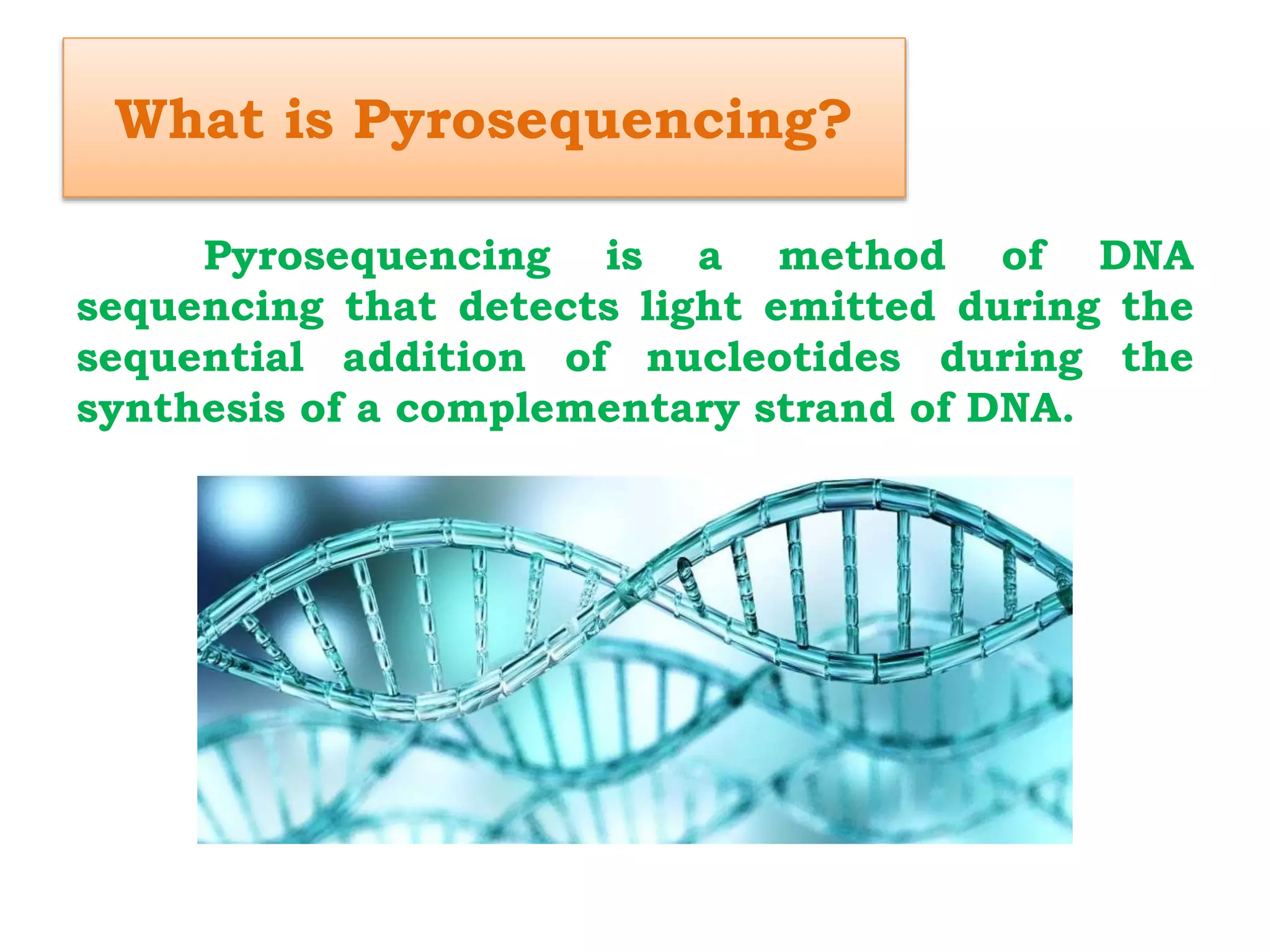
Pyrosequencing is a method of DNA
sequencing that detects light emitted during the
sequential addition of nucleotides during the
synthesis of a complementary strand of DNA.
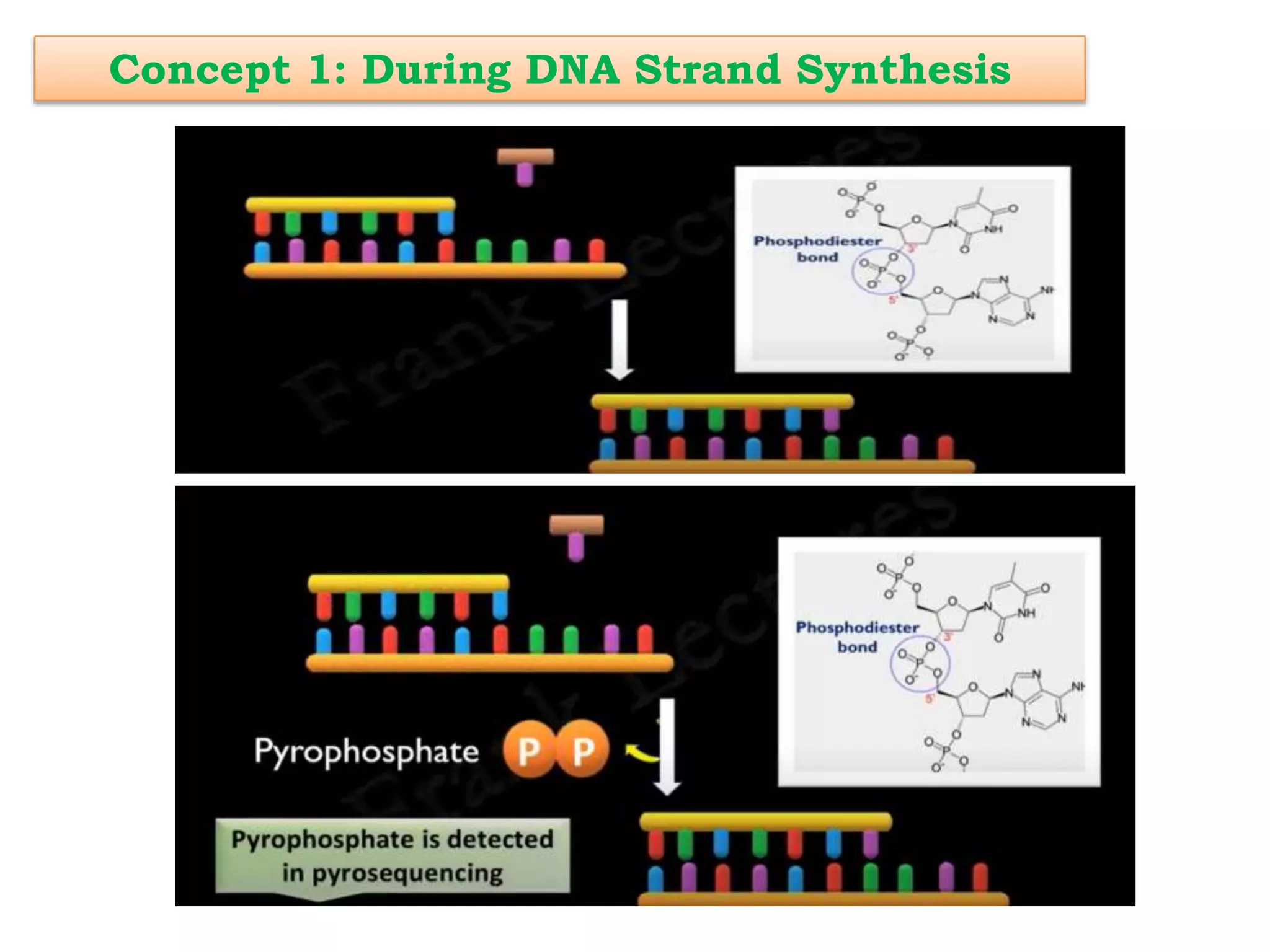
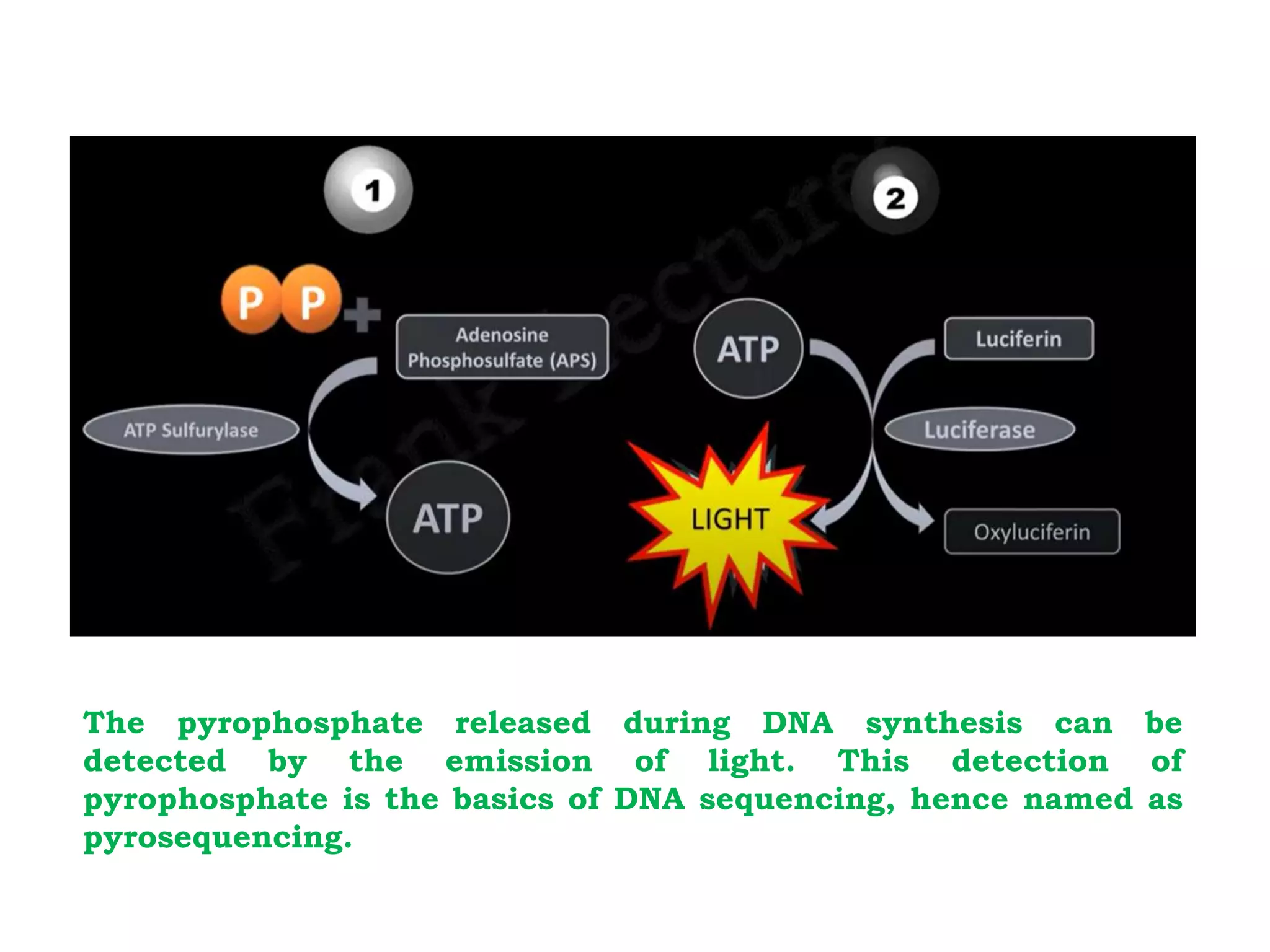
Concept 1: During DNA Strand Synthesis
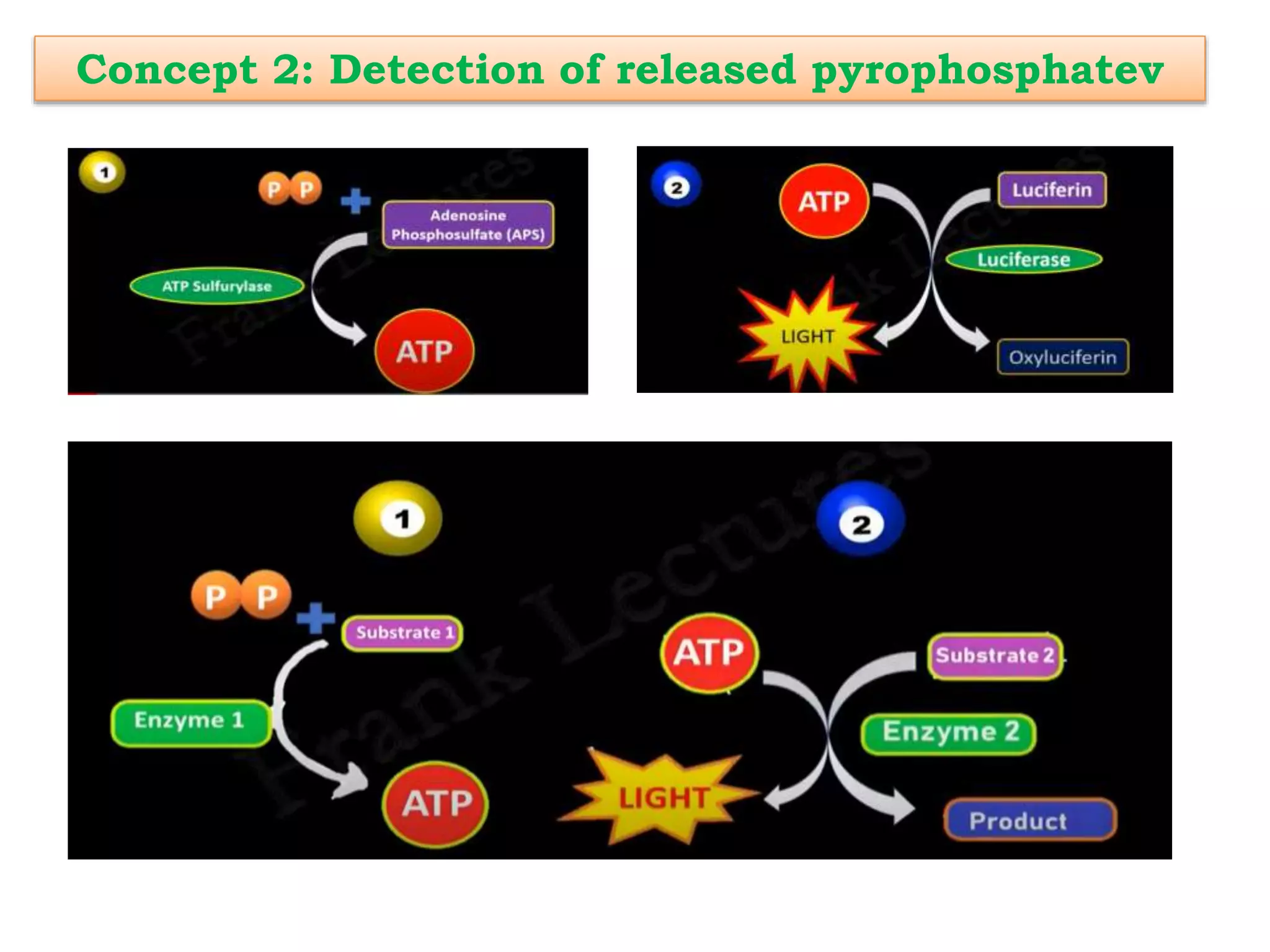
Concept 2: Detection of released pyrophosphatev
The pyrophosphate released during DNA synthesis can be
detected by the emission of light. This detection of
pyrophosphate is the basics of DNA sequencing, hence named as
pyrosequencing.
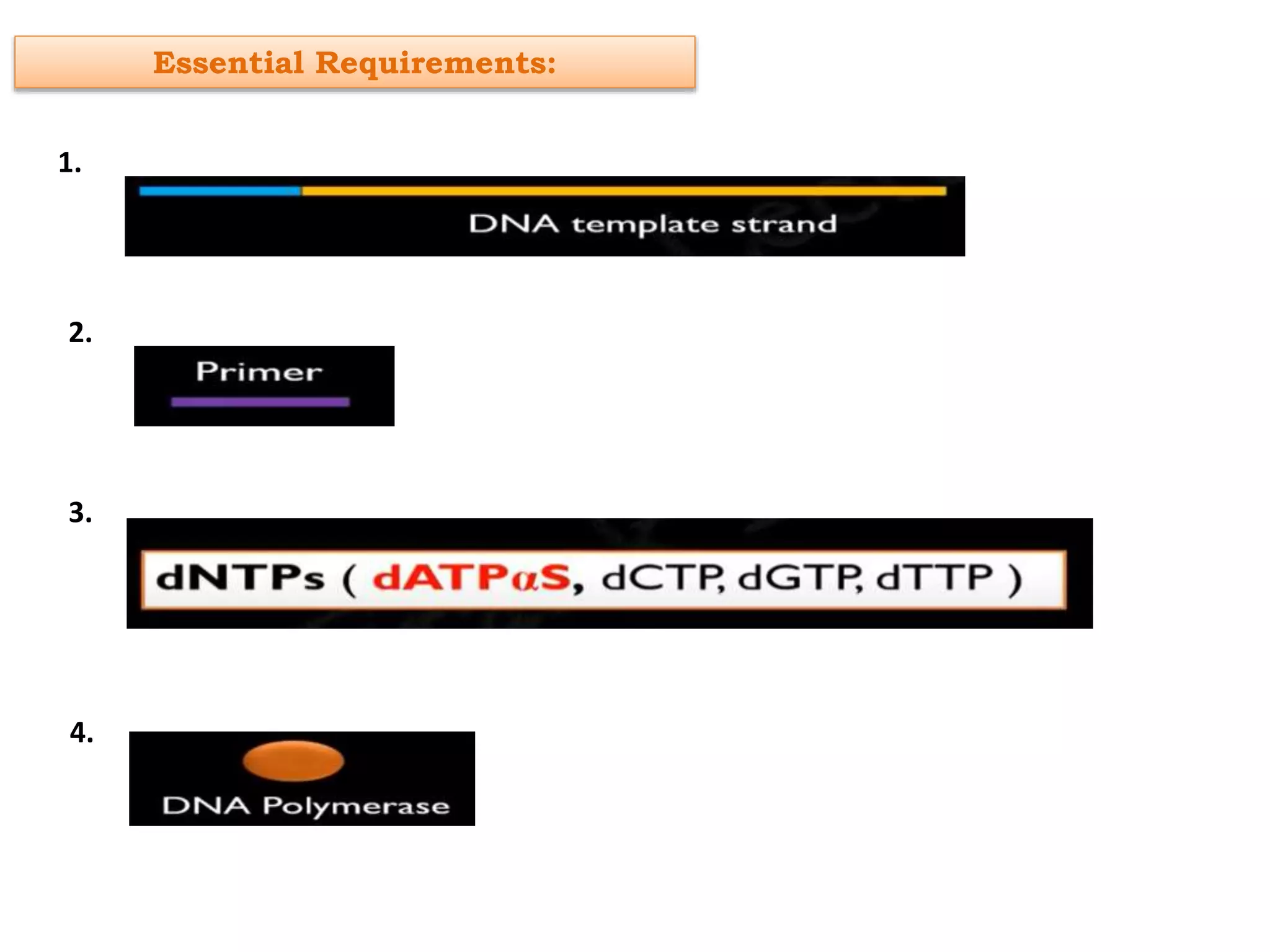
Essential Requirements:
1.
2.
3.
4.
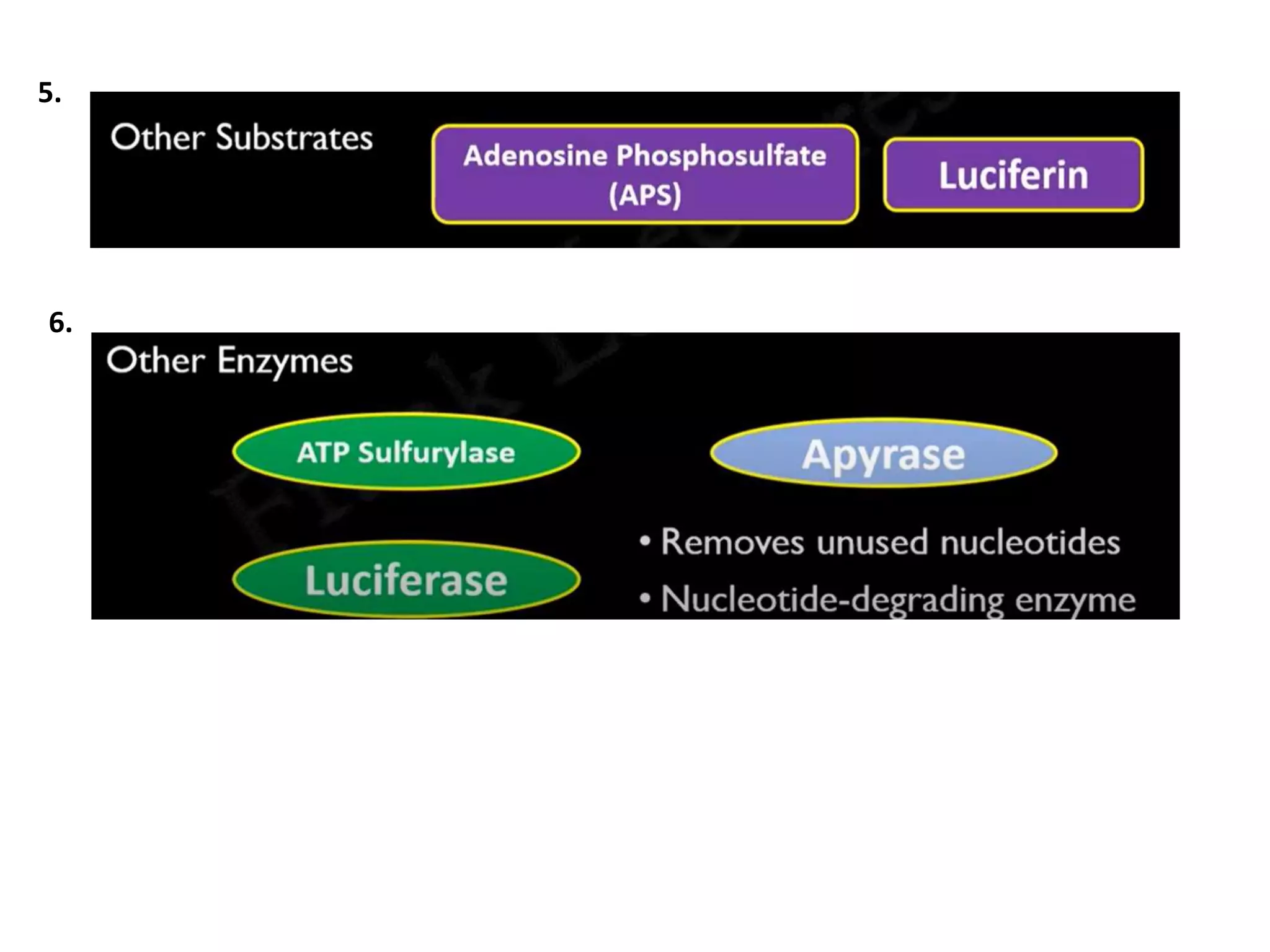
5.
6.
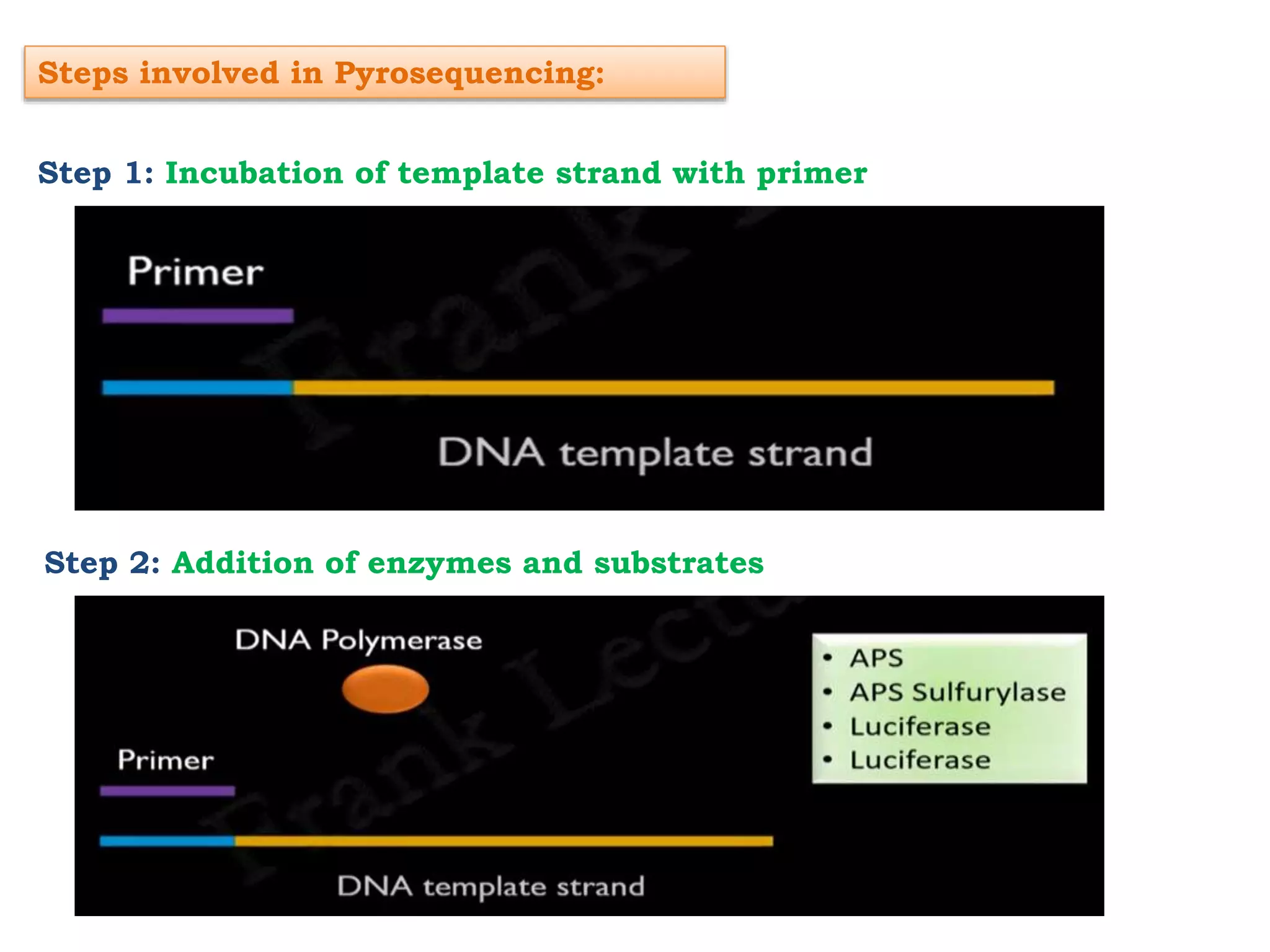
Steps involved in Pyrosequencing:
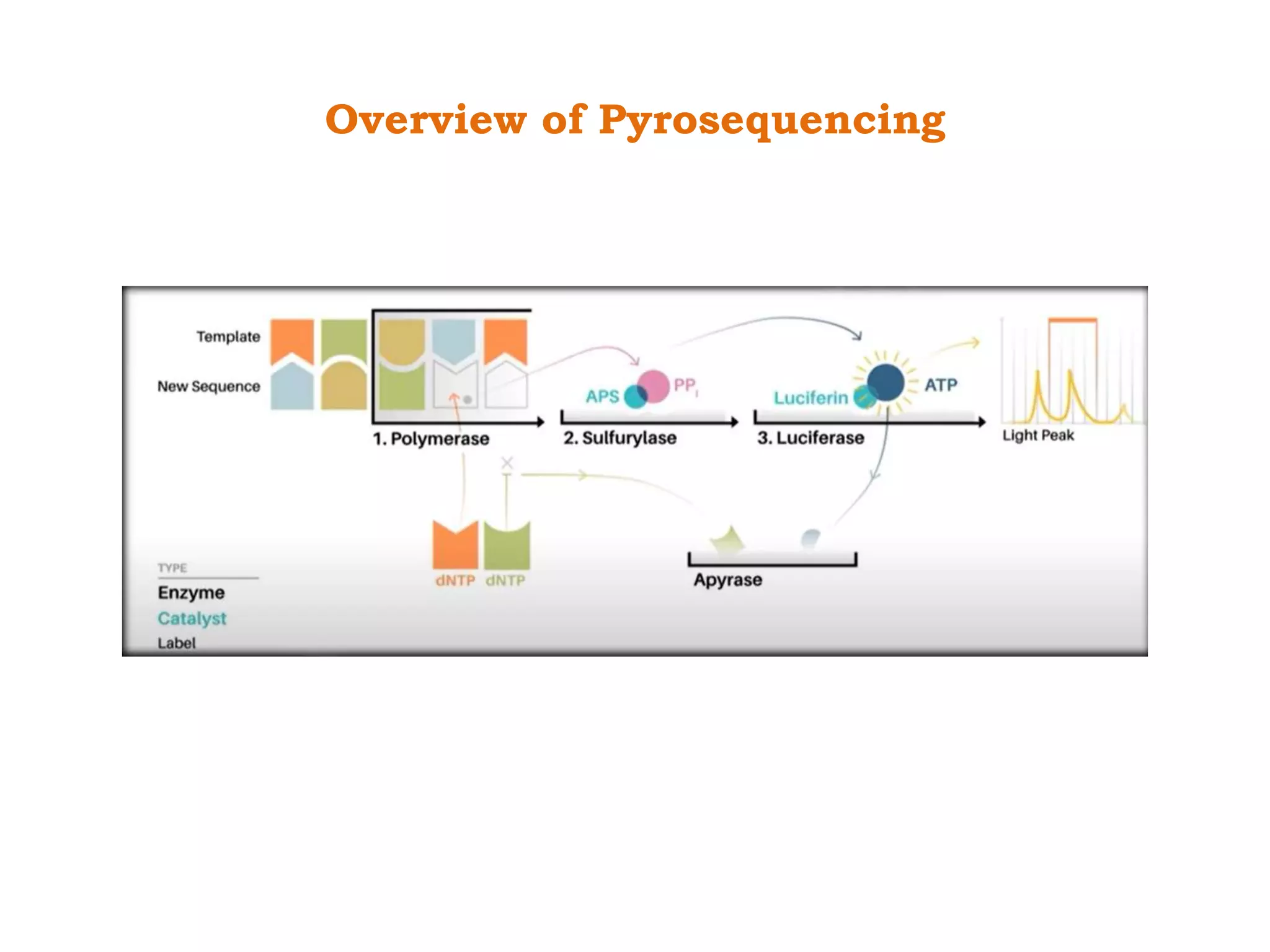
Step 1: Incubation of template strand with primer
Step 2: Addition of enzymes and substrates
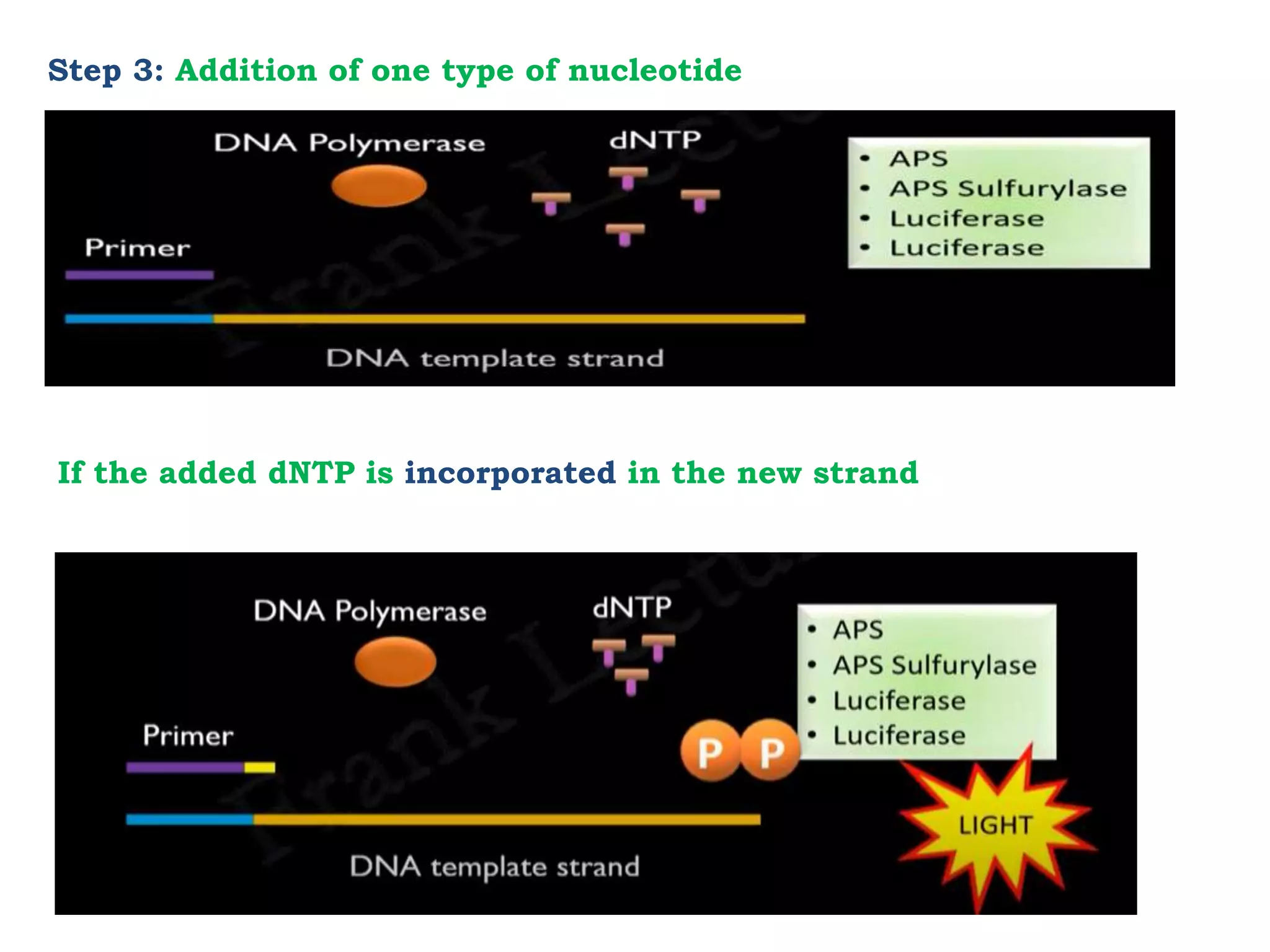
Step 3: Addition of one type of nucleotide
If the added dNTP is incorporated in the new strand
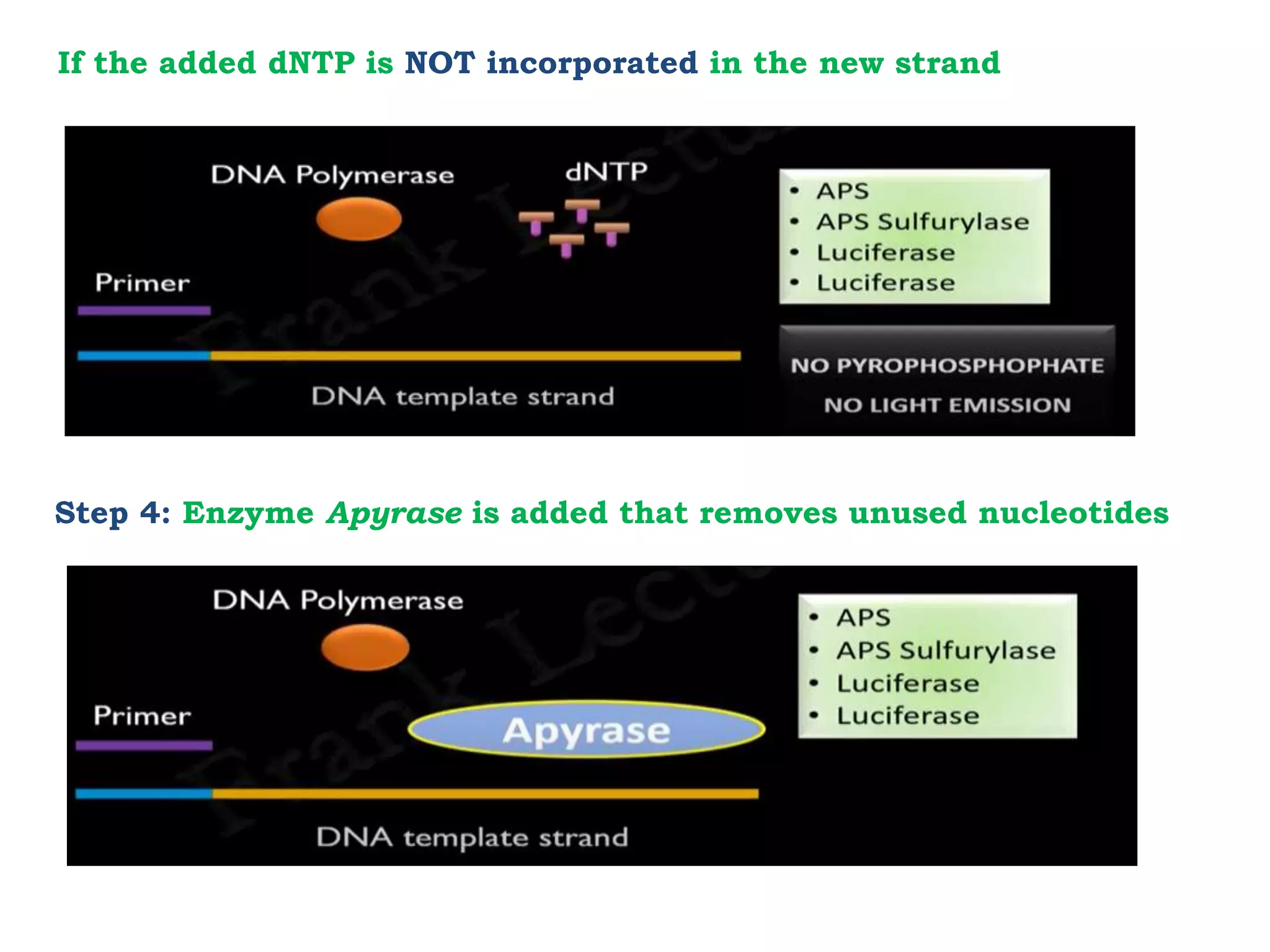
If the added dNTP is NOT incorporated in the new strand
Step 4: Enzyme Apyrase is added that removes unused nucleotides
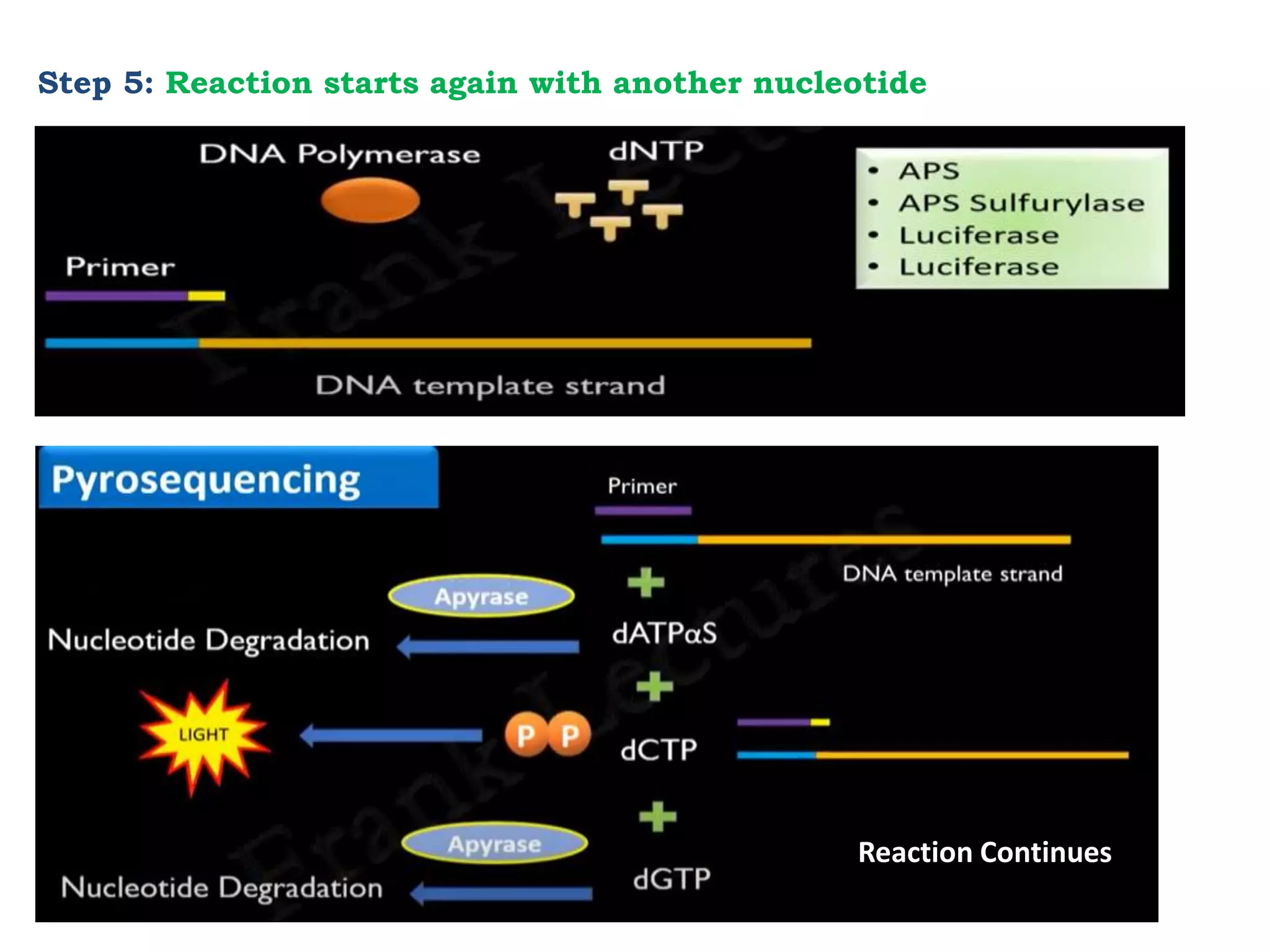
Step 5: Reaction starts again with another nucleotide
Reaction Continues
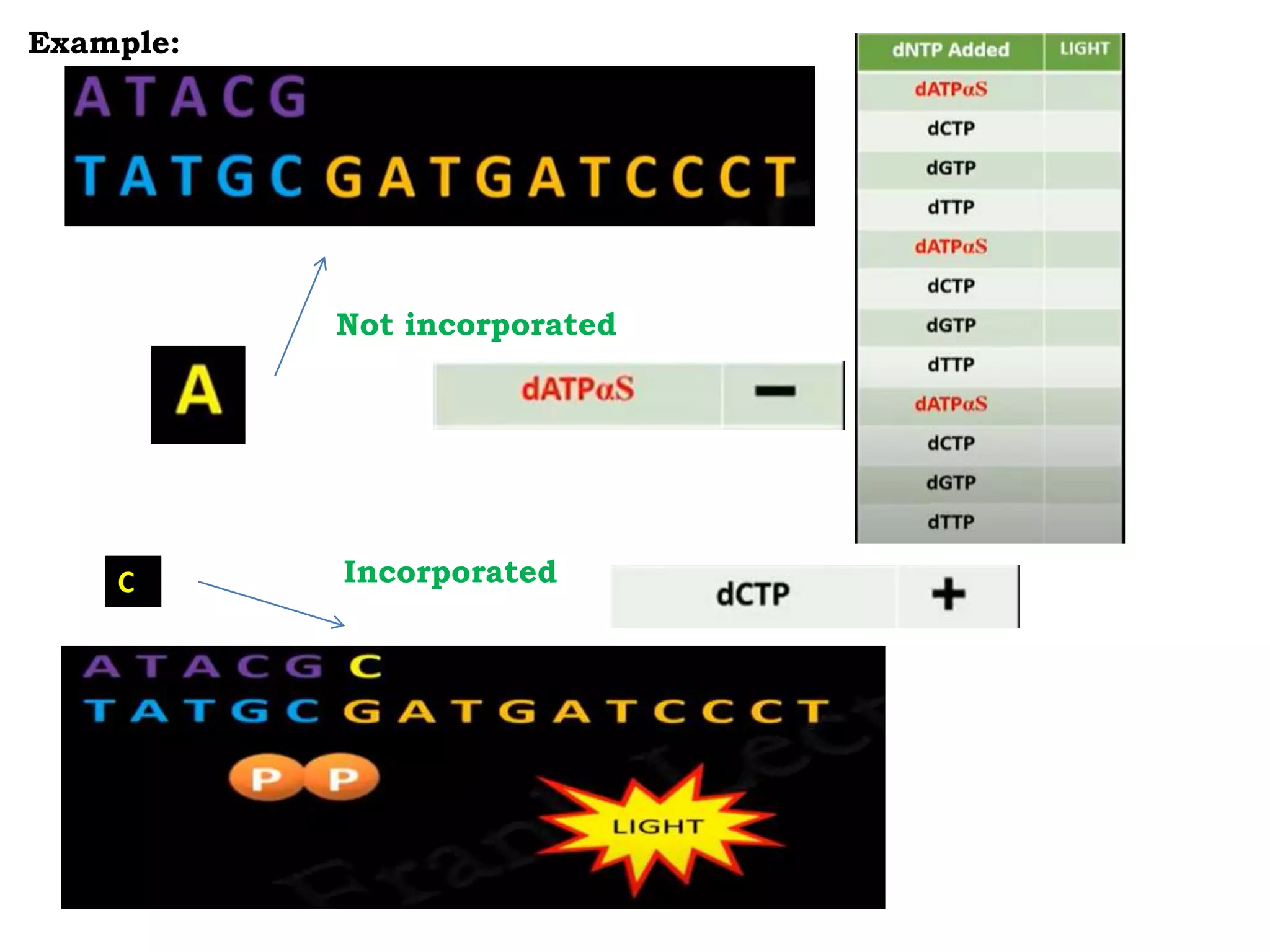
Example:
Not incorporated
C Incorporated
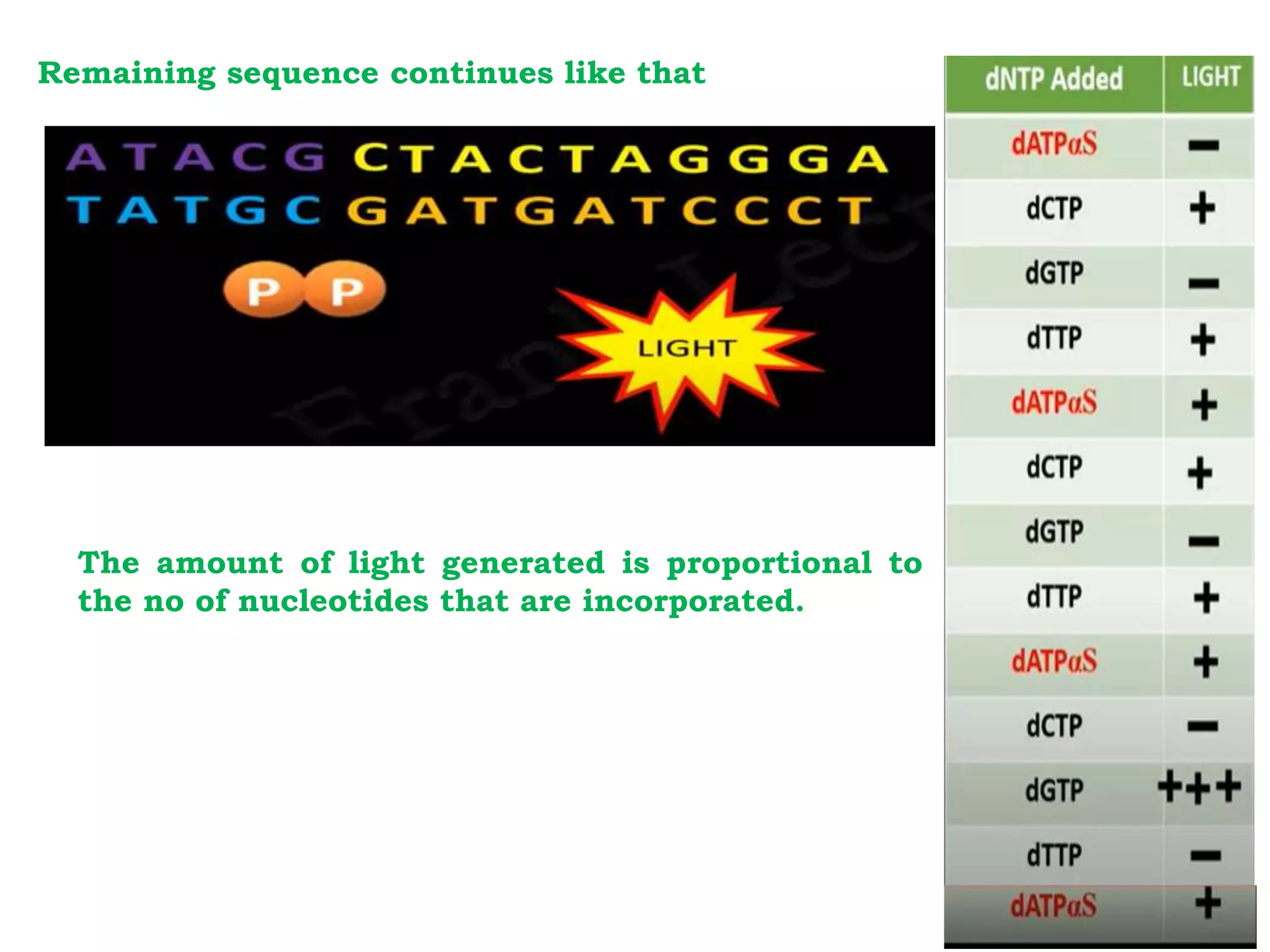
Remaining sequence continues like that
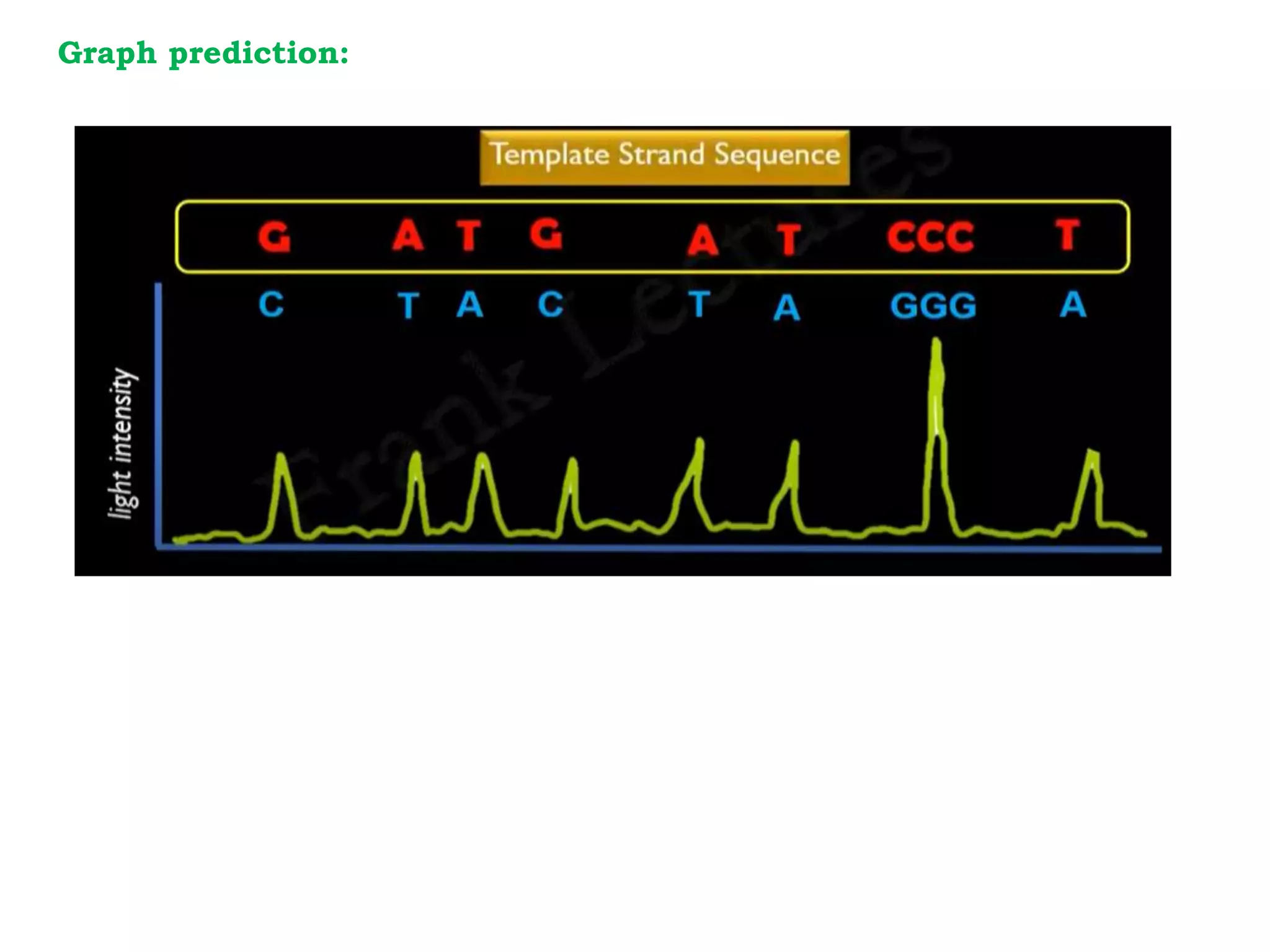
The amount of light generated is proportional to
the no of nucleotides that are incorporated.
Graph prediction:
Overview of Pyrosequencing

PyroSequencing.pptx