Under the guidance of
Santhosh K.G
Assistant professor
Mechanical engineering
M.I.T Mysore
A Technical Seminar on
WATER PURIFICATION USING
SOLAR STILL
Submitted by
Mohamed Shakeeb Ahmed
4MH11ME069
1
INTRODUCTION
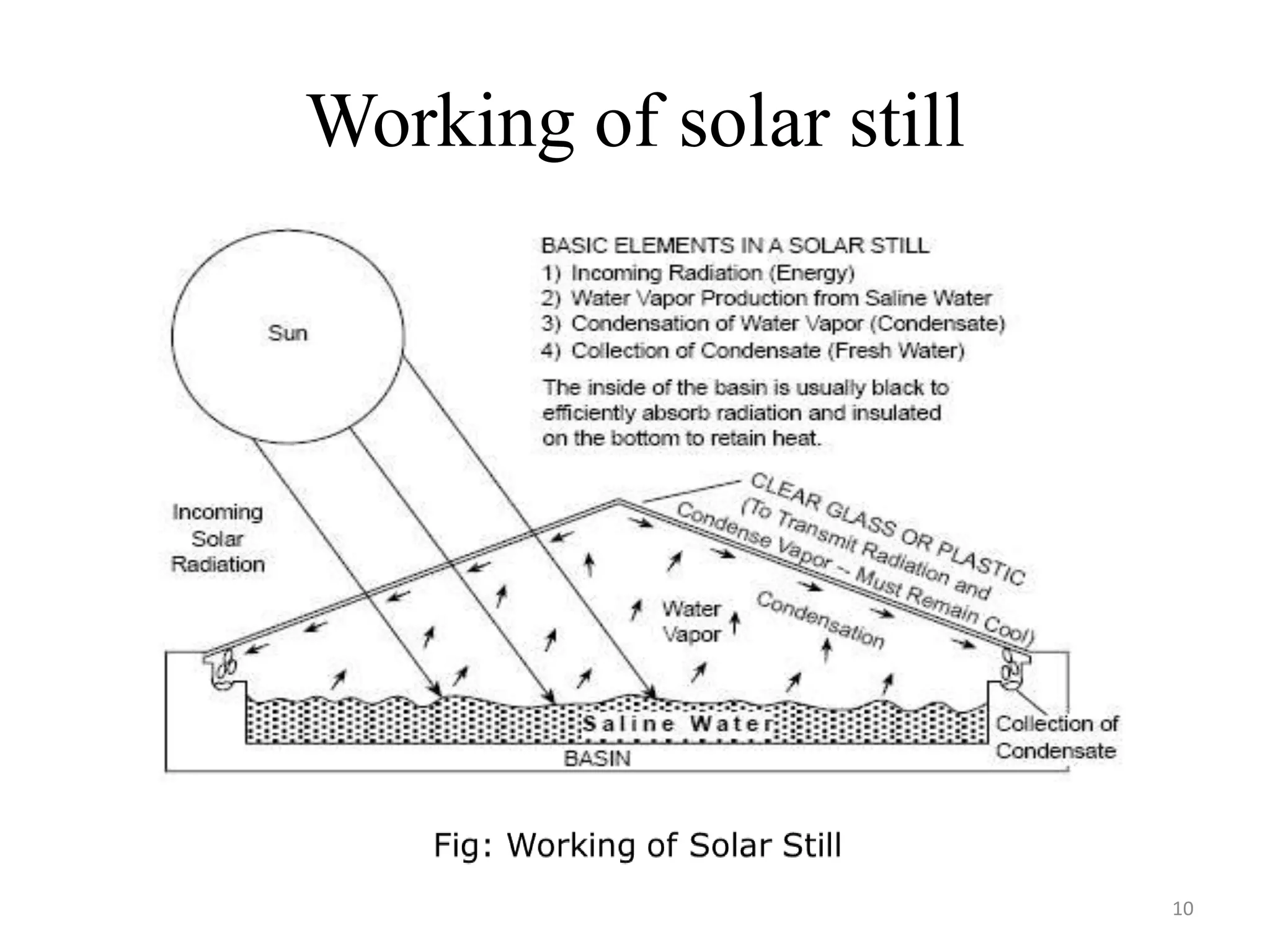
• A solar still is a simple way
of distilling water.
• It uses solar energy to distill the water.
• It removes impurities such as salt and
other microbiological organisms.
2
Water Impurities
• Suspended particles.
• Dissolved inorganic salts.
• Dissolved organic compounds.
• Micro-organisms.
• Pyrogens.
3
Types of purification
• Distillation.
• Vapour compression.
• Reverse osmosis.
4
Benefits of Distillation
• It produces water of high quality.
• Maintenance is almost negligible.
• Any type of water can be purified into potable water
by means of this process.
• Wastage of water will be minimum.
5
Types of solar still
• Spherical solar still.
• Hemispherical solar still.
• Pyramid solar still.
6
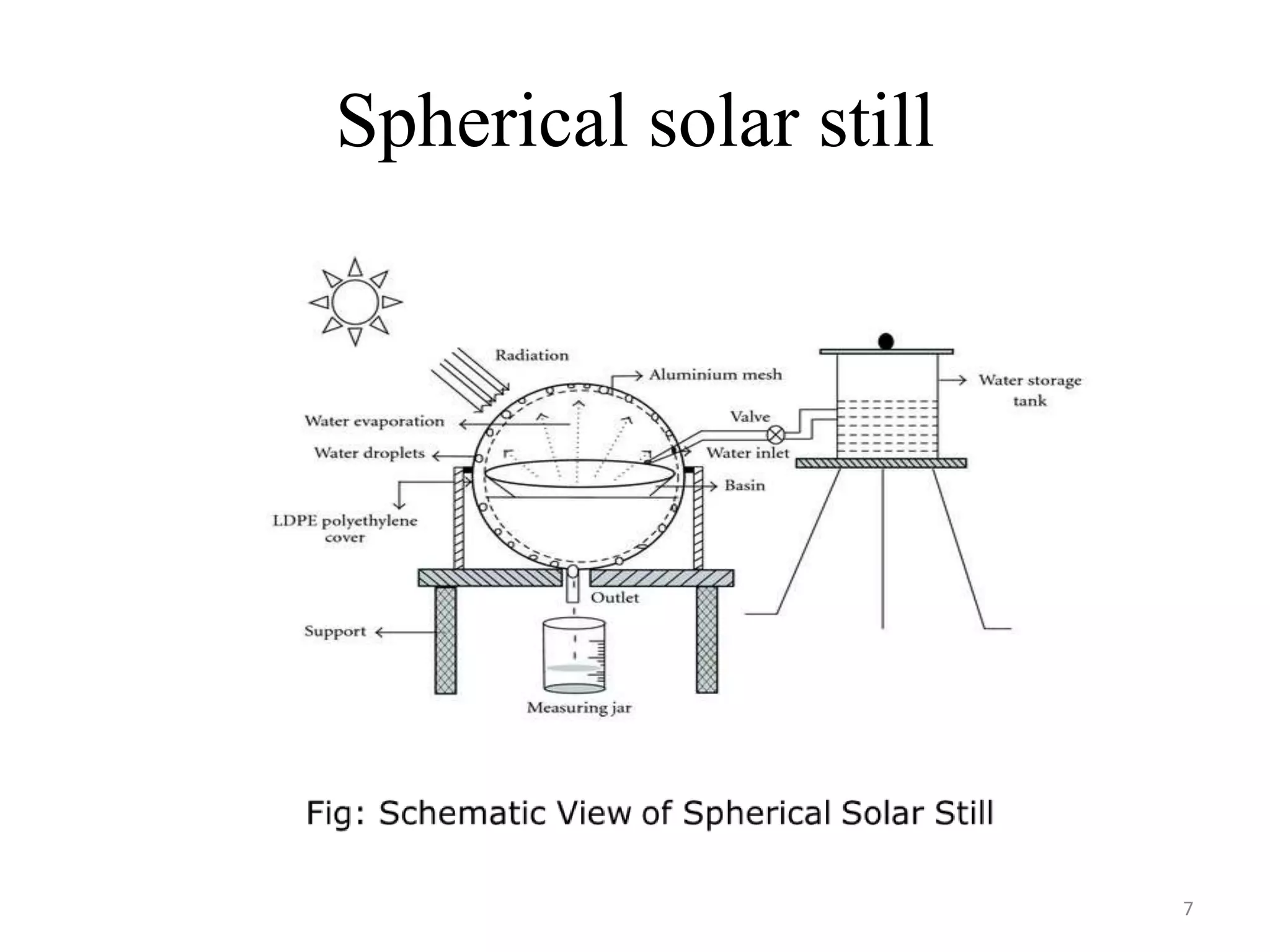
Spherical solar still
7
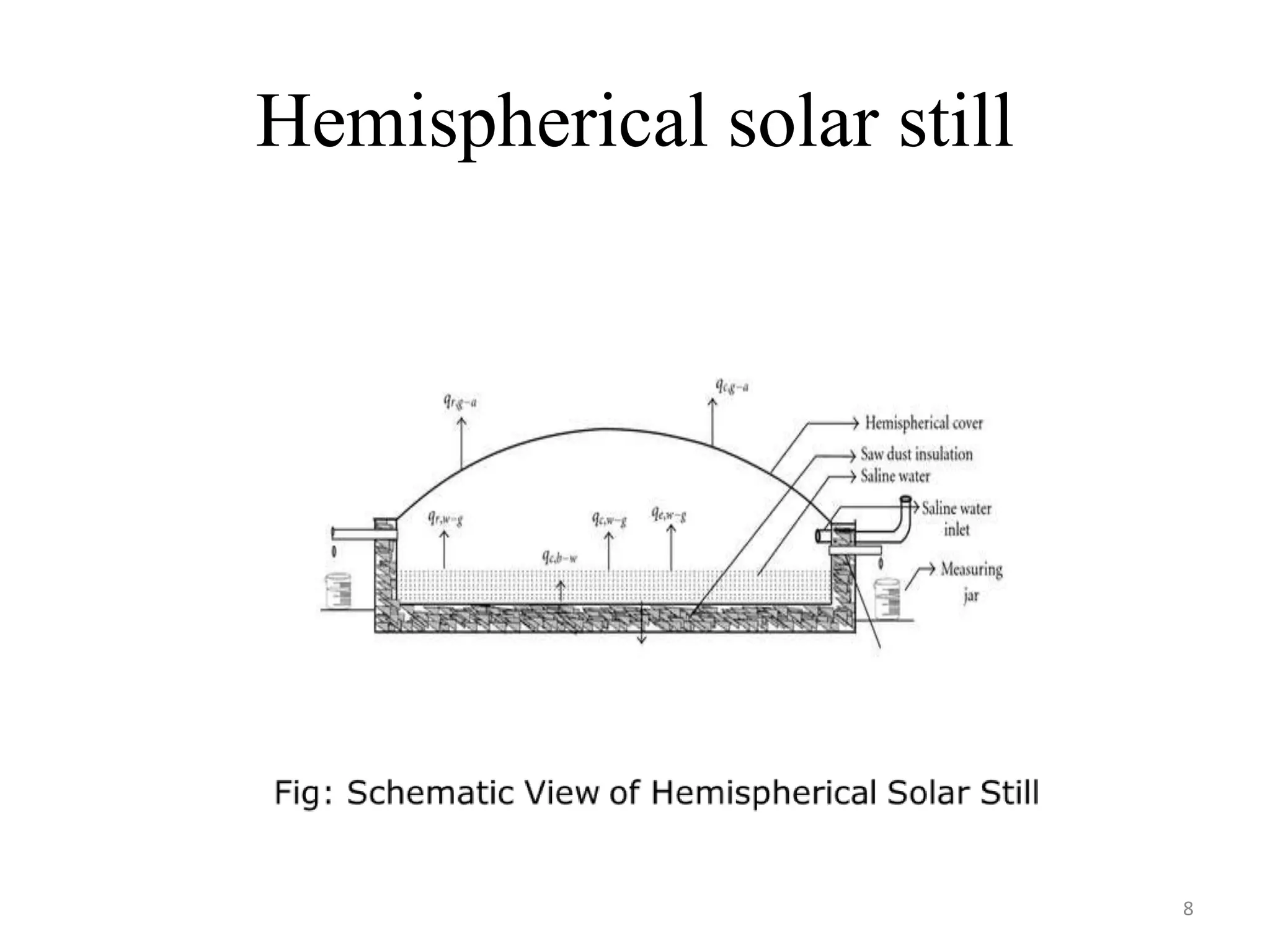
Hemispherical solar still
8
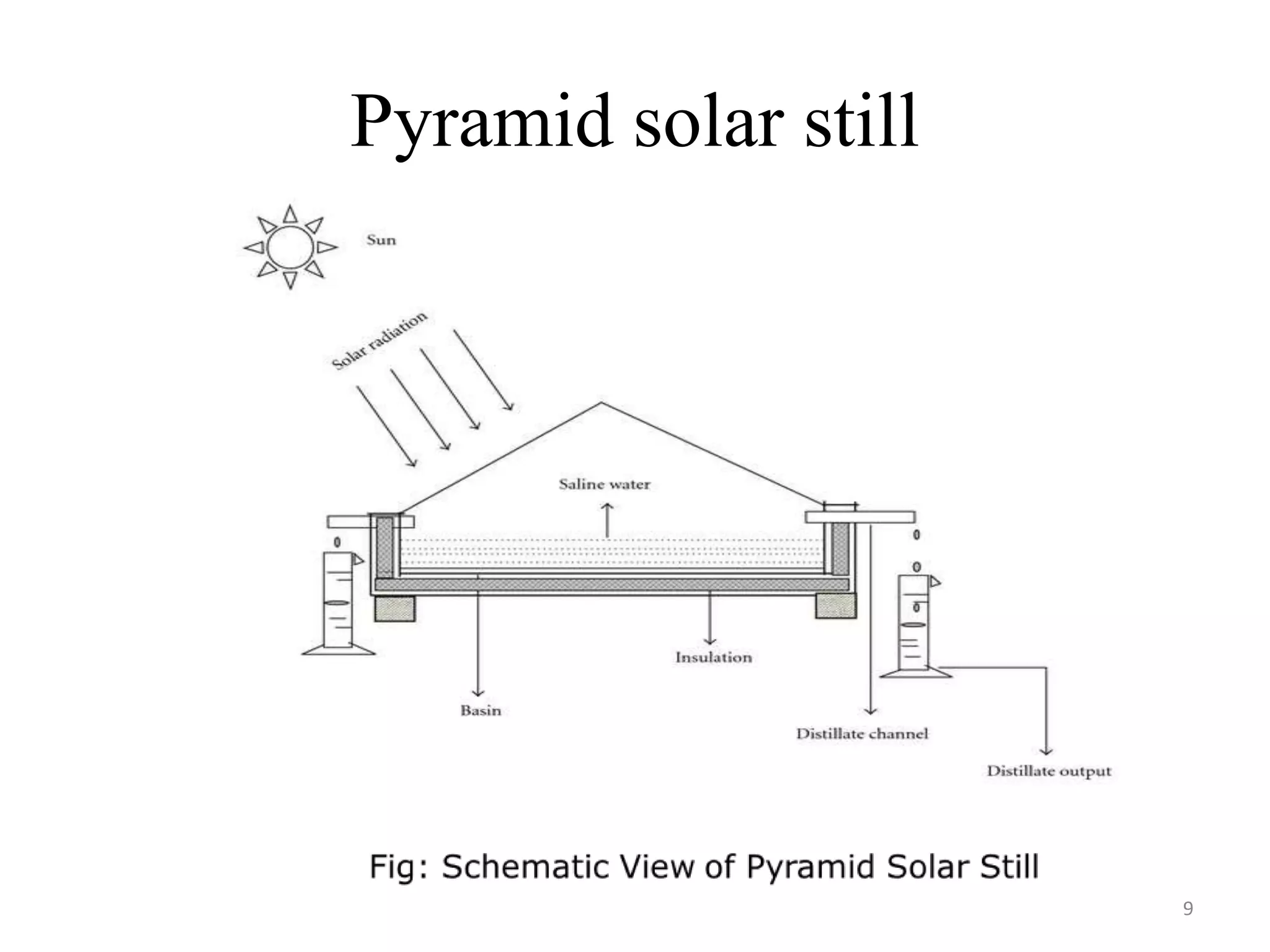
Pyramid solar still
9
Working of solar still
10
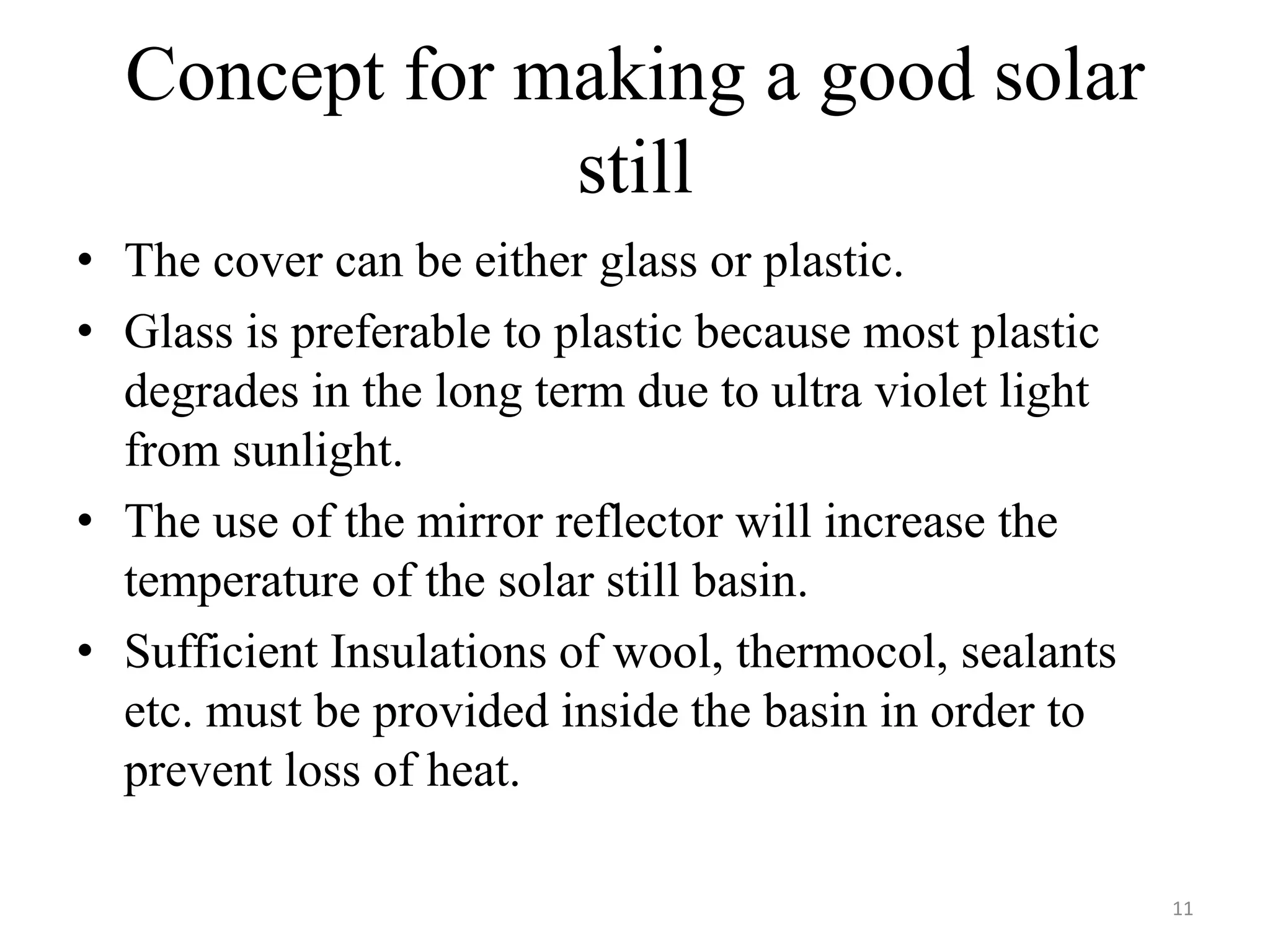
Concept for making a good solar
still
• The cover can be either glass or plastic.
• Glass is preferable to plastic because most plastic
degrades in the long term due to ultra violet light
from sunlight.
• The use of the mirror reflector will increase the
temperature of the solar still basin.
• Sufficient Insulations of wool, thermocol, sealants
etc. must be provided inside the basin in order to
prevent loss of heat.
11
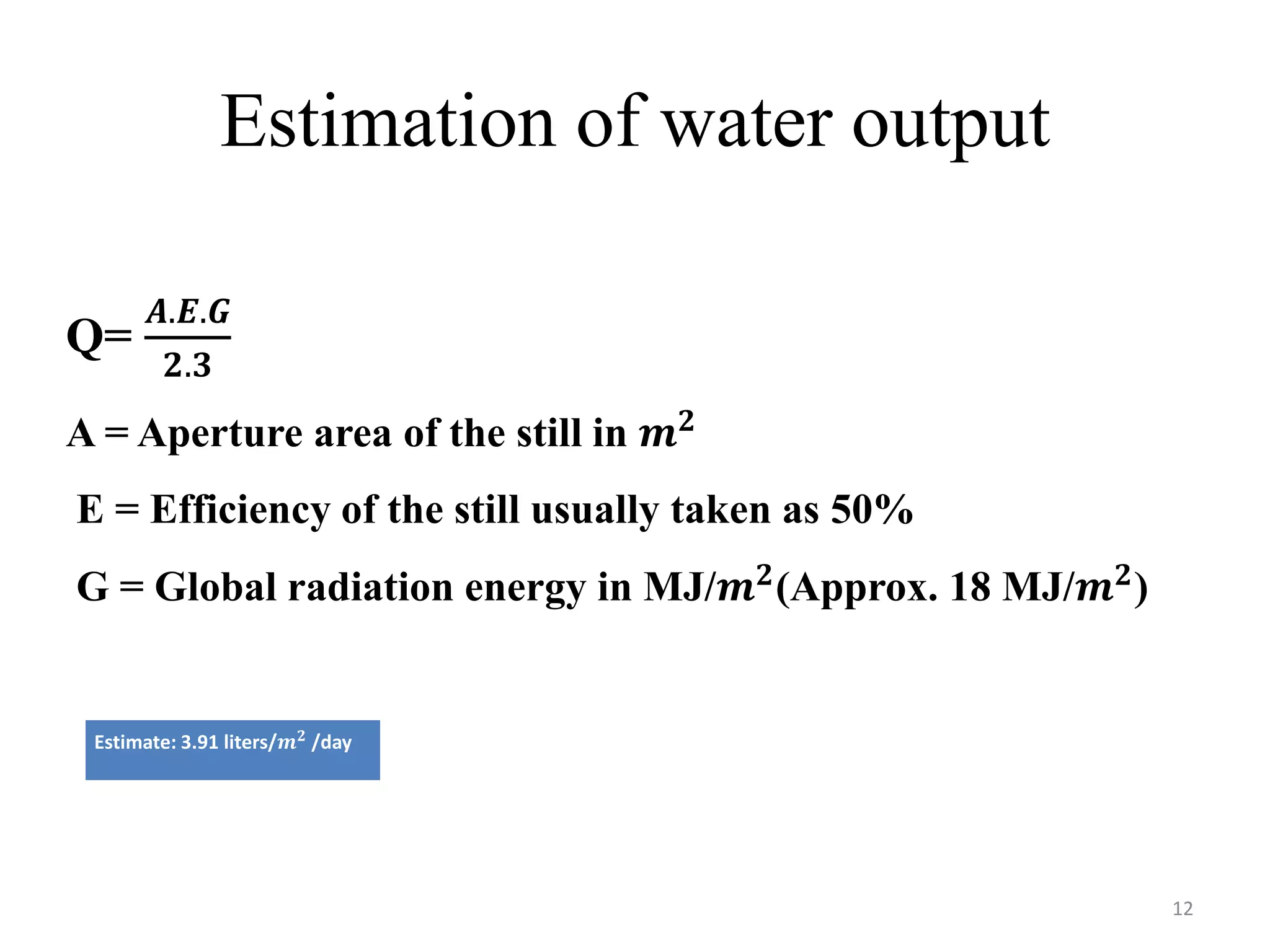
Estimation of water output
Estimate: 3.91 liters/𝒎 𝟐
/day
Q=
𝑨.𝑬.𝑮
𝟐.𝟑
A = Aperture area of the still in 𝒎 𝟐
E = Efficiency of the still usually taken as 50%
G = Global radiation energy in MJ/𝒎 𝟐(Approx. 18 MJ/𝒎 𝟐)
12
Advantages
• Free of charge sun energy (during sunlight it
eliminates 500 Watt electric consumption per one
hour of sunlight).
• There are no moving parts; it is therefore reliable and
almost maintenance free (cleaning is required
though).
• Water taste is claimed to be better since the device
act as a Solar Water Vaporizer and it doesn’t boil the
water (resembling rain water).
• Neutral pH is claimed (like rainwater), not like the
not neutral pH of steamed distilled water.
13
Disadvantages
• Low distillate output per unit area.
• Leakage of vapour through joints.
• High maintenance.
• Productivity decreases with time for a variety of
reasons.
14
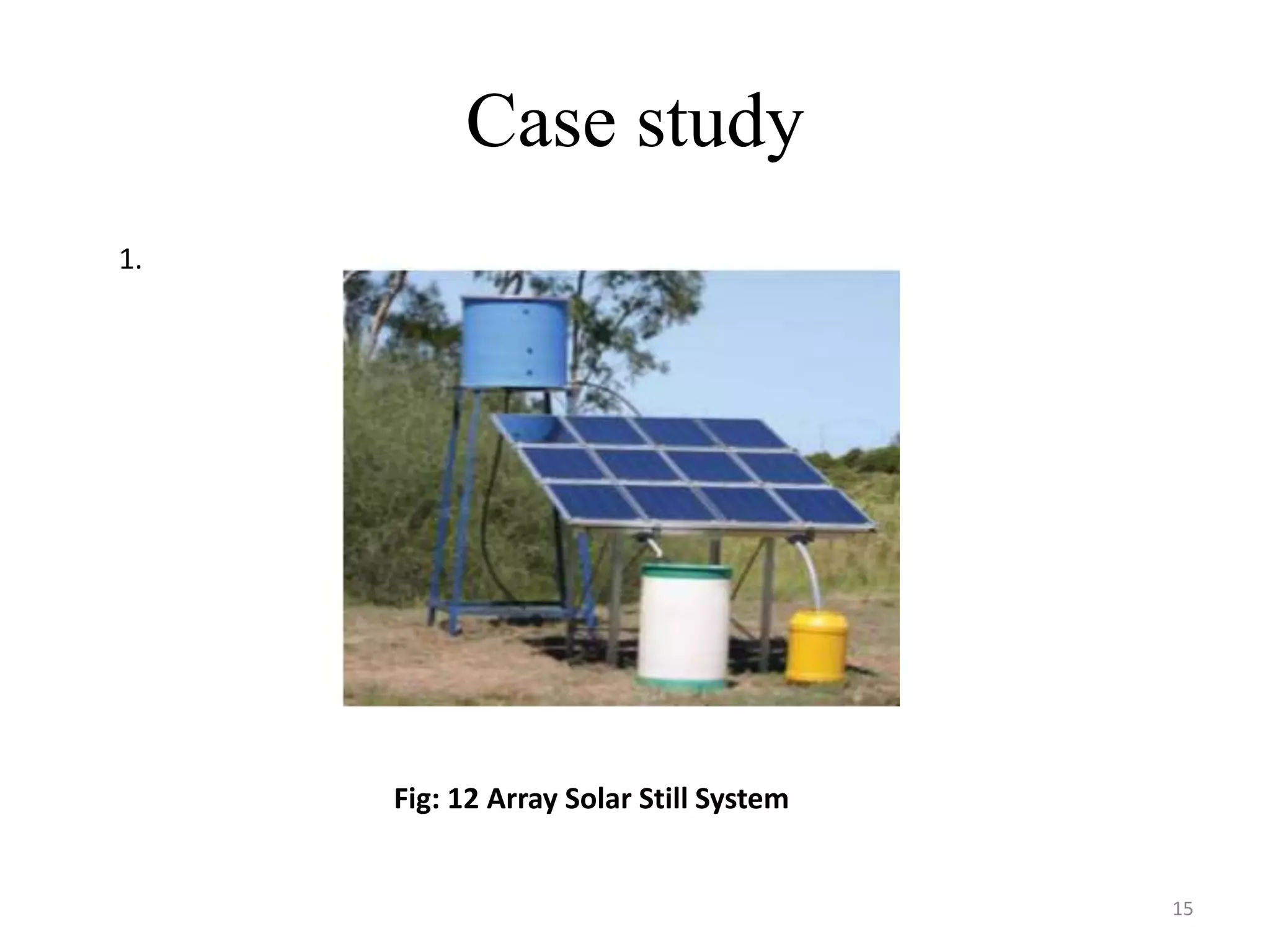
Case study
Fig: 12 Array Solar Still System
1.
15
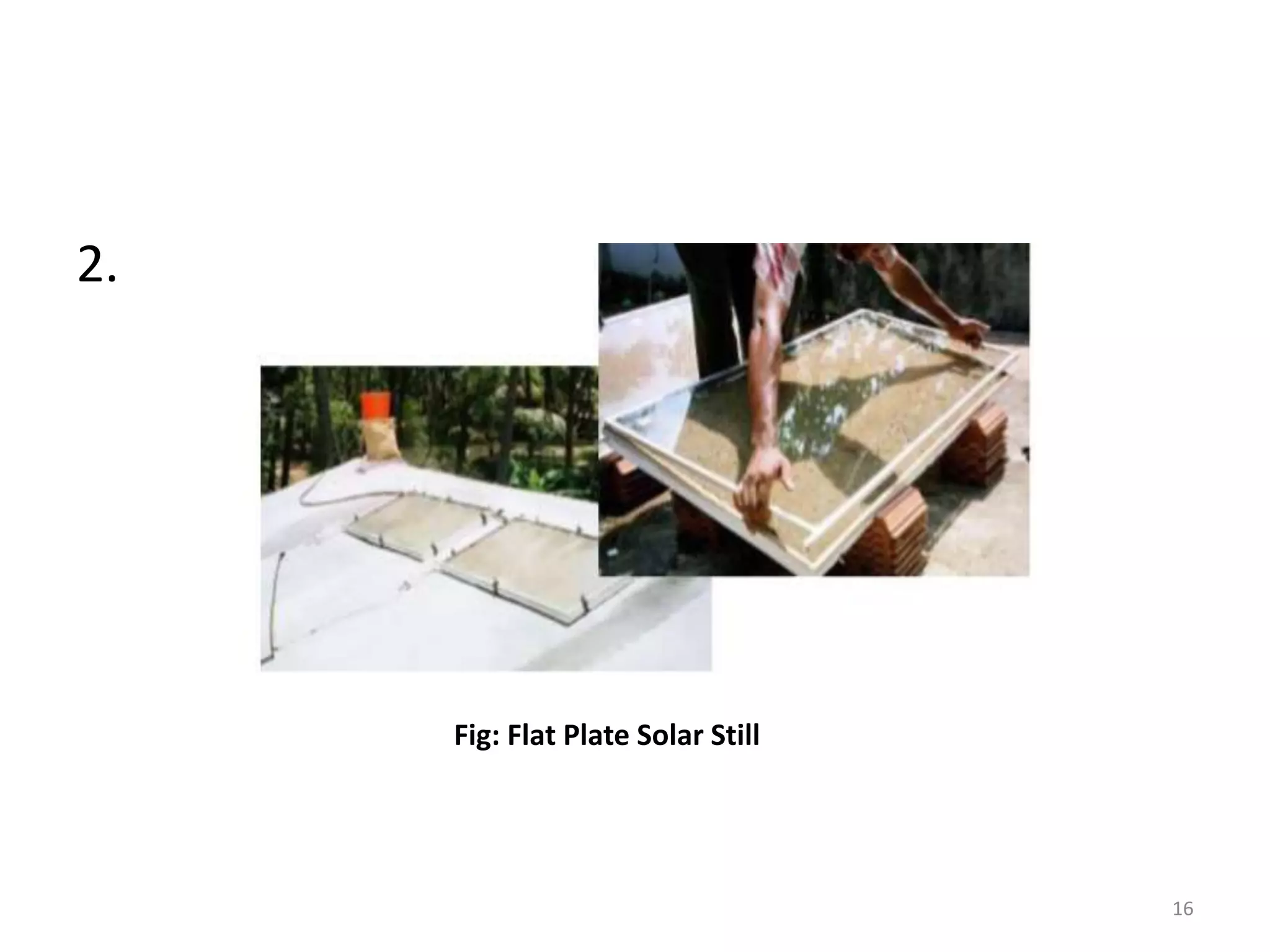
2.
Fig: Flat Plate Solar Still
16
Conclusion
• It was found from the experimental analysis that
increasing the ambient temperature from 32°C to
47°C will increase the productivity by approximate
12 to 23%.
• It was observed that when the water depth increases
from 0.01m to 0.03m the productivity decreased by
5%.
• Solar still productivity can also increase by use of
reflector by 3%.
• Capital cost can be reduced by using different designs
and new materials for construction of solar stills. 17
THANK YOU
18

purification of water using solar still

  • 1.
    Under the guidanceof Santhosh K.G Assistant professor Mechanical engineering M.I.T Mysore A Technical Seminar on WATER PURIFICATION USING SOLAR STILL Submitted by Mohamed Shakeeb Ahmed 4MH11ME069 1
  • 2.
    INTRODUCTION • A solarstill is a simple way of distilling water. • It uses solar energy to distill the water. • It removes impurities such as salt and other microbiological organisms. 2
  • 3.
    Water Impurities • Suspendedparticles. • Dissolved inorganic salts. • Dissolved organic compounds. • Micro-organisms. • Pyrogens. 3
  • 4.
    Types of purification •Distillation. • Vapour compression. • Reverse osmosis. 4
  • 5.
    Benefits of Distillation •It produces water of high quality. • Maintenance is almost negligible. • Any type of water can be purified into potable water by means of this process. • Wastage of water will be minimum. 5
  • 6.
    Types of solarstill • Spherical solar still. • Hemispherical solar still. • Pyramid solar still. 6
  • 7.
  • 8.
  • 9.
  • 10.
  • 11.
    Concept for makinga good solar still • The cover can be either glass or plastic. • Glass is preferable to plastic because most plastic degrades in the long term due to ultra violet light from sunlight. • The use of the mirror reflector will increase the temperature of the solar still basin. • Sufficient Insulations of wool, thermocol, sealants etc. must be provided inside the basin in order to prevent loss of heat. 11
  • 12.
    Estimation of wateroutput Estimate: 3.91 liters/𝒎 𝟐 /day Q= 𝑨.𝑬.𝑮 𝟐.𝟑 A = Aperture area of the still in 𝒎 𝟐 E = Efficiency of the still usually taken as 50% G = Global radiation energy in MJ/𝒎 𝟐(Approx. 18 MJ/𝒎 𝟐) 12
  • 13.
    Advantages • Free ofcharge sun energy (during sunlight it eliminates 500 Watt electric consumption per one hour of sunlight). • There are no moving parts; it is therefore reliable and almost maintenance free (cleaning is required though). • Water taste is claimed to be better since the device act as a Solar Water Vaporizer and it doesn’t boil the water (resembling rain water). • Neutral pH is claimed (like rainwater), not like the not neutral pH of steamed distilled water. 13
  • 14.
    Disadvantages • Low distillateoutput per unit area. • Leakage of vapour through joints. • High maintenance. • Productivity decreases with time for a variety of reasons. 14
  • 15.
    Case study Fig: 12Array Solar Still System 1. 15
  • 16.
    2. Fig: Flat PlateSolar Still 16
  • 17.
    Conclusion • It wasfound from the experimental analysis that increasing the ambient temperature from 32°C to 47°C will increase the productivity by approximate 12 to 23%. • It was observed that when the water depth increases from 0.01m to 0.03m the productivity decreased by 5%. • Solar still productivity can also increase by use of reflector by 3%. • Capital cost can be reduced by using different designs and new materials for construction of solar stills. 17
  • 18.