Tinnitus
Pulsatile tinnitus
• Perception of sound is not that of a continuous form
• The perceived sound  form of a pulsation, clicking or fluttering
• Specific subtype of tinnitus management different
• Classified
↓
synchronous
 non-synchronous
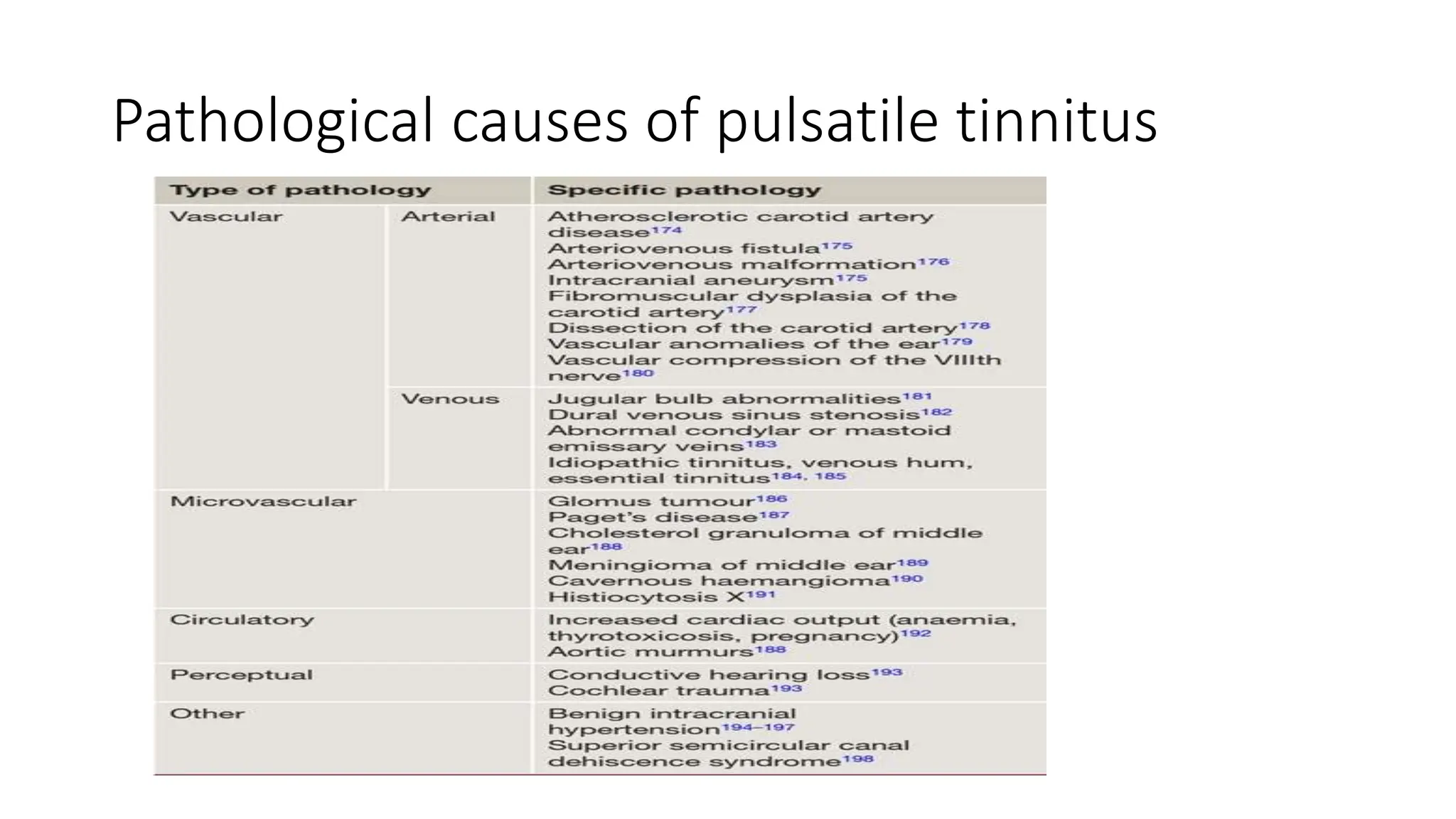
Pathological causes of pulsatile tinnitus
Synchronous pulsatile tinnitus
• Synchronous pulsatile tinnitus may result of abnormal
vascular anatomy in the vicinity of the peripheral auditory
system.
• Systemic aberrations ofthe circulation hyperdynamic
circulation role in development
• Idiopathic intracranial hypertension or pseudotumor cerebri
gaining attention as the cause of synchronous pulsatile
tinnitus
• Superior semicircular canal dehiscence syndrome beginning
to gain attention as the cause
Investigation
• Simple bood test  to exclude anaemia and thyrotoxicosis.
• Contrast-enhanced computed tomography of temporal bone,
scalp, brain If otoscopy reveals a retrotympanic mass
• duplex carotid ultrasonography atherosclerotic carotid artery
disease
• Angiographic imaging often reserved for severe recalcitrant
cases
• Ophthalmological assessment,lumbar puncture If idiopathic
intracranial hypertension is suspected
Treatment
Supportive
• When no obvious cause is identified, providing reassurance
These patients  CBT or TRT
• Sound therapies subjective idiopathic tinnitus
Surgerical management of pulsatile tinnitus
• Depending on the causative pathology treatments may
include decompressive and destructive procedures
• Microvascular decompression of vascular loops vascular
loops -close proximity to the cochlear nerves of patients with
tinnitus
Non-synchronous pulsatile tinnitus
• Tinnitus may manifest itself as a train of rhythmical clicks or a
buzzing or fluttering noise or sensation that is not synchronous
with the pulse.
• Sounds often related to myoclonic activity middle ear muscle
• Other muscles within the head and neck region like palatal
muscle
• Contraction tensor tympani and/or stapedius muscle -
>clicking or buzzing noise
• Tinnitus muscle contraction noise,vibration of the tympanic
membrane or movement of the ossicular chain
INVESTIGATION
• Tympanometry middle ear myoclonus
• MRI recommended to exclude a pathology with the triangle of
Guillain–Mollaret palatal myoclonus
↓
palatal myoclonus
TREATMENT
Pharmological
• use of benzodiazepines,orphenadrine,
carbamazepine,piracetamand botulinum toxin
Supportive treatment
• Relaxation therapy,psychotherapy,tinnitus maskingand
biofeedback
Surgical
• surgical division of the middle ear tendons(both tensor tympani
and stapedius)

pulsatile Tinnitus ENT AND HEAD NECK SURGERY.pptx

  • 1.
  • 2.
    Pulsatile tinnitus • Perceptionof sound is not that of a continuous form • The perceived sound  form of a pulsation, clicking or fluttering • Specific subtype of tinnitus management different • Classified ↓ synchronous  non-synchronous
  • 3.
    Pathological causes ofpulsatile tinnitus
  • 4.
    Synchronous pulsatile tinnitus •Synchronous pulsatile tinnitus may result of abnormal vascular anatomy in the vicinity of the peripheral auditory system. • Systemic aberrations ofthe circulation hyperdynamic circulation role in development • Idiopathic intracranial hypertension or pseudotumor cerebri gaining attention as the cause of synchronous pulsatile tinnitus • Superior semicircular canal dehiscence syndrome beginning to gain attention as the cause
  • 5.
    Investigation • Simple boodtest  to exclude anaemia and thyrotoxicosis. • Contrast-enhanced computed tomography of temporal bone, scalp, brain If otoscopy reveals a retrotympanic mass • duplex carotid ultrasonography atherosclerotic carotid artery disease • Angiographic imaging often reserved for severe recalcitrant cases • Ophthalmological assessment,lumbar puncture If idiopathic intracranial hypertension is suspected
  • 6.
    Treatment Supportive • When noobvious cause is identified, providing reassurance These patients  CBT or TRT • Sound therapies subjective idiopathic tinnitus
  • 7.
    Surgerical management ofpulsatile tinnitus • Depending on the causative pathology treatments may include decompressive and destructive procedures • Microvascular decompression of vascular loops vascular loops -close proximity to the cochlear nerves of patients with tinnitus
  • 8.
    Non-synchronous pulsatile tinnitus •Tinnitus may manifest itself as a train of rhythmical clicks or a buzzing or fluttering noise or sensation that is not synchronous with the pulse. • Sounds often related to myoclonic activity middle ear muscle • Other muscles within the head and neck region like palatal muscle • Contraction tensor tympani and/or stapedius muscle - >clicking or buzzing noise • Tinnitus muscle contraction noise,vibration of the tympanic membrane or movement of the ossicular chain
  • 9.
    INVESTIGATION • Tympanometry middleear myoclonus • MRI recommended to exclude a pathology with the triangle of Guillain–Mollaret palatal myoclonus ↓ palatal myoclonus
  • 10.
    TREATMENT Pharmological • use ofbenzodiazepines,orphenadrine, carbamazepine,piracetamand botulinum toxin Supportive treatment • Relaxation therapy,psychotherapy,tinnitus maskingand biofeedback Surgical • surgical division of the middle ear tendons(both tensor tympani and stapedius)

Editor's Notes

  • #6 If otoscopy reveals a retrotympanic mass, a contrast-enhanced computed tomography (CT) of the temporal bone, brain and scalp is indicated
  • #8 Microvascular decompression of vascular loops in tinnitus patients has been used with very variable results, ranging from 40% improvement201 to 77%