D R A N A N T H A K R I S H N A N P B
D E P T O F E N T
G G H , S W M
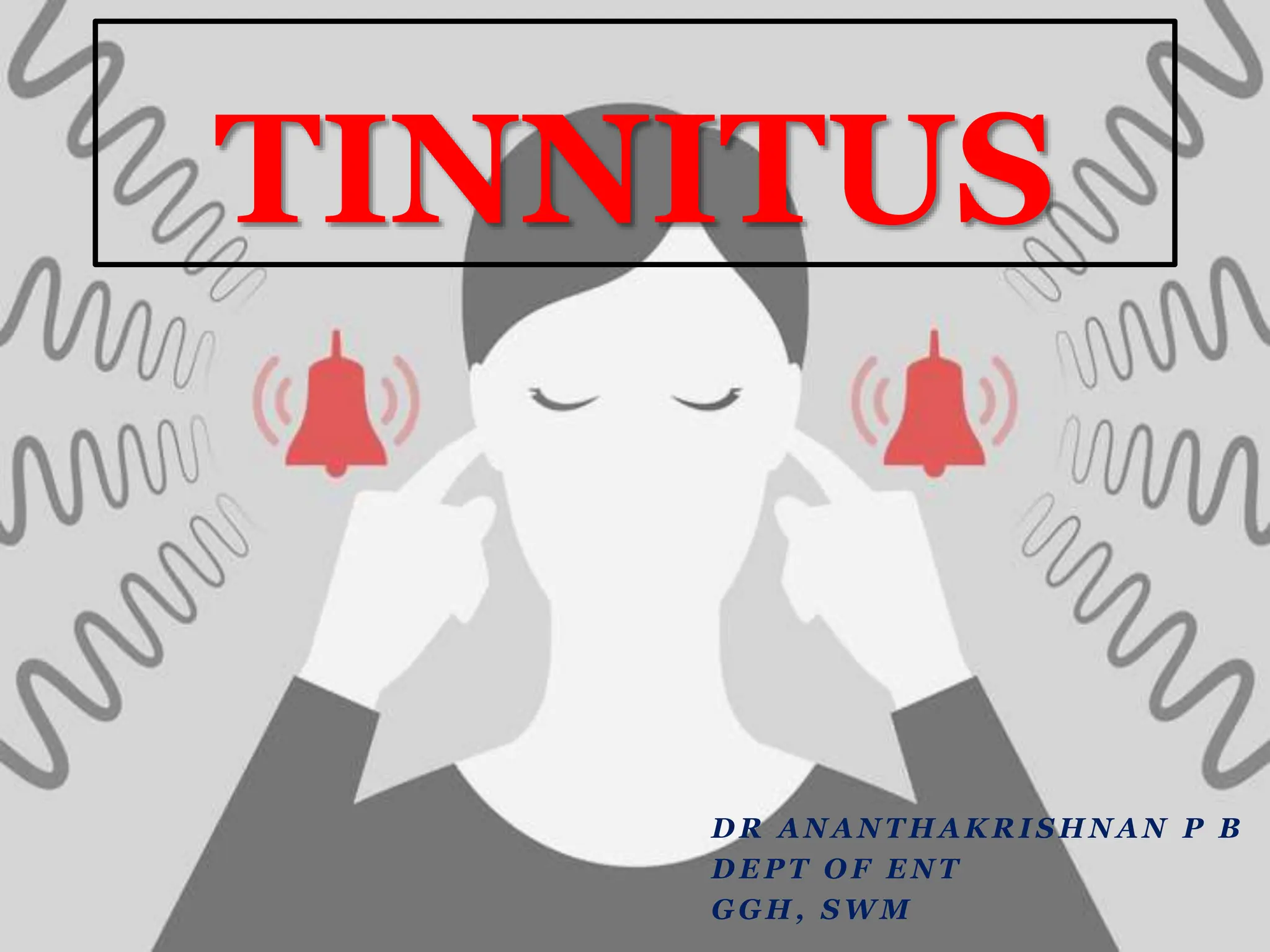
TINNITUS
Tinnitus
 Tinnitus is ringing sound or noise in the ear
 Described by patient as roaring, hissing, swishing,
rustling or clicking.
 It is defined as an auditory perception due to
aberrant spontaneous activity arising from an altered
state of excitation or inhibition within the auditory
system.
 It can be subjective or objective.
 Usually unilateral
 It may vary in pitch and loudness
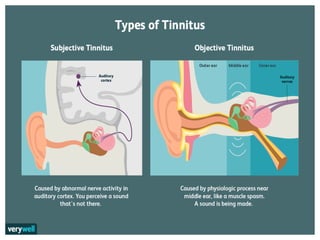
Subjective v/s Objective
Subjective : audible only by the patient
 It may have its origin in the external ear, middle ear,
inner ear, VIIIth nerve or the CNS.
 Systemic diseases like arteriosclerosis, HTN, anemia
and certain drugs may act through inner ear or
central auditory pathways.
Objective : audible to the examiner as well, usually
caused by arteriovenous malformations, glomus
tumours, palatal or tympanic myoclonus, patulous
eustachian tube, TM joint abnormality.
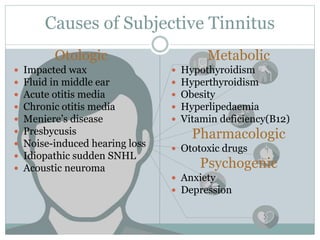
Causes of Subjective Tinnitus
Otologic
 Impacted wax
 Fluid in middle ear
 Acute otitis media
 Chronic otitis media
 Meniere’s disease
 Presbycusis
 Noise-induced hearing loss
 Idiopathic sudden SNHL
 Acoustic neuroma
Metabolic
 Hypothyroidism
 Hyperthyroidism
 Obesity
 Hyperlipedaemia
 Vitamin deficiency(B12)
Pharmacologic
 Ototoxic drugs
Psychogenic
 Anxiety
 Depression
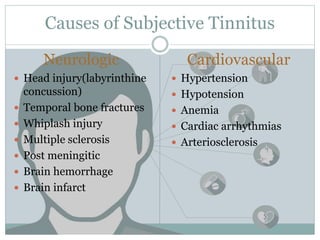
Causes of Subjective Tinnitus
Neurologic
 Head injury(labyrinthine
concussion)
 Temporal bone fractures
 Whiplash injury
 Multiple sclerosis
 Post meningitic
 Brain hemorrhage
 Brain infarct
Cardiovascular
 Hypertension
 Hypotension
 Anemia
 Cardiac arrhythmias
 Arteriosclerosis
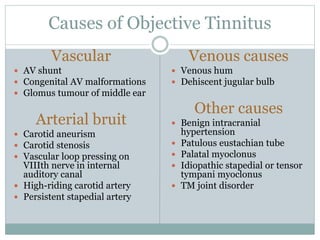
Causes of Objective Tinnitus
Vascular
 AV shunt
 Congenital AV malformations
 Glomus tumour of middle ear
Arterial bruit
 Carotid aneurism
 Carotid stenosis
 Vascular loop pressing on
VIIIth nerve in internal
auditory canal
 High-riding carotid artery
 Persistent stapedial artery
Venous causes
 Venous hum
 Dehiscent jugular bulb
Other causes
 Benign intracranial
hypertension
 Patulous eustachian tube
 Palatal myoclonus
 Idiopathic stapedial or tensor
tympani myoclonus
 TM joint disorder
Pathophysiology
I. Cochlear/ Peripheral
mechanisms
 Structural cochlear damage
 VIIIth nerve pathological excitation
 Spontaneous cochlear oscillations(SOAE)
 Glutamate excitotoxicity
 Enhanced sensitivity of NMDA & non-NMDA
receptors
Pathophysiology
II. Central mechanisms
 Abnormal afferent excitation(including irritative
lesions)
 Extralemniscal auditory activation
 Efferent dysinhibition/Reduction of GABA effect
 Tonotopic transformation
Pathophysiology
III.Psychological stress
 Monoamine neurotransmitter circuits:
Serotonin, Norepinephrine, Dopamine
Investigations
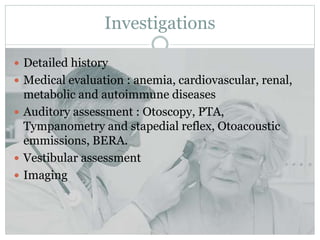
 Detailed history
 Medical evaluation : anemia, cardiovascular, renal,
metabolic and autoimmune diseases
 Auditory assessment : Otoscopy, PTA,
Tympanometry and stapedial reflex, Otoacoustic
emmissions, BERA.
 Vestibular assessment
 Imaging
Treatment
 Treatment of underlying disorders
 Surgical treatment : Auditory nerve section, Cochlear
destruction.
 Tinnitus retraining therapy
 Instrumentation : Hearing aids, Noise generators
 Psychotherapy
 Pharmacological : Antidepressants, GABA analogues,
Ca channel antagonists, Antiepileptics, Selective
glutamate receptor antagonists, Prostaglandin
analogues.
Tinnitus Retraining Therapy
 Developed by Jastreboff from University of
Maryland.
 It aims to attenuate connections between auditory,
limbic and autonomic nervous systems and thus
create tinnitus habituation.
 It is based on the neurophysiological model of
tinnitus.
 It presumes that tinnitus doesnot cause as much
annoyance as the emotional reactions generated
from limbic and autonomic systems.
Tinnitus Retraining Therapy
It occurs at two levels :
1. Habituation of reaction : it is uncoupling of brain
and body from negative reactions to tinnitus
2. Habituation of tinnitus : it is blocking of the
tinnitus related neuronal activity to reach level of
consciousness.
Tinnitus Retraining Therapy
Therapy consists of two major components :
1. Counselling : it is important to educate patients about
tinnitus, its mechanism of generation, perception of
tinnitus at subcortical and cortical levels and
plasticity of brain which can habituate any sensory
stimuli.
2. Sound therapy : the patient is exposed to
environmental sounds, music, radio, television or use
of hearing aids(if suffering from hearing loss)
 To produce external sound for habituation, sound
generators are used which produce continuous low-
level, broad-band noise for atleast 8 hours a day.
Tinnitus Retraining Therapy
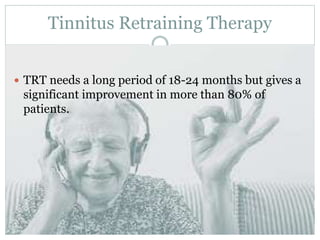
 TRT needs a long period of 18-24 months but gives a
significant improvement in more than 80% of
patients.
Thank you

TINNITUS.pptx

  • 1.
    D R AN A N T H A K R I S H N A N P B D E P T O F E N T G G H , S W M TINNITUS
  • 2.
    Tinnitus  Tinnitus isringing sound or noise in the ear  Described by patient as roaring, hissing, swishing, rustling or clicking.  It is defined as an auditory perception due to aberrant spontaneous activity arising from an altered state of excitation or inhibition within the auditory system.  It can be subjective or objective.  Usually unilateral  It may vary in pitch and loudness
  • 3.
    Subjective v/s Objective Subjective: audible only by the patient  It may have its origin in the external ear, middle ear, inner ear, VIIIth nerve or the CNS.  Systemic diseases like arteriosclerosis, HTN, anemia and certain drugs may act through inner ear or central auditory pathways. Objective : audible to the examiner as well, usually caused by arteriovenous malformations, glomus tumours, palatal or tympanic myoclonus, patulous eustachian tube, TM joint abnormality.
  • 5.
    Causes of SubjectiveTinnitus Otologic  Impacted wax  Fluid in middle ear  Acute otitis media  Chronic otitis media  Meniere’s disease  Presbycusis  Noise-induced hearing loss  Idiopathic sudden SNHL  Acoustic neuroma Metabolic  Hypothyroidism  Hyperthyroidism  Obesity  Hyperlipedaemia  Vitamin deficiency(B12) Pharmacologic  Ototoxic drugs Psychogenic  Anxiety  Depression
  • 6.
    Causes of SubjectiveTinnitus Neurologic  Head injury(labyrinthine concussion)  Temporal bone fractures  Whiplash injury  Multiple sclerosis  Post meningitic  Brain hemorrhage  Brain infarct Cardiovascular  Hypertension  Hypotension  Anemia  Cardiac arrhythmias  Arteriosclerosis
  • 7.
    Causes of ObjectiveTinnitus Vascular  AV shunt  Congenital AV malformations  Glomus tumour of middle ear Arterial bruit  Carotid aneurism  Carotid stenosis  Vascular loop pressing on VIIIth nerve in internal auditory canal  High-riding carotid artery  Persistent stapedial artery Venous causes  Venous hum  Dehiscent jugular bulb Other causes  Benign intracranial hypertension  Patulous eustachian tube  Palatal myoclonus  Idiopathic stapedial or tensor tympani myoclonus  TM joint disorder
  • 8.
    Pathophysiology I. Cochlear/ Peripheral mechanisms Structural cochlear damage  VIIIth nerve pathological excitation  Spontaneous cochlear oscillations(SOAE)  Glutamate excitotoxicity  Enhanced sensitivity of NMDA & non-NMDA receptors
  • 9.
    Pathophysiology II. Central mechanisms Abnormal afferent excitation(including irritative lesions)  Extralemniscal auditory activation  Efferent dysinhibition/Reduction of GABA effect  Tonotopic transformation
  • 10.
    Pathophysiology III.Psychological stress  Monoamineneurotransmitter circuits: Serotonin, Norepinephrine, Dopamine
  • 11.
    Investigations  Detailed history Medical evaluation : anemia, cardiovascular, renal, metabolic and autoimmune diseases  Auditory assessment : Otoscopy, PTA, Tympanometry and stapedial reflex, Otoacoustic emmissions, BERA.  Vestibular assessment  Imaging
  • 12.
    Treatment  Treatment ofunderlying disorders  Surgical treatment : Auditory nerve section, Cochlear destruction.  Tinnitus retraining therapy  Instrumentation : Hearing aids, Noise generators  Psychotherapy  Pharmacological : Antidepressants, GABA analogues, Ca channel antagonists, Antiepileptics, Selective glutamate receptor antagonists, Prostaglandin analogues.
  • 13.
    Tinnitus Retraining Therapy Developed by Jastreboff from University of Maryland.  It aims to attenuate connections between auditory, limbic and autonomic nervous systems and thus create tinnitus habituation.  It is based on the neurophysiological model of tinnitus.  It presumes that tinnitus doesnot cause as much annoyance as the emotional reactions generated from limbic and autonomic systems.
  • 14.
    Tinnitus Retraining Therapy Itoccurs at two levels : 1. Habituation of reaction : it is uncoupling of brain and body from negative reactions to tinnitus 2. Habituation of tinnitus : it is blocking of the tinnitus related neuronal activity to reach level of consciousness.
  • 15.
    Tinnitus Retraining Therapy Therapyconsists of two major components : 1. Counselling : it is important to educate patients about tinnitus, its mechanism of generation, perception of tinnitus at subcortical and cortical levels and plasticity of brain which can habituate any sensory stimuli. 2. Sound therapy : the patient is exposed to environmental sounds, music, radio, television or use of hearing aids(if suffering from hearing loss)  To produce external sound for habituation, sound generators are used which produce continuous low- level, broad-band noise for atleast 8 hours a day.
  • 16.
    Tinnitus Retraining Therapy TRT needs a long period of 18-24 months but gives a significant improvement in more than 80% of patients.
  • 17.