Public Workshop #2October 2010
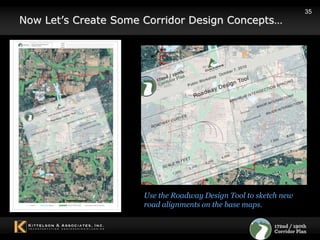
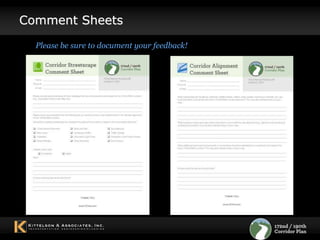
2Meeting AgendaWhy are we here? Corridor Design 101 Alignments and StreetscapesOpportunities and Constraints Future Plans Workshop – 2 topics Alignments and Streetscapes
Why here? Why now? (See Project YouTube Video)
Purpose of This ProjectAddress corridor congestion and safety problems Serve future north-south trafficServe expected population growth in the areaDamascus Happy Valley Pleasant Valley Plan area GreshamServe the growing demand for regional travel
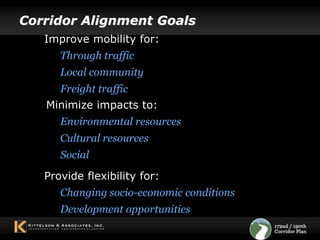
Corridor Alignment GoalsImprove mobility for:Through traffic  Local community Freight trafficMinimize impacts to:Environmental resources Cultural resourcesSocial Provide flexibility for:Changing socio-economic conditions Development opportunities
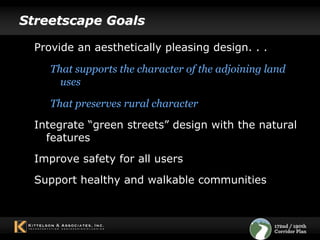
Streetscape GoalsProvide an aesthetically pleasing design. . . That supports the character of the adjoining land usesThat preserves rural characterIntegrate “green streets” design with the natural features Improve safety for all users Support healthy and walkable communities
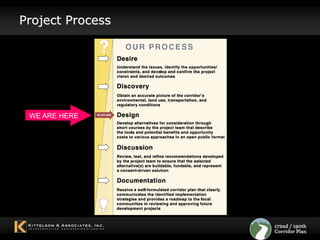
Project ProcessWE ARE HERE
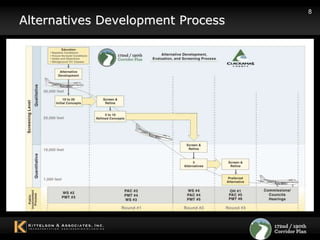
8Alternatives Development Process
Corridor Design 101Roadway Design BasicsHorizontal alignment  Vertical alignmentRoadway cross-sectionsIntersection treatmentsIntersection spacing
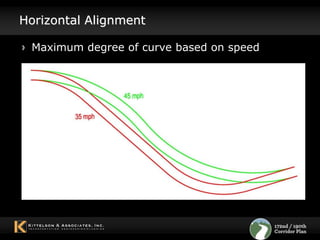
Horizontal AlignmentMaximum degree of curve based on speed
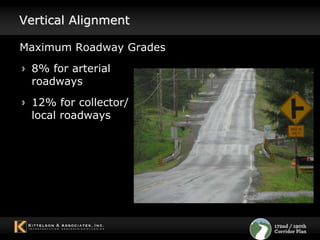
Vertical AlignmentMaximum Roadway Grades8% for arterial roadways12% for collector/local roadways
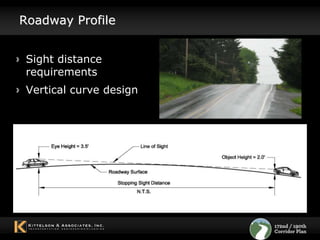
Roadway ProfileSight distance requirementsVertical curve design
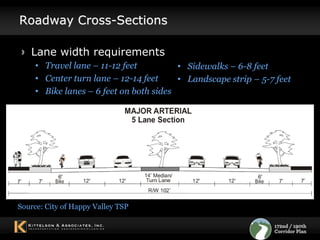
Roadway Cross-SectionsLane width requirements Travel lane – 11-12 feet
Center turn lane – 12-14 feet
Bike lanes – 6 feet on both sides
Sidewalks – 6-8 feet
Landscape strip – 5-7 feetSource: City of Happy Valley TSP
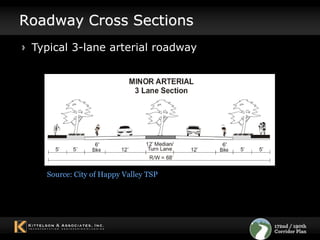
Roadway Cross SectionsTypical 3-lane arterial roadwaySource: City of Happy Valley TSP
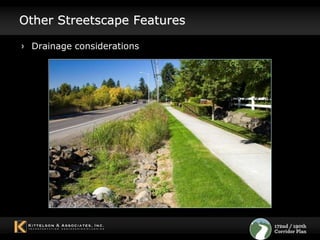
Other Streetscape FeaturesDrainage considerations
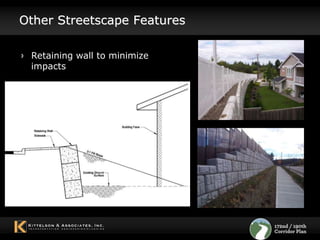
Other Streetscape FeaturesRetaining wall to minimize impacts
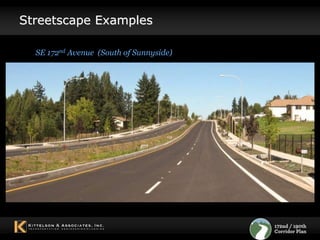
Streetscape ExamplesSE 172nd Avenue  (South of Sunnyside)
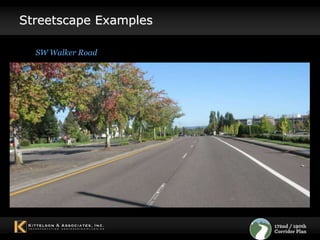
Streetscape ExamplesSW Walker Road
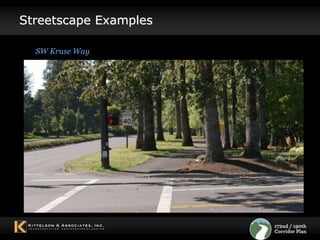
Streetscape ExamplesSW Kruse Way
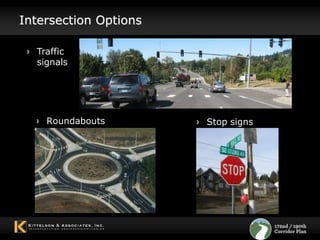
Intersection OptionsTraffic signalsRoundaboutsStop signs
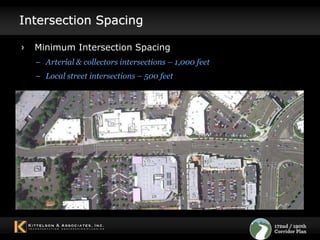
Intersection Spacing Minimum Intersection SpacingArterial & collectors intersections – 1,000 feet
Local street intersections – 500 feetCorridor Opportunities and ConstraintsDiscussed in Stakeholder interviewsMemos on existing conditionsMemos on projected future conditions
23Future Transportation Conditions -- 2035Projections in Project Study Area Households grow by more than 300%
Jobs grow by 1,200%
Virtually all intersections fail during peak hoursProjected Average Daily Traffic (ADT)16,000 vehicles/day (south of Foster Rd)
25,000 vehicles/day (north of Sunnyside Rd) 24Existing Transportation ConditionsTraffic volumes172nd Avenue:  8,500 vehicles /day (near Hemrick Rd)Foster Road :  7,500 vehicles /day (near Cheldelin Rd)SE Sunnyside Road:  9,000 vehicles /day (near 172nd Ave)All intersections operate acceptably except Foster Road/172nd Avenue (LOS F)Intersection crash rates are within normal levelsThere are no bike lanes or sidewalks
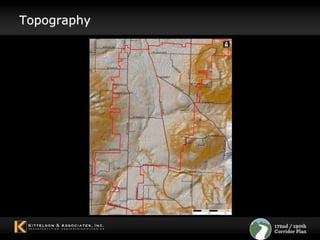
Topography
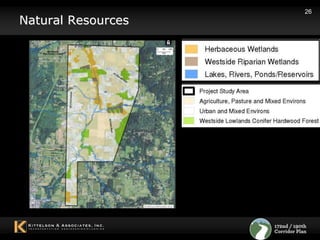
26Natural Resources
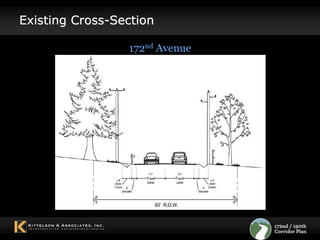
Existing Cross-Section172nd Avenue
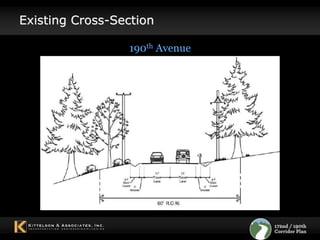
Existing Cross-Section190th Avenue
29Other Opportunities and Constraints10 historical resources eligible for National Register of Historic PlacesGenerally located along Foster RdNo recorded archaeological sites
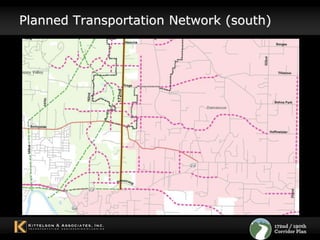
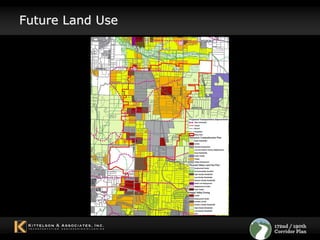
Future Plans for CorridorRegional Transportation System Plan Local Transportation System PlansLocal Comprehensive Plans 30
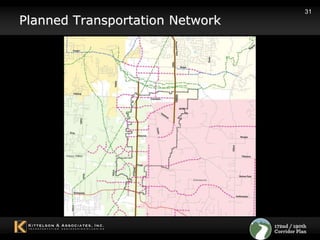
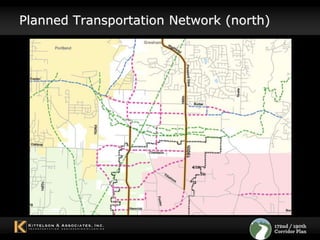
31Planned Transportation Network

Public Workshop #2