








How to Acquire Your Skills
Objectives
At the end of the lecture, the student should be able to:
- Identify learning & it’s importance
- Identify tips to improve learning
- Know how to become professional
- Know how to acquire clinical skills
How to Acquire Learning
Skills
Deem Al-Blaihed, BDS
Outline
• What is learning?
• Why is improving learning skills important?
• Tips to improve learning skills
• Taking care of your brain
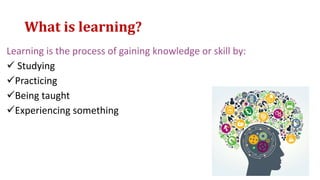
What is learning?
Learning is the process of gaining knowledge or skill by:
 Studying
Practicing
Being taught
Experiencing something
Why is improving learning skills
important?
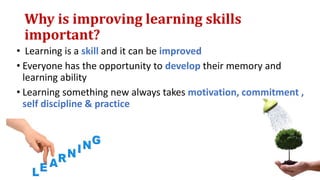
• Learning is a skill and it can be improved
• Everyone has the opportunity to develop their memory and
learning ability
• Learning something new always takes motivation, commitment ,
self discipline & practice
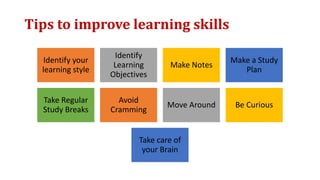
Tips to improve learning skills
Identify your
learning style
Identify
Learning
Objectives
Make Notes
Make a Study
Plan
Take Regular
Study Breaks
Avoid
Cramming
Move Around Be Curious
Take care of
your Brain
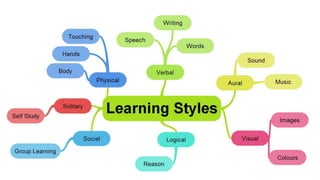
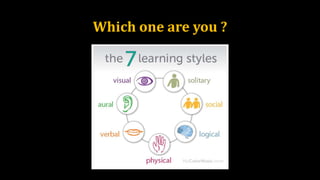
Identifying Your
Learning Style
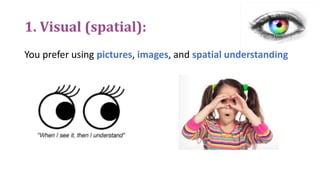
1. Visual (spatial):
You prefer using pictures, images, and spatial understanding
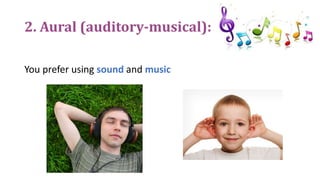
2. Aural (auditory-musical):
You prefer using sound and music
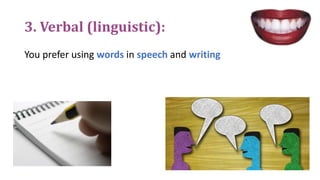
3. Verbal (linguistic):
You prefer using words in speech and writing
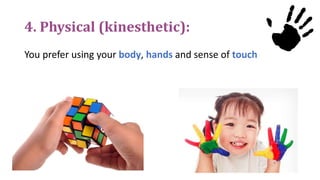
4. Physical (kinesthetic):
You prefer using your body, hands and sense of touch
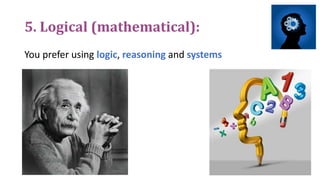
5. Logical (mathematical):
You prefer using logic, reasoning and systems
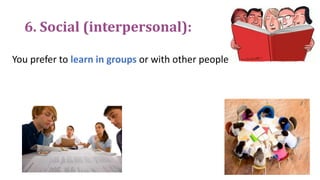
6. Social (interpersonal):
You prefer to learn in groups or with other people
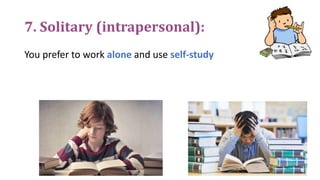
7. Solitary (intrapersonal):
You prefer to work alone and use self-study
Which one are you ?
Identifying Learning Objectives
• A learning objective states specifically what a student should
be able to do
• Learning objectives tell students what is important
• Learning objectives are what the teacher want the student
to learn
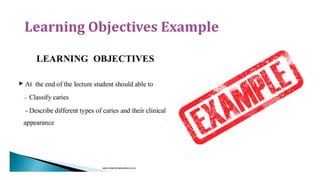
Learning Objectives Example
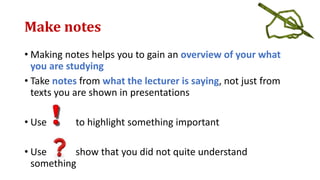
Make notes
• Making notes helps you to gain an overview of your what
you are studying
• Take notes from what the lecturer is saying, not just from
texts you are shown in presentations
• Use to highlight something important
• Use show that you did not quite understand
something
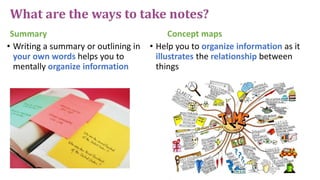
What are the ways to take notes?
Summary
• Writing a summary or outlining in
your own words helps you to
mentally organize information
Concept maps
• Help you to organize information as it
illustrates the relationship between
things
Make a Study Plan
• Think ahead and create an effective study plan
• It will help you organize your time
• It will put your mind at ease
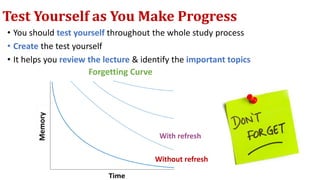
Test Yourself as You Make Progress
• You should test yourself throughout the whole study process
• Create the test yourself
• It helps you review the lecture & identify the important topics
With refresh
Without refresh
Forgetting Curve
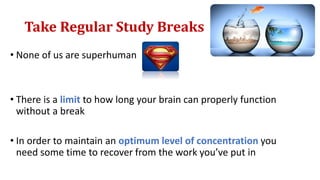
Take Regular Study Breaks
• None of us are superhuman
• There is a limit to how long your brain can properly function
without a break
• In order to maintain an optimum level of concentration you
need some time to recover from the work you’ve put in
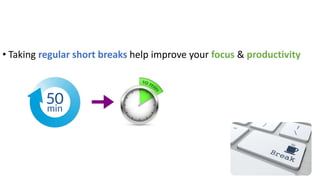
• Taking regular short breaks help improve your focus & productivity
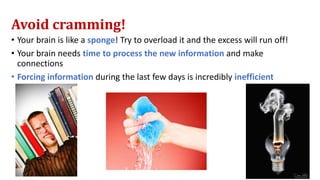
Avoid cramming!
• Your brain is like a sponge! Try to overload it and the excess will run off!
• Your brain needs time to process the new information and make
connections
• Forcing information during the last few days is incredibly inefficient
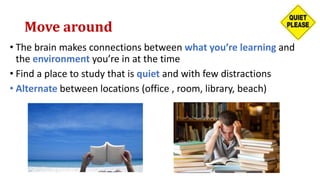
Move around
• The brain makes connections between what you’re learning and
the environment you’re in at the time
• Find a place to study that is quiet and with few distractions
• Alternate between locations (office , room, library, beach)
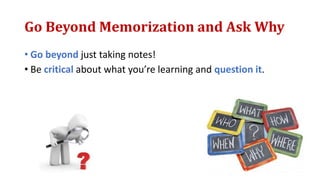
Go Beyond Memorization and Ask Why
• Go beyond just taking notes!
• Be critical about what you’re learning and question it.
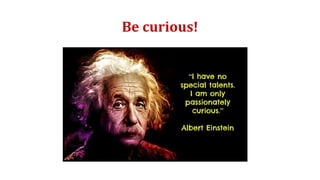
Be curious!
Taking care of your brain
Get enough sleep:
-A good night's sleep supports the functions of the brain and
memory.
- Insufficient sleep weakens your concentration and increases
restlessness
Taking care of your brain
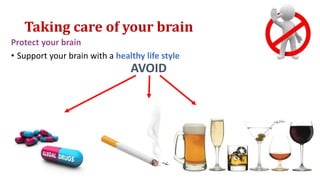
Protect your brain
• Support your brain with a healthy life style
AVOID
Taking care of your brain
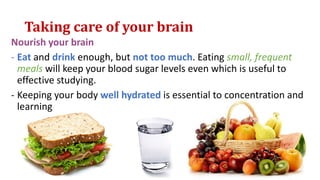
Nourish your brain
- Eat and drink enough, but not too much. Eating small, frequent
meals will keep your blood sugar levels even which is useful to
effective studying.
- Keeping your body well hydrated is essential to concentration and
learning
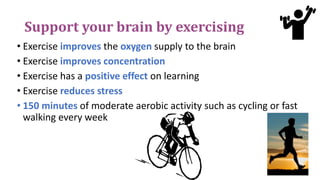
Support your brain by exercising
• Exercise improves the oxygen supply to the brain
• Exercise improves concentration
• Exercise has a positive effect on learning
• Exercise reduces stress
• 150 minutes of moderate aerobic activity such as cycling or fast
walking every week
How to Acquire Professional
Skills
Shimaa Ibrahim, BDS
Outline
• Profession definition
• Professional definition
• How to become professional
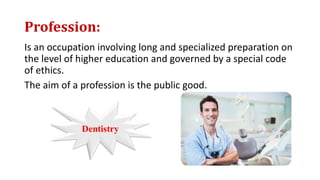
Profession:
Is an occupation involving long and specialized preparation on
the level of higher education and governed by a special code
of ethics.
The aim of a profession is the public good.
Professional:
Refers to one who practices a learned profession and has
special knowledge and skills used to benefit the public,
regardless of personal gain.
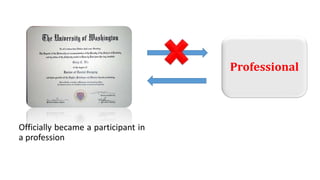
Officially became a participant in
a profession
Professional
To become a dental professional you
should
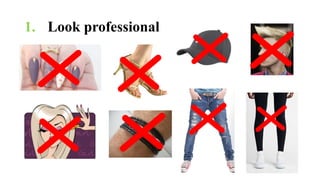
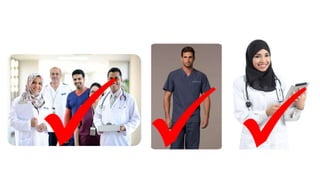
1. Look professional
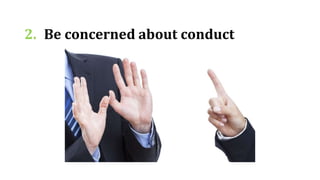
2. Be concerned about conduct
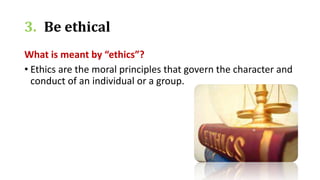
3. Be ethical
What is meant by “ethics”?
• Ethics are the moral principles that govern the character and
conduct of an individual or a group.
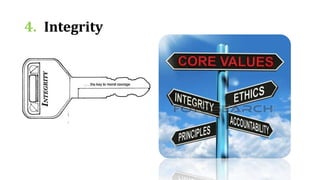
4. Integrity
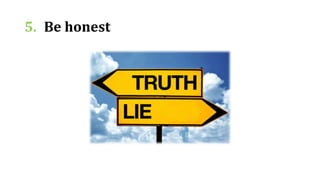
5. Be honest
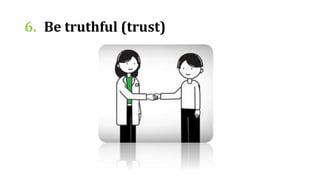
6. Be truthful (trust)
7. Be fair
Discrimination
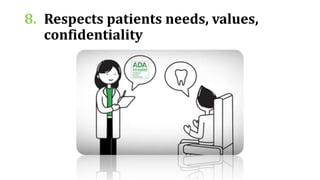
8. Respects patients needs, values,
confidentiality
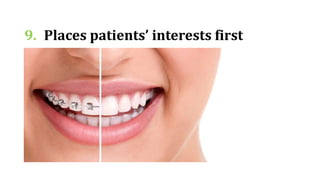
9. Places patients’ interests first
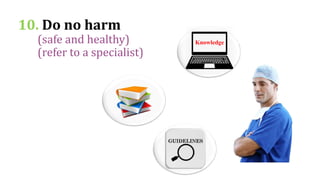
10. Do no harm
(safe and healthy)
(refer to a specialist)
Knowledge
11. Do good (consider needs and value)
12. Primary concern is service, not
prestige or profit
How to Acquire Clinical Skills
Rahaf Najjar, BDS
Outline:
Some tips to be a good dentist:
• Diagnostic Skills
• Treatment Planning
• Dental Auxiliary Utilization
• Manual Dexterity
• Teamwork
• Education Skills
• Soft Skills
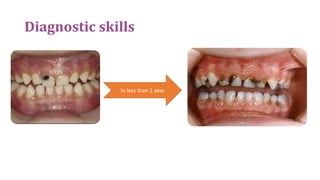
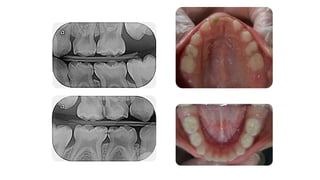
Diagnostic skills
In less than 1 year
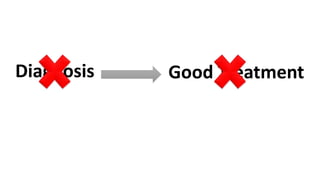
Diagnosis Good Treatment
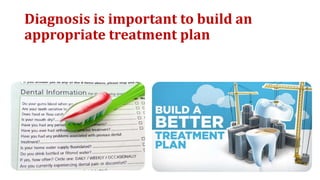
Diagnosis is important to build an
appropriate treatment plan
Treatment Planning
Why?
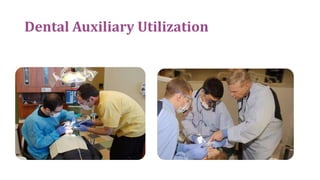
Dental Auxiliary Utilization
Manual Dexterity
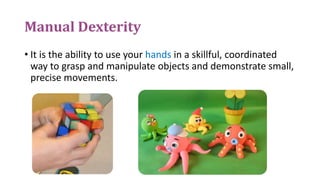
• It is the ability to use your hands in a skillful, coordinated
way to grasp and manipulate objects and demonstrate small,
precise movements.
Manual Dexterity
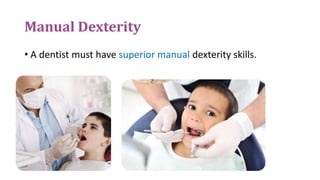
• A dentist must have superior manual dexterity skills.
Manual Dexterity
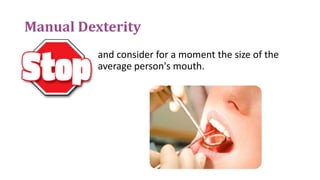
and consider for a moment the size of the
average person's mouth.
Manual Dexterity
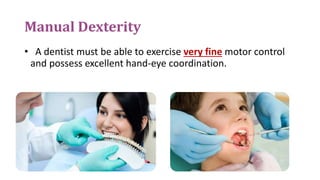
• A dentist must be able to exercise very fine motor control
and possess excellent hand-eye coordination.
What to do to Refine Manual Dexterity
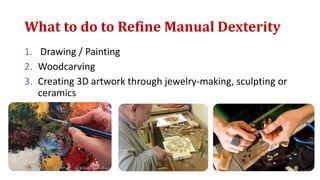
1. Drawing / Painting
2. Woodcarving
3. Creating 3D artwork through jewelry-making, sculpting or
ceramics
What to do to Refine Manual Dexterity
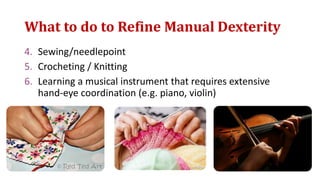
4. Sewing/needlepoint
5. Crocheting / Knitting
6. Learning a musical instrument that requires extensive
hand-eye coordination (e.g. piano, violin)
What Helped Me
Teamwork
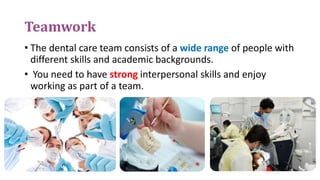
• The dental care team consists of a wide range of people with
different skills and academic backgrounds.
• You need to have strong interpersonal skills and enjoy
working as part of a team.
Education Skills
Soft Skills
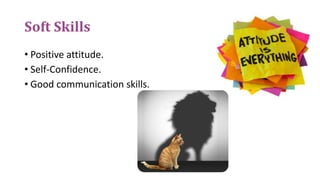
• Positive attitude.
• Self-Confidence.
• Good communication skills.
Soft Skills
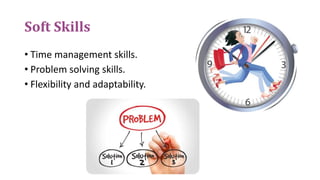
• Time management skills.
• Problem solving skills.
• Flexibility and adaptability.
How to acquire  skills

How to acquire skills

  • 1.
    How to AcquireYour Skills
  • 2.
    Objectives At the endof the lecture, the student should be able to: - Identify learning & it’s importance - Identify tips to improve learning - Know how to become professional - Know how to acquire clinical skills
  • 3.
    How to AcquireLearning Skills Deem Al-Blaihed, BDS
  • 4.
    Outline • What islearning? • Why is improving learning skills important? • Tips to improve learning skills • Taking care of your brain
  • 5.
    What is learning? Learningis the process of gaining knowledge or skill by:  Studying Practicing Being taught Experiencing something
  • 6.
    Why is improvinglearning skills important? • Learning is a skill and it can be improved • Everyone has the opportunity to develop their memory and learning ability • Learning something new always takes motivation, commitment , self discipline & practice
  • 7.
    Tips to improvelearning skills Identify your learning style Identify Learning Objectives Make Notes Make a Study Plan Take Regular Study Breaks Avoid Cramming Move Around Be Curious Take care of your Brain
  • 8.
  • 9.
    1. Visual (spatial): Youprefer using pictures, images, and spatial understanding
  • 10.
    2. Aural (auditory-musical): Youprefer using sound and music
  • 11.
    3. Verbal (linguistic): Youprefer using words in speech and writing
  • 12.
    4. Physical (kinesthetic): Youprefer using your body, hands and sense of touch
  • 13.
    5. Logical (mathematical): Youprefer using logic, reasoning and systems
  • 14.
    6. Social (interpersonal): Youprefer to learn in groups or with other people
  • 15.
    7. Solitary (intrapersonal): Youprefer to work alone and use self-study
  • 17.
  • 19.
    Identifying Learning Objectives •A learning objective states specifically what a student should be able to do • Learning objectives tell students what is important • Learning objectives are what the teacher want the student to learn
  • 20.
  • 21.
    Make notes • Makingnotes helps you to gain an overview of your what you are studying • Take notes from what the lecturer is saying, not just from texts you are shown in presentations • Use to highlight something important • Use show that you did not quite understand something
  • 22.
    What are theways to take notes? Summary • Writing a summary or outlining in your own words helps you to mentally organize information Concept maps • Help you to organize information as it illustrates the relationship between things
  • 23.
    Make a StudyPlan • Think ahead and create an effective study plan • It will help you organize your time • It will put your mind at ease
  • 24.
    Test Yourself asYou Make Progress • You should test yourself throughout the whole study process • Create the test yourself • It helps you review the lecture & identify the important topics With refresh Without refresh Forgetting Curve
  • 25.
    Take Regular StudyBreaks • None of us are superhuman • There is a limit to how long your brain can properly function without a break • In order to maintain an optimum level of concentration you need some time to recover from the work you’ve put in
  • 26.
    • Taking regularshort breaks help improve your focus & productivity
  • 27.
    Avoid cramming! • Yourbrain is like a sponge! Try to overload it and the excess will run off! • Your brain needs time to process the new information and make connections • Forcing information during the last few days is incredibly inefficient
  • 28.
    Move around • Thebrain makes connections between what you’re learning and the environment you’re in at the time • Find a place to study that is quiet and with few distractions • Alternate between locations (office , room, library, beach)
  • 29.
    Go Beyond Memorizationand Ask Why • Go beyond just taking notes! • Be critical about what you’re learning and question it.
  • 30.
  • 31.
    Taking care ofyour brain Get enough sleep: -A good night's sleep supports the functions of the brain and memory. - Insufficient sleep weakens your concentration and increases restlessness
  • 32.
    Taking care ofyour brain Protect your brain • Support your brain with a healthy life style AVOID
  • 33.
    Taking care ofyour brain Nourish your brain - Eat and drink enough, but not too much. Eating small, frequent meals will keep your blood sugar levels even which is useful to effective studying. - Keeping your body well hydrated is essential to concentration and learning
  • 34.
    Support your brainby exercising • Exercise improves the oxygen supply to the brain • Exercise improves concentration • Exercise has a positive effect on learning • Exercise reduces stress • 150 minutes of moderate aerobic activity such as cycling or fast walking every week
  • 35.
    How to AcquireProfessional Skills Shimaa Ibrahim, BDS
  • 36.
    Outline • Profession definition •Professional definition • How to become professional
  • 37.
    Profession: Is an occupationinvolving long and specialized preparation on the level of higher education and governed by a special code of ethics. The aim of a profession is the public good.
  • 38.
    Professional: Refers to onewho practices a learned profession and has special knowledge and skills used to benefit the public, regardless of personal gain.
  • 39.
    Officially became aparticipant in a profession Professional
  • 40.
    To become adental professional you should
  • 41.
  • 43.
    2. Be concernedabout conduct
  • 44.
    3. Be ethical Whatis meant by “ethics”? • Ethics are the moral principles that govern the character and conduct of an individual or a group.
  • 45.
  • 46.
  • 47.
  • 48.
  • 50.
    8. Respects patientsneeds, values, confidentiality
  • 51.
    9. Places patients’interests first
  • 52.
    10. Do noharm (safe and healthy) (refer to a specialist) Knowledge
  • 53.
    11. Do good(consider needs and value)
  • 54.
    12. Primary concernis service, not prestige or profit
  • 55.
    How to AcquireClinical Skills Rahaf Najjar, BDS
  • 56.
    Outline: Some tips tobe a good dentist: • Diagnostic Skills • Treatment Planning • Dental Auxiliary Utilization • Manual Dexterity • Teamwork • Education Skills • Soft Skills
  • 57.
  • 59.
  • 60.
    Diagnosis is importantto build an appropriate treatment plan
  • 61.
  • 62.
  • 63.
    Manual Dexterity • Itis the ability to use your hands in a skillful, coordinated way to grasp and manipulate objects and demonstrate small, precise movements.
  • 64.
    Manual Dexterity • Adentist must have superior manual dexterity skills.
  • 65.
    Manual Dexterity and considerfor a moment the size of the average person's mouth.
  • 66.
    Manual Dexterity • Adentist must be able to exercise very fine motor control and possess excellent hand-eye coordination.
  • 67.
    What to doto Refine Manual Dexterity 1. Drawing / Painting 2. Woodcarving 3. Creating 3D artwork through jewelry-making, sculpting or ceramics
  • 68.
    What to doto Refine Manual Dexterity 4. Sewing/needlepoint 5. Crocheting / Knitting 6. Learning a musical instrument that requires extensive hand-eye coordination (e.g. piano, violin)
  • 69.
  • 70.
    Teamwork • The dentalcare team consists of a wide range of people with different skills and academic backgrounds. • You need to have strong interpersonal skills and enjoy working as part of a team.
  • 71.
  • 72.
    Soft Skills • Positiveattitude. • Self-Confidence. • Good communication skills.
  • 73.
    Soft Skills • Timemanagement skills. • Problem solving skills. • Flexibility and adaptability.