Psychology Assignment
1
Personality
• The set of individual characteristics that make a
person unique.
• Determines patterns of behaviour
• (Stafford-Brown and Rea, 2010)
Personality theories
• Jarvis, 2006
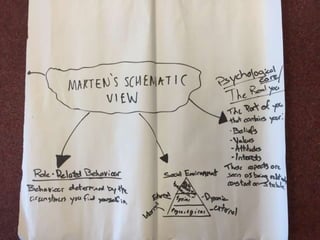
• Marten’s schematic view of personality
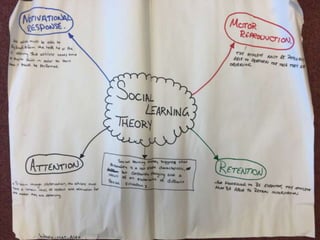
• Bandura’s Social learning theory
• Friedman, 1996
Jarvis, 2006
• Genetic makeup - Innate aspect of personality
• Past experiences
• Nature of the situation
• Free will.
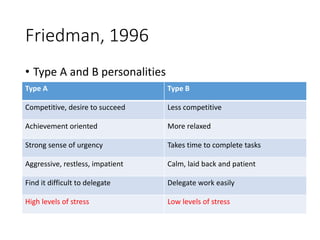
Friedman, 1996
• Type A and B personalities
Type A Type B
Competitive, desire to succeed Less competitive
Achievement oriented More relaxed
Strong sense of urgency Takes time to complete tasks
Aggressive, restless, impatient Calm, laid back and patient
Find it difficult to delegate Delegate work easily
High levels of stress Low levels of stress
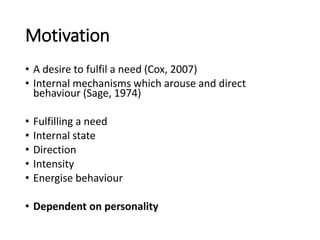
Motivation
• A desire to fulfil a need (Cox, 2007)
• Internal mechanisms which arouse and direct
behaviour (Sage, 1974)
• Fulfilling a need
• Internal state
• Direction
• Intensity
• Energise behaviour
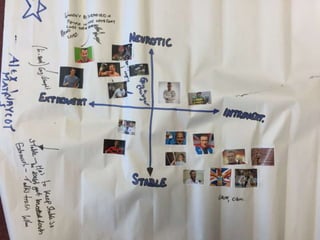
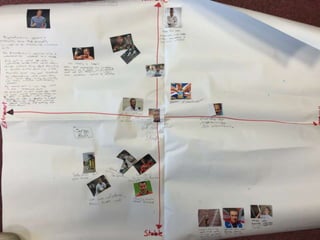
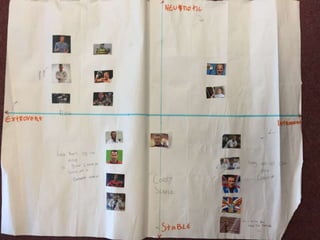
• Dependent on personality
Group dynamics
Group
Collective identity
shared purpose
structured communication
personal and/or task interdependence
interpersonal attraction
(Weinburg and Gould, 2007)
Team
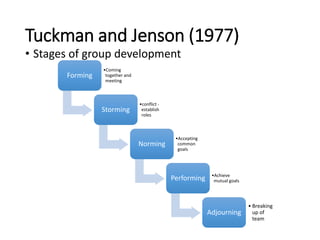
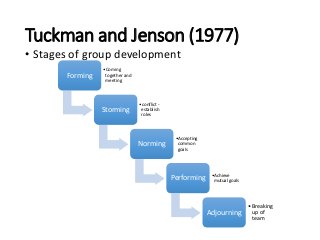
Tuckman and Jenson (1977)
• Stages of group development
Forming
•Coming
together and
meeting
Storming
•conflict -
establish
roles
Norming
•Accepting
common
goals
Performing •Achieve
mutual goals
Adjourning
• Breaking
up of
team
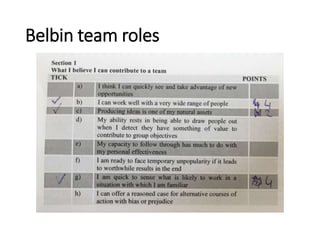
Belbin team roles
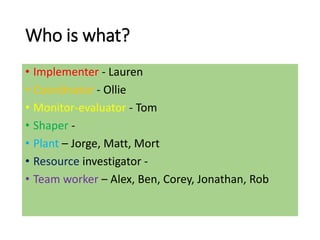
Who is what?
• Implementer - Lauren
• Coordinator - Ollie
• Monitor-evaluator - Tom
• Shaper -
• Plant – Jorge, Matt, Mort
• Resource investigator -
• Team worker – Alex, Ben, Corey, Jonathan, Rob
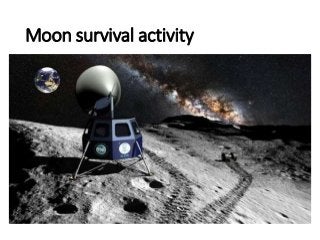
Moon survival activity
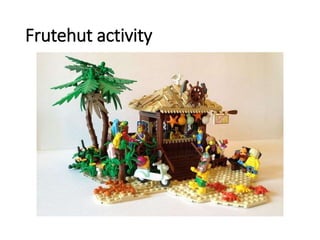
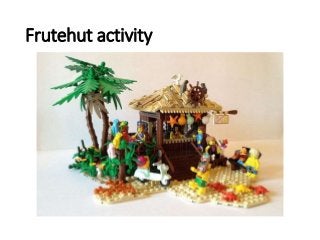
Frutehut activity

Psychology assignment 1

  • 1.
  • 2.
    Personality • The setof individual characteristics that make a person unique. • Determines patterns of behaviour • (Stafford-Brown and Rea, 2010)
  • 3.
    Personality theories • Jarvis,2006 • Marten’s schematic view of personality • Bandura’s Social learning theory • Friedman, 1996
  • 4.
    Jarvis, 2006 • Geneticmakeup - Innate aspect of personality • Past experiences • Nature of the situation • Free will.
  • 11.
    Friedman, 1996 • TypeA and B personalities Type A Type B Competitive, desire to succeed Less competitive Achievement oriented More relaxed Strong sense of urgency Takes time to complete tasks Aggressive, restless, impatient Calm, laid back and patient Find it difficult to delegate Delegate work easily High levels of stress Low levels of stress
  • 12.
    Motivation • A desireto fulfil a need (Cox, 2007) • Internal mechanisms which arouse and direct behaviour (Sage, 1974) • Fulfilling a need • Internal state • Direction • Intensity • Energise behaviour • Dependent on personality
  • 16.
    Group dynamics Group Collective identity sharedpurpose structured communication personal and/or task interdependence interpersonal attraction (Weinburg and Gould, 2007) Team
  • 18.
    Tuckman and Jenson(1977) • Stages of group development Forming •Coming together and meeting Storming •conflict - establish roles Norming •Accepting common goals Performing •Achieve mutual goals Adjourning • Breaking up of team
  • 19.
  • 20.
    Who is what? •Implementer - Lauren • Coordinator - Ollie • Monitor-evaluator - Tom • Shaper - • Plant – Jorge, Matt, Mort • Resource investigator - • Team worker – Alex, Ben, Corey, Jonathan, Rob
  • 21.
  • 22.