Energy systems:
Overview and ATP
Describe, explain and analyse the three
different energy systems and their use in
sport and exercise activities
What is energy?
• Energy is a property of objects which can be
transferred to other objects or converted into
different forms (Wikipedia, 2016)
• The "ability of a system to perform work" is a
common description, but it is misleading because
energy is not necessarily available to do work
(Wikipedia, 2016)
• Energy gives us the capacity to do stuff (Steve,
2016 – please do not reference)
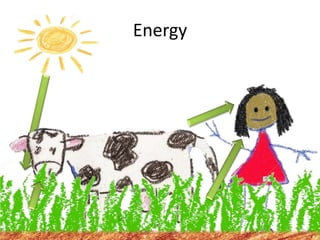
Energy
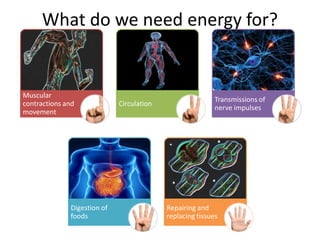
What do we need energy for?
Muscular
contractions and
movement
Circulation
Transmissions of
nerve impulses
Digestion of
foods
Repairing and
replacing tissues
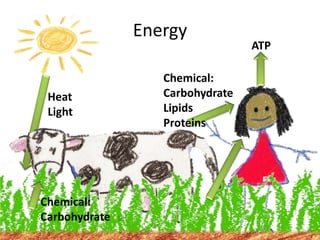
Energy
Heat
Light
Chemical:
Carbohydrate
Chemical:
Carbohydrate
Lipids
Proteins
ATP
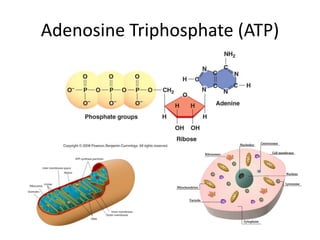
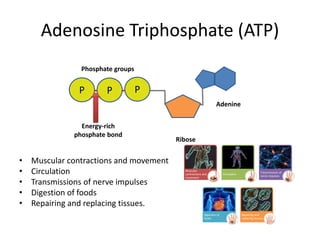
Adenosine Triphosphate (ATP)
• Muscular contractions and movement
• Circulation
• Transmissions of nerve impulses
• Digestion of foods
• Repairing and replacing tissues.
PP P
Adenine
Ribose
Phosphate groups
Muscular
contractions and
movement
Circulation
Transmissions of
nerve impulses
Digestion of
foods
Repairing and
replacing tissues
Energy-rich
phosphate bond
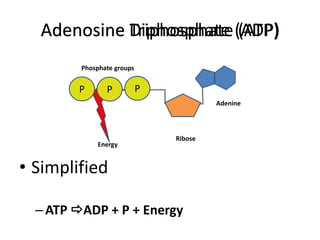
Adenosine Triphosphate (ATP)
PP P
Phosphate groups
Adenine
Ribose
Energy
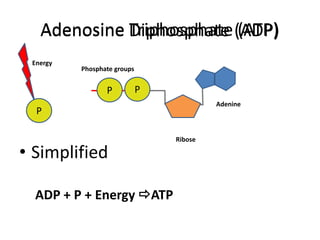
• Simplified
–ATP ADP + P + Energy
Adenosine Diphosphate (ADP)
P
P
P
Phosphate groups
Adenine
Ribose
Energy
• Simplified
ADP + P + Energy ATP
Adenosine Triphosphate (ATP)
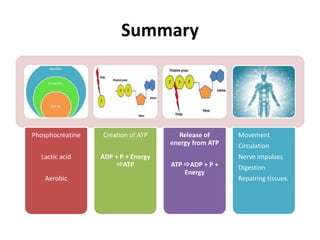
Summary
Phosphocreatine
Lactic acid
Aerobic
Creation of ATP
ADP + P + Energy
ATP
Release of
energy from ATP
ATP ADP + P +
Energy
Movement
Circulation
Nerve impulses
Digestion
Repairing tissues.

Energy systems

  • 1.
    Energy systems: Overview andATP Describe, explain and analyse the three different energy systems and their use in sport and exercise activities
  • 2.
    What is energy? •Energy is a property of objects which can be transferred to other objects or converted into different forms (Wikipedia, 2016) • The "ability of a system to perform work" is a common description, but it is misleading because energy is not necessarily available to do work (Wikipedia, 2016) • Energy gives us the capacity to do stuff (Steve, 2016 – please do not reference)
  • 3.
  • 4.
    What do weneed energy for? Muscular contractions and movement Circulation Transmissions of nerve impulses Digestion of foods Repairing and replacing tissues
  • 5.
  • 6.
  • 7.
    Adenosine Triphosphate (ATP) •Muscular contractions and movement • Circulation • Transmissions of nerve impulses • Digestion of foods • Repairing and replacing tissues. PP P Adenine Ribose Phosphate groups Muscular contractions and movement Circulation Transmissions of nerve impulses Digestion of foods Repairing and replacing tissues Energy-rich phosphate bond
  • 8.
    Adenosine Triphosphate (ATP) PPP Phosphate groups Adenine Ribose Energy • Simplified –ATP ADP + P + Energy Adenosine Diphosphate (ADP)
  • 9.
    Adenosine Diphosphate (ADP) P P P Phosphategroups Adenine Ribose Energy • Simplified ADP + P + Energy ATP Adenosine Triphosphate (ATP)
  • 10.
    Summary Phosphocreatine Lactic acid Aerobic Creation ofATP ADP + P + Energy ATP Release of energy from ATP ATP ADP + P + Energy Movement Circulation Nerve impulses Digestion Repairing tissues.