Criminal Psychology – The Five Psychological Perspectives
Behaviourism Emerged through the belief that for psychology to be a science it must deal with what is OBSERVABLE and MEASURABLE – Human behaviour. The goal of behaviourism is the prediction and control of behaviour.
Behaviourism No fundamental distinction between human and animal behaviour. Conducted experiments on rats, cats, dogs, pigeons, etc. John Watson
Classical Conditioning  PAVLOV’S DOGS Developed a technique where dogs’ saliva could be collected in a tube outside its cheek – could be easily measured. Discovered dogs salivated before seeing food, eg, if they saw feeding bucket or heard staff’s footsteps.
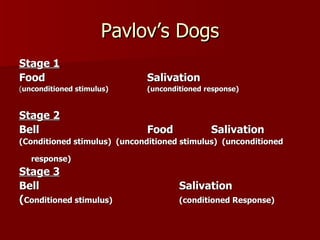
Pavlov’s Dogs Stage 1 Food Salivation ( unconditioned stimulus) (unconditioned   response) Stage 2 Bell   Food Salivation (Conditioned stimulus)  (unconditioned stimulus)  (unconditioned  response) Stage 3 Bell Salivation  ( Conditioned stimulus) (conditioned Response)
Operant Conditioning (Skinner) Believed learning more active than classical conditioning determined. Believed behaviour more voluntary- likelihood of behaviour being repeated is a function of past consequences of behaviour.
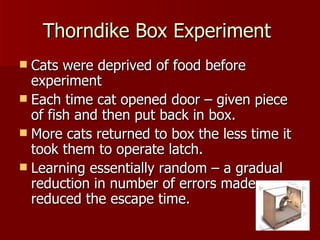
Thorndike Box Experiment  Cats were deprived of food before experiment Each time cat opened door – given piece of fish and then put back in box. More cats returned to box the less time it took them to operate latch. Learning essentially random – a gradual reduction in number of errors made reduced the escape time.
Behaviourism Popular until 1950s. Responses that bring about pleasure are likely to be repeated. Responses that bring about discomfort are likely not to be repeated. Cause of criminal behaviour – result of learning maladaptive responses or the failure of learning adaptive ones in first place.
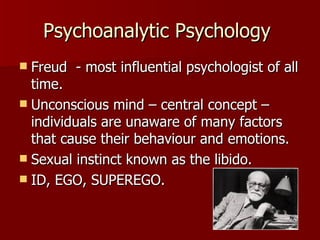
Psychoanalytic Psychology  Freud  - most influential psychologist of all time. Unconscious mind – central concept – individuals are unaware of many factors that cause their behaviour and emotions. Sexual instinct known as the libido. ID, EGO, SUPEREGO.
Freud’s Psychosexual Stages of Development Oral phase Sadistic anal phase Phallic phase Genital phase Freud believed criminals had disturbances of the ego which resulted in inability to be honest.
Psychodynamic Theories of Crime Proposed two different models of criminal behaviour. Caused by particular mental disturbance/illness, neuroses due to disruption at stage of psychosexual development, childhood trauma, etc. Criminal possesses weak conscience.
Psychodynamic theories of Crime Aichorn (1925)  Offenders have underdeveloped ego – caused by absent or problematic attachment with parents in childhood. Two categories of criminal: Those with fully developed consciences but identified with criminal parents. Those who had been able to do whatever they liked by over-indulgent parents.
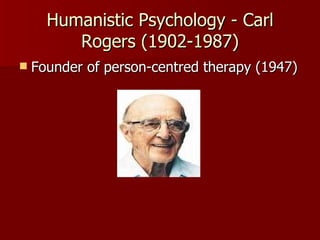
Humanistic Psychology - Carl Rogers (1902-1987) Founder of person-centred therapy (1947)
Basic assumptions People are naturally trustworthy & good People are able to understand their own problems. People are capable of self-growth. People are capable of living effective and productive lives.
Positive regard Rogers believed that humans NEED: Positive regard   Positive self-regard .
Person centred therapy Therapist  must  show these three qualities: Empathy   Congruence   Unconditional positive regard :
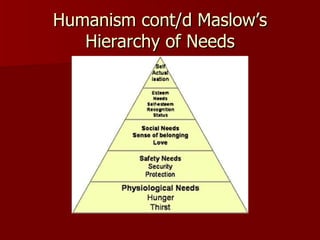
Humanism cont/d Maslow’s Hierarchy of Needs
Biological Perspectives Interested in the physical basis for human behaviour.  How the functions of the nervous system, endocrine system, etc affect behaviour and mental processes. Biopsychology inc. – neuro-anatomy, developmental neurobiology, neurochemistry, neuroendocrinology, etc.
Biological Perspectives Includes study of localisation of brain function, sleep studies & physical changes in brain associated with learning, memory, motivation and stress. Also relevant to area of head injuries.
Biological Theories Crime – biological theorists might try to identify particular characteristics of offender, eg. Genetic make-up, brain activity, hormonal imbalances, etc.
Cognitive Psychology Looks at the mind like a computer. Cognitive processes  – our thoughts, including ideas, beliefs and mental images. Examines internal mental processes like memory, problem solving, language. Looks at the way people  understand, diagnose  and  solve problems .
Cognitive Psychology Within criminal psychology v. important for things such as understanding the memory processes in eyewitness testimony.
Cognitive Therapy Negative thinking can trigger certain health problems – eg anxiety, depression, phobias, etc. Therapist to help you to understand your current thought patterns – to identify any “false” ideas or thoughts which can trigger your health problem or make it worse.
Behaviour therapy Aims to change any unhealthy behaviours. Eg.  Teaches someone to avoid situations that can make them anxious, or encourage them to engage in unhealthy behaviour. Exposure therapy for treatment of phobias. Therapist teaches you to control and cope with anxiety, eg deep breathing, etc.

Psychological Perspectives

  • 1.
    Criminal Psychology –The Five Psychological Perspectives
  • 2.
    Behaviourism Emerged throughthe belief that for psychology to be a science it must deal with what is OBSERVABLE and MEASURABLE – Human behaviour. The goal of behaviourism is the prediction and control of behaviour.
  • 3.
    Behaviourism No fundamentaldistinction between human and animal behaviour. Conducted experiments on rats, cats, dogs, pigeons, etc. John Watson
  • 4.
    Classical Conditioning PAVLOV’S DOGS Developed a technique where dogs’ saliva could be collected in a tube outside its cheek – could be easily measured. Discovered dogs salivated before seeing food, eg, if they saw feeding bucket or heard staff’s footsteps.
  • 5.
    Pavlov’s Dogs Stage1 Food Salivation ( unconditioned stimulus) (unconditioned response) Stage 2 Bell Food Salivation (Conditioned stimulus) (unconditioned stimulus) (unconditioned response) Stage 3 Bell Salivation ( Conditioned stimulus) (conditioned Response)
  • 6.
    Operant Conditioning (Skinner)Believed learning more active than classical conditioning determined. Believed behaviour more voluntary- likelihood of behaviour being repeated is a function of past consequences of behaviour.
  • 7.
    Thorndike Box Experiment Cats were deprived of food before experiment Each time cat opened door – given piece of fish and then put back in box. More cats returned to box the less time it took them to operate latch. Learning essentially random – a gradual reduction in number of errors made reduced the escape time.
  • 8.
    Behaviourism Popular until1950s. Responses that bring about pleasure are likely to be repeated. Responses that bring about discomfort are likely not to be repeated. Cause of criminal behaviour – result of learning maladaptive responses or the failure of learning adaptive ones in first place.
  • 9.
    Psychoanalytic Psychology Freud - most influential psychologist of all time. Unconscious mind – central concept – individuals are unaware of many factors that cause their behaviour and emotions. Sexual instinct known as the libido. ID, EGO, SUPEREGO.
  • 10.
    Freud’s Psychosexual Stagesof Development Oral phase Sadistic anal phase Phallic phase Genital phase Freud believed criminals had disturbances of the ego which resulted in inability to be honest.
  • 11.
    Psychodynamic Theories ofCrime Proposed two different models of criminal behaviour. Caused by particular mental disturbance/illness, neuroses due to disruption at stage of psychosexual development, childhood trauma, etc. Criminal possesses weak conscience.
  • 12.
    Psychodynamic theories ofCrime Aichorn (1925) Offenders have underdeveloped ego – caused by absent or problematic attachment with parents in childhood. Two categories of criminal: Those with fully developed consciences but identified with criminal parents. Those who had been able to do whatever they liked by over-indulgent parents.
  • 13.
    Humanistic Psychology -Carl Rogers (1902-1987) Founder of person-centred therapy (1947)
  • 14.
    Basic assumptions Peopleare naturally trustworthy & good People are able to understand their own problems. People are capable of self-growth. People are capable of living effective and productive lives.
  • 15.
    Positive regard Rogersbelieved that humans NEED: Positive regard Positive self-regard .
  • 16.
    Person centred therapyTherapist must show these three qualities: Empathy Congruence Unconditional positive regard :
  • 17.
    Humanism cont/d Maslow’sHierarchy of Needs
  • 18.
    Biological Perspectives Interestedin the physical basis for human behaviour. How the functions of the nervous system, endocrine system, etc affect behaviour and mental processes. Biopsychology inc. – neuro-anatomy, developmental neurobiology, neurochemistry, neuroendocrinology, etc.
  • 19.
    Biological Perspectives Includesstudy of localisation of brain function, sleep studies & physical changes in brain associated with learning, memory, motivation and stress. Also relevant to area of head injuries.
  • 20.
    Biological Theories Crime– biological theorists might try to identify particular characteristics of offender, eg. Genetic make-up, brain activity, hormonal imbalances, etc.
  • 21.
    Cognitive Psychology Looksat the mind like a computer. Cognitive processes – our thoughts, including ideas, beliefs and mental images. Examines internal mental processes like memory, problem solving, language. Looks at the way people understand, diagnose and solve problems .
  • 22.
    Cognitive Psychology Withincriminal psychology v. important for things such as understanding the memory processes in eyewitness testimony.
  • 23.
    Cognitive Therapy Negativethinking can trigger certain health problems – eg anxiety, depression, phobias, etc. Therapist to help you to understand your current thought patterns – to identify any “false” ideas or thoughts which can trigger your health problem or make it worse.
  • 24.
    Behaviour therapy Aimsto change any unhealthy behaviours. Eg. Teaches someone to avoid situations that can make them anxious, or encourage them to engage in unhealthy behaviour. Exposure therapy for treatment of phobias. Therapist teaches you to control and cope with anxiety, eg deep breathing, etc.