The Basics of Psychology

   Samantha Roy
   EDU 290
   Dr. William Merrill
The History and Scope of Psychology

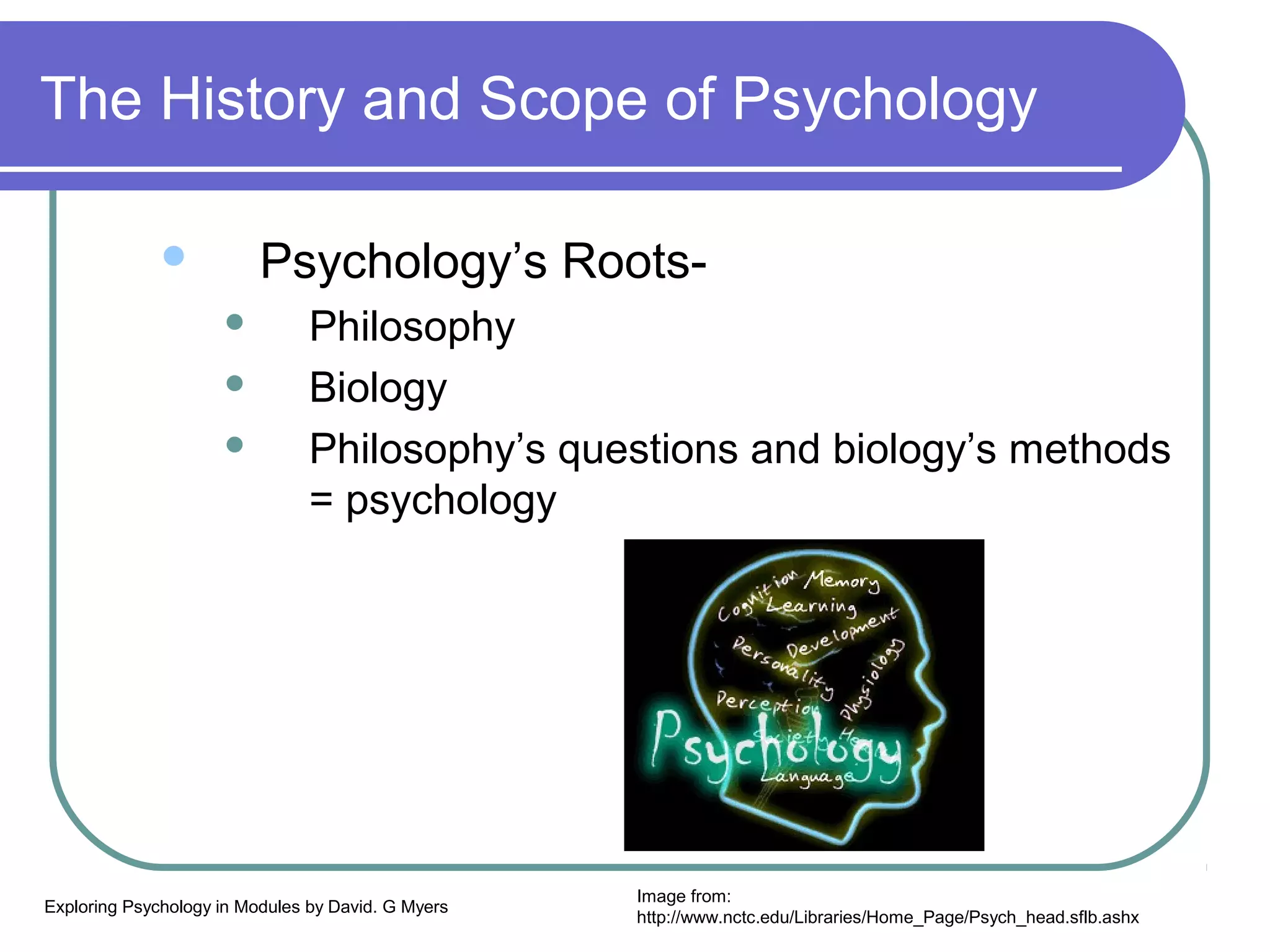
                         Psychology’s Roots-
                               Philosophy
                               Biology
                               Philosophy’s questions and biology’s methods
                                = psychology


                                                    Image from:
Exploring Psychology in Modules by David. G Myers
                                                    http://www.nctc.edu/Libraries/Home_Page/Psych_head.sflb.ashx
Psychology’s Birth – 1879
    Wilhelm Wundt- created the first psychology lab
          University of Leipzig (Germany)
          Father of Experimental Psychology
          Founder of Modern Psychology
     Psychology-
       the scientific study of behavior and mental processes

    Behavior-
          anything an organism does that is an observable or recordable action
     Mental Processes-
          internal subjective (debatable) experiences inferred from behavior


 Exploring Psychology in Modules by David. G Myers
Philosophers
                      John Locke (1632-1704)
                            at birth the mind is a blank slate
                            empiricism- rely on observation and
                             experimentation
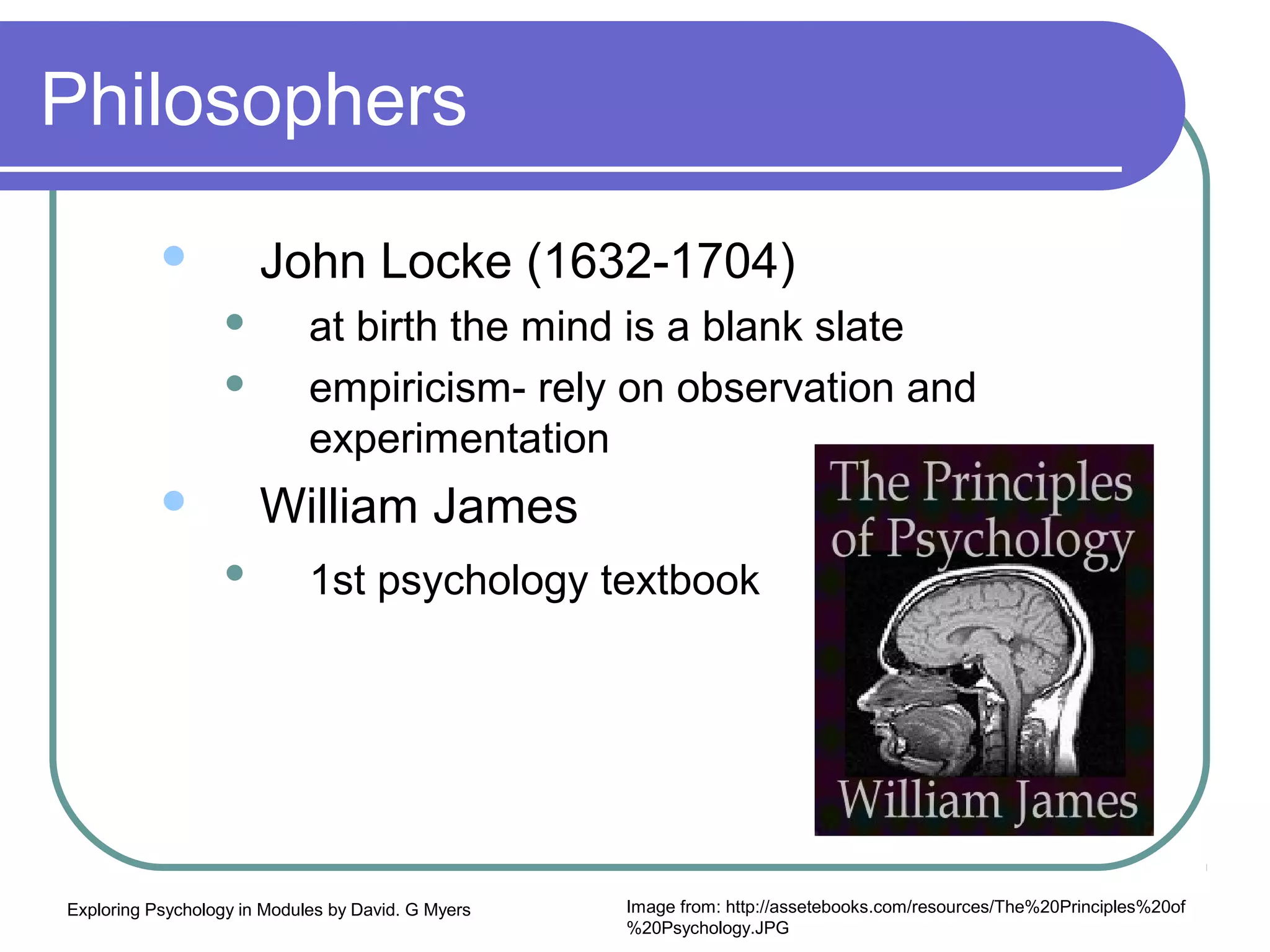
                      William James
                            1st psychology textbook


Exploring Psychology in Modules by David. G Myers   Image from: http://assetebooks.com/resources/The%20Principles%20of
                                                    %20Psychology.JPG
Biology - Pavlov (Russian Physiologist)

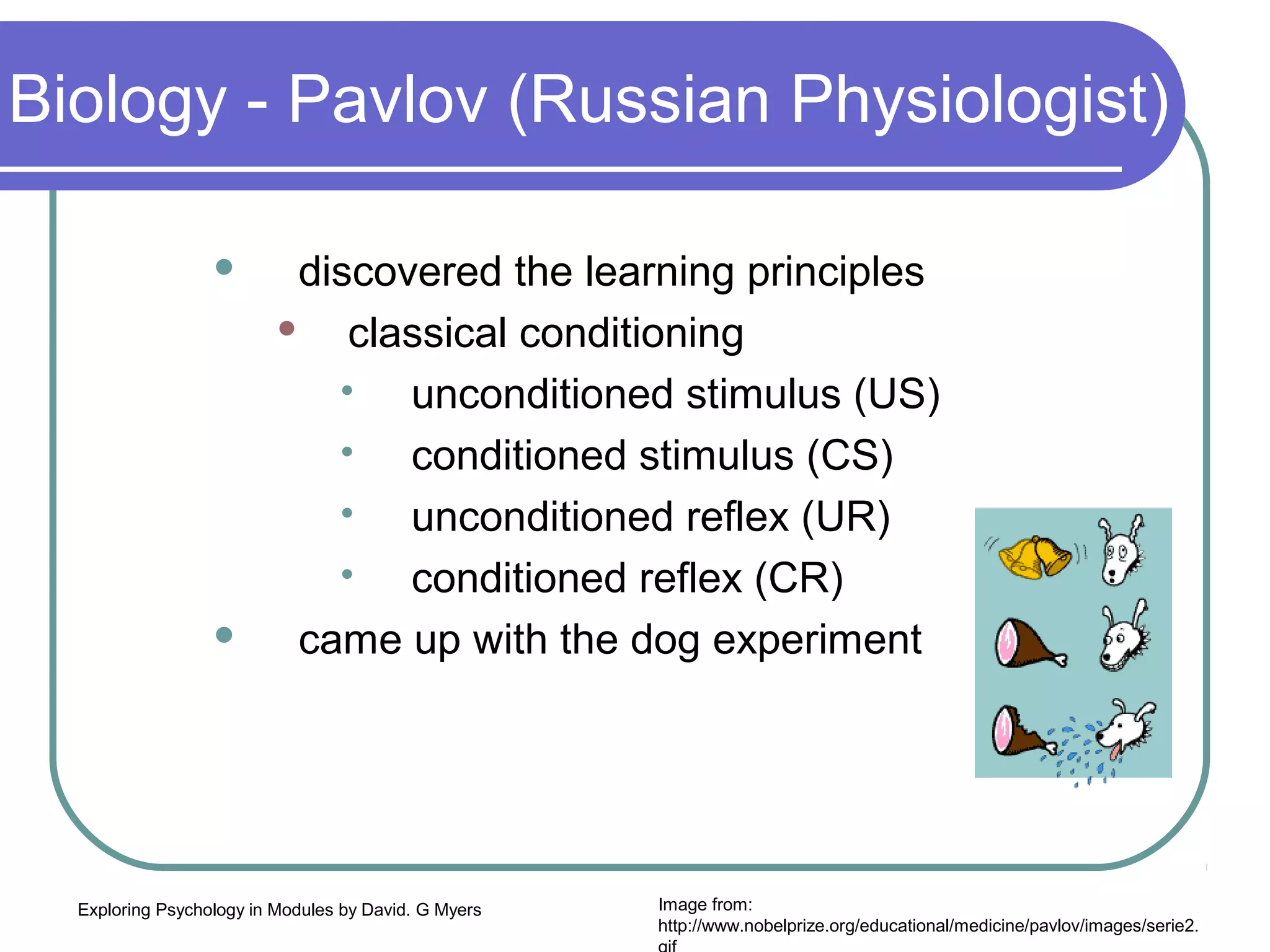
                          discovered the learning principles
                             classical conditioning
                                 unconditioned stimulus (US)
                                 


                                 conditioned stimulus (CS)
                                 


                                 unconditioned reflex (UR)
                                 


                                 conditioned reflex (CR)
                                 


                          came up with the dog experiment


  Exploring Psychology in Modules by David. G Myers   Image from:
                                                      http://www.nobelprize.org/educational/medicine/pavlov/images/serie2.
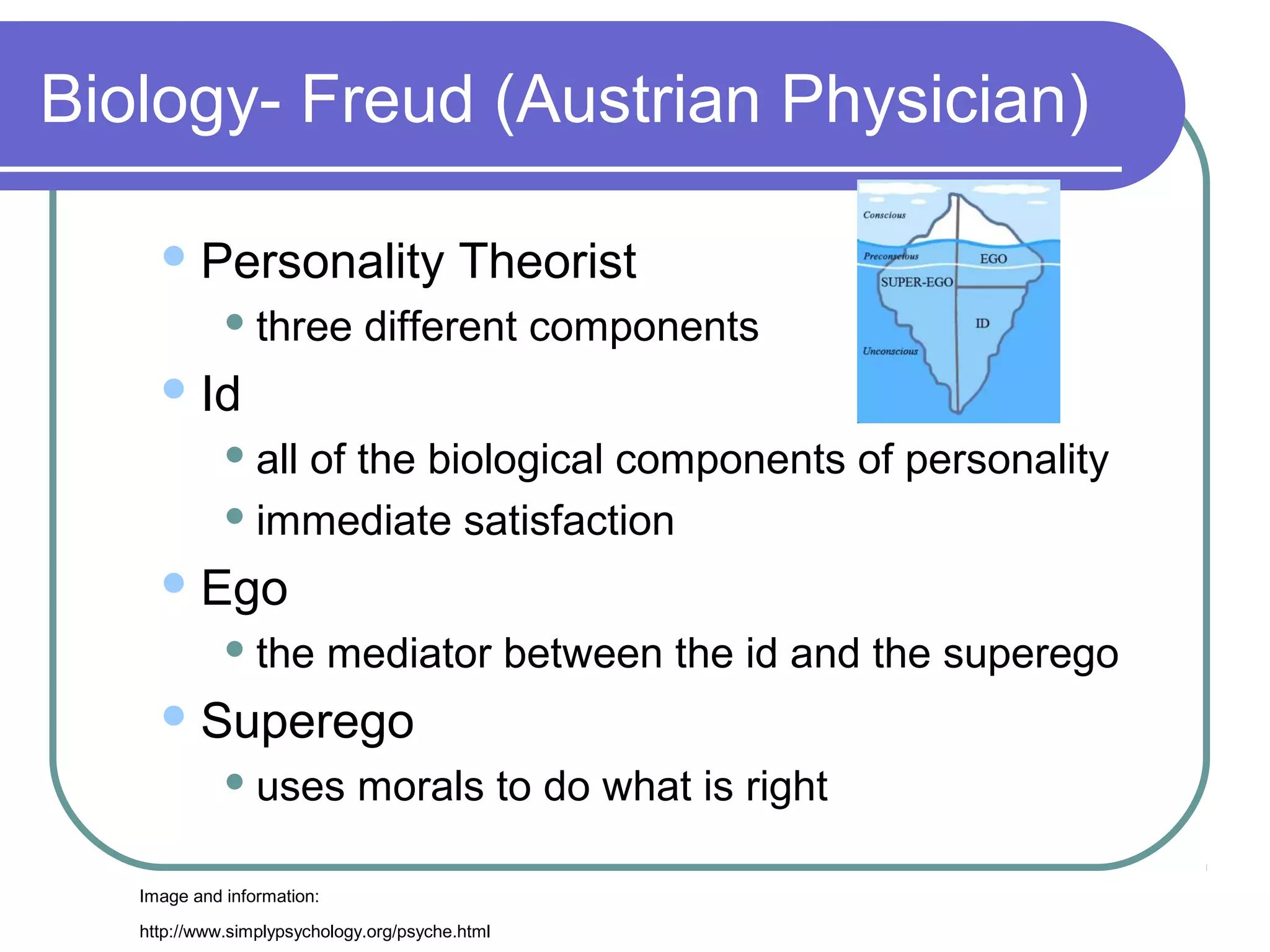
Biology- Freud (Austrian Physician)

      Personality                        Theorist
              three          different components
      Id
              all
                 of the biological components of personality
              immediate satisfaction

      Ego
              the          mediator between the id and the superego
      Superego
              uses          morals to do what is right

   Image and information:

   http://www.simplypsychology.org/psyche.html
Biology - Piaget (Swiss Biologist)
     Developmental Psychology
           Cognitive Theory
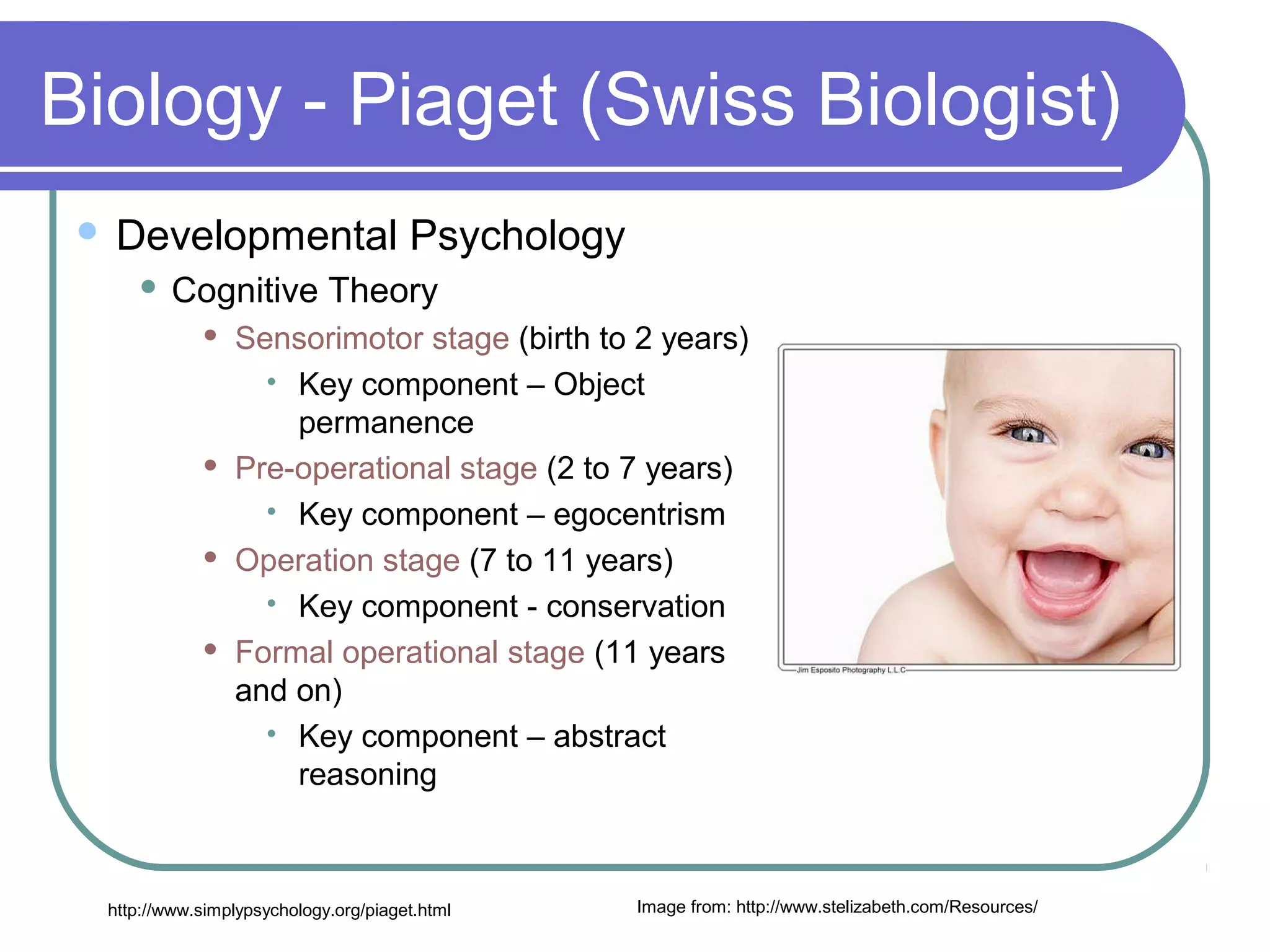
                   Sensorimotor stage (birth to 2 years)
                        Key component – Object
                        


                        permanence
                   Pre-operational stage (2 to 7 years)
                        Key component – egocentrism
                        


                   Operation stage (7 to 11 years)
                        Key component - conservation
                        


                   Formal operational stage (11 years
                    and on)
                        Key component – abstract
                        


                        reasoning


     http://www.simplypsychology.org/piaget.html   Image from: http://www.stelizabeth.com/Resources/
Biology – Erik Erikson

   8          stages of Psychosocial development
            1. Trust vs. Mistrust (birth to 1 year)
            2. Autonomy vs. Shame & doubt (2-3 years)

            3. Initiative vs. Guilt (3-5 years)

            4. Industry vs. Inferiority (6-12 years)

            5. Identity vs. Role Confusion (13-18 years)

            6. Intimacy vs. Isolation (young adulthood)

            7. Generativity vs. Stagnation (middle adulthood)

            8. Ego Integrity vs. Despair (old age)


www.simplypsychology.com.org/erik-erikson.html
Four Primary Perspectives

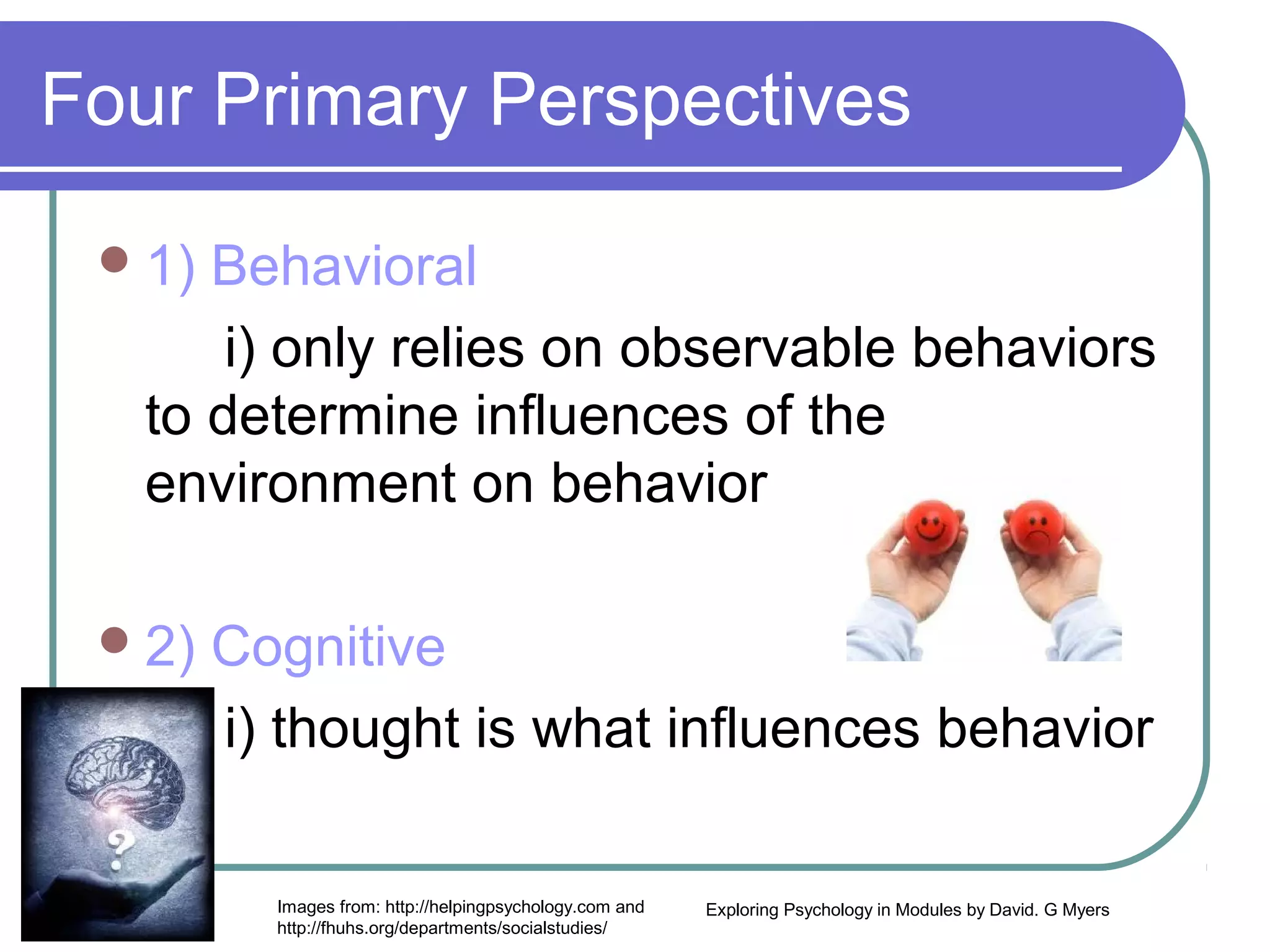
  1) Behavioral
       i) only relies on observable behaviors
   to determine influences of the
   environment on behavior

  2)   Cognitive
        i) thought is what influences behavior

          Images from: http://helpingpsychology.com and   Exploring Psychology in Modules by David. G Myers
          http://fhuhs.org/departments/socialstudies/
Four Primary Perspectives
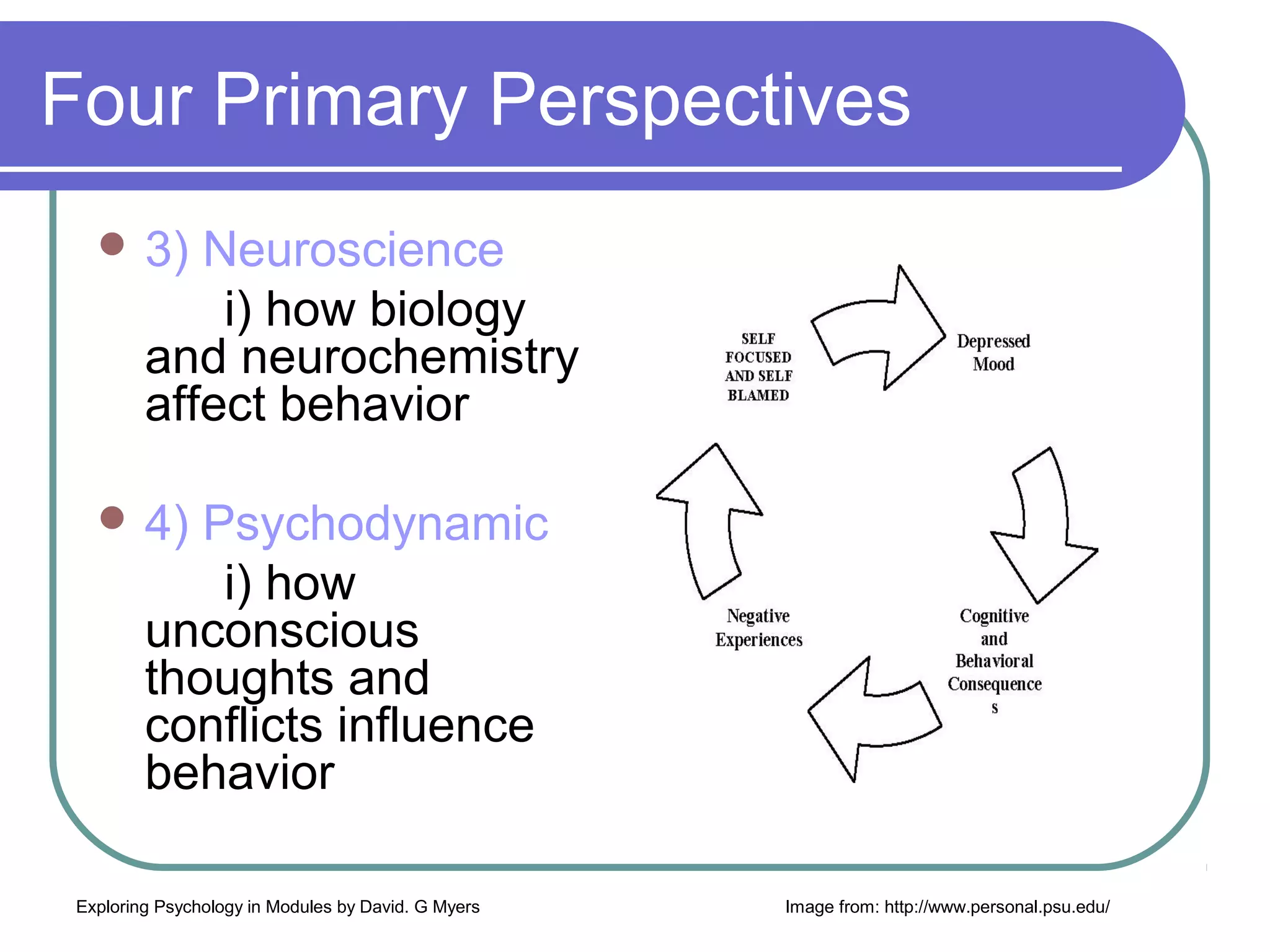
    3)     Neuroscience
             i) how biology
         and neurochemistry
         affect behavior

    4)     Psychodynamic
             i) how
         unconscious
         thoughts and
         conflicts influence
         behavior

 Exploring Psychology in Modules by David. G Myers   Image from: http://www.personal.psu.edu/
Big Issue in Psychology

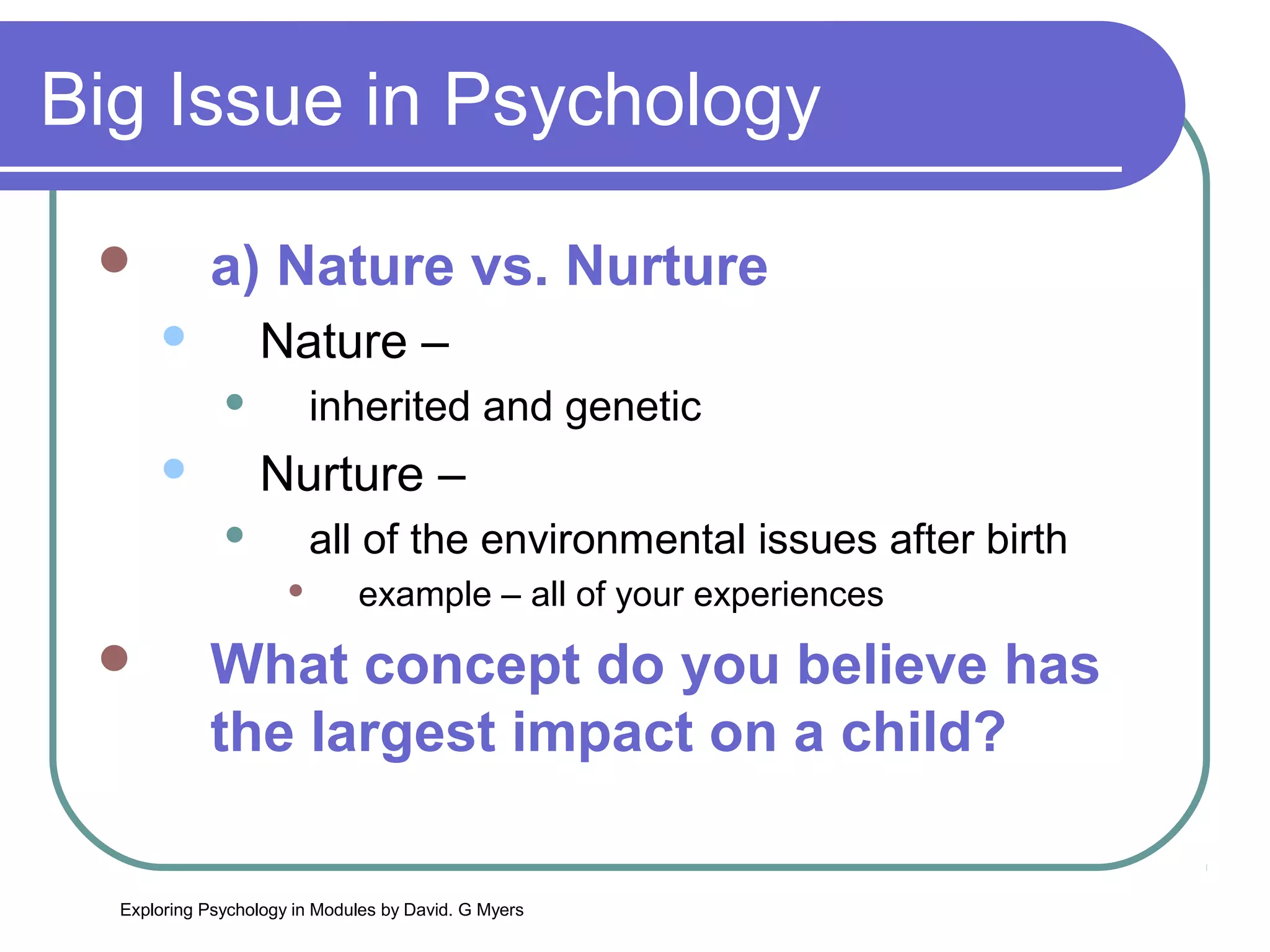
           a) Nature vs. Nurture
                 Nature –
                       inherited and genetic
                 Nurture –
                       all of the environmental issues after birth
                             example – all of your experiences
           What concept do you believe has
            the largest impact on a child?

  Exploring Psychology in Modules by David. G Myers
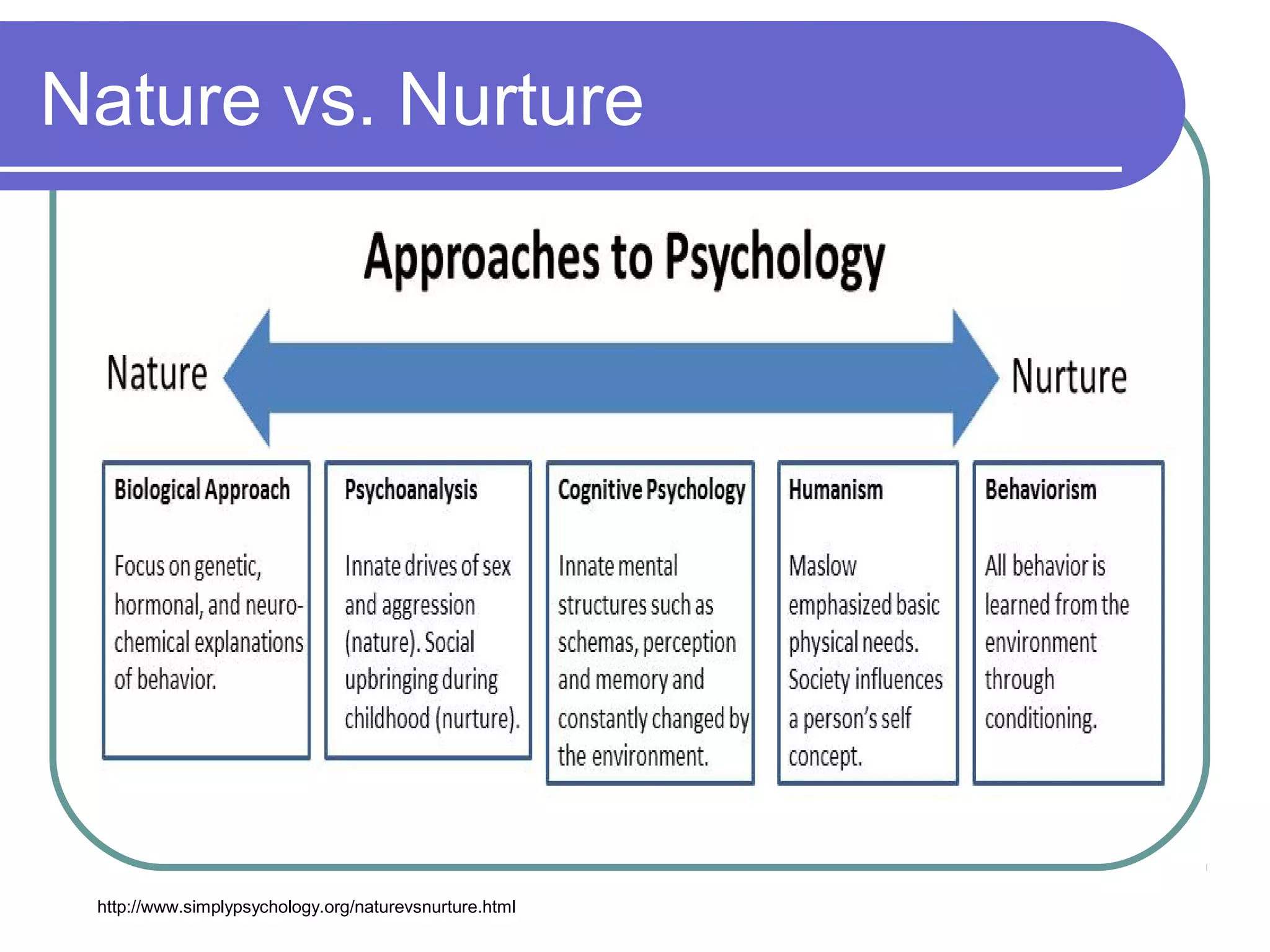
Nature vs. Nurture


 http://www.simplypsychology.org/naturevsnurture.html
Subfields of Psychology

 a)   Developmental
       i) mental and physical changes throughout
   a persons life with a particular emphasis on
   the earlier stages in life


 b)   Clinical
      i) Studies, assesses, treats people with
   psychological disorders

        Exploring Psychology in Modules by David. G Myers
Subfields of Psychology cont.

 c)   Industrial/Organizational
        i) applied to work, selection, leadership,
   management, work and family conflicts, organizational
   culture, and performance
 d)   Sports
      i) mental aspects of sports and competition to
   maximize performance


        Exploring Psychology in Modules by David. G Myers
Fun Facts about psychology!
              Placebo   pills can have just as much effect on a
               human as the actual treatment
              Freud is taught at a number of universities, expect

               for in their psychology department
              Almost all identical twins are not considered

               “identical”
              A lot of people déjà vu about a conversation or a

               dream
              You can only remember 3 to 4 things at a time

              You are hard wired for imitation and empathy


  www.psychologytoday.com
                            Exploring Psychology in Modules by David. G Myers

The Basics of Psychology

  • 1.
    The Basics ofPsychology Samantha Roy EDU 290 Dr. William Merrill
  • 2.
    The History andScope of Psychology  Psychology’s Roots-  Philosophy  Biology  Philosophy’s questions and biology’s methods = psychology Image from: Exploring Psychology in Modules by David. G Myers http://www.nctc.edu/Libraries/Home_Page/Psych_head.sflb.ashx
  • 3.
    Psychology’s Birth –1879  Wilhelm Wundt- created the first psychology lab  University of Leipzig (Germany)  Father of Experimental Psychology  Founder of Modern Psychology  Psychology-  the scientific study of behavior and mental processes  Behavior-  anything an organism does that is an observable or recordable action  Mental Processes-  internal subjective (debatable) experiences inferred from behavior Exploring Psychology in Modules by David. G Myers
  • 4.
    Philosophers  John Locke (1632-1704)  at birth the mind is a blank slate  empiricism- rely on observation and experimentation  William James  1st psychology textbook Exploring Psychology in Modules by David. G Myers Image from: http://assetebooks.com/resources/The%20Principles%20of %20Psychology.JPG
  • 5.
    Biology - Pavlov(Russian Physiologist)  discovered the learning principles  classical conditioning unconditioned stimulus (US)  conditioned stimulus (CS)  unconditioned reflex (UR)  conditioned reflex (CR)   came up with the dog experiment Exploring Psychology in Modules by David. G Myers Image from: http://www.nobelprize.org/educational/medicine/pavlov/images/serie2.
  • 6.
    Biology- Freud (AustrianPhysician)  Personality Theorist  three different components  Id  all of the biological components of personality  immediate satisfaction  Ego  the mediator between the id and the superego  Superego  uses morals to do what is right Image and information: http://www.simplypsychology.org/psyche.html
  • 7.
    Biology - Piaget(Swiss Biologist)  Developmental Psychology  Cognitive Theory  Sensorimotor stage (birth to 2 years) Key component – Object  permanence  Pre-operational stage (2 to 7 years) Key component – egocentrism   Operation stage (7 to 11 years) Key component - conservation   Formal operational stage (11 years and on) Key component – abstract  reasoning http://www.simplypsychology.org/piaget.html Image from: http://www.stelizabeth.com/Resources/
  • 8.
    Biology – ErikErikson 8 stages of Psychosocial development  1. Trust vs. Mistrust (birth to 1 year)  2. Autonomy vs. Shame & doubt (2-3 years)  3. Initiative vs. Guilt (3-5 years)  4. Industry vs. Inferiority (6-12 years)  5. Identity vs. Role Confusion (13-18 years)  6. Intimacy vs. Isolation (young adulthood)  7. Generativity vs. Stagnation (middle adulthood)  8. Ego Integrity vs. Despair (old age) www.simplypsychology.com.org/erik-erikson.html
  • 9.
    Four Primary Perspectives  1) Behavioral i) only relies on observable behaviors to determine influences of the environment on behavior  2) Cognitive i) thought is what influences behavior Images from: http://helpingpsychology.com and Exploring Psychology in Modules by David. G Myers http://fhuhs.org/departments/socialstudies/
  • 10.
    Four Primary Perspectives  3) Neuroscience i) how biology and neurochemistry affect behavior  4) Psychodynamic i) how unconscious thoughts and conflicts influence behavior Exploring Psychology in Modules by David. G Myers Image from: http://www.personal.psu.edu/
  • 11.
    Big Issue inPsychology  a) Nature vs. Nurture  Nature –  inherited and genetic  Nurture –  all of the environmental issues after birth  example – all of your experiences  What concept do you believe has the largest impact on a child? Exploring Psychology in Modules by David. G Myers
  • 12.
    Nature vs. Nurture http://www.simplypsychology.org/naturevsnurture.html
  • 13.
    Subfields of Psychology a) Developmental i) mental and physical changes throughout a persons life with a particular emphasis on the earlier stages in life b) Clinical i) Studies, assesses, treats people with psychological disorders Exploring Psychology in Modules by David. G Myers
  • 14.
    Subfields of Psychologycont. c) Industrial/Organizational i) applied to work, selection, leadership, management, work and family conflicts, organizational culture, and performance d) Sports i) mental aspects of sports and competition to maximize performance Exploring Psychology in Modules by David. G Myers
  • 15.
    Fun Facts aboutpsychology!  Placebo pills can have just as much effect on a human as the actual treatment  Freud is taught at a number of universities, expect for in their psychology department  Almost all identical twins are not considered “identical”  A lot of people déjà vu about a conversation or a dream  You can only remember 3 to 4 things at a time  You are hard wired for imitation and empathy www.psychologytoday.com Exploring Psychology in Modules by David. G Myers