By
 : SAIKAT BISWAS
NETWORK SECURITY
WHAT IS NETWORK SECURITY.
WHY DO I NEED SECURITY
HOW DOES NETWORK SECURITY
WORK
HOW DO I BENEFIT FROM NETWORK
SECURITY
TYPES OF NETWORK SECURITY
CONTENTS
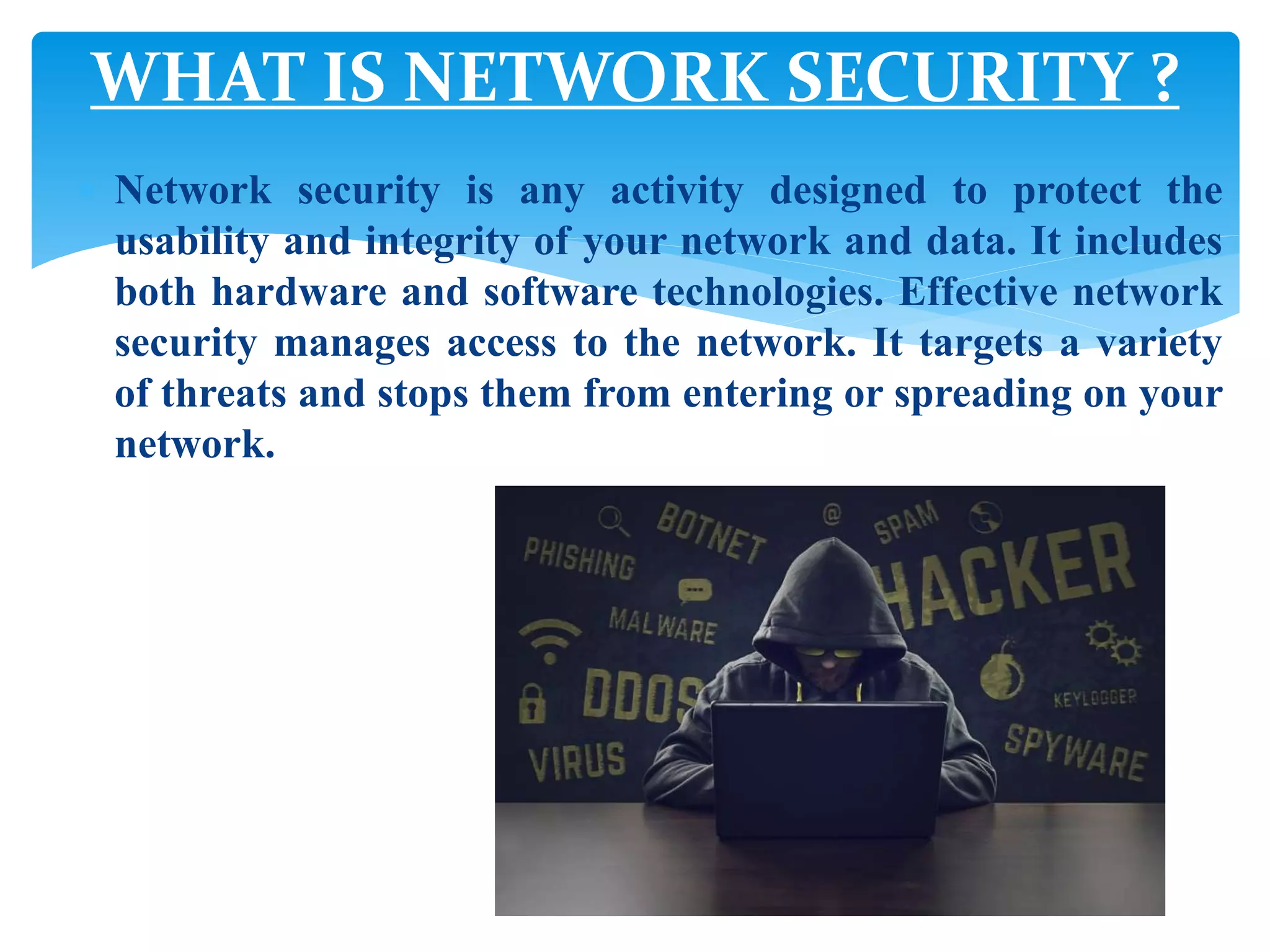
 Network security is any activity designed to protect the
usability and integrity of your network and data. It includes
both hardware and software technologies. Effective network
security manages access to the network. It targets a variety
of threats and stops them from entering or spreading on your
network.
WHAT IS NETWORK SECURITY ?
Protect vital information while still
allowing access to those who need it
Trade secrets, medical records, etc.
WHY DO I NEED SECURITY ?
 Network security combines multiple layers of defences at
the edge and in the network. Each network security layer
implements policies and controls. Authorized users gain
access to network resources, but malicious actors are
blocked from carrying out exploits and threats.
HOW DOES NETWORK SECURITY WORK ?
 Digitization has transformed our world. How we live, work,
play, and learn have all changed. Every organization that
wants to deliver the services that customers and
employees demand must protect its network. Network
security also helps you protect proprietary information
from attack. Ultimately it protects your reputation.
HOW DO I BENEFIT FROM
NETWORK SECURITY ?
 ACCESS CONTROL
 ANTIVIRUS AND ANTIMALWARE SOFTWARE
 APPLICATION SECURITY
 BEHAVIOURALANALYTICS
 DATA LOSS PREVENTION
 E-MAIL SECURITY
 FIREWALLS
 INTRUSION PREVENTION SYSTEMS
 MOBILE DEVICE SECURITY
 NETWORK SEGMENTATION
 SECURITY INFORMATION & EVENT MANAGEMENT
 VPN
 WEB SECURITY
 WIRELESS SECURITY
TYPES OF NETWORK SECURITY
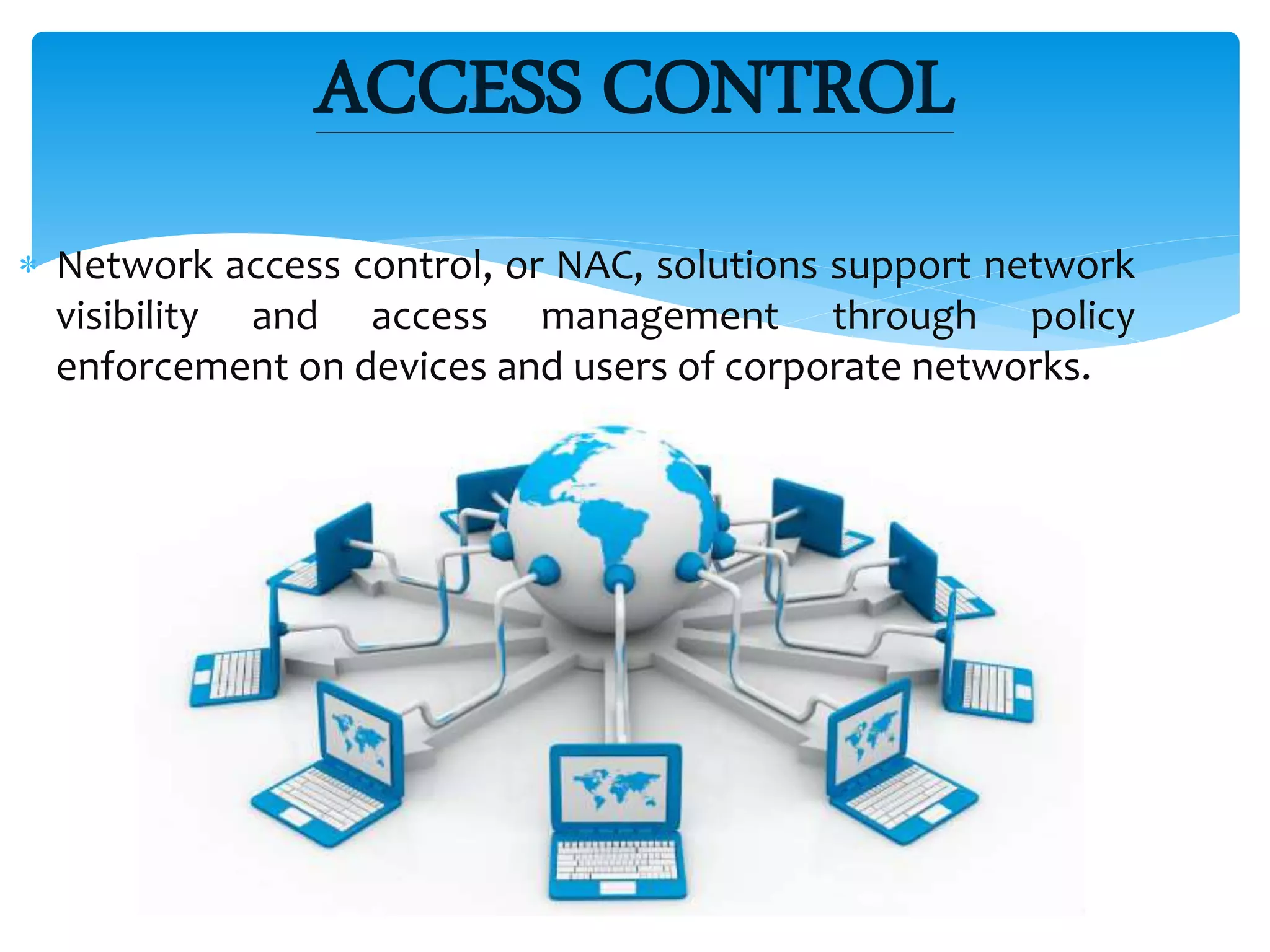
 Network access control, or NAC, solutions support network
visibility and access management through policy
enforcement on devices and users of corporate networks.
ACCESS CONTROL
 "Malware," short for "malicious software," includes viruses,
worms, Trojans, ransom ware, and spyware. Sometimes
malware will infect a network but lie dormant for days or even
weeks. The best antimalware programs not only scan for
malware upon entry, but also continuously track files
afterward to find anomalies, remove malware, and fix damage.
ANTIVIRUS & ANTIMALWARE
SOFTWARE
 Any software you use to run your business needs to be
protected, whether your IT staff builds it or whether you
buy it. Unfortunately, any application may contain holes,
or vulnerabilities, that attackers can use to infiltrate your
network. Application security encompasses the hardware,
software, and processes you use to close those holes.
APPLICATION SECURITY
 To detect abnormal network behaviour, you must
know what normal behaviour looks like.
Behavioural analytics tools automatically discern
activities that deviate from the norm. Your security
team can then better identify indicators of
compromise that pose a potential problem and
quickly remediate threats.
BEHAVIOURAL ANALYTICS
 Organizations must make sure that their staff does not send
sensitive information outside the network. Data loss
prevention, or DLP, technologies can stop people from
uploading, forwarding, or even printing critical information
in an unsafe manner.
DATA LOSS PREVENTION
 Email gateways are the number one threat vector for a
security breach. Attackers use personal information and
social engineering tactics to build sophisticated phishing
campaigns to deceive recipients and send them to sites
serving up malware. An email security application blocks
incoming attacks and controls outbound messages to
prevent the loss of sensitive data.
E-MAIL SECURITY
 Firewalls put up a barrier between your trusted internal
network and untrusted outside networks, such as the
Internet. They use a set of defined rules to allow or block
traffic. A firewall can be hardware, software, or both.
FIREWALLS
This System protects against network
and application-level attacks, securing
organizations against intrusion
attempts, malware, Trojans, DoS and
DDoS attacks, malicious code
transmission, backdoor activity and
blended threats.
INTRUSION PREVENTION SYSTEMS
 Cybercriminals are increasingly targeting mobile devices and
apps. Within the next 3 years, 90% of IT organizations may
support corporate applications on personal mobile devices. Of
course, you need to control which devices can access your
network. You will also need to configure their connections to
keep network traffic private.
MOBILE DEVICE SECURITY
 Software-defined segmentation puts network
traffic into different classifications and makes
enforcing security policies easier. Ideally, the
classifications are based on endpoint identity, not
mere IP addresses. You can assign access rights
based on role, location, and more so that the right
level of access is given to the right people and
suspicious devices are contained and remediated.
NETWORK SEGMENTATION
 SIEM products pull together the information that
your security staff needs to identify and respond to
threats. These products come in various forms,
including physical and virtual appliances and server
software.
SECURITY INFORMATION & EVENT
MANAGEMENT
 A virtual private network encrypts the connection
from an endpoint to a network, often over the
Internet. Typically, a remote-access VPN uses IPsec
or Secure Sockets Layer to authenticate the
communication between device and network.
V P N (VIRTUAL PRIVATE NETWORK)
 A web security solution will control your staff’s
web use, block web-based threats, and deny
access to malicious websites. It will protect your
web gateway on site or in the cloud. "Web
security" also refers to the steps you take to
protect your own website.
WEB SECURITY
 Wireless networks are not as secure as
wired ones. Without stringent security
measures, installing a wireless LAN can be
like putting Ethernet ports everywhere,
including the parking lot. To prevent an
exploit from taking hold, you need products
specifically designed to protect a wireless
network.
WIRELESS SECURITY
THANK
YOU

Network Security ppt

  • 1.
    By  : SAIKATBISWAS NETWORK SECURITY
  • 2.
    WHAT IS NETWORKSECURITY. WHY DO I NEED SECURITY HOW DOES NETWORK SECURITY WORK HOW DO I BENEFIT FROM NETWORK SECURITY TYPES OF NETWORK SECURITY CONTENTS
  • 3.
     Network securityis any activity designed to protect the usability and integrity of your network and data. It includes both hardware and software technologies. Effective network security manages access to the network. It targets a variety of threats and stops them from entering or spreading on your network. WHAT IS NETWORK SECURITY ?
  • 4.
    Protect vital informationwhile still allowing access to those who need it Trade secrets, medical records, etc. WHY DO I NEED SECURITY ?
  • 5.
     Network securitycombines multiple layers of defences at the edge and in the network. Each network security layer implements policies and controls. Authorized users gain access to network resources, but malicious actors are blocked from carrying out exploits and threats. HOW DOES NETWORK SECURITY WORK ?
  • 6.
     Digitization hastransformed our world. How we live, work, play, and learn have all changed. Every organization that wants to deliver the services that customers and employees demand must protect its network. Network security also helps you protect proprietary information from attack. Ultimately it protects your reputation. HOW DO I BENEFIT FROM NETWORK SECURITY ?
  • 7.
     ACCESS CONTROL ANTIVIRUS AND ANTIMALWARE SOFTWARE  APPLICATION SECURITY  BEHAVIOURALANALYTICS  DATA LOSS PREVENTION  E-MAIL SECURITY  FIREWALLS  INTRUSION PREVENTION SYSTEMS  MOBILE DEVICE SECURITY  NETWORK SEGMENTATION  SECURITY INFORMATION & EVENT MANAGEMENT  VPN  WEB SECURITY  WIRELESS SECURITY TYPES OF NETWORK SECURITY
  • 8.
     Network accesscontrol, or NAC, solutions support network visibility and access management through policy enforcement on devices and users of corporate networks. ACCESS CONTROL
  • 9.
     "Malware," shortfor "malicious software," includes viruses, worms, Trojans, ransom ware, and spyware. Sometimes malware will infect a network but lie dormant for days or even weeks. The best antimalware programs not only scan for malware upon entry, but also continuously track files afterward to find anomalies, remove malware, and fix damage. ANTIVIRUS & ANTIMALWARE SOFTWARE
  • 10.
     Any softwareyou use to run your business needs to be protected, whether your IT staff builds it or whether you buy it. Unfortunately, any application may contain holes, or vulnerabilities, that attackers can use to infiltrate your network. Application security encompasses the hardware, software, and processes you use to close those holes. APPLICATION SECURITY
  • 11.
     To detectabnormal network behaviour, you must know what normal behaviour looks like. Behavioural analytics tools automatically discern activities that deviate from the norm. Your security team can then better identify indicators of compromise that pose a potential problem and quickly remediate threats. BEHAVIOURAL ANALYTICS
  • 12.
     Organizations mustmake sure that their staff does not send sensitive information outside the network. Data loss prevention, or DLP, technologies can stop people from uploading, forwarding, or even printing critical information in an unsafe manner. DATA LOSS PREVENTION
  • 13.
     Email gatewaysare the number one threat vector for a security breach. Attackers use personal information and social engineering tactics to build sophisticated phishing campaigns to deceive recipients and send them to sites serving up malware. An email security application blocks incoming attacks and controls outbound messages to prevent the loss of sensitive data. E-MAIL SECURITY
  • 14.
     Firewalls putup a barrier between your trusted internal network and untrusted outside networks, such as the Internet. They use a set of defined rules to allow or block traffic. A firewall can be hardware, software, or both. FIREWALLS
  • 15.
    This System protectsagainst network and application-level attacks, securing organizations against intrusion attempts, malware, Trojans, DoS and DDoS attacks, malicious code transmission, backdoor activity and blended threats. INTRUSION PREVENTION SYSTEMS
  • 16.
     Cybercriminals areincreasingly targeting mobile devices and apps. Within the next 3 years, 90% of IT organizations may support corporate applications on personal mobile devices. Of course, you need to control which devices can access your network. You will also need to configure their connections to keep network traffic private. MOBILE DEVICE SECURITY
  • 17.
     Software-defined segmentationputs network traffic into different classifications and makes enforcing security policies easier. Ideally, the classifications are based on endpoint identity, not mere IP addresses. You can assign access rights based on role, location, and more so that the right level of access is given to the right people and suspicious devices are contained and remediated. NETWORK SEGMENTATION
  • 18.
     SIEM productspull together the information that your security staff needs to identify and respond to threats. These products come in various forms, including physical and virtual appliances and server software. SECURITY INFORMATION & EVENT MANAGEMENT
  • 19.
     A virtualprivate network encrypts the connection from an endpoint to a network, often over the Internet. Typically, a remote-access VPN uses IPsec or Secure Sockets Layer to authenticate the communication between device and network. V P N (VIRTUAL PRIVATE NETWORK)
  • 20.
     A websecurity solution will control your staff’s web use, block web-based threats, and deny access to malicious websites. It will protect your web gateway on site or in the cloud. "Web security" also refers to the steps you take to protect your own website. WEB SECURITY
  • 21.
     Wireless networksare not as secure as wired ones. Without stringent security measures, installing a wireless LAN can be like putting Ethernet ports everywhere, including the parking lot. To prevent an exploit from taking hold, you need products specifically designed to protect a wireless network. WIRELESS SECURITY
  • 22.