PROSTHETIC
HEART
VALVES
Prepared by Atheena Pandian
BASICS OF BIOMEDICAL
Presentation
Rundown
Important Points
What is Prosthetic?
Heart Valves
Types of Vlaves
Mechanical Valve
Biological Valve
Tissue-Engineered Valve
1.
2.
3.
4.
5.
6.
What is
Prosthetic?
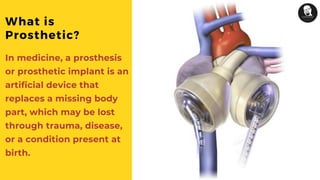
In medicine, a prosthesis
or prosthetic implant is an
artificial device that
replaces a missing body
part, which may be lost
through trauma, disease,
or a condition present at
birth.
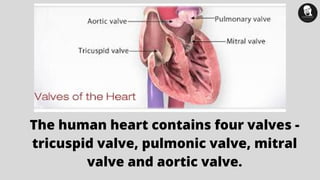
The human heart contains four valves -
tricuspid valve, pulmonic valve, mitral
valve and aortic valve.
Heart valves can malfunction for a variety of
reasons, which can impede the flow of blood
through the valve (stenosis) and/or let blood
flow backwards through the valve
(regurgitation). Both processes put strain on the
heart and may lead to serious problems,
including heart failure.
Although some
dysfunctional
valves can be
treated with
drugs or
repaired,
others need to
be replaced
with an
artificial valve.
Heart Valves
Types of Heart
Valves
Mechanical
Biological(bioprosthetic/tiss
ue), and
Tissue-engineered valves.
The three main types of
artificial heart valves are
Mechanical
Heart Valves
Caged ball
Tilting-disc and
Bileaflet
Mechanical valves
come in three
main types –
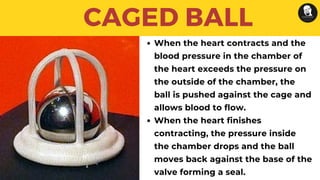
CAGED BALL
When the heart contracts and the
blood pressure in the chamber of
the heart exceeds the pressure on
the outside of the chamber, the
ball is pushed against the cage and
allows blood to flow.
When the heart finishes
contracting, the pressure inside
the chamber drops and the ball
moves back against the base of the
valve forming a seal.
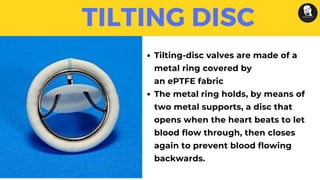
TILTING DISC
Tilting‐disc valves are made of a
metal ring covered by
an ePTFE fabric
The metal ring holds, by means of
two metal supports, a disc that
opens when the heart beats to let
blood flow through, then closes
again to prevent blood flowing
backwards.
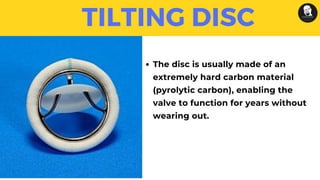
TILTING DISC
The disc is usually made of an
extremely hard carbon material
(pyrolytic carbon), enabling the
valve to function for years without
wearing out.
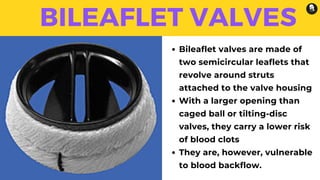
BILEAFLET VALVES
Bileaflet valves are made of
two semicircular leaflets that
revolve around struts
With a larger opening than
caged ball or tilting-disc
valves, they carry a lower risk
of blood clots
They are, however, vulnerable
to blood backflow.
attached to the valve housing
Advantages
The major advantage of
mechanical valves over
bioprosthetic valves is their
greater durability
Made from metal and/or pyrolytic
carbon
They can last 20–30 years
Biological or
Bio-Prosthetic
Valve
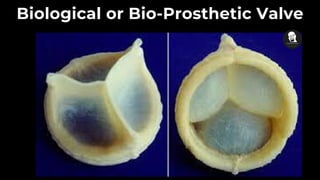
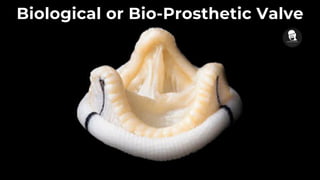
Bioprosthetic valves are usually made from animal
tissue (heterograft/xenograft) mounted on a metal or
polymer support
Bovine (cow) tissue is most commonly used, but some
are made from porcine (pig) tissue
The tissue is treated to prevent rejection and
calcification (where calcium builds up on the
replacement valve and stops it working properly)
Biological or Bio-Prosthetic Valve
Advantages of Biological Valve
Bioprosthetic valves are less likely than mechanical
valves to cause blood clots, so do not require lifelong
anticoagulation. As a result, people with bioprosthetic
valves have a lower risk of bleeding that those with
mechanical valves.
Disadvantages of Biological
Valve
Tissue valves are less durable than mechanical valves, typically lasting 10–20
years
This means that people with bioprosthetic valves have a higher risk of
requiring another aortic valve replacement in their lifetime
Bioprosthetic valves tend to deteriorate more quickly in younger patients.
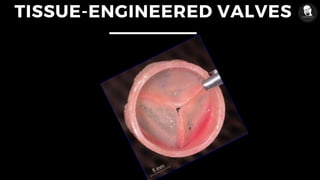
TISSUE-ENGINEERED VALVES
These tissue‑engineered valves involve seeding human cells on
to a scaffold.
The two main types of scaffold are natural scaffolds, such as
decellularized tissue, or scaffolds made from degradable
polymers
TISSUE-ENGINEERED VALVES
The scaffold acts as an extracellular matrix, guiding tissue growth
into the correct 3D structure of the heart valve
Some tissue-engineered heart valves have been tested in clinical
trials
but none are commercially available.
THANK Y0U

Prosthetic heart valves and its structures

  • 1.
    PROSTHETIC HEART VALVES Prepared by AtheenaPandian BASICS OF BIOMEDICAL
  • 2.
    Presentation Rundown Important Points What isProsthetic? Heart Valves Types of Vlaves Mechanical Valve Biological Valve Tissue-Engineered Valve 1. 2. 3. 4. 5. 6.
  • 3.
    What is Prosthetic? In medicine,a prosthesis or prosthetic implant is an artificial device that replaces a missing body part, which may be lost through trauma, disease, or a condition present at birth.
  • 4.
    The human heartcontains four valves - tricuspid valve, pulmonic valve, mitral valve and aortic valve.
  • 5.
    Heart valves canmalfunction for a variety of reasons, which can impede the flow of blood through the valve (stenosis) and/or let blood flow backwards through the valve (regurgitation). Both processes put strain on the heart and may lead to serious problems, including heart failure.
  • 6.
    Although some dysfunctional valves canbe treated with drugs or repaired, others need to be replaced with an artificial valve. Heart Valves
  • 7.
    Types of Heart Valves Mechanical Biological(bioprosthetic/tiss ue),and Tissue-engineered valves. The three main types of artificial heart valves are
  • 8.
    Mechanical Heart Valves Caged ball Tilting-discand Bileaflet Mechanical valves come in three main types –
  • 9.
    CAGED BALL When theheart contracts and the blood pressure in the chamber of the heart exceeds the pressure on the outside of the chamber, the ball is pushed against the cage and allows blood to flow. When the heart finishes contracting, the pressure inside the chamber drops and the ball moves back against the base of the valve forming a seal.
  • 10.
    TILTING DISC Tilting‐disc valvesare made of a metal ring covered by an ePTFE fabric The metal ring holds, by means of two metal supports, a disc that opens when the heart beats to let blood flow through, then closes again to prevent blood flowing backwards.
  • 11.
    TILTING DISC The discis usually made of an extremely hard carbon material (pyrolytic carbon), enabling the valve to function for years without wearing out.
  • 12.
    BILEAFLET VALVES Bileaflet valvesare made of two semicircular leaflets that revolve around struts With a larger opening than caged ball or tilting-disc valves, they carry a lower risk of blood clots They are, however, vulnerable to blood backflow. attached to the valve housing
  • 13.
    Advantages The major advantageof mechanical valves over bioprosthetic valves is their greater durability Made from metal and/or pyrolytic carbon They can last 20–30 years
  • 14.
    Biological or Bio-Prosthetic Valve Bioprosthetic valvesare usually made from animal tissue (heterograft/xenograft) mounted on a metal or polymer support Bovine (cow) tissue is most commonly used, but some are made from porcine (pig) tissue The tissue is treated to prevent rejection and calcification (where calcium builds up on the replacement valve and stops it working properly)
  • 15.
  • 16.
  • 17.
    Advantages of BiologicalValve Bioprosthetic valves are less likely than mechanical valves to cause blood clots, so do not require lifelong anticoagulation. As a result, people with bioprosthetic valves have a lower risk of bleeding that those with mechanical valves.
  • 18.
    Disadvantages of Biological Valve Tissuevalves are less durable than mechanical valves, typically lasting 10–20 years This means that people with bioprosthetic valves have a higher risk of requiring another aortic valve replacement in their lifetime Bioprosthetic valves tend to deteriorate more quickly in younger patients.
  • 19.
    TISSUE-ENGINEERED VALVES These tissue‑engineeredvalves involve seeding human cells on to a scaffold. The two main types of scaffold are natural scaffolds, such as decellularized tissue, or scaffolds made from degradable polymers
  • 20.
  • 21.
    TISSUE-ENGINEERED VALVES The scaffoldacts as an extracellular matrix, guiding tissue growth into the correct 3D structure of the heart valve Some tissue-engineered heart valves have been tested in clinical trials but none are commercially available.
  • 22.