PROPELLER SHAFT AND
DIFFERENTIAL
PRESENTATION PREPARED BY
AKASH PANCHAL – 2124
RIDDHISH PARAB - 2125
TYPT
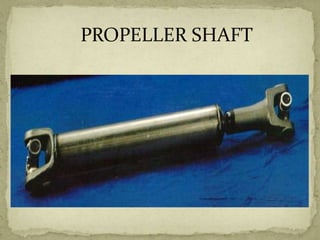
PROPELLER SHAFT
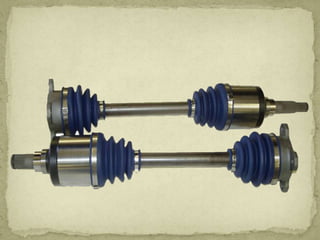
 To transmit power from one point to another in a







smooth, continues action.
In trucks and construction equipment, the propeller
shaft is designed to send torque through an angle from
the transmission to the axle( or auxiliary transmission).
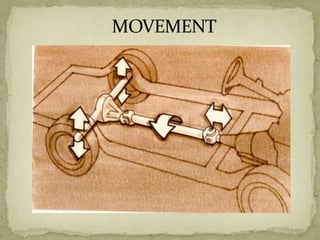
The Propeller shaft must operate through constantly
changing relative angles the between transmission and
axle.
- it must also be capable of changing length while
transmitting torque.
- The axle of a vehicle is not attached directly to the
frame, but rides suspended by springs in an
irregular, floating motion.
 To transmit required torque loads, the propeller shaft

must be durable and strong. Forged steel and highstrength, cast, end yoke for heavy-duty vehicles are
used to provide the necessary rigidity required to
maintain bearing alignment under torque loads.
 Anti-friction bearings are used to with stand
oscillating loads while the propeller shaft is rotating at
high speeds. The needle roller bearings on the cross
trunnions carry large loads and are used because of
their high capacity in a limited space.
 Special high-strength tubing is used to provide

maximum torque carrying capacity at minimum
practical weight. Propeller shafts have been developed
to meet the vehicular industry needs.
 The sliding plines betweens lip joint and permanent

joint must support the propeller shaft and be capable
of sliding under full torque loads.
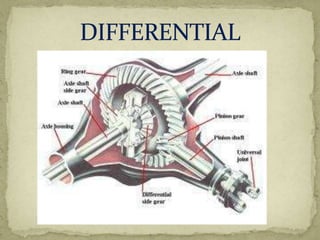
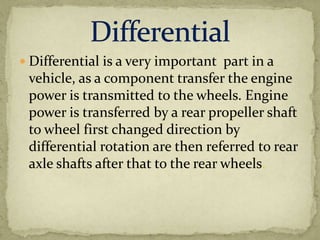
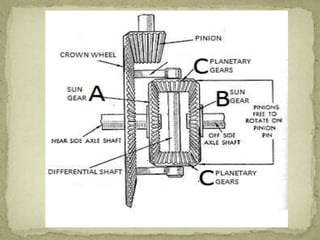
 Differential is a very important part in a

vehicle, as a component transfer the engine
power is transmitted to the wheels. Engine
power is transferred by a rear propeller shaft
to wheel first changed direction by
differential rotation are then referred to rear
axle shafts after that to the rear wheels.
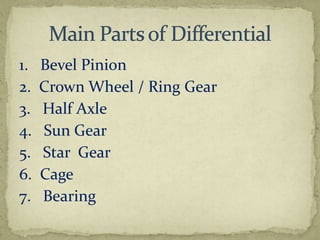
1.
2.
3.
4.
5.
6.
7.

Bevel Pinion
Crown Wheel / Ring Gear
Half Axle
Sun Gear
Star Gear
Cage
Bearing
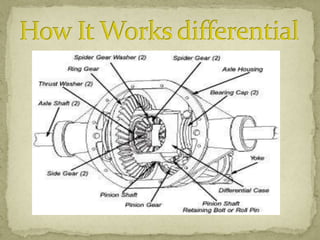
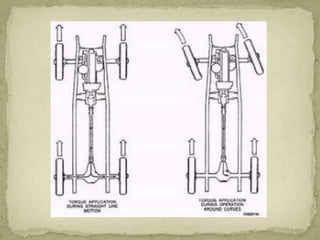
 At the time of straight road.

During the vehicle runs straight, the wheels of the
rear axle will be screened by the drive pinion
through the ring gear differential case, wheelwheel differential gear pinion shaft, wheel-pinion
differential gears, side gear teeth is not
spinning, remain to be drawn into the ring gear
rotation. Thus the spin on the wheel left and right
alike.
 At the time of turning.

At the time of vehicle turning left prisoners left wheel
is bigger than the right wheel. If the differential case
with the ring gear rotates the pinion will rotate on its
axis and also the movement around the left side gear,
so round the right hand side gear increases, the side
where the number of revolutions of the gear which is 2
times round the ring gear. It can be said that the
average second round gear is comparable with the
rotary ring gear. as it should.
The basic principle of the differential gear unit can
be understood by using equipment that consists of
two gears pinion and rack.
2. Both rack can be moved in the vertical direction as
far as the weight rack and slip resistance will be lifted
simultaneously. Placed between the tooth pinion
rack and pinion gear connected to the braces and can
be moved by these braces.
1.
1.

When the same load “W” placed on each rack then braces
(Shackle) is pulled up the second rack would be lifted at
the same distance, this will prevent the pinion gear does
not rotate.

2.

But if a greater burden placed on the left rack and pinion
buffer will then be drawn up along the gear rack rotates
the load gets heavier, which is attributed to differences in
prisoners who are given the pinion gear, so the smaller the
burden will be lifted.
1. The raised rack spacing is proportional to the
number of turns pinion gear. In other words that
rack gets custody larger still and while prisoners
who received a smaller load will move. This
principle is used in the planning of differential
gears.
Propeller and Differential

Propeller and Differential

  • 1.
    PROPELLER SHAFT AND DIFFERENTIAL PRESENTATIONPREPARED BY AKASH PANCHAL – 2124 RIDDHISH PARAB - 2125 TYPT
  • 2.
  • 4.
     To transmitpower from one point to another in a     smooth, continues action. In trucks and construction equipment, the propeller shaft is designed to send torque through an angle from the transmission to the axle( or auxiliary transmission). The Propeller shaft must operate through constantly changing relative angles the between transmission and axle. - it must also be capable of changing length while transmitting torque. - The axle of a vehicle is not attached directly to the frame, but rides suspended by springs in an irregular, floating motion.
  • 6.
     To transmitrequired torque loads, the propeller shaft must be durable and strong. Forged steel and highstrength, cast, end yoke for heavy-duty vehicles are used to provide the necessary rigidity required to maintain bearing alignment under torque loads.  Anti-friction bearings are used to with stand oscillating loads while the propeller shaft is rotating at high speeds. The needle roller bearings on the cross trunnions carry large loads and are used because of their high capacity in a limited space.
  • 7.
     Special high-strengthtubing is used to provide maximum torque carrying capacity at minimum practical weight. Propeller shafts have been developed to meet the vehicular industry needs.  The sliding plines betweens lip joint and permanent joint must support the propeller shaft and be capable of sliding under full torque loads.
  • 9.
     Differential isa very important part in a vehicle, as a component transfer the engine power is transmitted to the wheels. Engine power is transferred by a rear propeller shaft to wheel first changed direction by differential rotation are then referred to rear axle shafts after that to the rear wheels.
  • 11.
    1. 2. 3. 4. 5. 6. 7. Bevel Pinion Crown Wheel/ Ring Gear Half Axle Sun Gear Star Gear Cage Bearing
  • 12.
     At thetime of straight road. During the vehicle runs straight, the wheels of the rear axle will be screened by the drive pinion through the ring gear differential case, wheelwheel differential gear pinion shaft, wheel-pinion differential gears, side gear teeth is not spinning, remain to be drawn into the ring gear rotation. Thus the spin on the wheel left and right alike.
  • 14.
     At thetime of turning. At the time of vehicle turning left prisoners left wheel is bigger than the right wheel. If the differential case with the ring gear rotates the pinion will rotate on its axis and also the movement around the left side gear, so round the right hand side gear increases, the side where the number of revolutions of the gear which is 2 times round the ring gear. It can be said that the average second round gear is comparable with the rotary ring gear. as it should.
  • 15.
    The basic principleof the differential gear unit can be understood by using equipment that consists of two gears pinion and rack. 2. Both rack can be moved in the vertical direction as far as the weight rack and slip resistance will be lifted simultaneously. Placed between the tooth pinion rack and pinion gear connected to the braces and can be moved by these braces. 1.
  • 17.
    1. When the sameload “W” placed on each rack then braces (Shackle) is pulled up the second rack would be lifted at the same distance, this will prevent the pinion gear does not rotate. 2. But if a greater burden placed on the left rack and pinion buffer will then be drawn up along the gear rack rotates the load gets heavier, which is attributed to differences in prisoners who are given the pinion gear, so the smaller the burden will be lifted.
  • 18.
    1. The raisedrack spacing is proportional to the number of turns pinion gear. In other words that rack gets custody larger still and while prisoners who received a smaller load will move. This principle is used in the planning of differential gears.