www.pi3.co.za 
Louise Worsley 
Linky van der Merwe 
Promoting knowledge 
sharing in projects
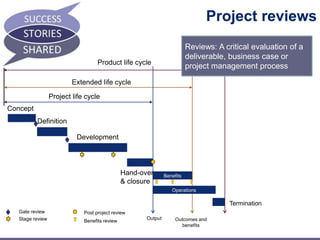
Extended life cycle 
Hand-over 
& closure 
Project reviews 
Concept 
Benefits 
realisation 
Definition 
Development 
Reviews: A critical evaluation of a 
deliverable, business case or 
project management process 
Termination 
Project life cycle 
Operations 
Product life cycle 
Gate review Post project review 
Stage review Benefits review Output Outcomes and 
benefits
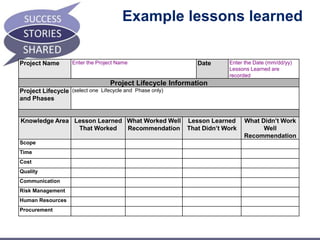
Example lessons learned 
Project Name Enter the Project Name Date Enter the Date (mm/dd/yy) 
Lessons Learned are 
recorded 
Project Lifecycle Information 
Project Lifecycle 
and Phases 
(select one Lifecycle and Phase only) 
Knowledge Area Lesson Learned 
That Worked 
What Worked Well 
Recommendation 
Lesson Learned 
That Didn’t Work 
What Didn’t Work 
Well 
Recommendation 
Scope 
Time 
Cost 
Quality 
Communication 
Risk Management 
Human Resources 
Procurement
Do we learn from the past? 
Adoption rates of lessons identified 
are too low 
It’s easier to identify a lesson than to 
get an organization to act on it and 
implement a useful solution – lesson 
identified 
When you uncover a problem, you 
are calling into question the wisdom 
of some earlier decisions. 
Excuses and creative explanations 
will emerge if a lesson learned 
threatens some cherished process 
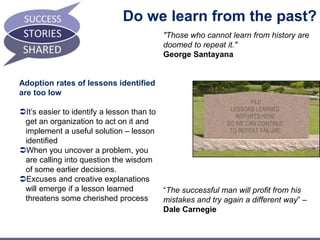
"Those who cannot learn from history are 
doomed to repeat it." 
George Santayana 
“The successful man will profit from his 
mistakes and try again a different way” – 
Dale Carnegie
SSS participants 
 ABSA 
 Transnet 
 Eskom 
 PnPay 
 Woolworths 
 BAT 
 Others… 
 Network Rail 
 Eurostar 
 Cellnet 
 Lloyds TSB 
 Remploy 
 Its amazing what we covered in 
1 hour. Listening to FC, 
reflecting on the challenges he 
faced and integrating this with 
what I know about major project 
management – this is the best 
learning context for me. I came 
away excited by my profession 
 Thanks for the discussion today. 
It was the first time that I got to 
debrief about the threats and 
issues that I faced on the project 
and that was quite nice!
What have we learned 
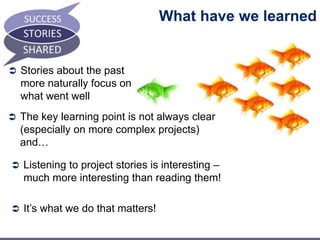
 Stories about the past 
more naturally focus on 
what went well 
 The key learning point is not always clear 
(especially on more complex projects) 
and… 
 Listening to project stories is interesting – 
much more interesting than reading them! 
 It’s what we do that matters!
Story sessions 
Share a story (in 2s) 
 Find a pair 
 Share your story 
Review a story (4s) 
 Read your story 
 Amongst the group discuss what you each feel is the 
learning to be taken away. 
 Compare with what the interviewee felt
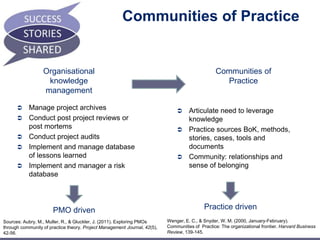
Communities of Practice 
Organisational 
knowledge 
management 
 Manage project archives 
 Conduct post project reviews or 
post mortems 
 Conduct project audits 
 Implement and manage database 
of lessons learned 
 Implement and manager a risk 
database 
Sources: Aubry, M., Muller, R., & Gluckler, J. (2011). Exploring PMOs 
through community of practice theory. Project Management Journal, 42(5), 
42-56. 
Communities of 
Practice 
 Articulate need to leverage 
knowledge 
 Practice sources BoK, methods, 
stories, cases, tools and 
documents 
 Community: relationships and 
sense of belonging 
PMO driven Practice driven 
Wenger, E. C., & Snyder, W. M. (2000, January-February). 
Communities of Practice: The organizational frontier. Harvard Business 
Review, 139-145.
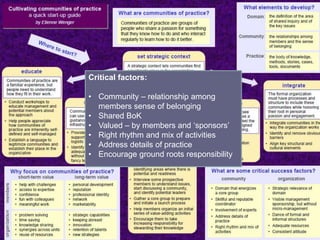
Critical factors: 
• Community – relationship among 
members sense of belonging 
• Shared BoK 
• Valued – by members and ‘sponsors’ 
• Right rhythm and mix of activities 
• Address details of practice 
• Encourage ground roots responsibility
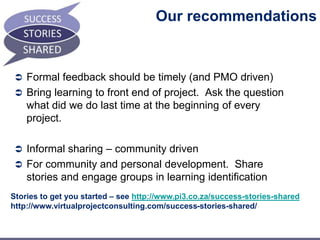
Our recommendations 
 Formal feedback should be timely (and PMO driven) 
 Bring learning to front end of project. Ask the question 
what did we do last time at the beginning of every 
project. 
 Informal sharing – community driven 
 For community and personal development. Share 
stories and engage groups in learning identification 
Stories to get you started – see http://www.pi3.co.za/success-stories-shared 
http://www.virtualprojectconsulting.com/success-stories-shared/
References 
Aubry, M., Muller, R., & Gluckler, J. (2011). Exploring PMOs through community of 
practice theory. Project Management Journal, 42(5), 42-56. 
Wenger, E. C., & Snyder, W. M. (2000, January-February). Communities of 
Practice: The organizational frontier. Harvard Business Review, 139-145. 
Wenger, E. (2002). Cultivating Communities of Practice: A start-up guide. 
Retrieved July 2014, from Defense Teaching Centre: 
http://www.dtc.org.au/Documents/182.pdf 
Duffield, S., & Whitty, J. (2012). A systemic lessons learned and captured 
knowledge (SLLCK) model for project organizations. Proceedings of the Annual 
Project Management Australia Conference Incorporating the PMI Australia 
National Conference. Melbourne, Australia. 
APM SIG. (2012, August). Assurance assessment toolkit. Retrieved July 
2014, from APM: http://www.apm.org.uk/news/assurance-assessment-toolkit#. 
U9ZOB_ldUXE
www.pi3.co.za 
questions 
Louise Worsley: 
lworsley@pi3.co.za 
Linky van der Merwe: 
linky@virtualprojectconsulting.com

Promoting knowledge sharing in projects

  • 1.
    www.pi3.co.za Louise Worsley Linky van der Merwe Promoting knowledge sharing in projects
  • 2.
    Extended life cycle Hand-over & closure Project reviews Concept Benefits realisation Definition Development Reviews: A critical evaluation of a deliverable, business case or project management process Termination Project life cycle Operations Product life cycle Gate review Post project review Stage review Benefits review Output Outcomes and benefits
  • 3.
    Example lessons learned Project Name Enter the Project Name Date Enter the Date (mm/dd/yy) Lessons Learned are recorded Project Lifecycle Information Project Lifecycle and Phases (select one Lifecycle and Phase only) Knowledge Area Lesson Learned That Worked What Worked Well Recommendation Lesson Learned That Didn’t Work What Didn’t Work Well Recommendation Scope Time Cost Quality Communication Risk Management Human Resources Procurement
  • 4.
    Do we learnfrom the past? Adoption rates of lessons identified are too low It’s easier to identify a lesson than to get an organization to act on it and implement a useful solution – lesson identified When you uncover a problem, you are calling into question the wisdom of some earlier decisions. Excuses and creative explanations will emerge if a lesson learned threatens some cherished process "Those who cannot learn from history are doomed to repeat it." George Santayana “The successful man will profit from his mistakes and try again a different way” – Dale Carnegie
  • 5.
    SSS participants ABSA  Transnet  Eskom  PnPay  Woolworths  BAT  Others…  Network Rail  Eurostar  Cellnet  Lloyds TSB  Remploy  Its amazing what we covered in 1 hour. Listening to FC, reflecting on the challenges he faced and integrating this with what I know about major project management – this is the best learning context for me. I came away excited by my profession  Thanks for the discussion today. It was the first time that I got to debrief about the threats and issues that I faced on the project and that was quite nice!
  • 6.
    What have welearned  Stories about the past more naturally focus on what went well  The key learning point is not always clear (especially on more complex projects) and…  Listening to project stories is interesting – much more interesting than reading them!  It’s what we do that matters!
  • 7.
    Story sessions Sharea story (in 2s)  Find a pair  Share your story Review a story (4s)  Read your story  Amongst the group discuss what you each feel is the learning to be taken away.  Compare with what the interviewee felt
  • 8.
    Communities of Practice Organisational knowledge management  Manage project archives  Conduct post project reviews or post mortems  Conduct project audits  Implement and manage database of lessons learned  Implement and manager a risk database Sources: Aubry, M., Muller, R., & Gluckler, J. (2011). Exploring PMOs through community of practice theory. Project Management Journal, 42(5), 42-56. Communities of Practice  Articulate need to leverage knowledge  Practice sources BoK, methods, stories, cases, tools and documents  Community: relationships and sense of belonging PMO driven Practice driven Wenger, E. C., & Snyder, W. M. (2000, January-February). Communities of Practice: The organizational frontier. Harvard Business Review, 139-145.
  • 9.
    Critical factors: •Community – relationship among members sense of belonging • Shared BoK • Valued – by members and ‘sponsors’ • Right rhythm and mix of activities • Address details of practice • Encourage ground roots responsibility
  • 10.
    Our recommendations Formal feedback should be timely (and PMO driven)  Bring learning to front end of project. Ask the question what did we do last time at the beginning of every project.  Informal sharing – community driven  For community and personal development. Share stories and engage groups in learning identification Stories to get you started – see http://www.pi3.co.za/success-stories-shared http://www.virtualprojectconsulting.com/success-stories-shared/
  • 11.
    References Aubry, M.,Muller, R., & Gluckler, J. (2011). Exploring PMOs through community of practice theory. Project Management Journal, 42(5), 42-56. Wenger, E. C., & Snyder, W. M. (2000, January-February). Communities of Practice: The organizational frontier. Harvard Business Review, 139-145. Wenger, E. (2002). Cultivating Communities of Practice: A start-up guide. Retrieved July 2014, from Defense Teaching Centre: http://www.dtc.org.au/Documents/182.pdf Duffield, S., & Whitty, J. (2012). A systemic lessons learned and captured knowledge (SLLCK) model for project organizations. Proceedings of the Annual Project Management Australia Conference Incorporating the PMI Australia National Conference. Melbourne, Australia. APM SIG. (2012, August). Assurance assessment toolkit. Retrieved July 2014, from APM: http://www.apm.org.uk/news/assurance-assessment-toolkit#. U9ZOB_ldUXE
  • 12.
    www.pi3.co.za questions LouiseWorsley: lworsley@pi3.co.za Linky van der Merwe: linky@virtualprojectconsulting.com