2009 HALT Fall Symposium
      Project-Based Learning
             Presenters:

    José Gigante, Punahou School
Cherie Hayes-Gigante, UH Manoa’s OLA
    Lynette Fujimori, Hawai’i DOE
       Danile Kop, Hawai’i DOE
Melvina Kurashige, Mid Pacific Institute

      Integrating technology in your projects
Tell me and I may forget.
Show me and I may remember.
Involve me and I understand.
                  Chinese Proverb


          Tell me and I forget.
          Teach me and I remember.
          Involve me and I learn.
                        Benjamin Franklin
What is Project-Based Learning?
What is PBL?
• student-centered activity
• breaks away from traditional models
• demonstrates mastery of material
• places material in situational context
Benefits of PBL
• personalized / individual learning
• encourages collaboration and
  communication
• improves presentational skills
• increases motivation
Challenges of PBL
• designing good projects
• developing good rubrics and
  assessments
• integrating technology
Challenges of PBL
• designing good projects
• developing good rubrics and
  assessments
• integrating technology
• breaking away from tradition
Creating the project
• develop an idea
• what do you want to
   accomplish?
• what knowledge do you
 want them to demonstrate?
• how will they demonstrate
   that knowledge?
• is technology applicable?
• how will you assess?
• develop a rubric
Integrating


              technology
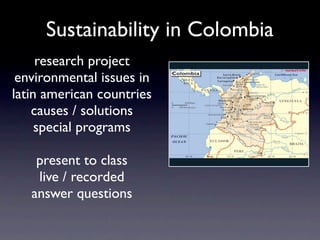
Sustainability in Colombia
     research project
 environmental issues in
latin american countries
    causes / solutions
     special programs

    present to class
    live / recorded
   answer questions
Video Exchange with France
        Share our school campuses
• decide on buildings
• work on research
• present information
• answer questions (local)
• share with french
  students
• high motivation due to
  foreign audience
• answer questions from french students
Video Exchange with France
        Share our school campuses
• decide on buildings
• work on research
• present information
• answer questions (local)
• share with french
  students
• high motivation due to
  foreign audience
• answer questions from french students
Project based learning
      Middle school
 Japanese Language class
Why projects?
engages and motivates students
helps students to both “know” and
“do”
students apply what they have
learned vs. rote memory
assesses performance on both
content and skills
meets the need of different
learning styles
creates positive communication
and collaboration between students
Sample student projects


Podcast/imovie “Penpal” project
Sample student projects


Podcast/imovie “Penpal” project
Sample student projects


Setsubun cultural video project
Sample student projects


Setsubun cultural video project
2009 HALT Fall Symposium
      Project-Based Learning
             Presenters:

    José Gigante, Punahou School
Cherie Hayes-Gigante, UH Manoa’s OLA
    Lynette Fujimori, Hawai’i DOE
       Danile Kop, Hawai’i DOE
Melvina Kurashige, Mid Pacific Institute


      Gracias, Mahalo, Arigato for coming today!

Project-Based Learning

  • 1.
    2009 HALT FallSymposium Project-Based Learning Presenters: José Gigante, Punahou School Cherie Hayes-Gigante, UH Manoa’s OLA Lynette Fujimori, Hawai’i DOE Danile Kop, Hawai’i DOE Melvina Kurashige, Mid Pacific Institute Integrating technology in your projects
  • 2.
    Tell me andI may forget. Show me and I may remember. Involve me and I understand. Chinese Proverb Tell me and I forget. Teach me and I remember. Involve me and I learn. Benjamin Franklin
  • 3.
  • 4.
  • 5.
    What is PBL? •student-centered activity • breaks away from traditional models • demonstrates mastery of material • places material in situational context
  • 6.
    Benefits of PBL •personalized / individual learning • encourages collaboration and communication • improves presentational skills • increases motivation
  • 7.
    Challenges of PBL •designing good projects • developing good rubrics and assessments • integrating technology
  • 8.
    Challenges of PBL •designing good projects • developing good rubrics and assessments • integrating technology • breaking away from tradition
  • 9.
  • 10.
    • develop anidea • what do you want to accomplish? • what knowledge do you want them to demonstrate? • how will they demonstrate that knowledge? • is technology applicable? • how will you assess? • develop a rubric
  • 12.
    Integrating technology
  • 15.
    Sustainability in Colombia research project environmental issues in latin american countries causes / solutions special programs present to class live / recorded answer questions
  • 16.
    Video Exchange withFrance Share our school campuses • decide on buildings • work on research • present information • answer questions (local) • share with french students • high motivation due to foreign audience • answer questions from french students
  • 17.
    Video Exchange withFrance Share our school campuses • decide on buildings • work on research • present information • answer questions (local) • share with french students • high motivation due to foreign audience • answer questions from french students
  • 18.
    Project based learning Middle school Japanese Language class
  • 19.
    Why projects? engages andmotivates students helps students to both “know” and “do” students apply what they have learned vs. rote memory assesses performance on both content and skills meets the need of different learning styles creates positive communication and collaboration between students
  • 20.
  • 21.
  • 22.
    Sample student projects Setsubuncultural video project
  • 23.
    Sample student projects Setsubuncultural video project
  • 24.
    2009 HALT FallSymposium Project-Based Learning Presenters: José Gigante, Punahou School Cherie Hayes-Gigante, UH Manoa’s OLA Lynette Fujimori, Hawai’i DOE Danile Kop, Hawai’i DOE Melvina Kurashige, Mid Pacific Institute Gracias, Mahalo, Arigato for coming today!